

































































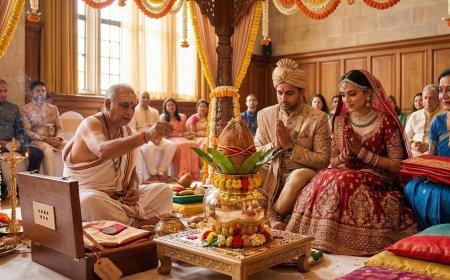

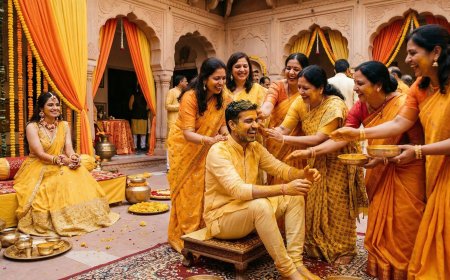
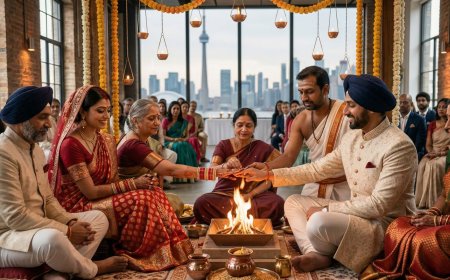



Taj Mahal Palace, Mumbai — Marrying Opposite the Gateway of India in India's Most Historic Hotel: The NRI Guide
The bride's father had told the story at every family dinner for twenty years. Not the embellished version — the specific, factual, every-detail-confirmed story whose accuracy he had verified at the Tata Institute's archives. The story was this. Jamsetji Nusserwanji Tata was refused entry to a Bombay hotel in the eighteen-eighties. The specific hotel had the specific policy: no Indians, no dogs. He had left. He had built the Taj. Not the metaphorical building — the literal, physical, five-year, finest-materials-from-Europe, best-craftspeople-from-the-subcontinent building whose 1903 completion was the completion of the specific, defiant act of the man who said in the language of the building rather than the protest: if you will not let me in, I will build the finest hotel in India and I will build it so that every Indian can enter. The bride's father had told this story at every family dinner for twenty years. When the bride said: we are getting married at the Taj Mahal Palace, Mumbai — he was quiet for a long moment. Then said: good. That was all. Just good. The single word whose weight was the weight of twenty years of the story applied to the daughter's wedding in the building the story was about. This complete guide gives NRI couples everything needed to plan a wedding at India's most historically significant hotel — covering the 1903 founding defiance and what the colonial refusal produced, the Gateway of India relationship and what the Apollo Bunder address means across 120 years of Indian history, the 26/11 resilience and what the building's institutional character most powerfully embodies, the Crystal Room's Edwardian gilded-ceiling heritage interior, the Heritage Wing versus Tower Wing accommodation priority, the Elephanta Caves ferry from the Gateway's doorstep, one comprehensive table covering all venue costs, accommodation from ₹35,000 to ₹6,00,000 per night across 560 rooms, and complete budget from ₹7.99 crore to ₹16.99 crore — the guide series' most historically weighted venue — the Bollywood home-market celebrity advantage, the baraat at the illuminated Gateway, the heritage-responsive Crystal Room decorator brief, the founding story formal programme, and the five mistakes that cost couples the defiance-built wedding's full extraordinary potential.


Taj Mahal Palace, Mumbai — Marrying Opposite the Gateway of India in India's Most Historic Hotel: The NRI Guide
The Defiance
The bride's father had told the story at every family dinner for twenty years.
Not the embellished story — not the version that grows in the telling, that acquires the details the teller adds across the retellings until the original fact and the accumulated flourish become indistinguishable. The specific, factual, every-detail-confirmed story whose telling he had researched at the Tata Institute's archives and whose accuracy he had verified and whose specific, historical weight had made it the story he could not stop telling because the story was too important to leave untold.
The story was this.
Jamsetji Nusserwanji Tata — the Parsi industrialist, the founder of what became the Tata Group, the specific, visionary, defiant man whose life was the life of the Indian who builds in the face of the empire that does not expect the Indian to build — was refused entry to a Bombay hotel in the eighteen-eighties. The specific hotel had the specific policy: no Indians, no dogs. The policy was the policy of the colonial India whose specific, racial, institutional humiliation of the Indian was the ambient condition of the subject people's daily life in the city that was the jewel of the British empire's commercial crown.
Jamsetji Tata had been refused entry.
He had left.
He had built the Taj.
Not the metaphorical building — the literal, physical, architectural, five-year, crore-rupee, finest-materials-from-Europe, best-craftspeople-from-the-subcontinent building whose completion in 1903 was the completion of the specific, defiant act of the man who said, in the language of the building rather than the protest: if you will not let me in, I will build the finest hotel in India and I will build it so that every Indian can enter.
The bride's father had told this story at every family dinner for twenty years.
When the bride had said: we are getting married at the Taj Mahal Palace, Mumbai — the groom's proposal, the groom's family's connection to Mumbai, the specific, long-held vision of the occasion in the hotel that was the story — the bride's father had been quiet for a long moment.
Then he had said: good.
That was all.
Good.
The single word whose weight was the weight of twenty years of the story told at every family dinner — the weight of the Parsi industrialist's defiance and the colonial hotel's refusal and the building that the defiance built — applied to the single, specific, particular, personal occasion of his daughter's wedding in the building that the defiance built.
The Taj Mahal Palace, Mumbai — the 1903 heritage hotel on the Apollo Bunder whose Gateway of India address and whose specific, only-in-India, defiance-built, empire-refused, Indian-built, Indian-owned, century-of-significant-occasions-hosted institutional character make it the most historically resonant wedding venue in this guide series and arguably in India — is the hotel that the bride's father had been telling the story about for twenty years.
His daughter was getting married there.
Good.
This guide is the complete knowledge of what that means.
The Hotel: 1903 and the Century Since
The Founding Defiance
The Taj Mahal Palace's founding story — the refused entry, the defiant building, the 1903 completion — is not the marketing mythology of the heritage hotel whose founding narrative has been managed across the decades into the institutional legend whose relationship to the actual history is the relationship of the polished version to the complicated original.
It is the actual history.
The specific, documented, historically verifiable founding defiance of the Parsi industrialist whose response to the racial exclusion of the colonial India was the constructive defiance of the builder rather than the political defiance of the protester — the defiance that says: you will not let me in, so I will build the finest building in your city and I will build it for my people.
The 1903 building: the original Taj Mahal Palace building — the Heritage Wing, the Florentine Gothic-Saracenic hybrid architecture whose specific, dome-topped, sea-facing, Gateway-of-India-adjacent position on the Apollo Bunder made it the most prominent building in the Bombay waterfront at the moment of its 1903 completion — is the building whose architectural quality is the quality of the specific ambition: the building that Jamsetji Tata commissioned to be the finest possible, sourced the best craftspeople and the best materials from across the world to build, and whose specific, only-in-Bombay, century-of-the-significant quality is the quality of the building that has been the setting of the important occasion for one hundred and twenty years.
The Tower Wing: the Taj Mahal Palace's Tower Wing — the modernist addition whose twenty-one-story tower provides the contemporary room standard alongside the Heritage Wing's historical character — is the operational addition whose presence gives the hotel its full-service contemporary infrastructure while the Heritage Wing's specific, only-1903, architectural and historical character remains the hotel's defining credential.
The Century of the Significant
The Taj Mahal Palace, Mumbai's guest list across one hundred and twenty years — the presidents and the prime ministers and the royalty and the independence leaders and the industrial magnates and the film stars and the diplomats and the specific, accumulated roster of the significant whose occasions at the hotel are the occasions of the significant — is the guest list that most powerfully communicates what the building is.
The independence connection: the Taj Mahal Palace's specific, historically documented connection to the Indian independence movement — the nationalists who met in its rooms, the conversations that happened in its corridors, the specific, institutional awareness of the hotel that was simultaneously the colonial India's grandest hotel and the nationalist India's meeting point — is the connection whose historical weight most directly reflects the building's specific, only-in-India, caught-between-two-worlds character.
The 26/11 resilience: the 2008 terrorist attack on the Taj Mahal Palace — the specific, traumatic, internationally televised, days-long siege whose target was the building that Jamsetji Tata had built in defiance of the colonial exclusion — and the hotel's specific, determined, symbolically significant reopening in twenty-one days is the specific, modern chapter of the Taj Mahal Palace's institutional history whose resilience most directly expresses the building's character. The hotel had been built in defiance. It had been attacked. It had reopened. The defiance is structural.
The Taj Hotels Institutional Standard
The Taj Hotels — described in the Taj Fateh Prakash Palace, the Taj Corbett, and the Taj Fisherman's Cove articles of this guide series — is the group whose Mumbai flagship property represents the group's institutional standard at its most historically loaded and its most operationally demanding: the flagship of the flagship, the hotel that the group was founded to create, the building whose institutional character is the character of the Tata Group's founding defiance applied to the century of the significant occasion.
The butler service: the Taj Mahal Palace's butler service — the specific, trained, personally assigned attendant whose role is the management of the individual guest's requirements at the personal level — is the service whose quality at the flagship property is the quality of the institution that has been providing this service to the significant guest for one hundred and twenty years. The wedding couple at the Taj Mahal Palace has the butler service of the hotel that has butlered the president of India.
The Setting: The Gateway of India and the Apollo Bunder
The Gateway of India
The Gateway of India — the specific, 1924, Indo-Saracenic, arch-form memorial structure built to commemorate the visit of King George V and Queen Mary in 1911 and whose specific, Apollo-Bunder-waterfront position has made it the most immediately recognisable single image of the Mumbai waterfront — is the Taj Mahal Palace's immediate, across-the-courtyard, visible-from-the-hotel-entrance neighbour.
The relationship: the Taj Mahal Palace and the Gateway of India — the 1903 defiant Indian building and the 1924 colonial commemorative arch, the Indian hotel and the British monument, the building that said we will build as well as you and the arch that said we are the empire — face each other across the Apollo Bunder in the specific, only-in-Mumbai, historically loaded, colonial-and-nationalist, empire-and-defiance relationship of the two structures whose proximity makes the Taj Mahal Palace's address the most historically resonant address in India.
The last thing the British saw: the historical fact that the last British troops to leave India in 1947 passed through the Gateway of India on their way to the ships that took them home — and that the Taj Mahal Palace, whose building had been the specific, defiant response to the colonial exclusion that those British troops represented, had been watching from across the courtyard — is the historical fact whose specific, only-in-Mumbai, independence-and-defiance quality gives the Apollo Bunder address the specific, irreplaceable historical weight that makes the bride's father's story the story that he told at every family dinner for twenty years.
The Mumbai Harbour
The Mumbai Harbour — the specific, Arabian Sea-facing, historically commercially significant harbour whose boats and whose ferries and whose specific, only-in-Mumbai, water-and-city quality is the quality of the harbour that was the entry point to the subcontinent for the centuries of the maritime trade — is the visual context of the Taj Mahal Palace's waterfront position.
The harbour view: the view from the Taj Mahal Palace's sea-facing rooms and event spaces — the Mumbai Harbour, the ferries, the specific, water-and-sky, Arabian Sea quality of the Mumbai waterfront in the evening — is the view whose specific, only-in-Mumbai, harbour-and-history quality most directly communicates the building's position at the intersection of the historical significance and the contemporary city.
The Wedding Spaces
The Crystal Room
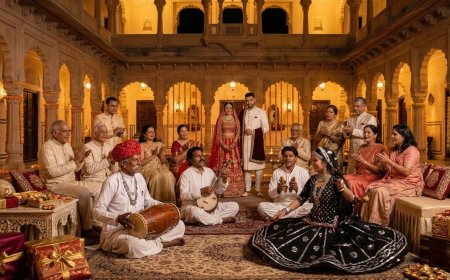
The Crystal Room — the Taj Mahal Palace's primary heritage banquet space whose specific, Edwardian, crystal-chandelier, gilded-ceiling, Heritage Wing interior is the interior of the building's most formally appointed formal space — is the wedding's primary indoor event space and the room whose specific, century-of-the-significant quality most directly embodies the Taj Mahal Palace's institutional character as the setting of the important occasion.
The Crystal Room accommodates up to two hundred and fifty guests for the standing reception and up to one hundred and fifty for the seated dinner — the moderate to substantial scale that the Heritage Wing's primary formal space provides and that the intimate to medium-large NRI wedding's primary indoor programme most comfortably fills.
The Crystal Room wedding: the wedding reception in the Taj Mahal Palace's Crystal Room — the dinner in the Edwardian, crystal-chandelier, gilded-ceiling Heritage Wing room that has been the setting of the important occasion since 1903 — is the dinner whose setting is the specific, accumulated, institutional, century-of-the-significant quality of the room that was built to be the finest in India and that has been the finest in India for one hundred and twenty years.
The Ballroom
The Taj Mahal Palace's Grand Ballroom — the primary large-scale indoor event space whose capacity accommodates the large NRI wedding's primary indoor functions — is the sangeet and the formal reception space for the occasion whose guest count requires the large indoor scale.
The Ballroom accommodates up to six hundred guests for the standing reception and up to three hundred and fifty for the seated dinner — the large NRI wedding's indoor scale whose provision at the Gateway of India address gives the occasion the specific, grand, institutional quality of the event in the most historically significant hotel in India.
The Ballroom sangeet: the large-format NRI sangeet at the Taj Mahal Palace's Ballroom — the three hundred and fifty guests, the Bollywood choreography, the celebrity performer, the specific, Mumbai, film-industry-proximate entertainment whose availability in the city that is simultaneously the Taj Mahal Palace's home and the Bollywood industry's home is the availability of the home market at the most accessible — is the sangeet that Mumbai most specifically enables.
The Sea Lounge and the Outdoor Spaces
The Taj Mahal Palace's Sea Lounge — the specific, Heritage Wing, sea-facing, Gateway-of-India-view lounge whose specific, landmark, only-in-Mumbai position gives it the specific, historical, waterfront-meeting-place quality of the room whose view has been the view of the significant occasion's pre-dinner gathering since 1903 — is the wedding's primary cocktail reception space.
The Sea Lounge cocktail reception: the cocktail reception in the Taj Mahal Palace's Sea Lounge — the Gateway of India visible through the windows, the Mumbai Harbour beyond, the specific, Heritage Wing, Edwardian, crystal-and-silk quality of the sea-facing lounge — is the cocktail reception whose setting most directly communicates the Taj Mahal Palace's specific, only-in-Mumbai, historical-significance-and-luxury-standard combination.
The Sea Lounge accommodates up to one hundred guests for the standing cocktail reception — the intimate scale that makes it the space for the cocktail gathering rather than the grand dinner, the transitional occasion rather than the primary event.
The outdoor terrace: the Taj Mahal Palace's outdoor terrace — the sea-facing outdoor space whose Gateway of India view and whose specific, Apollo Bunder, Mumbai waterfront quality give the outdoor occasion the specific, only-at-this-address, historical-and-natural quality — is the wedding space for the intimate outdoor gathering whose character the Gateway-of-India-view most powerfully frames.
The Heritage Wing Corridors and the Smaller Suites
The Taj Mahal Palace's Heritage Wing corridors and the smaller function suites — the spaces whose specific, 1903, Edwardian, heritage-interior quality gives them the most directly, intimately historically resonant character of any function space in the hotel — are the wedding spaces for the pre-wedding family functions: the mehendi in the Heritage Wing salon, the family gathering in the corridor's specific, historical, art-lined, Edwardian quality, the intimate function whose character the heritage interior most completely provides.
The art collection: the Taj Mahal Palace's art collection — the specific, heritage, institutional-quality collection of Indian and international art whose display throughout the Heritage Wing's corridors and the function spaces gives the hotel the specific, curated, gallery-quality ambient character of the institution that has been collecting and displaying for one hundred and twenty years — is the wedding's ambient heritage dimension whose engagement in the programme's pre-wedding gallery walk gives every guest the specific, only-in-this-building, art-and-history quality of the Heritage Wing.
The Mumbai Experience
The Bollywood Proximity
Mumbai — the Taj Mahal Palace's home city and the Bollywood film industry's headquarters — is the city whose specific, film-industry proximity gives the NRI wedding's entertainment programme the most directly, competitively accessible celebrity performer market in India.
The Bollywood celebrity: the Bollywood celebrity performer whose appearance at the NRI sangeet is the sangeet's primary announcement — the specific, film industry name whose Mumbai-based, home-market availability is the availability that is most competitively, most logistically, most financially accessible at the Taj Mahal Palace, Mumbai, whose address is the address of the city the Bollywood industry calls home — is the entertainment asset whose Mumbai proximity most directly exploits. The celebrity performer's appearance at the Taj Mahal Palace, Mumbai, is the appearance in the performer's home city at the building that has been hosting the significant occasion since before the performer's grandparents were born.
The Mumbai Heritage Programme
The Taj Mahal Palace's Apollo Bunder address — the specific, heritage-dense, historically layered, Colaba-and-Fort-adjacent position in South Mumbai whose specific, colonial-and-nationalist, architectural and historical programme is the programme of the city's most historically significant neighbourhood — gives the wedding's guest programme the most directly, specifically, Mumbai-historically-extraordinary experience.
The Heritage walk: the South Mumbai heritage walk — the Taj Mahal Palace, the Gateway of India, the Colaba Causeway, the Chhatrapati Shivaji Maharaj Terminus, the High Court, the University of Mumbai, the specific, Victorian-Gothic, colonial-era, UNESCO-nominated South Mumbai architectural programme — is the guest programme's primary heritage dimension whose quality and whose walkable proximity to the hotel give the international guest the most complete single-city heritage experience of any property in this guide series.
The Chhatrapati Shivaji Maharaj Terminus: the CST — the specific, Victorian-Gothic, 1887, UNESCO World Heritage-listed railway terminal whose design by F.W. Stevens is among the finest examples of the Victorian-era institutional architecture outside Britain — is the heritage programme element whose combination of the architectural quality and the UNESCO designation and the specific, only-in-Mumbai, Victorian-Gothic-on-the-subcontinent quality gives the international guest the most specifically, architecturally extraordinary single-building experience of the South Mumbai heritage walk.
The Marine Drive and the Art Deco Heritage
The Marine Drive — the specific, Arabian Sea-facing, Art Deco-lined, Mumbai seafront promenade whose curved form and whose specific, only-in-Mumbai, Art Deco architectural ensemble give it the specific quality of the urban seafront whose architecture is the architecture of a specific, historically bound moment — is the guest programme's secondary heritage dimension whose specific, Mumbai Art Deco, UNESCO-nominated character most directly gives the international guest the Mumbai experience that the South Mumbai heritage walk alone does not provide.
The Elephanta Caves
The Elephanta Caves — the UNESCO World Heritage Site on Elephanta Island in the Mumbai Harbour whose specific, fifth-to-seventh-century, rock-cut, Shaiva sculptural programme is the programme of the Indian classical tradition at its most specifically, extraordinarily carved — is the guest programme's primary ancient heritage excursion whose one-hour ferry journey from the Gateway of India gives the wedding programme the most directly, logistically accessible UNESCO World Heritage experience — the ferry from the Gateway of India, the island, the fifth-century caves, the return — in the most specifically, only-in-Mumbai form.
The ferry from the Gateway: the Elephanta Caves ferry from the Gateway of India — the departure point whose specific, only-at-the-Gateway, Taj-Mahal-Palace-visible, morning-Mumbai-harbour quality is the departure whose setting is the setting of the wedding programme's most specifically, historically, visually extraordinary excursion beginning — is the experience that most completely uses the Taj Mahal Palace's Gateway-of-India address as the wedding programme's logistical advantage.
The Season: The Mumbai Wedding Calendar
The Optimal Window
The Mumbai wedding season — the specific, post-monsoon, dry-season window whose combination of the manageable humidity, the relatively clear sky, and the specific, Mumbai, October-through-February quality of the post-monsoon city gives the outdoor occasion the conditions it most practically supports — is the October through February window whose peak is the November through January period.
October and November: the post-monsoon, early-dry-season quality — the specific, fresh, washed, post-rain quality of the Mumbai October whose reduced humidity and whose specific, post-monsoon clarity give the outdoor occasion the most comfortable conditions of the Mumbai year.
December and January: the peak Mumbai wedding season — the specific, cooler, drier, clearest-sky quality of the Mumbai winter whose temperature and whose humidity are the most comfortable outdoor event conditions of the year. The outdoor terrace gathering at the Taj Mahal Palace in the December evening — the Gateway of India visible, the Mumbai Harbour beyond, the specific, Mumbai winter's warm-but-not-hot quality — is the occasion whose conditions the season most specifically supports.
The monsoon: the June through September Mumbai monsoon — the specific, extraordinarily heavy, Arabian-Sea-originating, western-India-targeting rainfall whose intensity in Mumbai is the intensity that the monsoon-season-in-Mumbai most specifically embodies — is the wedding season whose outdoor programme requires the comprehensive indoor contingency whose management the Taj Mahal Palace's professional events team most specifically addresses. The Ballroom and the Crystal Room are the monsoon's specific, complete, luxury-standard indoor answer.
The Complete Planning and Pricing Table
Comprehensive Wedding Planning Table: All Spaces, Costs, Accommodation, and Budget
| Category | Detail | Capacity / Scope | Approx. Cost (INR) | Approx. Cost (USD) | Notes |
|---|---|---|---|---|---|
| WEDDING SPACES AND VENUE COSTS | |||||
| Crystal Room – Reception Dinner | 1903 Heritage Wing, gilded | Up to 150 seated / 250 standing | ₹40,00,000 – ₹75,00,000 | $48,000 – $90,000 | Most historic Indian dining |
| Crystal Room – Intimate Sangeet | Heritage interior, jewel | Up to 150 seated / 250 standing | ₹35,00,000 – ₹65,00,000 | $42,000 – $78,000 | Heritage interior sangeet |
| Grand Ballroom – Sangeet | Large-scale Mumbai event | Up to 350 seated / 600 standing | ₹55,00,000 – ₹1,00,00,000 | $66,000 – $1,20,000 | Bollywood-scale sangeet |
| Grand Ballroom – Reception | Formal large-scale dinner | Up to 350 seated / 600 standing | ₹65,00,000 – ₹1,20,00,000 | $78,000 – $1,44,000 | Grand Mumbai reception |
| Sea Lounge – Cocktails | Gateway view, Heritage Wing | Up to 60 seated / 100 standing | ₹18,00,000 – ₹32,00,000 | $21,600 – $38,400 | Iconic Gateway cocktails |
| Outdoor Terrace – Ceremony | Gateway of India backdrop | Up to 80 seated / 120 standing | ₹20,00,000 – ₹38,00,000 | $24,000 – $45,600 | Most historic ceremony view |
| Outdoor Terrace – Cocktails | Apollo Bunder, sea | Up to 80 seated / 120 standing | ₹15,00,000 – ₹28,00,000 | $18,000 – $33,600 | Gateway evening cocktails |
| Heritage Wing Salon – Mehendi | 1903 heritage interior | Up to 50 seated / 70 standing | ₹8,00,000 – ₹16,00,000 | $9,600 – $19,200 | Pre-wedding heritage |
| Heritage Wing – Haldi | Heritage corridor setting | Up to 30 seated / 50 standing | ₹6,00,000 – ₹12,00,000 | $7,200 – $14,400 | Inner circle, 1903 building |
| Smaller Suite – Family Dinner | Heritage private dining | Up to 30 seated | ₹8,00,000 – ₹18,00,000 | $9,600 – $21,600 | Rehearsal or family |
| Heritage Walk – Art Programme | Gallery walk, corridors | All guests | ₹2,00,000 – ₹5,00,000 | $2,400 – $6,000 | Heritage art collection |
| Property Approach – Baraat | Apollo Bunder, Gateway | Procession / 200 standing | ₹8,00,000 – ₹18,00,000 | $9,600 – $21,600 | Most historic baraat address |
| Full 3-Day Wedding Package | All functions, full prog | 150–350 guests | ₹3,50,00,000 – ₹7,00,00,000 | $4,20,000 – $8,40,000 | India's most historic hotel |
| GUEST PROGRAMME COSTS | |||||
| Elephanta Caves Ferry | UNESCO ferry, Gateway dep | Up to 100 guests | ₹1,50,000 – ₹4,00,000 | $1,800 – $4,800 | Ferry from Gateway itself |
| South Mumbai Heritage Walk | CST, High Court, Victorian | Up to 30 per group | ₹80,000 – ₹2,50,000 | $960 – $3,000 | UNESCO colonial heritage |
| Marine Drive Art Deco Walk | UNESCO Art Deco ensemble | Up to 30 per group | ₹80,000 – ₹2,50,000 | $960 – $3,000 – | Mumbai Art Deco heritage |
| Taj History and Art Tour | 1903 founding, collection | All guests | ₹50,000 – ₹1,50,000 | $600 – $1,800 | Defiance story, art walk |
| Bollywood Studio Tour | Film industry, Mumbai | Up to 40 guests | ₹1,00,000 – ₹3,00,000 | $1,200 – $3,600 | Mumbai film heritage |
| CATERING PER HEAD | |||||
| Welcome Cocktails | Mumbai coastal, Taj quality | Per head | ₹4,000 – ₹7,000 per head | $48 – $84 per head | Taj flagship standard |
| Buffet Dinner | Indian, continental, coastal | Per head | ₹12,000 – ₹18,000 per head | $144 – $216 per head | Taj culinary excellence |
| Seated Dinner | Formal Taj full service | Per head | ₹18,000 – ₹30,000 per head | $216 – $360 per head | India's finest dining |
| ACCOMMODATION | |||||
| Superior Room – Tower Wing | City or harbour view | Per night | ₹35,000 – ₹55,000 per night | $420 – $660 per night | Entry level, Tower Wing |
| Deluxe Room – Tower Wing | Enhanced harbour view | Per night | ₹50,000 – ₹75,000 per night | $600 – $900 per night | Better position, harbour |
| Heritage Room – Heritage Wing | 1903 building, sea facing | Per night | ₹65,000 – ₹95,000 per night | $780 – $1,140 per night | Actual 1903 heritage room |
| Heritage Suite | Heritage Wing, suite | Per night | ₹1,00,000 – ₹1,50,000 per night | $1,200 – $1,800 per night | Key family, senior guests |
| Grand Luxury Suite | Premier Heritage suite | Per night | ₹1,50,000 – ₹2,50,000 per night | $1,800 – $3,000 per night | VIP family, close relatives |
| Presidential Suite | Finest, Gateway panorama | Per night | ₹3,50,000 – ₹6,00,000 per night | $4,200 – $7,200 per night | Wedding couple, Heritage Wing |
| Total Rooms Available | Heritage and Tower Wings | ~560 rooms | Group rate negotiated | Group rate negotiated | Heritage Wing essential |
| OVERFLOW ACCOMMODATION | |||||
| The Oberoi Mumbai | Adjacent, Nariman Point | Per night | ₹30,000 – ₹1,50,000 per night | $360 – $1,800 per night | Premium overflow, South Mumbai |
| ITC Grand Central Mumbai | Five-star, central Mumbai | Per night | ₹15,000 – ₹60,000 per night | $180 – $720 per night | Quality overflow option |
| Standard South Mumbai hotels | Colaba and Fort area | Per night | ₹8,000 – ₹30,000 per night | $96 – $360 per night | Mid-range overflow |
| COMPREHENSIVE BUDGET SUMMARY | |||||
| Venue hire – all functions (3 days) | All spaces, full programme | All events | ₹2,00,00,000 – ₹4,00,00,000 | $2,40,000 – $4,80,000 | India's most historic venue |
| Catering – all functions (250 guests) | Taj flagship, all meals | Three events | ₹1,80,00,000 – ₹3,50,00,000 | $2,16,000 – $4,20,000 | Taj flagship culinary |
| Accommodation (100 rooms, 3 nights) | Group rate, Heritage pref | Full block | ₹1,00,00,000 – ₹2,20,00,000 | $1,20,000 – $2,64,000 | Heritage Wing premium |
| Decoration and florals | Heritage-responsive, grand | Full programme | ₹80,00,000 – ₹1,60,00,000 | $96,000 – $1,92,000 | Crystal Room and Gateway |
| Photography and videography | Heritage and Gateway spec | Full programme | ₹20,00,000 – ₹45,00,000 | $24,000 – $54,000 | 1903 building specialist |
| Entertainment | Bollywood celebrity, DJ | Full programme | ₹40,00,000 – ₹1,00,00,000 | $48,000 – $1,20,000 | Home market Bollywood |
| Destination wedding planner | Taj Mumbai specialist | Full service | ₹15,00,000 – ₹35,00,000 | $18,000 – $42,000 | Heritage protocol expertise |
| Guest programme | Elephanta, heritage walk | All days | ₹3,00,000 – ₹8,00,000 | $3,600 – $9,600 | Mumbai heritage programme |
| Taj defiance story | Heritage art tour guide | All guests | ₹50,000 – ₹1,50,000 | $600 – $1,800 | Founding story, essential |
| Bridal and groom's clothing | Mumbai designer, heritage | Personal | ₹25,00,000 – ₹80,00,000 | $30,000 – $96,000 | India's design capital access |
| Hair and makeup | Mumbai premium bridal | On-site | ₹6,00,000 – ₹15,00,000 | $7,200 – $18,000 | India's strongest market |
| Guest transport | Mumbai airport, transfers | All guests | ₹8,00,000 – ₹20,00,000 | $9,600 – $24,000 | 30-minute airport transfer |
| Invitations and stationery | Gateway and Taj design | Full suite | ₹4,00,000 – ₹10,00,000 | $4,800 – $12,000 | Heritage institutional design |
| Priest and religious requirements | Multi-tradition, Taj | Ceremony | ₹2,00,000 – ₹6,00,000 | $2,400 – $7,200 | Multi-tradition capability |
| Miscellaneous and contingency (10%) | Flagship hotel premium | Standard | ₹20,00,000 – ₹50,00,000 | $24,000 – $60,000 | Standard percentage |
| TOTAL ESTIMATED RANGE | 250 guests, 3-day wedding | Full programme | ₹7,99,50,000 – ₹16,99,50,000 | $9,59,000 – $20,39,000 | India's most historic NRI |
| PLANNING TIMELINE | |||||
| Initial inquiry | Taj Mahal Palace events team | 24 months | 24 months before | India's most competed dates | |
| Heritage Wing priority | Confirm Heritage Wing rooms | 22 months | 22 months before | Heritage Wing books first | |
| Contract and room block | Negotiate simultaneously | 20–22 months | 20–22 months before | Taj rate, all spaces | |
| Destination planner engaged | Taj Mumbai specialist | 20 months | 20 months before | Heritage protocol expertise | |
| Celebrity performer confirmed | Bollywood, home market | 18–20 months | 18–20 months before | Books earliest, home city | |
| Taj founding story brief | Heritage art tour design | 10 months | 10 months before | Defiance story for all guests | |
| Crystal Room vs Ballroom | Scale decision confirmed | 12 months | 12 months before | Guest count determines space | |
| Elephanta ferry programme | Group booking arranged | 6 months | 6 months before | Gateway departure confirmed | |
| Heritage walk programme | South Mumbai specialist | 6 months | 6 months before | UNESCO heritage guide | |
| Guest communications | Invitation, founding story | 6 months | 6 months before | Include defiance narrative | |
| Butler pre-briefing | Couple preferences sent | 4 weeks before | 4 weeks before | Heritage Wing Taj butler | |
| Final guest count | Confirmed to Taj team | 6–8 weeks | 6–8 weeks before | Space and catering precision | |
| Final payments | All vendors and venue | 4 weeks | 4 weeks before | Confirm in writing |
The Taj Mahal Palace Mumbai's total budget range is the guide series' highest for the flagship heritage hotel wedding — reflecting the India's most historic hotel's premium pricing, the Heritage Wing accommodation's specific, 1903-building rate structure, the Crystal Room and the Grand Ballroom's institutional event costs, and the Mumbai Bollywood celebrity entertainment market's premium pricing at the home-city maximum. The NRI couple whose guest count is one hundred and fifty to three hundred and fifty and whose wedding vision is the specific, historically loaded, defiance-built, Gateway-of-India-address, India's-most-significant-hotel occasion will find the Taj Mahal Palace Mumbai the only property in the guide series that delivers this specific, irreplaceable credential.
The Honest Assessment
What the Taj Mahal Palace Offers That No Other Property Does
The Taj Mahal Palace, Mumbai's specific credential — the 1903 founding defiance, the Gateway of India address, the Crystal Room's Edwardian heritage interior, the one hundred and twenty years of the significant occasion, the Elephanta ferry from the property's doorstep, and the specific, only-in-India, only-at-this-address, historical-weight-of-the-building — is the credential of the institution.
Not the palace. Not the lake. Not the mountain. Not the fort. Not the wildlife.
The institution. The specific, only-in-India, one-hundred-and-twenty-year, defiance-built, empire-refused, Indian-built, Indian-owned institution whose credential is the credential of the historical weight that the bride's father had been telling the story about for twenty years.
No other property in this guide series has this credential. The heritage palaces have the royal history. The forts have the military history. The lakeside resorts have the geographical history. The Taj Mahal Palace, Mumbai has the specific, founding, institutional, defiance-built, independence-adjacent, twenty-six-eleven-survived, one-hundred-and-twenty-year Indian institutional history.
That is different.
That is more.
The Scale Consideration
The Taj Mahal Palace Mumbai's most intimate primary space — the Crystal Room — accommodates one hundred and fifty seated. The Grand Ballroom accommodates three hundred and fifty seated. The property's strongest recommendation is for the NRI wedding whose guest count is one hundred and fifty to three hundred and fifty — the moderate to large scale whose accommodation in the Crystal Room or the Ballroom most directly exploits the heritage spaces' specific, institutional quality.
The NRI wedding whose honest guest count is seven hundred should consider the ITC Grand Chola Chennai's Grand Chola Ballroom whose eight hundred seated capacity most specifically serves this scale. The Taj Mahal Palace Mumbai's credential is not the credential of the largest. It is the credential of the most historically significant.
Common Mistakes NRI Couples Make When Planning the Taj Mahal Palace Mumbai Wedding
The first mistake is not beginning the inquiry at twenty-four months for the October through February peak dates. The Taj Mahal Palace Mumbai is the most historically significant hotel in India — and the Indian wedding market, the destination wedding market, the NRI wedding market, and the international luxury travel market all know it. The December and January dates at the Taj Mahal Palace Mumbai are the most competed-for wedding dates in the Indian hospitality market. The couple whose inquiry begins at eighteen months for the December date will find the apology before the conversation. Twenty-four months is the minimum. The couple with the flexibility to consider the October or November shoulder-season dates will find the availability and the pricing more manageable without the sacrifice of the post-monsoon Mumbai quality.
The second mistake is not prioritising the Heritage Wing accommodation over the Tower Wing for the key family members and the wedding couple. The Taj Mahal Palace has two wings — the Heritage Wing, the 1903 Edwardian building whose specific, heritage-interior, original-construction, only-this-building quality is the quality that the founding defiance built, and the Tower Wing, the modernist addition whose contemporary standard is the standard of the contemporary luxury hotel. The wedding at the Taj Mahal Palace is the wedding in the building that Jamsetji Tata built in defiance. The key family members who sleep in the Heritage Wing sleep in that building. The couple who sleeps in the Heritage Wing Presidential Suite sleeps in the building that the colonial hotel refused to let the Indian enter. Prioritise the Heritage Wing. The Tower Wing's contemporary standard is excellent. The Heritage Wing's 1903 quality is irreplaceable.
The third mistake is not including the Taj founding story as a formal programme element — the guided heritage and art tour whose specific, expert-led, historically informed introduction to the building's founding defiance and whose walk through the Heritage Wing's art collection gives every guest the understanding of where they are — in the wedding programme. The Taj Mahal Palace's founding story — the refused entry, the defiant building, the 1903 completion, the twenty-six-eleven resilience, the one hundred and twenty years of the significant occasion — is the story whose communication to every guest transforms the wedding from the India's most expensive luxury hotel event into the India's most historically significant institutional occasion. The guest who knows the story understands the weight of being here. The guest who does not knows only the luxury. Include the heritage tour. Brief every guest with the founding story before the arrival. The defiance is the wedding's most powerful narrative. Use it.
The fourth mistake is not using the Gateway of India's specific, only-at-this-address, baraat-arrival opportunity as the wedding's most dramatically, historically resonant single programme element. The baraat that arrives at the Taj Mahal Palace's Apollo Bunder entrance with the Gateway of India as the backdrop — the groom's procession, the band, the dhol, the specific, Mumbai, waterfront, Gateway-and-Taj-in-the-same-frame arrival whose setting is the most historically significant address in India — is the baraat that no other Indian wedding venue's entrance provides. The baraat at the Taj Mahal Palace Mumbai is the baraat opposite the Gateway of India. Plan the baraat as the ceremonial event the Apollo Bunder address most specifically deserves. The lighting management, the specific, managed timing that places the baraat at the evening hour when the Gateway of India is illuminated and the Mumbai harbour is the backdrop and the Taj Mahal Palace's 1903 Heritage Wing facade is the arrival destination — this is the baraat whose programme design most completely expresses the address.
The fifth mistake is not giving the wedding designer the specific, heritage-responsive brief that the Crystal Room and the Heritage Wing's 1903 Edwardian interior most urgently require. The Crystal Room's gilded ceiling and crystal chandeliers and the Heritage Wing's specific, Edwardian, accumulated, institutional quality are the spaces whose decoration most rewards the restraint rather than the maximalism — the decorator whose brief is the heritage-responsive, the space-honouring, the specific-to-1903 rather than the generic luxury wedding overlay. The mandap whose scale is the scale appropriate to the Crystal Room's proportions. The florals whose selection references the Edwardian aesthetic's specific colour vocabulary rather than the generic marigold-and-rose. The lighting whose design amplifies the Crystal Room's own chandeliers rather than competing with them. The decorator whose brief is the Crystal Room's own quality as the primary design statement — built toward, not covered — produces the Crystal Room wedding whose visual quality is the visual quality of the institution at its finest. Brief with the heritage. The building's own quality is the decoration's foundation.
Good
The bride's father had told the story at every family dinner for twenty years.
The refused entry. The defiant building. The 1903 completion.
When the bride had said: we are getting married at the Taj Mahal Palace, Mumbai — he had been quiet for a long moment.
Then he had said: good.
Just good.
The single word whose weight was the weight of twenty years of the story and the specific, historical, personally significant, institutionally enormous meaning of the daughter's wedding in the building that the story was about.
The Taj Mahal Palace, Mumbai is the building that the story is about.
Not the metaphor for the story. The literal, physical, one-hundred-and-twenty-year-old, Gateway-of-India-facing, Jamsetji-Tata-built, colonial-hotel-refused, Indian-built-in-defiance, twenty-six-eleven-survived, Crystal-Room-and-Grand-Ballroom and Sea-Lounge-and-Heritage-Wing building.
The one Jamsetji Tata built.
The one that said: if you will not let me in, I will build the finest.
The one that has been the finest for one hundred and twenty years.
The one that the bride's father had been telling the story about for twenty years and whose daughter was getting married in.
Good.
Contact the Taj Mahal Palace events team at twenty-four months.
Prioritise the Heritage Wing from the first booking conversation.
Include the founding story in the formal heritage tour programme.
Book the Bollywood celebrity in the home city at twenty months.
Plan the baraat for the Apollo Bunder at the illuminated evening hour.
Brief the decorator with the Crystal Room's own quality as the primary design statement.
Include the Elephanta ferry from the Gateway's doorstep.
And when the bride tells the father — not the bride telling the father, because in this story the bride told the groom and the groom told the family and the bride's father had already been telling the story for twenty years — when the family hears the venue:
Be quiet for a moment.
Then say: good.
The building that the defiance built.
The wedding that the building deserves.
One hundred and twenty years in the waiting.
Good.
Published by NRIWedding.com — The Premium Global Platform for Non-Resident Indians Planning Indian Weddings From Abroad.
What's Your Reaction?
 Like
0
Like
0
 Dislike
0
Dislike
0
 Love
0
Love
0
 Funny
0
Funny
0
 Angry
0
Angry
0
 Sad
0
Sad
0
 Wow
0
Wow
0