



















































The Moment Your Grandmother Sings Everything She Has Been Saving for Thirty Years: What Bhaandvani Really Means for NRI Families from UP
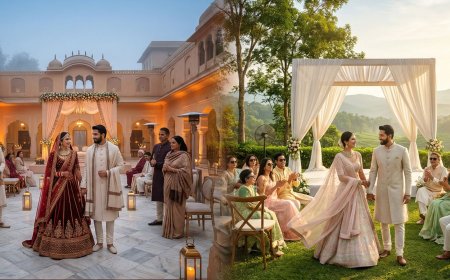
Bhaandvani — the ancient post-wedding tradition of comic performance, Gaali singing, and joyful family teasing in Uttar Pradesh weddings — is the ceremony in which the formality of the wedding dissolves and the family gives itself permission to laugh at everything that just happened. For NRI families from UP across the US, UK, Canada, UAE, and Australia, performing this irreverent and deeply human tradition abroad requires a Dholak, a Gaali expert grandmother, and the courage to be completely ridiculous in front of both families. This guide covers the full Bhaandvani tradition, Gaali song sourcing, Joota Churai protocols, and the ceremony's profound comic meaning.


Bhaandvani — the ancient tradition of post-wedding teasing, comic performance, and irreverent celebration practiced in Uttar Pradesh weddings — is the ceremony in which the formality of the wedding dissolves entirely and the family gives itself permission to laugh at everything that has just happened, everyone who participated in it, and the entire magnificent absurdity of the institution of marriage itself. For NRI families carrying this joyfully subversive tradition across oceans, the Bhaandvani is not a footnote to the wedding — it is the exhale after the held breath, the moment the family discovers it survived and decides to celebrate that survival with maximum comic enthusiasm.
You grew up hearing about the Bhaandvani in the way you hear about all the most delightfully disreputable things — in the laughter of adults who had experienced it, in the slightly scandalised delight of older relatives describing what the women of the family had said at so-and-so's wedding, what the men had been made to endure, what the bride's side had done to the groom's side that had been both completely outrageous and absolutely perfect. The particular freedom of it. The way that people who had been conducting themselves with great dignity and ceremony for three days suddenly had explicit licence to be as ridiculous as possible.
Now it is your family's wedding. You are in a house in Brampton or Birmingham or Brisbane, and the wedding ceremony is over, and the serious part is done, and there is a tradition in your family from Uttar Pradesh that says: now we tease. Now we mock. Now the women sing songs that make the men cover their ears. Now the groom's family discovers what the bride's family really thinks of them, delivered in verse, with percussion.
This guide is for that family. For the NRI household from UP that knows the Bhaandvani is not optional, not inappropriate, and not something that needs to be toned down for a diaspora setting — it is the wedding's most honest moment, and it deserves to be performed with the full comic commitment it has always required.
🌟 DID YOU KNOW?
Bhaandvani [from Hindi Bhaand meaning a comic performer or jester, and the suffix -vani meaning speech or voice] belongs to the ancient Indian tradition of Hasya Rasa [the aesthetic of comedy and laughter, one of the nine Navarasa or fundamental human emotional experiences in classical Indian performing arts theory] — meaning that post-wedding comic performance is not merely a folk custom but a recognised and theorised artistic tradition with roots in Sanskrit aesthetic philosophy dating to the Natyashastra [approximately 200 BCE].
The Gaali [affectionate ritual abusive songs] sung by women during post-wedding celebrations in Uttar Pradesh and across North India are a documented genre of folk poetry with their own compositional conventions, performance traditions, and community of specialist performers — with some Gaalicompositions traced to regional folk traditions over five hundred years old, making post-wedding teasing one of the oldest living genres of North Indian oral literature.
Among NRI families from Uttar Pradesh in the UK, US, Canada, UAE, and Australia, the Bhaandvani and associated post-wedding teasing traditions have proven among the most resilient of all wedding customs in the diaspora — with second and third-generation family members who have never visited UP enthusiastically participating in Gaali singing and comic performances they learned from recordings, family elders, and WhatsApp voice notes, because the tradition's essential spirit — that laughter is the appropriate response to the completion of a wedding — requires no cultural fluency to understand and enjoy.
What Is Bhaandvani?
Bhaandvani [the comic voice, the jester's performance — from the ancient tradition of professional and community comic performance at North Indian wedding celebrations] is a post-wedding tradition from Uttar Pradesh and the broader Awadhi and Bhojpuri cultural regions in which the assembled family and community give themselves formal licence to tease, mock, perform, and celebrate with a freedom that the wedding ceremony's solemnity deliberately withholds. It encompasses several related traditions that together constitute the post-wedding comic repertoire of the UP wedding.
The central element of Bhaandvani is the Gaali [literally "abuse" or "insult" — but in the wedding context, a genre of affectionate, comic, and often ribald folk songs sung by the women of the bride's family directed at the groom's family, and vice versa, with the explicit social licence of the post-wedding celebration making these songs not offensive but obligatory]. Gaali songs are composed in specific metres, follow established compositional conventions, and address specific targets — the groom, his father, his maternal uncle, his brothers — with verses that comment on their appearance, their behaviour, their pretensions, and their general unworthiness to have received such an exceptional bride. The groom's family is expected to receive these songs with good humour, counter-performance, and the occasional equally comic rebuttal.
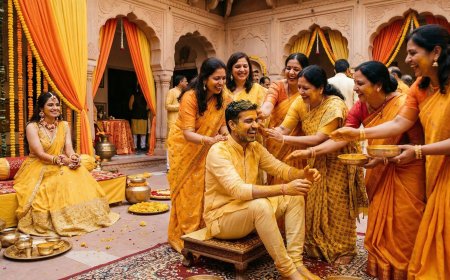
Related traditions include Naach [comic dance performances by family members, often involving cross-dressing or comic costume], Nok-Jhok [playful verbal sparring between the two families], Joota Churai [the ritual stealing of the groom's shoes by the bride's female relatives, who demand a ransom before returning them — one of the most universally practised North Indian wedding games], and the broader tradition of Tamasha [comic spectacle] in which specific family members known for their wit and performance ability are given the floor to entertain the assembled gathering with comic commentary on the just-completed wedding.
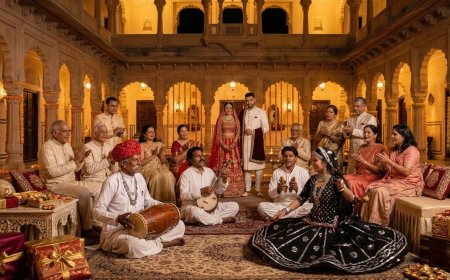
The Dholak [a smaller, lighter drum played by hand] is the primary musical accompaniment of Bhaandvani and Gaali singing — its specific rhythm for post-wedding songs is distinct from the ceremonial dhol rhythms, lighter and more playful, creating the precise sonic atmosphere of celebration that has ended its serious phase and entered its comic one.
The Bhaandvani typically begins on the wedding night after the ceremony concludes and continues through the following morning — the Vidaai [the bride's departure from her family home] is traditionally preceded by a final round of Gaali singing that manages to be simultaneously the most comic and the most emotionally raw performance of the entire sequence.
Community Comparison Table
| Community/State | Local Name | Key Tradition | How NRIs Abroad Adapt It |
|---|---|---|---|
| Uttar Pradesh (Awadhi/Bhojpuri) | Bhaandvani / Gaali | Post-wedding Gaali songs; Dholak accompaniment; Joota Churai; comic performances; Nok-Jhok | Indoor family gathering; Gaali songs taught from recordings; Dholak sourced; Joota Churai maintained |
| Punjabi | Joota Churai / Boliyan | Shoe-stealing tradition; Boliyan [teasing folk songs]; comic exchanges between families | Joota Churai maintained with cash ransom; Boliyan sung; Dholak or recorded music |
| Rajasthani | Joota Churai / Gaali Geet | Shoe-stealing; teasing songs specific to Rajasthani tradition; women's comic performances | Rajasthani Gaali songs played; Joota Churai with negotiated ransom; family performances |
| Gujarati | Joota Churai / Comic games | Shoe-stealing with monetary ransom; comic games between families; Garba sometimes follows | Joota Churai maintained; monetary ransom negotiated; family games organised |
| Marathi | Joota Churai / Nok-Jhok** | Shoe-stealing tradition; specific Marathi teasing songs; playful family exchanges | Joota Churai maintained; Marathi teasing songs played; family comic performances |
| Bengali (Hindu) | Aashirbaad teasing / Nok-Jhok | Post-wedding teasing exchanges; comic songs; specific Bengali wit tradition | Bengali comic songs played; family teasing maintained; community performances |
| Bihari / Bhojpuri | Gaali / Bhaandvani | Strongest Gaali tradition; most elaborate post-wedding comic performance; Dholak central | Bhojpuri Gaali recordings shared; Dholak sourced; family performances maintained |
| Himachali / Garhwali | Post-wedding celebration | Community comic performances; Pahadi folk humour; teasing songs | Pahadi community members invited; folk humour maintained; community performances |
| Tamil (Hindu) | Nalangu / Comic games** | Post-wedding games between bride and groom; family teasing; playful competitions | Nalangu games adapted; family teasing maintained; community invited |
| Kashmiri Pandit | Post-wedding teasing | Specific Kashmiri Pandit comic tradition; community performances | Kashmiri community members invited; community humour maintained |
The Meaning Behind the Ritual
In the classical Indian aesthetic theory of Navarasa [the nine fundamental emotional experiences that art and ritual must address], Hasya [comedy and laughter] holds a position of equal dignity alongside Shringar [romantic love], Karuna[pathos], and Veer [heroism]. The inclusion of comic performance in the wedding sequence is not a concession to the family's need to let off steam — it is a theological acknowledgement that a ceremony addressed only to the sacred and the serious is an incomplete ceremony.
The Gaali tradition in particular encodes a profound social wisdom. By giving the women of the bride's family formal licence to mock the groom's family — and by requiring the groom's family to receive this mockery with good humour — the Bhaandvani performs a specific social function: it tests and demonstrates the new alliance's resilience. A family that can laugh at itself, that can receive comic criticism with grace, that can engage in playful combat without genuine offence, is a family that will be able to navigate the inevitable difficulties of an extended family relationship with flexibility and warmth. The Bhaandvani is not merely entertainment — it is an audition for the capacity to endure each other joyfully.
The Joota Churai [shoe-stealing] tradition is the most universally understood element of this comic complex — and its meaning is equally precise. The groom, at the moment of maximum ceremonial dignity, finds himself helpless before the bride's female relatives who have stolen his shoes and will not return them without payment. The message is clear: you may have married our daughter, but you are not the most powerful person in this room. You never were. The women of this family have your shoes.
Bhaandvani says: we have been serious long enough — and a family that can laugh together at the end of a wedding is a family that will stay together through everything that comes after.
Doing Bhaandvani Abroad: The Practical Reality
Bhaandvani is one of the most intimate and family-dependent of all wedding traditions — it cannot be hired out, cannot be conducted by professionals, and its quality depends entirely on the willingness of family members to be ridiculous in public. The practical challenge for NRI families is not sourcing items but sourcing courage — and creating the protected, intimate space in which that courage becomes possible.
The venue must be domestic or quasi-domestic — Bhaandvani absolutely cannot happen in a banquet hall in the formal wedding reception configuration. The post-wedding Bhaandvani and Gaali singing require a space in which people are sitting close together, informally, with the particular atmosphere of a gathering that has shed its public face and is now among its own. The family home is ideal. A close relative's home is the appropriate alternative. If a venue must be used, choose the smallest, most intimate space available and reconfigure it entirely from the reception layout — floor seating on durries [cotton rugs] or low chairs, the Dholak at the centre, no stage, no formal seating arrangement, no separation between performer and audience because in Bhaandvani everyone is simultaneously both.
The Dholak is the ceremony's essential instrument and must be sourced in advance. Unlike the ceremonial Dhol, the Dholak is a smaller instrument that can be played while seated and that produces the specific lighter, more playful rhythm appropriate to Gaali singing and post-wedding celebration music. Indian music stores in all major diaspora cities carry Dholaks — in London, Southall's musical instrument stores carry Dholaks year-round. In Toronto, South Asian music stores in Brampton stock them. In Houston, Indian music suppliers near Hillcroft Avenue carry Dholaks. In Sydney, Indian music stores in the Parramatta area have them available. Order or purchase at minimum two weeks before the wedding. Ideally, identify a family member who can play — a Dholak played by a family member creates a fundamentally different atmosphere from one played by a hired musician.
The Gaali songs are the most culturally specific element and require the most preparation for NRI families whose younger members may not know the traditional verses. The most reliable approach is to ask the family's most senior women — grandmothers, great-aunts, the family's acknowledged expert in the Gaali tradition — to record themselves singing their favourite Gaali verses on voice notes and share these recordings with the family at least three weeks before the wedding. These recordings serve both as teaching material and as the specific family versions of the songs that carry the ceremony's continuity. Share recordings in the family WhatsApp group with an explicit invitation to learn at least the chorus lines. Even partial participation — people who know only the refrain joining in while the expert leads the verses — creates the communal singing atmosphere the Gaali requires.
For NRI families where no one knows the traditional Gaali verses, high-quality recordings of traditional UP and Bhojpuri Gaali and Bhaandvani songs are available on streaming platforms. A playlist of authentic recordings, played at the gathering while family members who do know some verses lead the room, creates a workable foundation. The spirit matters more than the technical accuracy.
The Joota Churai requires no sourcing beyond the groom's shoes and a family agreement on the ransom amount — which should be significant enough to be worth negotiating over but not so significant that it creates genuine tension. The negotiation itself is the ceremony, and the longer and more theatrical the negotiation the better.
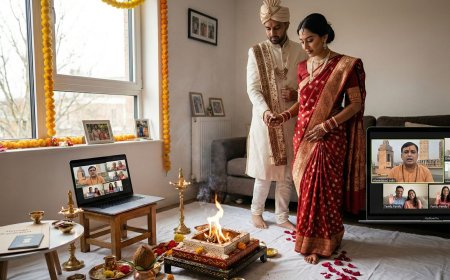
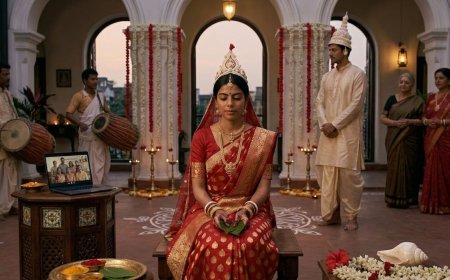
For India family on video call, the Bhaandvani is one of the most enjoyable events to share in real time because its energy is entirely communicated through sound — the Dholak, the singing, the laughter. Keep the India call open throughout and invite India family members to contribute their own Gaali verses through the speaker, which invariably produces the gathering's most enthusiastically received performances.
Doing Bhaandvani as a Destination in India
For NRI families returning to Uttar Pradesh for the wedding, Lucknow is the cultural capital of the Awadhi wedding tradition — its refinement of the comic arts, its tradition of Lakhnavī wit and sophisticated humour, and its established wedding culture make it the most complete setting for a Bhaandvani with full cultural authenticity.
Varanasi carries a different and equally powerful Bhaandvani tradition — the city's ancient relationship with performance arts, its Bhojpuri cultural roots, and the particular quality of its community life create a post-wedding celebration context unlike anywhere else in India. For NRI families with ancestral roots in rural UP, returning to the family village for the post-wedding Bhaandvani — with the community's acknowledged Gaali experts, the family's own Dholak player, and the neighbourhood women who have been attending weddings together for forty years — is the most complete version of the tradition available.
When coordinating from abroad, brief your India-based relatives about which family members are the acknowledged Gaali experts and ensure they are specifically invited to lead the post-wedding session. For non-Indian guests attending a destination Bhaandvani in India, a brief explanation of the Gaali tradition — that these are not genuinely abusive but formally licensed comic songs whose rudeness is a sign of affection and social intimacy — will transform puzzlement into delighted participation.
What You Need: Bhaandvani Checklist
Ritual and Event Items A Dholak [sourced minimum two weeks before], Gaali song recordings shared with family minimum three weeks before, printed Gaali lyrics for family members who want them, floor seating — durries, cushions, or low chairs arranged in a circle or informal cluster, the groom's shoes [hidden in advance by the bride's female relatives for Joota Churai], a negotiated Joota Churai ransom amount agreed in advance between the couple and their respective families, refreshments appropriate to a long informal gathering [chai, nimbu pani, snacks], and a general agreement between both families that the Bhaandvani is a protected space in which comic licence applies to everyone present.
People Required The family's acknowledged Gaali expert — the grandmother, great-aunt, or senior woman who knows the traditional verses and has the performance confidence to lead them, a Dholak player [family member preferred, hired musician as alternative], a family MC or natural comic who can manage the Joota Churai negotiation theatrically, the bride's female relatives for the Joota Churai execution, both families assembled in the same intimate space, and a video call coordinator for India family — the Bhaandvani is one ceremony that benefits from India family participation through the speaker.
Preparation Steps Identify the family's Gaali expert minimum one month before the wedding and brief them on their central role. Request Gaali recordings from family elders three weeks before. Share recordings in family WhatsApp group three weeks before. Source Dholak two weeks before. Identify and brief Joota Churai participants one week before. Agree on Joota Churai ransom amount one week before. Set up intimate venue space the morning of. Test India video call audio the day before.
NRI.Wedding's planning checklists and vendor directories connect NRI families from UP and North India to resources across the UK, US, Canada, UAE, and Australia for all post-wedding celebration requirements.
5 Questions NRI Couples Always Ask About Bhaandvani
How explicit can the Gaali songs be at a mixed gathering with non-Indian guests?
The Gaali tradition exists on a spectrum from the gently teasing to the robustly ribald, and the appropriate register depends entirely on the specific gathering. Traditional Gaali songs at village weddings in UP can be extremely explicit — this is part of their ancient function as a space in which normal social propriety is formally suspended. For NRI gatherings with mixed cultural backgrounds, non-Indian guests, and varying comfort levels, the most effective approach is to have the Gaali expert lead the room in the milder verses first, gauge the atmosphere, and escalate only to the degree that the specific gathering's energy supports. The most important thing is that the Gaali songs feel genuinely irreverent — sanitised to the point of blandness defeats the ceremony's entire purpose. Find the register that makes the room laugh rather than cringe, and stay there.
What if the groom's family is not familiar with the Gaali tradition and takes offence?
This is the primary practical risk of the Bhaandvani for cross-regional NRI families, and it must be managed through advance communication rather than hoping for the best. Before the wedding, the couple should have an explicit conversation with both families about the Bhaandvani tradition — explaining that the Gaali songs are a formal, licensed, ancient tradition of affectionate teasing and not genuine criticism, that receiving them with good humour is considered a sign of family quality rather than submission, and that the bride's family's most accomplished Gaali singer doing her best work is a compliment to the groom's family rather than an insult. If the groom's family comes from a tradition without a Gaali equivalent, brief them specifically on what to expect and frame their good-humoured participation as a gift they are giving the bride's family.
Can the Joota Churai ransom be a genuine negotiation or should the amount be fixed in advance?
The best Joota Churai is the one in which the ransom amount is not fixed in advance but negotiated theatrically in the moment — with the bride's female relatives opening at an extravagant figure, the groom's family countering with an expression of wounded dignity, the negotiation proceeding through several rounds of comic outrage and counter-offer, and the final agreed amount being less important than the performance of getting there. Fix the floor amount in advance — agree privately that the negotiation will not go below a certain reasonable figure — but leave the ceiling open for theatrical escalation. The groom's visible discomfort during the negotiation, and his family's theatrical attempt to rescue him, is the ceremony's entertainment. Let it breathe.
How do we find someone to teach the younger generation Gaali songs before the wedding?
The most direct route is the family's own elders — every UP family has at least one woman who knows the Gaali tradition and has been waiting for someone to ask her to share it. The act of asking her to teach the younger family members the verses before the wedding is itself a ceremony of transmission that most elder women receive with great pleasure. If your family's elders are in India, a series of video calls in the weeks before the wedding — with the elder singing verses and the diaspora cousins learning them — creates the intergenerational connection that the Bhaandvani is designed to celebrate. The slightly imperfect diaspora versions of the Gaali songs, learned from voice notes and video calls, often produce the most genuinely funny performances of the entire ceremony because the combination of the ancient verses and the visible effort of the learners is irresistible.
Is there a specific point in the wedding schedule when the Bhaandvani should happen?
The Bhaandvani and Gaali singing traditionally begin after the wedding ceremony concludes — on the wedding night, continuing through the morning, with the Joota Churai specifically timed for the moment after the pheras when the groom is still at the wedding venue and before the couple departs. For NRI weddings with compressed timelines, the most practical placement is the post-ceremony family gathering — after the formal reception has concluded, when the hired venue has been vacated and the family has gathered at the family home for the intimate post-wedding continuation. This transition from the formal reception to the home gathering is the moment the Bhaandvani atmosphere becomes possible, because the public face of the wedding has been completed and the family is now among itself.
The Emotional Angle
The laughter of the Bhaandvani is not simple laughter. It is the laughter of people who have been holding something very tightly for a very long time and have just been given permission to put it down.
Three days of ceremony. Three days of getting everything right, of being on your best behaviour, of managing the seating chart and the caterer and the pandit's timing and the relatives who don't get along and the outfit changes and the family from four different countries who all needed to be received with the correct warmth in the correct order. Three days of being watched. Three days of performing your family at its most dignified and composed for the largest audience it has had in years.
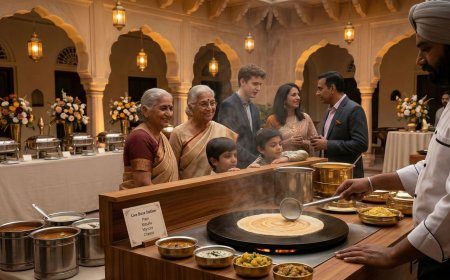
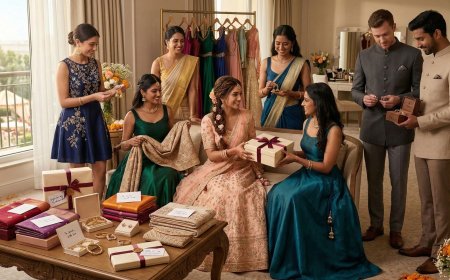
And now it is over. The pheras are done. The sindoor is applied. The mangalsutra is on. The photographs have been taken. And someone has stolen the groom's shoes and is refusing to return them without a ransom that started at an amount that made everyone gasp, and your grandmother — your grandmother, who has been the most dignified person in every room she has entered for the past three days — is singing a Gaali verse about the groom's family that is making your mother cover her face with her dupatta while her shoulders shake with laughter.
For NRI families, the Bhaandvani is the moment the wedding becomes completely real. Not the pheras — those were real too, but in a sacred, held-breath way. The Bhaandvani is real in the way that falling asleep laughing is real. In the way that your whole family being ridiculous together is real. In the way that your grandmother knowing exactly how inappropriate to be, and being it with total commitment, and bringing the entire room to tears of laughter, is the realest thing you have seen all week.
This is what survived the immigration. This laughter. This grandmother. These songs.
A Moment to Smile
At a post-wedding gathering in Birmingham three years ago, the Joota Churai had been executed with military precision by the bride's female cousins — the groom's shoes secured before he had fully registered what was happening, the ransom negotiations opened at a figure that caused the groom's father to make a sound that was not quite a word.
The negotiation proceeded for forty-five minutes. This was entirely because the bride's eight-year-old niece, Riya, had appointed herself lead negotiator and was conducting the proceedings with a seriousness and attention to detail that no one had anticipated from someone who had only recently learned to tie her own shoelaces.
Every counter-offer from the groom's family was met with Riya's patient explanation of why that figure was insufficient, with specific reference to the qualities of her aunt that she felt had been undervalued in the current offer. The groom's family, faced with an eight-year-old negotiator of extraordinary tenacity, found themselves repeatedly outmanoeuvred.
The final ransom was three times the floor amount anyone had privately agreed on. Riya accepted the settlement with the grace of someone who knew she could have held out longer but was choosing generosity. The shoes were returned. The groom wore them in a state of mild shock.
Riya has been asked to lead every subsequent family negotiation. She has not lost one yet.
Quotes From the Diaspora
"My dadi sang Gaali at my wedding in Mississauga. She had been saving them up for thirty years in Canada — waiting for someone in the family to get married so she could deploy them. When she began the first verse, I watched my husband's uncle's face go through five distinct expressions in about three seconds. My dadi finished the verse and looked at him with the expression of someone who knows exactly what she has just done and has no regrets. He started laughing. Everyone started laughing. That was the moment I knew the two families were going to be fine." — Priya Mishra, UP bride, originally from Lucknow, now in Mississauga
"My son married a girl from a Gujarati family. We are from Varanasi. The bride's family had never encountered a proper Bhojpuri Gaali session. I watched their faces during the first song — the uncertainty giving way to the realisation that this was deliberate and licensed, then to genuine laughter. By the third song, the bride's mother — who had spent the entire wedding being impeccably composed — was laughing so hard she was leaning on her sister. That is what the Gaali does. It finds the laughter in people who thought they had used it all up." — Sunita Shukla, UP mother of the groom, originally from Varanasi, now in Birmingham
"We did the Bhaandvani in our garden in Houston. My nani joined on the video call from Lucknow and sang two Gaali verses through the speaker at the assembled groom's family in Texas who had never heard anything like them. The groom's father — a very dignified man from a very proper family — listened to both verses and then said, in English: I don't understand all the words but I understand the spirit and I accept it completely. My nani declared him the best Samdhi she had ever encountered. He has been dining on that compliment ever since." — Ananya Tripathi, UP bride, originally from Lucknow, now in Houston
Your Laughter Travels With You
The Bhaandvani is the ceremony that completes the wedding — not the pheras, which begin the marriage, but this: the post-ceremony gathering in which the family discovers it is still itself, still ridiculous, still capable of making each other laugh until the dupatta has to be deployed as a face-covering. For NRI families from Uttar Pradesh performing this ancient comic tradition in diaspora homes across the world, the Gaali songs travel as easily as the sindoor and the samagri, because laughter is the most portable thing a family owns.
NRI.Wedding supports families from UP and North India across the UK, US, Canada, UAE, and Australia with planning checklists for post-wedding celebrations, vendor directories for sourcing Dholaks and traditional instruments in diaspora cities, and event planning resources for the full wedding week including the intimate post-ceremony family gatherings where the Bhaandvani finds its natural home.
Source your Dholak. Find your Gaali expert. Hide the groom's shoes in advance.
Let your grandmother sing what she has been saving for thirty years — the wedding is not complete until she does.
This article explores the Bhaandvani and Gaali traditions of Uttar Pradesh post-wedding celebrations — including Gaali songs, Joota Churai, Dholak music, and Nok-Jhok comic traditions — alongside related post-wedding teasing traditions from Punjabi, Bihari, Rajasthani, and Bengali communities, with practical planning guidance for NRI families in the US, UK, Canada, UAE, and Australia.
What's Your Reaction?
 Like
0
Like
0
 Dislike
0
Dislike
0
 Love
0
Love
0
 Funny
0
Funny
0
 Angry
0
Angry
0
 Sad
0
Sad
0
 Wow
0
Wow
0