















































Many Diyas, Many Stories: India's Regional Diwali Traditions and What They Mean for NRIs Abroad
Diwali is not one festival — it is many, each carrying distinct rituals, deities, and cultural meaning across India's regions. From Gujarat's Chopda Pujan and Bengal's Kali Puja to Tamil Nadu's Naraka Chaturdashi and Rajasthan's merchant traditions, this guide breaks down how Diwali is celebrated differently across communities and what NRI families in the US, UK, Canada, UAE, and Australia need to know to honour their specific regional heritage authentically — whether celebrating abroad or returning to India for the festival.


Diwali is not one festival — it is many, stitched together by a shared love of light and a continent of different stories. For NRI families carrying regional Diwali traditions across oceans, understanding the full mosaic of how India celebrates is both a cultural education and a deeply personal homecoming.
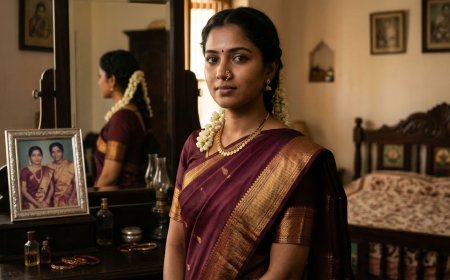
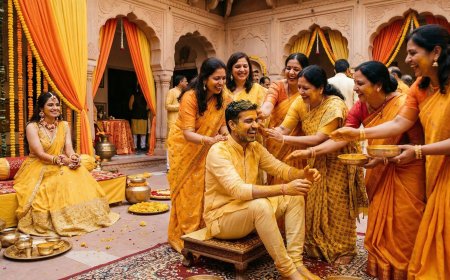
You grew up with one version of Diwali. Maybe it was the smell of mustard oil warming before sunrise, your mother pulling you out of bed in the dark for the ritual bath before the neighbours woke up. Or maybe it was the sound of your father's shop shutters rolling up after the puja, the ledger freshly blessed and the year formally begun. Or perhaps it was the particular way your grandmother arranged the diyas — never randomly, always in a pattern she had learned from her own grandmother, in a village you have never visited but somehow carry inside you.
Now you are in Houston or Harrow or Hamilton, and Diwali arrives each year with the same emotional weight — and a new complication. Your children ask why your Diwali looks different from their friend's family's celebration. Your non-Indian partner asks why some people celebrate on one night and others on a different day entirely. And somewhere in you, you realise that what you thought was simply Diwali is actually your family's particular thread within an extraordinarily complex and beautiful tapestry.
This guide pulls that tapestry open. For NRI families from every region of India, this is the article you send to your partner, your curious children, and your non-Indian friends who want to genuinely understand what the festival of lights actually is — across all the different lives it illuminates.
🌟 DID YOU KNOW?
Diwali is not a single-night festival anywhere in India — it spans five days on the Hindu calendar, from Dhanteras [the auspicious day of wealth] to Bhai Dooj [the celebration of the sibling bond], with each day carrying distinct rituals that vary dramatically by region, community, and even individual family tradition.
In West Bengal, the main Diwali night — Amavasya [the new moon night] — is dedicated not to Goddess Lakshmi but to Goddess Kali [the fierce deity of time and transformation], making it one of the most striking examples of how a single festival date carries completely different theological meaning depending on where in India your family is from.
South India's major light festival, Karthigai Deepam, falls approximately three to four weeks after Diwali and culminates in the lighting of an enormous beacon fire atop the hill at Thiruvannamalai in Tamil Nadu — visible for miles — representing one of the most dramatic light rituals on the Indian subcontinent, yet largely unknown to North Indian communities celebrating Diwali on an entirely different calendar logic.
What Is Diwali — Really?
Diwali [derived from the Sanskrit Deepavali, meaning "row of lights"] is a five-day Hindu festival observed on the Amavasya [new moon] of the month of Kartik in the Hindu lunar calendar. It is the most widely celebrated festival across the Indian subcontinent — and yet to describe it as a single unified event is to misunderstand it entirely. What Diwali means, which deities are worshipped, which rituals are performed, and even which day is considered the most sacred differs profoundly across India's regions, communities, and traditions.
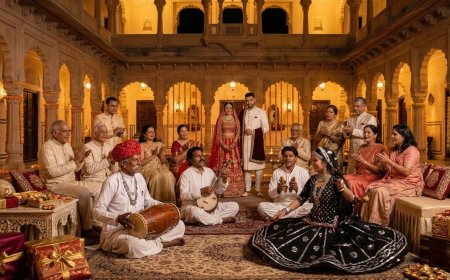
In the broadest terms, the five days proceed as follows. Dhanteras [Day 1] marks the auspicious purchase of gold, silver, or new utensils — an invitation to Goddess Lakshmi and Lord Dhanvantari [deity of health and medicine] to enter the home. Naraka Chaturdashi or Roop Chaudas [Day 2] involves a ritual oil bath at dawn, believed to cleanse the body of spiritual impurity. Lakshmi Puja or Amavasya [Day 3] is the main Diwali night — though what is worshipped on this night varies enormously, as we will explore. Govardhan Puja or Annakut [Day 4] celebrates Lord Krishna's lifting of Govardhan Hill, with devotees creating elaborate food offerings in gratitude to nature's abundance. And Bhai Dooj [Day 5] celebrates the sacred bond between siblings, with sisters praying for their brothers' wellbeing through the application of a tilak [sacred mark on the forehead].
The reason the festival feels different depending on which Indian household you walk into is not variation for variation's sake. It is because India is not one civilisation — it is dozens, woven into a single national identity. Each regional tradition represents thousands of years of distinct mythology, agricultural rhythm, and community memory.
Community Comparison Table
| Community/State | Primary Diwali Night Deity | Signature Ritual | How NRIs Abroad Adapt It |
|---|---|---|---|
| North Indian (General Hindu) | Goddess Lakshmi | Lakshmi Puja with diyas, rangoli, fireworks; home cleaning ritual | Community Lakshmi Puja at temples; home diyas with LED alternatives at no-firework buildings |
| Gujarati | Goddess Lakshmi + Chopda Pujan | Accounting book worship; Bestu Varas (New Year) the following day | Laptops and digital accounts blessed; Gujarati New Year celebrations at community sabha halls |
| Bengali | Goddess Kali | Kali Puja with large pandals, night vigil, offerings; Bhai Phonta follows | Community Kali Puja at Bengali cultural associations; pandals recreated in community halls in London and Toronto |
| Tamil | Naraka Chaturdashi focus | Pre-dawn oil bath ritual; bursting crackers at sunrise; Karthigai Deepam celebrated separately | Oil bath tradition maintained at home; crackers replaced by sparklers in gardens; Karthigai Deepam observed at Tamil temples |
| Maharashtrian | Goddess Lakshmi + Balipratipada | Diwali Padwa (day after Diwali) celebrated as new year; wife applies tilak to husband | Padwa celebrated with family gatherings; tilak ritual maintained as intimate family tradition |
| Rajasthani / Marwari | Goddess Lakshmi + Lord Kuber | Chopda Pujan with strong merchant community emphasis; Kuber puja added | Community mass puja at Rajasthani sabha halls; merchant families bless business accounts together |
| Punjabi | Goddess Lakshmi + Bandi Chhor Divas | Sikhs observe Bandi Chhor Divas commemorating Guru Hargobind's release from prison | Gurdwara celebrations central; Diwali and Bandi Chhor Divas observed together at local gurdwaras abroad |
| Goan | Naraka Chaturdashi focus | Burning of Narakasura effigies at dawn; scented oil baths; lamps at doorways | Effigy burning adapted to community bonfires; oil bath and lamp rituals maintained at home |
| Kashmiri Pandit | Goddess Lakshmi + ancestor remembrance | Strong ancestral dimension; oil lamps lit for departed souls alongside Lakshmi Puja | Ancestor remembrance maintained through home rituals; community pujas at Kashmiri sabha centres |
| Himachali / Garhwali / Kumaoni | Goddess Lakshmi + local deities | Some communities observe Budhi Diwali (Old Diwali) a month later per local calendar | Budhi Diwali maintained in diaspora community gatherings; UK and Canadian Pahadi associations coordinate celebrations |
The Meaning Behind the Festival
At its philosophical core, Diwali is not about fireworks or sweets or even lights — it is about the ancient and enduring human conviction that light is stronger than darkness, and that this conviction must be renewed every year through deliberate, communal, physical act. The rows of diyas [oil lamps] are not decorative. They are a declaration.
Every regional variation of Diwali, despite its surface differences, returns to this same declaration. Whether it is Goddess Kali defeating the demon of ego in Bengal, Lord Rama returning from exile to Ayodhya in the north, Lord Krishna lifting Govardhan Hill to protect his community in Mathura, or Gujarati merchants consecrating their accounts under divine witness — each story is a different version of the same truth: that what we protect, what we illuminate, and what we choose to begin anew at this moment of the year defines who we are.
The oil bath at dawn is not hygiene — it is the physical enactment of spiritual cleansing, the body made ready for a new cycle. The new ledger opened with a prayer is not accounting — it is integrity made visible. The sister's tilak on her brother's forehead is not affection alone — it is a covenant of protection spoken across the threshold of one year into the next.
Diwali, in all its forms, is India's annual promise to itself: that no matter what the year brought, light is chosen again.
Celebrating Diwali Abroad: The Practical Reality
The most honest thing to say about celebrating Diwali abroad is this: it requires significantly more intention than it does in India, and that intention is itself a form of devotion.
Fireworks and crackers are the first practical reality to address. In the UK, Australia, and Canada, private firework use is either restricted or entirely prohibited in residential areas. In the US, regulations vary by state and county — Houston and parts of Texas are more permissive than California or New York. The practical solution is community: most major diaspora cities host organised Diwali fireworks events through temples, cultural associations, or local councils. In London, the Diwali celebrations on Trafalgar Square and in Leicester's Golden Mile have become landmark community events. In Toronto, the Diwali in the Park events across Scarborough and Brampton draw thousands. Attend these — they replace the street-level cracker experience with something larger and, in many ways, more moving.
Sourcing puja items follows a familiar diaspora pattern. In London, Wembley's Ealing Road and Southall's Lady Margaret Road are transformed in the weeks before Diwali — every shop stocked with diyas, rangoli colours, puja thalis, incense, and regional speciality items. In Toronto, Gerrard Street East and the shops of Peel Region in Brampton carry full Diwali supplies. In Houston, Hillcroft Avenue is your one-stop destination. In Sydney, Harris Park in Parramatta has multiple suppliers. In Dubai, Meena Bazaar and Little India in Karama are fully stocked from October onward. For specific regional items — Bengali Kali Puja flowers, Gujarati chopda ledgers, South Indian sesame oil for the ritual bath — ask shopkeepers specifically, as these items are stocked but not always displayed prominently.
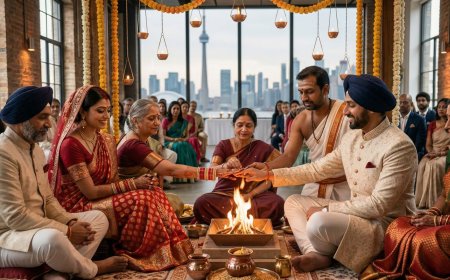
The pandit question depends entirely on which regional tradition your family follows. A Bengali family needs a pandit familiar with Kali Puja rituals; a Gujarati family needs one who knows the Chopda Pujan sequence; a South Indian family celebrating Naraka Chaturdashi needs someone familiar with the specific dawn-ritual customs. Do not book a generic pandit and hope for the best. NRI.Wedding's pandit directory organises priests by regional tradition and community — use it, and book a minimum of two months before Diwali, as this is the single most booked period of the year for community priests.
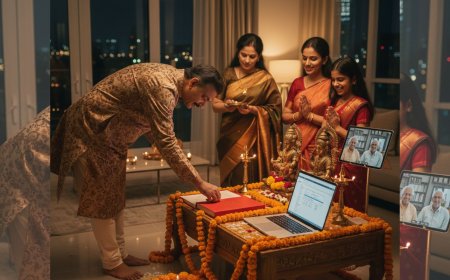
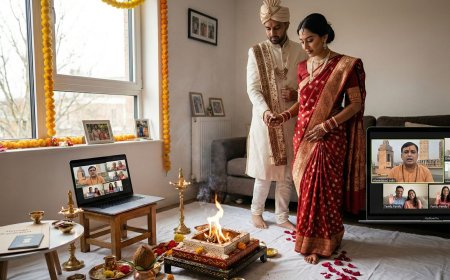
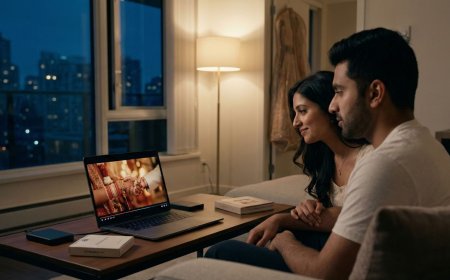
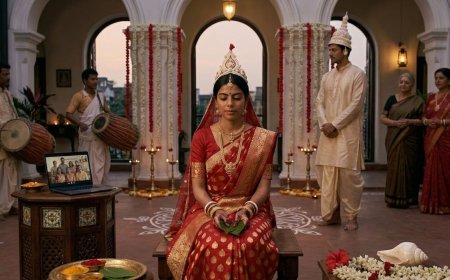
For video calls with India, the time zone calculation is essential. Diwali's main Lakshmi Puja muhurat is calculated annually by the Panchang and typically falls in the evening hours IST — usually between 6:00 p.m. and 8:00 p.m. IST. This translates to early morning in Toronto (approximately 8:30–10:30 a.m. EST), afternoon in London (approximately 12:30–2:30 p.m. GMT), and late evening in Sydney (approximately 11:30 p.m.–1:30 a.m. AEDT). Plan your own puja timing to align with an hour when both you and your India family can be present simultaneously — even across screens, performing the aarti together in real time is worth every scheduling effort.
Celebrating Diwali as a Destination Festival in India
For NRI families returning to India for Diwali — and this is one of the most emotionally rewarding decisions you can make — the destination choice should follow your regional tradition rather than a generic "best Diwali city" list.
If your family is from Varanasi or the Hindi-heartland tradition, the ghats of the holy city on Diwali night are simply one of the most extraordinary human spectacles on earth — thousands of diyas floating on the Ganga, the entire riverbank illuminated. Jaipur and Jodhpur offer spectacular Rajasthani Diwali atmospheres for Marwari and Rajput families. Ahmedabad's old city pol houses are the heartland of Chopda Pujan culture for Gujarati families, with Manek Chowk transforming into a luminous open-air celebration. Kolkata's Kali Puja is an experience entirely its own — the city's enormous pandals, the night vigil, the collective devotion drawing millions into the streets. For South Indian families, Thiruvannamalai's Karthigai Deepam, timed differently from Diwali proper but equally magnificent, offers a profound and distinctly Tamil encounter with sacred fire.
For non-Indian partners and guests accompanying NRI families on Diwali trips to India, prepare a simple cultural briefing document explaining which regional tradition your family follows and what each ritual means — most international guests find the depth and variety of Diwali utterly surprising and deeply moving.
What You Need: Diwali Checklist
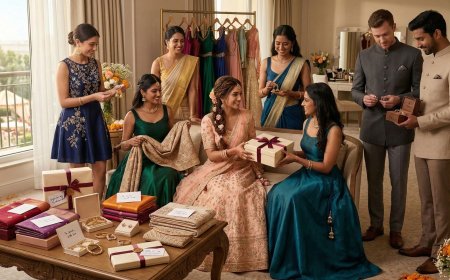
Ritual Items Diyas (clay oil lamps, minimum two dozen), ghee or sesame oil for lamps, cotton wicks, rangoli colours or flower petals, a puja thali [ritual plate] with kumkum, turmeric, rice grains, incense, camphor, and a small bell, fresh flowers (marigold and rose), coconut, sweets for prasad, a new pen and new notebook or ledger for Gujarati families, sesame or mustard oil for the Naraka Chaturdashi bath for South Indian and North Indian families, and idols or framed images of the relevant deity for your regional tradition.
People Required All family members for the main puja, a pandit familiar with your regional tradition (book early), an elder to lead the aarti if no pandit is available, siblings for Bhai Dooj or Bhai Phonta rituals, and India-based family connected via a dedicated video call device for the muhurat moment.
Preparation Steps Clean the home thoroughly two days before Diwali — this is not optional, it is part of the ritual preparation. Source all puja items one week before. Confirm the muhurat timing for your city using a reliable Panchang app. Prepare sweets and food offerings the day before. Set up a stable, dedicated video call device angled toward your altar for the India connection. Brief non-Indian family members or partners with a simple written guide to the ritual sequence.
NRI.Wedding's Diwali vendor directory, regional pandit network, and cultural planning checklists are available for families across the UK, US, Canada, UAE, and Australia — explore our directory to connect with verified professionals in your city.
5 Questions NRI Families Always Ask About Diwali Abroad
Our building doesn't allow diyas or open flames. How do we maintain the ritual authentically?
The diya is the symbol, but the intention behind it is the ritual. Many NRI families in apartments with strict no-flame policies use high-quality LED diya lamps that replicate the visual warmth of an oil flame convincingly. For the puja itself, a single small ghee lamp in a contained, ventilated space — such as a bathroom counter or near an open window — is usually manageable within most building regulations. Speak to your building management in advance; many are more accommodating than you expect once you explain the cultural significance. The ritual does not require a hundred diyas to be sacred — it requires your presence and intention.
My partner is not Indian and has never experienced Diwali. How do I make them feel included rather than just observed?
Give them a role. Non-Indian partners who are handed a task — lighting a specific diya, placing flowers on the altar, distributing prasad — feel included rather than observed. Prepare a simple written guide explaining what each ritual means as it happens. Most people, regardless of background, respond deeply to the Diwali story because its core message — that light defeats darkness, that a new beginning is always possible — is universal. Your partner does not need to share the theology to share the meaning.
Our family follows a regional tradition that most local temples don't cater to. What do we do?
This is the most common practical frustration for NRI families from less-represented communities — Pahadi families, Goan families, specific Bengali or Tamil traditions. The solution is a combination of a qualified community pandit found through personal referral networks or NRI.Wedding's directory, and a home-centred celebration rather than a temple-dependent one. Many of the most beautiful NRI Diwali celebrations happen entirely at home, with a pandit who has been briefed specifically on your family's tradition. Community cultural associations — Himachali sabhas, Goan associations, Bengali cultural societies — are also invaluable for finding community members who can co-celebrate.
How do we coordinate the puja timing with family in India when we are so many time zones apart?
Calculate the IST muhurat first, then work backward to your local time zone. Share the full ritual timeline with your India family at least a week before Diwali so they know exactly when to be assembled and ready. Use a dedicated device — not a phone that will receive other calls — set up on a stable stand with a clear view of your altar. The moment of aarti is the one that must be shared in real time; everything else can be slightly asynchronous. And accept that imperfection is part of the diaspora experience — a grandmother joining from Chennai on a slightly buffering screen, her diya visible through the pixels, is not a lesser version of the real thing. It is the real thing, adapted.
Should we celebrate Diwali on the same night as India, or adjust for our local time zone?
The muhurat — the auspicious time for Lakshmi Puja — is calculated astronomically and is specific to a geographic location. Technically, the correct approach is to use a Panchang muhurat calculated for your actual city rather than IST. Many diaspora pandits and Panchang apps now provide location-specific muhurats. However, many NRI families choose to align their celebration with the IST timing so they can observe the moment simultaneously with family in India. Both approaches are spiritually valid — the key is that the choice is made consciously and with the same reverence you would bring to any sacred timing.
The Emotional Angle
Here is what nobody tells you about celebrating Diwali abroad: it gets more meaningful, not less, with every passing year. Not because it becomes easier — it doesn't — but because the effort accumulates into something that begins to feel like an inheritance you are actively building, not passively receiving.
Your parents brought one version of Diwali to their adopted country. You are carrying it further, and adding to it — the Diwali cookbook your children help you make, the specific way you arrange the diyas that has become your family's arrangement, the phone call to your aunt in Lucknow at the exact moment the aarti begins. These are not lesser substitutes for the Diwali you might have had in India. They are a new chapter of a very old story.
What NRI families understand, in a way that is hard to articulate to anyone who has not lived it, is that the distance makes the ritual more conscious. When you have to source the diyas deliberately, calculate the muhurat carefully, and explain to your child's school why the morning after Diwali is a significant day — you are not going through the motions. You are choosing this, actively, every single year.
And that choosing — deliberate, determined, sometimes exhausting — is itself a form of love that the festival has never required before, and that it has never been more worthy of.
A Moment to Smile
At a Diwali celebration in Melbourne three years ago, a family from two different regional backgrounds — the mother Gujarati, the father Bengali — had decided to celebrate both Lakshmi Puja and Kali Puja on the same night in their living room. Two separate altars, two separate pandits found through the same community network, and an agreement that each tradition would have equal time.
What they had not accounted for was that both pandits, upon meeting each other, immediately became deeply engaged in a theological discussion about the respective merits of Lakshmi versus Kali that lasted forty-five minutes and significantly delayed the muhurat. The children, aged seven and nine, used the time to arrange all the diyas in the shape of a large letter M — for Melbourne, they said. The grandmother watching on video call from Kolkata declared it the most beautiful rangoli she had ever seen. Both pujas eventually proceeded, both deities were duly honoured, and the family ate an extraordinary spread of both Gujarati and Bengali sweets well past midnight. Nobody agreed on whose tradition was more correct. Everyone agreed it was the best Diwali they had ever had.
Quotes From the Diaspora
"I am Gujarati and my husband is from Bengal. For the first three years of our marriage, we argued every October about whose Diwali we were doing. By the fourth year, we stopped arguing and started doing both. Now our daughters think everyone worships both Lakshmi and Kali on the same night. We have decided not to correct them." — Rima Shah-Banerjee, Gujarati-Bengali household, Mississauga
"My son asked me why we take a bath before sunrise on Diwali when everyone else in his class gets to sleep in. I told him it is because we are washing away everything that did not serve us in the past year, so we can start fresh. He thought about it and said, 'That actually makes sense, Amma.' That was enough for me." — Sudha Krishnamurthy, Tamil Brahmin mother, originally from Coimbatore, now in Houston
"The first Diwali after I moved to London, I cried for an hour because I couldn't smell the particular incense my mother uses at home in Jaipur. I ordered fifteen types of incense online trying to find it. I never did. But I found something else — the Rajasthani community in Harrow who celebrates the same way we do back home. They became my family here. That is also what Diwali gave me." — Priyanka Rathore, Rajasthani bride, originally from Jaipur, now in Harrow, London
Your Light Travels With You
Diwali is not a place — it is a practice. And practices, unlike places, can be carried across oceans, adapted to apartment living, celebrated in accents the original ritual never anticipated, and passed to children who have never seen India but somehow, inexplicably, feel its pull on the fifth day of Kartik every year. That pull is not nostalgia. It is heritage, alive and insisting on itself.
NRI.Wedding supports Indian families across the UK, US, Canada, UAE, and Australia with verified regional pandits for every Diwali tradition, cultural vendor directories for ritual supplies, and planning guides for families navigating celebrations across two continents simultaneously. You should not have to do this without support — and with the right community around you, you absolutely do not have to.
Light your diyas. Lay out your rangoli. Call your mother.
Your light does not diminish across distance — it multiplies.
This article explores the diverse regional Diwali traditions across India — including Lakshmi Puja, Kali Puja, Chopda Pujan, Naraka Chaturdashi, Karthigai Deepam, Govardhan Puja, and Bhai Dooj — with practical guidance for NRI families in the US, UK, Canada, UAE, and Australia celebrating their specific cultural traditions abroad.
What's Your Reaction?
 Like
0
Like
0
 Dislike
0
Dislike
0
 Love
0
Love
0
 Funny
0
Funny
0
 Angry
0
Angry
0
 Sad
0
Sad
0
 Wow
0
Wow
0