





























































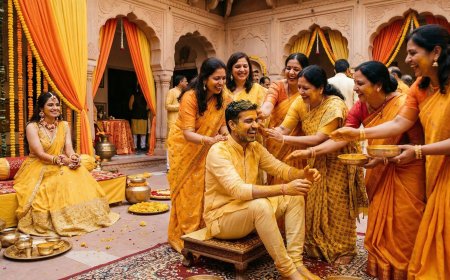




Before the Makeup. Before the Mandap. Before Everything: Inside Bengal's Dodhi Mangal
Dodhi Mangal is the sacred pre-dawn ritual meal at the heart of every Bengali Hindu wedding day — a deeply intentional ceremony in which the bride and groom separately consume curd, sweetened rice, and auspicious foods at sunrise, offered by the mother before the wedding day begins. Rooted in the Bengali concept of brahma muhurta — the most auspicious hour before sunrise — the ritual is preserved powerfully across the Bengali diaspora in the UK, USA, Canada, UAE, and Australia. This complete guide covers its meaning, timing, ingredients, and everything NRI families need to do it right abroad.


Dodhi Mangal — the auspicious early morning ritual in which the Bengali bride and groom separately consume a sacred meal of curd, sweetened rice, and auspicious foods at dawn on their wedding day — is one of the most quietly powerful ceremonies in all of Bengali Hindu wedding culture. It asks the person about to be married to begin their most important day not with noise or celebration, but with stillness, sweetness, and the deliberate act of receiving what is good before the world fully wakes. For Bengali NRI families from Kolkata to California, from Dhaka to Dubai, the Dodhi Mangal is the ceremony that sets the emotional tone for everything that follows — a moment of sacred pause before the day takes over completely.
You have been awake since before the alarm. The wedding is today. Somewhere in the house — or the hotel suite, or the serviced apartment in Croydon or Scarborough that your mother insisted on booking because she needed a real kitchen — something is already happening. You can hear it. The soft sounds of preparation. A pot. A spoon. Someone moving with purpose in the quiet.
Your mother has been awake since four.
She did not tell you she would be up this early. She did not tell you what she was preparing. But somewhere in the weeks of planning and the catering negotiations and the decorator calls and the thousand decisions that constitute a modern NRI Bengali wedding, she quietly set aside this one thing — this one ritual that belongs only to her and to you and to the dawn — and she has been preparing for it in the dark so that when you wake, everything will be ready.
This is the Dodhi Mangal. The auspicious beginning. The sweetness before the ceremony. The thing your grandmother did, and her mother before her, and her mother before that, on every wedding morning in this family's history. And it is yours now, even here, even in this city that is not Kolkata, even in this light that is not the same light — because your mother is in the kitchen, and the ritual is beginning, and the day that changes everything is about to start exactly as it should.
🌟 Did You Know?
-
The name Dodhi Mangal comes from the Sanskrit and Bengali words dodhi (curd or yoghurt — one of the five sacred substances of Hindu ritual, the Panchamrit [five nectars]) and mangal (auspiciousness, wellbeing, the quality of beginning something under good omens). The ceremony is therefore literally the auspicious curd ritual — a deliberate act of starting the wedding day by consuming sacred, blessed food before any other act of the day takes place.
-
The Dodhi Mangal must take place before sunrise or at the precise moment of dawn — this timing is not aesthetic but cosmological. In Bengali Hindu tradition, the brahma muhurta [the sacred hour before sunrise, literally the hour of Brahma the creator] is considered the most auspicious window for beginning any significant undertaking. To eat the Dodhi Mangal in this window is to place the wedding day under the protection of the most powerful auspicious hour of the entire twenty-four hour cycle.
-
The ritual foods of the Dodhi Mangal — curd, sweetened rice, banana, coconut, and sometimes fish — are each cosmologically significant in Bengali Hindu tradition. Curd purifies. Sweetened rice nourishes the soul before the body. Banana represents fertility and abundance. Coconut represents completeness. Fish — specifically a small piece of fried fish in many family traditions — represents the continuation of life through water, the element from which all Bengali culture flows. Together they constitute a complete sacred meal designed to align the person eating it with everything auspicious before the ceremony begins.
What Is Dodhi Mangal?
Dodhi Mangal is the pre-dawn or dawn ritual meal eaten by the Bengali bride and groom — separately, at their respective homes — on the morning of their wedding day, before any other food is consumed, before the makeup begins, before the formal wedding preparations take hold. It is the first act of the wedding day and it is treated with the seriousness that first acts deserve.
The ritual is prepared and led by the mother or the most senior female relative of the household. The foods are assembled the night before and prepared from the earliest hours of the morning: dodhi [fresh curd, preferably set at home rather than store-bought], mitha anna [sweetened rice or sweetened rice flakes], ripe banana, pieces of fresh coconut, and in many family traditions a small piece of fried fish — often rui [rohu] or another auspicious fish. Some families also include chire [flattened rice], muri [puffed rice], and khoi [puffed paddy] in the Dodhi Mangal spread, depending on regional and family tradition.
The person being prepared for marriage sits on a piri [a small low wooden seat], freshly bathed, wearing clean clothes — often white or a pale colour in the period before the bridal or wedding attire is put on. The senior female relative or mother offers the foods in a specific order, beginning with the curd. Each food is given with a blessing, sometimes with specific mangal prayers or ululation [the Bengali ululation called ulu dhwani, the high-pitched sound Bengali women make at auspicious moments, which you will hear the moment the curd touches the bride's lips].
The meal is eaten in silence or near-silence. This is not a celebratory breakfast. It is a ritual consumption — deliberate, intentional, and understood by everyone present to be the formal beginning of the most significant day of this person's life. When the last food is eaten, the wedding day has officially begun. Everything that comes after — the Gaye Holud[turmeric ceremony], the Saat Paak [the seven circles], the Sindoor Daan [the application of vermillion] — flows from this quiet, sacred morning beginning.
The Dawn Ritual Across Indian Communities
The Dodhi Mangal is Bengal's expression of a near-universal Indian wedding tradition — the sacred morning ritual that prepares the bride or groom spiritually and physically for the day ahead. Here is how the instinct to begin the wedding day with deliberate sacred consumption manifests across communities.
| Community / State | Local Name | Key Tradition | How NRIs Abroad Adapt It |
|---|---|---|---|
| Bengali Hindu | Dodhi Mangal | Curd, sweetened rice, banana, coconut, fish consumed at dawn; mother leads; held before sunrise; ulu dhwani at first offering | Fresh curd set the night before; dawn timing preserved; mother leads in hotel suite or apartment |
| Bengali Muslim | Fajr blessing meal | Dawn meal with dates, sweetened rice, water; Islamic blessing prayer; family gathered | Halal ingredients; Fajr prayer timing used as equivalent sacred dawn window |
| Maharashtrian | Kankavati puja | Early morning puja before bridal preparation; sacred foods offered to deity first, then consumed; coconut central | Puja items sourced from Indian stores; family pandit leads via video call if needed |
| Punjabi | Vatna morning ritual | Turmeric application at dawn before bathing; sacred foods consumed after; female relatives gather | Dawn timing preserved; turmeric and sacred foods from Indian grocers |
| Tamil | Kashi Yatra morning | Groom performs mock renunciation at dawn; bride's father intercepts; sacred foods consumed before ceremony | Tamil pandit leads sequence; timing adjusted for diaspora schedule |
| Gujarati | Mandvo morning puja | Early morning prayers at the mandvo [wedding canopy]; sacred foods distributed to family; coconut and jaggery central | Mandvo set up the evening before; family elder leads morning prayers |
| Rajasthani | Pithodi morning ritual | Pre-dawn application of pithi paste; sacred foods consumed; auspicious songs sung by women | Pithi ingredients from Indian grocers; female relatives gather at dawn |
| Odia | Mangala Snan | Auspicious bath at dawn followed by sacred meal; turmeric and curd central; temple visit if possible | Temple visit replaced by home puja; curd and turmeric from Indian stores |
| Kashmiri Pandit | Livun morning | Pre-dawn purification ritual; mustard oil and sacred foods; Wanwun songs sung by women at dawn | Kashmiri Pandit community elder leads; songs from family recordings |
| Himachali | Tel Baan morning | Oil application at dawn; sacred foods consumed before wedding; community women gather | Family elder leads; coconut oil and sacred foods from Indian stores |
The Meaning Behind the Ritual
The Dodhi Mangal is built on a philosophical understanding of beginnings that runs through the entirety of Bengali Hindu thought: that how you start something determines what it becomes. To begin the wedding day with sacred food, consumed in stillness before the sun is fully up, is to place the entire day — and by extension the entire marriage — under the protection of intention. You are not entering this day accidentally. You are entering it deliberately, having first filled yourself with everything auspicious.
The curd at the centre of the ritual is panchamrit — one of the five sacred substances used in Hindu ritual purification alongside milk, ghee, honey, and sugar. To consume curd in a ritual context is to purify the self from the inside. To receive it from a mother's hands at dawn is to be purified by the two most trusted sources in the Bengali worldview: sacred substance and maternal love.
The sweetness of the mitha anna [sweetened rice] carries a specific intention: that the first taste of the wedding day should be sweet, so that sweetness becomes the template the day follows. In Bengali folk belief, the first experience of any significant period sets the emotional register for everything within it. To taste sweetness first is to ask sweetness to stay.
The fish — where included — speaks to the Bengali understanding of life as fundamentally aquatic. Bengal is a river delta. Its people emerged from water, are fed by water, return to water. To include fish in the first sacred meal of the wedding day is to acknowledge this origin and ask the river's blessing on everything that follows.
For a non-Indian partner or family member seeking the simplest truth: this is the family ensuring that the very first thing the person they love tastes on their wedding day is something sacred, something sweet, and something given with complete love — so the day begins exactly as they hope it will continue.
Doing the Dodhi Mangal Abroad: The Practical Reality
The Dodhi Mangal abroad faces one logistical challenge that distinguishes it from most other pre-wedding ceremonies: it must happen at dawn. Not mid-morning. Not after everyone has slept in and had coffee. Before sunrise or at the precise moment of it — which in winter in London or Toronto means as early as 6:30 AM, and in summer can mean 4:30 AM. This timing requirement organises everything around it and must be planned with complete seriousness.
The first practical step is to look up the exact sunrise time for your wedding city on your wedding date and work backwards. The Dodhi Mangal should begin at least thirty minutes before sunrise so the first offering is made in the brahma muhurta. Set this time as a hard appointment in the wedding day schedule and protect it from being moved. Everything else on the wedding day — the hair and makeup call time, the photographer's arrival, the getting-ready timeline — must be built around the Dodhi Mangal, not the other way around.
The curd question is the most important ingredient decision. Fresh curd set at home the night before is the ideal — the mother sets the milk and culture the evening before the wedding and the curd is ready by four in the morning. In a hotel suite this requires a small container and the hotel room's ambient temperature, which works in summer and may require a warm spot near a radiator in winter. Mishti doi [Bengali sweet curd] from a Bengali or Indian grocery store is an acceptable substitute if home-setting is not possible, but the plain fresh curd has ritual significance that the sweetened commercial version does not fully carry. In London, fresh curd and mishti doi are available from the Bengali and South Asian grocers of Whitechapel and Brick Lane. In Toronto, the South Asian grocers of Gerrard Street East and Brampton. In Houston, Hillcroft Avenue. In Melbourne, Harris Park and Dandenong.
The fish component — where the family tradition includes it — follows the same sourcing logic as the Aiburo Bhaat ilish question. A small piece of fried fish is all that is required for the Dodhi Mangal; it does not need to be a whole preparation. Fry it the evening before and keep it covered — it simply needs to be present at the ritual table.
The ceremony space in a hotel or apartment should be set the evening before: a clean cloth on the floor or a low table, the piri in position, the foods arranged in their serving vessels, a small oil lamp and fresh flowers in one corner. The ulu dhwani — the Bengali ululation at the moment of first offering — should not be suppressed out of consideration for hotel neighbours. Warn the adjacent rooms the night before if you are concerned, but do not silence the ulu dhwani. It is the sound that tells the universe the auspicious moment has arrived. It belongs in the ceremony.
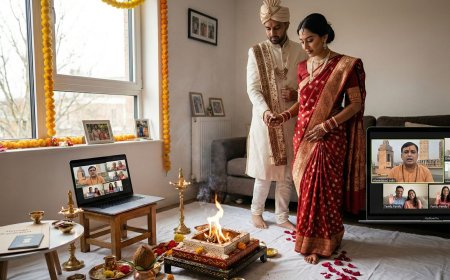
For streaming to family in Kolkata — where the Dodhi Mangal happening in London at 5:00 AM means it is 10:30 AM in Kolkata, a very comfortable time — position your device to show both the ritual table and the face of the bride or groom receiving the first offering. The grandmother in Ballygunge watching her grandchild receive the curd from across the world, hearing the ulu dhwani through a phone speaker in her sitting room, is as much a part of the ceremony as anyone in the room.
Doing the Dodhi Mangal as a Destination Wedding in Bengal
To do the Dodhi Mangal in Kolkata — in the family flat where the mother set the curd the night before in the same clay pot she has always used, where the dawn light comes through the window at exactly the angle it has always come, where the ulu dhwani fills the rooms of a house that has heard it at every wedding for three generations — is to do it in the landscape for which it was made.
For a destination Dodhi Mangal in Kolkata, the family home is the irreplaceable setting. If the family home is not available, the heritage guesthouses and private mansion properties of South Kolkata — particularly in Ballygunge, Hindustan Park, and the old north Kolkata para [neighbourhood] areas — offer the domestic architecture the ceremony requires. These are spaces with inner courtyards and morning light and the quality of stillness that the Dodhi Mangal needs.
Brief your family pandit — if the family includes formal priestly involvement in the Dodhi Mangal — at least a week before the wedding. Most Kolkata pandits know the Dodhi Mangal sequence precisely, but family traditions vary in the specific prayers said, the order of the foods offered, and whether the ritual includes any formal sankalpa [sacred intention-setting prayer] at the opening. Do not assume your family's sequence is the same as the pandit's default. Sit with the pandit and your senior family elder together and confirm every detail.
For non-Bengali guests witnessing the Dodhi Mangal in Kolkata at dawn, brief them the evening before on the brahma muhurta timing and why it matters. Watching a mother offer curd to her child in silence at the moment the sky begins to lighten is one of the most universally moving things any human being can witness at a wedding, regardless of cultural background. The stillness of it communicates everything.
What You Need: The Dodhi Mangal Checklist
Ritual Items and Ingredients: Fresh curd set the night before in a clay or brass vessel; mishti doi as backup if home-setting is not possible; sweetened rice or sweetened rice flakes; ripe bananas; fresh coconut pieces; small portion of fried fish if family tradition includes it; chire, muri, or khoi if family tradition includes them; a small oil lamp and ghee; fresh flowers — marigold and white flowers preferred; a piri or low wooden seat for the bride or groom; a clean white cloth for the ritual space; a small brass or clay serving plate for presenting the foods; agarbatti for the opening blessing.
People Required: The mother or most senior female relative to prepare and lead the offering; all female family members present to witness and perform the ulu dhwani at the moment of first offering; the bride or groom as the recipient of the ritual — they should be bathed and in clean pale or white clothes before the ceremony begins; a family pandit if the family tradition includes formal priestly blessing over the foods; one designated family member to manage the video stream to relatives in India; your wedding photographer — brief them specifically that the Dodhi Mangal is a dawn ceremony requiring silent, available-light documentary photography, not flash, not posed. The natural light of the ceremony is part of its meaning and must be preserved in the photographs.
Preparation Steps: Look up exact sunrise time for your wedding city and date at least two weeks before the wedding. Set the Dodhi Mangal start time as the first fixed appointment of the wedding day and build everything else around it. Set the curd the evening before — confirm with your mother the exact timing she needs for it to be properly set by four in the morning. Prepare the ceremony space the night before: cloth, piri, lamp, flowers, foods in their vessels. Test the video call to India the evening before. Brief your photographer on the dawn timing and the no-flash requirement at least two days before.
NRI.Wedding connects Bengali NRI couples with Dodhi Mangal planning support, Bengali ingredient sourcing contacts in diaspora cities, photographers experienced in dawn ceremony documentary work, and complete Bengali wedding day timeline coordination. Begin at NRI.Wedding.
5 Questions NRI Couples Always Ask
The Dodhi Mangal is supposed to happen before sunrise but our hotel hair and makeup team is arriving at 6:00 AM. How do we fit both in?
This is the most common scheduling conflict in diaspora Bengali wedding planning and it has a clean solution: move your hair and makeup call time to 6:30 or 7:00 AM and hold the Dodhi Mangal at 5:00 or 5:30 AM. The ceremony itself takes twenty to thirty minutes at most. It is entirely possible to complete the Dodhi Mangal, have a short period of quiet reflection, and still be ready for the makeup team at a reasonable hour. What you cannot do is compress the Dodhi Mangal into the gaps between other appointments — it needs to be the first thing, unhurried, before the day's machinery starts. Speak to your makeup artist in advance and explain the situation. Most experienced Indian wedding makeup artists have encountered this request and will accommodate it without difficulty.
My partner is not Hindu and doesn't eat fish. Can we modify the Dodhi Mangal without losing its meaning?
The fish component of the Dodhi Mangal, while traditional in many Bengali family practices, is not universally present — many families do not include fish in their Dodhi Mangal at all, and its absence does not diminish the ceremony's validity or meaning. The essential, non-negotiable elements are the curd, the sweetened rice, and the intention with which they are offered and received. If your partner's dietary restrictions or beliefs make the fish component uncomfortable, simply omit it with your family elder's confirmation and proceed with the core foods. The ceremony will be complete.
We want to include my partner's non-Bengali family in the Dodhi Mangal. Is that appropriate?
The Dodhi Mangal is traditionally a ceremony of the natal family — the bride or groom's own household — but many contemporary Bengali NRI families welcome the partner's family as witnesses at the edges of the ceremony rather than active participants. The most natural approach is to invite them to be present and observing while keeping the active ritual — the offering, the ulu dhwani, the receiving — within the Bengali family. Brief them the evening before on what they will see and hear, including preparing them for the ulu dhwani so they are not startled by it. Being witnessed by both families at the dawn of the wedding day is, in its own way, a beautiful extension of the Dodhi Mangal's intention.
My grandmother in Kolkata is the only person who knows the exact sequence of our family's Dodhi Mangal. She can't travel. How do we make sure we do it correctly?
Call your grandmother at least two weeks before the wedding and record the conversation. Ask her to walk you through the complete sequence — which food is offered first, what she says with each offering, whether the pandit is involved or not, what the ulu dhwani moment is timed to exactly. Write it all down and confirm it back to her. Then have her on a video call on the morning of the ceremony itself — not just for streaming, but as a live guide. Many NRI families have had their grandmother in Kolkata verbally lead the ceremony from her sitting room in real time, telling the mother in London or Toronto exactly when to move to the next food and what to say. It is, in its own way, the most complete form of transmission the tradition has found.
Does the Dodhi Mangal have to happen at the natal home or can it happen at the wedding venue?
Traditionally the Dodhi Mangal happens at the natal home because the natal home's blessing is part of what is being received. In the diaspora, the natal home equivalent — the apartment or house where the family is staying, the place where the mother set the curd the night before — carries this function entirely adequately. What the ceremony requires is not a specific building but a specific quality of domestic belonging: the space where the mother was preparing since before you woke, the space that smells of the ritual foods, the space that feels, for these few days, like the home you come from. Create that space with intention and the ceremony will recognise it.
The Emotional Angle
She set the curd at eleven the night before.
After everything was confirmed — the decorator's final call, the caterer's last message, the cousin's airport pickup arranged, the flower order confirmed for the morning — she came to the kitchen alone and set the curd. Warm milk. The culture from the last batch, kept specifically for this. The clay pot her mother gave her when she left Kolkata the first time, the one she has carried between three countries in twenty-two years because she knew, always, that it would be needed for this exact morning.
She did not sleep much. She was up at three-thirty, moving quietly so as not to wake anyone. By four the curd was set. By four-thirty the sweetened rice was ready. By five she had laid the cloth and placed the piri and lit the small lamp and arranged everything in the order it is supposed to be arranged — the order she learned from watching her own mother, who learned it from watching hers.
At five-fifteen she went to wake her child.
She stood in the doorway for a moment before she knocked. Her child was sleeping in the last hour of their unmarried life, in a city that was not Kolkata, in a room that was not the room they grew up in, in a bed that would not be theirs much longer. Tomorrow they would wake in a different place, as a different kind of person, belonging to a different configuration of the world.
But right now they were sleeping. And in the kitchen, the curd was set. And the lamp was lit. And the dawn was coming.
She knocked.
"It's time," she said. "The Dodhi Mangal is ready."
And the wedding day began exactly as it was always supposed to begin — with a mother, and a clay pot, and the first light of the most important morning.
A Moment to Smile
At a Bengali Hindu wedding in Melbourne in the winter of 2023, the Dodhi Mangal was set for 5:45 AM to catch the winter dawn. The mother had set the curd perfectly, arranged the ritual table with complete attention, and lit the oil lamp with the quiet authority of a woman who had been preparing for this moment for thirty years.
At 5:43 AM, the smoke alarm in the serviced apartment went off.
Not because of the lamp — the lamp was tiny and well-contained. Because the father, who had been told specifically not to make coffee during the ceremony, had decided that 5:43 AM was an appropriate time to make toast, in the kitchen, directly beneath the smoke detector.
The ulu dhwani that followed — performed at full volume by six aunties who had been awake since four and were not going to let a smoke alarm interfere with the auspicious moment — was, by all accounts, audible from the corridor.
The ceremony continued. The curd was offered. The dawn came. The toast was confiscated.
The father maintains to this day that the toast was almost ready and it was worth it. The mother has not confirmed this. The bride says the smoke alarm going off just before the ulu dhwani created a soundscape she will never forget for the rest of her life, and that it was, somehow, perfect.
Quotes from the Diaspora
"My mother set the curd in a clay pot she brought from Kolkata in her hand luggage. She said the clay pot matters — the curd sets differently in clay, it tastes different, it is different. When she offered it to me at five in the morning in that apartment in Croydon, with the dark still outside the window and the lamp lit and my aunties doing the ulu dhwani, I understood that she had carried that clay pot across the world for this exact moment. I have never felt more loved in my life." — Debapriya Ghosh, Bengali Hindu community, London, UK
"My daughter-in-law's mother did the Dodhi Mangal at 5:00 AM in a hotel suite in Toronto. I was not invited — it was her family's ceremony. But I was in the corridor at 5:01 when the ulu dhwani started, and I stood there outside the door with my hand over my mouth and tears running down my face. I had never heard that sound at dawn before. I understood in that moment what the ceremony was. I understood what they were giving her." — Sutapa Mukherjee, Bengali Hindu community, mother of the groom, Toronto, Canada
"We did the Dodhi Mangal via split screen — my mother in our apartment in Dubai offering me the curd while my grandmother in Kolkata watched on video call and did the ulu dhwani from her sitting room. The sound came through the phone speaker, delayed by half a second, from six thousand kilometres away. It was the most beautiful half-second delay I have ever experienced." — Ananya Basu, Bengali Hindu community, Dubai, UAE
The Dawn Belongs to You
Your mother was up at three-thirty. She did not tell you she would be. She set the curd the night before, in the clay pot, and she laid the cloth and lit the lamp in the dark, and when she came to wake you the first light was just beginning at the edge of the sky.
This is what she carried across oceans. Not just the clay pot and the gobindobhog rice and the specific culture for the curd. She carried the knowledge of this morning — the exact sequence, the exact timing, the exact words — because she always knew this morning was coming, and she always intended to be ready for it.
NRI.Wedding is here for every part of making this dawn ceremony exactly what it should be — from connecting you with Bengali community elders who know your family's specific Dodhi Mangal sequence, to photographers who understand that dawn documentary work requires patience and available light, to complete Bengali wedding day timeline planning that protects the Dodhi Mangal as the sacred first act it is.
The lamp is lit. The curd is set. The sky is beginning to change. Let the most important day of your life begin exactly as it was always meant to — in the stillness before sunrise, with the first sweet thing your mother ever gave you.
This article explores Dodhi Mangal, the sacred pre-dawn ritual meal at the heart of Bengali Hindu wedding day traditions, its cosmological roots in the brahma muhurta and Bengali food philosophy, and complete practical guidance for Bengali NRI couples planning the ceremony in the UK, USA, Canada, UAE, and Australia.
What's Your Reaction?
 Like
0
Like
0
 Dislike
0
Dislike
0
 Love
0
Love
0
 Funny
0
Funny
0
 Angry
0
Angry
0
 Sad
0
Sad
0
 Wow
0
Wow
0