






































Entertainment Ideas for Keeping Diverse Guests Engaged — The Complete NRI Wedding Planning Guide
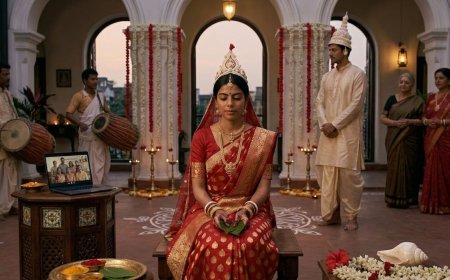
At nine forty-five on the night of the reception the bride noticed it — the specific way a room divides when its entertainment has stopped serving half the people in it. On one side of the dance floor the younger guests and the international contingent were clustered around the DJ booth. On the other side the older Indian guests had formed their own gathering, the uncles in a semicircle of pulled chairs, the aunts in conversation that had grown warm and self-sufficient, the grandparents at a table that had become its own contained celebration. The groom's mother found the bride at nine fifty and said the thing both of them had been thinking — the older guests are lovely but they have stopped being part of the evening, they are just waiting. The diverse NRI wedding guest list is the most consistently under-planned entertainment challenge in the wedding industry, and the couple who invests in a DJ, a photo booth, and a live band but whose entertainment programme splits the room at nine forty-five has not failed to invest in entertainment — they have invested in entertainment designed for part of the room. This complete guide gives NRI couples the full framework for designing entertainment for the whole room — covering the four axes of guest diversity including generational, cultural, linguistic and mobility and sensory, the participation spectrum from active participants through social participants through observers to reluctant participants, the layered entertainment framework with anchor, parallel, episodic and discovery layers, and six complete entertainment categories in full including intergenerational activities such as the memory table, antakshari station and recipe exchange, cultural bridge activities including henna stations, turban tying, cultural displays and cooking demonstrations, games and activities for mixed groups including wedding trivia, photo challenges and marriage advice walls, quiet and restorative entertainment including the quiet lounge, live classical music and storytelling circles, technology-enhanced entertainment including wedding film booths and virtual guest integration, food as entertainment including live stations and the midnight food reveal, the five-phase reception entertainment arc, the principles for episodic shared moments, and the five common mistakes including designing for the couple's own age group and not providing low-risk entry points for reluctant participants.


Entertainment Ideas for Keeping Diverse Guests Engaged
The Party That Split in Two
It happened at approximately nine forty-five on the night of the reception.
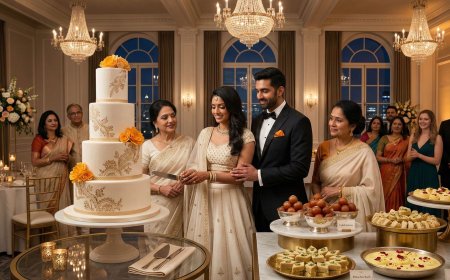
The bride noticed it first — the specific way a room divides when its entertainment has stopped serving half of the people in it. On one side of the dance floor, the younger guests and the international contingent were clustered around the DJ booth, responding enthusiastically to the current Bollywood and Western pop set that had been running for forty minutes. On the other side, in the quieter section near the bar and the seating area, the older Indian guests had formed their own gathering — the uncles in a semicircle of chairs pulled from nearby tables, the aunts in conversation that had grown warm and self-sufficient, the grandparents at a table that had become its own contained celebration.
The two groups were not hostile to each other. They were simply no longer at the same party.
The groom's mother — a woman of specific social intelligence whose read of a room was rarely wrong — found the bride near the entrance at nine fifty and said the thing that both of them had been thinking.
"The older guests are lovely, but they've stopped being part of the evening. They're just waiting."
The bride knew she was right. The entertainment programme — the DJ set, the photo booth with its millennial props, the LED dance floor — had been designed, without anyone explicitly deciding this, for one segment of the guest list. The other segment, the grandparents who had traveled from Chennai and the aunts who had come from Ahmedabad and the elderly family friends for whom the wedding was a significant occasion in their lives, were present in the room and absent from the evening.
The diverse NRI wedding guest list is the most consistently under-planned entertainment challenge in the wedding industry. The couple who thinks carefully about entertainment — who books a DJ, a photo booth, a live band, perhaps a comedian — and whose entertainment programme nevertheless splits the room at nine forty-five, has not failed to invest in entertainment. They have invested in entertainment that was designed for part of the room.
This guide is about designing entertainment for the whole room — the specific ideas, the specific structures, and the specific thinking that keeps every segment of a genuinely diverse guest list engaged, included, and participating in an evening that feels designed for them.
Understanding the Diversity You Are Designing For
The Four Axes of Diversity
The NRI wedding guest list is diverse across four specific axes — and entertainment design that accounts for only one or two of them will produce the room split that the bride noticed at nine forty-five.
The generational axis:
The eighty-year-old grandfather and the twenty-two-year-old cousin are at the same wedding. Their relationship to music, to noise, to movement, to the duration of an evening, and to the social forms through which they participate in celebration are entirely different. The entertainment that serves one does not automatically serve the other — and the evening that is designed entirely for the younger generation's entertainment preferences is the evening that the grandfather is enduring rather than enjoying.
The cultural axis:
The Indian family members whose cultural framework for celebration is rooted in specific Indian traditions — the value of sitting together, the specific forms of music and dance that constitute celebration for them, the communal rather than individual orientation of enjoyment — and the Western guests whose framework for celebration at an evening event is more oriented toward the dance floor, the bar, the individual or couple-centred experience, are not served by the same entertainment forms.
The linguistic axis:
The entertainment that requires English comprehension — the comedian whose set is in English, the MC whose jokes depend on English wordplay, the trivia game conducted in English — excludes the guests whose primary language is not English as thoroughly as a language barrier excludes them from any other form of participation.
The mobility and sensory axis:
The elderly guest with limited mobility for whom the dance floor is not an option, the guest with hearing loss for whom the DJ's volume is discomfort rather than energy, the guest with social anxiety for whom the high-stimulation environment of the peak reception is genuinely difficult — these guests need entertainment options that do not require physical capability, high sensory tolerance, or social courage to access.
The Participation Spectrum
Beyond the axes of diversity, the guests at an NRI wedding exist on a spectrum of desired participation — from the guest who wants to be at the centre of the floor for every song to the guest who wants to be warmly present at the edge of the evening without being required to perform or participate actively.
The active participants:
The guests who come to weddings to dance, to perform, to be physically involved in the celebration's energy. Entertainment design for these guests — the dance floor, the sangeet performances, the garba — is the entertainment design that most weddings execute well.
The social participants:
The guests who come to weddings primarily for the social occasion — the conversations, the reconnections, the specific joy of being gathered with people they love. Entertainment design for these guests is not about activities but about the environment that makes conversation possible — the seating arrangements, the acoustic management, the food and drink accessibility that supports extended social engagement.
The observers:
The guests who come to weddings to witness and to be present — particularly the elderly guests for whom the wedding is a significant family occasion whose meaning does not depend on active participation. Entertainment design for these guests is about ensuring that the evening provides them with something to watch, something to engage with at their own level, and the specific dignity of being included rather than tolerated.
The reluctant participants:
The guests — often the non-Indian international guests at an NRI wedding — who are genuinely enthusiastic about the occasion but uncertain how to participate in cultural forms they are unfamiliar with. Entertainment design for these guests is about creating low-risk entry points into participation — the activity that does not require prior knowledge, the instruction that is warmly offered rather than assumed.
The Entertainment Design Framework
The Principle of Layered Entertainment
The entertainment programme that keeps a diverse guest list engaged across a five-hour reception is not a single entertainment type extended through the evening — it is a layered structure in which multiple entertainment forms are available simultaneously, allowing guests to self-select the form of participation that matches their preference, their capacity, and their moment.
The layered entertainment programme has:
An anchor entertainment layer — the main entertainment that defines the evening's character and provides the central shared experience. The DJ, the live band, the performance programme.
A parallel social layer — the entertainment that runs alongside the anchor layer and serves the guests who are not engaging with the anchor at any given moment. The conversation spaces, the food stations, the activities that do not require the dance floor.
An episodic shared layer — the moments in which the entire room is brought together regardless of their usual position in the evening's entertainment spectrum. The toasts, the special performances, the games that pause the evening and gather everyone.
A discovery layer — the entertainment elements that guests find rather than are directed to, that reward curiosity and create the specific conversations that only happen when people encounter something unexpected together. The memory wall, the cultural display, the interactive installation.
The Entertainment Ideas
Category One: Intergenerational Activities
The Memory Table:
A dedicated table — beautifully set, with good lighting and comfortable seating — where framed or displayed photographs, letters, and objects from the couple's families are arranged as an exhibition. Old wedding photographs of the couple's parents and grandparents. Objects that tell the family's story. A guest book at the table with the specific prompt: "Write a memory of one of us, or a wish for both of us."
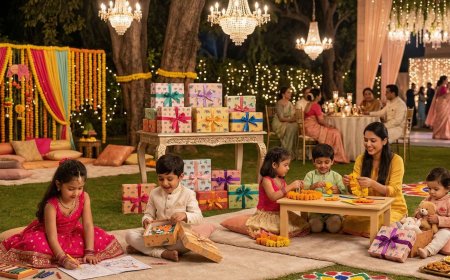
The memory table serves multiple guest segments simultaneously. The elderly guests who are the subjects of the old photographs engage with it as a personal celebration of their own history. The younger guests discover family stories they did not know. The international guests learn the family's narrative in a form that does not require cultural prior knowledge. The memory table is not an activity — it is an environment that generates conversation, discovery, and the specific intergenerational connection that the wedding occasion exists to celebrate.
The Antakshari Station:
Antakshari — the Indian musical game in which participants sing a song beginning with the last letter of the previous song — is the entertainment form that most consistently crosses generational lines at Indian gatherings. The grandfather who cannot dance and the twenty-five-year-old who has never heard his grandfather sing find themselves at the same table, contributing to the same game, discovering that their knowledge of Hindi film songs overlaps in specific and delightful ways.
A dedicated antakshari station — a table with a designated host, a comfortable seating arrangement, and perhaps a small prize for the most unexpected song — provides the specific structure that the spontaneous antakshari of family gatherings has always had without requiring the gathering to organise itself.
The Recipe Exchange:
A card station where guests write a recipe — or a cooking memory, or a food-related story — connected to the couple or to their own family tradition. The bride's grandmother writes her recipe for the specific sweet she makes for every family celebration. The groom's British colleague writes about the first Indian meal he ever had. The Tamil aunt writes the recipe for the dish she is bringing to every family gathering for the next forty years.
The recipe exchange is not primarily about the recipes — it is about the specific conversations that happen around a table where people are asked to think about food and memory and family. It is an activity that produces connection rather than performance and that is equally accessible to the grandmother from Chennai and the colleague from Manchester.
Category Two: Cultural Bridge Activities
The Henna Station:
The mehndi artist who is available during the reception for guests who want henna applied is one of the most effective cultural bridge activities at an NRI wedding — because it creates a sustained, individual interaction between the artist and the guest that is simultaneously a cultural introduction, a personal service, and a conversation starter.
The non-Indian guest who has never had mehndi applied sits with the artist for fifteen to twenty minutes — a duration that is long enough for a real conversation, that produces a visible result the guest will carry for days, and that creates the specific experience of being personally attended to within the Indian cultural tradition rather than observing it from the outside.
The henna station should be positioned visibly and accessibly — not tucked in a corner — with clear signage that communicates its availability to all guests. The artist's manner should be warm and explanatory rather than assuming prior knowledge.
The Turban Tying Station:
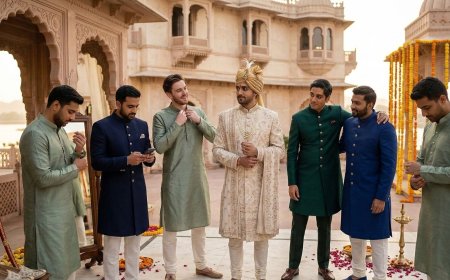
For Punjabi Sikh weddings — or for any NRI wedding where the turban is part of the tradition — a turban tying station where a knowledgeable family member or hired professional offers to tie turbans for guests who want to try is the activity that produces the most consistent joy and the most shared photographs of the evening.
The non-Indian guest who emerges from the turban tying station wearing a turban for the first time is having a specific experience of the culture — not as an observer but as a participant, however brief and however imperfect the results. The photographs from these moments are among the most treasured of the wedding album.
The Cultural Display:
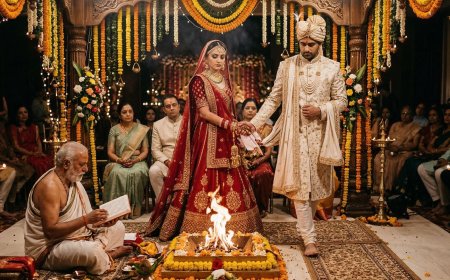
A visual display — exhibition-style, with brief explanatory text beside each element — that explains specific elements of the wedding's cultural tradition to guests who are encountering them for the first time. The significance of specific ritual objects. The meaning of the couple's traditional clothing. The regional origin of the wedding's specific customs. The brief explanatory texts should be warm and specific — not the distant register of museum labels but the warm voice of someone sharing something they love.
The cultural display serves the international guests who are genuinely curious about what they are experiencing and whose curiosity the ceremony programme has not fully satisfied. It also serves the Indian guests from different regional traditions who are encountering the specific customs of the couple's family for the first time.
The Cooking Demonstration:
A brief, informal cooking demonstration — managed by a family member whose cooking is a point of pride, or by the wedding's catering team — where a specific dish from the wedding menu is demonstrated and the guests who gather to watch are invited to participate at the margins. The demonstration of how the specific sweet is made, the explanation of the specific spice that defines the regional dish, the tasting that follows — this is the activity that brings the most naturally curious guests into a specific cultural experience through the universal language of food.
Category Three: Games and Activities for Mixed Groups
The Wedding Trivia Game:
A trivia game — conducted by the MC or a designated host — with questions specifically designed for the diverse guest list. Not a test of Indian cultural knowledge that excludes international guests, and not a generic wedding trivia game that excludes Indian family members, but a game designed with the specific couple and the specific guest list in mind.
The categories might include: questions about the couple that only close friends know, questions about Indian wedding traditions explained in the question itself rather than assumed, questions about the countries represented in the guest list, questions about the families' histories. The game that is designed for mixed teams — where each table has a mix of Indian family members and international guests — produces the intergenerational and intercultural connections that the seating plan can initiate but games can accelerate.
The Photo Challenge:
A list of photograph challenges distributed to every table — not the standard photo booth list but a specific set of challenges designed for this guest list. "Photograph three generations of one family." "Photograph a guest from the furthest country." "Photograph the best dupatta arrangement of the evening." "Photograph a moment that the couple would want to remember."
The photo challenge produces movement — guests get up from their tables, interact with guests at other tables, and create the specific connections that the seating plan does not automatically generate. It also produces a photographic archive of the evening that supplements the professional photographer's work with the specific, personal perspective of the guests themselves.
The Marriage Advice Wall:
A large display surface — a board, a wall section, a string installation with cards — where guests write their best piece of marriage advice and pin or clip it to the display. The display accumulates through the evening and becomes, by the end of the night, a specific and often hilarious and occasionally profound collection of the wisdom that the couple's community holds about love and marriage.
The marriage advice wall works across every segment of the guest list — the grandmother's advice is different from the international colleague's advice, and the contrast between them is itself a form of entertainment that produces the specific cross-cultural conversations the evening is designed to create.
The Musical Chairs Variation:
A variation on musical chairs — played not with chairs but with cultural elements specific to the wedding's traditions — that brings a mixed group of guests onto the dance floor for a brief, structured, low-stakes participation moment. The specific variation should be designed for the couple's tradition and guest list, but the principle is the same: a familiar game structure with a specific cultural content that makes participation accessible to guests who would not otherwise engage with the dance floor.
Category Four: Quiet and Restorative Entertainment
The Quiet Lounge:
A specifically designed quiet space — separate from the main reception room, with comfortable seating, lower lighting, and conversation-level acoustic environment — where guests who need a break from the sensory intensity of the main reception can retreat without feeling that they have left the party.
The quiet lounge is not a waiting room. It should be a designed space — with elements that make it engaging in its own right. A curated selection of family photographs. A collection of books significant to the couple. A table with a specific selection of the wedding's food, made available in a less crowded context. The quiet lounge is the entertainment for the guests who find the main reception's stimulation level genuinely difficult and who, without the quiet lounge, leave earlier than they would choose to.
The Live Classical Music Element:
A classical musician — a sarangi player, a sitar player, a tabla player, a Carnatic vocalist — performing in the quiet lounge or in the welcome period of the reception provides the entertainment layer that specifically serves the older guests for whom the classical Indian musical tradition is the deepest musical home.
The classical performance is not a compromise in the direction of the older guests at the expense of the younger. It is a specific, high-quality entertainment form that the younger guests often discover with genuine pleasure when they encounter it in the right context — the intimate setting of the quiet lounge rather than the background noise of the main reception.
The Storytelling Circle:
A dedicated time — thirty to forty-five minutes, typically in the middle of the reception before the peak DJ set begins — where a designated family elder or a hired storyteller facilitates a gathering of stories about the couple. Guests are invited to share a brief memory, a specific story, a particular quality of the bride or groom that they want the room to know.
The storytelling circle is the entertainment form that most directly honors the Indian oral tradition of the wedding as a gathering of community memory. It gives voice to the older guests whose participation in the dance floor is limited but whose knowledge of the couple and their families is the deepest. It produces the specific emotional register of the wedding — the laughter and the tenderness and the recognition — that the DJ set cannot replicate.
Category Five: Technology-Enhanced Entertainment
The Live Social Media Wall:
A display screen in the reception space that shows a live feed of photographs and messages posted by guests using a specific wedding hashtag — creating the specific pleasure of the collective album accumulating in real time, visible to the room that is creating it.
The social media wall works particularly well for the NRI wedding because it spans the physical guest list and the virtual one — the guests who could not attend, who are following from London or Toronto or Sydney, whose messages appear on the wall alongside the photographs from the room.
The Virtual Guest Integration:
For the NRI couple with significant guests who could not attend in person — who are following the wedding from abroad — a specific moment in the programme where virtual guests are integrated into the live celebration. A video message segment where pre-recorded messages from absent guests are shown on a large screen. A brief live video call with a specific absent family member whose presence would have been significant. The technology is not the point — the specific inclusion of the absent guest in the celebration is.
The Wedding Film Booth:
A video booth — a step beyond the standard photo booth — where guests are invited to record a short video message to the couple. The booth should have a simple brief: "Tell us something about one of them, or something you wish for both of them." The collection of thirty-second videos from across the guest list — the grandfather in Tamil, the British colleague in English, the aunt in Gujarati, the childhood friend in Hindi — becomes a specific artifact of the evening that no professional videographer would capture.
The wedding film booth is the entertainment activity that most consistently produces the most treasured post-wedding content — because it captures the voices, the faces, and the specific words of the people the couple loves, in the moment of the celebration, in the language that is most natural to each of them.
Category Six: Food as Entertainment
The Live Food Stations:
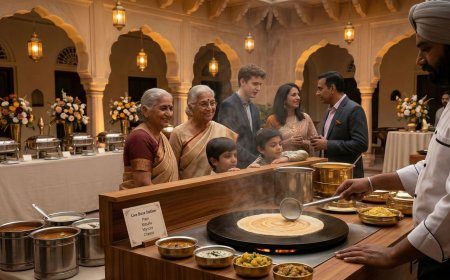
Food stations where specific dishes are prepared live — the chaat station where the pani puri is assembled to order, the dosa station where the dosas are made fresh, the chaat counter where the bhel puri is mixed in front of the guest — are simultaneously food service and entertainment. They create the specific social dynamic of a crowd gathering around an activity, watching with interest, asking questions, and receiving something personal rather than plated.
For international guests, the live food station is also a specific cultural introduction — the first time many of them have watched pani puri being assembled, the first opportunity to ask what is in the specific sauce, the first discovery that they love chaat in a way that they did not expect. The live food station is the entertainment that requires no explanation and no cultural prior knowledge because the food itself provides both.
The Regional Food Journey:
A guided tasting of specific regional foods — with brief, warm explanations of the dish's origin, the family's connection to it, and the specific ingredients that define it — that moves through the different regional traditions represented in the couple's families. The Tamil Nadu sweet. The Gujarati snack. The Punjabi pickle. The specific dish that the groom's grandmother made for every family gathering.
The regional food journey is the entertainment that most directly honors the diversity of the families gathered — that says, through the specific medium of food, that every tradition represented in the room has contributed something to the table.
The Midnight Food Reveal:
A specific late-night food moment — typically between ten-thirty and eleven, when the energy of the peak dance set has begun to wane and the guests need something to refresh the evening — where a specific food item is unveiled. The biryani that has been cooking since afternoon. The specific sweet that the grandmother prepared personally. The street food spread that recreates the late-night eating culture of the wedding's destination city.
The midnight food reveal is not primarily about the food — it is about the specific structure of anticipation and revelation that gives the late evening a moment of collective attention. The announcement that the biryani is ready brings the entire room — the dancers on the floor, the conversationalists at the tables, the guests in the quiet lounge — into the same moment.
The Programme Design: Putting It Together
The Entertainment Arc
The entertainment programme for a five-hour reception should be designed as an arc — with specific entertainment forms deployed at specific moments based on the energy and the need of each phase.
The arrival and welcome phase (first hour):
The entertainment in the welcome phase is environmental rather than active — the live classical musician, the memory table, the cultural display, the henna station. These entertainment forms are discoverable rather than directed, allowing guests to arrive, settle, and engage at their own pace without the pressure of an active programme.
The early reception phase (second hour):
The early reception introduces the first active entertainment elements — the trivia game, the photo challenge, the storytelling circle if the programme includes one. These activities are lower-energy than the peak entertainment but require more active participation than the welcome phase's discoverable elements.
The peak phase (middle two hours):
The peak phase is the anchor entertainment layer — the DJ or live band, the dance floor, the sangeet performances if they have not already happened. The parallel entertainment layers — the henna station, the film booth, the quiet lounge — run alongside the peak phase for the guests who are not on the dance floor.
The late phase (final hour):
The late phase reduces the energy of the peak without ending abruptly — the midnight food reveal, the final episodic shared moment (a last toast, a specific song), the gradual transition from dancing to conversation that allows the evening to close naturally.
The Episodic Shared Moments
The most important entertainment design decision for the diverse guest list is the placement and content of the episodic shared moments — the points in the programme where the entire room is brought together, where the layered entertainment pauses and every guest, regardless of which layer they have been in, becomes part of the same experience.
The principles for episodic shared moments:
They must be accessible to every guest — no language barrier, no cultural knowledge required, no physical participation demanded.
They must be brief — long enough to create the shared experience, short enough that the guests who were not naturally inclined toward this moment do not feel held.
They must be emotionally specific rather than generically celebratory — the toast that tells a specific story, the performance that reveals something true about the couple, the moment that produces the specific combination of laughter and tenderness that only this gathering could produce.
The most effective episodic shared moments:
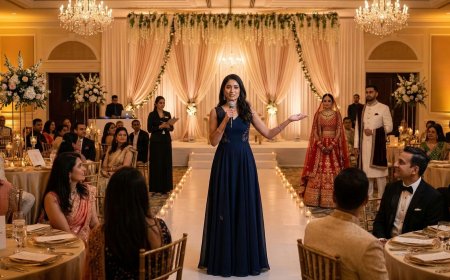
The parent speech — delivered with warmth, with specific stories, with the acknowledgment of everyone in the room's role in the occasion.
The surprise performance — the moment that was not on the programme and that brings the room to attention through its specific unexpectedness.
The collective photograph — the moment when the entire gathering is assembled for a single photograph, which requires the physical gathering of two hundred people into a shared space and produces the specific collective awareness that they are all here, together, for this.
Common Mistakes NRI Couples Make With Entertainment Design
The first mistake is designing entertainment for the couple's own age group and assuming it will serve the full guest list. The couple who is twenty-eight and plans an entertainment programme for twenty-eight-year-olds has planned for approximately thirty percent of their guest list. The entertainment design conversation should begin with the specific segments of the guest list — the grandparents, the elderly aunts and uncles, the international guests, the children — and work outward from their needs rather than inward from the couple's preferences.
The second mistake is treating food and conversation as the default entertainment for guests who are not on the dance floor. The guests who are not dancing are not being entertained by the DJ — they are sitting with food and conversation because nothing else has been provided for them. Food and conversation are not entertainment design; they are the baseline that exists regardless of whether entertainment has been designed. The entertainment design for the non-dancing segment of the guest list requires specific activities and specific spaces.
The third mistake is not managing the acoustic environment for older guests. The DJ volume that creates the right energy on the dance floor creates genuine discomfort for guests with age-related hearing sensitivity — and the discomfort is not just unpleasant but specifically communicates that the evening was not designed for them. The quiet lounge with conversation-level acoustics is not a luxury — it is the specific accommodation that makes the evening accessible to a significant proportion of the guest list.
The fourth mistake is the entertainment programme that assumes cultural knowledge as the entry point. The trivia game that tests knowledge of Indian wedding traditions, the game that requires Hindi language comprehension, the activity whose instructions are given only in English — each of these excludes a specific segment of the guest list from the activity. Entertainment for the diverse guest list should be designed for the guest with the least cultural prior knowledge and the least language facility, and it will work for everyone else as well.
The fifth mistake is not providing low-risk entry points for reluctant participants. The international guest who wants to be part of the celebration but is uncertain how to participate in cultural forms they are unfamiliar with needs a specific, warm, low-stakes invitation — the family member who explains the garba step before the music starts, the henna artist who offers the application without requiring enthusiasm, the antakshari host who welcomes the guest who does not know Hindi film songs because someone at the table will sing for them. The entertainment that is designed for the already-willing participant will not reach the reluctant one without these specific accommodations.
The Party That Did Not Split
The bride's solution — at nine fifty, forty minutes before the end of the reception — was imperfect because it was improvised. She found the MC, asked him to call the storytelling circle that had been planned for earlier in the evening and abandoned when the DJ set had taken over. She found the family member who had been designated as the antakshari host and asked her to start a table at the edge of the room. She found the groom's father and asked him to go and sit with the older guests — not to manage them, but to be present with them.
It worked, partially. The uncle who had been waiting found the antakshari table and did not leave for an hour. The grandmother from Chennai, who had been sitting quietly since nine, found herself in the storytelling circle and contributed the specific story about the groom's childhood that made the entire gathering laugh in the way that only happens when a grandmother speaks with complete authority about the person everyone has assembled to celebrate.
But the partial solution at nine fifty is not the design. The design is the programme that was built before the evening began — that anticipated the room split and prevented it, that gave every segment of the guest list its specific place in the evening, that created the layered entertainment programme in which the grandmother and the British colleague and the Punjabi uncle and the twenty-two-year-old cousin each found their form of participation and each remained, for the full five hours, at the same party.
The diverse guest list is not a problem to be managed.
It is the specific character of the NRI wedding — the gathering that spans generations and cultures and countries and languages and relationships to the occasion — and the entertainment design that honors it is the entertainment design that makes every guest feel that this evening was made for them.
Design for the whole room.
Layer the entertainment.
Build the episodic shared moments.
And make sure the grandmother from Chennai has her story told before the evening ends.
Published by NRIWedding.com — The Premium Global Platform for Non-Resident Indians Planning Indian Weddings From Abroad.
What's Your Reaction?
 Like
0
Like
0
 Dislike
0
Dislike
0
 Love
0
Love
0
 Funny
0
Funny
0
 Angry
0
Angry
0
 Sad
0
Sad
0
 Wow
0
Wow
0