


























































The Child in the Miniature Sherwani: The NRI Couple's Complete Guide to Kids' Entertainment and Childcare at Indian Weddings
The seven-year-old lying on the floor near the emergency exit in a miniature sherwani that had been beautiful six hours ago. The parents fifteen feet away managing the specific guilt of wanting to be present at the occasion while their child's needs are going unmet. Children at NRI weddings are consistently accommodated in the headcount and not designed for in the programme — and the wedding that designs for its youngest guests is a better wedding for everyone in the room. This guide delivers a complete framework covering what children actually experience at a multi-day Indian wedding, provision across mehendi, haldi, sangeet, ceremony and reception, the dedicated children's area design, professional childcare sourcing in India, the ceremony survival kit, children's roles in the wedding programme, the children's table, and communicating with parents in advance so they arrive with the right expectations and the right preparation.


Kids' Entertainment at Indian Weddings: A Complete Guide
The NRI couple's guide to the youngest guests at the wedding — understanding what children actually need across a multi-day Indian wedding programme, and how to provide it in ways that serve the children, their parents, and the occasion itself
The Child Who Was Not Having a Good Time
The wedding was in its third hour of the reception. The adults were at the dance floor or at their tables, the speeches had been made, the food was being served in the specific unhurried rhythm of a large Indian wedding reception that has settled into its middle hours.
In the corner near the emergency exit, a seven-year-old boy in a miniature sherwani that had been beautiful six hours ago and was now missing one button and had acquired a specific stain on the left sleeve that his mother had not yet noticed — this boy was lying on the floor.
Not injured. Not unwell. Simply done. Done with the formal clothes and the loud music and the being told to sit nicely and the food that was not the food he wanted and the adults who kept telling him how much he had grown and the ceremony that had been interesting for approximately twelve minutes and had then continued for three hours and forty minutes after that.
His parents were at the table fifteen feet away, aware of his presence, managing the specific guilt of the parent who wants to be present at the occasion and who is also aware that their child is lying on the floor near an emergency exit in a miniature sherwani.
Three tables away, an eighteen-month-old was asleep across two chairs pushed together, having achieved this specific peace by crying for twenty minutes first.
At the bar, a father was managing his four-year-old daughter, who had found a second wind at ten-thirty in the evening that nobody had anticipated and who was attempting to access the dance floor with a determination that her father was only barely containing.
These three children — and the twelve other children distributed across this wedding in various states of engagement, exhaustion, and mild chaos — had not been planned for. Not maliciously, not carelessly, but in the specific way that children at weddings are often not planned for: as a category of guest whose presence has been accommodated in the headcount but whose specific experience of the occasion has not been designed.
The wedding that designs for its youngest guests — that creates the specific provision that allows children to be present and comfortable and engaged, and that allows their parents to be present and comfortable and not spending the reception managing a seven-year-old near an emergency exit — is a better wedding for everyone in the room.
This guide provides that design.
Understanding What Children Actually Experience at an Indian Wedding
The Child's Experience of the Multi-Day Wedding
The Indian wedding's multi-day programme — the mehendi, the haldi, the sangeet, the ceremony, the reception — is experienced by a child entirely differently from how it is experienced by an adult.
The adult's experience of the multi-day wedding is rich with meaning, with social connection, with the specific pleasures of an occasion that is intellectually and emotionally complex. The adult who finds the ceremony's Sanskrit recitation incomprehensible is still present in a meaningful way — appreciating the ceremony's atmosphere, watching the couple, feeling the weight of the occasion.
The child's experience is more immediate and more bodily. The child who finds the ceremony's Sanskrit recitation incomprehensible is simply bored, with a boredom that is unrelieved by the appreciation of atmosphere or the feeling of weight. The child's experience of a multi-day wedding is: a series of long events in formal clothes, in adult social environments, with food that is not always the food they want, at times that do not align with their sleep schedule, surrounded by adults who are variously delightful and overwhelming.
This is not a criticism of the Indian wedding or of the children who attend it. It is the honest account of the mismatch between what the occasion offers and what a child between two and twelve years old can receive from it.
The provision for children at an Indian wedding is the design that bridges this mismatch — that creates the specific experiences and the specific environments within the wedding programme that make the child's attendance genuinely positive rather than genuinely endured.
The Parent's Experience When Provision Is Absent
The parent of a young child attending an Indian wedding without specific children's provision is managing a specific dual reality throughout the wedding: wanting to be present at the occasion — to participate in the conversation, the ceremony, the dancing, the social connection that the wedding provides — while simultaneously managing a child whose needs are not being met by the environment.
The parent who is managing this dual reality is not fully present at the wedding. They are partially present, partially occupied, and carrying the specific low-level guilt of the person who is neither fully doing one thing nor fully doing the other.
The wedding that provides for children releases these parents into the occasion. Not completely — the parent of a young child is never completely released from awareness of that child's wellbeing — but sufficiently that they can be present in the way the occasion deserves and the couple hopes for.
The Different Age Groups and Their Different Needs
Children at an Indian wedding are not a single category. The provision that serves a three-year-old is different from the provision that serves a seven-year-old, which is different from the provision that serves an eleven-year-old. Understanding these differences is the foundation of provision that is actually useful rather than generically child-friendly.
Infants and toddlers — zero to two years:
Infants and toddlers need their parents or a trusted caregiver, a quiet space for feeding and sleep, and minimal additional provision. The primary requirement for this age group is not entertainment but infrastructure — the quiet room, the nursing space, the high chair, the space to sleep safely. Their parents are the provision.
Young children — three to six years:
Young children have energy, curiosity, and a limited tolerance for adult social environments. They need supervised activity — crafts, sensory play, imaginative play — that engages them sufficiently to prevent the specific boredom that produces the behavior that disrupts adult social environments. They need food that they will eat. They need the opportunity to move. They benefit significantly from a dedicated children's space with a trusted adult supervisor.
Older children — seven to twelve years:
Older children can engage with the wedding more meaningfully — they can understand what is happening at the ceremony, they can participate in some of the dancing, they can be involved in specific roles within the wedding programme. They still need the option to step away from adult environments and engage with age-appropriate activity, but they have the social and emotional capacity to move between the children's provision and the adult wedding in ways that the younger child cannot.
Teenagers:
Teenagers are not, strictly speaking, children who need children's entertainment — but they are also not adults who are fully engaged by the adult social environment of a wedding reception. The teenager who has been seated at an adult table between two of the bride's father's business associates is not having a good time. The teenager who has been seated with other teenagers and who has been given a specific role or responsibility within the wedding programme is significantly more engaged. The provision for teenagers is primarily social — ensuring they have peers to interact with — rather than entertainment in the sense of the younger child.
The Design Framework: Planning for Children at Each Event
The Pre-Wedding Events: Mehendi and Haldi
The mehendi and the haldi are, of the Indian wedding's pre-wedding events, the ones most naturally accommodating for children — and the ones whose children's provision requires the least formal design.
The mehendi:
The mehendi is an event where children can be genuinely included rather than accommodated. Young children who receive a small mehendi design on their hand — a flower, a simple pattern — are participating in the event rather than watching adults participate. The mehendi artist who has the patience and the inclination to apply simple designs to children's hands, and who has been briefed to expect this, creates an inclusive experience that serves children and their parents simultaneously.
The older child at the mehendi can be genuinely engaged — watching the intricate designs being applied, asking questions about the patterns and their meanings, potentially learning about the tradition through the experience. The mehendi event's relatively informal, sitting-based structure makes it more manageable for children than the ceremony or the reception.
The haldi:
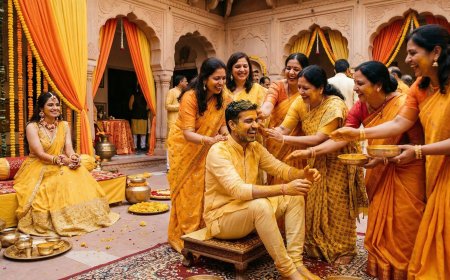
The haldi is the event most naturally suited to children's participation — because the haldi's essential activity, the application of turmeric paste, is both sensory and messy in ways that children find genuinely engaging. The child who is allowed to participate in applying haldi — who is given a small bowl of paste and guided to apply it to the bride or groom or to a sibling — is not being accommodated at an adult event. They are participating in something that is genuinely appropriate for their engagement style.
The specific consideration: the turmeric stains permanently. Children at the haldi should be in clothes that can be stained without consequence — which their parents should be informed of well in advance.
The Sangeet: Children's Entertainment Alongside the Programme
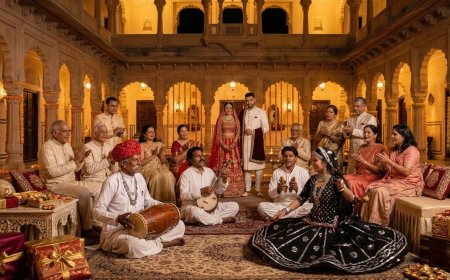
The sangeet's performance programme presents a specific opportunity for children — because the family performance format naturally includes children, and the child who has a role in a performance is a child who is engaged, purposeful, and present in the occasion rather than peripheral to it.
The child performer:
Many sangeet performance groups include children — the group dance that involves the bride's young cousins, the musical number that features the couple's nieces and nephews, the comedy sketch that gives older children a speaking part. The child who has rehearsed a performance and who delivers it in front of the assembled family is having one of the most significant experiences of their childhood — and their participation produces the specific warmth in the audience that only the sight of a small person taking something seriously can produce.
The child performer requires: a manageable performance role — a simple, clear part that does not require the sustained attention and precision of a fully adult performer. A patient adult who has rehearsed the performance with them in terms appropriate to their age. The understanding that on the night, the child may do something different from what was rehearsed — and that this is part of the sangeet's specific joy rather than a failure.
The children's area at the sangeet:
For children who are not performing, the sangeet's later evening hours — when the adult dancing begins — benefit from a designated children's area with age-appropriate activity that provides an alternative to either watching adult dancing or lying on the floor near the emergency exit.
The sangeet children's area: a designated space, slightly removed from the main event area but within the venue so parents can check in easily. Supervised by a trusted adult or a professional childcare provider. Stocked with age-appropriate activity — craft supplies, simple games, a selection of children's films on a tablet or a small screen.
The Ceremony: Managing the Long Form
The ceremony is the most challenging event for children's management — because it is the most formal, the most requiring of sustained quiet attention, and typically the longest single event in the wedding programme.
The decision: bring children to the ceremony or not?
The couple can make a specific decision about whether young children attend the ceremony — and communicate this decision clearly to parents in the guest information. "The ceremony will be approximately three hours long — we love your little ones and welcome them, and we also want you to know this so you can plan accordingly" is genuinely useful information for parents who might otherwise discover the three-hour duration on the day.
Some couples — particularly those whose ceremony is at a venue with a space that can accommodate a children's activity room adjacent to the ceremony — offer parents the option of bringing children to the ceremony with the knowledge that a supervised children's area is available if the child needs to step out. This option allows the child to attend the significant moments — the pheras, the mangalsutra, the moments the family will photograph and remember — while having a managed alternative for the intervening ritual sequences.
The ceremony survival kit:
For parents who bring young children to the ceremony, a small provision — the ceremony survival kit — is a specific gesture of care that practical parents will receive with genuine gratitude.
The ceremony survival kit for young children: a small activity pack containing coloring sheets with wedding-themed designs, a small box of crayons, a simple puzzle, a small quiet toy or fidget item. Delivered to families with young children at their ceremony seats — not available at a central table but specifically placed for the specific families who need them. The kit that occupies a three-year-old for thirty minutes of the ceremony is the kit that allows the parent to watch the pheras.
The nursing and quiet space:
Every ceremony venue hosting a wedding with young children should have a designated nursing and quiet space — a room near the ceremony space where parents can take infants or distressed children without entirely leaving the event. The nursing space should be comfortable, clean, and equipped with a live audio feed of the ceremony so that the parent managing a child can hear what is happening even while out of the main space.
The Reception: The Dedicated Children's Area
The reception is the event where the dedicated children's area has the most impact — because the reception is the event that runs latest, that involves the most adult social behaviour, and that represents the longest gap between what the evening offers and what a young child can receive from it.
The children's area design:
The dedicated children's area at the reception should be: physically separated from the main reception space but proximate enough that parents can check in without significant disruption to their own participation. Comfortable — not a spare room with folding chairs but an actual comfortable space with low furniture appropriate for children's use, soft floor covering, and adequate lighting. Supervised — by a professional childcare provider or by a trusted adult who has specifically accepted this responsibility for the evening, not by a rotating cast of adults who step in when they notice nobody is there.
The activity provision:
The activity provision for the reception children's area scales with the age range of the children attending.
For the three to six year old group: arts and crafts with wedding-themed materials — the Indian wedding offers specific aesthetic richness that craft activities can draw from. Simple sensory play. Building blocks. Age-appropriate films. Simple dress-up — small children in adult Indian wedding attire is a specific source of joy for every adult who encounters it.
For the seven to twelve year old group: more complex craft activities, board games appropriate for mixed ages, a supervised film selection, and the specific freedom from adult social performance that the children's area provides.
The food provision:
The children's area should have its own food provision — food that children will actually eat, timed to children's hunger patterns rather than the adult reception's service timeline. The child whose dinner is served at ten in the evening — the time the adult reception's main course arrives — has been hungry since seven. The children's food provision serves dinner at seven, with snacks available throughout the evening.
The food: familiar, accessible, not spicy or complex. The wedding caterer who is producing an extraordinary adult menu may not be the right provider for the children's menu — the dedicated children's food, sourced from a provider whose expertise is feeding children rather than catering weddings, is worth the additional coordination.
The bedtime provision:
The later the reception runs, the more significant the bedtime provision becomes. The children's area that has fold-out beds, sleeping mats, or a quiet sleeping corner — that acknowledges that some children will sleep before their parents are ready to leave — is genuinely useful for parents who want to stay for the dancing but whose children have run out of evening.
The Professional Childcare Option
When to Hire Professional Childcare
The wedding with fifteen or more children attending benefits from professional childcare provision — not a family member managing the children's area as a secondary responsibility while also participating in the wedding, but a qualified childcare professional whose entire role at the wedding is the children's supervision and engagement.
Professional childcare at an Indian wedding provides: the specific expertise to manage children across different ages simultaneously, the professional training to manage the unexpected — the child who becomes unwell, the toddler who has a meltdown, the older child who becomes anxious in an unfamiliar environment — without involving the parents unnecessarily, and the specific freedom for parents to be genuinely present at the wedding rather than managing the dual reality described above.
Sourcing Professional Childcare in India
For NRI couples whose wedding is in India, sourcing professional childcare — a nanny service, a crèche service, or an events childcare provider — requires advance planning and specific verification.
The advance planning: professional childcare in India for wedding events should be booked at least four to six months in advance, particularly for weddings during the peak October to February season. The most experienced providers are in demand and are not available at short notice.
The specific verification: the childcare provider's qualifications, their experience with wedding events specifically, their staff-to-child ratios, their protocol for medical emergencies, and their familiarity with the specific ages of children attending. The provider who has staffed Indian wedding events before understands the specific context — the late hours, the large and dynamic adult event running simultaneously, the specific mix of cultures and languages in the children's group — in ways that a provider with only domestic childcare experience may not.
The Children's Role in the Wedding Programme
Including Children in the Ceremony
Children who are given specific ceremonial roles — rather than being asked simply to attend and to behave — have a fundamentally different experience of the ceremony. The specific roles vary by tradition and by the couple's specific ceremony, but the principle applies broadly.
The flower girl and ring bearer:
The Western-influenced inclusion of a flower girl and ring bearer in the Indian wedding ceremony has become common at NRI weddings — and for good reason. The small child who has a specific role, a specific cue, and a specific costume is engaged in the ceremony rather than peripheral to it. Their participation produces a specific warmth in the audience that adult roles cannot produce. And the child who has something to do — walk down the aisle, scatter petals, carry the cushion — is the child who is occupied during the ceremony rather than the child who is looking for alternative occupations.
The aashirwad moment:
Many Indian ceremonies include moments when the couple seeks the blessings of the family — moments that can be specifically extended to include the children in the assembled family as a specific gesture of inclusion. The child who is brought to the mandap at a specific ceremony moment, who receives the couple's specific blessing in front of the assembled family, is participating in the ceremony's meaning in a way that sitting in the audience does not provide.
The Children's Table
The children's table at the reception — a dedicated table for children of similar ages, positioned near the children's area but within the main reception space — is the specific provision that serves older children most effectively.
The children's table should be: at the right height for children, with food and drink provision calibrated to children's needs and timing, with an activity or entertainment provision that occupies children between courses, and seated with children of compatible ages rather than mixing a three-year-old with a ten-year-old in ways that serve neither.
The children's table positioned near sympathetic family members — the younger aunties, the grandparents who enjoy children's company — rather than isolated at the edge of the room creates the social warmth that allows children to feel included in the occasion rather than managed separately from it.
Communicating With Parents in Advance
The provision for children at the wedding is only valuable if the parents of young children know it exists. The communication that informs parents of the children's provision — the childcare, the children's area, the ceremony survival kit, the children's food — is the communication that allows them to make informed decisions about their children's attendance and to arrive at the wedding with the right expectations.
The pre-wedding communication:
The wedding website or the welcome booklet should include a specific section for guests traveling with children: the children's provision at each event, the ages for which provision is available, the names and qualifications of the childcare providers, the location of the children's area at the venue, and the specific advice for parents of very young infants — the nursing space, the quiet room.
The ceremony communication:
The ceremony duration should be communicated explicitly to parents of young children — not the optimistic estimate, the realistic duration. The parent who brings a three-year-old to a ceremony expecting ninety minutes and who discovers it is three hours and forty minutes is managing a situation that honest communication would have allowed them to prepare for.
The dietary communication:
The pre-wedding communication should ask parents of children attending to specify their children's dietary requirements — including allergies — separately from the adult dietary requirements. The child's dietary requirements are often different from the parent's and are sometimes medically significant in ways that require specific catering management.
The Gift That Children Remember
The Indian wedding is, for the children who attend it, a specific and significant experience — the first encounter with a tradition that may be partly or entirely their cultural heritage, with the specific visual and sensory richness of an occasion that adult weddings in their home countries do not provide.
The child who has received a small mehendi design on her hand. Who has scattered petals at the ceremony. Who has worn the miniature sherwani and been photographed with the groom. Who has been genuinely included in the occasion rather than managed separately from it — this child carries a specific memory of this wedding that will be part of their understanding of their cultural identity for years.
The adult NRI who describes their most vivid early memory of Indian culture often describes a wedding — the colors, the music, the food, the specific warmth of a large family occasion. The children at your wedding are forming their equivalent memories now.
The provision for children at the NRI wedding is not the accommodation of a logistical inconvenience. It is the specific invitation to the youngest members of the family community to receive the occasion in the fullest way available to them.
Design for them accordingly.
NRIWedding.com — Expert guidance for Indian weddings planned across borders.
What's Your Reaction?
 Like
0
Like
0
 Dislike
0
Dislike
0
 Love
0
Love
0
 Funny
0
Funny
0
 Angry
0
Angry
0
 Sad
0
Sad
0
 Wow
0
Wow
0