


















































Farm Weddings Near Delhi and Mumbai: The Complete NRI Guide to India's Most Exciting Venue Category
Farm weddings near Delhi and Mumbai have transformed India's premium wedding venue market — offering NRI couples the scale, freedom, outdoor atmosphere, and blank canvas design flexibility that no hotel or palace venue can match. But farm venues are also operationally the most complex venue category in Indian wedding planning, requiring a full infrastructure build, a multi-vendor coordination team, and a planner with specific farm venue expertise to deliver the extraordinary experience they promise. This complete guide covers the full Delhi and Mumbai farm venue geography, the operational reality of the blank canvas venue, the true total cost structure, the specific evaluation questions, and everything NRI couples need to know to decide whether a farm wedding is right for them — and how to plan it properly if it is. The most thorough farm wedding guide written specifically for NRI couples worldwide.


The Venue Category That Changed Indian Wedding Planning
Something shifted in the Indian wedding venue market about a decade ago.
The hotel ballroom — the dominant venue format for urban Indian weddings for several generations — began losing ground to a different kind of space. Not a palace, not a heritage property, not an international hotel brand. Something more informal, more expansive, more connected to the landscape. Something that offered the possibility of an outdoor ceremony under open sky, a mehendi on a lawn that actually felt like a lawn rather than a hotel garden, a sangeet where the music could be as loud and as late as the celebration demanded without the constraints of neighbouring hotel guests and municipal sound ordinances.
The farm venue.
Converted agricultural land, rural estates, countryside properties, and purpose-built event farms on the periphery of India's major cities — these spaces entered the premium wedding venue market and found an immediate and enthusiastic audience among couples who wanted the scale, the freshness, and the particular freedom that farm venues provide.
For NRI couples, farm venues near Delhi and Mumbai offer a specific set of advantages that are particularly relevant to the planning challenges of an Indian wedding managed from abroad. The flexibility of a blank canvas — where every element is designed and brought in rather than constrained by the existing infrastructure of a hotel or heritage property. The scale to accommodate large guest counts across multiple functions without the room allocation challenges of a hotel venue. The freedom from sound restrictions and timing curfews that constrain urban venues. The outdoor atmosphere that produces a different quality of wedding photographs and a different quality of guest experience than any indoor venue can replicate.
They also come with a specific set of challenges. Farm venues are operationally complex — more complex than hotel venues, more complex than heritage properties with established hospitality infrastructure. Everything needs to be brought in: the catering, the décor, the lighting, the seating, the tents, the generators, the bathrooms. The operational blank canvas that is the farm venue's greatest advantage is also its most demanding characteristic.
For NRI couples planning from abroad, understanding both dimensions — the advantages and the operational demands — is essential before making a farm venue the foundation of their Indian wedding.
This article is the complete guide to farm weddings near Delhi and Mumbai for NRI couples. It covers the distinctive characteristics of farm venues, the geography of each market — where the best farm venues are located relative to each city, the access routes, the distances — the specific operational considerations, the vendor ecosystem, the budget structure, and the framework for evaluating and selecting a farm venue that delivers the experience it promises.
What a Farm Wedding Actually Is
The term farm venue covers a range of properties with genuinely different characteristics. Understanding the sub-categories helps you identify what you are actually looking for before beginning the search.
Purpose-Built Event Farms
The most developed and most common category in the premium Delhi and Mumbai farm venue markets — properties that were originally agricultural land or rural estates and that have been specifically developed and built out as dedicated event venues.
Purpose-built event farms have made the infrastructure investment that raw agricultural land requires: permanent or semi-permanent tent structures, professional generator systems, water and drainage infrastructure, purpose-built bathroom facilities, event-appropriate flooring in outdoor areas, dedicated vendor access and logistics zones, and in many cases a dedicated event management team.
These properties are event venues first — the farm character is aesthetic and atmospheric rather than actively agricultural. They are the most operationally reliable category of farm venue and the most appropriate starting point for NRI couples who are planning from abroad and who need the operational infrastructure to be already in place rather than assembled from scratch.
Working Farms and Rural Estates
Properties that are genuinely working agricultural operations — orchards, vineyards, dairy farms — that also host events, typically during non-agricultural season windows or in areas of the property separate from the active farming operation.
These properties offer a more authentic rural character than purpose-built event farms — the landscape is genuinely agricultural, the setting is genuinely rural, and the atmosphere has a quality that purpose-built venues sometimes struggle to replicate. They also have more variable operational infrastructure and require more thorough due diligence.
Countryside Residences and Private Estates
Private residential properties — bungalows, kothi complexes, garden estates — in the peri-urban or rural belt around Delhi and Mumbai that are available for private event hire.
These properties can be extraordinary — a private garden estate with decades of established landscaping, a countryside bungalow with an orchard and a swimming pool, a rural kothi with enough space to accommodate an intimate destination wedding. They are also the most variable category in terms of operational infrastructure and require the most thorough vendor-led planning to function as wedding venues.
Resort Properties With Farm Aesthetics
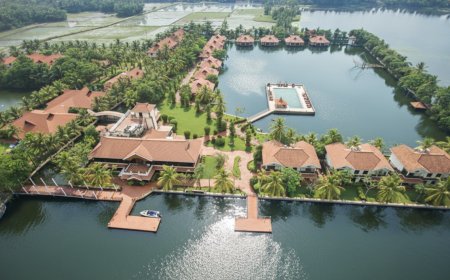
A growing category of purpose-built resort properties — particularly in the Alibag belt near Mumbai and the Dera belt near Delhi — that are designed with a rural, open-air aesthetic but operate with hotel-quality infrastructure and service standards.
These properties offer the visual character of a farm venue with the operational reliability of a professionally managed resort. For NRI couples who want the farm aesthetic without the operational complexity of a true farm venue, this category deserves specific attention.
Farm Venues Near Delhi: The Geography
Delhi's farm venue market is one of the most developed in India — a direct result of the capital's culture of large-scale, high-production Indian weddings and the specific topography of the Delhi NCR region, which provides large tracts of accessible rural and peri-urban land within manageable distance of the city.
The Primary Farm Venue Belts Near Delhi
Chattarpur and Mehrauli — South Delhi
The Chattarpur and Mehrauli farm belt in South Delhi is the original and most established farm venue market in the Delhi NCR region. The concentration of farmhouses in this area — ranging from modest family-owned properties to purpose-built luxury event farms — is the densest of any single location in the Delhi farm venue market.
Distance from central Delhi: 15 to 25 kilometres from central Delhi, depending on specific location. Approximately 20 to 35 minutes by car in off-peak traffic.
The character: Chattarpur farm venues are typically fully developed event properties — they have been hosting Delhi weddings for two to three decades and have infrastructure commensurate with that experience. The landscape is relatively flat, the properties range from compact urban-fringe venues to larger, more expansive estates, and the accessibility is good.
The limitation: The proximity to urban Delhi means that Chattarpur farmhouses are surrounded by and adjacent to the urban expansion of South Delhi. The rural atmosphere is relative — these are farm venues in the metropolitan context, not genuinely remote countryside properties. The view beyond the venue perimeter is typically urban rather than natural.
Best for: Large Delhi weddings — 400 to 1,000+ guests — where the Chattarpur area's capacity, vendor accessibility, and guest convenience are the primary priorities.
Dera Mandi and Sultanpur
The Dera Mandi and Sultanpur belt — extending from South Delhi toward the Gurugram-Faridabad border — offers a slightly more rural character than the Chattarpur belt, with larger property footprints and more expansive natural surroundings.
Distance from central Delhi: 25 to 40 kilometres from central Delhi. Approximately 30 to 50 minutes by car in off-peak traffic.
The character: Properties in this belt tend to be larger and more developed as premium event venues — purpose-built structures, professional generator systems, dedicated event teams. The landscape begins to feel more genuinely rural than in Chattarpur, with more open agricultural land in the surroundings.
Best for: Premium Delhi farm weddings where a more expansive, more genuinely rural setting is important alongside high production capacity.
Gurugram and Sohna — Haryana
Extending from Gurugram along the Sohna Road and into the Aravalli foothills, this belt offers the most genuinely scenic and most naturally varied farm venue landscape accessible from Delhi. The Aravalli foothills provide a distinctive topography — low rocky outcrops, natural scrub vegetation, and a landscape character that is genuinely different from the flat agricultural land of the Chattarpur and Dera Mandi belts.
Distance from central Delhi: 35 to 60 kilometres from central Delhi, depending on specific location. Approximately 45 to 75 minutes by car in off-peak traffic — the Sohna Road corridor has improved significantly in recent years.
The character: The best farm venues along the Sohna Road belt offer a genuinely scenic natural setting — the Aravalli backdrop, the rocky outcrops, the natural vegetation — that is distinctive and photogenic. The venue development in this belt ranges from purpose-built event properties to resort-style properties with full hotel amenities.
Best for: NRI couples who prioritise natural scenic character, who have guests primarily based in Gurugram or South Delhi, and who are comfortable with the slightly longer journey from central Delhi.
Noida and Greater Noida — Uttar Pradesh
The eastern belt — extending from Noida and Greater Noida toward Yamuna Expressway and the Taj Expressway corridor — offers a different kind of farm venue landscape: flat, agricultural, and increasingly well-developed with resort properties and purpose-built event venues.
Distance from central Delhi: 25 to 50 kilometres from central Delhi, depending on specific location. Approximately 30 to 60 minutes by car.
The character: The Noida and Greater Noida belt is particularly well-suited to large-scale Delhi weddings with guest bases concentrated in East Delhi, Noida, and Uttar Pradesh. The venue infrastructure is well-developed and continues to improve. The natural character is less distinctive than the Aravalli foothills but the capacity and accessibility are strong.
Best for: Large Delhi weddings with guest bases in East Delhi and Noida, or events on the Yamuna Expressway corridor.
Farm Venues Near Mumbai: The Geography
Mumbai's farm venue market has a different character from Delhi's — shaped by the city's coastal geography, the specific nature of the land available on Mumbai's periphery, and the distinct culture of Mumbai's premium wedding market.
The Primary Farm Venue Belts Near Mumbai
Alibaug — The Coastal Escape
Alibaug is Mumbai's most celebrated destination wedding location — a coastal district across the bay from Mumbai that offers a genuinely resort-quality destination experience within approximately two hours of the city.
Distance from Mumbai: Alibaug is not accessible by road from Mumbai without a significant detour — the direct route is by ferry from the Gateway of India or from other Mumbai jetties to Mandwa or Rewas jetties, from which Alibaug is approximately 15 to 30 minutes by car. Ferry journey time is approximately one hour. Road via Pune takes approximately three to four hours depending on traffic.
The character: Alibaug's farm and estate venue landscape is among the most distinctive in India — coastal properties, lush green surroundings (particularly after the monsoon), Portuguese-influenced architecture in parts, and a resort atmosphere that is genuinely different from both urban Mumbai and the rural hinterland. The combination of sea breezes, verdant landscape, and the particular quality of Konkan light creates a photographic environment of real beauty.
The ferry crossing — which the vast majority of guests will use — is a distinctive and memorable part of the guest experience. Arriving at your wedding destination by boat, watching the Mumbai skyline recede as you cross the bay, is an experience that airport-to-hotel arrivals cannot match.
The operational caveat: The ferry logistics are real and require thorough planning. Multiple ferry departures need to be coordinated for large guest counts. Guests with mobility challenges may find the ferry crossing more difficult. The ferry schedule is weather-dependent — strong sea conditions occasionally disrupt service, particularly at the edges of the monsoon season. A detailed guest transportation plan — from Mumbai to jetty, ferry crossing, Mandwa to venue, and return — is a critical element of any Alibaug wedding.
Best for: Mumbai-based NRI couples planning destination-style weddings of 100 to 400 guests where the Alibaug experience — the coastal landscape, the ferry journey, the resort atmosphere — is a primary priority.
Karjat and the Sahyadri Foothills
Karjat — approximately 70 to 90 kilometres from Mumbai along the Mumbai-Pune Expressway — offers a dramatically different landscape from Alibaug: the green Sahyadri mountain foothills, river crossings, valley vistas, and a genuinely rural Konkan character.
Distance from Mumbai: Approximately 90 minutes to two hours by car via the Mumbai-Pune Expressway.
The character: Karjat's farm and resort venue landscape is set against the Sahyadri backdrop — dramatic green hills, river valleys, and monsoon-fed vegetation that is lush and richly coloured from June through November. The peak wedding season in Karjat — October through February — sees the landscape at its most verdant and the weather at its most pleasant.
The scale of properties available in Karjat is typically larger than in Alibaug — more land, more capacity for large events, more expansive natural settings. The drive from Mumbai is manageable for a day event but benefits from on-site or nearby accommodation for destination-style multi-day weddings.
Best for: NRI couples planning larger farm weddings — 200 to 600 guests — who want a genuinely natural, Sahyadri-backdrop setting and who are comfortable with the two-hour drive from Mumbai.
Lonavala and Khandala
The Lonavala-Khandala belt — on the crest of the Western Ghats approximately 70 kilometres from Pune and 100 kilometres from Mumbai — offers a hill station setting with established resort infrastructure.
Distance from Mumbai: Approximately two to two and a half hours by car.
The character: Lonavala's farm venue and resort landscape benefits from the hill station setting — cooler temperatures, misty monsoon atmosphere, and the dramatic Western Ghats scenery. The established resort infrastructure of the Lonavala-Khandala belt means that accommodation for wedding guests is more readily available than in more remote rural locations.
The monsoon caveat: Lonavala receives heavy monsoon rainfall — it is one of Maharashtra's highest-rainfall locations. Wedding planning in the monsoon period at Lonavala requires fully weatherproofed infrastructure. The landscape is at its most beautiful during and immediately after the monsoon, but outdoor events without rain protection are not viable.
Best for: NRI couples who value hill station character, who are planning events during or just after the monsoon period, and who want the established resort infrastructure of Lonavala alongside a farm venue aesthetic.
Pune Periphery
For NRI couples with strong Pune family connections, the farm venue market on Pune's periphery — particularly in the direction of Nashik and in the Mulshi and Tamhini belt — offers distinctive options including vineyard venues in the wine-producing region around Nashik.
Distance from Mumbai: Pune itself is approximately two to three hours from Mumbai. Pune periphery venues add additional journey time.
Best for: Pune-connected NRI couples for whom the Pune guest base is primary and the Mumbai journey is secondary.
The Operational Reality of Farm Weddings
Farm venues — particularly true farm venues rather than resort-style properties — are operationally the most complex category of Indian wedding venue. For NRI couples planning from abroad, understanding the operational requirements in detail is essential before committing to this venue category.
Everything Is Brought In
At a hotel or palace venue, much of the operational infrastructure is already in place — the kitchen, the bathrooms, the sound system, the lighting, the furniture. At a true farm venue, most of this infrastructure is hired, transported to the venue, installed, used, and removed.
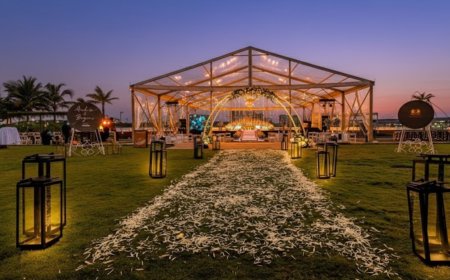
Tents and structures: Large format event tents — the primary shelter for outdoor farm functions — are hired from specialist tent vendors. The size, type, quality, and configuration of the tent is a major determinant of the visual impact and the guest comfort of the event. Premium tent vendors use imported or high-quality domestic structures that can produce genuinely extraordinary interior spaces. Budget tent vendors produce structures that look exactly like budget tents.
For NRI couples planning from abroad, the tent vendor selection is one of the most important vendor decisions in a farm wedding. The tent is the event space — it determines whether the event looks and feels like a premium production or like a well-intentioned but underfunded one.
Catering: Farm venues with no in-house catering require a catering vendor — either a standalone caterer or the décor and catering combination packages offered by some large-format event companies. The catering vendor brings the kitchen infrastructure, the service staff, the crockery, the glassware, and everything else required for the food and beverage service.
Food quality and consistency at farm venue events depends entirely on the catering vendor. Unlike a hotel venue where the catering infrastructure is permanent and professionally maintained, the farm venue catering setup is assembled and operated by the vendor team for each specific event. The quality of the vendor determines the quality of the catering experience.
Generators and power: Farm venues in the peri-urban and rural belts around Delhi and Mumbai have varying levels of reliable grid power. Premium purpose-built event farms typically have robust generator systems. Smaller and more remote properties may require the event company or the couple to hire and install generator capacity specifically for the event.
Generator capacity must cover: all event space lighting and air conditioning or heating, all catering equipment, all sound and audio-visual systems, all guest accommodation if on-site, all safety and security lighting. Under-specified generator capacity is one of the most consistent causes of farm wedding operational problems.
Bathrooms: Luxury portable bathroom facilities — hired for the event, installed on-site, maintained by dedicated staff throughout the event — are the standard bathroom solution at farm venues without permanent facilities. The quality of luxury portable bathrooms has improved significantly in recent years. The best portable bathroom setups are genuinely comfortable and appropriately appointed. The worst are exactly what the word portable traditionally implied.
For NRI weddings with international guests who have high expectations of bathroom facilities — and for events that will run for five or more hours — the bathroom specification and the maintenance staffing are non-trivial planning considerations.
The Vendor Ecosystem at Farm Venues
Farm venue weddings require a more extensive vendor team than hotel or palace venue weddings — because the farm venue provides space but not services, and every service must be separately contracted and coordinated.
The core farm wedding vendor team typically includes: the décor and floral vendor, the tent and furniture hire vendor, the catering vendor, the lighting vendor, the sound and audio-visual vendor, the generator hire vendor (if not venue-provided), the bathroom hire vendor (if not venue-provided), the transportation vendor for guest logistics, and the event management team that coordinates all of the above.
For NRI couples planning from abroad, this multi-vendor coordination is the most operationally demanding aspect of a farm wedding. A wedding planner with specific farm venue experience — not just general wedding planning experience — is not optional for this venue category. The coordination complexity at a farm wedding, managed without experienced professional oversight, is a significant operational risk.
The Build Time Reality
Farm venue setups require substantially more time than hotel venue setups — because everything is being brought in and installed rather than simply being arranged.
A large-scale farm wedding — multiple functions, elaborate décor, tent structures, full catering infrastructure — may require two to three days of setup before the first event begins. This build time has real cost implications: the venue hire period needs to include the build period, and the vendor teams are on-site and on-billing throughout.
For NRI couples used to hotel venues where setup happens in hours rather than days, the farm wedding build timeline is an important budget and planning consideration.
The Farm Wedding Budget Structure
The budget structure for a farm wedding differs significantly from a hotel or palace venue budget — in ways that NRI couples accustomed to hotel venue pricing need to understand before the farm venue comparison is meaningful.
What Farm Venue Pricing Includes
Farm venue pricing typically covers only the hire of the land, the permanent structures (if any), and the basic utilities. It does not include catering, décor, tents, furniture, lighting, sound, bathrooms, generators, or any other service.
The farm venue hire cost — which may appear attractively low compared to a palace hotel's combined venue hire and catering package — is the starting point of the total event cost, not a comprehensive representation of it.
The True Total Cost Calculation
For a farm wedding, the total event cost is the sum of: venue hire, tent and structure hire, décor and florals, catering (food, beverage, service staff, crockery, glassware), lighting, sound and audio-visual, generator hire, bathroom hire, event management fees, transportation for guest logistics, and GST across all service categories.
When all components are included, the total cost of a premium farm wedding can equal or exceed the all-inclusive cost of a premium hotel venue at a similar standard. The farm venue's apparent cost advantage disappears when the full infrastructure requirement is included.
What the farm venue offers in exchange for this equivalent cost is not a financial saving — it is a different kind of experience: more space, more freedom, more flexibility, more outdoor character, and in many cases a more distinctive and personalised event aesthetic than a hotel venue can produce.
The Value Proposition Framing
The farm wedding is not chosen because it is cheaper than a hotel wedding. At premium production quality, it is not cheaper. The farm wedding is chosen because it offers something that a hotel wedding cannot: the scale, the freedom, the outdoor atmosphere, the blank canvas that allows a completely personalised design vision, and the distinctive character of an event that feels genuinely different from a hotel ballroom production.
Frame the farm wedding decision around what it offers, not around a cost saving that does not materialise at premium quality levels.
Evaluating Farm Venues: The Specific Questions
The general venue evaluation framework — virtual visits, planner site visits, specific questions — applies to farm venues. But farm venues require additional specific questions that hotel and palace venues do not.
Infrastructure Questions
What permanent structures does the venue have?
What is covered by the venue hire versus what needs to be brought in? What is the permanent toilet and bathroom provision? What is the venue's generator capacity and does it cover all event requirements?
What is the maximum tent structure size that can be installed?
Some farm venues have restrictions on the size and type of structures that can be installed — based on the land area, local planning restrictions, or physical constraints of the property.
What is the ground surface and condition?
Flat, well-drained ground is essential for large outdoor events. Low-lying areas, clay soils, or inadequate drainage can create significant problems after any rain. Ask specifically about the drainage situation and the ground surface under the primary event areas.
What is the build access like?
Can large vehicles — tent trucks, catering equipment, generator vehicles — access all areas of the venue that need to be serviced? Tight access roads or weight-limited bridges can prevent or complicate the delivery of large infrastructure items.
Permission and Restriction Questions
What are the noise restrictions and operating hours?
Farm venues in peri-urban areas may be subject to district or municipal noise regulations. Confirm the permitted sound levels and the latest permitted time for music.
Are there any local authority permissions required for large events?
Some jurisdictions require specific permissions for events above certain guest counts. Confirm whether any permissions are required for your event and whether the venue has obtained or will obtain them.
What is the fire and safety infrastructure?
For large events in temporary structures, fire safety provisions — extinguishers, clear evacuation routes, emergency lighting — are important safety requirements. Confirm what the venue's fire safety infrastructure is and what the event management team's safety plan includes.
Weather and Contingency Questions
What is the rain contingency?
If it rains during an outdoor function, what is the contingency plan? Is there a covered area large enough to accommodate all guests? Can tent sides be added rapidly to an open-sided structure?
What is the heat and cold management plan?
For summer farm weddings near Delhi, the heat management for outdoor afternoon functions requires specific planning. For winter evenings, heating provision for open-sided tents needs to be specified.
Common Mistakes NRI Couples Make With Farm Weddings
Choosing a Farm Venue Without a Farm-Experienced Planner
This is the highest-consequence mistake in farm wedding planning. Farm venues require a planner who specifically understands the operational complexity of non-hotel venues — who has managed the multi-vendor coordination, the build timeline, the infrastructure specification, and the contingency planning that a farm wedding demands. A planner with hotel venue experience who is confident they can manage a farm wedding is a different and less appropriate resource than a planner with specific farm venue expertise.
Underestimating the True Total Cost
Building a farm wedding budget based on the venue hire quote alone — without including the full infrastructure cost — produces a budget that is significantly understated. Always build the full infrastructure cost into the budget from the beginning. The final total will be substantially higher than the venue hire figure.
Not Visiting or Verifying the Ground Condition
Farm venues can look beautiful in summer or winter portfolio photography and be entirely different in the specific season of the wedding. Waterlogged ground after unseasonable rain, cracked and uneven surfaces during dry conditions, or poorly drained areas that become muddy after any precipitation — these are physical realities that portfolio photography does not reveal. Your planner's site visit should specifically include an assessment of the ground condition and drainage.
Ignoring the Guest Transportation Logistics
Farm venues outside major urban centres require guest transportation planning that hotel venues do not. Guests cannot independently navigate to a rural farm venue without clear coordination. The transportation logistics — pickup points, vehicle allocation, journey timing, return arrangements — are a significant operational component of a farm wedding that needs to be planned and managed by the event team.
Not Building Enough Buffer Time Into the Build Schedule
Farm wedding builds take longer than estimated. Unexpected delivery delays, ground preparation requirements, structural adjustments — any of these can push back the build timeline. Build significantly more buffer into the setup schedule than seems necessary. A build that was planned to complete 24 hours before the first event should realistically be planned to complete 48 hours before.
The Farm Wedding vs. Palace Wedding Decision for NRI Couples
For NRI couples choosing between a Rajasthan palace venue and a farm venue near Delhi or Mumbai, the comparison is not purely aesthetic — it involves practical considerations about the wedding experience each delivers.
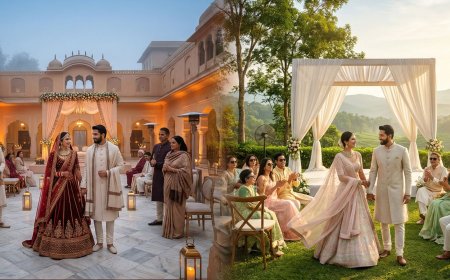
Choose a farm venue near Delhi or Mumbai if: Your guest base is primarily in Delhi or Mumbai and destination travel is an imposition rather than an enhancement. You want a venue that can be scaled to very large guest counts — 500 to 1,000+ — without the capacity constraints of most palace properties. You have a very specific, highly personal design vision that you want to execute without the constraints of existing architectural character. You value outdoor atmosphere, open sky, and the freedom from hotel-imposed restrictions above the cultural immersion and photographic distinctiveness of a Rajasthan palace.
Choose a Rajasthan palace venue if: The cultural immersion experience — for yourself, your family, and your international guests — is a primary priority. You want photographs that communicate something specific and irreplaceable about Indian heritage. Your guest count is within the range that a palace property can accommodate comfortably. You are prepared to ask guests to travel to Rajasthan and believe the experience justifies the journey.
The Farm Wedding That Works Is the One That Is Planned
The farm wedding near Delhi or Mumbai is capable of producing some of the most extraordinary Indian wedding experiences available — events that feel genuinely personal, genuinely spacious, and genuinely distinct from the hotel and palace wedding formats that dominate the premium Indian wedding market.
They are also the venue format most dependent on the quality of the planning and execution behind them - A hotel wedding with adequate planning produces an adequate outcome. A farm wedding with adequate planning produces a chaotic one. The operational complexity of the farm venue format amplifies the consequences of planning gaps in ways that more infrastructure-complete venues do not.
For NRI couples, this means one thing above all others: engage a planner with specific farm venue expertise before committing to this venue format. The planner is not supplementary to the farm wedding — they are the operational infrastructure that makes it possible.
With the right planner, the right vendor team, the right site, and the right budget fully understood, the farm wedding near Delhi or Mumbai delivers an experience that is genuinely exceptional — open, personal, atmospheric, and unmistakably yours.
Build it well. Plan it thoroughly. And then let the open sky do the rest.
What's Your Reaction?
 Like
0
Like
0
 Dislike
0
Dislike
0
 Love
0
Love
0
 Funny
0
Funny
0
 Angry
0
Angry
0
 Sad
0
Sad
0
 Wow
0
Wow
0