














































Floral vs. Non-Floral Decor: Modern Alternatives for Indian Weddings
The most visually distinctive Indian weddings today are not the ones with the most flowers — they are the ones with the most intention. This comprehensive guide explores the honest financial realities of fresh floral décor, the modern non-floral alternatives gaining serious traction across Indian wedding design, and the intelligent blend strategy NRI couples need to create celebrations that are culturally rooted, aesthetically extraordinary, and financially smart. From dried botanical installations and candle landscapes to textile walls and geometric metalwork, this guide helps you discover exactly where flowers win and where modern alternatives create significantly greater visual impact and lasting value.


The Conversation Nobody Was Having — Until Now
You're deep into wedding planning. Mood boards saved. Pinterest folders organized by function. WhatsApp groups with your mother, your future mother-in-law, and your décor vendor all running simultaneously at different levels of chaos.
And somewhere in the middle of your third floral quote — the one that just came in at a number that made you sit down quietly and stare at the wall for a few minutes — a thought crossed your mind.
Does it have to be flowers?
Not because you don't love flowers. You do. Every couple does. Flowers are beautiful, flowers are traditional, flowers are what Indian weddings have looked like for generations. But 400,000 rupees for blooms that will wilt within 24 hours of the ceremony, that guests will barely notice because there are so many of them competing for attention, that contribute significantly to post-wedding waste — the logic starts to crack under scrutiny.
And once you start asking that question — does it have to be flowers — a much more interesting creative conversation opens up.
Because here's what the most visually distinctive Indian weddings of the last three years have in common. They are not the ones with the most flowers. They are the ones with the most intention. The weddings where the couple made deliberate, unexpected, considered choices about every surface, every table, every arch, every backdrop — and where flowers, when they appeared, appeared because they were chosen, not because they were default.
For NRI couples planning Indian weddings from the UK, USA, Canada, UAE, or Australia, this creative evolution is particularly resonant. You've attended events and celebrations abroad that introduced you to a wider vocabulary of design — dried botanicals, sculptural installations, textile art, geometric metalwork, candle landscapes, living plant walls. You know that extraordinary visual spaces don't require fresh flowers at every turn.
This article is a complete, honest, and deeply practical exploration of where floral décor still reigns supreme, where non-floral alternatives create more impact, how to blend both intelligently, and how to navigate the family conversations that will inevitably follow when you suggest replacing the traditional rose garland arch with something they've never seen before.
The Core Reality: What Floral Décor Actually Costs Indian Couples — And What They Get for It
Before the creative conversation, the honest financial one.
Fresh floral décor is the single largest line item in most Indian wedding budgets after catering and venue. A multi-function Indian wedding with four to five events — haldi, mehendi, sangeet, ceremony, reception — can easily spend between fifteen and forty lakh rupees on flowers alone, depending on scale, flower variety, and the importing versus local sourcing decision.
That number deserves examination.
What drives floral costs upward:
Fresh flowers are perishable, which means they must be sourced, transported, refrigerated, and installed within an extremely compressed timeframe. The labor involved in constructing large floral installations — a ceiling installation, a mandap, a floral wall — is intensive and skilled. And the trend toward imported varieties — garden roses, peonies, ranunculus, protea, orchids — adds significant cost at every stage from procurement to transportation.
What couples actually get for that investment:
Undeniably beautiful visuals that photograph well, align with established Indian wedding aesthetics, and carry cultural resonance. Fresh flowers smell extraordinary, they create warmth and softness, and they have a tactile richness that most alternatives cannot fully replicate.
What couples don't always get:
Longevity. A morning haldi setup built with fresh florals will be wilting by the time the evening mehendi begins. A reception centerpiece that looked pristine at 7 PM will look tired by 10 PM. And the day after the wedding, virtually everything goes to waste.
This is the honest trade-off at the heart of the floral vs. non-floral conversation. Not that flowers are wrong — they are not — but that defaulting to maximum florals across every function without interrogating whether it's the right choice for each context is where most couples lose both money and creative opportunity.
The Strategic Framework: Where Flowers Win, Where They Don't, and How to Blend Both
Category 1 — Where Fresh Florals Remain Irreplaceable
There are specific moments and contexts within an Indian wedding where fresh flowers are not just beautiful — they are the right choice, culturally and aesthetically.
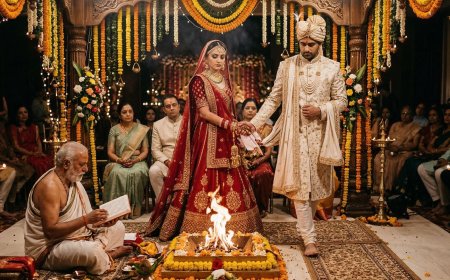
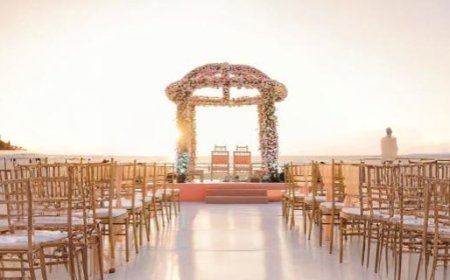
The Mandap: The mandap is the spiritual heart of the ceremony. Fresh flowers — particularly native varieties like marigold, jasmine, tuberose, and lotus — carry a cultural and sensory resonance here that no non-floral alternative can replicate. The fragrance alone is part of the experience. This is where your floral budget should be concentrated most heavily.
Bridal and Groom Garlands: The varmala exchange is a ceremonial moment. Fresh flower garlands are culturally essential and deeply meaningful. This is not the place for non-floral substitution.
Hair and Personal Florals: Gajra in the bride's hair, buttonholes for the groom, floral jewelry — these intimate personal touches carry enormous emotional and cultural weight and are best executed with fresh flowers.
Welcome and Transition Moments: A fresh flower petal pathway, a jasmine-draped entrance, marigold torans at doorways — these threshold moments benefit from the freshness and fragrance that only real flowers provide.
Conclusion: Concentrate your fresh floral budget on the mandap, personal florals, and key ceremonial moments. These are the contexts where flowers are irreplaceable. Everything else is open to creative rethinking.
Category 2 — Where Non-Floral Alternatives Create More Impact
Large-Scale Backdrops and Feature Walls
A fresh flower wall at the scale required for a wedding backdrop — typically three to four meters wide and two to three meters tall — is expensive, heavy, and begins wilting within hours. Non-floral alternatives for this context include:
Dried botanical walls using pampas grass, dried palms, preserved eucalyptus, and dried wildflowers — these are visually rich, hold their form across multiple functions, and have a warm organic texture that fresh flower walls often lack. Textile installation walls using handloom fabrics, block-printed cotton panels, or layered silk draping — these create a dramatically different but equally compelling backdrop aesthetic. Macramé and woven installations — particularly beautiful for outdoor ceremonies and garden receptions, creating a bohemian-luxe visual that photographs extraordinarily well. Brass and copper geometric frame installations with minimal dried botanical accents — modern, architectural, and completely reusable.
Table Centerpieces
Fresh flower centerpieces are beautiful but short-lived and expensive at scale. For a 200-person reception with 20 tables, the centerpiece budget alone can be substantial. Alternatives that create equal or greater visual impact include:
Candle landscapes — clusters of pillar candles at varying heights in brass or terracotta holders, surrounded by dried botanicals, fruits, or foliage. These create extraordinary warmth and romance at a fraction of the cost of fresh floral centerpieces and hold their appearance across the entire evening. Potted plant centerpieces — a mix of trailing plants, herbs, and small flowering potted varieties that guests can take home after the reception. This is sustainable, personal, and genuinely memorable. Sculptural terracotta and brass arrangements — a cluster of terracotta vessels at varying heights filled with dried grasses, native foliage, and single-stem flowers creates a centerpiece that is architecturally interesting and culturally grounded. Fruit and botanical tableaux — particularly for mehendi and haldi tables, arrangements of seasonal fruits, citrus, dried spices, and foliage create a sensory, abundant aesthetic that aligns beautifully with daytime function energy.
Ceiling Installations
Ceiling installations are among the most visually impactful elements of any wedding space — and among the most expensive when executed in fresh flowers. The weight, the installation complexity, and the speed of wilting make fresh floral ceiling canopies a high-cost, short-lifespan investment. Alternatives include:
Dried pampas and botanical canopies — lighter, easier to install, visually dramatic, and lasting across multiple functions. Fabric canopies in layered silks, muslins, or handloom textiles — particularly beautiful for outdoor ceremonies where movement in fabric creates a living, breathing quality. Lantern and pendant light clusters — brass lanterns, rattan pendants, and woven light fixtures suspended at varying heights create architectural ceiling interest that works in partnership with your lighting design. Ribbon and textile stream installations — layered ribbons or strips of natural fabric in complementary tones, suspended from ceiling rigging, create a movement-based ceiling installation that is dramatic and cost-effective.
Arch and Frame Structures
Wedding arches are a significant floral investment — particularly for ceremony backdrops and entrance features. Non-floral arch alternatives that have gained significant traction include:
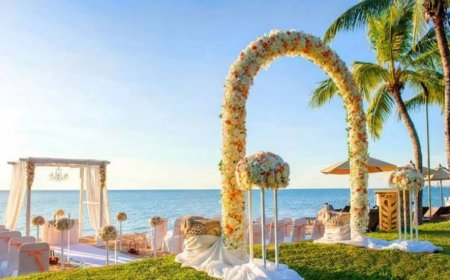
Dried botanical arches — pampas grass, dried palm leaves, preserved eucalyptus, and dried wildflowers structured around a simple frame create a full, dramatic arch that maintains its appearance across the entire wedding day. Macramé arches — handwoven natural fiber arches that frame ceremony spaces with organic texture and a warm, artisanal quality. Bamboo and rattan arch structures with minimal botanical accents — architectural, sustainable, and visually distinctive. Geometric metalwork arches in brass or copper — clean, modern, and reusable across multiple functions.
Category 3 — The Intelligent Blend Strategy
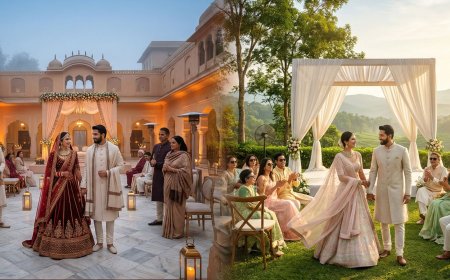
The most visually sophisticated Indian weddings currently being celebrated are not choosing between floral and non-floral. They are making intelligent, intentional decisions about where each belongs — concentrating fresh flowers where they matter most and using non-floral alternatives where they create more impact, more longevity, and more cost efficiency.
A practical blend framework might look like this: invest heavily in fresh florals for the mandap, bridal garlands, personal florals, and key ceremonial transitions. Use dried botanicals for large-scale backdrop and arch installations that need to hold across multiple functions. Use candle landscapes and potted plants for reception centerpieces. Use textile installations and geometric metalwork for feature walls and entrance statements. Use fresh floral accents — single stems, small clusters, petal scattering — to add the fragrance and freshness of real flowers to non-floral installations without the cost of full floral coverage.
Common Mistakes NRI Couples Make in the Floral vs. Non-Floral Decision
Going Fully Non-Floral Without Understanding Cultural Context A wedding entirely without fresh flowers can feel sterile and disconnected from Indian wedding culture. Fresh flowers carry cultural memory and sensory experience that matters deeply. The goal is not elimination — it is intelligent allocation.
Treating Dried Botanicals as the Cheap Option High-quality dried botanical installations — particularly professionally sourced pampas, preserved eucalyptus, and dried palm — are not significantly cheaper than fresh floral alternatives when executed well. Their value is longevity and aesthetic distinction, not cost savings.
Not Briefing Your Photographer on the Material Palette Non-floral décor elements — metalwork, dried botanicals, candle landscapes — require different photographic approaches than fresh flower setups. Brief your photographer on your full décor material palette so they can prepare their lighting and shooting approach accordingly.
Choosing Trends Over Coherence Pampas grass is having a significant moment in Indian wedding design. So is macramé. So are dried botanicals. But layering every current trend into a single wedding creates visual incoherence. Choose a clear aesthetic language and select elements — floral and non-floral — that speak the same visual dialect.
Ignoring Fragrance One of the things fresh flowers bring to a wedding that no non-floral alternative can replicate is scent. The fragrance of jasmine, tuberose, and marigold at an Indian wedding is deeply emotional — it is the scent of memory, of celebration, of home. Even a heavily non-floral wedding should incorporate fresh fragrant flowers in intimate spaces — the bridal room, the mandap, welcome garlands — to preserve this sensory dimension.
The Emotional and Cultural Layer: What Flowers Mean at Indian Weddings — and Why That Matters
Flowers at Indian weddings are not purely decorative. They carry spiritual, cultural, and emotional freight that deserves acknowledgment even as you make the creative decision to supplement or replace them in certain contexts.
Marigolds are associated with auspiciousness and the divine. Jasmine carries connotations of purity and love. Lotus is sacred across multiple Indian religious traditions. These are not arbitrary aesthetic choices — they are culturally loaded symbols that have been present at Indian celebrations for thousands of years.
When NRI couples choose non-floral alternatives, it is worth being intentional about how and where the cultural flower vocabulary is preserved. You don't need marigolds on every table — but you probably want them present at the mandap, in the garlands, and in the intimate ceremonial spaces where their cultural meaning is most resonant.
The creative freedom of non-floral design is best exercised in the spaces where flowers are decorative rather than symbolic. Reserve the cultural flower vocabulary for the moments where it carries genuine meaning — and in those moments, let it be present fully and beautifully.
Practical Checklist: Floral vs. Non-Floral Decision Framework
Fresh Florals — Prioritize For
- Mandap construction and ceremonial space
- Bridal and groom garlands and personal florals
- Bridal hair and gajra
- Welcome and threshold moments — entrances, pathways, torans
- Intimate ceremonial spaces where fragrance matters
Non-Floral Alternatives — Consider For
- Large-scale feature walls and backdrops
- Ceiling installations across multiple functions
- Reception table centerpieces
- Arch and frame structures for ceremony and photo spaces
- Entrance statement pieces that need to hold across the full wedding day
Intelligent Blend Principles
- Concentrate fresh floral budget on high-meaning ceremonial contexts
- Use dried botanicals for installations requiring multi-function longevity
- Use candle landscapes and potted plants for reception tables
- Add fresh floral accents to non-floral installations for fragrance and freshness
- Confirm all material choices with your photographer before finalizing
The Wedding That Looks Like Nobody Else's
The Indian wedding landscape is shifting. Couples with global exposure, refined aesthetic sensibilities, and the confidence to make unexpected creative choices are producing celebrations that look genuinely distinctive — weddings that don't look like every other wedding, because they were built with intention rather than convention.
The floral vs. non-floral conversation is one expression of that shift. It's not about rejecting tradition — it's about understanding tradition deeply enough to know where it is essential and where it is simply assumed.
Your wedding can have marigolds at the mandap and pampas grass at the reception. It can have jasmine in your hair and a dried botanical arch at the ceremony entrance. It can honor everything that flowers mean in Indian culture while making intelligent, modern, beautiful choices about where other materials create more impact.
The most memorable weddings are not the most floral. They are the most considered. And a couple who has thought carefully about every surface, every material, every moment — that is a couple whose wedding people talk about for years.
Make it yours. Make it intentional. Make it unforgettable.
What's Your Reaction?
 Like
0
Like
0
 Dislike
0
Dislike
0
 Love
0
Love
0
 Funny
0
Funny
0
 Angry
0
Angry
0
 Sad
0
Sad
0
 Wow
0
Wow
0