





































































Where Nizami Grace Meets Eternal Devotion — The Complete Guide to Hyderabadi Muslim Wedding Traditions
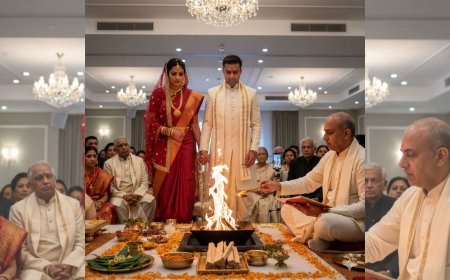
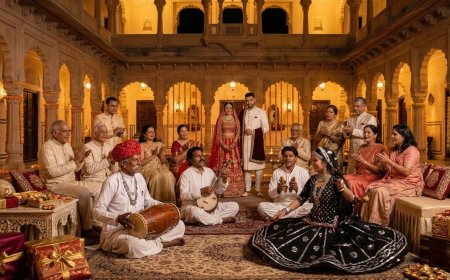
The Hyderabadi Muslim wedding is a living inheritance from one of the Subcontinent's most refined Islamic courts — a multi-day ceremonial sequence of Mangni, Mayoon, Mehndi, Nikah, Rukhsati, and Chauthi shaped by four centuries of Nizami culture, Dakhni Urdu tradition, and Deccani Muslim identity. This complete guide covers the full wedding sequence, its cultural and spiritual significance, and practical planning guidance for Hyderabadi NRI families hosting weddings in the USA, UK, Canada, Australia, and UAE.


The Hyderabadi Muslim wedding is unlike any other on the Subcontinent — a living inheritance from one of history's most refined Islamic courts, where Persian elegance, Telugu warmth, and Deccani Muslim identity fused over four centuries into a wedding culture of extraordinary depth and beauty. For NRI Hyderabadi families from Houston to London to Melbourne, preserving this tradition is not sentiment — it is an act of civilisational memory.
You did not grow up explaining where you were from — you grew up defending it. Not defensively, but proudly, with the specific confidence of someone whose culture has always known exactly who it is. When people said "Indian Muslim wedding" you said "no — Hyderabadi." Because there is a difference. There has always been a difference. The food is different, the language is different, the music is different, the rituals carry four hundred years of Nizam's court refinement in every detail — and you knew this before you could fully articulate it.
You are in Houston now, or in the western suburbs of Melbourne, or in East London, and you are planning a wedding. Not just a wedding — a Hyderabadi wedding. And you are discovering that the community aunty who knows the specific sequence of the Mangni [formal engagement], the Mayoon, the Mehndi, the Nikah, the Chauthi [the fourth-day celebration] — she is in Hyderabad, not in your city. The caterer who knows the difference between Hyderabadi biryani and everything else that calls itself biryani is three suburbs away if you are lucky and two flights away if you are not.
You can have the wedding your family has always had. Exactly as it has always been. Here is everything you need to know.
🌟 Did You Know?
The Hyderabadi Muslim wedding tradition developed under the patronage of the Asaf Jahi dynasty — the Nizams of Hyderabad who ruled from 1724 to 1948 — who brought Persian courtly customs, absorbed Telugu and Kannada regional traditions, and created a uniquely Deccani Islamic culture that expressed itself most fully in weddings, food, language, and dress. The seventh and last Nizam, Mir Osman Ali Khan, was at one point considered the wealthiest man in the world, and the scale and refinement of Nizami weddings set a standard that percolated through every layer of Hyderabadi Muslim society.
Dakhni Urdu [the distinct dialect of Urdu spoken by Hyderabadi Muslims, which preserves older Persian and Arabic constructions alongside Telugu and Kannada loanwords] is the specific language of Hyderabadi wedding songs, rituals, and ceremonial communication — and it is distinct enough from standard Urdu that Punjabi or Lucknawi Muslim families encountering it at a Hyderabadi wedding experience it as a genuinely different linguistic tradition. NRI Hyderabadi families across the diaspora treat the preservation of Dakhni Urdu in wedding ceremonies as a conscious act of cultural identity.
The Hyderabadi Muslim diaspora in the United States is concentrated heavily in the Dallas-Fort Worth and Houston metropolitan areas, with an estimated Hyderabadi Muslim population in Texas alone that supports dedicated Hyderabadi caterers, mehendi artists trained in Hyderabadi bridal designs, and cultural organisations that actively document and preserve Nizami wedding traditions for second and third-generation NRI families.
What Is a Hyderabadi Muslim Wedding?
The Hyderabadi Muslim wedding is a multi-day ceremonial sequence that reflects the layered cultural inheritance of the Deccan — the particular synthesis of Mughal court tradition, Persian aesthetic refinement, and deep South Indian cultural roots that makes Hyderabadi Muslim identity distinct from every other Muslim community on the Subcontinent.
The wedding sequence typically unfolds across five to seven days, beginning with the Mangni [the formal engagement ceremony, in which the two families are joined by the exchange of gifts, sweets, and the formal reading of the Fatiha [the opening chapter of the Quran recited as a blessing]], moving through the Mayoon [the seclusion ceremony in which the bride is kept from sunlight and anointed with ubtan [a paste of turmeric, sandalwood, and rose water] by female relatives over several days — considered to prepare the bride's skin and spirit for the transformation of marriage], the Mehndi [the henna celebration], the Nikah [the Islamic marriage contract], the Rukhsati [the bride's departure from her family home — one of the most emotionally charged moments in any South Asian wedding, but carrying a particular weight in the Hyderabadi tradition], and the Chauthi [the fourth-day reception at the groom's family home at which the bride is formally welcomed into her new family].
What distinguishes the Hyderabadi sequence from other South Asian Muslim weddings is the specific Nizami cultural layer — the Dakhni Urdu wedding songs called Geet, the specific Hyderabadi biryani served at every significant event, the Attar [pure perfume oil] traditions, the specific bridal jewellery forms including the Mathapatti [the elaborate head ornament], the Jhoomar [the side-head ornament], and the Passa — and the pervading sense that every ritual gesture carries the weight of a courtly tradition four centuries deep.
Hyderabadi Wedding Traditions Compared Across South Asian Muslim Communities
| Community / State | Engagement Ceremony | Pre-Wedding Ritual | Bridal Music Tradition | Signature Wedding Food | How NRIs Abroad Adapt It |
|---|---|---|---|---|---|
| Hyderabadi Muslim | Mangni with Fatiha recitation | Mayoon — turmeric seclusion over multiple days | Dakhni Urdu Geet; Hyderabadi qawwali | Hyderabadi dum biryani; Sheer Korma; Qubani ka Meetha | Hyderabadi community networks; specialist caterers; travelling mehendi artists |
| Pakistani Muslim (Punjabi) | Mangni / Ring ceremony | Dholki nights; ubtan | Punjabi wedding songs; dholki | Pulao; Nihari; Halwa Puri | Pakistani community hall; South Asian caterer |
| Pakistani Muslim (Sindhi) | Mangni | Mehndi over multiple days | Sindhi folk songs | Sindhi biryani; Sai Bhaji | Sindhi community contacts |
| Indian Muslim (Lucknowi) | Mangni with refined Nawabi customs | Mayoon with specific Awadhi customs | Urdu thumri and ghazal | Awadhi biryani; Galouti kebab | Lucknawi community networks |
| Bangladeshi Muslim | Akd / Engagement | Holud — turmeric ceremony | Bengali Muslim wedding songs | Kacchi biryani; Polao | Bangladeshi community hall |
| Kashmiri Muslim | Mangni | Livet — walnut paste ceremony | Kashmiri Sufiana Kalam | Wazwan feast | Kashmiri community contacts |
| Tamil Muslim | Nikah preparation ceremony | Manjal ceremony | Tamil Muslim wedding songs | Biryani; Sevai | Tamil Muslim community networks |
| Rajasthani Muslim | Mangni | Ubtan/Mayoon | Rajasthani folk songs | Rajasthani biryani; Dal Baati | Rajasthani community contacts |
| Marathi Muslim | Nikah preparation | Haldi ceremony | Urdu and Marathi wedding songs | Kombdi Vade; biryani | Marathi Muslim community contacts |
| Mughlai / Delhi Muslim | Mangni with Nawabi customs | Mayoon | Urdu ghazal and qawwali | Mughlai biryani; Korma | Delhi Muslim community networks |
The Meaning Behind the Tradition
The Hyderabadi Muslim wedding carries within it a philosophical understanding that marriage is not merely a social contract but a civilisational event — the moment at which one lineage meets another, at which all the culture, memory, and identity of a family passes into a new configuration. The Nizami court that shaped this tradition understood the wedding as an expression of a culture's full capacity for beauty, refinement, and devotion, and that understanding persists in every Hyderabadi wedding detail.
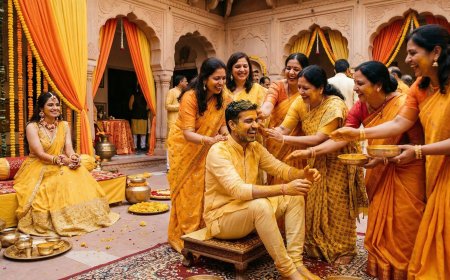
The Mayoon — the seclusion and anointing — is the most philosophically rich pre-wedding ceremony in the tradition. The bride's withdrawal from ordinary life, her anointing with substances that are simultaneously cosmetic and sacred, her preparation by the female community of her family — all of this reflects an ancient understanding that transformation requires a liminal space, a period of withdrawal between one identity and another. You cannot cross the threshold of marriage as the same person who approached it. The Mayoon is the ceremony that makes the crossing possible.
The insistence on Dakhni Urdu in wedding songs, the specific Hyderabadi forms of jewellery, the particular biryani that can only be called Hyderabadi if it is made a specific way — these are not conservatism. They are a culture saying: we know who we are, and we will not be dissolved.
For a non-Hyderabadi partner or family member: this wedding is the expression of a culture that survived the end of its kingdom and carried its refinement intact across generations — and considers the wedding the primary vehicle for that survival.
Doing It Abroad: The Practical Reality
The Hyderabadi Muslim wedding abroad faces a specific challenge that goes beyond the general NRI wedding sourcing problem: the depth and specificity of the tradition requires people who carry it in their bodies, not just their memories. The Dakhni Urdu songs cannot be approximated by standard Urdu wedding songs. The Hyderabadi biryani cannot be replaced by any other biryani, no matter how good. The Mayoon sequence has a specific structure that a general South Asian wedding planner will not know without being told.
The first and most important resource is the Hyderabadi Muslim community network in your diaspora city. In Houstonand the Dallas-Fort Worth area, the Hyderabadi Muslim community is large, organised, and actively engaged in cultural preservation — the mosque networks, the cultural associations, and the community WhatsApp groups that connect Hyderabadi families are your most reliable source for every vendor referral you need, from the caterer who makes authentic dum biryani to the mehendi artist trained in Hyderabadi bridal designs. The Hyderabadi Muslim Associationcontacts in Texas are worth finding months before you begin any other wedding planning.
In London, the Hyderabadi Muslim community is concentrated in parts of East London and in the broader South Asian Muslim network. Seek specifically within the Hyderabadi community rather than the general South Asian wedding market — the difference in what you receive will be significant.
For Hyderabadi biryani specifically — and this is not negotiable, the biryani is the centrepiece of every Hyderabadi wedding feast — you are looking for a caterer who prepares it in the dum style [slow-cooked, sealed with dough, the rice and meat layered and cooked together] with the specific Hyderabadi spice profile that is distinct from Lucknawi, Kolkata, or any other biryani tradition. In Houston, the Indian grocery and restaurant corridor of Hillcroft Avenue has Hyderabadi food operations. In London, seek specifically within the Hyderabadi community rather than assuming any South Asian caterer will understand the difference.
For the Mayoon ceremony abroad, the practical challenge is the multi-day structure — working families in diaspora cities cannot always sustain a three-day Mayoon, and the ceremony is sometimes condensed into a single event. If condensing is necessary, preserve the sequence and the specific ubtan [anointing paste] preparation even if the duration is shortened — the ritual gesture matters more than the number of days.
For coordinating with family in Hyderabad via video stream — a wedding in London at 7:00 PM is midnight in Hyderabad. The Chauthi in particular, which is typically a daytime event, is the easiest to stream to Hyderabad in real time. For the Nikah, brief your stream operator to position the camera for the Qazi [the Islamic officiant] and the formal exchange — the family in Hyderabad who cannot be present will want to witness this above all else.
As a Destination Wedding in Hyderabad
To have a Hyderabadi wedding in Hyderabad itself is to have it in the city that created it — where the Qutb Shahi tombs and the Charminar stand as permanent reminders of the civilisation whose wedding culture you are celebrating, where the caterer has made dum biryani for forty years, where the Qazi knows the specific Hyderabadi nikah customs, where the aunties in the back row know every word of every Dakhni Geet and will sing them whether or not they have been asked.
The heritage venues of Hyderabad — the palatial properties in Banjara Hills and Jubilee Hills, the heritage havelis in the old city, the gardens of properties near the Hussain Sagar lake — provide settings of extraordinary beauty for a destination Hyderabadi wedding. Brief your Hyderabadi wedding planner specifically on which elements of the Nizami tradition your family preserves — traditions vary between families and between the old city and the newer Hyderabad — and ask them to source a Qazi experienced in the full ceremonial sequence.
For non-Indian guests at a destination Hyderabadi wedding, Hyderabad itself is one of the most magnificent cities in India for visitors — the food alone, the Charminar, the Salar Jung Museum, the pearls of Laad Bazaar, the specific beauty of a city that has always known how to live well. Brief your guests in advance with a cultural note on the wedding sequence and what to expect at each event.
What You Need: The Hyderabadi Wedding Checklist
Ritual and Event Items: Ubtan ingredients for the Mayoon — sandalwood powder, turmeric, rose water, and family-specific additions preserved in family recipes; mehendi artist trained specifically in Hyderabadi bridal design sourced from the Hyderabadi community network at least four months before; Dakhni Urdu Geet singers or recordings confirmed for the Mehndi night; Qazi experienced in the Hyderabadi nikah ceremony sequence confirmed at least three months before; Hyderabadi dum biryani caterer confirmed with tasting at least two months before; bridal jewellery in the Hyderabadi style including Mathapatti, Jhoomar, and Passa — sourced from Hyderabadi jewellers in the community or from Hyderabad directly; Attar [pure perfume oil] in the specific Hyderabadi wedding fragrances, traditionally oud-based.
People Required: The senior female relatives who carry the Mayoon sequence in their memory — their presence is not optional, it is the ceremony; the Qazi for the Nikah; the Dakhni Geet singers for the Mehndi; the Hyderabadi biryani caterer as the food anchor of every event; your wedding photographer briefed that the Mayoon anointing, the Rukhsati, and the Chauthi welcome are the three visual priorities of the entire wedding sequence.
Preparation Steps: Engage the Hyderabadi community network in your city at least six months before to begin vendor sourcing. Book your biryani caterer as early as possible — the best Hyderabadi caterers in diaspora cities are taken far in advance. Confirm the Mayoon sequence with senior family members and agree on what will be preserved and what will be condensed given diaspora constraints. Order or commission Hyderabadi bridal jewellery at least six months before. Set up and test the video stream for family in Hyderabad at least the day before.
NRI.Wedding connects Hyderabadi NRI families with specialist caterers, Hyderabadi mehendi artists including internationally travelling artists, Qazis experienced in the Hyderabadi nikah sequence, and photographers who understand the specific visual poetry of a Nizami wedding. Begin at NRI.Wedding.
5 Questions NRI Couples Always Ask
We cannot find a Qazi who knows the specific Hyderabadi nikah customs. What do we do?
The Hyderabadi nikah has specific ceremonial elements — particular duas, a specific sequence of recitation, the manner of the ijab-o-qubool [the offer and acceptance] — that distinguish it from a generic Islamic nikah. The most reliable route to a Qazi with this knowledge is through the Hyderabadi Muslim community network in your city. If no Qazi with specific Hyderabadi experience is available, a knowledgeable Qazi can be briefed by senior family members on the specific elements you want preserved — bring a written note of the specific customs your family observes. For families with strong ties to Hyderabad, having the Qazi participate via video call from Hyderabad while a local Qazi officiates the legal ceremony is an increasingly used solution in the diaspora.
My partner's family is not Hyderabadi and doesn't understand the Mayoon. How do we explain it?
The Mayoon is one of the most visually beautiful and emotionally resonant pre-wedding ceremonies in any South Asian tradition — the bride in her yellow clothes, the anointing with fragrant paste by her female relatives, the seclusion and preparation — and it communicates its meaning effectively even to people who don't know its name. Prepare a brief written explanation for non-Hyderabadi family members describing what is happening and why. Invite the partner's female family members to participate in applying the ubtan — the gesture of inclusion transforms observers into participants and the Mayoon into a shared event rather than a display.
The Hyderabadi biryani at our last family wedding in Houston was not authentic. How do we ensure we get the real thing?
This is the most common and most serious Hyderabadi NRI wedding complaint. The solution is threefold: source your caterer specifically from within the Hyderabadi community network rather than from a general South Asian caterer; insist on a tasting at least two months before the wedding; and be explicit about the specific requirements — dum cooking method, the specific Hyderabadi spice profile, the ratio of rice to meat, the saffron colour on the top layer. If no satisfactory caterer exists in your city, consider bringing a caterer from another city where the Hyderabadi community is larger, or arranging for a Hyderabadi home cook from the community to prepare the biryani for the wedding.
How do we coordinate the Rukhsati with family streaming from Hyderabad given the time difference?
A wedding Rukhsati in London at 9:00 PM is 1:30 AM in Hyderabad. For family who will stay up for the stream — and they will — ensure the stream is stable, positioned correctly to capture the bride's face and the family farewell, and that the audio carries the Dakhni Geet singing that accompanies the Rukhsati in Hyderabadi tradition. Brief the stream operator that this is the most emotionally significant moment of the entire wedding weekend and the camera cannot move from the bride until she has left the room. Consider recording the entire sequence in full quality for the family members in Hyderabad who cannot stay up to watch live.
Should we do the full multi-day Mayoon or condense it for a diaspora wedding?
The honest answer is that a condensed Mayoon done with full intention is infinitely more meaningful than a multi-day Mayoon done without it. Diaspora families cannot always sustain the traditional three to five-day Mayoon structure, and there is no cultural shame in condensing it to a single dedicated afternoon or evening. What must be preserved are the essential elements: the specific ubtan preparation, the application by senior female relatives in the correct sequence, the Dakhni Geet singing that accompanies the anointing, and the bride's seclusion in the period that follows. These elements are the ceremony. The duration is the container — and the container can flex.
The Emotional Angle
The mother does not speak about it directly. She never has.
She has given you everything — the language lessons when you were small and didn't want to learn, the Eid clothes made to pattern because the stitching here was never quite right, the biryani that took all of Saturday to make properly because she would not serve the other kind, the specific insistence that you know where you came from and what that means.
And now it is the week before your wedding, and she has been in the kitchen since six in the morning preparing the ubtan from her mother's recipe — the sandalwood and the turmeric and the rose water in the proportions that have not been written down because they do not need to be written down, because a Hyderabadi woman carries them — and you come into the kitchen and you watch her hands moving through the paste and you understand, for the first time fully, what she has been doing all these years.
She has been keeping Hyderabad alive. In this house in Houston, in this kitchen on an ordinary Saturday morning, she has been the last standing wall of a civilisation that the history books say ended in 1948 but that is not true, it has not ended, it is here, it is in her hands, it is in the recipe she is making for your wedding.
She looks up. She does not say anything.
She hands you the bowl.
A Moment to Smile
At a Hyderabadi Muslim wedding in Melbourne in the summer of 2023, the biryani had been the subject of significant family negotiation for four months. The caterer — a Hyderabadi uncle from the community who had never catered a wedding of this size before — had confidently assured the family that he could produce biryani for one hundred and twenty guests without difficulty.
By Saturday afternoon it became apparent that the uncle had slightly underestimated the quantity required and was short by approximately thirty portions.
The WhatsApp message went out to the Hyderabadi community group at 4:00 PM. By 5:30 PM, four aunties had arrived with their own pots. By 6:00 PM there was more biryani than the wedding could eat.
Every pot was slightly different. Every aunty's recipe was, naturally, the correct one.
The bride's grandmother tasted each one carefully. She declared all of them acceptable. This was, by Hyderabadi standards, high praise.
The wedding ran out of nothing. The aunties stayed for the dancing.
Quotes from the Diaspora
"My mother sat with me the night before the Mehndi and sang the Dakhni Geet — the same songs her mother sang at her wedding in Hyderabad in 1971. I don't think I had ever heard her sing before. She has a beautiful voice. I didn't know that either. There are things the wedding reveals that ordinary life keeps hidden." — Nadia Siddiqui, Hyderabadi Muslim community, Houston, USA
"My son married a girl from a Punjabi family. They had never seen a Mayoon before. By the end of it, his mother-in-law was applying the ubtan with the same care as my own sisters. She told me afterwards that she wished her own daughters had had something like it. I told her: they can. We'll do it properly for hers." — Rubina Hussain, Hyderabadi Muslim community, Birmingham, UK
"We had the biryani catered by a Hyderabadi aunty from the community in Mississauga who had been making it for forty years. My husband — who is not Hyderabadi, he is from Lahore — had his first proper Hyderabadi dum biryani at our wedding reception. He went back four times. He has since admitted that it is better than Lahori biryani. This took courage and I respect him for it." — Farah Mirza, Hyderabadi Muslim community, Mississauga, Canada
The Nizam's Legacy Travels With You
The Hyderabadi Muslim wedding is not a recreation of something lost — it is the continuation of something that has refused to be lost, carried by families who understood that culture does not survive by accident but by the deliberate, loving, sometimes exhausting decision to keep doing things the right way even when the easier version is available.
NRI.Wedding exists to support that decision at every practical level — connecting Hyderabadi NRI families with specialist caterers who make authentic dum biryani, mehendi artists trained in Hyderabadi bridal designs, Qazis experienced in the full ceremonial sequence, and wedding photographers who understand that a Nizami wedding requires a different eye than any other. The planning checklists, the vendor networks, the community connections — all of it built for families who know exactly what they want and need the right people to help them have it.
Your family carried the Nizam's legacy across oceans. Your wedding is where it lives.
Let it be magnificent. It always has been.
This article explores Hyderabadi Muslim wedding traditions — including the Mangni, Mayoon, Mehndi, Nikah, Rukhsati, and Chauthi — their origins in Nizami court culture, Dakhni Urdu traditions, and full practical guidance for Hyderabadi NRI families planning weddings in the USA, UK, Canada, Australia, and UAE.
What's Your Reaction?
 Like
0
Like
0
 Dislike
0
Dislike
0
 Love
0
Love
0
 Funny
0
Funny
0
 Angry
0
Angry
0
 Sad
0
Sad
0
 Wow
0
Wow
0