








































The Leela Palace Chennai — A Palace Wedding in South India's Most Underrated NRI Wedding City — The Complete NRI Wedding Planning Guide
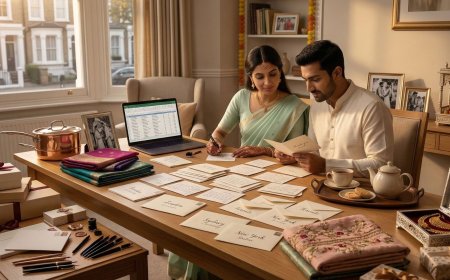
Meenakshi had a problem that she had not seen addressed in any of the destination wedding guides she had read across eight months of venue research. She was Tamil. Her fiancé Karthik was Tamil. Their families were from Chennai. Their extended family — the aunts and uncles and cousins and community connections that constituted the social world within which both families had lived for three generations — was largely based in Chennai and Tamil Nadu. The wedding would be attended by a minimum of three hundred guests, approximately two hundred and fifty of whom were from Chennai, and approximately fifty flying in from London, Singapore, and various American cities. Every destination wedding guide had pointed her toward Jaipur, Udaipur, Goa, Kerala — destinations requiring her two hundred and fifty Chennai guests to either make the journey or be absent. The wedding planner she had consulted offered the standard redirection: the guests who matter most will make the journey; the two hundred and fifty Chennai guests could attend a separate reception later. She had listened and disagreed entirely. The two hundred and fifty Chennai guests were not the overflow. They were the family. The Kolathur aunty who had attended her mother's wedding thirty-five years earlier. The Mylapore uncle whose blessing at the beginning of any significant occasion was the specific beginning the family had always observed. She did not want the destination at the expense of the community. She wanted the wedding that was of the community and also extraordinary. She typed: five star palace wedding Chennai. The Leela Palace Chennai appeared. White marble. Mughal-influenced formal garden. Grand Ballroom capacity for a thousand guests. In Chennai. On Anna Salai. Forty minutes from every one of her two hundred and fifty community guests. This guide gives NRI couples the complete framework for The Leela Palace Chennai wedding — every event space with detailed pricing, the Tamil wedding ritual requirements, the muhurtham as the organising principle, the banana leaf feast brief, the Carnatic music and Bharatanatyam cultural program, and the specific mistakes that separate the couple who uses Chennai as the destination it actually is from the couple who went to Goa when the community was already here.


The Leela Palace Chennai — A Palace Wedding in South India's Most Underrated NRI Wedding City — The Complete NRI Wedding Planning Guide
Meenakshi had a problem that she had not seen addressed in any of the destination wedding guides she had read across eight months of venue research.
The problem was this: she was Tamil. Her fiancé Karthik was Tamil. Their families were from Chennai. Their extended family — the aunts and uncles and cousins and family friends and community connections that constituted the social world within which both families had lived for three generations — was largely based in Chennai and Tamil Nadu. The wedding would be attended by a minimum of three hundred guests, approximately two hundred and fifty of whom were from Chennai and the surrounding region, and approximately fifty of whom were flying in from London where Meenakshi and Karthik lived, from Singapore where several close friends were based, and from various American cities where Karthik's father's extended family had settled.
The destination wedding guidance she had been reading had, without exception, pointed her toward destinations that were not Chennai. Jaipur. Udaipur. Goa. The Kerala resorts. The Coorg hills. All of them extraordinary. All of them requiring her two hundred and fifty Chennai guests to either make the journey to the destination — the flight, the accommodation, the travel expense, the days away from work and family — or to be absent from the wedding.
She had tried to explain this to the wedding planner she had been in conversation with, who had responded with the gentle redirection that she had come to recognise as the destination wedding industry's standard response to the Chennai problem: the guests who matter most will make the journey; the destination wedding is about quality not quantity; the two hundred and fifty Chennai guests could attend a separate reception in Chennai after the destination wedding.
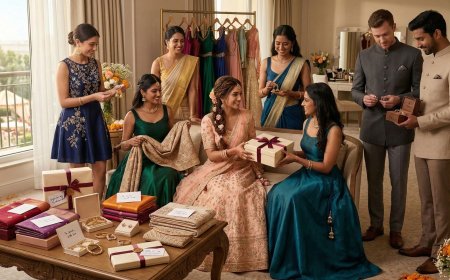
She had listened to this and understood why the planner was saying it and disagreed with it entirely. The two hundred and fifty Chennai guests were not the overflow. They were the family. The Kolathur aunty who had attended Meenakshi's mother's wedding thirty-five years earlier. The Mylapore uncle whose blessing at the beginning of any significant occasion was the specific beginning that the family had always observed. The community connections through whose presence the wedding was made real in the specific way that the Tamil wedding tradition had always made it real — the witness of the community, not just the witness of the inner circle.
She did not want a destination wedding at the expense of the community. She wanted the wedding that was of the community and also extraordinary — the wedding that did not require the guests to choose between attending and managing the logistics of a destination journey, but that gave the guests the experience of a genuinely grand and genuinely beautiful wedding within the city they were already in.
She had typed: five star palace wedding Chennai.
The Leela Palace Chennai had appeared.
She had known of The Leela Palace Chennai in the way that Chennai residents know the significant landmarks of their city — by reputation, by reference, by the occasional passing of the white marble facade on the Anna Salai corridor. She had not thought of it as a wedding venue because the destination wedding planning frame had not included Chennai in its geography. She looked at it now with the question she should have been asking from the beginning: was this a palace?
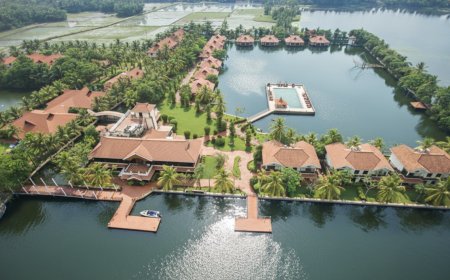
She looked at the photographs for thirty minutes. The white marble exterior. The formal Mughal-influenced garden. The palatial interiors. The Grand Ballroom. The event spaces that were proportioned for the large South Indian wedding rather than for the intimate destination gathering. The Leela Hotels group's operational standards. The Anna Salai address that every one of her two hundred and fifty Chennai guests could reach from their homes in under forty minutes.
She called Karthik. She said: I have been solving the wrong problem. He said: what do you mean? She said: I have been trying to take the wedding to a destination. The destination is already here. He said: The Leela? She said: The Leela Palace Chennai. He said: on Anna Salai? She said: on Anna Salai. He said: is it a palace? She said: look at the photographs and tell me. She sent the photographs. He looked at them for eight minutes. Then he said: it is a palace. She said: it is exactly a palace. He said: in Chennai. She said: in Chennai. He said: why did nobody tell us about this? She said: because the destination wedding conversation does not start in Chennai. He said: the destination wedding conversation should start in Chennai. She said: I know. That is what this article is for.
This guide is for every NRI couple from Tamil Nadu and South India who has been pointed toward Rajasthan and Goa by the destination wedding industry — for Meenakshi and Karthik in London and every couple who deserves the complete framework for the palace wedding in South India's most underrated NRI wedding city.
Why Chennai Is Underrated as an NRI Wedding Destination
The NRI wedding planning conversation about South India has a specific and consistent bias: it points toward Kerala and Goa and occasionally toward the Coorg hills and the Andhra coast, but it rarely points toward Chennai. The reasons for this bias are worth examining because they are not entirely rational and because examining them is the beginning of understanding why Chennai is, for the specific NRI couple whose family and community are based in the Tamil Nadu region, one of the most compelling wedding destinations in India.
The bias has two sources. The first is the visual. The destination wedding photography and content economy is organised around visual distinctiveness — the lake palace, the desert fort, the clifftop lighthouse — and Chennai, as a large, dense, modern Indian city, does not produce the visual distinctiveness that the destination wedding content economy values. The Leela Palace Chennai is extraordinarily beautiful, but it is the beauty of a palace on a city boulevard rather than the beauty of a palace on a lake or a fort on a cliff, and the visual grammar of the destination wedding industry has not been trained to value the urban palace in the same way it values the natural setting palace.
The second is the assumption that destination means away from home. The destination wedding industry's fundamental premise is that the wedding should be in a place that is not the couple's ordinary life — the removed setting, the extraordinary environment, the place that communicates the significance of the occasion through its distance from the everyday. For the NRI couple from London, Rajasthan or Goa is definitively away from home. But for the NRI couple from Chennai — whose home is London now but whose family home is Chennai, whose people are in Chennai, whose cultural identity is rooted in Chennai — the Chennai wedding is the wedding that is away from the London ordinary and within the Tamil community's own geography. The destination, for this couple, is Chennai.
The practical case for Chennai is the case that Meenakshi had been building for eight months without quite articulating it directly: the two hundred and fifty guests who are already there, the international guests who fly directly to Chennai from Singapore and Dubai and London without the domestic connection, the cultural program of a city with one of the richest classical music and dance traditions in the world, the Carnatic season that fills the city with extraordinary live music from December through January, the temple architecture of the Chennai and Tamil Nadu region that is the most specific and the most extraordinary visual heritage available in South India.
The Leela Palace Chennai is the venue that resolves the destination wedding's core tension for the Tamil NRI couple: the tension between the extraordinary setting and the accessible community. It provides both simultaneously.
Understanding The Leela Palace Chennai: The Urban Palace on Anna Salai
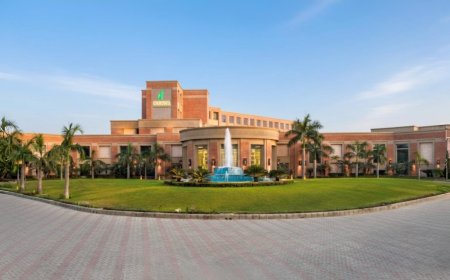
The Leela Palace Chennai is a luxury hotel on Anna Salai — the major arterial road of Chennai, also known as Mount Road, that runs from the southern suburbs through the commercial heart of the city — in the Guindy area of Chennai that has some of the best road connectivity in the city.
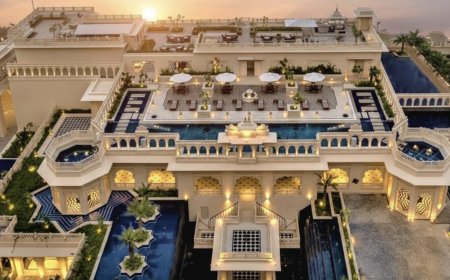
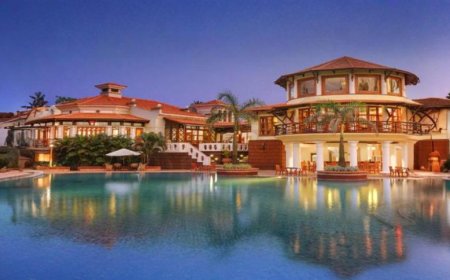
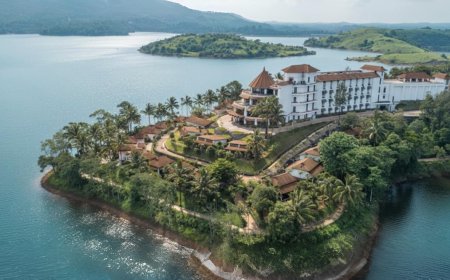
The property was developed by The Leela Hotels group with the specific architectural ambition that has characterised the group's palace hotel properties: the engagement with the Mughal and Rajput palace vocabulary — the white marble, the formal garden, the arched colonnades, the specific decorative vocabulary of the Indian palace tradition — applied to the urban hotel brief with the conviction of a developer who understood that the palace aesthetic, properly executed, could produce a building of genuine grandeur on a city site rather than only in the natural settings that the heritage conversion depends on.
The Leela Palace Chennai is not a converted heritage building. It is a contemporary palace hotel — designed in the palace vocabulary from the beginning rather than adapted from a historic structure — and the quality of the contemporary palace design reflects the group's accumulated experience with the palace hotel format across its portfolio. The white marble of the exterior, the formal garden at the entrance, the vaulted ceilings of the public spaces, the carved stone detail of the corridors — these are designed elements that produce the palace quality rather than historic elements that were preserved from an earlier structure. The distinction matters for the NRI couple who is choosing between the historic heritage property and the contemporary palace hotel: The Leela Palace Chennai is the latter, and its quality is the quality of a very well designed contemporary building rather than the quality of accumulated historical time.
The property has two hundred and sixty-six rooms and suites — the accommodation capacity for the large South Indian wedding that the palace-scale event spaces are designed to host — and the full operational infrastructure of one of India's finest luxury hospitality groups applied to a South Indian urban wedding destination.
The South Indian Wedding Tradition: What The Leela Chennai Is Designed For
The South Indian Hindu wedding — and specifically the Tamil Brahmin and Tamil wedding traditions — is one of the most elaborate and most ceremonially complete of the regional Indian wedding traditions, and the infrastructure requirements of the South Indian wedding are specific and demanding in ways that the North Indian wedding template does not always address.
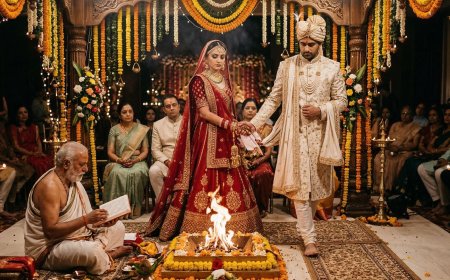
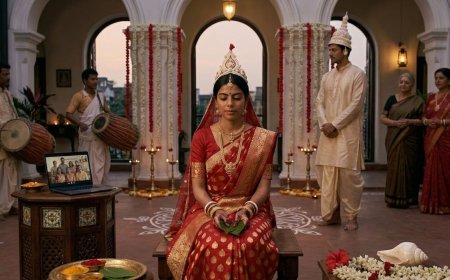
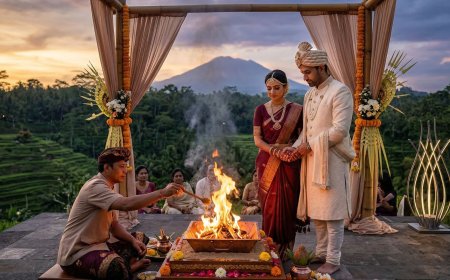
The Tamil wedding ceremony — the muhurtham, the specific auspicious timing that the family astrologer has identified as the moment for the most sacred ritual acts — is the centrepiece of the event program, and the ritual vocabulary of the Tamil ceremony — the nalangu, the oonjal, the sumangali prarthanai, the kashi yatra, the maalai maatral — is a sequence of specific, choreographed ritual events that require specific spaces, specific timing, and specific infrastructure to be conducted properly.
The South Indian wedding also has a specific culinary tradition — the Tamil wedding feast, the multi-course meal served on the banana leaf in the specific sequence of the South Indian feast vocabulary — that is the most important single element of the hospitality dimension of the Tamil wedding and that requires the kitchen team's specific knowledge of the tradition to be produced correctly.
The Leela Palace Chennai's kitchen team has the specific knowledge of the South Indian culinary tradition and the South Indian wedding feast that the position in Chennai demands. The wedding couple who briefs the kitchen team on the Tamil wedding feast tradition — the specific dishes, the sequence, the banana leaf service — is briefing a team that has produced this meal many times before.
The event spaces of The Leela Palace Chennai are proportioned for the South Indian wedding's specific requirements: the large mandap space within the Grand Ballroom for the main ceremony, the separate spaces for the pre-ceremony rituals, the accommodation for the three-day program that the Tamil wedding traditionally requires, the capacity for the three-hundred-guest wedding that is the minimum for many Tamil Nadu families.
The Chennai Cultural Program: The Carnatic Music Capital
Chennai's specific position in the cultural geography of India — the city that is the global capital of the Carnatic music tradition, the home of the December-January Margazhi music season that draws the finest Carnatic musicians from across the world for a month of concerts and sabha performances — is the cultural gift of the Chennai destination that no other city in India and no destination in this series can provide.
The Margazhi season runs from mid-December through mid-January — the peak wedding season for the Tamil community — and the coincidence of the season with the wedding program provides the international guests at a Chennai wedding with the opportunity to attend Carnatic music concerts of the highest quality, performed by the tradition's finest practitioners, in the Sabha halls of the Chennai music tradition. The Music Academy, the Brahma Gana Sabha, the Narada Gana Sabha — the cultural institutions of the Chennai music world — are producing concerts of extraordinary quality throughout the season that the wedding program can incorporate as the cultural experience that most specifically communicates the identity of the Chennai destination.
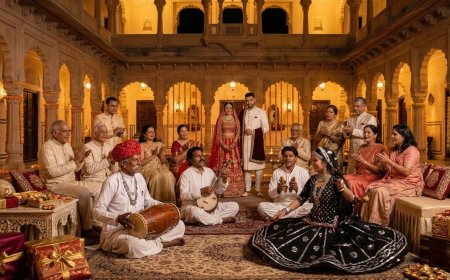
The Bharatanatyam tradition — the classical South Indian dance form whose most significant practitioners have historically been based in Chennai — is the classical performance element that the Leela Palace Chennai wedding can incorporate in the form of the professional recital by a senior practitioner rather than the background entertainment of the standard wedding dance performance. The Bharatanatyam recital at the wedding dinner — the classical dancer in the full traditional costume performing the specific repertoire of the tradition for a gathered audience that has been given the context to understand what they are witnessing — is the cultural performance that most completely communicates the specific identity of the Tamil cultural tradition.
The Event Spaces: Palace Scale for the South Indian Wedding
The Grand Ballroom: The Primary Ceremony and Reception Space
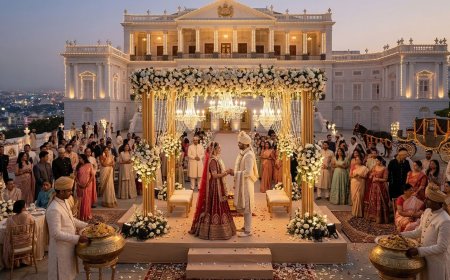
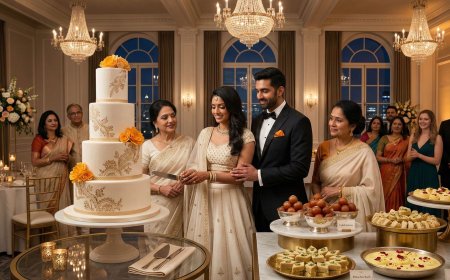
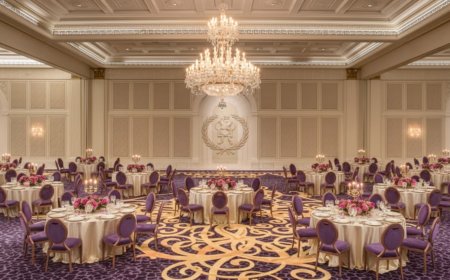
The Grand Ballroom of The Leela Palace Chennai is the primary event space and the space that most directly justifies the palace designation — a ballroom of genuine grandeur, with the vaulted ceiling, the crystal chandeliers, the white marble of the palace vocabulary, and the capacity to accommodate the large South Indian wedding without the compromises that the undersized venue requires.
The Grand Ballroom accommodates up to a thousand guests for a standing reception and up to six hundred and fifty for a seated dinner. The capacity is the most significant advantage of The Leela Palace Chennai for the Tamil NRI wedding whose guest list routinely exceeds the capacity of the standard five-star hotel ballroom: the Grand Ballroom can accommodate the three-hundred-guest seated dinner and the five-hundred-guest evening reception within a single space, without the room management compromises that the smaller ballroom requires.
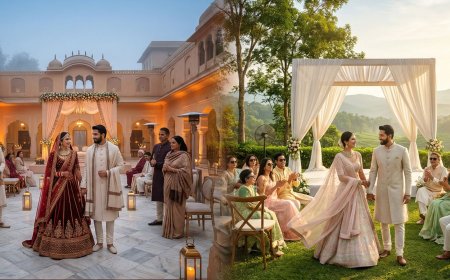
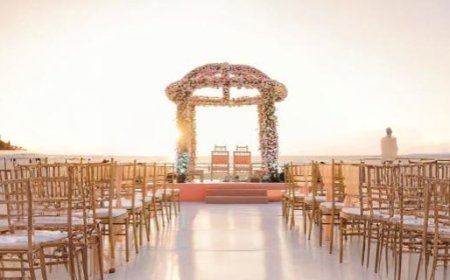
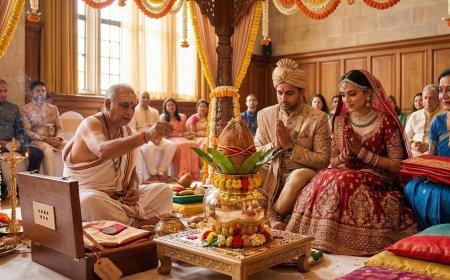
The ceremony in the Grand Ballroom — the traditional Tamil muhurtham within the white marble grandeur of the palace ballroom, the mandap at the centre of the high-ceilinged space, the two hundred and fifty Tamil community guests witnessing the ceremony in the specific manner of the tradition — is the ceremony that uses The Leela Palace Chennai's specific gift: the palace grandeur available to the full South Indian wedding community, in Chennai, without the destination journey.
The Mughal Garden: The Outdoor Ceremony and Reception Space
The Mughal Garden of The Leela Palace Chennai — the formal garden at the hotel's entrance, laid out in the charbagh tradition with the water channels and the formal planting of the Mughal garden vocabulary — is the primary outdoor event space and the setting that most completely communicates the palace aesthetic in the outdoor form.
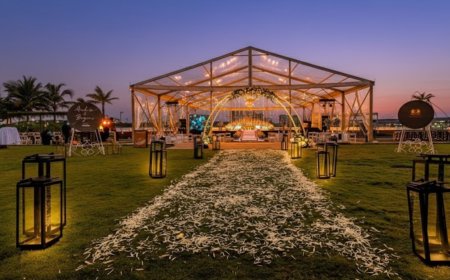
The garden accommodates up to four hundred guests for a standing reception and up to two hundred and fifty for a seated ceremony or dinner. The evening reception in the Mughal Garden — the formal garden lit for the event, the palace facade illuminated above, the Chennai night sky — is the outdoor palace event that the beach resort and the hilltop retreat cannot provide in the same urban, accessible, community-inclusive form.
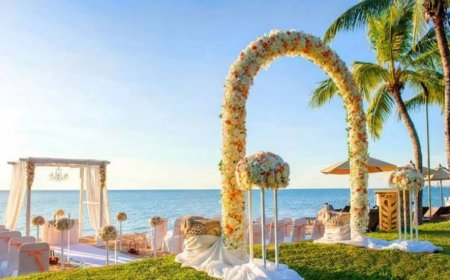
The outdoor ceremony in the Mughal Garden — the traditional Tamil wedding ceremony in the formal garden setting of the palace, the community gathered in the garden enclosure — is the ceremony that uses the specific quality of the outdoor palace space: the formality of the garden design communicating the seriousness of the occasion, the open sky above communicating the tradition's cosmic dimension, the community gathered within the palace enclosure.
The Imperial Ballroom: The Secondary Event Space
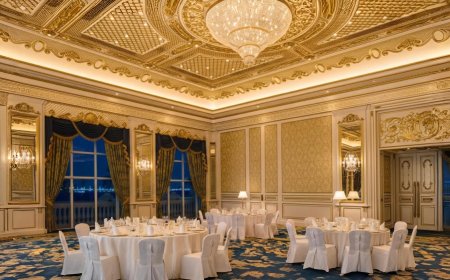
The Imperial Ballroom — the secondary indoor event space of The Leela Palace Chennai — accommodates up to four hundred guests for a standing reception and up to two hundred and fifty for a seated dinner. The space is the natural choice for the mehendi ceremony, the sangeet, the family dinner on the evening of arrival, or the situation where simultaneous events in different spaces are required by the three-day Tamil wedding program.
The three-day Tamil wedding program — the first day's pre-wedding rituals and family gathering, the second day's muhurtham and main ceremony, the third day's reception and departure — requires the multi-space infrastructure that The Leela Palace Chennai's combination of the Grand Ballroom and the Imperial Ballroom provides.
The Pool Terrace: The Social Gathering Space
The pool terrace of The Leela Palace Chennai — the outdoor space surrounding the hotel's main pool, within the palace's garden setting — is the social gathering space for the informal elements of the three-day wedding program. The pool terrace accommodates up to two hundred guests for a standing reception and up to one hundred and twenty for a seated event.
The pool terrace's specific quality is the combination of the outdoor garden setting with the palace facade visible above and the specific quality of the Chennai light — the tropical light of the coastal city that is different from the Rajasthan desert light and the Himalayan mountain light and the Western Ghats forest light but that is the specific light within which the Tamil community's social life has always been conducted, and the specific familiarity and comfort of that light for the two hundred and fifty Chennai guests who are in their own city's light.
The Private Dining Rooms: The Intimate Family Spaces
The Leela Palace Chennai's private dining rooms — the smaller event spaces for the intimate family gatherings within the three-day program — accommodate up to forty guests for formal dinners and provide the specific intimate spaces for the pre-ceremony family rituals, the sumangali prarthanai, the family puja, and the specific private ceremonies that the Tamil wedding tradition requires to be conducted in a smaller, more intimate setting before the main ceremony.
Comprehensive Pricing and Planning Reference
| Category | Detail | Approximate Range | Notes |
|---|---|---|---|
| Grand Ballroom venue hire | Up to 650 seated / 1,000 standing | ₹15,00,000–₹28,00,000 per event | Primary ceremony; Tamil wedding scale |
| Mughal Garden venue hire | Up to 250 seated / 400 standing | ₹8,00,000–₹16,00,000 per event | Outdoor ceremony; palace garden setting |
| Imperial Ballroom venue hire | Up to 250 seated / 400 standing | ₹8,00,000–₹15,00,000 per event | Mehendi, sangeet, family events |
| Pool Terrace venue hire | Up to 120 seated / 200 standing | ₹4,00,000–₹8,00,000 per event | Cocktail, social gathering, informal |
| Private Dining Rooms | Up to 40 seated | ₹1,50,000–₹3,50,000 per event | Family rituals, intimate ceremonies |
| Full Hotel Exclusive Buyout | All spaces combined | ₹50,00,000–₹95,00,000 per day | Complete palace exclusivity |
| Accommodation — Deluxe Room per night | Standard rooms | ₹18,000–₹28,000 | Palace aesthetic; garden or city views |
| Accommodation — Premier Room per night | Superior position | ₹25,000–₹38,000 | Enhanced palace views; upgraded amenities |
| Accommodation — Suite per night | Full suite | ₹50,000–₹90,000 | Palace suites; full luxury standard |
| Accommodation — Presidential Suite per night | Flagship | ₹1,20,000–₹2,20,000+ | Full butler service; premier position |
| Accommodation — Full Hotel Buyout per night | All rooms | ₹48,00,000–₹85,00,000 | Complete palace hotel exclusivity |
| Catering per cover — Tamil wedding feast | Banana leaf | ₹2,500–₹4,500 | Traditional South Indian feast |
| Catering per cover — multi-course dinner | Contemporary | ₹4,000–₹7,000 | Leela culinary team; mixed menu |
| Catering per cover — daytime event | Lunch or breakfast | ₹2,000–₹3,500 | Full service; garden and terrace |
| Carnatic music performance | Per concert | ₹1,00,000–₹5,00,000 | Senior practitioner; sabha-quality |
| Bharatanatyam recital | Per recital | ₹80,000–₹3,00,000 | Classical tradition; professional level |
| Décor and florals per event | Wedding decoration | ₹7,00,000–₹25,00,000 | South Indian palette; palace vocabulary |
| Photography and videography | Full wedding | ₹3,00,000–₹10,00,000 | Tamil wedding tradition specialists |
| Sound and lighting per event | Indoor and outdoor | ₹3,00,000–₹8,00,000 | Full ballroom AV; garden systems |
| Wedding planner fee | Full service | ₹6,00,000–₹15,00,000 | Tamil wedding and Leela experience |
| Transport — Chennai Airport to Leela Palace | Per vehicle | ₹1,000–₹2,000 | 25 minutes; Anna Salai access |
| Total three-day wedding — 200 guests | Without buyout | ₹1,00,00,000–₹1,80,00,000 | Full Tamil wedding program |
| Total three-day wedding — 350 guests | Full program | ₹1,50,00,000–₹2,70,00,000 | Complete palace Tamil wedding |
| Total three-day wedding — 500 guests, buyout | Full hotel | ₹2,50,00,000–₹4,50,00,000+ | Peak season; full palace exclusivity |
The Tamil Wedding Tradition: What The Leela Palace Chennai Is Built to Host
The Tamil wedding tradition has specific ritual and logistical requirements that the planning must address from the beginning — the requirements that make the Tamil wedding a distinct planning challenge from the North Indian wedding template and that the Leela Palace Chennai's event infrastructure is specifically designed to accommodate.
The muhurtham — the auspicious timing — is the organising principle of the Tamil wedding, and every element of the event program is scheduled around the muhurtham rather than the muhurtham being scheduled around the event program's other requirements. The wedding planner and the venue's event team must understand this organising principle from the first conversation. The mandap must be ready. The priest must be present. The ritual sequence must begin at the specified time. The catering, the photography, the family seating — all of these must be arranged to support the muhurtham's timing rather than imposing the event management's preferred schedule on the ritual.
The oonjal — the swinging ceremony in which the couple sits on the decorated swing while the women of the family sing the traditional songs — requires a specific swing installation within the ceremony space. The mandap's height and the ceiling's structural capacity must accommodate the swing installation before the ceremony space is confirmed. This requirement is specific to the Tamil wedding and must be confirmed with the venue's technical team before the booking is finalised.
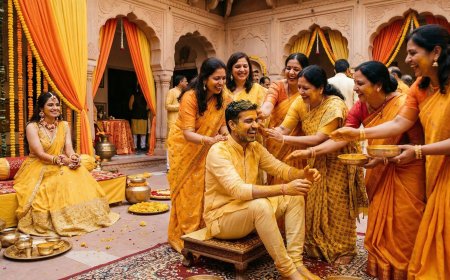
The nalangu — the pre-wedding ceremony that includes the specific games and rituals between the couple and their families — requires a specific space and a specific timing within the three-day program that the event planner must design around the muhurtham's constraints. The sumangali prarthanai — the ceremony honouring the married women of the family — requires a private space for the intimate gathering that the private dining rooms provide.
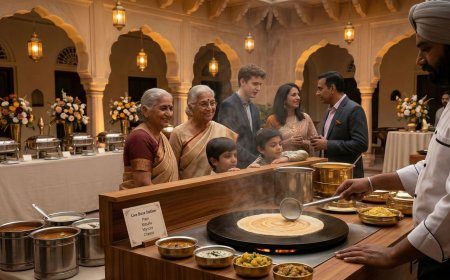
The banana leaf feast — the traditional South Indian meal served to all wedding guests on a banana leaf in the specific sequence of the Tamil feast tradition — is the hospitality element that the Tamil wedding community judges most directly and remembers longest. The kitchen team's ability to produce the correct dishes in the correct sequence, to serve the meal in the correct manner, and to maintain the quality across three hundred or five hundred covers simultaneously is the operational test that the Leela Palace Chennai's kitchen is equipped to meet.
The International Guest Experience: Chennai Beyond the Wedding
The Chennai wedding gives the international guests — the London friends and the Singapore colleagues and the American cousins — an encounter with South India's most specific cultural city that the Rajasthan and Goa destinations do not provide. Chennai is the capital of the Tamil language tradition, the home of the Carnatic music classical world, the city whose temple architecture and whose classical performing arts and whose specific culinary tradition represent one of the oldest and most sophisticated regional cultures in India.
The Kapaleeshwarar Temple in Mylapore — the Dravidian temple architecture of the seventh century Pallava tradition, with the specific gopuram tower design that is the signature visual vocabulary of the Tamil temple tradition — is twenty minutes from The Leela Palace Chennai and the cultural experience that most directly communicates the antiquity of the Tamil civilisation to the international guest who encounters it. The guided visit to the Kapaleeshwarar Temple — the pre-wedding morning tour for the London and Singapore guests who have not been to a major Dravidian temple before — is the cultural experience that gives the Chennai wedding its most specific cultural dimension.
The Marina Beach — the longest urban beach in India, the specific social landscape of the Chennai public life — is the experience that gives the international guest the encounter with the Chennai that belongs to the city rather than to the tourist circuit. The evening walk on Marina Beach — the thousands of Chennai residents at their leisure, the vendors and the games and the specific quality of the South Indian coastal city at its most popular and its most itself — is an experience that no heritage palace and no mountain resort provides in the same form.
The Mylapore neighbourhood — the traditional Tamil Brahmin quarter of Chennai, with its temple tank and its sabha culture and its specific quality of the South Indian urban cultural life — is the neighbourhood that gives the international guest the most complete encounter with the cultural identity of Chennai. The guided walk through Mylapore — the temple, the tank, the traditional music and dance culture of the neighbourhood — is the guest experience that most specifically uses the Chennai location as a cultural destination.
Décor at The Leela Palace Chennai: The South Indian Palace Vocabulary
The décor philosophy at The Leela Palace Chennai is shaped by the specific intersection of the Tamil wedding tradition's ceremonial vocabulary and the Mughal-influenced palace aesthetic of The Leela's architecture. The décor that works best at this venue is the décor that acknowledges both traditions simultaneously — the kolam patterns of the Tamil floor decoration tradition against the white marble of the palace floor, the jasmine and the rose and the marigold of the South Indian ceremonial garland against the carved stone of the palace arcade, the traditional South Indian brass and copper objects against the Mughal-influenced architecture of the formal garden.
The kolam — the geometric floor design made with rice flour at the entrance of the Tamil home — is the decorative element that most immediately communicates the Tamil wedding's cultural identity and that most specifically belongs at The Leela Palace Chennai's entrance. The kolam at the palace entrance, made by a practitioner who knows the tradition rather than by a decorator who knows the pattern, is the décor element that tells the guests what kind of wedding this is before they have entered the space.
The jasmine — the specific fragrance of the South Indian wedding, the gajra worn in the bride's hair, the garlands on the mandap, the bundles of jasmine at the entrance — is the floral vocabulary that belongs at the Tamil wedding at The Leela Palace Chennai. The South Indian wedding without jasmine is a wedding that has lost the specific fragrance of its tradition. The palace space that is filled with the jasmine fragrance at the wedding dinner is the palace space that is specifically and permanently of the Tamil wedding rather than of a generic luxury event.
Common Mistakes NRI Couples Make With The Leela Palace Chennai Wedding
The first mistake is treating the Chennai wedding as the consolation prize for the couple who could not do the destination. The Leela Palace Chennai is a genuine palace hotel of extraordinary quality in a culturally extraordinary city. The Tamil NRI couple who has chosen it because it is the right choice for their specific wedding — the wedding that includes the full community, that uses the cultural richness of Chennai, that gives the international guests the encounter with the Tamil classical tradition — has made the best possible choice. Present it as that. Not as the alternative to the destination but as the destination itself.
The second mistake is not briefing the kitchen on the banana leaf feast tradition. The South Indian banana leaf feast is the most important single element of the Tamil wedding hospitality, and the kitchen team that produces it in the abbreviated or simplified form that commercial catering sometimes defaults to is the kitchen team that will produce the most discussed failure of the entire wedding program. Brief the kitchen specifically. Visit the kitchen team before the wedding. Taste the specific dishes. Ensure the banana leaf service is in the correct traditional format. The feast is the hospitality. Get it right.
The third mistake is not incorporating the Carnatic music or the Bharatanatyam into the cultural program. The Chennai wedding gives the couple access to the finest practitioners of the Tamil classical traditions — the Carnatic musicians and the Bharatanatyam dancers who live and work in the city and who can be engaged for the wedding program at a level of quality that the destination weddings requiring the travel of performers from Chennai to the destination cannot always provide. Use this access. The Carnatic concert at the sangeet, the Bharatanatyam recital at the wedding dinner — these are the cultural performances that most specifically communicate the identity of the Tamil wedding to the international guests.
The fourth mistake is not designing the guest experience for the international visitors. The Tamil NRI couple's London friends and Singapore colleagues and American cousins have come to Chennai for the wedding, and the wedding program that does not include the Kapaleeshwarar Temple visit, the Marina Beach evening, the Mylapore walk — that treats the international guests as presences at the event without giving them the city — is the wedding program that has not used the Chennai destination for its full cultural value. Design the guest experience. Give the international guests Chennai.
The fifth mistake is not using the muhurtham as the organising principle of the entire event schedule. The Tamil wedding's muhurtham is not a preference or a starting point that can be adjusted for the catering team's convenience. It is the organising principle of the entire ceremony, and every other element of the event schedule must be built around it. The wedding planner who does not fully understand this principle — who attempts to negotiate the muhurtham timing to accommodate the event management's preferred schedule — is the wrong planner for the Tamil NRI wedding. Brief the planner on the muhurtham's primacy from the first conversation.
Meenakshi's wedding was in January — the Margazhi season, the specific month when Chennai's classical music tradition fills the city with extraordinary live music and the jasmine market in Mylapore overflows onto the street and the city is most specifically itself.
The muhurtham was at seven-fifteen in the morning on the second day — the auspicious time that the family astrologer had specified, the time around which the entire three-day program had been organised, the time that the Grand Ballroom had been prepared for since the previous evening. Three hundred and twelve guests were present. Approximately two hundred and sixty of them were from Chennai. They had arrived the night before and the night before that, the way Tamil wedding guests arrive — the aunts from Mylapore who walked in at nine in the evening, the cousins from Adyar who had brought the specific sweet that Meenakshi's grandmother had always made for auspicious occasions, the Kolathur aunty who had attended Meenakshi's mother's wedding thirty-five years earlier and who took her seat in the front row with the specific authority of someone who had been coming to this family's significant occasions for a generation.
The muhurtham was at seven-fifteen. Fifty guests from London and Singapore and America were present alongside the two hundred and sixty Tamil community guests. In the Grand Ballroom of The Leela Palace Chennai, in the white marble grandeur of the palace space, in the city where the family had always been.
Afterward, at the banana leaf feast in the ballroom, Meenakshi's Kolathur aunty said to the person beside her: this is the wedding as it should be. All of us here. In Chennai. In a palace. The person beside her said: they almost went to Goa. The aunty said: Goa is very nice. She looked at the banana leaf in front of her, the specific dishes of the Tamil feast in their correct positions. She said: but this is the feast. In the palace. With everyone here. She said: this is right.
Present the Chennai wedding as the destination it is. Brief the kitchen on the banana leaf feast with full seriousness. Incorporate the Carnatic music and the Bharatanatyam into the cultural program. Design the guest experience to include the temple, the beach, the Mylapore neighbourhood. Build the entire event schedule around the muhurtham.
The Leela Palace Chennai is on Anna Salai. The Carnatic season is in January. The jasmine is in the market. The community is in the city.
The destination was always here.
Published by NRIWedding.com — The Premium Global Platform for Non-Resident Indians Planning Indian Weddings From Abroad.
What's Your Reaction?
 Like
0
Like
0
 Dislike
0
Dislike
0
 Love
0
Love
0
 Funny
0
Funny
0
 Angry
0
Angry
0
 Sad
0
Sad
0
 Wow
0
Wow
0