


















































Mangalasnanam: The Sacred Pre-Wedding Bath Every Telugu NRI Bride Needs to Know About
Mangalasnanam, the auspicious ceremonial bath performed on the morning of a Telugu Hindu wedding, is one of the most intimate and spiritually significant pre-wedding rituals in Indian culture. Rooted in Vedic purification traditions over 3,000 years old, it marks the bride's sacred transition from daughter to wife. This guide explores the ritual's deep cultural meaning, community variations across India, and practical advice for Telugu NRI families recreating Mangalasnanam in the US, UK, Canada, UAE, and Australia — without losing a single drop of its soul.


For Telugu NRI brides in the US, UK, Canada, UAE, and Australia, this pre-wedding ritual is more than purification — it is the last morning you wake up entirely as your parents' daughter, and the first breath of who you are about to become.
The Mangalasnanam (auspicious ceremonial bath) is one of the most intimate and emotionally layered rituals in a Telugu Hindu wedding — a private, feminine act of purification that takes place at dawn on the wedding day, surrounded by the women who have loved the bride her whole life. It is not a spa treatment. It is not aesthetic. It is ancient, intentional, and quietly devastating in the most beautiful way. For NRI Telugu families scattered across Hyderabad communities in New Jersey, Telugu Sangham circles in London, and temple corridors in Melbourne, recreating Mangalasnanam abroad requires logistical creativity — but the emotional core of it is utterly untranslatable, and utterly worth preserving.
You grew up watching your mother pour coconut oil into her palms on Sunday mornings, working it into her hair with a rhythm so practiced it looked like prayer. You didn't know then that she was passing something down to you. You didn't know it had a name.
You're sitting in your apartment in Plano, Texas, or Mississauga, or Wembley, three weeks before your wedding, and someone — your naani on a video call, your mami in a WhatsApp voice note — says the word Mangalasnanam, and something in your chest unlocks. You've never had it done. But you know it belongs to you.
That is how tradition works when you live far from home. Not as instruction. As inheritance. As longing that suddenly has a shape.
🌟 DID YOU KNOW?
- The Mangalasnanam ritual has roots in Vedic purification theology dating back over 3,000 years — the concept of snana (ritual bathing) appears in the Rigveda as an act of physical and spiritual preparation before sacred transitions.
- In Andhra Pradesh and Telangana, it is customary for the bride's maternal uncle (mama) to bring the ceremonial turmeric and new saree the evening before the Mangalasnanam — a tradition that encodes the maternal lineage's blessing into the very fabric of the ritual.
- According to community surveys conducted within Telugu diaspora networks in the US, over 68% of Telugu NRI brides report that pre-wedding rituals like Mangalasnanam are the moments they most regret not being able to fully recreate abroad — more than the reception décor, more than the food.
What Is Mangalasnanam?
The word itself is layered: Mangala [auspicious, blessed, of good omen] and Snanam [bath, immersion, purification]. Together, it means the auspicious bath — a ritual cleansing of the bride (and in many Telugu families, simultaneously the groom at his own home) performed on the morning of the wedding before any other ceremony begins.
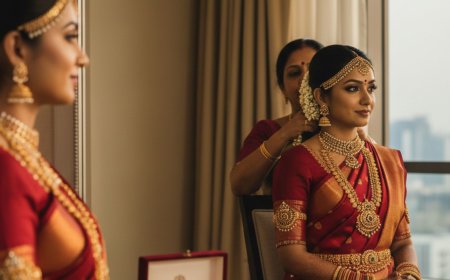
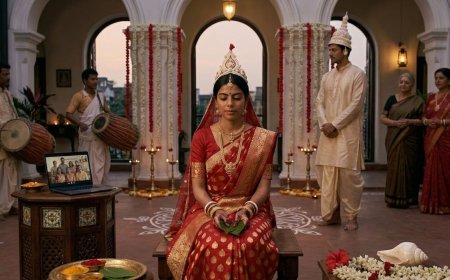
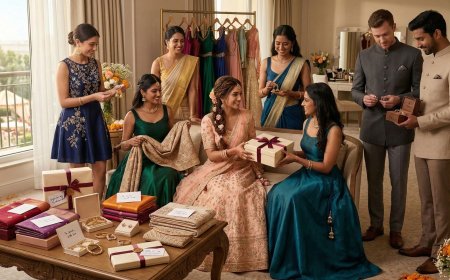
It takes place at sunrise or just after, orchestrated by the women of the household — the mother, aunts, grandmothers, and close female relatives. The bride sits on a peetham [a low wooden ceremonial stool], dressed in an old saree or a simple cotton cloth, barefoot, her hair loose. Around her, the women have prepared a mixture called nalugu [a paste made from turmeric, chandanam (sandalwood paste), rose water, and in many families, raw milk, gram flour, and saffron]. This paste is applied to the bride's face, neck, arms, and feet in deliberate, affectionate strokes — not hurriedly, not commercially, but the way a mother washes a child she is about to release to the world.
The application of nalugu is accompanied by mangala geetalu [auspicious wedding songs] sung by the elder women — folk songs in Telugu that speak of rivers, flowers, the moon, and the goddess Gauri [a form of Parvati, symbol of wifely virtue and feminine power]. After the paste settles briefly, warm water is poured from a kindi [a traditional bronze or copper vessel] — never plastic, always metal — by the senior-most woman present, beginning the rinse.
The ritual occurs before the bride dresses in her wedding saree, before the kanya daanam [the giving away of the daughter], before the muhurtham [the auspicious wedding moment]. It is the first ceremony of the day, and it is intentionally private, intentionally female, intentionally liminal. The bride is between two lives. The water marks the crossing.
Community Comparison: How Different Indian Communities Mark This Sacred Transition
| Community / State | Local Name | Key Tradition | How NRIs Abroad Adapt It |
|---|---|---|---|
| Telugu (Andhra/Telangana) | Mangalasnanam | Turmeric-sandalwood nalugu paste applied by women; sung with folk geetalu; copper kindi used | Conducted at home or hotel suite; aunts video-called in from Hyderabad sing songs live on speaker |
| Himachali | Tel Baan | Mustard oil applied to bride and groom by relatives over multiple days before wedding | Condensed to one ceremony in living room; mustard oil sourced from Indian grocery stores |
| Garhwali | Ubtan ceremony | Chickpea flour and turmeric paste rubbed on bride; women sing Garhwali folk songs | Community women from Garhwali sabhas in Toronto/UK participate |
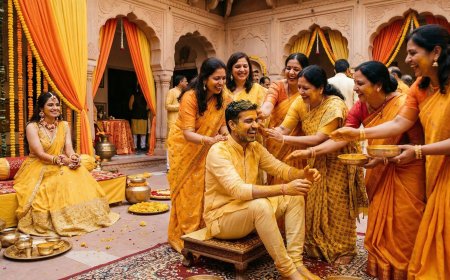
| Kumaoni | Haldi | Turmeric applied communally in the courtyard; neighbourhood women invited | Moved indoors; Kumaoni diaspora WhatsApp groups coordinate attendance |
| Ladakhi | Lha-bsang | Purification ritual with juniper incense and ritual washing; lamas may attend | Simplified to cleansing ceremony with juniper oil; conducted by senior family woman |
| Kashmiri Pandit | Devgun / Livun | Ritual cleaning of the home and bride using mustard oil; done the day before wedding | Pandits sourced from Kashmiri Pandit sabhas in UK, US; ritual adapted for flat/apartment |
| Punjabi | Vatna / Maiyan | Mustard oil and turmeric applied to bride and groom; sangeet atmosphere | Very well-preserved in diaspora; Vatna parties common in Brampton, Southall, Houston |
| Marathi | Haldi ceremony | Turmeric paste applied; the bride's and groom's families do it separately, then together | Adapted as combined family event; Maharashtrian Mandals in US/Australia organise supplies |
| Tamil | Nalungu | Turmeric-sandalwood paste with playful games between bride and groom's families | Preserved strongly in Tamil diaspora; temple halls in Markham, Harrow used |
| Bengali | Dodhi Mangal | Pre-dawn ritual; bride eats curd and puffed rice, bathed with turmeric; extremely auspicious timing observed | Time zone carefully calculated; Kolkata relatives video-call in at 4 AM IST to observe |
| Rajasthani | Pithi ceremony | Chickpea flour, turmeric, rose water paste applied; neighbourhood women apply communally | Rajasthani Samaj chapters in UK/US/UAE maintain tradition; pithi applied by community elders |
The Meaning Behind the Ritual
In the Indian philosophical tradition, the body is not separate from the soul — what happens to the skin happens to the self. The Mangalasnanam understands this instinctively. Turmeric, the oldest antiseptic known to the subcontinent, is also one of the oldest symbols of mangalya [auspiciousness, divine protection]. When it is rubbed into the bride's skin, it is not merely cosmetic preparation — it is the invocation of the goddess into a human body that is about to undergo one of life's most profound metamorphoses.
The pancha bhutas [five elements — earth, water, fire, air, space] are all present in the Mangalasnanam: the earth in the turmeric paste, the water in the kindi, the fire in the prayers, the air in the songs, and the space that opens between who the bride was and who she is becoming. The ritual encodes an entire cosmology of womanhood — not submission, but transformation. Not loss, but expansion. In Vedic thought, a woman at her wedding does not diminish into a new role; she expands into a new power.
For a non-Indian partner or in-law witnessing this ritual for the first time, here is what to say to their own family: "It is the moment her family prays her whole self clean, so she can begin again with everything she already is."
Doing Mangalasnanam Abroad: The Practical Reality
The first challenge is space. The Mangalasnanam is traditionally held in the inner courtyard of the family home — a vettu[open-air courtyard] where water can flow, where the sound of songs can rise without echo, where the earth itself feels like a participant. In a three-bedroom semi-detached in Wembley or a condo in Mississauga, you are working with different physics.
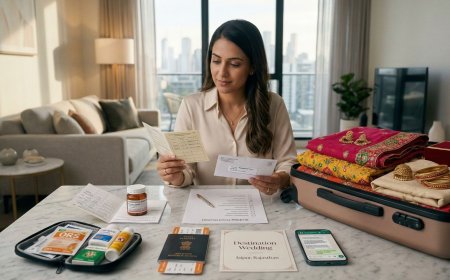
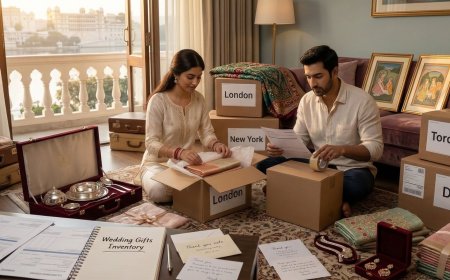
The solution most Telugu NRI families have found is the hotel suite route — booking an adjoining room or suite to the main wedding block specifically for pre-ceremony rituals. The bathroom becomes a ritual space, the bedroom becomes the dressing room, and the sitting area is where the women gather. Some families use a tarpaulin or waterproof mat in the living room and conduct the nalugu application there, with the actual rinse done over the bathtub. It is not identical to a courtyard. But the love in the room is identical.
For ritual items, if you are in London, Ealing Road in Wembley and Soho Road in Handsworth are your first stops — you will find chandanam [sandalwood paste], turmeric powder, copper vessels, and kumkum at stores like Nishkam Superstore and various South Indian grocery shops that stock Telugu-specific items. In Toronto, Gerrard Street East and Dixie Road in Mississauga carry most of what you need; for the copper kindi specifically, ask at Tamil-owned stores as they stock ritual vessels. In Sydney, Harris Park in Parramatta has become the subcontinent's answer to this city's Indian grocery needs. In Houston, Hillcroft Avenue is your place — it is sometimes called Little India and stocks everything from nalugu ingredients to the exact brands of sandalwood paste used in Andhra households. In Dubai, Meena Bazaar in Bur Dubai and the Indian stores in Karama have comprehensive stocks.
The pandit question is more delicate. Mangalasnanam does not always require a priest — in most Telugu families, it is conducted entirely by the senior women, with the mother and maternal aunts leading the ceremony. However, if your family wishes to have Vedic mantras chanted, you will need a Telugu Brahmin priest specifically familiar with Vaikhanasa or Smartha traditions, as the mantras differ. NRI.Wedding maintains a vetted directory of Telugu pandits in the UK, US, Canada, UAE, and Australia — always specify your family's community (Kamma, Reddy, Brahmin, Kapu) and tradition when requesting a pandit, as customs vary.
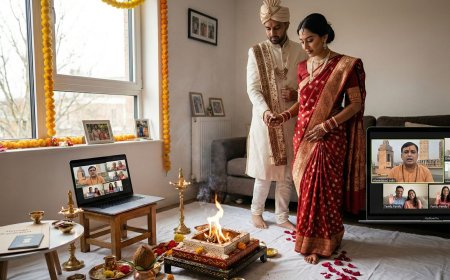
For relatives in India joining by video call: the Mangalasnanam typically occurs between 6 and 8 AM local time at the wedding venue. If you are in London, that means streaming at 10:30–12:30 IST — perfectly reasonable for Hyderabad relatives. From Toronto EST, a 7 AM ceremony means a 5:30 PM Hyderabad call — again manageable. From Sydney AEDT, coordinate carefully — a 7 AM ceremony is only 1:30 AM IST, so either push your start time to 8:30 AM locally or prepare family in India to join on a recorded stream.
Doing Mangalasnanam as a Destination Wedding in India
If you are returning to India for your wedding — whether to Hyderabad, Vijayawada, Tirupati, or a resort property in Rishikesh or Udaipur — the Mangalasnanam is easiest to honour here because the infrastructure exists naturally.
Hyderabad and Vijayawada are the heartlands of Telugu wedding tradition, and wedding planners in both cities are deeply familiar with Mangalasnanam logistics — they know which florists supply the right flower arrangements for the ritual space, which caterers prepare the pre-ceremony tambalams [ritual trays], and which pandits can chant the appropriate mantras for your specific caste and community tradition. If your family is from a smaller town in Andhra or Telangana, consider hosting the ceremony at your family's ancestral home even if the main wedding is at a hotel — the courtyard of a family home carries a memory that no hotel suite can replicate.
For non-Indian guests attending the destination wedding, brief them in advance with a short printed or digital card explaining what they are witnessing. Most international guests respond to the Mangalasnanam with profound reverence when they understand it — it is primal, it is universal, it is a mother washing her daughter clean before sending her to her life.
What You Need: Ritual Checklist
Ritual Items — fresh turmeric root and powder, sandalwood paste (chandanam), rose water, raw milk (optional), gram flour or besan, saffron strands, a copper or bronze kindi (pouring vessel), a wooden peetham or low stool, new cotton cloth or ritual saree for the bride to sit in, flowers (jasmine, marigold), kumkum, vibhuti, a brass or steel plate (thattu) for arranging items, coconut, betel leaves and arecanut, sesame oil or coconut oil.
People Required — the bride's mother (leads the ritual), maternal aunts (maamas' wives and mother's sisters), paternal aunts (ideally present), the eldest female relative of the family, married women only for the application of nalugu in most traditions, the bride herself, and optionally a Telugu Brahmin pandit if mantras are to be recited.
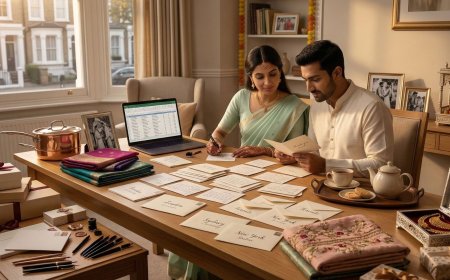
Preparation Steps — prepare the nalugu paste the night before and refrigerate it covered. Set up the ritual space with a waterproof mat and the peetham. Arrange the thattu with all items the night before. Coordinate the song playlist or confirm which aunts will lead the geetalu. Confirm video call links and time zones for relatives in India. Ensure the venue has agreed to the use of turmeric (it stains — get confirmation in writing). Keep towels and a change of clothes ready. Instruct the photographer to use a second shooter for this ceremony as lighting is often intimate and low.
NRI.Wedding connects Telugu families abroad with verified pandits, ritual supply vendors, and photographers who specialise in pre-wedding ceremonies. Begin your planning at NRI.Wedding.
5 Questions NRI Couples Always Ask
Can we do Mangalasnanam at a hotel that has restrictions on open flames and coloured substances?
Yes, and many NRI families do exactly this. The Mangalasnanam does not require open fire — it is a water and paste ceremony. The challenge is turmeric, which stains surfaces permanently. Contact your venue's events coordinator in advance and request a tarp or protective covering for the floor. Most hotels, when they understand the cultural significance and the scope, will accommodate this. Book the suite a day early so the ritual space can be set up without rush. Always get permission in writing.
My partner is not Indian. How do we include them without making the ritual feel like a performance?
Mangalasnanam is a female ritual in most Telugu traditions — the groom (and non-Indian partners who are women) can be invited to observe respectfully from a threshold distance, or can participate in a simplified way if the family elders agree. What matters most is briefing your partner in advance on what they are witnessing, not so they can perform understanding, but so they can actually feel it. Many non-Indian partners describe Mangalasnanam as one of the most moving things they have ever witnessed.
How do we find a Telugu-speaking pandit in Australia who knows the specific Andhra rituals?
Through NRI.Wedding's pandit directory, which lists priests by regional tradition, language, and diaspora city. Additionally, the Telugu Association of Australia maintains temple networks in Sydney and Melbourne where community pandits are registered. Always call ahead and ask specifically whether they are familiar with your family's tradition — Vaikhanasa, Smartha, or community-specific customs differ meaningfully.
Can we have the Mangalasnanam the day before the wedding instead of the morning of?
In some Telugu families, a preliminary turmeric ceremony happens the evening before (as part of the Pellikoduku / Pellikuturu function), and the full Mangalasnanam still happens on the wedding morning. If logistics genuinely prevent a wedding-morning ceremony, most families move it to the previous evening — but the spiritual tradition associates it with the dawn of the wedding day, and if at all possible, it is worth keeping it there. Talk to your family elders about what your specific tradition permits.
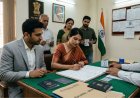
We are doing a civil ceremony first in the UK and the Indian wedding six months later in Hyderabad. Does Mangalasnanam still apply?
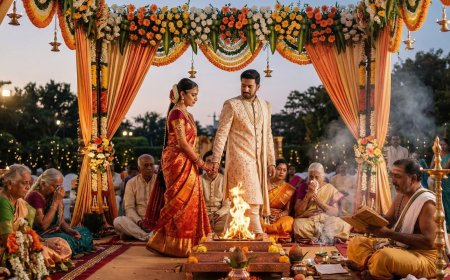
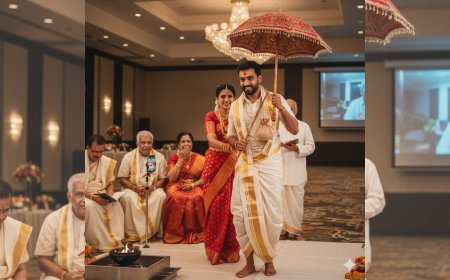
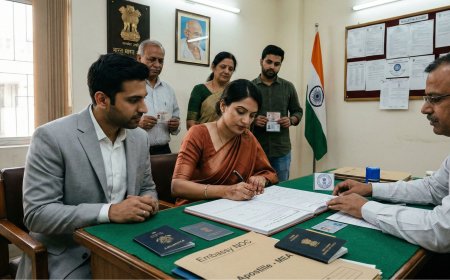
Absolutely. The Mangalasnanam is tied to the vivaha [Hindu religious wedding ceremony], not to the civil registration. Many NRI couples do exactly this — they complete the legal paperwork in their country of residence and then travel to India for the full religious wedding including all pre-wedding rituals. Mangalasnanam is performed on the morning of the Indian vivaha regardless of whether a civil ceremony has already occurred.
The Emotional Angle
There is a moment during Mangalasnanam — usually when the third or fourth woman has taken her turn with the nalugu, when the songs have settled into something slower and more certain — when the bride stops trying to hold herself together.
It is not grief. It is not happiness. It is the feeling of being fully witnessed by the people who have known you longest, and the terrifying, tender awareness that this is the last morning you will be only theirs. NRI brides who have grown up abroad carry an extra layer into this moment: the knowledge that their mothers carried this ritual inside them across oceans, kept it alive in a cramped apartment in Croydon or Scarborough, waited years for the morning when they could finally do this, finally be the woman singing the songs, finally pour the water.
For these mothers, the Mangalasnanam is not just a ritual for their daughters. It is proof. Proof that everything they brought with them when they emigrated — the language, the prayers, the paste-recipe their own mother taught them — survived. That it made it. That it will continue past them, in the hands of a daughter who grew up somewhere else but belongs, still, to something ancient and unbroken.
A Moment to Smile
At a Mangalasnanam in Mississauga last October, the bride's family had sourced a beautiful copper kindi from a Brampton Indian store — the real kind, hand-hammered, just like the one the grandmother used in Guntur. The ceremony was perfect until the bride's four-year-old nephew, who had been very quiet in the corner, suddenly announced with great authority that "Pinni smells like the pickle shelf at No Frills."
The room collapsed. The bride's grandmother — who had flown in from Vijayawada specifically for this morning — laughed so hard she had to hand the kindi to someone else. The mother of the bride, who had been crying with great beauty and dignity for twenty minutes, snorted. The songs dissolved into laughter. The four-year-old, pleased with himself, went back to his tablet.
The ceremony resumed. The songs came back. But now there was laughter woven into them too — and it was better for it.
Quotes from the Diaspora
"My mother had been practising the songs for three months. Three months. She sang them in the shower, in the car, at the grocery store. When she finally sang them over me that morning in our house in Fremont, I realised she hadn't been practising for me. She'd been practising for herself — to make sure she could get through it." — Divya Raghunathan, Kamma community, Fremont, California
"We couldn't find a copper kindi anywhere in Dubai that week — everything was stainless steel. So we used my mother-in-law's old brass jug that she had brought from Rajahmundry when she first came here in 1998. She had kept it for twenty-six years. It turned out to be the most sacred thing in the room." — Vasantha Subramaniam, mother of groom, Telugu Brahmin community, Dubai
"My fiancé is Irish. He stood at the doorway and watched the whole thing without making a sound. Afterwards he said — I'm not sure he even meant to say it out loud — 'I've never seen anyone love someone like that.' He was talking about my mum. I think about that every day." — Priyanka Maddela, Reddy community, London
Your Roots Travel With You
The Mangalasnanam does not require a courtyard. It does not require a specific postcode in Andhra Pradesh or a particular river's water. What it requires is the women who love you, the paste their mothers taught them to make, and the willingness to begin your wedding day in the oldest, most human way possible — by being washed clean in love.
NRI.Wedding exists because rituals like Mangalasnanam deserve to be carried forward in their full dignity, not abbreviated out of logistical inconvenience. Our directory of Telugu pandits, regional ritual supply vendors, and pre-wedding ceremony photographers ensures that wherever you are in the world — Mississauga, Melbourne, Manchester, or Houston — you have the support to do this properly. Your planning checklist, your vendor connections, your pandit match: it all begins at NRI.Wedding.
The water travels with you. So does the song.
This article explores the Mangalasnanam ritual — the sacred pre-wedding auspicious bath central to Telugu Hindu weddings — and its practice among Telugu NRI communities in the US, UK, Canada, UAE, and Australia, covering adaptations for diaspora cities including Hyderabad, Vijayawada, London, Toronto, Houston, Sydney, and Dubai.
What's Your Reaction?
 Like
0
Like
0
 Dislike
0
Dislike
0
 Love
0
Love
0
 Funny
0
Funny
0
 Angry
0
Angry
0
 Sad
0
Sad
0
 Wow
0
Wow
0