


























































What He Owes Her Before the First Vow Is Spoken: Mehr in Islamic Wedding Tradition
Mehr — the mandatory financial gift given by the groom to the bride as a fundamental condition of an Islamic marriage contract — is one of the most misunderstood and most significant concepts in all of wedding tradition. Fourteen centuries old and more relevant than ever, this binding obligation belongs exclusively to the bride as her absolute right, her financial security, and the first material expression of a marriage built on Islamic principles of respect and justice. This complete guide covers the religious obligation across all four major schools of jurisprudence, prompt and deferred Mehr structures, community variations across South Asian, Arab, Iranian, and West African Muslim traditions, civil legal enforceability in the UK, Canada, and Australia, and full practical advice for NRI Muslim families in London, Toronto, Houston, Dubai, and Sydney navigating Mehr with complete knowledge of their rights.


Mehr — the mandatory financial gift given by the groom to the bride as a fundamental condition of an Islamic marriage contract — is one of the most misunderstood, most significant, and most quietly revolutionary concepts in all of wedding tradition. For NRI Muslim families in London, Toronto, Houston, Dubai, and Sydney, getting Mehr right is not merely a legal formality — it is an act of respect, a declaration of intent, and the first material expression of a marriage built on principles that are fourteen centuries old and more relevant than ever.
You have been to enough South Asian Muslim weddings to know the moment. The Qazi [Islamic marriage officiant] asks the question. The groom — or his representative — states a figure. Someone writes it down. The room moves on to the next part of the Nikah [Islamic marriage contract ceremony]. And if you grew up in the diaspora, there is a reasonable chance that nobody fully explained to you what just happened, why the number matters, who decided it, or what the bride's rights in this transaction actually are.
Because here is what nobody told you clearly enough: Mehr is not a dowry paid to the bride's family. It is not a symbolic gesture. It is not negotiable away to nothing. It is a legally binding financial obligation from the groom to the bride alone — her absolute property, her security, her right — and it has been so in Islamic law for fourteen hundred years.
Understanding Mehr properly is one of the most important things an NRI Muslim couple can do before their Nikah. This is where that understanding begins.
🌟 Did You Know?
- In classical Fiqh [Islamic jurisprudence], Mehr is classified as a Haqq [right] — specifically the bride's absolute and inalienable right — not a gift in the conventional sense. This distinction is legally and theologically significant: a gift can be declined or waived casually, but a Haqq [right] requires the full, free, and informed consent of the rights-holder to be waived. Islamic scholars across all major schools of jurisprudence are unanimous that Mehr cannot be waived under social pressure, family expectation, or community custom.
- The Prophet Muhammad ﷺ himself set the precedent for accessible Mehr — in multiple authenticated Hadith [prophetic narrations], he is recorded as accepting iron rings, a pair of sandals, and the teaching of Quranic verses as valid Mehr, establishing the principle that the amount is secondary to the sincerity and the contractual completion of the obligation. This precedent is cited by contemporary Islamic scholars to counter community pressures that inflate Mehr to unaffordable levels or deflate it to meaningless tokens.
- In the United Kingdom, Canada, and Australia, Mehr stated in a properly witnessed Nikah contract can be legally enforceable in civil courts as a contractual obligation — particularly in cases of divorce — provided the Nikah contract meets the relevant legal requirements of the jurisdiction. NRI Muslim couples are increasingly advised by both Islamic scholars and civil lawyers to ensure their Mehr is clearly documented in both the religious Nikah contract and, where appropriate, referenced in civil marriage documentation.
What Is Mehr?
Mehr [also spelled Mahr — from Arabic meaning gift, dowry in the Islamic sense, or obligatory marital gift] is the mandatory financial or material gift that a groom is required to give his bride as a fundamental legal condition of the Nikah [Islamic marriage contract]. It is not optional. It is not customary. It is Fard [religiously obligatory] in Islamic law, and a Nikah performed without Mehr being agreed upon is considered deficient in all four major schools of Islamic jurisprudence — Hanafi, Maliki, Shafi'i, and Hanbali.
The Mehr belongs exclusively and absolutely to the bride. Not to her father. Not to her family. Not to her future household with her husband. To her, alone, as her personal property and financial security. She may do with it whatever she chooses — spend it, invest it, gift it, save it — and no one, including her husband, has any claim over it.
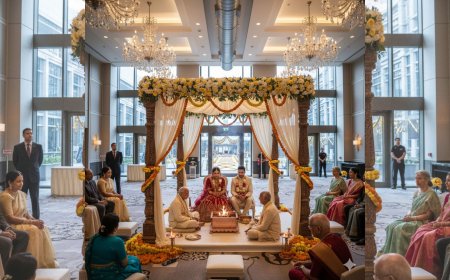
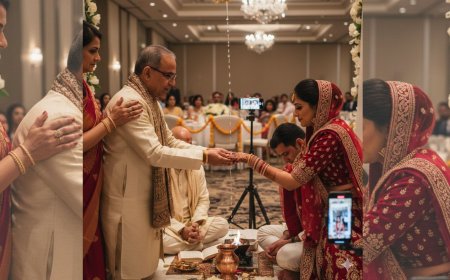
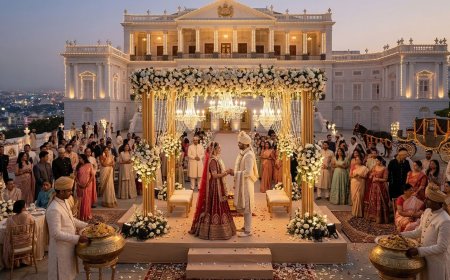
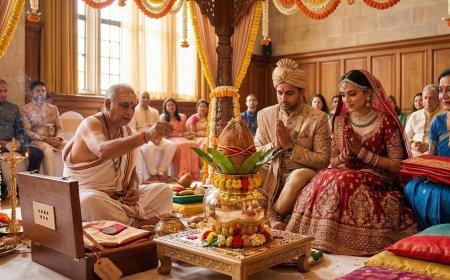
The Mehr is agreed upon and formally stated during the Nikah ceremony. The Qazi [Islamic officiant] asks the groom — or his Wakil [representative] — whether he accepts the Nikah with the agreed Mehr. The groom's acceptance is then witnessed by a minimum of two adult Muslim male witnesses, or in some scholarly interpretations, one male and two female witnesses. The bride's acceptance — through her own statement or through her Wakil — completes the contract.
Mehr is typically structured in two parts. Mehr Mu'ajjal [prompt Mehr] is the portion due immediately — at the time of the Nikah or upon the marriage being consummated — and must be paid without delay. Mehr Mu'ajjal [deferred Mehr, also called Mehr Muwajjal] is the portion agreed to be paid at a later date — often specified as payable in the event of divorce or the husband's death — functioning as a form of financial security for the wife in the most vulnerable circumstances she might face.
The form of Mehr can be anything of genuine value — money, gold, property, a specific asset, or even a non-material benefit of real value such as education or the teaching of a skill. What it cannot be is nothing. What it should not be is a figure so token as to be meaningless, agreed upon merely to satisfy the legal requirement while providing the bride with no real financial acknowledgment of the commitment being made.
Community Comparison Table
| Community / Region | Local Name | Traditional Form | Typical Structure | How NRIs Abroad Adapt It |
|---|---|---|---|---|
| South Asian Muslim (Pakistani/Indian) | Mehr / Maher | Gold, cash, or property; amount varies enormously by family | Prompt portion stated at Nikah; deferred portion agreed separately | Civil lawyers increasingly consulted alongside Qazi; Mehr documented in writing and witnessed formally |
| South Asian Muslim (Bangladeshi) | Mohr / Den Mohr | Cash amount predominant; gold increasingly common | Kabin [marriage registration document] records Mehr formally | Kabin documentation maintained; Mehr amounts discussed openly in diaspora families |
| Arab Muslim tradition | Mahr | Gold jewellery [Shabka] prominent; cash; property | Prompt and deferred portions clearly separated in contract | Mehr contracts drafted with legal advice in UK, Canada, Australia for civil enforceability |
| Iranian/Persian Muslim | Mehrieh | Named items of cultural value — gold coins [Bahar Azadi], Quran, mirror and candelabras | Often very high nominal amounts; deferred in full until divorce or husband's death | Diaspora Iranian families often maintain high nominal Mehrieh as cultural continuity |
| Turkish Muslim | Mehir / Başlık** | Cash or gold; more modest amounts traditional; civil marriage primary | Increasingly symbolic in secular Turkish tradition; religiously observant families maintain full obligation | NRI Turkish Muslim families vary widely; religious observance determines practice |
| West African Muslim (Nigerian/Ghanaian) | Sadaq / Mahr | Cash; kola nuts; fabric; culturally specific gifts | Community elders negotiate; amount reflects family standing | Diaspora families maintain cultural negotiation customs; amounts adapted to diaspora economic realities |
| Malay Muslim | Mas Kahwin | Fixed minimum amount set by Malaysian state religious authorities; gold ring common | Prompt payment at Nikah; state minimum enforced | Diaspora Malaysian families maintain cultural minimum; amount often increased as mark of respect |
| Somali Muslim | Meher | Gold; livestock traditionally; cash in diaspora | Negotiated between families; elder involvement traditional | Diaspora Somali families negotiate through community elders; gold remains prominent |
| Moroccan/North African Muslim | Sadaq / Mahr | Gold jewellery; cash; property | Notarised in Morocco; legally documented | Diaspora families often maintain notarised contracts; civil legal advice sought |
| Bohra/Ismaili Muslim | Mahr | Modest amounts traditional; spiritual interpretation emphasised | Community guidance from Jamaat structures | Community organisations provide guidance; amounts modest and spiritually framed |
| Kashmiri Muslim | Mahar** | Gold; property; cash | Elder negotiation traditional; amounts vary by family | Kashmiri Muslim community networks in UK and Canada assist with guidance |
| Kerala Muslim (Mappila) | Mahar | Gold jewellery prominent; cash | Prompt portion given at Nikah; deferred portion documented | Kerala Muslim community associations in diaspora cities actively support Nikah documentation |
The Meaning Behind Mehr
To understand Mehr properly is to understand something revolutionary about the position Islam gave women at a time in history when almost no legal system in the world recognised a woman's independent right to property.
The Quran [Islamic holy scripture] states in Surah An-Nisa [4:4]: "And give the women their Mahr as a free gift." The Arabic word used — Nihlah — specifically means a gift given freely and completely, with no expectation of return and no strings attached. This verse was revealed in seventh-century Arabia, in a social context where women were frequently treated as property rather than as rights-holders. The establishment of Mehr as the bride's absolute, unconditional right was — in its historical context — a legal and theological revolution.
In Islamic jurisprudential understanding, Mehr serves multiple simultaneous functions. It is a Daleel [sign and proof] of the groom's sincerity and his commitment to the financial responsibilities of marriage. It is a Kafala [guarantee] — a form of financial security that ensures the bride enters marriage with her own independent financial foundation, not entirely dependent on her husband's continued goodwill. And it is a Tawqeer [mark of honour and respect] — a formal acknowledgment that the woman being married has value that deserves material recognition.
The deferred portion of Mehr — Mehr Mu'ajjal — functions as what contemporary legal thinkers have called the world's oldest form of prenuptial financial protection for women. It ensures that in the event of divorce or the husband's death, the wife has a legally owed financial settlement that was agreed before the marriage began, not negotiated in the vulnerability of its ending.
For a non-Muslim partner or guest: "Before the first vow is spoken, Islamic law requires the groom to make a binding financial commitment directly to his bride — her money, her right, her security. It has been this way for fourteen hundred years."
Navigating Mehr Abroad: The Practical Reality
For NRI Muslim couples in the UK, Canada, Australia, and the UAE, Mehr operates at the intersection of Islamic religious law and civil legal jurisdiction — and understanding both dimensions is essential for ensuring Mehr is both religiously valid and practically meaningful.
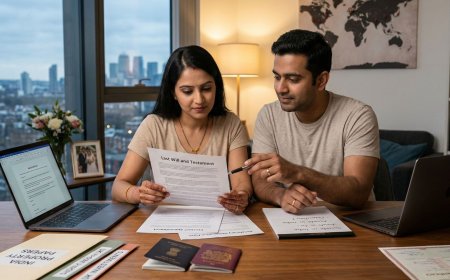
The first practical consideration is documentation. In many South Asian Muslim diaspora communities, Mehr is agreed verbally at the Nikah and not formally documented beyond the Nikah certificate. This is religiously valid but practically vulnerable — in the event of divorce or the husband's death, an undocumented Mehr is significantly harder to enforce, even in jurisdictions where Nikah contracts carry civil legal weight. NRI Muslim couples are increasingly advised — by both Islamic scholars and family law solicitors — to document Mehr clearly in a written Nikah contract that specifies the amount, the division between prompt and deferred portions, the form of payment, and the conditions under which the deferred portion becomes due.
In the United Kingdom, the Law Commission has published guidance on the civil enforceability of Nikah contracts, and while the legal landscape continues to evolve, a clearly documented Mehr in a properly witnessed written contract has been upheld in specific civil court cases. NRI Muslim couples in the UK are strongly advised to consult a family law solicitor familiar with both Islamic and civil law — organisations including Muslim Arbitration Tribunal and specialist Islamic family law practices in London, Birmingham, and Manchester can assist.
In Canada, the Ontario Court of Appeal has upheld Mehr as an enforceable contractual obligation in specific landmark cases — most notably in circumstances where the Mehr was clearly documented and the parties had explicitly agreed to its terms. Consulting a civil lawyer alongside your Qazi before the Nikah is advisable for all NRI Canadian Muslim couples.
In Australia, the legal enforceability of Mehr varies by state and by the specific circumstances of documentation. NRI Australian Muslim couples are advised to seek legal advice in their specific state through Islamic legal resource organisations in Sydney and Melbourne.
In the UAE, the civil marriage registration system for expatriates intersects with Islamic law in specific ways that depend on the couple's nationality and religion. The UAE's Personal Status Law governs Muslim marriages and includes Mehr provisions — your Qazi and the relevant emirate's marriage registration authority can provide guidance specific to your circumstances.
For finding a knowledgeable Qazi in diaspora cities, the quality and knowledge of available Islamic officiants varies significantly. In London, mosque networks in East London, Wembley, and Southall, alongside the Muslim Council of Britain, can assist with Qazi referrals. In Toronto, the Islamic Society of North America (ISNA) Canada and the mosque networks in Mississauga, Brampton, and Scarborough are primary resources. In Houston, the Islamic Society of Greater Houston maintains active community resources. In Dubai, the Islamic Affairs and Charitable Activities Department governs Nikah registration and can guide expatriate Muslim couples through the specific requirements of their jurisdiction. In Sydney, the Australian National Imams Council and mosque networks in Auburn and Lakemba are your primary contacts.
The community pressure problem around Mehr in South Asian Muslim diaspora communities deserves direct acknowledgment. In many families, there is implicit or explicit pressure to set Mehr at a token amount — sometimes as little as a symbolic sum — to avoid the groom's family appearing unable to meet a substantial obligation, or to avoid the bride's family appearing demanding. Islamic scholars are unambiguous on this point: Mehr set under social pressure, without the bride's genuine free consent, does not fulfil the spirit of the obligation. The bride has the absolute right to request a Mehr that reflects genuine financial acknowledgment of the commitment being made. Supporting that right is the responsibility of every family member present.
Mehr in a Destination Nikah in South Asia or the Middle East
For NRI Muslim couples returning to Pakistan, Bangladesh, India, or the Gulf for a destination Nikah, the Mehr documentation process varies significantly by country and jurisdiction.
In Pakistan, Mehr is recorded on the official Nikah Nama [marriage registration document] — a legally binding government document that specifies the Mehr amount and its terms. This document, once registered with the Union Council, carries full civil legal weight in Pakistan. NRI Pakistani couples are strongly advised to ensure their Mehr is correctly recorded on the Nikah Nama and that copies are retained by both parties.
In Bangladesh, the Kabin Nama [marriage registration document] similarly records Mehr as a legally binding contractual term. The Nikah Registrar appointed by the government officiates and documents the Mehr formally.
In India, Muslim personal law governs Nikah and Mehr, and while the specific legal framework has been subject to significant recent legislative change, Mehr remains a legally recognised obligation under the Muslim Personal Law (Shariat) Application Act.
For destination Nikahs in UAE, Saudi Arabia, or Qatar, expatriate couples must navigate the specific requirements of each jurisdiction's marriage registration authority — your embassy and the local religious affairs authority can guide you through the specific documentation requirements.
For non-Muslim guests attending a destination Nikah, a brief written guide explaining Mehr — what it is, why it exists, and what it represents about Islamic marriage — transforms the moment of the Mehr agreement from a procedural pause into one of the most intellectually and emotionally striking moments of the ceremony.
What You Need: Mehr Checklist
Documentation Required: A written Nikah contract clearly specifying the full Mehr amount, the division between prompt (Mu'ajjal) and deferred (Muwajjal) portions, the form of payment, the conditions under which the deferred portion becomes payable, and the signatures of both parties and a minimum of two witnesses. In diaspora countries, legal review of this document by a civil family law solicitor is strongly recommended.
People Required: A knowledgeable Qazi familiar with the Mehr requirements of your specific Madhab [school of jurisprudence] and your diaspora jurisdiction's civil legal context. A minimum of two adult Muslim witnesses. Both parties' Wakil [representatives] if either party is not present in person. A civil family law solicitor for legal review of the contract where civil enforceability is desired.
Preparation Steps: Discuss Mehr amount, form, and division between prompt and deferred portions minimum three months before the Nikah. Consult a knowledgeable Qazi on the religious requirements for your tradition. Consult a civil family law solicitor on documentation requirements for civil enforceability in your jurisdiction. Draft the written Nikah contract and have it reviewed by both a scholar and a solicitor. Ensure both parties sign and retain copies of the documented contract. Brief witnesses on their role and the Mehr terms before the ceremony.
NRI.Wedding connects Muslim couples with knowledgeable Qazis, Islamic family law resources, and Nikah ceremony coordinators across London, Toronto, Dubai, Sydney, and Houston. Visit our vendor directory to begin.
5 Questions NRI Couples Always Ask
My family is pressuring us to set a very low Mehr to avoid embarrassing the groom's family. What does Islamic law actually say about this?
Islamic law is clear: Mehr must be agreed upon freely by the bride, without coercion or social pressure. The minimum valid Mehr in the Hanafi tradition is ten dirhams of silver — a threshold set to ensure the obligation is real, not illusory. There is no maximum. The Prophet Muhammad ﷺ himself validated Mehr in non-monetary forms including the teaching of the Quran, establishing that the amount is secondary to the sincerity of the obligation. A bride who accepts a token Mehr under family pressure has not genuinely exercised her right — and Islamic scholars across all major schools are unanimous that this is problematic. The bride's right to a meaningful Mehr is her own, and no family member has the authority to waive it on her behalf.
Can the bride waive her Mehr after the Nikah if she chooses?
Yes — a bride can waive her Mehr after the Nikah, and this is considered an act of generosity (Sadaqah) in Islamic tradition if done freely and without pressure. The Quran acknowledges this possibility. However, the waiver must be entirely voluntary, made with full understanding of her right, and without any coercion from the groom, his family, or community pressure. A waiver made under pressure is not valid. The distinction between genuine, informed, voluntary waiver and socially pressured surrender of rights is one that Islamic scholars and NRI Muslim community organisations are increasingly working to help families understand clearly.
We want our Mehr to be enforceable in civil court in the UK. What do we need to do?
You need a clearly written Nikah contract that specifies the Mehr in precise, legally unambiguous terms — amount, currency, division between prompt and deferred, conditions for payment of the deferred portion, and signatures of both parties and witnesses. This contract should be reviewed by a civil family law solicitor familiar with both Islamic and English law before the Nikah. Organisations including the Muslim Arbitration Tribunal and specialist Islamic family law practices in London can assist. Note that the civil legal landscape for Nikah contracts in England and Wales is still evolving — current legal advice from a qualified solicitor, not general guidance, is essential.
My partner is a convert to Islam with no prior family experience of Mehr. How do we approach setting an appropriate amount?
This is an opportunity rather than a complication. Without the weight of family tradition or community expectation on either side, you and your partner can approach Mehr with genuine freedom — discussing what amount would feel meaningful, what form it should take, what division between prompt and deferred makes sense for your circumstances. Consult a knowledgeable Qazi who can explain the religious principles and the range of valid options, and make the decision together as two adults who understand what they are agreeing to. Many scholars note that Mehr decided in this way — freely, with full understanding, without social pressure — most completely fulfils the spirit of the obligation.
Is a Nikah without a civil marriage registration legally valid in diaspora countries?
In the UK, Canada, and Australia, a Nikah ceremony alone does not constitute a legally recognised civil marriage — civil registration is required separately for the marriage to have legal standing under civil law. This has significant practical implications for inheritance, next-of-kin rights, and the civil enforceability of Mehr and other marital rights. NRI Muslim couples in these jurisdictions are strongly advised to complete civil marriage registration — either before, at the same time as, or after the Nikah — to ensure their marriage carries full civil legal protection for both parties. Consult a civil solicitor and your local mosque or Islamic organisation for guidance specific to your jurisdiction.
The Emotional Angle
There is a conversation that happens in NRI Muslim families before a Nikah that is rarely spoken about honestly. It happens in kitchens and in WhatsApp messages and in the careful negotiations between parents who are trying simultaneously to honour tradition, manage family pride, protect their daughter, and not make anyone feel inadequate.
It is the conversation about how much.
And for daughters who have grown up in London or Toronto or Houston or Dubai — who have studied, worked, built careers and savings and independence — there is sometimes a particular frustration in this conversation. Because they understand, in a way that perhaps their grandmothers did not have the vocabulary to articulate, exactly what Mehr is supposed to be. They have read the scholarship. They know their rights. They know the Prophet Muhammad ﷺ validated Mehr in forms as simple as an iron ring and as profound as knowledge itself. And they know that what is being negotiated in some family WhatsApp groups is not a right but a ritual — a number agreed upon to satisfy a formality, set low enough not to offend, signed away before the ink is dry.
These daughters are not wrong to want more. The tradition is on their side.
For NRI Muslim families doing this honestly — really honestly, with full acknowledgment of what Mehr is for and what it means and what it protects — the conversation before the Nikah is one of the most important conversations they will have. It is a family saying: we know what we owe her. And we will give it.
That is not a legal transaction. That is a family telling a daughter that she is worth exactly what she is worth. Which is everything.
A Moment to Smile
At Zara and Tariq's Nikah in Houston last March, everything about the Mehr discussion had been conducted with exemplary seriousness — Zara had done her research, Tariq had done his research, both families had consulted their respective scholars, and the amount agreed upon was thoughtful, documented, and genuinely reflective of mutual respect.
What nobody had prepared for was Zara's seven-year-old nephew Hamza, who had been sitting very quietly in the front row for the entire Nikah ceremony with the focused expression of a child who is processing a great deal of new information.
At the precise moment the Qazi confirmed the Mehr and the ceremony moved forward, Hamza turned to his mother and said, at perfectly audible volume: "So Tariq owes Zara money? Does she have to give it back if they argue?"
The Qazi paused. The room held its breath. Tariq looked at the ceiling.
Zara, to her enormous credit, said clearly and without hesitation: "No, Hamza. It's mine. I keep it."
The room laughed for a long time. The Qazi, once he recovered, said it was the most accurate summary of Mehr he had heard in thirty years of performing Nikahs.
Hamza looked satisfied. The Nikah continued.
Quotes From the Diaspora
"Growing up in London, I absorbed the idea that Mehr was a formality — a number you said at the Nikah and then everyone moved on. It wasn't until I did my own research before my wedding that I understood what it actually was. It's my right. It's my money. It exists specifically to protect me. The moment I understood that, I stopped feeling embarrassed about asking for a Mehr that reflected that reality." — Aisha Siddiqui, Pakistani Muslim, London
"I am the mother of the groom. In our culture, there is sometimes pressure to see Mehr as a burden on the groom's family. I want to say clearly: my son giving his wife a meaningful Mehr is not a burden. It is him showing her, before God and the community, that he understands his obligations. That is not a cost. That is character." — Rubina Malik, mother of the groom, Pakistani Muslim, Toronto
"My husband is a convert. He had no family tradition of Mehr to draw from. So we sat together with our Qazi and we talked about what Mehr means — the history of it, the theology of it, the practical reality of it — and then we decided together. No family pressure, no community expectations, just two people understanding what they were agreeing to. It was the most honest conversation we had before our Nikah. I think every couple deserves that conversation." — Fatima Hassan, Bangladeshi Muslim married to a British convert, Sydney
Your Roots Travel With You
Mehr has been protecting Muslim women for fourteen hundred years — in seventh-century Arabia, in Mughal courts, in the villages of Bengal and Punjab and Kerala, and now in the apartments and offices and communities of London, Toronto, Houston, Dubai, and Sydney where NRI Muslim families are building their lives and their marriages.
The distance from the Subcontinent does not diminish Mehr's obligation. The civil legal system of your diaspora country does not replace it. The family pressure to keep the number small does not override it. Mehr is a right. Rights travel. Rights do not expire. Rights do not respect borders.
NRI.Wedding supports Muslim couples with Qazi connections, Nikah documentation resources, Islamic family law referrals, and ceremony coordinators across London, Toronto, Dubai, Sydney, and Houston who understand that a Nikah performed with full understanding and full documentation of Mehr is not just religiously complete — it is the most respectful foundation a marriage can be built on.
Know your right. State it clearly. Document it fully. Receive it with the dignity it was always intended to carry.
Before the first vow is spoken, the first debt is honoured. That is where an Islamic marriage begins. Begin it well.
This complete guide to Mehr in Islamic wedding tradition covers the religious obligation across Hanafi, Maliki, Shafi'i, and Hanbali schools of jurisprudence, prompt and deferred Mehr structures, community variations across South Asian, Arab, Iranian, Malay, and West African Muslim traditions, civil legal enforceability in the UK, Canada, and Australia, and practical advice for NRI Muslim families in London, Toronto, Houston, Dubai, and Sydney navigating Mehr with full knowledge of their rights.
What's Your Reaction?
 Like
0
Like
0
 Dislike
0
Dislike
0
 Love
0
Love
0
 Funny
0
Funny
0
 Angry
0
Angry
0
 Sad
0
Sad
0
 Wow
0
Wow
0