















































The Lamp, the Rice, and the Promise: Inside Kerala's Most Intimate Wedding Ritual
Nischayam — the formal betrothal ceremony at the heart of Kerala Hindu weddings — is a ritual of quiet power and profound intention. Rooted in Vedic sankalpam, the sacred exchange of vastram, and the lighting of the nirathalam lamp, it is the moment two Kerala families make their promise in sacred space, witnessed by ancestry, community, and divine presence. This guide explores Nischayam across Nair, Namboothiri, and Ezhava traditions, with complete practical guidance for Malayali NRI families recreating this deeply meaningful ceremony in the Gulf, UK, Canada, USA, and Australia.


In Kerala Hindu tradition, the engagement is not an announcement — it is a arrival. Nischayam is the moment two families cross the threshold from consideration to commitment, from conversation to covenant. Conducted with characteristic Malayali restraint and deep ritual intention, it is a ceremony that speaks more in silence and symbol than in spectacle — and for Kerala Hindu NRI families from Thiruvananthapuram, Thrissur, Kozhikode, and Ernakulam now living in the Gulf, the UK, the US, Canada, and Australia, it is the ritual that reminds them that some things do not need to be loud to be profound.
You grew up in a Kerala household where important things were said quietly. Where decisions were made over chai at the kitchen table, not announced in grand gestures. Where your mother's approval came in the form of an extra serving of rice, not a speech. Where love was a practice, not a performance.
And so when the time came for your engagement, you understood — even if you had spent the last decade in Dubai or Doha or Dartford — that Nischayam would be exactly that. Quiet. Intentional. Weighted with everything that does not need to be said out loud because it has already been understood.
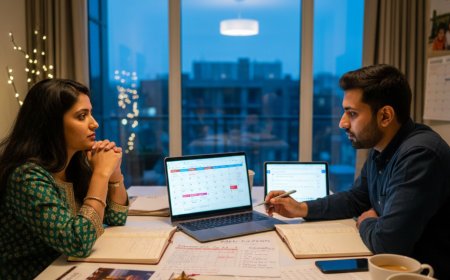
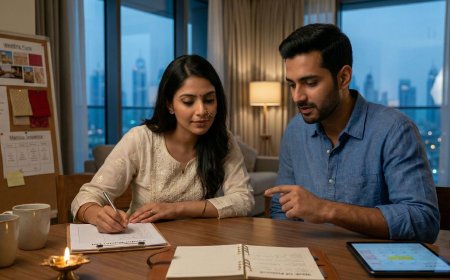
You are in your apartment in Sharjah or your terraced house in Wolverhampton or your condo in Brampton, three months before the ceremony, and your mother is on a video call explaining the sequence of rituals to you with the particular patience she reserves for things she considers obvious. You are writing it all down. You are realising, as you write, that this ceremony has been waiting for you your entire life.
🌟 DID YOU KNOW?
- The word Nischayam derives from the Sanskrit nischaya [firm decision, resolute determination] — making it linguistically close to the Kannada Brahmin Nischitartha, yet ritually and culturally distinct in almost every structural detail, reflecting Kerala's unique synthesis of Vedic tradition and Dravidian cultural identity.
- Kerala Hindu wedding traditions vary significantly across communities — Nair, Namboothiri Brahmin, Ezhava, and Syrian Christian families each observe distinct engagement customs, but the Nischayam ceremony as described here is most specifically observed among Nair and Hindu Nair-adjacent communities who form the largest Hindu demographic in Kerala.
- The Kerala NRI population — concentrated heavily in the Gulf states, UK, USA, Canada, and Australia — is estimated at over 2.5 million, making Malayalis one of the largest and most globally dispersed Indian diaspora communities, with a correspondingly sophisticated ecosystem of cultural preservation including temple networks, Malayali Samajams, and Kerala cultural associations that actively support wedding ritual continuity abroad.
What Is Nischayam?
Nischayam [the firm decision, the formal engagement ceremony] is the sacred betrothal ritual in Kerala Hindu family tradition — the ceremony in which two families make their intention to unite their children in marriage formally, publicly, and ritually binding. It is the bridge between the private world of family discussion, horoscope matching, and mutual agreement, and the public world of community acknowledgement and spiritual sanction.
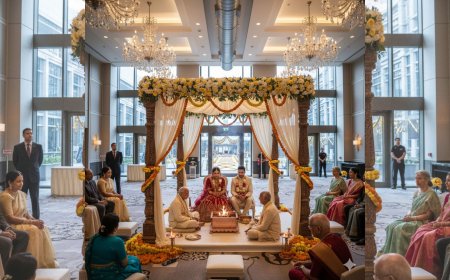
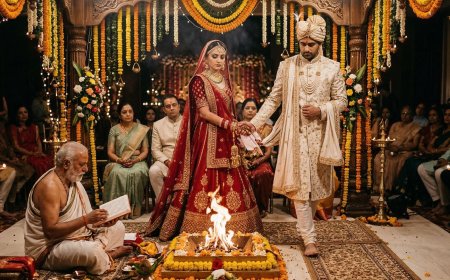
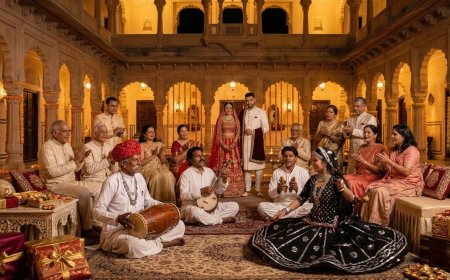
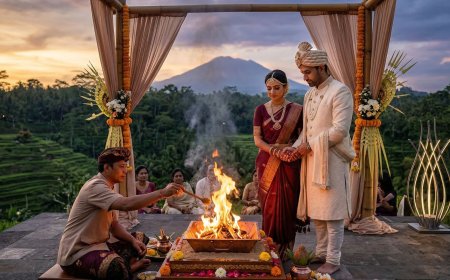
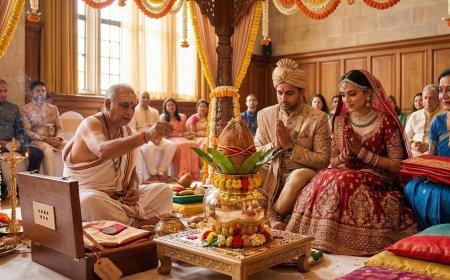
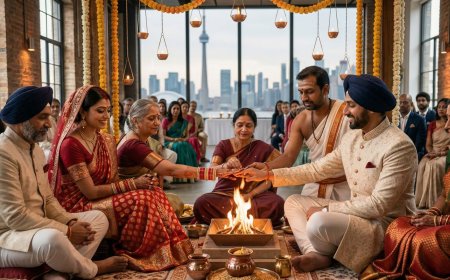
The ceremony traditionally takes place at the bride's family home, though in contemporary practice it may occur at a temple hall, a community centre, or a hired venue. It begins with Ganapathi Pooja [the invocation of Lord Ganesha, remover of obstacles] performed by the family's kula purohitan [hereditary family priest] — in Kerala Hindu tradition, the relationship between a family and its purohitan is often multi-generational, and the priest's presence carries the weight of all the ceremonies he has conducted for this family before. The sankalpam [formal Vedic declaration of intent] is chanted, naming the date, the lunar position, the families, their gotras [patrilineal clan lineages], and the nature of the agreement being made.
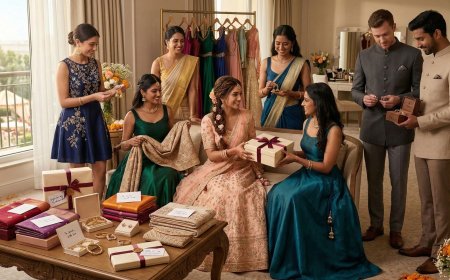
The central ritual act of Nischayam is the exchange of dakshina [offerings of reverence and goodwill] and vastram[clothing — typically silk sarees for the bride and women of her family, and silk dhotis for the groom and men of his family] between the two families. This exchange is a physical enactment of mutual acceptance — each family clothing the other's people in their own generosity, literally wrapping them in care. In many Kerala Hindu families, this exchange is accompanied by the giving of thali — not the permanent wedding thali, but a ceremonial gold ornament that acknowledges the betrothal — and edangali [a gold bangle] presented to the bride by the groom's family.
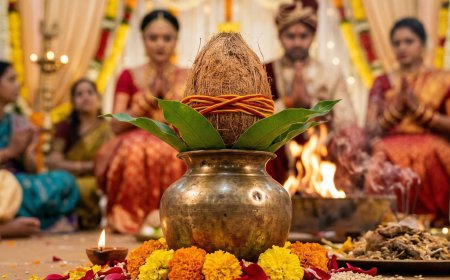
Nirapara [a traditional Kerala vessel filled with rice, symbolising abundance and prosperity] and nirathalam [a lit lamp] are central to the ceremonial arrangement — no Kerala Hindu sacred ceremony is complete without the lamp's flame, which in Vastu and Tantra traditions represents both the divine presence and the continuity of the family's sacred fire. Pazham [banana], coconut, and betel leaves are arranged on the ceremonial tray alongside pushpam [flowers] and kumkumam [sacred red powder].
The families then formally announce the vivaha muhurtham [the auspicious date and time for the wedding], which the purohitan has calculated in advance based on the jathakam [horoscopes] of both the bride and groom. This announcement — the wedding date spoken aloud in sacred space for the first time — is the emotional climax of the Nischayam. It makes the future real.
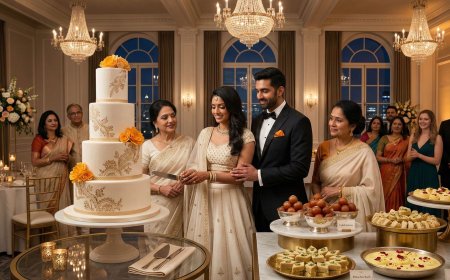
The ceremony concludes with aashirvaadam [the blessing of elders], where grandparents and senior family members bless the couple, and with the distribution of prasadam [sacred food offering] to all assembled — typically sweetened rice, banana, and coconut-based preparations that carry the blessing of the ritual into the bodies of everyone present.
Community Comparison: How Different Indian Communities Mark the Formal Betrothal
| Community / State | Local Name | Key Tradition | How NRIs Abroad Adapt It |
|---|---|---|---|
| Kerala Hindu (Nair) | Nischayam | Ganapathi Pooja; vastram exchange; nirapara and nirathalam; muhurtham announced; elder blessing | Home or temple hall ceremony; vastram sourced from Kerala silk stores; purohitan found via Malayali Samajam |
| Kerala Namboothiri Brahmin | Nischayam / Veli Nischayam | More elaborate Vedic ritual sequence; strict gotra considerations; Namboothiri-specific mantras | Namboothiri purohitans rare abroad; often flown in from Kerala or consulted via video |
| Kerala Ezhava | Nischayam | Similar structure but community-specific customs; Sree Narayana Guru tradition influences ceremony tone | Ezhava community associations in Gulf, UK, and USA support ritual continuity |
| Himachali | Kurmai | Gift exchange witnessed by elders; local deity invoked; community-centred | Adapted to family gathering; deity honoured symbolically |
| Garhwali | Sagai | Coconut and gift exchange; community witnesses essential | Garhwali community members in UK/Canada serve as witnesses |
| Kashmiri Pandit | Livun / Misri ceremony | Exchange of sugar crystals and walnuts as betrothal seal | Kashmiri Pandit sabhas in New Jersey, London assist |
| Kannada Brahmin (Smartha) | Nischitartha | Tambula exchange; Vedic sankalpam; Ganapathi Pooja | Well-preserved in diaspora; pandits available in major cities |
| Tamil Brahmin | Nichayathartham | Tambula exchange; Lagna Patrika written; highly similar to Nischayam in structure | Tamil Brahmin pandits widely available in Markham, Harrow, Melbourne |
| Punjabi | Roka / Kurmai | Informal Roka followed by formal Kurmai with gifts and sweets | Very well-preserved in Brampton, Southall, Houston |
| Marathi Brahmin | Saakhar Puda | Bride receives sugar bundle; horoscope matching precedes | Maharashtra Mandals in USA and Australia support ceremony |
| Bengali Brahmin | Ashirbad / Paka Dekha | Family meeting with sweets exchange; elder blessing central | Bengali community centres in London, Toronto host ceremonies |
| Rajasthani | Sagai | Ring exchange combined with tilak; community gathering | Rajasthani Samaj networks in UAE and UK coordinate |
The Meaning Behind the Ritual
The Nischayam operates on a frequency that is distinctly Malayali — understated on the surface, oceanic underneath. Kerala's cultural identity has always been shaped by the Arabian Sea on one side and the Western Ghats on the other: a people simultaneously open to the world and rooted in something ancient and unyielding. The Nischayam carries both of these qualities in its structure.
The nirapara [the vessel of rice] at the centre of the ceremony is one of the oldest symbols in Kerala ritual life — rice is not merely food but the embodiment of Lakshmi [the goddess of prosperity and abundance], and a vessel overflowing with rice is a prayer made material. To place it at the centre of a betrothal ceremony is to say: may this union always overflow. May it never know scarcity. May the family that begins here always have enough.
The nirathalam [the lamp] is equally layered. In Kerala's Tantric and Shaiva traditions, the lamp is the Jyoti [divine light] — the presence of the sacred within the domestic. A lamp lit at a Nischayam is the family's way of placing the divine at the centre of what is beginning. It says: this is not merely a social arrangement. This is consecrated. This is witnessed by something greater than us.
The vastram exchange — clothing the other family — encodes a profound reciprocity. In Kerala culture, to clothe someone is to take responsibility for their dignity. Each family is saying to the other: we will take care of yours as if they were our own.
For a non-Indian partner or family member: "It is the moment both families say to each other — we trust you with what we love most."
Doing Nischayam Abroad: The Practical Reality
The first practical reality of Nischayam abroad is that the Malayali diaspora is exceptionally well-organised. In almost every major diaspora city, there is a Malayali Samajam [Kerala cultural association] or a Kerala Hindu temple that maintains community networks, pandit contacts, and cultural continuity resources. This is your first port of call — before you search anywhere else, contact your local Malayali Samajam. They have done this before. They know who to call.
For ritual items: the Nischayam requires silk sarees and dhotis for the vastram exchange — Kerala silk (Kasavu, with its characteristic gold border) is the tradition. In London, Wembley's Ealing Road and Tooting's Upper Tooting Road carry Kerala silk sarees at stores that cater specifically to the South Indian community — call ahead and specify Kasavu Kerala silk, as not all South Indian silk sarees have the characteristic gold border. In Dubai and Abu Dhabi, the Kerala silk store presence is exceptionally strong given the Gulf's large Malayali population — Lulu Hypermarket, Saravana Stores in Karama, and specialist Kerala textile shops in Meena Bazaar all stock traditional Kasavu. In Toronto, Gerrard Street East and the Mississauga South Asian retail corridor carry silk sarees; for Kerala-specific Kasavu, contact Kerala textile shops directly or order from India with sufficient lead time. In Sydney, Harris Park in Parramatta and the Blacktown South Indian retail area serve the Kerala community. In Houston, Hillcroft Avenue and the Harwin Drive corridor carry South Indian textiles.
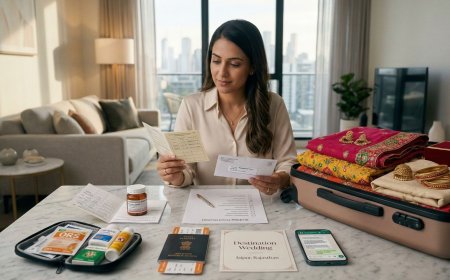
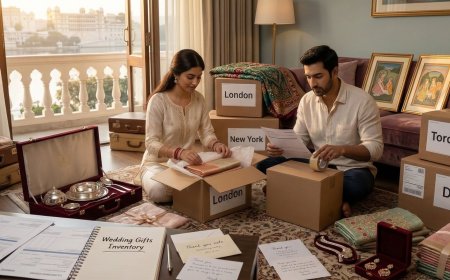
For the nirapara: a traditional brass or bronze nirapara vessel may need to be sourced from a Kerala brass goods importer or brought from India. Many NRI families bring the nirapara from their family home in Kerala — it is the kind of object that travels in suitcases wrapped in sarees, carrying the memory of every ceremony it has held before. If you cannot source a traditional nirapara, a clean brass vessel of similar form is an acceptable substitute — what matters is the rice it holds and the intention behind it.
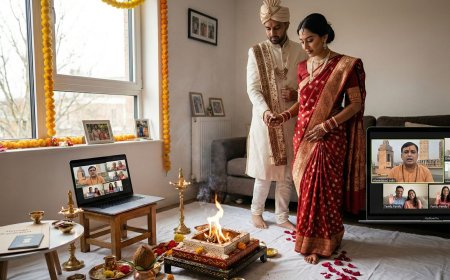
The purohitan question is the most delicate for Kerala Hindu families abroad, because the kula purohitan relationship — the hereditary priest who has served your family across generations — is by definition located in Kerala. Most Kerala NRI families navigate this in one of three ways: flying their family purohitan to the ceremony (the preferred option for families with the means and the close relationship), engaging a Kerala Hindu priest from the local temple community who is briefed thoroughly on your family's specific customs, or conducting part of the ceremony with a local priest and streaming the purohitan's participation from Kerala via video. All three approaches are legitimate. The key is briefing — whichever priest conducts the ceremony, he must know your family's gotra, your community sub-tradition, and your specific regional customs before the ceremony day.
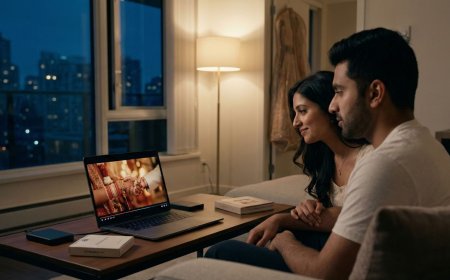
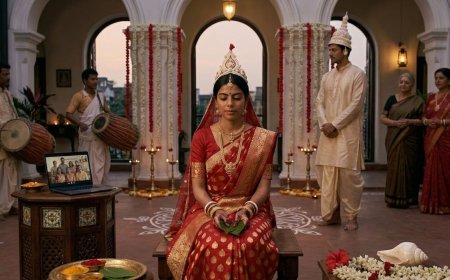
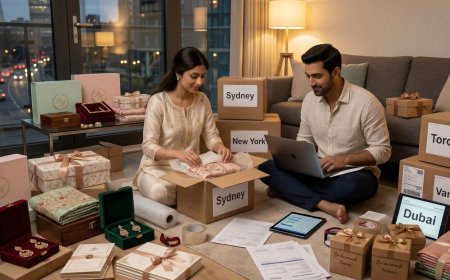
For relatives in India watching via video call: a Nischayam typically runs 60 to 90 minutes. Position your streaming device at the ceremonial arrangement — the nirapara, the lamp, and the vastram exchange are the three visual focal points. In the Gulf, IST time differences are minimal (UAE is 1.5 hours ahead of IST) making coordination straightforward. From London, a 10 AM ceremony is 3:30 PM IST — comfortable. From Toronto EST, an 11 AM ceremony is 9:30 PM IST — manageable with advance notice. From Sydney AEDT, time zone coordination requires the most care — a 10 AM Sydney ceremony is only 4:30 AM IST, so either start later or prepare India family to join a recorded stream.
Doing Nischayam as a Destination Ceremony in India
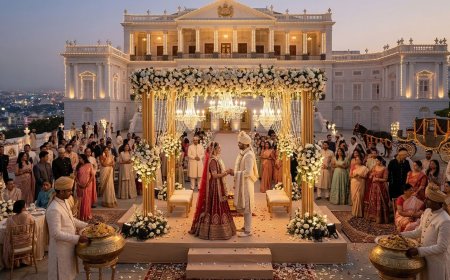
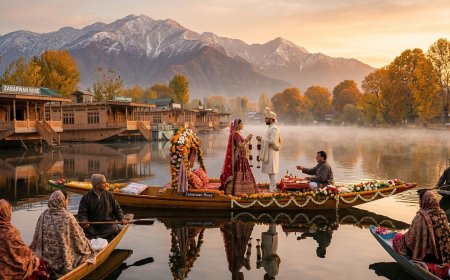
Kerala is one of the most naturally beautiful wedding destinations in India, and a Nischayam conducted in Thiruvananthapuram, Thrissur, Kozhikode, or Ernakulam — or in a heritage property in the backwaters of Alleppey or the hills of Munnar — carries a geographical and spiritual resonance that no overseas venue can replicate.
Thrissur, known as the cultural capital of Kerala, is the natural heartland for traditional Hindu ceremonies — the density of experienced purohitans, the availability of traditional ritual items, and the cultural familiarity of venue staff with Hindu ceremony requirements make it an ideal base. Thiruvananthapuram's temple culture, anchored by the Sree Padmanabhaswamy Temple, gives ceremonies conducted in the capital a particular spiritual weight for Nair families whose family deities are connected to the Padmanabha tradition.
For NRI families coordinating a destination Nischayam from abroad, most Kerala wedding planners in Thrissur, Ernakulam, and Thiruvananthapuram are experienced with NRI logistics — they understand the time zone coordination, the need to brief non-Indian guests, and the importance of documentary photography for families who will not see the images in person for months. Brief your planner specifically on your family's community — Nair, Namboothiri, or Ezhava — as the ritual sequence differs between them.
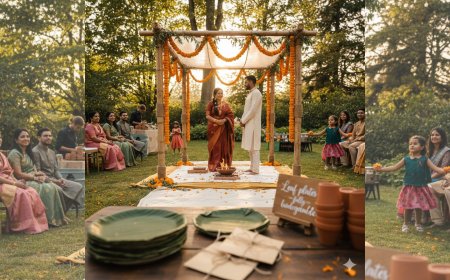
For non-Indian guests, Kerala's natural beauty does much of the explanatory work. A Nischayam conducted in a traditional tharavadu [ancestral family home] or a heritage property with Kerala architectural elements provides non-Indian guests with an immediate visual context that helps them understand they are witnessing something genuinely old and carefully preserved.
What You Need: Ritual Checklist
Ritual Items — Kerala Kasavu silk sarees (one for the bride, one for the bride's mother, and additional sarees as per family tradition) and silk dhotis for male family members on both sides; nirapara vessel filled with raw rice; nirathalam [brass lamp] with oil and wick; fresh flowers — particularly thankappoo [golden champak] and chethi [ixora] which are traditional in Kerala ritual arrangements; coconut; banana; betel leaves and arecanut; kumkumam and chandanam[sandalwood paste]; gold ornament for the bride (ceremonial thali or edangali bangle); agarbatti [incense]; camphor; prasadam ingredients for post-ceremony distribution; printed jathakam documents for both bride and groom; written muhurtham document from the purohitan.
People Required — the kula purohitan or designated Kerala Hindu priest; the bride and groom; both sets of parents; paternal and maternal grandparents; married female relatives to assist with lamp and nirapara arrangement; a designated family elder to make the formal agreement statement; the bride's maternal uncle [ammavan] who plays a significant role in Kerala Hindu ceremonies; witnesses from both families.
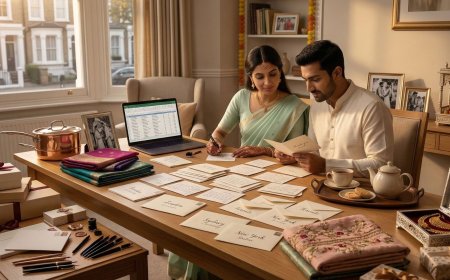
Preparation Steps — confirm purohitan availability and brief him on family gotra and community tradition at least three months ahead. Source vastram at least six weeks before the ceremony. Prepare the nirapara the morning of the ceremony. Confirm video call links and time zones for India relatives at least two weeks before. Brief the photographer on the lamp lighting, vastram exchange, and muhurtham announcement as the three core non-repeatable moments. Prepare a short printed bilingual programme for non-Indian guests.
NRI.Wedding connects Kerala Hindu families abroad with verified purohitans, Kerala silk textile vendors, and photographers experienced in intimate Kerala ceremony documentation. Begin your planning at NRI.Wedding.
5 Questions NRI Couples Always Ask
Our kula purohitan is elderly and cannot travel from Kerala — what are our options?
This is the most common challenge for Kerala NRI families, and there are three workable paths. First, contact your local Kerala Hindu temple — most temples in major diaspora cities maintain a roster of Kerala Brahmin priests, and some will have familiarity with Nair community customs. Second, ask your kula purohitan to recommend a colleague or former student who may be based abroad or willing to travel. Third, arrange for the kula purohitan to participate via live video — chanting the sankalpam and guiding the ceremony remotely while a local priest handles the physical ritual actions. Discuss with your family which approach best honours your tradition.
Can we include non-Indian guests at the Nischayam, or is it a family-only ceremony?
Nischayam is traditionally a family ceremony, but in NRI contexts it is increasingly common to include close non-Indian friends and the non-Indian partner's family. If you choose to include non-Indian guests, prepare a brief printed or digital programme explaining the ceremony sequence — the Ganapathi Pooja, the sankalpam, the vastram exchange, the muhurtham announcement, and the aashirvaadam. Non-Indian guests who understand what they are witnessing almost universally report the Nischayam as one of the most moving ceremonies they have attended.
How do we handle the vastram exchange if both families are not physically present in the same city?
Some NRI families conduct parallel ceremonies — each family performs their portion of the vastram exchange at their own location simultaneously, connected by video call, with the formal agreement spoken across the connection. Others choose to delay the Nischayam until both families can physically gather. The decision depends on your family's priorities. For Kerala Hindu tradition, physical presence for the vastram exchange is strongly preferred by most elders — if at all possible, coordinate travel so both families are in the same location for the ceremony.
My partner is from a different Indian state — how do we blend the Nischayam with their family's engagement tradition?
Many NRI couples navigate intercommunity engagement ceremonies by structuring the day in two phases — each family's tradition honoured separately in sequence, with a shared celebration afterward. Alternatively, a skilled and experienced purohitan can structure a ceremony that draws from both traditions while maintaining the integrity of each. The key is involving both families' elders in the planning conversation early, so that the ceremony feels like a genuine honouring of both lineages rather than a compromise that satisfies neither.
Does the Nischayam need to happen on an auspicious date, like the wedding muhurtham?
Yes — for most Kerala Hindu families, the Nischayam date is also selected with reference to the panchang, avoiding inauspicious periods and choosing a date with favourable tithi and nakshatra. This calculation is typically done by the kula purohitan simultaneously with the wedding muhurtham calculation. Some families are more flexible about the Nischayam date than the wedding muhurtham, but elder family members will almost always prefer astrological guidance on both. Consult your purohitan before selecting your Nischayam date.
The Emotional Angle
There is a particular quality of light in Kerala in the early morning — the way it comes through coconut palms and settles on the floor of a tharavadu in long gold strips — that every Malayali who has grown up abroad carries inside them like a photograph they never took. You don't know you're carrying it until something calls it up. Until a lamp is lit in a living room in Sharjah or a community hall in Wolverhampton, and the flame does something to the air that makes the room feel, just for a moment, like home.
That is what the nirathalam does at the Nischayam. That is what the smell of chandanam and thankappoo does. That is what your mother's hands, arranging the nirapara with the same precision she uses for everything she loves, does to you.
Kerala NRI families carry their culture the way the state itself carries its rivers — quietly, continuously, finding their way through whatever terrain they encounter. The Nischayam abroad is not a lesser ceremony for happening in a different place. It is proof of the same thing it has always been proof of: that this family knows what it values. That it will go to whatever lengths are required to honour it. That the lamp will be lit. That the rice will overflow. That the promise will be made in the right words, even when the right words have to travel eleven thousand kilometres to be heard.
A Moment to Smile
At a Nischayam in Wolverhampton two years ago, the family had sourced everything perfectly — the Kasavu sarees, the nirapara, the traditional brass lamp, the champak flowers flown in from a specialist South Asian florist in Birmingham. The purohitan, a Kerala Brahmin priest who had been in the UK for fifteen years, was mid-sankalpam when the family's elderly Labrador — who had been asleep in the kitchen and apparently found the chanting interesting — padded into the room and sat down directly beside the nirapara with the air of someone who had been invited.
The purohitan paused. The dog did not move. The bride's grandmother, who had flown in from Thrissur specifically for this ceremony, looked at the dog with an expression of profound theological consideration and then said, very calmly, "Ganapathi has sent a representative."
The room dissolved. The dog, satisfied, put his head on his paws. The sankalpam resumed. The ceremony was, by unanimous family agreement, the most auspicious Nischayam anyone present had ever attended.
Quotes from the Diaspora
"When the purohitan chanted the sankalpam and said our family name and our gotra aloud in that room in Brampton, I started crying and I couldn't explain to anyone why. My fiancé's mother — she's from Dublin — put her hand on mine. She didn't say anything. She didn't need to. She understood that something old had just been spoken out loud in a new place, and that this was important." — Devika Menon, Nair community, Brampton, Canada
"I found the Kasavu saree for my daughter's Nischayam at a shop in Tooting. The woman who ran it was Tamil, not Malayali, but she knew exactly which saree I needed when I described it. She said, 'You want the gold border one, for something important.' I said yes. She said, 'Then this one.' She was right. My daughter was beautiful." — Thankam Pillai, mother of bride, Nair community, London
"We did the Nischayam in Dubai because both our families are here. My husband's family is from Kozhikode, mine is from Ernakulam — slightly different customs. Our purohitan sat with both our mothers for an hour before the ceremony and built a sequence that honoured both. That hour, those three people negotiating the details of our future — I wish I had filmed it." — Anjali Krishnakumar, Nair community, Dubai, UAE
Your Roots Travel With You
The Nischayam is Kerala's way of saying that the most important decisions deserve a ceremony. That a promise made in sacred space, with the lamp lit and the rice overflowing and the family gathered, is a different kind of promise than one made anywhere else. It is a ceremony that asks very little in terms of spectacle and everything in terms of presence — the right people, the right words, the right light.
NRI.Wedding supports Kerala Hindu families across the diaspora — in Dubai, London, Toronto, Sydney, and beyond — with verified Kerala Hindu purohitans, Kasavu saree sourcing guidance, Kerala ceremony photographers, and Nischayam planning checklists tailored to overseas logistics. The lamp can be lit anywhere. The promise carries the same weight regardless of which city's air it is spoken into.
Light the lamp. Fill the nirapara. Let the promise be made properly.
This article explores Nischayam — the formal engagement ceremony in Kerala Hindu tradition — across Nair, Namboothiri, and Ezhava communities, and its practice among the Kerala NRI diaspora in the Gulf, UK, Canada, USA, and Australia, including cities such as Dubai, London, Toronto, Sydney, and Houston.
What's Your Reaction?
 Like
0
Like
0
 Dislike
0
Dislike
0
 Love
0
Love
0
 Funny
0
Funny
0
 Angry
0
Angry
0
 Sad
0
Sad
0
 Wow
0
Wow
0