


































































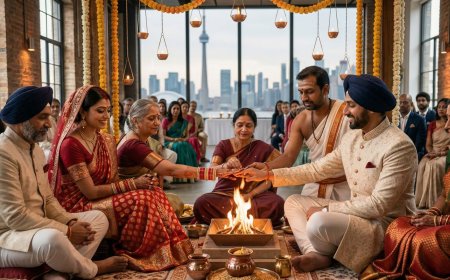



Seven Sacred Steps Across Oceans: Why Saat Pheras Still Matter for NRI Couples
This feature explores how NRI couples across the US, UK, Canada, UAE, and Australia are preserving the sacred Hindu ritual of Saat Pheras while hosting weddings abroad. It examines the cultural meaning, modern adaptations, and practical considerations involved in performing traditional vows outside India, highlighting how global Indian communities blend heritage with contemporary wedding settings.


For millions of Indians living abroad, the sacred Saat Pheras are no longer just a ritual — they are an emotional bridge between two worlds. As destination weddings, civil ceremonies, and intercultural unions become the norm, NRI couples are redefining how ancient vows travel across continents without losing their soul. This is the story of how seven sacred steps still anchor a lifetime, even when taken thousands of miles from home.
You grew up watching your parents circle a sacred fire in grainy wedding videos from the 80s. Your mother still remembers the smell of ghee, the nervous tremble in her voice as she repeated the vows, the way her own mother cried silently in the background.
Now you're sitting in a condo in Toronto, planning a wedding in a vineyard with a guest list split between time zones and continents. Half your family wants a legal ceremony. The other half wants proper Saat Pheras. And you, standing in the middle, are wondering — can something so deeply Indian still feel real so far from India?
This is the question almost every NRI couple asks. And the answer is more beautiful than you think.
🌟 DID YOU KNOW? FACT BOX
Did You Know?
Over 68% of Indian-origin couples in the US and UK now combine a civil ceremony with at least one core Hindu ritual.
The earliest written references to marriage fire rituals appear in the Rig Veda, over 3,500 years old.
In diaspora communities, over 40% of couples source their pandits digitally through regional WhatsApp networks.
WHAT IS SAAT PHERAS?
Saat Pheras (seven sacred circumambulations) form the spiritual core of a Hindu wedding. The word comes from Saat(seven) and Phera (to walk around), referring to the seven rounds a couple takes around the sacred fire, known as Agni(fire deity and witness).
This ritual originates in ancient Vedic marriage rites where fire was considered the purest messenger between humans and the divine. During the ceremony, the bride and groom walk together around the fire seven times, each round accompanied by a vow. These vows are not romantic promises in the modern sense — they are cosmic agreements about life, duty, and shared destiny.
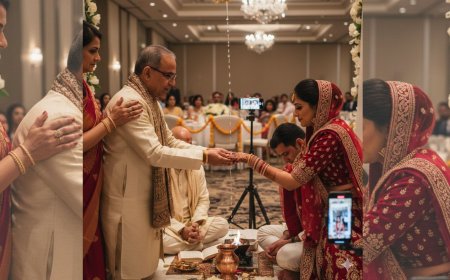
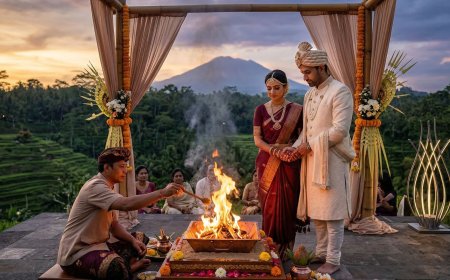
Physically, the ritual unfolds after the main Havan (fire offering). The couple’s garments are tied together in Gathbandhan (symbolic knot of union). The priest chants Sanskrit mantras, and with each step, the couple pauses to hear a vow — about nourishment, strength, prosperity, family, health, friendship, and spiritual growth.
Spiritually, Saat Pheras mark the moment when two individuals stop being separate social entities and become a single household. In Hindu philosophy, marriage is not just emotional or legal — it is Dharma (cosmic duty). These seven steps are believed to bind not just two bodies, but two karmic journeys.
For Indian families, especially in the diaspora, this is the moment the wedding truly feels real.
COMMUNITY COMPARISON TABLE
| Community / State | Local Name | Key Tradition | How NRIs Abroad Adapt It |
|---|---|---|---|
| Himachali | Pheras | Bride walks first three rounds | Shortened mantras, bilingual vows |
| Garhwali | Saptapadi | Rice offerings after each round | Symbolic fire bowl indoors |
| Kumaoni | Saptapadi | Parents whisper blessings | Zoom participation from India |
| Ladakhi | Nyopa | Butter lamps instead of fire | Electric diya alternatives |
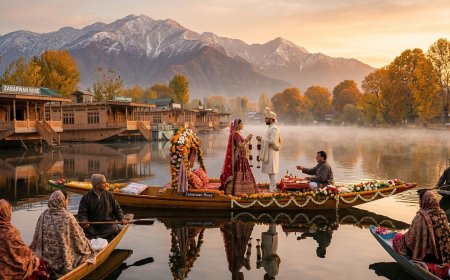
| Kashmiri Pandit | Lagan | No fire, sacred thread ritual | Combined with North Indian pheras |
| Punjabi | Lavan | Four rounds to Gurbani | Hybrid Sikh-Hindu ceremonies |
| Marathi | Saptapadi | Seven rice steps | DIY rice packets from India |
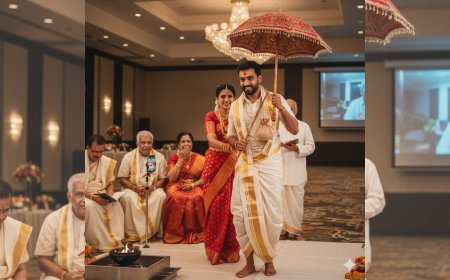
| Tamil | Saptapathi | Fire + homam | Conducted in temples abroad |
| Bengali | Saat Paak | Bride carried around groom | Symbolic walk instead of lift |
| Rajasthani | Phera | Heavy ghee offerings | Fire-safe minimal havan |
THE MEANING BEHIND THE RITUAL
At its heart, Saat Pheras reflect the Indian worldview that life is not a linear pursuit of happiness, but a circular journey of shared responsibility. Each step is not about desire, but about balance — between material and spiritual, individual and collective, love and duty.
The fire represents consciousness itself — always changing, always consuming, always witnessing. Walking around it signifies that the couple agrees to keep truth at the centre of their lives. Not romance. Not ego. Truth.
In ancient philosophy, the number seven mirrors cosmic order — seven chakras, seven planets, seven realms of existence. By taking seven steps, the couple symbolically aligns their household with the structure of the universe.
To explain this to a non-Indian partner, one sentence suffices:
Marriage in Hindu culture is not about finding happiness — it is about building a sacred life together.
DOING SAAT PHERAS ABROAD: THE PRACTICAL REALITY
This is where emotion meets logistics.
The first challenge is venue restrictions. Most Western venues — especially vineyards, beaches, and ballrooms — restrict open flames. The solution most NRI couples use is a symbolic fire: a copper bowl with minimal flame, surrounded by electric diyas, or in some cases, a glass-encased havan kund approved by the venue.
Sourcing ritual items is easier than it used to be. In London, couples rely on Southall and Wembley. In Sydney, Harris Park is a goldmine. In Houston, Hillcroft Avenue has everything from havan samagri to mangal sutras. In Dubai, Bur Dubai remains the unofficial Indian wedding district.
Finding the right pandit is emotional, not technical. NRIs don’t just want a priest — they want their kind of priest. A Garhwali family wants Garhwali mantras. A Tamil bride wants someone who understands Agamic traditions. Most successful matches happen through community WhatsApp groups, Facebook diaspora pages, and increasingly through platforms like NRI.Wedding.
Then comes the time zone problem. Parents and grandparents often insist on watching live from India. Couples coordinate ceremonies around IST evenings, which means early morning or late-night weddings abroad. It sounds inconvenient — until you see your grandmother bless you through a phone screen, tears in her eyes.
The truth is, doing Saat Pheras abroad requires compromise, creativity, and courage. But every couple who does it says the same thing afterwards: this was the moment the wedding stopped feeling like an event and started feeling like a life.
DOING SAAT PHERAS AS A DESTINATION WEDDING IN INDIA
Many NRI couples choose to return home for this one ritual. Popular destinations include Rishikesh for spiritual weddings, Udaipur for royal settings, Coorg for intimate nature ceremonies, and ancestral villages for emotional continuity.
The key is briefing the pandit properly. Indian priests often default to local customs unless told otherwise. NRI couples must clearly explain regional variations, language preferences, and time constraints.
For non-Indian guests, printed ceremony guides and bilingual explanations transform confusion into connection. What feels foreign becomes fascinating.
WHAT YOU NEED: RITUAL CHECKLIST
Ritual Items: Havan kund, ghee, samagri, rice, sacred thread, flowers, copper lota, diya, matchbox.
People Required: Pandit, bride, groom, two witnesses, ideally parents or elders.
Preparation Steps: Confirm fire permissions, rehearse mantras, brief videographers, test Zoom call with India.
NRI.Wedding connects couples with verified pandits and regional vendors worldwide, eliminating guesswork.
5 QUESTIONS NRI COUPLES ALWAYS ASK
Can we do Saat Pheras in a hotel ballroom?
Yes. Most couples use symbolic fire setups approved by venues. Emotional authenticity matters more than literal flames.
What if my partner isn’t Indian?
Many intercultural couples adapt the vows into English alongside Sanskrit, creating powerful hybrid ceremonies.
How do I find a region-specific pandit abroad?
Community groups and NRI.Wedding’s curated network remain the most reliable sources.
Can family in India participate live?
Absolutely. Time zones require planning, but video blessings are now a cherished norm.
Should we do civil or religious ceremony first?
Most couples legally marry first for paperwork, then treat Saat Pheras as the true wedding.
THE EMOTIONAL ANGLE
You don’t realise how heavy your culture feels until you carry it across borders.
For NRI parents, watching Saat Pheras abroad is bittersweet. Pride that their child honours tradition. Grief that the village temple is now a hotel ballroom. Determination to make sure the next generation still knows the smell of agarbatti and the rhythm of Sanskrit.
For you, standing in a foreign country wearing clothes stitched in India, surrounded by accents from everywhere, these seven steps become an act of defiance. A refusal to let heritage dissolve. A declaration that your story did not begin at immigration.
It began long before passports existed.
A MOMENT TO SMILE
At a wedding in Mississauga, the fire alarm went off during the fourth phera. The entire ballroom evacuated — bride, groom, guests, pandit — still holding hands.
Instead of panic, everyone burst into laughter. The priest continued chanting mantras in the parking lot. Someone played the wedding playlist from their phone. And the couple completed their vows under the open sky, surrounded by confused Canadian security guards.
To this day, the bride says, “Our marriage literally survived a fire drill. I think we’ll be fine.”
QUOTES FROM THE DIASPORA
“Doing pheras in Southall felt strange until my mother cried during the mantras. Then it felt exactly like home.” — Riya, Punjabi bride
“I didn’t understand the Sanskrit, but I felt the weight of history. It was humbling.” — Daniel, American groom
“I thought culture fades abroad. Watching my son take pheras proved me wrong.” — Meera, Kashmiri mother, Melbourne
YOUR ROOTS TRAVEL WITH YOU
You may live in glass towers, speak in global accents, and celebrate in vineyards instead of village courtyards. But when you walk those seven steps, you carry centuries with you.
NRI.Wedding exists for this reason — to help couples honour tradition without sacrificing reality. From regional pandits to diaspora photographers and cultural planners, the platform exists to ensure your wedding feels like you — not a compromise.
Your roots travel with you. Let them bloom.
Saat Pheras ritual explained for NRI couples in US, UK, Canada, UAE, Australia — cultural meaning, diaspora adaptations, and practical wedding guidance.
What's Your Reaction?
 Like
0
Like
0
 Dislike
0
Dislike
0
 Love
0
Love
0
 Funny
0
Funny
0
 Angry
0
Angry
0
 Sad
0
Sad
0
 Wow
0
Wow
0