





























































The Red That Stays Forever: Sindur Daan in Odia Hindu Weddings
Sindur Daan — the moment a groom places vermillion in the parting of his bride's hair for the first time — is the single most visually iconic and spiritually decisive act in the Odia Hindu wedding ceremony. Rooted in the ancient Shakti tradition and distinguished by the joyful Sindur Khela celebration that follows, this ritual of red and reverence is carried across oceans by NRI Odia families in London, Toronto, Houston, Dubai, and Sydney with undiminished devotion. This complete guide covers the ritual's spiritual significance, the Sindur Khela tradition, community variations across Odia, Bengali, Tamil, Marathi, and North Indian traditions, and full practical advice for NRI couples planning authentic ceremonies at home or as destination weddings in Bhubaneswar, Puri, and Cuttack.


Sindur Daan — the moment a groom places vermillion in the parting of his bride's hair for the first time — is the single most visually iconic and spiritually decisive act in the Odia Hindu wedding ceremony. For NRI Odia families in London, Toronto, Houston, Dubai, and Sydney, this moment of red and reverence carries the full weight of cultural identity, marital commitment, and the ancient Odia understanding that some vows are written not in words but in colour — and they do not wash out.
You have seen it a hundred times in photographs and you have felt it exactly once — or you are about to. The groom's hand moving toward the parting in the bride's hair. The small container of sindur [vermillion powder]. The room holding its breath in that particular way that only happens at the most sacred moments, when everyone present understands simultaneously that something irrevocable and beautiful is occurring.
You are in Houston or Wembley or somewhere in suburban Melbourne where the neighbours have no idea what is happening inside your hired hall tonight. And inside that hall, in a moment that has been performed in Odisha for longer than any written record confirms, your groom will place red at the root of your hair and the universe will witness it and you will be, in the oldest and most complete sense of the word, his.
Not his property. His partner. His chosen. His home.
This is Sindur Daan. And the red, once placed, stays.
🌟 Did You Know?
- Sindur [vermillion] in Hindu cosmological understanding is not merely a cosmetic marker. It is considered a direct material manifestation of Shakti [divine feminine energy] — specifically associated with Goddess Parvati, who is understood to have first applied sindur when she married Lord Shiva. When a groom applies sindur to his bride's hair parting, he is understood to be invoking the same divine energy that sustains the cosmos into their marriage.
- In Odia tradition, the specific shade and composition of sindur used in the wedding ceremony matters ritually. Traditional pure sindur made from turmeric and lime — called haridra sindur — is considered the most auspicious for the wedding ceremony itself, as opposed to commercially produced vermillion which may contain synthetic compounds. Many NRI Odia families specifically source traditional haridra sindur from Odisha or from specialist suppliers before the wedding.
- The Odia Sindur Daan tradition includes a specific custom not found in many other regional traditions — the Sindur Khela [vermillion play] that follows the formal application, in which married women of the family smear sindur on each other's faces and foreheads in an explosion of colour and joy that transforms the solemnity of the formal ritual into collective celebration. This custom, shared with Bengali tradition, is one of the most visually spectacular moments of any Odia wedding.
What Is Sindur Daan in Odia Tradition?
Sindur Daan [the gift of vermillion — from sindur meaning vermillion and daan meaning the act of sacred giving] is the ritual within the Odia Hindu wedding ceremony in which the groom applies vermillion powder to the parting of the bride's hair — the maang [hair parting] — for the first time, formally completing her transition from daughter to wife in the eyes of the community, the family, and the divine witnesses invoked throughout the ceremony.
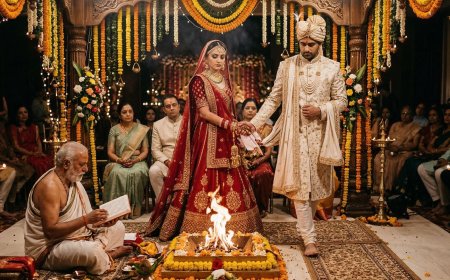
In the Odia Brahmin tradition, Sindur Daan occurs after the Saptapadi [seven sacred steps around the fire] and after Kanyadan [the formal giving of the bride] have been completed. The sequence matters: the fire has witnessed the vows, the father has given his daughter, and now the groom marks his bride with the colour that will identify her marital status for the rest of her life. The order is theologically intentional — the marking follows the giving, and the giving follows the vowing.
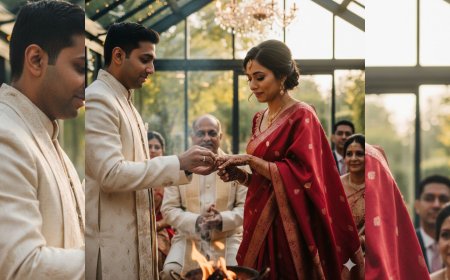
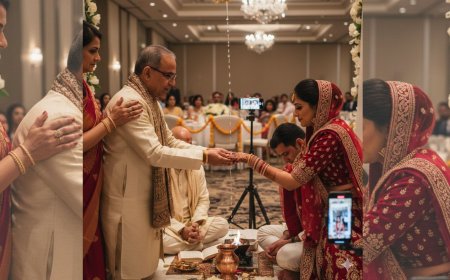
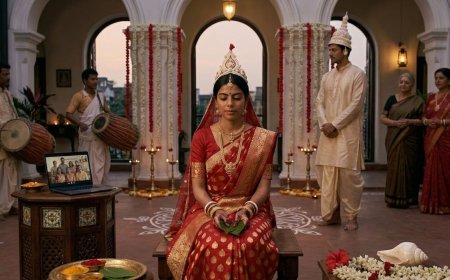
The ritual itself unfolds with specific precision in the Odia tradition. The purohit [priest] places a small quantity of sindur in a sindur daani [vermillion container] — traditionally a small silver or gold vessel — and guides the groom through the accompanying mantras. The bride sits before the groom with her hair parting clearly visible, her head slightly bowed. The groom dips the tip of his right ring finger — or in some Odia family traditions, a small gold stick — into the sindur and draws it along the length of the bride's maang in a single, deliberate stroke.
The Baajantri [ceremonial musicians] who have been present throughout the ceremony fall silent at this specific moment in many Odia family traditions — the silence marking the most sacred beat of the wedding, the moment when the mantras and the colour and the breath of the couple are the only sounds in the room. Then, as the sindur is placed, the musicians resume — and the shankha [conch shell] is blown, ululation rises from the women of the family, and the room transforms from sacred stillness to sacred joy in a single breath.
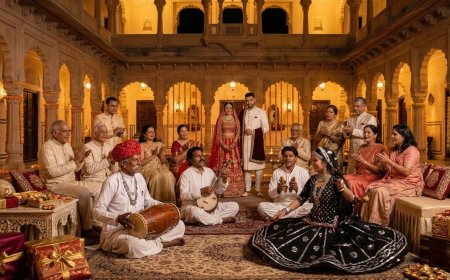
What follows — the Sindur Khela — is uniquely and joyfully Odia and Bengali in character. Married women of the family take sindur from the container and apply it to each other's foreheads and cheeks in an act of collective celebration, their white and red sarees becoming canvases for shared happiness, the laughter and colour marking the moment when formal ceremony gives way to pure communal delight.
Community Comparison Table
| Community / State | Local Name | Key Distinctive Element | Sindur Khela Equivalent | How NRIs Abroad Adapt It |
|---|---|---|---|---|
| Odia Brahmin | Sindur Daan | Music stops at application moment; gold stick or ring finger used; Sindur Khela follows | Full Sindur Khela with married women of family | Full ritual performed; traditional haridra sindur sourced from specialist suppliers or ordered from Odisha |
| Odia Karan (Kayastha) | Sindur Daan | Close to Brahmin tradition; specific Karan community mantra variations | Sindur Khela observed with community women | Community elders consulted for specific Karan tradition variations before briefing overseas purohit |
| Bengali Hindu (Brahmin/Kayastha) | Sindur Daan / Sindoor Daan | Performed after Shubho Drishti and Saat Paak sequence; conch shell blown simultaneously | Sindur Khela — elaborate, extended, joyful | Bengali purohit networks active in London, Toronto, Dubai; Sindur Khela widely preserved in diaspora |
| North Indian Brahmin (UP/Bihar) | Sindoor Daan / Maang Bharai** | Performed during or after pheras [sacred circles]; family members may guide groom's hand | No formal Sindur Khela equivalent; general celebration follows | Large North Indian diaspora ensures ritual support in all major diaspora cities |
| Marathi Brahmin | Mangalsutra and Sindoor** | Sindoor applied after Mangalsutra [sacred necklace] tying; less formally separated as standalone ritual | No formal Sindur Khela; communal celebration follows | Marathi community associations in Toronto and London support full ritual |
| Tamil Brahmin (Iyer) | Thali Tying / Pottu** | Sacred thread tying is the primary marital marker; sindoor applied but less ceremonially central | No Sindur Khela equivalent; Nalungu [turmeric games] is the joyful communal ritual | Tamil Sangams in every major diaspora city; full ritual infrastructure available |
| Goan GSB Brahmin | Sindoor Daan | Incorporated within broader fire ritual sequence; Konkani coastal elements present | No formal Sindur Khela; communal music and celebration follows | GSB Sabha networks support authentic ceremony; ritual well-preserved in diaspora |
| Gujarati Hindu | Sindoor Daan** | Applied during or after seven steps; groom uses right ring finger; family witnesses designated | No formal Sindur Khela; garba celebration follows | Gujarati community infrastructure strongest in diaspora; full ceremonies consistently available |
| Rajasthani | Maang Bharai** | Applied with specific Rajasthani mantra variation; family elder may guide groom's hand first | Folk songs mark the moment; communal celebration follows | Adapted with available purohits; Rajasthani folk elements preserved through recorded music |
| Punjabi Hindu | Maang Bharai / Sindoor** | Often performed by groom's mother first, then groom; chunni [scarf] placed over bride simultaneously | No formal Sindur Khela; bhangra celebration follows | Large Punjabi diaspora means full ceremony support in all major diaspora cities |
| Kashmiri Pandit | Sindoor Daan** | Specific KP mantra sequence; applied with walnut leaf in some family traditions | No Sindur Khela; specific KP post-wedding rituals follow | KP Sabhas in London and Toronto maintain purohit and cultural networks |
| Bengali Muslim | Not applicable | Sindoor is a Hindu ritual marker; not part of Islamic Nikah tradition | Not applicable | Distinct tradition; Nikah ceremony observed through Muslim community organisations |
The Meaning Behind the Ritual
In the Hindu philosophical and cosmological understanding, sindur [vermillion] is not a cosmetic. It is a declaration — written in the colour of fire, of blood, of the goddess herself — that a woman has entered the most sacred social and spiritual bond available to human beings.
The maang [hair parting] is not chosen arbitrarily as the location for this declaration. In classical Indian physiological and spiritual understanding, the maang is the point on the body closest to the Brahmarandhra [the crown chakra, the point of connection between the individual soul and the universal consciousness]. Placing sindur at this point is therefore not merely a social marking — it is a spiritual sealing of the union at the highest point of the body, the point closest to the divine.
Goddess Parvati is the presiding deity of Sindur Daan. She is understood in Hindu theology as the Adi Shakti[primordial feminine energy] who chose Lord Shiva as her husband across multiple lifetimes, whose devotion was so complete and so powerful that it brought the most ascetic of gods into the social bond of marriage. When a bride receives sindur, she receives it in the lineage of Parvati — as a woman whose choice of partner is understood as an act of cosmic devotion, not merely social arrangement.
The Sindur Khela that follows in Odia and Bengali tradition is not frivolous after-ceremony entertainment. It is the community's collective participation in the bride's transition — the married women marking themselves and each other with the same colour, saying collectively: we know this bond. We have lived it. We welcome you into it. We celebrate with everything we have.
For a non-Indian partner or guest: "The red he places in her hair is not a mark of ownership. It is the colour the goddess wore when she married the god she had chosen across lifetimes. It says: I chose you. I choose you. I will keep choosing you."
Performing Sindur Daan Abroad: The Practical Reality
The good news for NRI Odia couples is that Sindur Daan is one of the most practically manageable rituals in the Odia wedding ceremony. It requires no fire at the specific moment of application, no large quantities of materials, and no elaborate spatial setup beyond the couple being positioned before each other with the bride's maang clearly visible. What it requires most is the right sindur, the right purohit, and the right silence at the right moment.
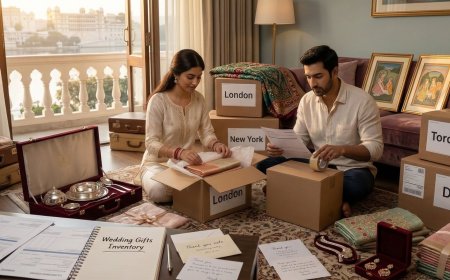
Sourcing traditional sindur is your first practical consideration. Standard commercially produced vermillion is available at virtually every South Asian grocery store in every diaspora city — at Green Street in East Ham and Ealing Road in Wembley in London, along Gerrard Street East in Toronto, at Meena Bazaar in Dubai, at Harris Park in Parramatta in Sydney, and along Hillcroft Avenue in Houston. However, if your family tradition calls for traditional haridra sindur[turmeric-based vermillion] rather than synthetic vermillion, this requires more specific sourcing. Specialist Odia cultural suppliers, online South Asian ritual supply services that ship internationally, and community networks through the Odia Association in your city can assist with sourcing. Many NRI Odia families ask relatives in Bhubaneswar or Puri to courier traditional sindur as part of the wedding supply package from India — this is entirely practical with three to four weeks' lead time.
The sindur daani [vermillion container] is an item worth sourcing with care. A small silver or gold vessel is traditional — available at South Asian jewellery stores in all major diaspora cities, or a family heirloom piece if your family has one. This is one of the ritual objects that NRI families most frequently bring from Odisha specifically for the wedding, carried in hand luggage as a piece of irreplaceable personal significance.
For the music coordination around Sindur Daan, brief your Baajantri musicians or your audio coordinator specifically on the silence protocol — the moment of sindur application in many Odia family traditions calls for the music to stop, and the silence must be genuine and complete, not merely soft. This requires your music coordinator to know the ceremony sequence well enough to anticipate the moment rather than reacting to it. Share your purohit's ceremony timeline with your music coordinator at least one week before the wedding.
For the Sindur Khela that follows, brief the married women of your family in advance on who will participate, the approximate timing, and what to wear — white sarees with red borders are traditional for Odia Sindur Khela, and sindur on white fabric is permanent. This point cannot be overstated to guests who may not know: sindur on clothing does not wash out. Brief all potential participants clearly and let them make an informed choice about their attire.
For coordinating with Odisha, the Sindur Daan moment is what relatives watching remotely will replay. Position your streaming camera for a close frame on the bride's face and the groom's hand during the application — not a wide room shot. The Sindur Khela, immediately afterward, benefits from a wider angle that captures the colour and the joy of the collective celebration. If you have the resources for two cameras, this is where to use them.
In Dubai, the UAE's formal dress code regulations in public spaces do not apply to private venue events — Sindur Khela can proceed without restriction in hired event spaces. Confirm with your venue that the celebration's colour element is expected and that post-event cleaning is factored into your booking.
Sindur Daan as a Destination Wedding in Odisha
Odisha rewards the return for Sindur Daan in ways that are difficult to anticipate until you are standing inside them. Bhubaneswar's heritage wedding venues, Puri's sacred atmosphere, and Cuttack's cultural richness all provide settings where Sindur Daan is not an adapted ritual but a living one — where the purohit knows the silence protocol without being told, where the Baajantri musicians know exactly when to stop and exactly when the conch must sound, where the married women of the extended family have been waiting all week for the Sindur Khela.
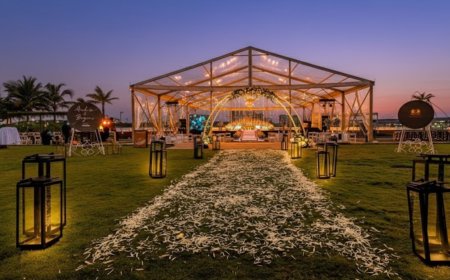
For destination weddings in Odisha, the Ekamra Haat cultural precinct in Bhubaneswar and the heritage venues in the Jaydev Vihar area offer beautiful settings with full ritual infrastructure. For families whose ancestral connections are to the Jagannath tradition in Puri, a wedding in proximity to the temple — with the temple's bells as a distant background presence — carries a spiritual weight that no overseas venue can approximate.
Brief your local coordinator — or NRI.Wedding's Odisha planning contacts — on your family's specific Sindur Daan customs well in advance. Whether your tradition uses a gold stick or the ring finger, whether the music stops or continues, whether the Sindur Khela is limited to immediate family or opened to all married women present — these details matter, and a local coordinator who understands them will ensure the ceremony flows without hesitation.
For non-Indian guests at an Odisha destination wedding, the Sindur Khela in particular is an experience that requires no cultural explanation. When twenty women in white and red sarees begin smearing vermillion on each other's faces and foreheads with absolute joy and absolute abandon, the experience communicates across every cultural boundary instantly. Provide a brief written note warning non-Indian guests that sindur is permanent on fabric — they will thank you, and then they will probably join in anyway.
What You Need: Ritual Checklist
Ritual Items: Traditional haridra sindur or high-quality pure vermillion in sufficient quantity for both the formal Daan and the Sindur Khela, a sindur daani [vermillion container] in silver or gold, a small gold stick if your family tradition uses one rather than the ring finger, shankha [conch shell] for blowing at the moment of application, and sufficient sindur for the Sindur Khela celebration — considerably more than the formal application requires.
People Required: An Odia purohit with confirmed knowledge of the Odia Sindur Daan mantra sequence and the specific silence-and-music protocol of your family's tradition, a music coordinator or Baajantri ensemble briefed on the silence moment, a designated shankha blower positioned near the ceremony, married women of the family briefed on Sindur Khela participation and attire, and a photographer specifically briefed on the application frame and the Sindur Khela wide shot.
Preparation Steps: Source traditional sindur minimum two weeks before the wedding and store sealed and dry. Source sindur daani from South Asian jewellery stores or bring from Odisha. Brief music coordinator on silence protocol in writing with ceremony timeline. Brief all Sindur Khela participants on permanent staining of sindur on fabric at least one week before. Confirm camera positions for application close-up and Sindur Khela wide shot. Test live-stream framing 24 hours before. Brief non-Indian guests on the Sindur Khela in your written ceremony guide so they are prepared for the transition from solemnity to joy.
NRI.Wedding connects Odia couples with community-specific purohits, traditional sindur suppliers, Baajantri musician networks, and ceremony photographers across London, Toronto, Dubai, Sydney, and Houston. Visit our vendor directory to begin.
5 Questions NRI Couples Always Ask
Can the bride apply sindur herself or does it have to be the groom?
In the Odia Brahmin tradition, the groom's application of sindur is the ritually required form — the act of giving is his, and it must be performed by his hand. However, in circumstances where the groom has a physical limitation that makes the application difficult, or in contemporary adaptations that some NRI families are thoughtfully exploring, the bride's active participation in guiding the groom's hand is entirely within the spirit of the ritual. Discuss any adaptations with your purohit in advance so the ceremony flows without hesitation.
We want to do Sindur Khela but our venue has light-coloured carpets and furnishings. How do we manage the colour?
This is a genuinely important practical consideration — sindur is permanent on fabric and very difficult to remove from carpets and upholstery. The most effective solution is to designate a specific area of your venue for Sindur Khela that is protected by plastic sheeting or a durable ground covering, position all Sindur Khela participants in this area, and warn your venue coordinator explicitly in advance. Some NRI couples have their Sindur Khela outdoors if weather permits, which solves the venue concern entirely and produces extraordinarily beautiful photographs. Provide all Sindur Khela participants with clear advance warning about permanent staining — ideally one week before the wedding, not on the day.
My partner is not Hindu and comes from a Western background. How do we include them in understanding the significance of Sindur Daan without it feeling like a lecture?
The most effective approach is a brief written explanation in your ceremony programme — no more than a paragraph — that explains what sindur represents and why the moment of application is the ceremony's most sacred beat. Beyond that, trust the ritual. The silence that falls over the room, the groom's hand moving toward the bride's parting, the conch shell sounding, the women's ululation rising — these communicate the moment's significance in a language that requires no translation. Non-Indian partners and guests consistently describe Sindur Daan as the moment they most profoundly understood what kind of tradition they had entered or witnessed. The ritual explains itself.
Is there a specific time in the ceremony when Sindur Daan must occur or can we move it for logistical reasons?
In Odia Brahmin tradition, Sindur Daan occurs after Saptapadi and Kanyadan — the sequence is theologically intentional and should not be reordered without your purohit's guidance. However, the overall ceremony timing can be adjusted within the muhurtham [auspicious time] window to accommodate practical considerations. Discuss your ceremony timeline with your purohit minimum one month before the wedding, identify the muhurtham window, and work backward from there to structure the ceremony sequence. Most experienced purohits who work with NRI families are accustomed to balancing ritual requirements with the practical realities of diaspora wedding logistics.
What happens if the groom applies too little sindur or places it incorrectly? Is there a ritual correction?
This concern is more common than couples admit, and the answer is reassuring — the ritual's validity is not compromised by a slightly imperfect application. Your purohit can guide the groom to add more sindur if needed without interrupting the ceremony's flow. Many NRI families have the groom practice the application motion before the ceremony using a cotton bud and harmless red powder on a willing family member — this is entirely sensible preparation and most purohits encourage it. What matters is the intention behind the act, not the geometric perfection of the line drawn.
The Emotional Angle
Nobody warns you about the silence.
You have been to Odia weddings. You have seen Sindur Daan from the crowd, from the back of a mandap, from the vantage point of a guest who is moved but not implicated. You thought you knew what it looked like.
You did not know what it sounds like from inside it. The specific quality of silence that falls over a room full of people who love you, at the exact moment the groom's hand moves toward your hair. Not quiet — silent. The way a room goes silent when it understands that something is happening that cannot be taken back and that everyone present is grateful to be witnessing.
For NRI Odia brides, this silence arrives carrying everything. It arrives carrying your mother's hands braiding your hair in the kitchen when you were small. It arrives carrying every Durga Puja celebrated in a community centre that smelled nothing like Odisha but tried. It arrives carrying every time your father said something in Odia in a supermarket aisle and you pretended not to hear because you were sixteen and mortified and you would give anything to have those moments back now.
And then the red is placed. One deliberate stroke along the parting that has been in your hair your whole life. And the conch sounds. And the women around you make the sound that Odia women have made at this moment for longer than any record confirms. And you are — completely, irrevocably, joyfully — home.
Not in Odisha. In yourself. In this. In the red that stays.
A Moment to Smile
At Lipsa and Daniel's wedding in Melbourne last October, the Sindur Daan proceeded with perfect ceremonial gravity right up until the moment Daniel — six foot two, Irish-Australian, three months of sincere Odia cultural preparation behind him — dipped his ring finger into the sindur daani with complete concentration and proceeded to apply what can only be described as the most enthusiastic maang in the history of Odia weddings.
The purohit looked at the result. He looked at Daniel. He said, with admirable composure: "Perhaps a little less next time."
There was, of course, no next time. There is only ever one Sindur Daan. But Lipsa's mother, who had been weeping with dignity for twenty minutes, laughed so hard at Daniel's expression of genuine horror at his own thoroughness that she had to sit down.
The photographs from that moment show Daniel looking at his handiwork with the expression of a man who has given one hundred and ten percent and is uncertain whether this was the correct amount. Lipsa is looking at him with an expression that is equal parts love, amusement, and the particular tenderness of a woman who knows she has chosen exactly the right person.
The sindur was generous. The marriage, by all evidence, is equally so.
Quotes From the Diaspora
"I did not expect the silence. I had been to six Odia weddings. I thought I knew what Sindur Daan sounded like. And then it was my turn and the room went so quiet that I could hear my own heartbeat and my mother crying somewhere behind me and the purohit breathing and nothing else. And then the red was there. And the conch sounded. And I understood for the first time why people call this the moment the wedding is complete. Because it is. It absolutely is." — Ananya Pradhan, Odia Brahmin, London
"My daughter-in-law is from a Tamil Brahmin family. Their tradition uses the thali tying as the primary marital marker. We spoke about it for months — whose tradition, which ritual, how to honour both. In the end we did both. My son applied sindur and then tied the thali. The purohit said it was the most complete wedding he had performed in thirty years. I believed him." — Sarojini Mishra, mother of the groom, Odia Brahmin, Toronto
"The Sindur Khela was what I had been waiting for all day. All the solemnity, all the Sanskrit, all the beautiful gravity of the ceremony — and then suddenly there is sindur on everyone's faces and my aunties are laughing and my mother has red on her nose and nobody cares and everyone is just completely, unreservedly happy. That moment — that transition from sacred to joyful — that is the most Odia thing I have ever experienced. That is exactly us." — Debasmita Mohanty, Odia Karan community, Houston
Your Roots Travel With You
Sindur Daan does not require Odisha's temples or the Mahanadi's banks or an ancestral home where the walls have witnessed this same moment across four generations. It requires a groom with steady hands and a full heart, a bride whose parting has been waiting for this one stroke of red her whole life, a purohit who knows when the music must stop, and a room full of people who understand that they are witnessing something the cosmos itself has leaned in to see.
NRI Odia families are performing Sindur Daan in hired halls in Toronto and hotel ballrooms in Dubai and community centres in Wembley — and the silence falls every time, exactly as it should, because the ritual knows what it is doing and it has always known. The red does not fade with distance. It does not dilute with diaspora. It stays.
NRI.Wedding supports Odia couples with community-specific purohit connections, traditional sindur sourcing guidance, Baajantri musician networks, Sindur Khela venue coordination, and ceremony photographers across London, Toronto, Dubai, Sydney, and Houston who understand that the frame that matters most is a groom's hand, a bride's parting, and the red that changes everything.
Place it with everything you have. It stays forever. So does the love behind it.
This complete guide to Sindur Daan in Odia Hindu weddings covers the ritual's spiritual significance, the Sindur Khela tradition, community comparisons across Bengali, Marathi, Tamil, Gujarati, Punjabi, and North Indian traditions, and practical advice for NRI Odia families in London, Toronto, Houston, Dubai, and Sydney planning authentic ceremonies at home or as destination weddings in Bhubaneswar, Puri, and Cuttack.
What's Your Reaction?
 Like
0
Like
0
 Dislike
0
Dislike
0
 Love
0
Love
0
 Funny
0
Funny
0
 Angry
0
Angry
0
 Sad
0
Sad
0
 Wow
0
Wow
0