














































Every Culture on Earth Has Tied This Knot — Here's What It Really Means at an Indian Wedding
The phrase "tying the knot" is spoken at weddings across the world, but few people know it traces back to real rituals — from ancient Rome's Knot of Hercules to Celtic handfasting and India's sacred gathbandhan, mangalya-dharanam, and palla rasam. In Indian weddings, the knot is not a metaphor but a living spiritual act, performed differently across Punjabi, Tamil, Telugu, Bengali, Sikh, and Himalayan communities. This guide explores the global origins, regional Indian variations, and practical advice for NRI couples performing this timeless ritual abroad.


The phrase "tying the knot" is spoken at a million weddings every year by people who have no idea they are invoking one of humanity's oldest rituals. From the sacred fires of the Vedic mandap to the handfasting ceremonies of medieval Celtic Europe, the knot has always meant the same thing: two lives, bound by intention, witnessed by the divine. For NRI couples planning weddings that must speak to two cultures at once, understanding this symbol is not just interesting — it is essential.
You grew up hearing it at every wedding, in every aunty's WhatsApp announcement, in every shaadi invitation card that landed on the doormat. "They're tying the knot." You said it yourself, casually, without thinking — the way you say dozens of English phrases that sit comfortably alongside your Hindi or Tamil or Punjabi without anyone stopping to ask where they came from.
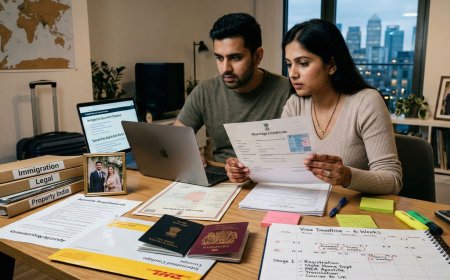
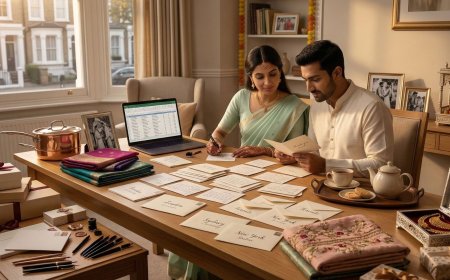
But then you started planning your own wedding. Maybe it's in Toronto, or in a Cotswolds country house, or back in Jaipur for a destination celebration. And suddenly the rituals started to matter in a way they never did before. The gathbandhan, the mangalsutra, the palla — you found yourself Googling them at midnight, not because you didn't know what they were, but because you needed to understand them well enough to explain them. To your venue coordinator. To your non-Indian partner. To yourself.
Here is what you were looking for.
🌟 DID YOU KNOW?
The Celtic handfasting ceremony — in which a couple's hands were literally bound together with cord — dates to at least the early Middle Ages and is the most direct Western ancestor of the phrase "tying the knot." It has seen a significant revival in modern Western weddings, with many couples incorporating it alongside civil ceremonies.
In Tamil weddings, the mangalya-dharanam involves three distinct knots — each tied with a specific spiritual intention — making it one of the most philosophically layered "knot-tying" rituals in any wedding tradition anywhere in the world.
The "Knot of Hercules," worn by Roman brides on their wedding girdle as a symbol of fertility and divine protection, is one of the earliest documented uses of a knot as a marriage symbol — placing the global tradition of the wedding knot at well over two thousand years old.
What Is the Wedding Knot Ritual?
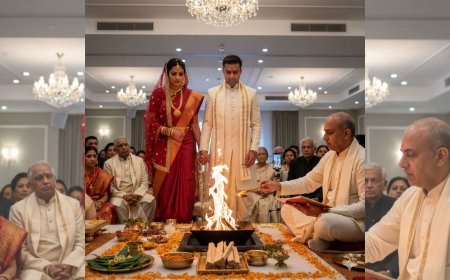
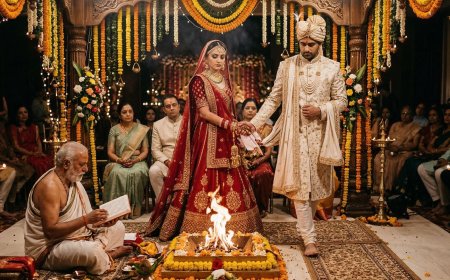
The wedding knot, in the Indian context, is not a single ritual but a family of them — each regional variation carrying its own name, its own physical form, and its own layer of spiritual logic. What they share is the act: two pieces of fabric, thread, or garland are joined together in the presence of fire, deity, and family, and in that joining, two people become sakshi jodi [the witnessed pair], bound not just to each other but to a set of shared obligations, promises, and cosmic responsibilities.
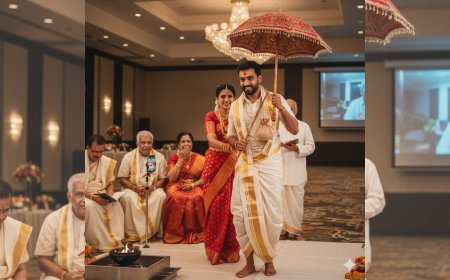
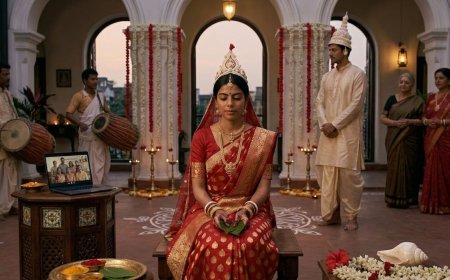
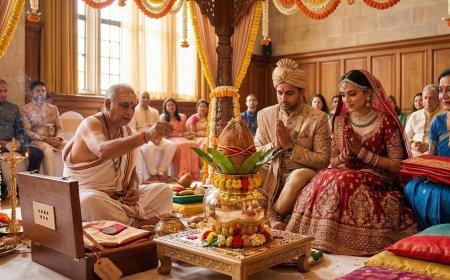
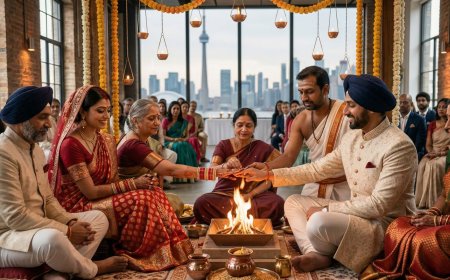
The most widely recognised form in North India is the gathbandhan [the tying of the garment], which occurs before the saptapadi [the seven sacred steps around the fire]. The bride's dupatta [scarf] or the end of her sari is tied to the groom's shawl or angavastram [upper garment], and the couple moves through the most consequential steps of the ceremony joined at the cloth. The knot precedes the steps deliberately — it says: you will not take these steps alone.
In South India, the equivalent moment is the mangalya-dharanam [the wearing of the auspicious thread], in which the groom ties a sacred necklace around the bride's neck. In Telugu communities, a turmeric-yellow thread called the talicarries the same meaning — purity, prosperity, and permanence. In Sikh weddings, the palla rasam sees the bride hold her groom's palla [the end of his scarf] as they circle the Guru Granth Sahib [the Sikh holy scripture], the knot here being not of fabric but of faith and divine guidance.
In Maharashtra, the antarpat [the ritual screen] is lifted to reveal the couple at the very moment their garments are joined, the physical barrier dissolved at precisely the same instant as the spiritual bond is formed. Bengali ceremonies echo this during the sindoor daan [the gifting of vermillion], where garments are tied as a symbol of marital permanence. Each version is distinct. Each version is the same.
Community Comparison: The Knot Across Indian Traditions
| Community / State | Local Name | Key Tradition | How NRIs Abroad Adapt It |
|---|---|---|---|
| Punjabi | Gathbandhan / Palla Rasam (Sikh) | Bride's dupatta tied to groom's shawl; in Sikh ceremonies, bride holds groom's palla while circling Guru Granth Sahib | Ceremony held in gurudwara or hired hall; Guru Granth Sahib present or a certified reader conducts the Anand Karaj |
| Himachali | Gathbandhan | Similar to North Indian tradition; Pahari customs layered onto the tying ritual; community elders preside | Elder family member or pandit sourced through community networks in diaspora cities; Pahari folk songs sung during the ritual |
| Garhwali | Gathbandhan | Performed before saptapadi; regional deity invoked; emphasis on family witness | Online pandit consultation from Haridwar or Rishikesh; ritual items sourced from Indian stores in Southall or Gerrard Street |
| Kumaoni | Gathbandhan | Garment tying performed with regional mantras; bride's family plays a central witnessing role | Uttarakhandi cultural associations in Mississauga and Toronto help coordinate pandits and community witnesses |
| Kashmiri Pandit | Lagan / Knot tying within Vivah ceremony | Distinct Shaivite mantras accompany the garment tying; ceremony structured differently from mainstream North Indian format | Kashmiri Pandit pandits in the UK (Southall, Harrow) and Toronto are specifically sought; community very protective of regional distinctions |
| Rajasthani | Gathbandhan / Granthi-bandhan | Elaborately embroidered dupatta tied to groom's angavastram; knot blessed by family elders and presiding pandit | Traditional embroidered dupattas ordered from Jaipur artisans and shipped abroad; ceremony adapted to hotel venue layouts |
| Marathi | Antarpat ritual with garment tying | Screen lifted and garments joined simultaneously; considered the visual centrepiece of the ceremony | Antarpat cloth sourced from Pune or Mumbai suppliers; NRI Maharashtrian community groups in Houston and Melbourne assist with coordination |
| Tamil | Mangalya-dharanam | Groom ties mangalsutra in three knots — Minasa (mind), Vaacha (speech), Karmena (action); groom's sister assists with third knot | Mangalsutra ordered from established Tamil jewellers in Wembley (London), Harris Park (Sydney), or Gerrard Street (Toronto) |
| Telugu | Tali tying | Yellow tali thread soaked in turmeric tied by groom; signifies purity and prosperity | Tali and turmeric sourced from Patel Brothers (Houston) or Indian grocery stores in Parramatta; ritual maintained with strong regional pride |
| Bengali | Garment tying during Sindoor Daan | Sari and shawl joined at the moment of sindoor application; permanence of bond emphasised | Bengali pandits in Southall, New Jersey, and Melbourne are specifically sought; community gatherings often organised around the ceremony |
The Meaning Behind the Knot
The knot, in Vedic cosmology, is not merely a domestic symbol. It is a cosmic one. The Tantric worldview holds that the universe itself is held together by the interweaving of Shiv [the masculine divine principle] and Shakti [the feminine divine energy] — a union that is neither dominant nor submissive, but mutually sustaining and infinitely generative. When a bride's dupatta is tied to her groom's shawl, they are not simply being joined to each other. They are being aligned with this fundamental structure of reality.
The samskara [sacred life transition] of marriage in Hindu philosophy is understood as one of the most consequential passages a human being undertakes. Unlike a contract — which is transactional, conditional, and dissolvable — a samskara changes the nature of the person who undergoes it. The knot is the physical embodiment of that irreversible change. It says: something has shifted here that cannot be untied by circumstance, distance, or time.
This is also why the knot appears globally. Rome, Celtic Britain, Norse Scandinavia, Slavic communities — all independently arrived at the same symbol because the knot captures something true about commitment that transcends language. The loop that cannot be undone without intent. The joining that requires two separate threads.
For a non-Indian partner explaining it to their own family: "In Indian tradition, the knot isn't a metaphor — it's the actual moment the marriage becomes real, witnessed by fire, family, and the divine."
Performing the Knot Ritual Abroad: The Practical Reality
The knot ritual — whether gathbandhan, mangalya-dharanam, or palla rasam — is one of the more adaptable Indian wedding rituals when it comes to performing it abroad, because it does not require fire, significant space, or large quantities of ritual materials. What it does require is precision: the right fabric, the right words, and ideally the right pandit.
The fabric question is the first practical hurdle. For North Indian ceremonies, the bride's dupatta must be long enough and sturdy enough to be tied to the groom's shawl without the knot slipping during the saptapadi. Many NRI brides in London source their bridal dupatta from Southall's Broadway, where shops like Meena Bazaar and House of Surya stock heavily embroidered dupattas from Rajasthani and Punjabi weavers. In Toronto, the Gerrard Street East corridor and Mississauga's Dixie Road area carry a full range. In Houston, Hillcroft Avenue's Indian bridal stores stock everything from tali threads to angavastrams. Sydney brides head to Harris Park in Parramatta, and Dubai shoppers will find the finest selection in Meena Bazaar in Bur Dubai.
For Tamil and Telugu NRI couples, the mangalsutra or tali is often the single most important item to source correctly. These are not generic — regional variations in design are significant and meaningful to families. Established Tamil and Telugu jewellers in Wembley (London) and in the Devon Avenue corridor in Chicago carry authentic designs. Many NRI families now commission the mangalsutra from a family jeweller in Chennai or Hyderabad and have it shipped, insured, well in advance of the wedding date.
The pandit question is more nuanced here than for most rituals. The gathbandhan mantras vary significantly between Punjabi, Rajasthani, Garhwali, and Kumaoni traditions. A generic North Indian pandit may not know the specific regional invocations your family expects. NRI.Wedding's pandit network includes priests with verified regional expertise — specify your community and state when enquiring, not just your religion.
For venue adaptation, the knot ritual requires no fire and minimal space — it can be performed at virtually any venue. The one consideration is that the couple needs enough room to move if saptapadi follows immediately after, so brief your venue coordinator on the flow. If you're in a smaller apartment or garden setting, the ritual loses nothing — the knot itself is the moment, not the room around it.
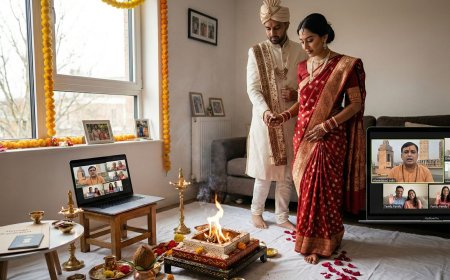
For relatives joining via video call from India, ensure your photographer or videographer captures the moment of tying from multiple angles. This is the single frame that relatives in Delhi or Coimbatore or Kolkata will screenshot and keep.
Doing the Ritual as a Destination Wedding in India
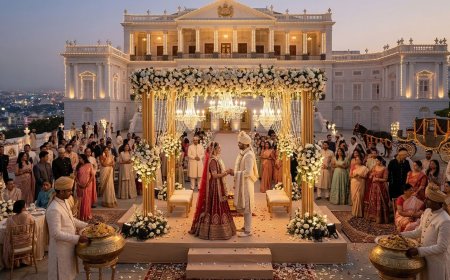
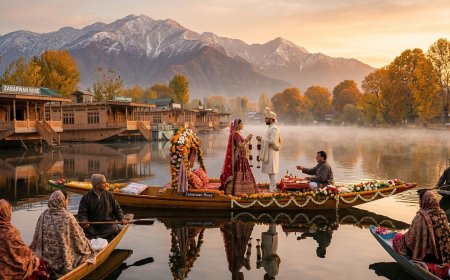
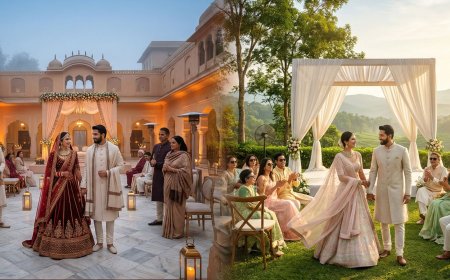
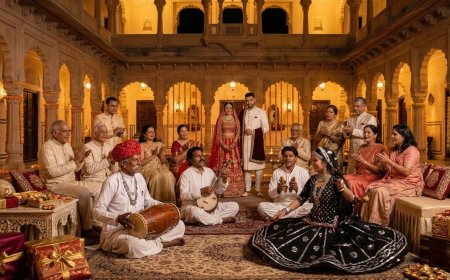
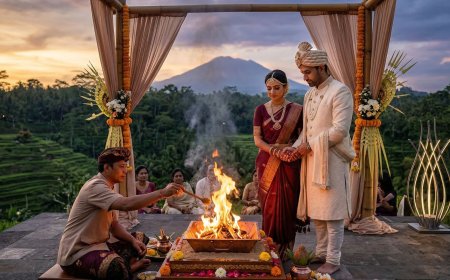
If you're returning to India for your wedding, the knot ritual finds its most natural home. Jaipur is ideal for Rajasthani gathbandhan ceremonies, where the embroidered dupatta against the sandstone architecture creates an image that requires no filter. Varanasi carries unmatched spiritual weight for North Indian Hindu ceremonies — performing the gathbandhan on the ghats, with the Ganga as witness, is an experience that non-Indian guests will speak of for the rest of their lives.
For Tamil and Telugu ceremonies, Chennai, Madurai, and Tirupati remain the most culturally resonant choices, with local pandits deeply fluent in the three-knot mangalya-dharanam. Brief any local pandit on your specific regional customs before the wedding day — do not assume regional fluency. NRI.Wedding's India coordination team can facilitate a pre-wedding call between you abroad and the presiding pandit in India so that your specific family traditions are honoured, not approximated.
For non-Indian guests attending your destination wedding, prepare a simple printed card or a short section in your wedding programme explaining the knot ritual — what is being tied, why it cannot be undone, what the three Tamil knots mean. It turns observers into witnesses.
What You Need: Ritual Checklist
Ritual Items — Bridal dupatta or sari (long enough to tie securely), groom's shawl or angavastram, mangalsutra or tali (for South Indian ceremonies), turmeric paste (for tali thread), roli and rice for pandit's blessing of the knot, fresh flower garlands if regional custom requires, and a printed or memorised version of the family's specific regional mantra sequence.
People Required — The couple, the presiding pandit (region-specific), the bride's or groom's sister for assistance with specific knot traditions (particularly the third Tamil knot), family elders to witness, and a videographer who understands the ritual's key moment well enough to capture it.
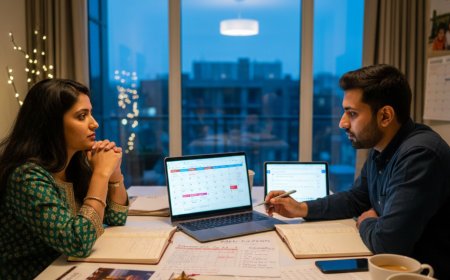
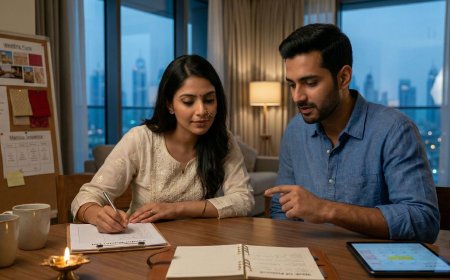
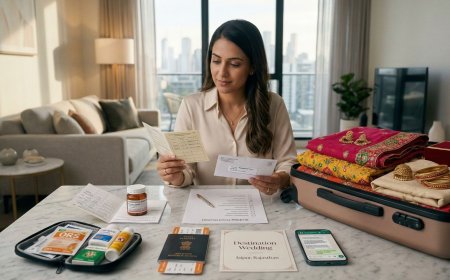
Preparation Steps — Source all fabric and jewellery items at minimum six weeks before the wedding. Brief your pandit on regional customs two to three weeks in advance, in writing if possible. Rehearse the movement sequence with your partner so the saptapadi after the knot tying flows without hesitation. Set up a dedicated video call link for India-based family members who will witness remotely, and assign someone to hold the phone steadily during the moment of tying.
NRI.Wedding connects you with region-specific pandits, verified bridal fabric and jewellery vendors, and wedding photographers who specialise in ritual documentation across the UK, Canada, USA, UAE, and Australia.
5 Questions NRI Couples Always Ask
Can we incorporate the knot-tying ritual into a civil ceremony abroad?
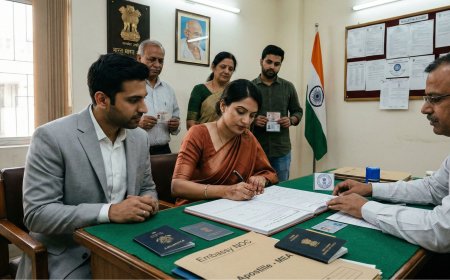
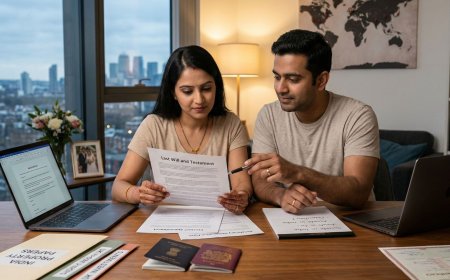
Civil ceremonies in the UK, Canada, Australia, and most US states do not permit religious rituals to be performed during the legally registered portion of the ceremony. The solution most NRI couples use is to hold the civil registration separately — often in a registry office a day or two before — and conduct the full religious ceremony, including gathbandhan or mangalya-dharanam, at the main celebration. This is not a compromise. It is the structure that gives both ceremonies the space and dignity they deserve.
My partner is not Indian. How do we include them meaningfully in the knot ritual?
The knot ritual is one of the most universally legible moments in any wedding — even a guest who has never attended an Indian wedding understands, instinctively, what is happening when two pieces of fabric are joined. For non-Indian partners, preparation is everything: explain the three Tamil knots, or the significance of the dupatta-to-shawl tie, in the weeks before the wedding so that when the moment comes, they are present in it rather than bewildered by it. Many non-Indian partners have described the gathbandhan as the most moving moment of their wedding.
How do I find a pandit in London or Toronto who knows my specific regional tradition?
The key is to be specific when you enquire — not "a Hindu pandit" but "a pandit who conducts Kumaoni vivah ceremonies" or "a priest fluent in Kashmiri Pandit vivah customs." NRI.Wedding's pandit directory is filterable by region and tradition. For very specific regional customs, online consultation with a pandit in your home region in India, who can guide a local priest abroad through the correct mantra sequence, is an increasingly common and effective solution.
How do we include family in India in the knot moment via video call?
Assign a dedicated family member on the India side — someone who is calm, tech-comfortable, and positioned near a good internet connection — to hold the device. On your end, assign someone to manage the call so the couple does not have to think about it. The knot moment itself lasts less than two minutes, but the video call should be open and stable for at least thirty minutes on either side. India is 5.5 hours ahead of UK time, 9.5 hours ahead of US Eastern time — a midday ceremony in London is an early evening witnessing in Delhi.
Does the knot ritual differ if we are having an interfaith wedding?
Interfaith couples increasingly work with progressive pandits who can adapt the mantra content while preserving the physical ritual of the knot itself. The tying of the garments, the witnessing, the physical bond — these carry meaning independent of the specific Sanskrit invocations. Speak openly with your pandit about your interfaith context; a good priest will find the language that honours both.
The Emotional Angle
There is a moment — it lasts perhaps four seconds — when the pandit has finished the knot and your dupatta is tied to his shawl and you are standing there, in a country that is not the one your parents grew up in, bound to someone you chose entirely on your own terms, in a language older than any nation on earth.
Your mother is crying. His mother is crying. The relatives on the video call from three different cities in India are crying, and the connection keeps buffering, and none of that matters because the knot is tied and something has shifted in the room that everyone present can feel even if nobody has words for it in English.
This is what you carried across the ocean. Not the language, not the food, not the festivals — though all of those came too. What you carried was the understanding that some moments require a physical act to become real. That love, to fully exist, must at some point be witnessed. That a thread, tied with intention in the presence of the people who made you, means something that no civil certificate can replicate — not because the certificate is lesser, but because it speaks a different language entirely.
The knot speaks the oldest language. And you still know every word.
A Moment to Smile
At a Punjabi wedding in Southall in the autumn of 2023, the gathbandhan was going beautifully until the pandit reached the moment of tying and discovered that the bride's dupatta — a magnificent heavily embroidered piece from a shop literally three doors down on the Broadway — was so stiff with goldwork that it could not be tied into any knot that would hold. The groom's shawl was slippery silk. The pandit tried three times, increasingly inventive in his approach.
The bride's nani, eighty-two years old and watching from the front row, stood up, walked to the mandap, took both pieces of fabric out of the pandit's hands, tied them together with one firm, practiced motion, patted the groom on the cheek, and sat back down.
The room erupted. The pandit laughed. The nani looked serenely unsurprised. The knot held for the entire saptapadi and was, the couple reported, still holding when they left for their honeymoon.
Quotes from the Diaspora
"I thought I understood what the gathbandhan was — I'd seen it at every wedding growing up. But when it was my dupatta being tied, and it was my hands shaking, and it was Rajan standing there looking at me like that — I understood for the first time why they call it a samskara. Something actually changed in me. I felt it happen." — Harpreet Kaur Sandhu, Punjabi, Brampton, Ontario
"My son married a girl from a Telugu family and we are Punjabi. The families spent weeks researching each other's knot rituals so we could honour both. On the day, they did a tali tying and a gathbandhan, one after the other. My husband said it was the most beautiful wedding he had ever seen. I said it was because it was the most honest one — nobody pretended the knot meant only one thing." — Gurpreet Ahuja, Punjabi, Wolverhampton
"James is Scottish. When the pandit explained what the three Tamil knots meant — mind, speech, action — James said to me afterwards, 'That's not that different from our wedding vows. It's just more precise.' He wasn't wrong. I think that precision is why I love it." — Kavitha Subramaniam-MacGregor, Tamil, Melbourne
Your Roots Travel With You
The knot is, in the end, the most portable of all wedding rituals. It requires no specific geography, no particular building, no landscape that only India can provide. It requires a piece of fabric, a pair of hands, the right words, and the people who love you standing close enough to witness.
NRI.Wedding exists to make sure that wherever you are in the world — a Cotswolds estate, a Houston banquet hall, a rooftop in Dubai, a garden in Melbourne — you have access to the pandits who know your regional tradition, the vendors who carry your specific ritual items, the photographers who understand which four seconds to capture, and the planning resources that mean you arrive at the mandap prepared rather than panicked.
The world's oldest wedding symbol has survived two thousand years and a hundred cultures. It will survive your postcode.
Your roots travel with you. Tie the knot and let them hold.
This article explores the global and Indian significance of tying the knot — including the gathbandhan, mangalya-dharanam, palla rasam, and tali rituals — for NRI couples planning weddings in the UK, Canada, USA, UAE, and Australia, across Punjabi, Tamil, Telugu, Bengali, Marathi, Kashmiri Pandit, Rajasthani, and Himalayan communities.
What's Your Reaction?
 Like
0
Like
0
 Dislike
0
Dislike
0
 Love
0
Love
0
 Funny
0
Funny
0
 Angry
0
Angry
0
 Sad
0
Sad
0
 Wow
0
Wow
0