



































































The Website Nobody Could Find Anything On: The NRI Couple's Complete Guide to Creating a Wedding Countdown Website for Guests
The international guests asking questions the website answered because the answers were organized by someone who already knew them. The visa information that was absent entirely because nobody thought to include it. The dress code guidance buried in a paragraph on a page nobody found. The NRI wedding website is not a convenience — it is the operational document that enables the international guest's attendance, and its failure to answer every question before it is asked creates the workload the couple spends months managing. This guide delivers a complete architecture covering the welcome section and countdown timer, the our story section, the event-by-event guide with time zone conversions, the accommodation and travel sections, the visa subsection that no NRI website should omit, the dress code section, the India guide for first-time visitors, the RSVP form that captures everything coordination requires, the FAQ section, platform selection, and the maintenance schedule that keeps the website current through the full planning arc.


How to Create a Wedding Countdown Website for Guests
The NRI couple's complete guide to the wedding website as a guest experience tool — building the digital home for your wedding that serves the internationally dispersed guest from the moment of the save the date through the morning after the last event
The Website Nobody Could Find Anything On
The wedding website had been built by the groom, who was a software engineer and who had approached the task with the specific confidence of someone who does not often find digital projects difficult. It was technically accomplished — fast, well-coded, mobile-responsive, with a custom domain and a clean design.
It was also, by the bride's assessment at the four-month mark, not serving its purpose.
The international guests — the friends from the UK, the family from Canada, the cousins from Australia — were asking questions that the website answered. They were asking the questions because they had not found the answers on the website. The accommodation information was there, but it was on the third page, accessible through a dropdown menu whose label said "logistics" rather than "where to stay." The dress code information was in a long paragraph on the "our wedding" page that guests had scanned without finding the specific guidance they needed. The visa information — the most urgently needed information for the international guests who had never visited India — was absent entirely, because the groom had not thought to include it.
The guests were not failing to use the website. They were using it and not finding what they needed. The website had been built by someone who knew all the information and who had organized it according to the logic of someone who already knew it. The guests were approaching it as people who did not know it and whose specific questions — what do I wear, where do I stay, do I need a visa, how do I get from the airport to the hotel — were not answered in the specific, findable way those questions required.
The website was rebuilt over a weekend at the four-month mark. The guests stopped asking the questions the website answered.
This guide provides the structure that the rebuild produced — the architecture of the wedding website that serves the NRI wedding's international guest from the first click to the morning after the last event.
What the NRI Wedding Website Is For
The wedding website serves a different function for the NRI wedding than it does for the domestic wedding — and understanding this difference is the foundation of building a website that actually serves its purpose.
For the Domestic Wedding
The domestic wedding website — for a wedding whose guests live in the same city or the same country — is primarily a convenience tool. It confirms the date, the venue, the dress code, and the RSVP mechanism. It provides information that the guest could also obtain by asking a mutual friend, by calling the family, or by reading the invitation carefully. The domestic wedding website is useful but not essential.
For the NRI Wedding
The NRI wedding website is the primary information resource for guests who are making complex, multi-step planning decisions across time zones and continents. For the guest in Toronto planning their India trip around a wedding in Jaipur, the website is the document they consult to: decide whether they can attend, understand what attending requires, plan their travel, arrange their accommodation, understand the events they are invited to, know what to wear, know what to bring, know what to expect culturally, and manage their ongoing planning questions as they arise.
The NRI wedding website is not a convenience. It is an operational document that enables the guest's attendance. The guest whose questions it fails to answer either asks them directly — creating the workload for the couple or the wedding planner — or makes decisions without the information, which produces the specific problems of the guest who booked the wrong hotel, bought the wrong outfit, or arrived at the airport without a visa.
The website's job is to answer every question the international guest will have, before they ask it, in a form they can find.
The Architecture: What Every Section Must Do
The Welcome Section
The welcome section is the website's opening statement — the first thing the guest sees, and the first impression the website makes on behalf of the couple and the occasion.
What it must do:
Establish the occasion's character immediately — the tone, the warmth, the specific feeling of this wedding rather than a generic wedding. The welcome section that says "we are so happy you are here and cannot wait to celebrate with you" in the specific voice of this couple, with the specific warmth of the relationship they have with the guest, is doing something different from the welcome section that says "welcome to our wedding website."
Orient the guest to the website — a brief indication of what the website contains and how to navigate it, for the guest who is visiting for the first time and who does not know whether the visa information is here, whether the RSVP form is here, whether the dress code is here.
Communicate the key logistics at the top level — the dates, the location, the countdown timer — so that the guest who has arrived at the website to check a specific fact can find it immediately without navigating to a specific page.
The countdown timer:
The countdown timer — showing the days, hours, and minutes until the first wedding event — is a specific element whose value is both functional and emotional. Functionally, it communicates the urgency of planning decisions that have not yet been made: the guest who sees forty-seven days on the countdown timer and who has not yet booked their flights is receiving a specific signal about the decision's timeliness. Emotionally, the countdown creates the anticipation that the flat date on the save the date does not — it makes the wedding feel imminent and real rather than future and abstract.
The countdown timer should count down to the first wedding event — the mehendi or the haldi — rather than only the ceremony, communicating that the wedding's full duration is what guests are being counted toward.
The Our Story Section
The our story section is the section that makes the website personal — the narrative that tells guests who the couple is, how they came to be together, and why this wedding is the specific, significant occasion it is.
What it must do for the NRI wedding specifically:
Acknowledge the specific context — the NRI experience, the cultural bridging, the specific journey that has produced this specific couple at this specific wedding in this specific place. The couple who met in London while both were working far from their families in India, whose relationship has been sustained across multiple cities and multiple countries, whose wedding is bringing together people from five countries — this story has a specific NRI character that the generic "how we met" narrative does not capture.
Provide the guest who does not know both partners with the context to understand the wedding. The bride's friend who is meeting the groom's family for the first time at the wedding, and who has read the our story section, arrives with the specific understanding that makes the encounter warm rather than awkward.
The length:
The our story section should be long enough to be genuine and short enough to be read. Three hundred to five hundred words — a page of engaged reading — is the appropriate length for most couples. The our story section that is eight hundred words has been written for the couple rather than for the guests.
The Events Section
The events section is the most operationally important section of the NRI wedding website — the section that tells every guest which events they are invited to, when and where each event is, and what they need to know to attend each one.
The architecture:
Each event should have its own dedicated subsection or page — not a single list of all events but a structured individual entry for each event that contains all the information a guest needs to attend that event specifically.
For each event, the required information:
The event name — in both its Indian name and a brief English description for guests who are unfamiliar with the term. "Mehendi (henna ceremony)" rather than "Mehendi" alone. "Anand Karaj (Sikh wedding ceremony)" rather than "ceremony."
The date and time — in the local Indian time zone, with a conversion note for guests in different time zones. Not "Saturday, November 15th at 6pm" but "Saturday, November 15th at 6pm IST — this is 12:30pm in the UK, 7:30am in Toronto."
The venue — the full name, address in English and in the local script, and an embedded Google Maps link. Not the venue name alone, which is not actionable for the guest who does not know Jaipur.
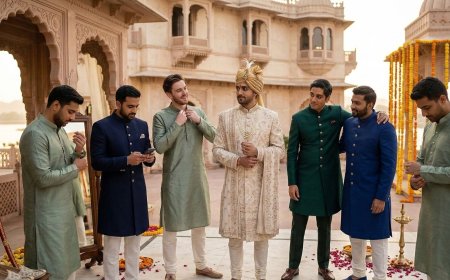
The dress code — specific, actionable guidance as described in the dress code guide, not a generic instruction. "Indian formal attire — we recommend a saree, lehenga, or salwar kameez for women, and a kurta or sherwani for men. Our dress code guide has more detail."
The transport arrangements — whether the couple has arranged transport from the group hotel to the venue, the pickup time, and the point of departure. For events where guests are arranging their own transport, a note confirming this and the estimated journey time from the group hotel.
The invitation scope — which guests are invited to this specific event. "All guests are warmly invited" or "this event is for close family only" or "wedding party and immediate family" — the explicit statement that removes the uncertainty about who is expected to be present.
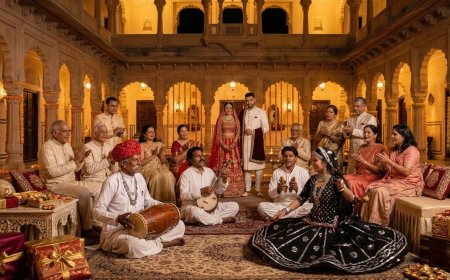
A one-paragraph description of what the event involves — the cultural context, the approximate duration, and any specific guest participation that is expected or available. The guest who does not know what a sangeet is should understand what they are attending before they arrive.
The Accommodation Section
The accommodation section is the section that the international guest accesses within the first two visits to the website — because the accommodation decision is among the first planning decisions they make after confirming their attendance.
What it must contain:
The group hotel — the primary accommodation the couple has arranged, with the hotel name, the address, the room types available, the group rate, the booking deadline, and the specific booking process. Not a link to the hotel website — the specific group booking reference and the method for accessing the group rate.
Additional accommodation options — one to three alternatives at different price points and locations for guests whose circumstances do not fit the primary hotel. A brief note on each option covering the price range, the distance from the wedding venues, and who it is most appropriate for.
The booking guidance — a brief note on when to book, with reference to the save the date's lead time recommendation, and an honest note about availability risk if the booking is delayed.
The in-hotel information — what is included in the room rate, whether breakfast is available, the hotel's facilities, and the check-in and check-out times in the context of the wedding's event schedule.
The Travel Section
The travel section is the section that distinguishes the NRI wedding website from the domestic wedding website — because international guests need specific, actionable travel information that the domestic guest does not.
The flights subsection:
The nearest international airports, with a note on which airlines serve direct routes from the major guest origin cities. The domestic connection requirement for guests flying into a city without direct international service — with the three-hour minimum connection time guidance. The approximate flight duration from the major origin cities. The recommendation to book early — with the specific lead time that produces the best prices for the relevant routes.
The visa subsection:
The visa requirement by passport type — which passport holders need a visa, which are eligible for the e-visa, which require the standard visa with processing time. This is not the place for detailed visa guidance — that belongs in a separate document linked from the website — but the visa subsection must tell every guest whether they need a visa and direct them to the appropriate guidance. The guest who discovers they need a visa for India two months before the wedding, because the website they were relying on for travel information did not mention it, is the guest who could not attend.
The airport to hotel subsection:
The journey from the international airport to the group hotel — the mode of transport, the approximate cost, the approximate duration, the specific recommendations. Whether the couple has arranged airport transfers, and if so, the booking process. If guests are arranging their own transport, the recommended method — pre-booked cab service, app-based service, hotel transfer — with the honest note about airport taxi touts that every first-time India visitor needs.
The domestic travel subsection:
For guests who are combining the wedding with broader India travel — and many international guests will be — brief guidance on the domestic travel options: the domestic flight network, the train system, and the specific connectivity of the wedding city to the major tourist destinations in the region.
The Dress Code Section
The dress code section should be its own section — not buried within the events section — because it is a question that the international guest asks independently of the event details.
The dress code section should contain: the event-by-event dress code guidance, the color language explained specifically, the practical guidance for buying Indian attire from abroad, the saree and Indian formal attire guide for guests who have never worn Indian clothing, and the explicit confirmation that Western formal attire is acceptable at specific events for guests who cannot source Indian attire.
This section should be written with the specific warmth of an invitation to participate in the aesthetic world of the occasion — not as a list of rules but as guidance from someone who wants the guest to feel good about how they are dressed.
The India Guide Section
The India guide section — the practical information for guests who are visiting India for the first time or for the first time in many years — is the section that most NRI wedding websites omit and whose absence generates the most questions.
The required subsections:
Currency and payments — the local currency, the ATM situation, the mobile payment platforms that are prevalent, and the practical guidance on carrying cash.
Health and vaccinations — the recommended vaccinations, the malaria prophylaxis guidance where applicable, the water and food safety guidance, and the basic health kit recommendation.
Connectivity — the SIM card options for international visitors, the eSIM alternatives, the major app-based services that are useful in India.
Cultural guidance — the specific cultural conventions that the international guest needs to know: the behavior in religious spaces, the specific etiquette at Indian wedding events, the tipping conventions, the basic language phrases that make the visit more connected.
Emergency contacts — the local emergency numbers, the nearest reputable hospital to the wedding venue, and the couple's emergency contact details.
The RSVP Section
The RSVP section should be prominently accessible — not buried in the navigation — and should contain a form that captures every piece of information the wedding coordination requires.
As described in detail in the RSVP management guide, the form must capture: attendance confirmation for each event, full party details with individual names, dietary requirements in sufficient specificity, accommodation booking status, transportation requirements, and any accessibility needs.
The RSVP section should also display the deadline clearly and should provide the couple's contact details for guests who have questions before submitting their RSVP.
The FAQs Section
The FAQs section is the overflow section — the place where the questions that do not fit neatly into other sections are answered.
The questions the NRI wedding FAQ must address:
Can I bring children? Is the wedding child-friendly and what provision is available?
What gifts are appropriate? The guidance on the cash gift convention, the honeymoon fund if applicable, and the explicit opt-out for guests who prefer not to give.
Is photography permitted at the ceremony? The couple's specific guidance on guest photography and the unplugged ceremony request if applicable.
What is the weather likely to be? The seasonal guidance for the wedding location and the practical packing recommendations.
Are there vegetarian and other dietary options? The catering guidance for guests with specific dietary requirements.
Can I extend my stay? The guidance on additional accommodation and the recommended extensions of the India trip for guests who want to explore beyond the wedding dates.
The Technical Build: Platform Selection
The Platform Options
Joy: The simplest wedding website platform, with an excellent mobile experience and the clearest guest navigation. Appropriate for couples who want a high-quality guest-facing website without extensive customization.
Zola: The most sophisticated wedding website in terms of RSVP integration and guest management backend. Appropriate for couples managing complex guest information capture.
Squarespace or Wix: General-purpose website builders that offer more design flexibility than dedicated wedding website platforms — appropriate for couples who want a highly customized website that reflects their specific aesthetic.
Custom build: The software engineer groom's instinct is not wrong — a custom website offers the most flexibility and the most specific design. The risk is the gap between technical capability and content architecture, as described in the opening scenario.
The Non-Negotiable Technical Requirements
Mobile optimization — the majority of guests will access the website on their phones. A website that is functional on desktop and awkward on mobile has failed the majority of its audience.
Fast loading — particularly for guests accessing from India, where connection speeds in some contexts are lower than in the Western countries where many NRI couples live.
A custom domain — not the platform's subdomain but a specific wedding domain that is easy to share and easy to remember.
Password protection — optional but appropriate for couples who want to restrict the website's detailed information to invited guests rather than making it publicly accessible.
The Maintenance: Keeping the Website Current
The wedding website that is built in month one and not updated until the week before the wedding has failed its function for the ten months in between. The guest who visits the website at month six looking for updates finds the same information they found at month one — and concludes that the website is not the place to look for current information.
The website should be updated at specific milestones: when the hotel room block is confirmed and open for booking, when the visa guidance is complete, when the event details are finalized, when the transportation arrangements are confirmed, when any programme changes occur. Each update should be communicated to guests — a brief WhatsApp message or email noting that the website has been updated with specific new information — so that the update is found rather than discovered by accident.
The Website as the First Experience of the Wedding
The international guest who visits the wedding website for the first time is having their first experience of the occasion — the first encounter with the couple's vision for the wedding, the first sense of what the event will be and what their attendance will involve.
The website that is functional but generic — that has all the information but communicates none of the character — is a website that has served the logistics but missed the opportunity. The website that is specifically, warmly, distinctively this couple's wedding — whose design reflects the wedding's aesthetic, whose voice is the couple's voice, whose content is specific to this occasion and these guests — is a website that has done something more than provide information.
It has made the guest feel that they are being welcomed specifically and thoughtfully into an occasion that has been designed with their presence in mind.
That welcome is the first act of hospitality the wedding performs. It is performed on the website, months before the guests arrive.
Design it accordingly.
NRIWedding.com — Expert guidance for Indian weddings planned across borders.
What's Your Reaction?
 Like
0
Like
0
 Dislike
0
Dislike
0
 Love
0
Love
0
 Funny
0
Funny
0
 Angry
0
Angry
0
 Sad
0
Sad
0
 Wow
0
Wow
0