



































































The Meal That Makes a House Into Her Home: Inside Bengal's Sacred Bou Bhaat Ceremony
Bou Bhaat is the sacred first cooking ceremony at the heart of every Bengali Hindu wedding — a deeply intimate ritual in which the bride cooks rice for the first time in her new home, receives the ladle from her mother-in-law, and formally assumes her role as the household's Grihalakshmi. Rooted in Bengali domestic philosophy and the goddess Lakshmi's concept of home abundance, the ceremony is preserved powerfully across the Bengali diaspora in the UK, USA, Canada, UAE, and Australia. This complete guide covers its meaning, kitchen logistics, community feast planning, and everything NRI families need to do it right abroad.


Bou Bhaat — the ceremonial feast in which the Bengali bride cooks rice for the first time in her new home, feeding her husband's family as her formal introduction to the household she has joined — is one of the most quietly profound rituals in all of Bengali Hindu wedding culture. It is not a celebration of the wedding that has just happened. It is the beginning of the marriage that is about to unfold — the moment the bride steps into her new kitchen, picks up a ladle, and says with her hands what no wedding vow quite manages to say: I am here. I am feeding you. I belong to this home now, and this home belongs to me. For Bengali NRI families from Kolkata to California, from Dhaka to Dubai, the Bou Bhaat is the ritual that transforms a guest into a Grihalakshmi — and a house into a home.
You have been a guest in this house for exactly one night. You arrived yesterday as a bride, carried across the threshold with ceremony and flowers and the specific weight of every eye in the room watching you cross from one life into another. You slept in a room that is yours now but does not yet feel like it. You woke in a house that is yours now but still smells like someone else's life.
And now it is morning — or afternoon, depending on the family tradition — and your mother-in-law is standing in the kitchen doorway, and she is not cooking. She is waiting. Because today, for the first time, you are the one who cooks.
You are in a house in New Jersey or a flat in East London or an apartment in Mississauga, and the kitchen is unfamiliar and the spice shelf is arranged differently from your mother's and you are not entirely sure where the good pot is kept. None of that matters. What matters is that you are here, and the rice is waiting, and the family is gathering at the table, and this is the Bou Bhaat — the moment you stop being a guest and start being home.
🌟 Did You Know?
-
The name Bou Bhaat comes from the Bengali words bou [bride, or more specifically daughter-in-law — the word carries both meanings simultaneously in Bengali, reflecting the cultural understanding that the woman who enters the family as a bride becomes its daughter-in-law in perpetuity] and bhaat [cooked rice — the central sacred food of Bengali culture]. The ceremony is therefore literally the bride's rice — the first rice she cooks in her new home, which is simultaneously her introduction, her offering, and her claim on the kitchen that is now hers.
-
The Bou Bhaat has a specific cosmological logic rooted in the Bengali concept of Grihalakshmi [the Lakshmi of the home — Lakshmi being the goddess of prosperity and abundance, and Grihalakshmi being the woman whose presence, care, and cooking transforms a house into a place of abundance]. The bride's first cooking is not merely a domestic act — it is a sacred one. By cooking for the family, she invokes Lakshmi's role within the household and formally assumes the mantle of the home's prosperity. The family eating her food is the family receiving her abundance.
-
In the Bengali diaspora, the Bou Bhaat has evolved in a specific and meaningful direction: in NRI communities across the UK, USA, Canada, UAE, and Australia, the ceremony increasingly takes place not as a private family ritual but as a catered feast for the extended community — with the bride performing the symbolic cooking of rice while professional caterers handle the full menu. This hybrid Bou Bhaat — part ancient tradition, part diaspora practicality — has become one of the most distinctive expressions of NRI Bengali cultural identity, and the debate within diaspora communities about whether the symbolic cooking is as valid as the full cooking is one of the liveliest ongoing conversations in Bengali NRI wedding culture.
What Is Bou Bhaat?
Bou Bhaat is the ceremonial first cooking performed by the Bengali bride in her husband's home, typically on the day after the wedding or within the first few days of her arrival. It marks her formal, active entry into the household — not as a guest being received but as the Grihalakshmi [the goddess of domestic prosperity] taking her rightful place at the centre of the home's life.
The ceremony begins with the bride entering the kitchen — often for the first time — accompanied by the senior women of the husband's family. The kitchen has been prepared for her arrival: cleaned, decorated with alpona [the white rice-paste decorative designs drawn on floors and surfaces for auspicious occasions], and stocked with the ingredients she will need. The bride is formally welcomed into the kitchen by her mother-in-law, who hands her the ladle — khunti [the Bengali cooking spatula, the tool of the kitchen's authority] — as a symbolic transfer of the kitchen's sovereignty.
The bride then cooks rice — bhaat — as her first act. The rice is prepared simply and with attention: this is not a demonstration of culinary skill but a ritual act of feeding. Once the rice is cooking, the bride may also prepare one or two additional dishes depending on family tradition — a simple dal, a vegetable preparation, sometimes a fish dish if the family tradition includes it. In many contemporary families, the bride's cooking is symbolic — she stirs the pot, adds specific ingredients with ceremony — while the broader feast for the extended family and guests is prepared by the family or a caterer.
The feast that follows the bride's cooking is the social event of the Bou Bhaat — a large gathering of the husband's family's community at which the bride is formally introduced, the wedding gifts are sometimes presented, and the new couple hosts as a unit for the first time. In this sense the Bou Bhaat has two distinct parts: the intimate kitchen ritual of the bride's first cooking, and the communal feast that follows it. Both are essential. The kitchen ritual is the ceremony. The feast is the celebration.
The First Cooking Tradition Across Indian Communities
The Bou Bhaat is Bengal's expression of a near-universal instinct in Indian wedding culture — the formal, ceremonial introduction of the bride into her new home through the act of cooking. Here is how the tradition of the bride's first domestic act manifests across communities.
| Community / State | Local Name | Key Tradition | How NRIs Abroad Adapt It |
|---|---|---|---|
| Bengali Hindu | Bou Bhaat | Bride cooks rice as first act in new home; khunti handed over by mother-in-law; community feast follows; alpona decorates kitchen | Symbolic cooking preserved; catered feast for community; alpona drawn by family member |
| Bengali Muslim | Bou-er Ranna | Similar first cooking tradition; halal ingredients; Islamic blessing before cooking begins; community feast | Full tradition preserved; halal caterers for community feast |
| Maharashtrian | Gruha Pravesh cooking | Bride enters kitchen on auspicious day; first cooking blessed by family pandit; specific Maharashtrian dishes | Pandit leads blessing via video call if needed; family recipes cooked |
| Punjabi | Pag Phera kitchen welcome | Bride welcomed into kitchen by mother-in-law; first cooking of a sweet dish; family gathers | Sweet dish cooked by bride; Punjabi family feast follows |
| Tamil | Griha Pravesham cooking | Bride enters new home with ritual; first cooking of rice pudding — payasam; family elder leads blessing | Tamil pandit leads entry ritual; payasam cooked by bride |
| Gujarati | Bride's first cooking | Mother-in-law welcomes bride to kitchen; first sweet preparation; community gathering | Sweet dish prepared; Gujarati community feast follows |
| Rajasthani | Pag Dhulai kitchen entry | Bride's feet washed before kitchen entry; first cooking blessed; community feast with specific Rajasthani dishes | Family elder leads; Rajasthani caterers supplement |
| Odia | Bou Bhata | Very similar tradition to Bengali; bride cooks rice first; mother-in-law hands ladle; community feast | Tradition preserved closely; Odia community connections used |
| Himachali | New bride's kitchen entry | Senior women welcome bride to kitchen; first cooking with community blessing; local dishes prepared | Family elder leads; community gathering preserved |
| Kashmiri Pandit | Wanwun kitchen welcome | Women sing Wanwun songs as bride enters kitchen; first cooking blessed; Wazwan feast follows | Kashmiri Pandit association contacts; Wanwun from recordings |
The Meaning Behind the Ritual
The Bou Bhaat is built on a philosophical architecture that runs through the entire Indian understanding of home, womanhood, and domestic sovereignty — the idea that a home's abundance does not simply exist but is actively created, sustained, and embodied by the woman at its centre.
In Bengali Hindu cosmology, Lakshmi [the goddess of prosperity and abundance] does not merely reside in a home — she is invoked into it by specific acts of care, cleanliness, and nourishment. The woman who cooks for a family is not performing a domestic service. She is performing a sacred one. She is the channel through which the home receives its Lakshmi. When the bride lifts the ladle for the first time in her new kitchen, she is not simply cooking rice. She is invoking abundance. She is saying to the house: I am here now. Lakshmi comes with me.
The khunti [ladle] handed over by the mother-in-law carries the weight of this understanding. It is not a kitchen implement being passed to a new cook. It is sovereignty being transferred — the mother-in-law saying: this kitchen was mine to tend. Now it is yours. I hand you the tool of its authority. Take it with my blessing.
The rice itself — always the first thing cooked — is the foundational food of Bengali life. To cook rice is to nourish in the most fundamental sense. The family eating the bride's rice for the first time is the family accepting her nourishment, her care, and by extension her presence at the centre of their domestic world.
For a non-Indian partner or family member seeking the simplest truth: this is the bride's family welcoming her into the kitchen — the heart of the home — and the bride feeding them for the first time as her way of saying: I am yours, and you are mine, and I will take care of this home as it will take care of me.
Doing the Bou Bhaat Abroad: The Practical Reality
The Bou Bhaat abroad presents a specific logistical reality that no other Bengali wedding ritual quite replicates: it requires a real kitchen. Not a hotel kitchen. Not a catering setup. A domestic kitchen — the kind where the bride can stand at the stove, lift a pot, and perform the act of cooking with the intimacy and intention the ritual requires.
This single requirement — a real kitchen — organises everything around it. If the couple's new home is in the same city as the wedding, the Bou Bhaat naturally happens there, which is its ideal setting. If the couple lives elsewhere — if the wedding is in London but the couple lives in Manchester, or the wedding is in Toronto but the couple lives in Vancouver — the logistics require either holding the Bou Bhaat at a family member's home near the wedding, or booking self-catering accommodation specifically to provide the kitchen the ceremony needs.
The alpona [rice-paste floor and surface decoration] that traditionally adorns the kitchen for the Bou Bhaat can be prepared by any family member who knows the patterns — it requires only rice paste or white chalk and the willingness to draw on the kitchen floor, which most family members approach with great enthusiasm once the occasion requires it. If no family member is confident with alpona, readymade alpona stencils are available from Indian religious supply stores in every major diaspora city and produce beautiful results with minimal practice.
The khunti [ladle] handover should be performed with a real ladle from the new home's kitchen — not a ceremonial prop. The significance of the khunti is that it is the actual tool of the actual kitchen being formally transferred. Buy a good ladle before the Bou Bhaat. It will be the first cooking implement in the new home's kitchen and it should be chosen with that meaning in mind.
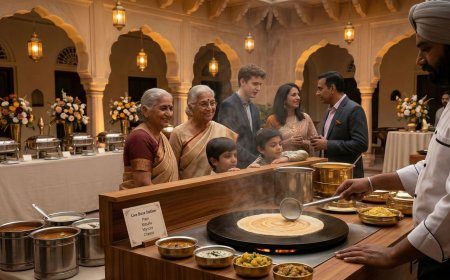
For the community feast component of the Bou Bhaat, the practical reality in most diaspora cities is a catered event — the bride's symbolic cooking of the rice is the ritual portion, and the broader feast is handled by Bengali or Indian caterers. In London, Bengali caterers operating from the East End and serving the broader South Asian wedding market can provide the full Bou Bhaat feast menu. In Toronto, the Bengali and South Asian caterers of Brampton and Scarborough. In New York and New Jersey, the Bengali caterers of Jackson Heights and the broader South Asian catering network. In Houston, the Indian caterers of Hillcroft Avenue. In Melbourne, the South Asian catering network of Harris Park and the broader Melbourne Indian wedding industry.
The gobindobhog rice [the short-grain aromatic Bengali rice used for ritual cooking and special occasions] should be used for the bride's ceremonial first cooking if at all possible — it is available at Bengali and Indian grocery stores in all major diaspora cities and its aroma and quality make the ceremonial rice preparation distinctly different from everyday cooking in a way that honours the ritual's significance.
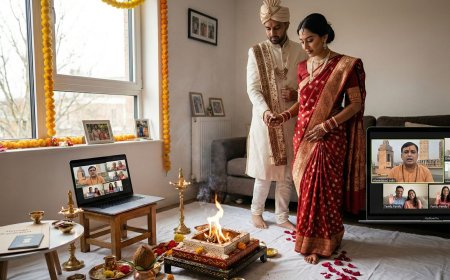
For streaming to family in Kolkata — where the Bou Bhaat happening in London or Toronto means the Kolkata family is watching in the evening — position your device to show the kitchen, the bride at the stove, and the khunti handover clearly. The grandmother in Ballygunge watching her granddaughter lift the ladle in a kitchen in Croydon is watching the same ceremony she performed in her own kitchen fifty years ago. Give her that view.
Doing the Bou Bhaat as a Destination Wedding in Bengal
To do the Bou Bhaat in Kolkata — in the family home where the kitchen has been cooking for three generations and the alpona is drawn by the aunties who have been drawing it since before you were born and the gobindobhog rice comes from the market two streets away — is to do it in the landscape that gave it its meaning.
For a destination Bou Bhaat in Kolkata, the family home is the ideal setting. If the family home is not available or not large enough for the community feast, the Bou Bhaat's kitchen ritual can happen at the home and the feast can move to a nearby venue — the two parts of the ceremony have always been somewhat separable in practice, with the kitchen ritual being the sacred core and the feast being its social expression.
Brief your family pandit if the ceremony includes formal priestly blessing — the Bou Bhaat in many Bengali Hindu families begins with a brief puja in the kitchen before the bride's first cooking, asking Lakshmi's blessing on the new Grihalakshmi who is about to assume her role. Most Kolkata pandits know this sequence well, but family traditions vary in their specific prayers and the order of the ritual elements. Confirm the sequence with your family elder at least a week before.
For non-Bengali guests witnessing the Bou Bhaat in Kolkata, the ceremony is one of the most universally comprehensible Indian wedding rituals — a woman cooking for her new family for the first time, being welcomed into the kitchen by the woman who ran it before her. Brief them on the Grihalakshmi concept and the khunti symbolism, and they will understand not just what they are seeing but why it matters.
What You Need: The Bou Bhaat Checklist
Ritual Items and Ingredients: Gobindobhog rice for the bride's ceremonial first cooking; a good ladle — the khunti — purchased specifically for this ceremony and used as the handover item; alpona rice paste or white chalk and stencils for kitchen decoration; fresh flowers for the kitchen — marigold and white flowers preferred; a small oil lamp and agarbatti for the opening blessing; ingredients for the bride's first dishes according to family tradition — at minimum rice, and optionally simple dal and one vegetable or fish preparation; a decorated tray for presenting the first cooked rice to the family; sindoor and a small puja thali for any opening blessing ritual; full feast ingredients or confirmed catering for the community feast that follows.
People Required: The mother-in-law to perform the formal khunti handover and welcome the bride into the kitchen; all senior female relatives of the husband's family as witnesses to the kitchen entry; the bride as the central actor of the ceremony; the family pandit if the tradition includes a formal kitchen puja before the cooking begins; the full community of extended family and friends for the feast that follows; your wedding photographer — brief them specifically that the kitchen ritual is the priority documentary sequence of the Bou Bhaat, and that the khunti handover and the bride's first stirring of the pot are the two images that must not be missed.
Preparation Steps: Confirm the kitchen space at least two weeks before — whether the couple's home, a family member's home, or self-catering accommodation. Source gobindobhog rice and any specialty ingredients at least one week before. Prepare the alpona the morning of the ceremony before the bride's kitchen entry. Confirm catering for the community feast at least four weeks before. Brief your photographer on the kitchen ritual sequence the evening before. Set up and test the India video call thirty minutes before the ceremony begins.
NRI.Wedding connects Bengali NRI couples with Bou Bhaat planning support, Bengali caterers for the community feast in diaspora cities, photographers who understand the kitchen ritual as the ceremony's sacred core, and complete Bengali wedding coordination. Begin at NRI.Wedding.
5 Questions NRI Couples Always Ask
We live in a different city from where the wedding is happening. How do we do the Bou Bhaat properly?
The most meaningful solution is to hold the Bou Bhaat in your actual new home — even if that means travelling back to your home city after the wedding before the community feast. Many couples hold a small, intimate kitchen ritual at their own home within a week of the wedding, with just the immediate family present, and then hold the community feast separately at the wedding city location for the broader family gathering. The kitchen ritual's intimacy actually benefits from this separation — the bride's first cooking in her real kitchen, in her real home, with just the people who matter most, is more complete in meaning than the same ritual performed in a borrowed kitchen surrounded by a hundred guests.
My mother-in-law and I have a warm but new relationship. How do we make the khunti handover feel genuine rather than performative?
Have a private conversation with your mother-in-law before the ceremony — just the two of you — and tell her what the Bou Bhaat means to you and ask her what it means to her. This conversation, more than any rehearsal or preparation, will make the khunti handover genuine. When two people understand what they are giving and receiving in a moment, the moment becomes real regardless of how many people are watching. The khunti is sovereignty being shared, not surrendered — frame it that way with your mother-in-law and the handover will carry exactly the warmth it is supposed to carry.
We want to do the full cooking — not just symbolic — but I am not a confident cook. How do we handle this?
Cook with your mother-in-law beside you. This is not a concession to tradition — it is, in many family traditions, exactly how the Bou Bhaat is supposed to work: the mother-in-law teaching the bride the family's way of cooking, standing beside her at the stove, guiding her hands. The Bou Bhaat is not an examination of cooking skill. It is an act of joining — of the bride learning how this family's kitchen works and the family's kitchen receiving her. A bride who cooks imperfectly but attentively, with her mother-in-law beside her, is performing the ceremony more completely than one who cooks perfectly but alone.
Can the Bou Bhaat feast be vegetarian?
Several of my husband's family members are strict vegetarians.Absolutely. The Bou Bhaat feast menu is entirely adaptable to dietary requirements — there is no ceremonially mandated dish for the feast beyond the bride's first rice. A full Bengali vegetarian feast — with cholar dal, multiple vegetable preparations, luchi, mishti doi, and payesh — is a complete and beautiful Bou Bhaat feast. Confirm the full family's dietary requirements before confirming the catering menu and brief your caterer specifically on any strict vegetarian or vegan requirements.
Is the Bou Bhaat supposed to happen the day after the wedding or can it be a week later?
Traditionally the Bou Bhaat happens within the first few days of the bride's arrival in her new home — the sooner the better, as the ritual marks her formal entry into the household rather than simply her physical presence in it. In diaspora wedding timelines, where the couple may be travelling or the community feast requires separate planning, a week's delay is entirely acceptable and widely practised. What matters is that the ceremony happens before the bride has fully settled into routine domestic life in the new home — it should feel like a threshold crossing, not a retrospective celebration. Hold it within two weeks of the wedding at the latest.
The Emotional Angle
Nobody tells the mother-in-law how much the khunti will weigh when she hands it over.
She has been the Grihalakshmi of this home for twenty-six years. She has stood at this stove and made this family's food through every significant thing that has ever happened to them — the illnesses and the recoveries, the school results and the job losses, the ordinary Tuesdays that made up the actual substance of their lives. The kitchen knows her. She knows the kitchen. The specific way the burner on the left runs slightly hotter. The pot that makes the best dal. The exact position of the khunti in the drawer.
And now she is standing in the kitchen doorway and the young woman who married her son yesterday is standing at the stove, and it is time.
She has thought about this moment. She has thought about it in different ways at different times — with something like grief, with something like relief, with something like the specific complicated love that comes from watching the person your child chose to love standing in your kitchen about to take over the thing you have tended for twenty-six years.
She walks to the drawer. She takes out the khunti. She walks to the bride.
She does not make a speech. There is no speech adequate to this moment. She places the ladle in the young woman's hands and holds them both for a second — the ladle and the hands — and she looks at her daughter-in-law with the full weight of everything she knows about this kitchen and this family and what it means to be the woman who feeds them.
She steps back.
The bride turns to the stove. She lifts the lid. She begins to stir.
The kitchen smells, for the first time, like both of them. Like the old Grihalakshmi and the new one. Like continuity. Like home being passed from one pair of hands to another with complete love and complete trust.
The rice is cooking. The family is gathering. The home has a new centre, and the centre is holding.
A Moment to Smile
At a Bengali Hindu Bou Bhaat in East London in the summer of 2022, the bride had prepared meticulously — the alpona was drawn, the gobindobhog rice was sourced, the khunti was polished, the family was gathered. The bride had practised cooking simple Bengali rice twice the week before so she would feel confident at the stove.
What she had not practised was the specific gas burner in her new flat, which had a sensitivity setting that could only be described as enthusiastic.
The rice came to a boil in approximately four minutes.
The bride stared at the pot. The pot stared back at her, bubbling with what she would later describe as personal aggression.
Her mother-in-law, to her eternal credit, did not intervene. She stood beside the bride and said, in perfectly calm Bengali, "Turn it to the left. The small mark. Yes. There."
The rice recovered. It was slightly overcooked in one corner, perfectly done in the rest, and completely consumed by the family within twenty minutes.
"The best rice I have ever eaten," announced the bride's father-in-law, who had been eating Bengali rice for sixty-three years and knew exactly what he was doing when he said it.
The bride looked at her mother-in-law. Her mother-in-law looked back at her with the expression of a woman who had once, herself, overcooked the Bou Bhaat rice in 1987 and had never told anyone.
Until that evening, when she told everyone.
Quotes from the Diaspora
"My mother-in-law placed the khunti in my hands without saying a word. Just held my hands around it for a moment and looked at me. I had been nervous about the Bou Bhaat for weeks — about the cooking, about performing it correctly, about whether I belonged in that kitchen. In that moment, with her hands around mine, I understood that she was not testing me. She was welcoming me. I have cooked in that kitchen every day since and I feel her welcome in it every time."— Rituparna Das, Bengali Hindu community, London, UK
"We did the Bou Bhaat in our flat in Mississauga — just the immediate family, the day after the wedding. My wife cooked gobindobhog rice and a simple dal. It took forty minutes and the dal was slightly underseasoned and it was the best meal I have ever eaten in my life. I watched my mother hand her the khunti and I understood, for the first time, what my parents had built in that kitchen for thirty years. And I understood what my wife and I were beginning." — Arjun Mukherjee, Bengali Hindu community, groom, Toronto, Canada
"My mother-in-law flew from Kolkata to Dubai specifically for the Bou Bhaat. She said the wedding she could miss if she had to — weddings are loud and full of people and she would see the photographs. The Bou Bhaat she could not miss. She needed to be the one to hand over the khunti. She needed to be the one to welcome me into the kitchen herself. She flew nineteen hours for a ladle handover and a pot of rice. I will love her for that for the rest of my life." — Priyanka Bose, Bengali Hindu community, Dubai, UAE
The Kitchen Is Yours Now
Your mother-in-law placed the khunti in your hands. The alpona is on the kitchen floor. The gobindobhog rice is in the pot. The family is gathering in the next room, waiting for the meal you are about to cook — not because they are hungry, but because eating your food for the first time is how they receive you completely.
This is what your mother-in-law carried into this kitchen twenty years ago. This is what her mother-in-law carried before her. This is the chain of Grihalakshmis who have stood at this stove and fed this family and made this house into a home, one meal at a time, across generations.
NRI.Wedding is here for every part of making the Bou Bhaat exactly what it should be — from connecting you with Bengali caterers for the community feast in your diaspora city, to photographers who understand the khunti handover as the image that will matter in forty years, to alpona sourcing and gobindobhog rice contacts, to complete Bengali wedding coordination that treats the Bou Bhaat as the sacred ceremony of homecoming it is.
The ladle is in your hands. The rice is cooking. The kitchen knows you now. Welcome home.
This article explores Bou Bhaat, the sacred first cooking ceremony at the heart of Bengali Hindu wedding traditions, its roots in the Grihalakshmi concept and Bengali domestic philosophy, and complete practical guidance for Bengali NRI couples planning the ceremony in the UK, USA, Canada, UAE, and Australia.
What's Your Reaction?
 Like
0
Like
0
 Dislike
0
Dislike
0
 Love
0
Love
0
 Funny
0
Funny
0
 Angry
0
Angry
0
 Sad
0
Sad
0
 Wow
0
Wow
0