











































Deogarh Mahal — The Hidden Fort Palace Wedding NRI Couples Are Discovering: Complete Guide
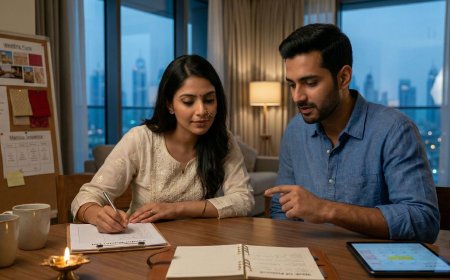
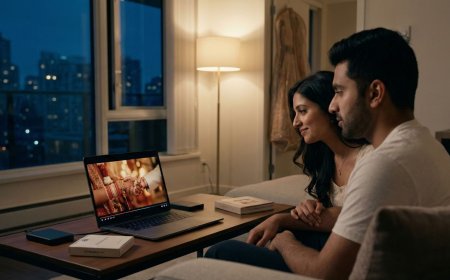
The bride had found Deogarh Mahal through a recommendation. Not the algorithm's recommendation — not the wedding website's sponsored listing or the Instagram advertisement. Through the specific, personal, unrepeatable recommendation of the colleague who had been there and who knew she would understand. The colleague had pulled out her phone and shown her a photograph. Not the professional wedding photograph — the personal image of a fort palace sitting on a hill above a small Rajasthani town whose rooftops spread below the palace walls. The bride had looked at it for a long moment. The colleague had said: most people drive past it without knowing it exists. That's the point. This complete guide gives NRI couples everything needed to plan a wedding at Rajasthan's most authentic undiscovered palace — covering the four-century Rawat family history, every wedding space from the frescoed courtyards to the panoramic rooftop terrace, two comprehensive tables with all venue costs, accommodation from ₹8,000 to ₹55,000 per night, complete budget breakdown from ₹1.87 crore to ₹4.05 crore, guest transport logistics, the personal family hosting difference, and the five mistakes couples make when planning at this destination.


Deogarh Mahal — The Hidden Fort Palace Wedding NRI Couples Are Discovering: Complete Guide
The Recommendation
The bride had found Deogarh Mahal through a recommendation.
Not the algorithm's recommendation — not the wedding website's sponsored listing or the Instagram advertisement whose targeting had identified her as the engaged woman in her early thirties whose browsing history included the words Rajasthan and heritage and palace wedding. She had found it the way that the best things are found: through the specific, personal, unrepeatable recommendation of the person who had been there and who knew that she would understand.
The person was her colleague at the Edinburgh architecture firm — a woman whose own wedding had been three years earlier and whose face, when the bride mentioned that she and the groom were looking for the Rajasthan palace wedding that was not the Udaipur everyone knew and not the Jaisalmer that had been the destination wedding of the previous season, had produced the specific expression of the person who has the exact answer to the question being asked.
She had said: "Have you heard of Deogarh?"
The bride had not heard of Deogarh.
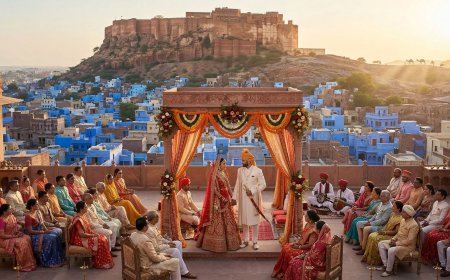
The colleague had pulled out her phone and shown her a photograph. Not the professional wedding photograph — the personal photograph she had taken on her own visit, the slightly imperfect image that personal photographs produce, of a fort palace sitting on a hill above a small Rajasthani town whose rooftops spread below the palace's walls in the specific organic way that the Indian town whose history predates the planning regulation grows across its landscape.
The bride had looked at the photograph for a long moment.
She had said: "Where exactly is this?"
The colleague had said: "Between Udaipur and Jaipur. Most people drive past it without knowing it exists. That's the point."
The colleague's last sentence was the recommendation's specific gift — the acknowledgment that the Deogarh Mahal's most valuable characteristic is not the architectural grandeur or the heritage depth or the Rajasthani setting, though it has all of these. Its most valuable characteristic is the specific, almost wilful obscurity of the place that has not yet been discovered by the circuit that discovers things and makes them the same as everything else.
This guide is for the NRI couple who received the same recommendation the bride received — or who is receiving it now, for the first time, in these pages — and who wants the complete knowledge to decide whether Deogarh is the wedding they have been looking for.
The Place: Understanding Deogarh
The Town and the Setting
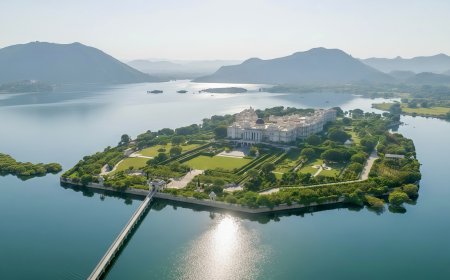
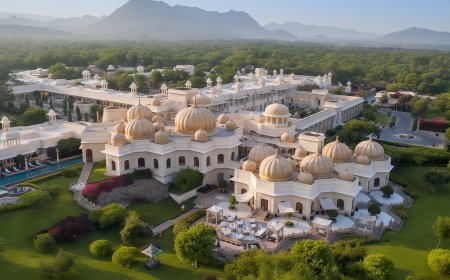
Deogarh — the full name is Deogarh Madaria, though the Mahal is universally known simply as Deogarh — is a small town in the Rajsamand district of Rajasthan, positioned on the National Highway between Udaipur and Jaipur at a point that is approximately one hundred kilometres from Udaipur and two hundred and sixty kilometres from Jaipur.
The town sits in the Aravalli Hills — the ancient mountain range whose specific landscape character is different from the desert of Jaisalmer and the lake country of Udaipur. The Aravallis at Deogarh are the hills of the forest and the granite outcrops and the small lakes whose water feeds the valley's agriculture — the specific, layered landscape of the interior Rajasthan that the tourist circuit's primary destinations do not typically show.
The Deogarh Mahal sits above the town on the natural elevation of the fort's traditional position — the high ground that the defensive logic of the fort architecture demanded and that produces, as the byproduct of the military calculation, the view that the pleasure of the palace now enjoys. The town below. The Aravalli Hills in every direction. The small lakes in the valley. The sky above.
The scale: Deogarh is a small town. Not the Jodhpur or the Udaipur with the tourist infrastructure, the airport, the multiple five-star hotels, and the international wedding vendor ecosystem. Deogarh is the small town whose primary distinction is the fort palace on the hill above it — and that distinction is the couple's advantage, not their limitation.
The History: Four Centuries of the Rawat Family
The Deogarh Mahal's history is the history of the Rawat family — the Rajput clan whose seat Deogarh has been since the seventeenth century, when the jagir of Deogarh was granted to Rawat Dwarka Das by the Maharana of Mewar as the recognition of his military service to the throne.
The fort was built across the seventeenth and eighteenth centuries — the successive Rawats adding to the original structure in the specific accumulative way that the Indian fort palace grows, each generation's contribution layering onto the previous until the building is the record of the family's history expressed in stone and pigment and the specific craftsmanship of the era in which each part was made.
The Deogarh Mahal's interior retains the specific character of this accumulated history — the older wing whose walls carry the faded frescoes of the eighteenth century, the newer wing whose appointments reflect the nineteenth century's different aesthetic sensibility, and the specific, intimate character of the building that was the home of one family across the centuries rather than the purpose-built palace of the royal court.
The current custodian: the Deogarh Mahal is currently managed by Rawat Nahar Singh Ji and his family — the living representatives of the four-century lineage whose home this has been and whose personal involvement in the property's management gives the Deogarh wedding its specific, unreplicable character. The couple who gets married at Deogarh gets married in a family's home — the home of a family that has been here for four hundred years and that brings to the hosting of the wedding occasion the specific warmth of the personal rather than the professional.
The Architecture: The Intimate Fort
The Deogarh Mahal's architecture is the intimate fort palace — intimate not in the sense of the small or the modest but in the sense of the human-scaled, the personal, the building whose spaces are the spaces of the lived life rather than the ceremonial performance.
The fort's exterior walls — the golden Rajasthani sandstone whose warm colour is consistent with the broader Rajput architectural tradition — enclose the interior spaces whose organisation is the haveli's logic: the courtyards, the interconnected rooms, the terraces whose levels create the specific vertical relationship between the enclosed and the open that the Indian fort palace produces most beautifully.
The frescoes are the Deogarh Mahal's most celebrated interior feature — the wall paintings whose subjects include the hunting scenes, the mythological narratives, the specific social and natural world of the eighteenth-century Rajput court, rendered in the mineral pigments whose specific colour quality — the lapis blue, the turmeric yellow, the pomegranate red — is the colour quality that the synthetic paint cannot replicate and that the fresco restorer's art is devoted to preserving.
The rooftop terrace — the open elevated space whose view across the Aravalli Hills is the Deogarh Mahal's single most photographed element and whose specific quality at dawn, when the hills emerge from the night and the valley's mist clears and the first light finds the fort's walls — is the terrace that the couple who marries here will photograph a hundred times and still feel has not been adequately captured.
The Wedding Spaces
The Courtyards
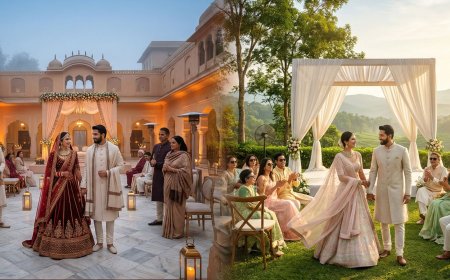
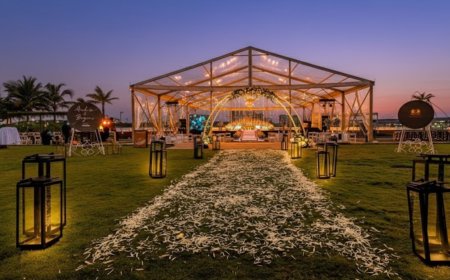
The Deogarh Mahal's courtyards are the primary wedding spaces — the enclosed outdoor areas whose sandstone walls, whose arched openings, and whose specific proportions create the contained warmth of the traditional Indian haveli's social space.
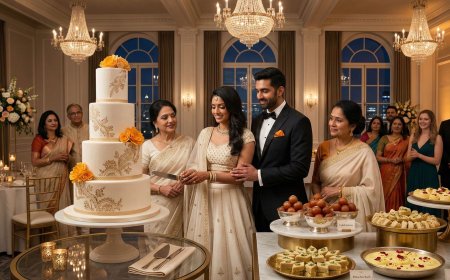
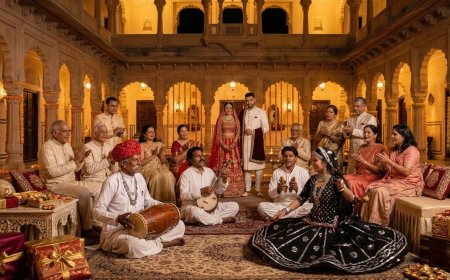
The main courtyard — the central space around which the principal rooms of the Mahal are organised — is the primary event space for the ceremony, the sangeet, and the reception. The courtyard's capacity accommodates up to one hundred and fifty guests for the seated dinner and up to two hundred for the standing reception — the scale that makes the Deogarh wedding the intimate occasion rather than the large-scale production, and that makes every guest feel specifically present rather than generally included.
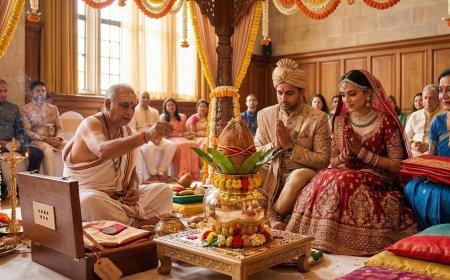
The ceremony in the courtyard — the mandap installed beneath the open sky with the Mahal's frescoed walls on three sides and the fourth side open to the terrace's view of the hills — is the ceremony whose specific setting is the intimacy of the enclosed with the expansiveness of the view, the combination that the courtyard's position produces and that the open-ground ceremony cannot replicate.
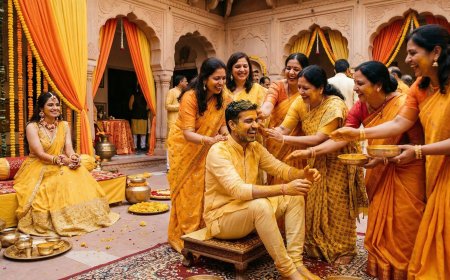
The smaller courtyards — the secondary spaces that the Mahal's multi-courtyard organisation provides — are the spaces for the mehendi, the haldi, the intimate family functions whose character requires the enclosed warmth of the smaller space rather than the primary courtyard's more generous scale.
The Rooftop Terrace
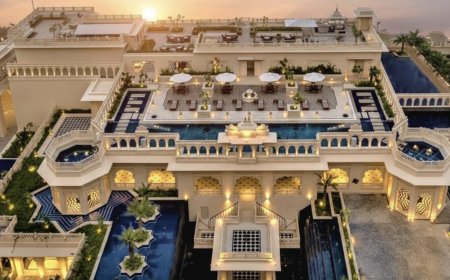
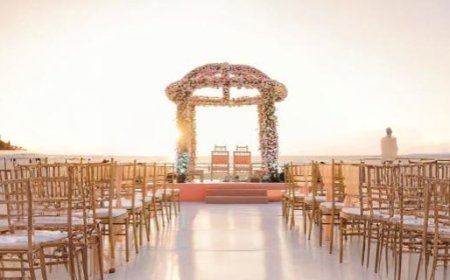
The rooftop terrace is the Deogarh Mahal's most spectacular event space — the elevated platform whose three-hundred-and-sixty-degree view of the Aravalli Hills, the valley below, and the sky above makes it the setting for the occasion that is simultaneously the most intimate and the most expansive the palace offers.
The rooftop ceremony — the pheras conducted on the terrace with the Aravalli Hills as the horizon in every direction — is the ceremony whose setting is the specific gift of the fort palace's elevated position. The guest who sits on the rooftop terrace for the ceremony has not been to a ceremony whose setting is comparable.
The rooftop capacity is the intimate scale — up to eighty guests for the seated function and up to one hundred and twenty for the standing reception. The rooftop is not the large wedding space. It is the most beautiful small wedding space in the Rajasthan destination wedding landscape.
The rooftop sunset cocktails — the specific occasion of the evening's first gathering on the terrace as the sun descends behind the Aravalli Hills and the valley below moves from the afternoon's warmth into the evening's quiet — is the event whose timing and whose setting combine to produce the specific collective experience that the wedding programme most rewards.
The Heritage Rooms and the Frescoed Halls
The Deogarh Mahal's interior rooms — the frescoed halls, the painted chambers, the specific spaces whose walls carry the eighteenth-century paintings — are the wedding spaces for the intimate indoor occasion: the family dinner, the pre-wedding gathering, the specific function whose character requires the historic interior's specific warmth.
The frescoed hall whose walls are the continuous narrative of the Rajput court's world — the hunting party, the festival, the specific domestic and ceremonial life of the eighteenth century — is the dining room whose context is the immersion in the history that the occasion is happening within. The family dinner in the frescoed hall at the Deogarh Mahal is the dinner whose setting no restaurant and no purpose-built banquet hall can approximate.
The capacity of the interior spaces is the intimate scale — the frescoed hall accommodating up to sixty guests for the seated dinner, the painted chambers used for the smaller gathering whose atmosphere the historic interior most rewards.
The Gardens and the Fort's Approach
The Deogarh Mahal's gardens — the terraced garden spaces that follow the fort's natural topography — and the fort's approach road whose processional quality makes it the natural setting for the baraat are the outdoor spaces that complement the courtyard and the rooftop events.
The baraat at Deogarh — the groom's procession up the fort's approach road with the dhol players ahead and the wedding party following and the fort's gateway as the destination — is the baraat whose setting is the processional arrival at the historic fort that the defensive architecture was designed to present: the imposing gateway, the elevated walls, the specific drama of the approach to the entrance whose purpose has been transformed from the military to the celebratory without losing the architectural authority that four centuries have produced.
The Deogarh Difference: What Sets This Venue Apart
The Personal Hosting
The Deogarh Mahal's most significant distinction from the managed hotel properties — the Umaid Bhawan's Taj management, the Jagmandir's Foundation operation, the Suryagarh's professional hospitality infrastructure — is the personal hosting of the Rawat family.
The Rawat family's involvement in the wedding is not the ceremonial presence of the heritage property's owner who appears at the welcome and departs before the occasion begins. It is the genuine, warm, specific involvement of the family in whose home the wedding is happening — the host's knowledge of the property's every corner, the personal attention to the couple's experience, the specific warmth of the occasion that is happening in a home rather than a hotel.
The couple who marries at Deogarh receives the specific gift of the personal host — the Rawat family member who knows which corner of the rooftop catches the best light at which hour, who knows the frescoed hall's story behind every painting on its walls, who brings to the wedding the four-century knowledge of the place that no professional property manager can replicate.
This is the Deogarh difference that cannot be priced — and it is the difference that the NRI couple who has experienced the large hotel property's professional management and who finds something missing in the professional excellence will most specifically recognise and most specifically value.
The Exclusivity
The Deogarh Mahal operates as the exclusive property — the venue that hosts one wedding at a time, that dedicates the full property to the single couple's occasion, and that does not simultaneously manage the other events whose presence divides the venue's attention and the couple's experience of the space.
The exclusive property is the specific luxury that the large hotel's multiple events cannot provide. The couple whose wedding is the only event at the Deogarh Mahal for the duration of their stay is the couple who has the full property — every space, every room, every corner of the rooftop terrace — as the specific setting of their occasion rather than the shared venue whose other events are managed alongside.
The Undiscovered Quality
The Deogarh Mahal's relative obscurity in the NRI wedding destination landscape is, paradoxically, its most valuable current asset. The wedding venue that has not been discovered by the circuit is the venue that has not been homogenised by the circuit's requirements — whose spaces have not been modified for the photogenic standardisation, whose character has not been smoothed into the palatability that the high-volume destination demands, whose specific, sometimes imperfect, deeply authentic quality is intact.
The imperfect quality of the authentic — the frescoed wall whose restoration is incomplete, the courtyard whose stone is the original stone rather than the renovation's smooth replacement, the rooftop whose parapet is the genuine fort parapet rather than the safety regulation's sanitised version — is the quality that the couple who values the authentic above the perfect will choose the Deogarh for.
The window: the Deogarh Mahal is being discovered. The word is spreading — the Edinburgh colleague's recommendation multiplied across the wedding planning conversations of the NRI community whose appetite for the undiscovered is the specific demand that the destination wedding market is serving. The couple who discovers Deogarh now is the couple who is ahead of the discovery curve. The couple who discovers it in three years will find it changed — not necessarily worse, but different in the specific way that the discovered place is always different from the undiscovered one.
The NRI Couple's Specific Planning
The Access
Deogarh's access is the specific planning challenge that the destination's obscurity imposes — the town is not the airport destination, not the major railway hub, not the point on the standard tourist route whose logistics are managed by the established infrastructure.
By road from Udaipur: the most practical access route for the NRI couple whose guests are flying into the nearest major city. The drive from Udaipur to Deogarh is approximately two hours on the NH 48 — the specific road journey through the Aravalli Hills whose landscape is the preview of the destination's character and whose driving time is the manageable distance for the guest who has flown into Udaipur.
By road from Jaipur: the three and a half hour drive from Jaipur whose connection through the Rajasthan interior is the longer but equally manageable access route for the guests flying into the Jaipur airport.
By train to Phulad: the nearest railway station to Deogarh is Phulad, approximately fifteen kilometres from the town, whose connection to the major rail network provides the train access for the guests who prefer the rail option.
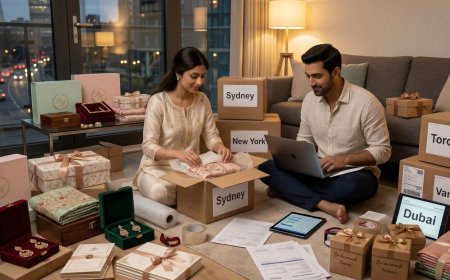
The guest transport coordination: the coordinated transport — the fleet of vehicles that meets the arriving guests at the Udaipur airport and drives them to Deogarh as the convoy whose journey through the Aravalli Hills is the arrival experience — is the guest management investment that the Deogarh destination most rewards. The guest who arrives at the Deogarh Mahal as part of the coordinated convoy, whose journey has been the shared experience of the arriving wedding party, has arrived with the community that the wedding occasion requires.
The Scale: The Wedding the Deogarh Is For
The Deogarh Mahal's capacity — the courtyard's two hundred standing maximum, the rooftop's one hundred and twenty standing maximum, the accommodation whose room count is the intimate property rather than the large hotel — makes it the venue for the specific scale of wedding rather than the wedding of any scale.
The Deogarh wedding is the wedding of one hundred to one hundred and fifty guests — the intimate destination wedding whose guest list is the specifically chosen rather than the comprehensively obligatory, whose scale allows the couple to be present to every person in the room, and whose character is the personal occasion rather than the managed event.
The NRI couple whose guest list is three hundred will not find Deogarh suitable. The NRI couple whose guest list is one hundred and twenty — whose specific vision is the intimate, authentic, deeply personal destination wedding in the undiscovered palace — will find Deogarh to be the exact answer.
The Complete Planning and Pricing Tables
Table One: Wedding Spaces, Events, and Costs
| Space / Event | Capacity (Seated) | Capacity (Standing) | Approx. Venue Cost (INR) | Approx. Venue Cost (USD) | Best For |
|---|---|---|---|---|---|
| Main Courtyard – Ceremony | Up to 120 | Up to 200 | ₹8,00,000 – ₹15,00,000 | $9,600 – $18,000 | Wedding pheras, intimate ceremony |
| Main Courtyard – Sangeet | Up to 150 | Up to 200 | ₹12,00,000 – ₹22,00,000 | $14,400 – $26,400 | Sangeet with performances |
| Main Courtyard – Reception Dinner | Up to 150 | Up to 200 | ₹15,00,000 – ₹28,00,000 | $18,000 – $33,600 | Wedding reception dinner |
| Rooftop Terrace – Ceremony | Up to 80 | Up to 120 | ₹10,00,000 – ₹18,00,000 | $12,000 – $21,600 | Intimate pheras, hill views |
| Rooftop Terrace – Cocktails | Up to 60 | Up to 120 | ₹6,00,000 – ₹12,00,000 | $7,200 – $14,400 | Sunset cocktails, hill panorama |
| Rooftop Terrace – Seated Dinner | Up to 60 | — | ₹10,00,000 – ₹18,00,000 | $12,000 – $21,600 | Intimate dinner, star canopy |
| Frescoed Hall – Family Dinner | Up to 60 | Up to 80 | ₹5,00,000 – ₹10,00,000 | $6,000 – $12,000 | Heritage interior, family function |
| Secondary Courtyard – Mehendi | Up to 80 | Up to 100 | ₹4,00,000 – ₹8,00,000 | $4,800 – $9,600 | Pre-wedding daytime function |
| Secondary Courtyard – Haldi | Up to 60 | Up to 80 | ₹3,00,000 – ₹6,00,000 | $3,600 – $7,200 | Morning ritual, intimate |
| Fort Approach – Baraat | Procession format | Up to 150 | ₹3,00,000 – ₹6,00,000 | $3,600 – $7,200 | Groom's procession, fort arrival |
| Garden Terraces – Welcome Cocktails | Up to 100 | Up to 150 | ₹5,00,000 – ₹10,00,000 | $6,000 – $12,000 | First evening, arrival welcome |
| Full Property – Exclusive Buyout (per day) | All spaces | All spaces | ₹40,00,000 – ₹80,00,000 | $48,000 – $96,000 | Complete exclusive use |
| Full 3-Day Wedding Package | 100–150 guests | — | ₹80,00,000 – ₹1,60,00,000 | $96,000 – $1,92,000 | All functions, family hosting |
| Catering – Per Head (Welcome Cocktails) | — | — | ₹2,500 – ₹4,500 per head | $30 – $54 per head | Arrival evening, canapes |
| Catering – Per Head (Buffet Dinner) | — | — | ₹6,000 – ₹10,000 per head | $72 – $120 per head | Sangeet dinner, buffet format |
| Catering – Per Head (Seated Dinner) | — | — | ₹8,000 – ₹14,000 per head | $96 – $168 per head | Reception dinner, formal |
| Traditional Rajasthani Cultural Evening | Folk music, dance, puppet | ₹3,00,000 – ₹8,00,000 | $3,600 – $9,600 | Welcome evening entertainment |
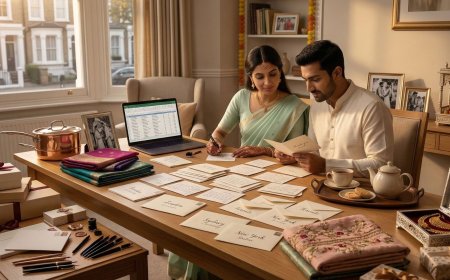
All prices are indicative estimates. The Deogarh Mahal provides the bespoke quotation directly through the Rawat family's management team. The Deogarh's pricing reflects the boutique property's structure — lower venue costs than the major palace hotels, with the catering and the external vendor costs forming the budget's larger proportion. The exclusive buyout is the strongly recommended approach for the destination wedding.
Table Two: Accommodation, Full Budget, and Planning Essentials
| Category | Detail | Approx. Cost (INR) | Approx. Cost (USD) | Notes |
|---|---|---|---|---|
| DEOGARH MAHAL ACCOMMODATION | ||||
| Heritage Room | Fort palace rooms, traditional décor | ₹8,000 – ₹14,000 per night | $96 – $168 per night | Original heritage rooms, frescoed |
| Deluxe Heritage Room | Larger heritage room, better view | ₹12,000 – ₹20,000 per night | $144 – $240 per night | Courtyard or hill view |
| Suite | Separate sitting area, premium | ₹20,000 – ₹35,000 per night | $240 – $420 per night | Key family, senior guests |
| Royal Suite | Premier suite, palace wing | ₹35,000 – ₹55,000 per night | $420 – $660 per night | Couple's suite, wedding night |
| Total Rooms Available | Approximately 35–40 rooms | Full buyout recommended | Rate negotiated for wedding | Intimate property, books quickly |
| OVERFLOW ACCOMMODATION | ||||
| Deogarh town guesthouses | Basic local accommodation | ₹2,000 – ₹5,000 per night | $24 – $60 per night | Budget option, limited quality |
| Udaipur hotels (2 hours away) | Full range available | ₹8,000 – ₹80,000 per night | $96 – $960 per night | For large guest lists exceeding capacity |
| Nearby heritage homestays | Rajasthani family properties | ₹4,000 – ₹10,000 per night | $48 – $120 per night | Characterful alternative |
| COMPREHENSIVE WEDDING BUDGET | ||||
| Venue hire – all functions (3 days) | Full property exclusive | ₹40,00,000 – ₹80,00,000 | $48,000 – $96,000 | Lower than major palace venues |
| Catering – all functions (120 guests) | Approved caterers, all meals | ₹40,00,000 – ₹80,00,000 | $48,000 – $96,000 | Three events, three days |
| Decoration and florals | Full installation, transport premium | ₹30,00,000 – ₹60,00,000 | $36,000 – $72,000 | Vendors from Udaipur or Jaipur |
| Photography and videography | Destination wedding team | ₹12,00,000 – ₹28,00,000 | $14,400 – $33,600 | Heritage and landscape coverage |
| Entertainment | Folk arts, sangeet performers, DJ | ₹10,00,000 – ₹25,00,000 | $12,000 – $30,000 | Rajasthani folk arts recommended |
| Destination wedding planner | Rajasthan specialist essential | ₹8,00,000 – ₹18,00,000 | $9,600 – $21,600 | Smaller fee than major destinations |
| Bridal and groom's clothing | Full trousseau | ₹15,00,000 – ₹40,00,000 | $18,000 – $48,000 | Personal to couple |
| Hair and makeup | Bridal, bridal party | ₹2,00,000 – ₹6,00,000 | $2,400 – $7,200 | Artist travels from Udaipur |
| Accommodation – full property (3 nights) | 35–40 rooms, wedding group rate | ₹10,00,000 – ₹22,00,000 | $12,000 – $26,400 | Full buyout, all guests on-site |
| Guest transport | Udaipur airport to Deogarh convoy | ₹5,00,000 – ₹12,00,000 | $6,000 – $14,400 | Two-hour road transfer essential |
| Vendor transport premium | From Udaipur or Jaipur | ₹3,00,000 – ₹8,00,000 | $3,600 – $9,600 | All vendors travel to destination |
| Invitations and stationery | Heritage fresco design language | ₹1,50,000 – ₹4,00,000 | $1,800 – $4,800 | Fresco motifs recommended |
| Pandit and religious requirements | Travels from Udaipur | ₹1,00,000 – ₹2,50,000 | $1,200 – $3,000 | Confirm travel arrangements |
| Miscellaneous and contingency (10%) | Remote location increases variance | ₹10,00,000 – ₹20,00,000 | $12,000 – $24,000 | Higher percentage recommended |
| TOTAL ESTIMATED RANGE | 120 guests, 3-day wedding | ₹1,87,50,000 – ₹4,05,50,000 | $2,25,000 – $4,87,000 | Significantly lower than major palaces |
| PLANNING TIMELINE | ||||
| Initial inquiry | Direct contact with Rawat family | 18 months before | 18 months before | Smaller team, personal response |
| Contract and deposit | Date confirmed, terms agreed | 14–16 months before | 14–16 months before | Personal negotiation with family |
| Destination planner engaged | Rajasthan specialist essential | 14 months before | 14 months before | Before vendor outreach begins |
| Vendor sourcing from Udaipur or Jaipur | Decorator, caterer, photographer | 10–12 months before | 10–12 months before | All vendors travel to destination |
| Guest transport coordination | Convoy from Udaipur airport | 6 months before | 6 months before | Central to guest experience |
| Overflow accommodation arranged | Udaipur hotels for excess guests | 6 months before | 6 months before | If guest count exceeds 40 rooms |
| Final guest count confirmed | To Rawat family team | 6–8 weeks before | 6–8 weeks before | Catering and space finalisation |
| Vendor transport schedule | All vendors depart Udaipur | 2 days before events | 2 days before events | Coordinate with planner |
| Final payments | Venue and all vendors | 4 weeks before | 4 weeks before | Confirm in writing with family |
All prices are indicative. The Deogarh Mahal's total budget range is meaningfully lower than the comparable experience at the major palace destinations — the boutique property's pricing structure and the smaller guest count's cost efficiency making the Deogarh the most accessible of the Rajasthan palace wedding destinations without the sacrifice of the heritage quality or the authentic experience. The remote location's vendor transport premium is the cost that the couple should build in from the beginning.
The Guest Experience at Deogarh
The Complete Property
The NRI wedding at the Deogarh Mahal — with the full property exclusively reserved for the wedding party — gives every guest the specific experience of living in a fort palace for the duration of the wedding. Not visiting a fort palace. Living in one.
The guest who wakes at the Deogarh Mahal on the morning of the wedding day wakes in a heritage room whose window looks across the Aravalli Hills, whose walls may carry the faded fresco of the eighteenth-century court, and whose specific quality of the morning light through the stone jali screen is the quality that the purpose-built hotel room does not produce. The guest who walks to breakfast crosses the courtyard where the mandap will stand tonight. The guest who takes the tea on the rooftop terrace at seven AM is the guest who has the Aravalli Hills entirely to themselves in the morning quiet.
This is the complete property experience — the experience that the large hotel with the two hundred rooms and the four restaurants and the spa and the pool whose deck is shared with the other hotel guests cannot provide, because the complete property experience requires the completeness of the exclusive possession.
The Rajasthani Cultural Immersion
The Deogarh Mahal's position in the Aravalli Hills — away from the major tourist circuit, in the specific landscape of the interior Rajasthan — gives the wedding's cultural programming access to the authentic rather than the performed.
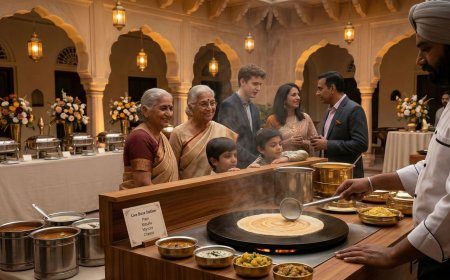
The local musicians who play at the Deogarh welcome dinner are the musicians from the surrounding villages whose musical tradition is the living tradition of the community rather than the tourist performance. The folk dancers whose engagement the Rawat family's local knowledge facilitates are the artists whose work is the genuine cultural expression rather than the packaged entertainment.
The Aravalli landscape excursion — the morning walk through the hills, the visit to the nearby Rajput temple, the specific local experience that the Rawat family's knowledge of the surrounding area makes available — is the cultural dimension of the guest programme that the major tourist destination cannot provide because the major tourist destination's surrounding experience has already been packaged and processed.
Common Mistakes NRI Couples Make When Planning the Deogarh Wedding
The first mistake is applying the major palace venue's planning assumptions to the Deogarh. The Deogarh Mahal is not the Umaid Bhawan with a smaller guest count. It is a different kind of property — the boutique family-managed heritage fort — whose planning requirements are different in the specific ways that the intimate scale and the remote location impose. The couple who approaches the Deogarh planning with the assumptions of the large hotel property — the professional events team with the established vendor list, the on-site catering infrastructure whose capacity scales to any guest count, the accommodation that exceeds the wedding party's size — will discover the specific gaps between the assumption and the reality. Research the Deogarh specifically. Understand what it is before planning for what the major palace is.
The second mistake is not arranging the guest transport as the centrepiece of the wedding programme's logistics. The guests who are flying to Udaipur or Jaipur and making their own way to Deogarh are the guests who are navigating a two-hour road journey to an unfamiliar small town without the guidance that the destination's obscurity makes essential. The coordinated convoy from the Udaipur airport — the fleet of vehicles whose passengers are the arriving wedding party, whose journey through the Aravalli Hills is the arrival experience, and whose arrival at the Deogarh Mahal's fort gateway is the collective moment that begins the wedding — is the guest transport investment that the Deogarh destination rewards most specifically.
The third mistake is not confirming every vendor's travel arrangements to the property. The Deogarh Mahal is two hours from Udaipur's vendor ecosystem. The decorator, the caterer, the photographer, the hair and makeup artist, the entertainment company — every vendor is travelling to the destination rather than operating from the local base. The vendor whose travel has not been confirmed, whose accommodation for the setup nights has not been arranged, and whose equipment transport has not been coordinated is the vendor whose arrival is the uncertainty that the remote destination turns into the crisis. Confirm every vendor's travel. Book their accommodation. Know their arrival time.
The fourth mistake is planning the guest count beyond the property's comfortable capacity without the overflow accommodation arranged in advance. The Deogarh Mahal's thirty-five to forty rooms accommodate the intimate wedding party completely — every guest on-site, every guest in the fort palace, the complete property experience intact. The couple whose guest count exceeds the property's accommodation must arrange the overflow accommodation in Udaipur or the nearby heritage homestays before the invitations are sent. The guest who discovers they are not staying at the Mahal itself — who is in the Udaipur hotel two hours away — has been given a different experience from the guest who is in the fort. Manage this transparently and early.
The fifth mistake is choosing the Deogarh for the wrong reasons and discovering the right reasons too late. The couple who chooses the Deogarh because it is less expensive than the major palaces — who discovers on arrival that the lower price reflects the boutique scale, the remote logistics, and the family management rather than the inferior quality — may find the gap between the expectation and the experience difficult to close if the expectation was the major palace at the boutique price. The Deogarh is not the budget option. It is the different option — the option whose value is the authenticity, the personal hosting, the undiscovered quality, and the specific intimacy that the major palace cannot provide regardless of the price paid. Choose the Deogarh for what it is, not for what it costs less than.
What the Colleague Knew
The bride had gone back to the Edinburgh architecture firm on the Monday after the wedding.
The colleague whose recommendation had started everything — the woman with the personal photograph on her phone, the slightly imperfect image of the fort palace above the small Rajasthani town — had asked how it was.
The bride had thought about this for a moment — the specific pause of the person who has been asked to compress something large into the available words of the Monday morning conversation.
She had said: "You were right that it was the point."
The colleague had said: "Which part?"
The bride had said: "That most people drive past it without knowing it exists. That's what made it what it was. We were in a place that felt like it was still ours — like we had found it rather than been directed to it. Like the wedding happened somewhere real rather than somewhere that exists to have weddings happen in it."
This is the thing the colleague knew and that the recommendation conveyed — the specific quality of the undiscovered place that still belongs to itself, that has not yet been shaped by the expectation of the people who come to experience it, that is still, in the most important sense, genuine.
The Deogarh Mahal is still that place.
Begin the conversation at eighteen months.
Arrange the convoy from Udaipur before the invitations are sent.
Confirm every vendor's travel before the deposit is paid.
Choose the Deogarh for what it is — the authentic, personal, undiscovered fort palace in the Aravalli Hills whose four-century family history is the wedding's specific, unreplicable context.
And when the colleague shows you the photograph — the slightly imperfect personal photograph of the fort above the small town — do not wait for the algorithm to show it to you.
The algorithm will get there eventually.
But by then the window will be smaller.
Go now.
While it is still yours to discover.
Published by NRIWedding.com — The Premium Global Platform for Non-Resident Indians Planning Indian Weddings From Abroad.
What's Your Reaction?
 Like
0
Like
0
 Dislike
0
Dislike
0
 Love
0
Love
0
 Funny
0
Funny
0
 Angry
0
Angry
0
 Sad
0
Sad
0
 Wow
0
Wow
0