












































Where Maharajas Once Ruled, Love Stories Are Now Written: The Complete Guide to Rajasthan's Royal Heritage Palace Weddings
Rajasthan's iconic heritage palaces — from Udaipur's Lake Palace to Jodhpur's Mehrangarh Fort — are now among the world's most sought-after destinations for NRI couples seeking culturally rooted, visually extraordinary weddings. This guide covers everything diaspora families need to know: choosing the right palace venue, sourcing region-specific pandits, coordinating international guests, and honouring community-specific rituals within a royal Rajasthani setting. For NRI couples across the US, UK, Canada, UAE, and Australia, a heritage palace wedding in Rajasthan is not just a celebration — it is a homecoming.


Where Maharajas Once Ruled, Love Stories Are Now Written: The Complete Guide to Rajasthan's Royal Heritage Palace Weddings
Rajasthan's fortress palaces and lakeside havelis have hosted conquerors, poets, and kings — and now they host something equally grand: the weddings of India's global diaspora, returning home to marry inside history itself. For NRI couples seeking a ceremony that transcends the ordinary, a heritage palace wedding in Rajasthan is not a venue choice. It is a declaration.
You have been dreaming of this since before you knew it was possible. Not a hotel ballroom in Dallas with marigold centrepieces trying their best. Not a marquee in a Surrey garden with a portable mandap and a smoke alarm that goes off during the havan. Something older. Something that remembers. You want stone walls that have witnessed centuries, a courtyard where the evening light turns everything gold, and the sound of a shehnai [ceremonial oboe] echoing off sandstone that was carved before your great-great-grandmother was born.
You are in London or Toronto or Dubai, scrolling through images of Udaipur's Lake Palace at midnight, and something in your chest recognises it — not as a travel destination but as something closer to a birthright. This is Rajasthan. And it has been waiting.
🌟 DID YOU KNOW?
Rajasthan alone has over 100 heritage hotels and palace properties currently licensed for wedding ceremonies, making it the single largest concentration of royal wedding venues anywhere in the world. Many were converted from active royal residences after the Indian government's 1971 privy purse abolition, when maharaja families opened their ancestral properties to sustain them.
The NRI and international destination wedding segment now accounts for an estimated 35–40% of all bookings at Rajasthan's top heritage palace properties, according to industry data from the Rajasthan Tourism Development Corporation — a figure that has nearly doubled since 2018.
The tradition of grand royal weddings in Rajputana dates back over a thousand years, with elaborate multi-day ceremonies documented in the courts of Mewar, Marwar, Jodhpur, and Jaisalmer. Many of the rituals performed at today's heritage palace weddings are direct descendants of those royal customs.
What Is a Rajasthan Heritage Palace Wedding?
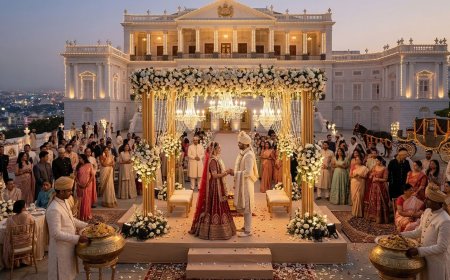
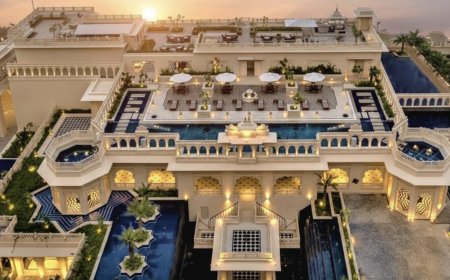
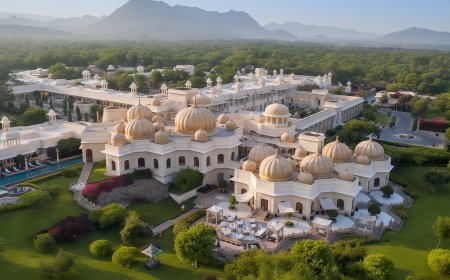
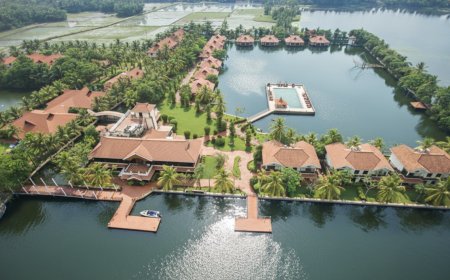
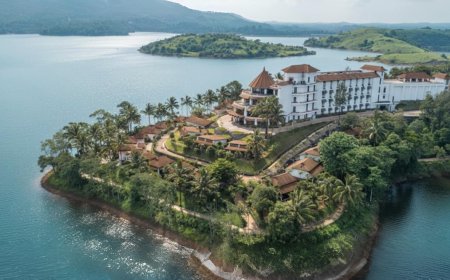
A heritage palace wedding is not simply a wedding held at a beautiful old building. It is a ceremony conducted within a living monument — a property that carries within its walls the genealogy of Rajput kings, Mughal diplomacy, colonial-era negotiations, and centuries of artistic patronage. These are properties like Umaid Bhawan Palace in Jodhpur, Taj Lake Palace in Udaipur, Samode Palace outside Jaipur, Deogarh Mahal in the Aravalli hills, and Sujan Jawai in the leopard country of Pali district.
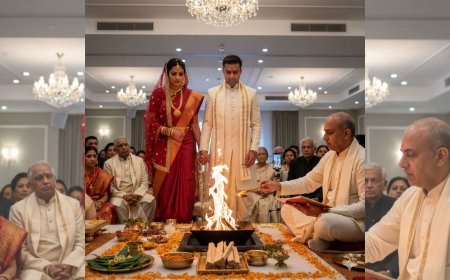
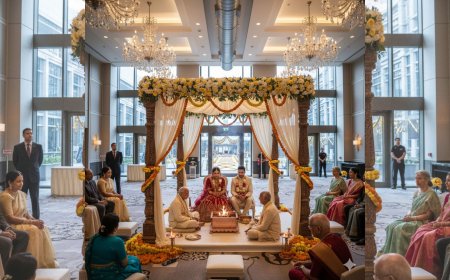
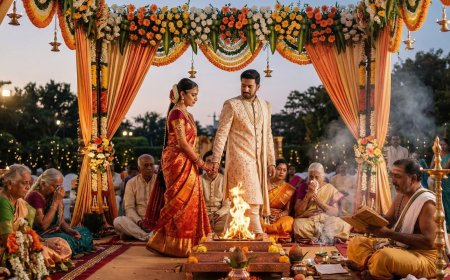
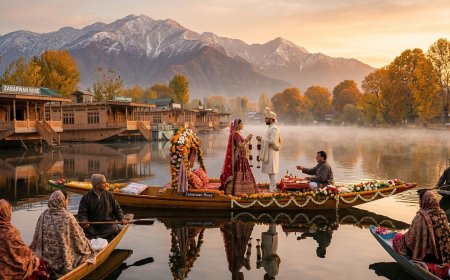
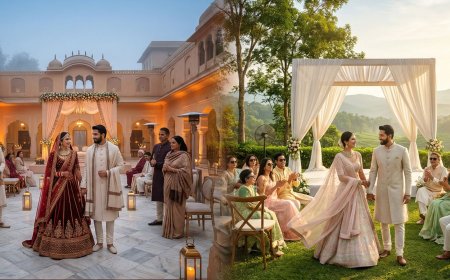
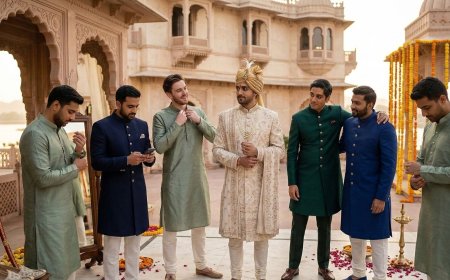
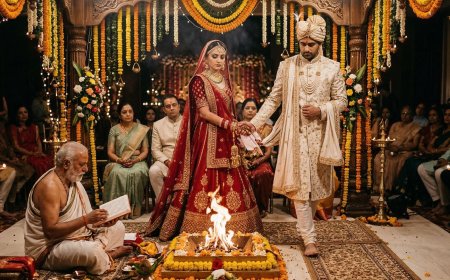
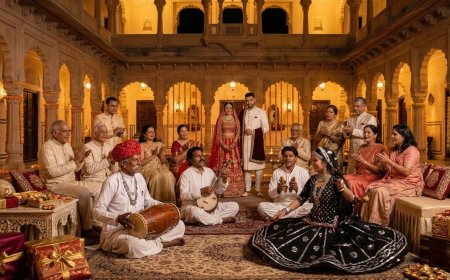
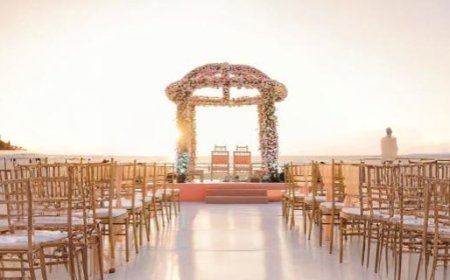
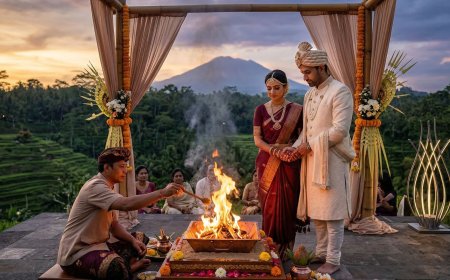
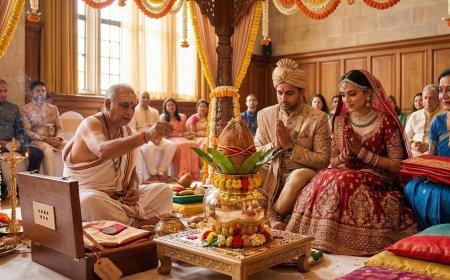
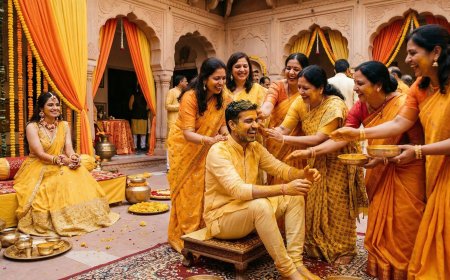
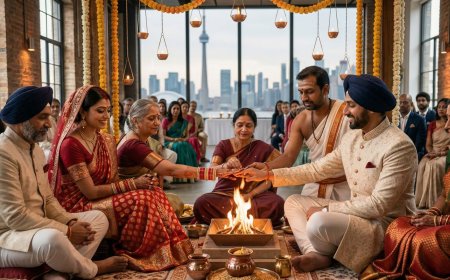
The wedding sequence at a heritage palace follows a rhythm shaped by both Rajput custom and the physical architecture of the property itself. The baraat [groom's wedding procession] arrives on horseback or atop a decorated elephant through gates that once admitted maharajas. The swagat [welcome ceremony] is performed by palace staff in royal livery. The mandap [sacred wedding canopy] is erected in the central courtyard, open to the sky. The saptapadi [seven sacred steps around the fire] takes place under stars, surrounded by fort walls lit by torches. The vidaai [bride's farewell] echoes through corridors where queens once walked.
The rajasthani vivah parampara [royal Rajasthani wedding tradition] includes specific customs unique to this geography: the toran [a decorative threshold piece struck by the groom upon arrival], the jaymala [garland exchange] performed on elevated platforms designed for visibility, and the involvement of the nat and bhopa [traditional Rajasthani performer communities] who provide live folk music throughout the celebrations.
Community Comparison: Royal Wedding Traditions Across Indian Communities and How They Map to Rajasthan
| Community/State | Traditional Wedding Anchor | Local Name | Core Symbolic Meaning | How It Translates to a Rajasthan Palace Setting |
|---|---|---|---|---|
| Rajasthani Rajput | Groom arrives on horseback, strikes the toran at the gate | Toran Marna | The groom's strength and arrival as protector | Fully executable at any heritage palace; many properties maintain horses and decorated elephant arrangements |
| Himachali | Village women welcome the baraat with songs at the boundary | Swagat Geet | Community's blessing of the union | Palace staff can be briefed to perform a traditional welcome; Himachali families bring their own women singers |
| Garhwali | Worship of ancestral deity before departure | Devta Puja | Mountain deity's blessing for the journey | A dedicated puja room is available at most palace properties; pandits can be sourced locally with regional briefing |
| Punjabi | Anand Karaj — four rounds of the sacred scripture | Laavan | The soul's union witnessed by the divine | Requires a Gurdwara for the formal ceremony; couples often combine a Gurdwara ceremony in Jaipur with palace reception |
| Kashmiri Pandit | Walnut ceremony and formal reading of the match | Lagan Lagnun | Cosmic confirmation of the union | Easily executed within palace courtyards; Kashmiri pandits can travel to the venue |
| Marathi | Silk cloth held between bride and groom at the auspicious moment | Antarpat | Sacred suspense of the first marital meeting | Beautifully suited to a palace mandap setting with dramatic courtyard staging |
| Tamil Brahmin | Bride and groom on a flower-draped swing together | Oonjal | Graceful, playful beginning of shared life | Palace properties in Udaipur and Jaipur can install ornate swings within their interior courtyards |
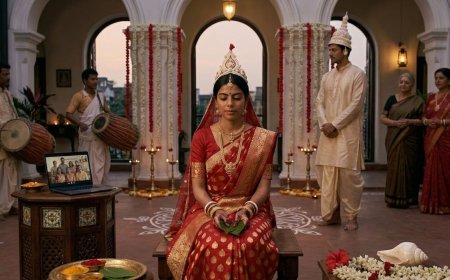
| Bengali | Sacred first exchange of gaze | Shubho Drishti | The universe witnessed in the beloved | Perfectly suited to the face-to-face intimacy of a palace mandap; betel leaves sourced locally |
| Gujarati | The groom's arrival welcomed with oil lamp ceremony | Aarti Welcome | Light dispelling darkness as love enters the home | Palace gateways and entrance halls create a natural theatrical setting for this ritual |
| South Indian (Iyer/Iyengar) | Sacred thread tied around the bride's neck | Mangalsutra / Thaali | The binding of souls through divine witness | Hindu priests experienced with Brahminic traditions are available in Jaipur, Udaipur, and Jodhpur |
The Meaning Behind the Royal Wedding Tradition
Rajput wedding customs were not designed for beauty alone, though beauty was never an afterthought in Rajputana. They were designed to enact a philosophy: that marriage is a public covenant witnessed not just by family but by dynasty, by land, by sky, and by time. When a Rajput king married, the entire kingdom participated. The fort walls were lit. The city was fed. The music did not stop for three days.
This is why a heritage palace wedding resonates so deeply for the Indian diaspora — not because NRI couples are Rajput royalty, but because the architecture of these spaces does something that no modern venue can replicate. It makes the personal feel historical. It makes the private feel witnessed. When you stand at the centre of a five-hundred-year-old courtyard and take your saat phere [seven sacred circumambulations of the fire], the walls around you have seen so much human love and grief and ceremony that they seem, somehow, to be holding your moment inside all the others. You are not alone in time.
The ancient Rajput concept of maan-mariyaad [honour through right conduct] held that a wedding was the moment a family's values were made visible to the world. That belief has never felt more relevant than it does for an NRI family choosing to return to India to marry — making visible, before God and history, exactly who they are and what they will not let go of.
For any non-Indian partner or guest trying to understand why this setting matters so deeply: it is because these walls remember, and to be remembered is a form of belonging.
Doing a Rajasthan Heritage Palace Wedding: The Practical Reality for NRI Couples
The single most important thing to understand about planning a Rajasthan palace wedding from abroad is this: these properties are experienced at hosting NRI and international couples, but they are not experienced at reading minds. The more specifically you brief them — in writing, months in advance — the more extraordinary your wedding will be.
Begin your venue search at least twelve to eighteen months before your wedding date. Rajasthan's peak wedding season runs from October through February, when the desert climate is temperate and the light is extraordinary. Properties like Samode Palace, Raas Jodhpur, Deogarh Mahal, and the Ravla Khempur book out for premium dates — especially around mahurat [auspicious dates according to the Hindu calendar] — sometimes two years in advance. NRI couples, particularly those who need to coordinate international travel for guests, must plan accordingly.
For the pandit question: Jaipur, Jodhpur, and Udaipur all have large communities of experienced Hindu priests who work regularly with heritage palace weddings. However, if your family follows a specific regional tradition — Kashmiri Pandit, Garhwali, Kumaoni, or South Indian Brahminic — you will need to either bring your own pandit from abroad or source a region-specific priest through NRI.Wedding's pandit network and arrange their travel to the venue. Rajasthani pandits are excellent within their own tradition but may not know the specific shlokas of a Kashmiri or Garhwali ceremony.
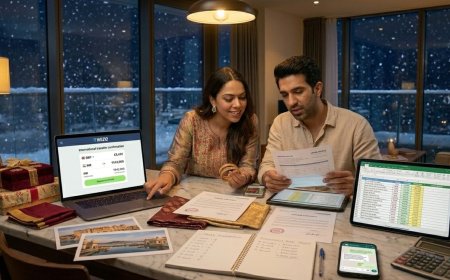
The logistics of international guests at a Rajasthan palace wedding require dedicated planning. Most heritage properties can accommodate guests on-site, eliminating transport challenges, but you will need to coordinate airport transfers from Jaipur, Jodhpur, or Udaipur airports — all of which have direct connections from major Indian cities and increasingly from international hubs. Guests from the US, UK, Australia, UAE, and Canada should be advised to fly into Mumbai or Delhi and connect onward; travel agents familiar with NRI wedding logistics can package this efficiently.
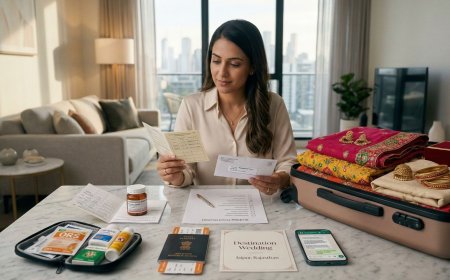
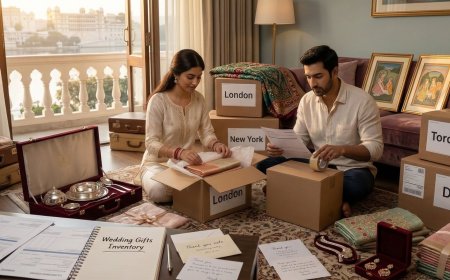
For sourcing any ritual items not available locally, the old city markets of Jaipur's Johari Bazaar [jewellers' market] and Bapu Bazaar are extraordinary for bridal jewellery, fabric, and ceremony materials. Udaipur's Hathi Pol Bazaar carries everything from supari to specific regional flowers. If you need items shipped from your home country — a specific item of clothing, a family heirloom, a regional ritual object — build four to six weeks of buffer into your shipping timeline and declare items carefully at Indian customs.
Planning Your Ceremony in India: Location Recommendations for Heritage Palace Weddings
Udaipur is the undisputed capital of romantic heritage palace weddings. The Taj Lake Palace — accessible only by boat across Lake Pichola — creates an arrival experience that is simply unmatched anywhere in the world. The City Palace complex offers multiple event spaces within one of India's most intact royal residences. Udaipur works best for couples who want intimacy, lake views, and the softest aesthetic of Rajasthan's palette.
Jodhpur is for couples who want drama. Mehrangarh Fort, rising two hundred feet above the blue city, is one of the most visually arresting wedding backdrops on earth. Raas Jodhpur, a boutique heritage property built into the fort's shadow, offers a more intimate alternative with extraordinary views. Jodhpur weddings feel cinematic — bold, architectural, unforgettable.
Jaipur offers the most accessible logistics for large guest lists and the widest range of supporting vendors — photographers, decorators, caterers, and musicians who are thoroughly experienced with NRI weddings. Samode Palace, forty-five minutes from Jaipur, is arguably the most complete heritage palace wedding experience in India, with frescoed rooms, a swimming pool courtyard, and a setting that looks like every Rajasthan dream at once.
Jaisalmer is for the adventurous. A fort wedding in the golden city, with desert dunes as your backdrop and camel processions as your baraat — this is Rajasthan at its most theatrical and most irreducible.
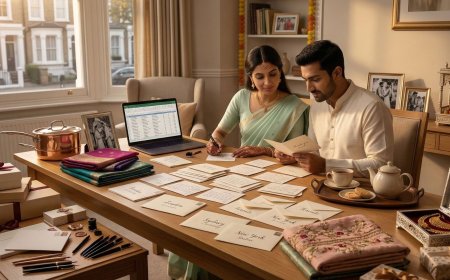
When briefing local pandits on your specific customs, meet them via video call before you arrive. Share your gotra, your community, your family's specific ritual sequence, and any adaptations required. For non-Indian guests, a bilingual ceremony guide — English and Hindi — printed on handmade paper with a Rajasthani block-print border makes a beautiful keepsake and ensures no one is lost during the ceremony.
What You Need: The Heritage Palace Wedding Checklist
Venue and Logistics Begin the venue search twelve to eighteen months in advance. Confirm in writing: the mandap location, open-flame permissions for the havan, on-site accommodation capacity, vendor exclusivity policies, generator backup for evening events, and elephant or horse availability for the baraat.
Ritual Items Most ritual items are easily sourced within Rajasthan's city markets: ghee, marigold garlands, supari, coconut, sacred thread, kumkum, clay kalash, til, and fresh flowers. If your ceremony requires region-specific items — walnut for Kashmiri Pandits, specific South Indian ritual materials — arrange these through a local coordinator in advance.
People Required A pandit familiar with your community's tradition, a local on-ground wedding coordinator, a dedicated NRI liaison who speaks both the venue's language and your family's expectations, a photographer with heritage palace experience (natural light in these properties is extraordinary but technically demanding), and a folk music ensemble — the manganiyar or langa [traditional Rajasthani Muslim musician communities] provide live wedding music of breathtaking authenticity.
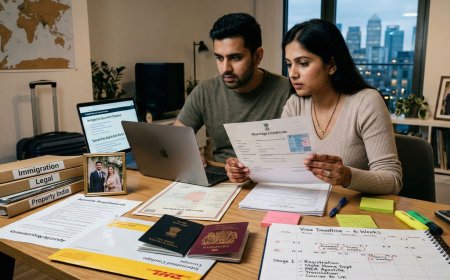
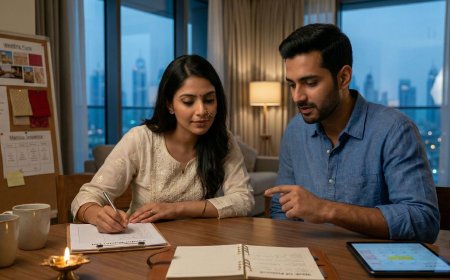
Preparation Steps Confirm your mahurat date with your pandit before booking the venue. Arrange international guest travel packages with an NRI-specialist travel partner. Video-call your Rajasthan pandit at least twice before the wedding. Send a written ceremony brief in Hindi. Arrange a pre-wedding cultural orientation dinner for your non-Indian guests. And build one free day into your wedding schedule — for the unexpected, for the wonder, and for simply being inside a palace in Rajasthan, which deserves at least one unscheduled hour.
NRI.Wedding's Rajasthan vendor network includes verified photographers, pandits, decorators, folk music ensembles, and ground coordinators with specific NRI wedding experience across Jaipur, Udaipur, Jodhpur, and Jaisalmer.
5 Questions NRI Couples Always Ask About Heritage Palace Weddings in Rajasthan
Can we actually have the havan fire ritual inside a heritage palace — or will the venue restrict it?
Most heritage palace properties in Rajasthan are fully equipped for open-air havan ceremonies in their courtyards, which are the natural mandap locations. Unlike Western venues, these properties have been hosting fire-based rituals for centuries — the architecture was literally designed around it. Confirm specifically with your venue that your chosen courtyard allows open flame, and ensure your pandit knows the site dimensions so the mandap can be sized appropriately. Indoor havan in palace halls may have smoke restrictions, so always prioritise the courtyard setting.
Our guest list includes many non-Indian friends and a non-Indian partner's family. How do we make it inclusive?
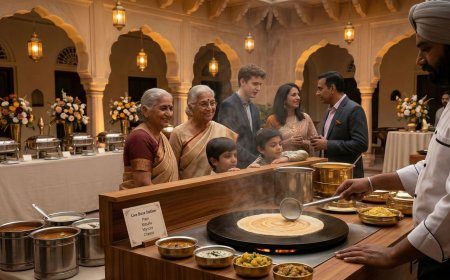
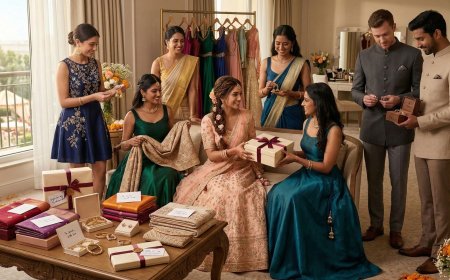
Rajasthan's heritage palaces are among the easiest places in the world to make intercultural wedding guests feel welcomed rather than bewildered — because the setting itself creates awe that crosses every cultural background. Supplement this with a printed bilingual ceremony guide, ask your pandit to offer brief English explanations at key ritual moments, and plan a pre-wedding folk music and cultural evening where non-Indian guests can ask questions, try traditional food, and meet the family in a relaxed setting. Most heritage properties offer curated cultural experiences — camel rides, block-printing workshops, traditional Rajasthani cooking sessions — that serve as beautiful guest entertainment in the days around the wedding.
How do we find a pandit who knows our specific community's customs in Rajasthan?
This is the most important logistical question for any heritage palace wedding. The local pandit pool in Rajasthan is deep and experienced but community-specific. For Rajasthani, Gujarati, and some North Indian traditions, local pandits will be entirely sufficient. For Kashmiri Pandit, South Indian Brahminic, Garhwali, Kumaoni, or Bengali traditions, it is strongly advisable to either bring your family pandit from abroad — budgeting for their travel and accommodation — or to source a region-specific priest through NRI.Wedding's pandit network who can travel to Rajasthan. Brief your pandit via video call at least twice before the ceremony, and always provide a written ceremony brief.
How do we coordinate relatives who cannot travel to India with the live ceremony?
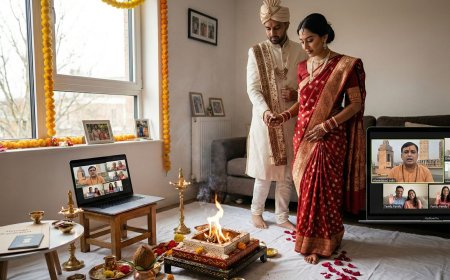
Heritage palaces have uneven WiFi infrastructure — some properties have invested heavily in connectivity, others are still catching up. Before your wedding, specifically test the internet quality at your chosen venue and identify the best location for a streaming setup within your mandap area. Use YouTube Live (unlisted) or Zoom for reliability. Assign a dedicated video coordinator whose only job is managing the feed, and position a quality microphone near the pandit so the audio is clear for remote viewers. Consider the time difference carefully: an afternoon ceremony in Udaipur is morning in London, pre-dawn in Toronto. Adjust your ceremony timing where possible to catch the maximum number of remote family members at reasonable hours.
Should we do our civil marriage registration before travelling to India?
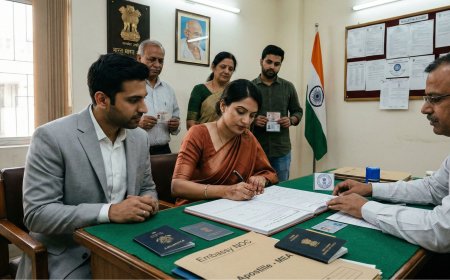
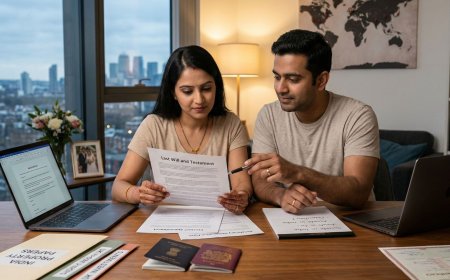
Yes — strongly recommended. Register your civil marriage in your country of residence before travelling to India for the religious ceremony. This eliminates the complexity of navigating Indian marriage registration as a foreign resident, ensures your marriage is legally recognised in your home country from the moment you return, and allows the Rajasthan ceremony to be exactly what it should be: emotionally and spiritually complete, with no paperwork in its way. Many NRI couples register quietly at a local registry office the week before travelling, and treat the palace ceremony as the true wedding in every sense that matters.
The Emotional Angle
There is a specific kind of NRI who has spent their whole adult life being two things at once. Indian enough to know every ritual, every song, every food that means home. Western enough to navigate boardrooms and school gates and mortgage applications in cities their grandparents never imagined. Holding both has always required a kind of private effort — code-switching not just linguistically but emotionally, putting parts of yourself away when they don't fit the room you're in.
A Rajasthan palace wedding is the one moment when nothing has to be put away.
The father who walks his daughter through a sandstone gateway that has stood for five hundred years does not have to translate himself. The mother who ties the maang tikka [forehead ornament] in a mirror that has reflected queens understands, for a moment, that nothing was truly lost across all those years of distance — it was just waiting. The couple who take their saat phere under a sky full of Rajasthan stars do not have to explain to anyone why this matters.
The walls already know.
These properties have held so much human ceremony — coronations, negotiations, grief, celebration, the whole breathing weight of Indian history — that they have a kind of accumulated presence. To marry inside them is to be held by something larger than yourself. And for an NRI family that has spent years holding everything together with their own two hands, that is not a small thing.
That is everything.
A Moment to Smile
At a destination wedding at Samode Palace in November 2023, a family from Houston had arranged a full elephant arrival for the groom's baraat — a moment they had been planning for two years, a photograph they had imagined a thousand times. The elephant arrived beautifully decorated, the groom mounted with dignity, the dhol players began, and the procession moved forward exactly as planned.
The elephant then stopped. Completely. In the middle of the palace gateway. And declined, with great authority and zero apology, to move another step.
The mahout whispered. The family urged. The dhol players, to their enormous credit, kept playing. The groom sat atop the immovable elephant for four minutes — grinning, perfectly still, increasingly aware that three hundred people were watching him — until the elephant decided, on its own schedule, that it was ready to continue.
"She just wanted a moment," the groom's mother said afterward, laughing until she cried. "Even the elephant knew this day deserved to be slowed down."
Quotes From the Diaspora
"We looked at venues in London, in Dubai, in Goa. And then we saw Deogarh Mahal and I just knew — this was the only place in the world where my parents would feel like themselves. Not guests at someone else's country. Home." — Ananya Rathore, Rajput background, currently based in Dubai
"My son's wedding at Raas Jodhpur was the first time in thirty years that I didn't feel like I was explaining India to someone. Everyone — our British friends, our American cousins — they all just felt it. The stones did the explaining for me." — Saroj Singhania, Marwari background, currently based in Leicester, UK
"I was worried a palace wedding would feel like a performance, like we were playing at being royal. But the moment the shehnai started and the sun hit the fort walls at that angle, it stopped being a venue. It became real. More real than anything I've planned in my entire professional life." — Preetika Chauhan, Rajasthani-Punjabi background, currently based in Toronto
Your Roots Did Not Wait — They Were Always There
Rajasthan's palace walls are patient. They have been waiting through the years you spent building a life abroad, through the weddings you attended in hotel ballrooms wishing for something more, through the midnight scrolling and the Google searches and the growing certainty that your wedding had to mean something more than a beautiful party.
NRI.Wedding's Rajasthan destination wedding services exist to close the distance between the dream and the reality. Our verified venue partners, on-ground coordinators, region-specific pandit network, heritage photographers, and folk music ensembles are all built around one understanding: that coming home to marry is one of the most profound things an NRI family can do, and it deserves to be done with absolute care.
The palace has been here for five hundred years. It will hold your ceremony the way it has held every ceremony before it — with permanence, with witness, and with the particular grace of something that has never once forgotten who it is.
You crossed oceans to build your life. Come home to begin it.
This article covers destination weddings at heritage palaces in Rajasthan, including venues in Udaipur, Jodhpur, Jaipur, and Jaisalmer, with guidance for NRI couples from the US, UK, Canada, UAE, and Australia planning royal Rajasthani weddings incorporating traditions from Rajput, Punjabi, Marathi, Tamil, Bengali, Kashmiri Pandit, and Gujarati communities.
What's Your Reaction?
 Like
0
Like
0
 Dislike
0
Dislike
0
 Love
0
Love
0
 Funny
0
Funny
0
 Angry
0
Angry
0
 Sad
0
Sad
0
 Wow
0
Wow
0