















































The Midnight Dance Floor: The NRI Couple's Complete Guide to Choosing Between a DJ, Live Band, and Traditional Musicians
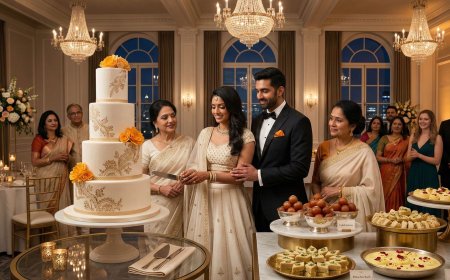
The aunties who have not danced in public for three years. The groomsman from Edinburgh being taught bhangra by the bride's cousins. The grandmother clapping at the edge with an expression better than smiling. The midnight dance floor that becomes the place where the wedding lives is not an accident — it is the result of an entertainment decision made with specific knowledge of what each option genuinely delivers. This guide covers what a good DJ does that a bad one cannot, what the live band offers that no DJ can replicate, the specific role of traditional musicians from dhol to shehnai to classical vocalist, the event-by-event music guide across baraat, mehendi, sangeet, ceremony and reception, the cultural fluency test for DJ bookings, the hybrid approach, and the framework for choosing the option that serves each occasion specifically.


DJ vs. Live Band vs. Traditional Musicians: What to Book
The NRI couple's complete guide to the most consequential entertainment decision of the wedding — understanding what each option genuinely delivers, what the NRI wedding's specific sonic landscape requires, and how to make the choice that serves the occasion rather than the trend
The Dance Floor at Midnight
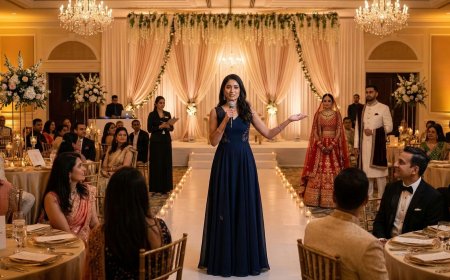
There is a specific moment at every Indian wedding reception — usually somewhere between eleven and midnight, after the formal programme has concluded and the speeches have been made and the first dances have happened — when the dance floor either becomes the place where the wedding lives or the place where the wedding ends.
The dance floor that lives is the one where the aunties who have not danced in public for three years are dancing. Where the groomsman from Edinburgh who has never heard a Bollywood song in his life is dancing, badly and joyfully, between the bride's cousins who are teaching him the moves. Where the grandmother is clapping from her chair at the edge with an expression that is not quite smiling but is better than smiling. Where the music is doing the specific thing that music at its best does — making the individual body part of a collective experience, making the occasion feel like the specific occasion it is rather than a generic event.
The dance floor that ends is the one where the crowd has thinned to the specific group of guests who will dance to anything, where the music is either too loud or too unfamiliar or too relentless or not relentless enough, where the transitions between songs land wrong and the momentum that was building collapses, where the DJ is playing what the brief said to play rather than reading what the room needs.
The difference between these two dance floors is partly the music, partly the volume, partly the playlist — but it is also, significantly, the person or people producing the music. The choice between a DJ, a live band, and traditional musicians is the choice of how the music is produced, controlled, and responded to — and it is a choice whose consequences are felt in the specific quality of the midnight dance floor.
This guide provides the framework for making it well.
Understanding What Each Option Actually Delivers
The DJ: What a Good One Does and What a Bad One Does
The DJ is the most common entertainment choice at NRI wedding receptions — and the most variable in quality across the full range of available practitioners. The gap between a genuinely excellent DJ and an adequate one is wider, and has more impact on the evening's quality, than the gap between equivalent levels of competence in almost any other vendor category.
What a good DJ delivers:
The genuinely excellent DJ is not a playlist manager. They are a reader of rooms — a person whose professional skill is the continuous assessment of what three hundred people in a specific room at a specific moment in a specific emotional state need to hear next, and the ability to provide it seamlessly.
The good DJ brings: an understanding of the Indian wedding's specific sonic landscape — the Bollywood classics that the older generation responds to, the contemporary Punjabi tracks that drive the dance floor for the younger guests, the specific Western tracks that bridge the two communities in the room, and the judgment to move between these registers at the right moment. The technical skill to mix tracks seamlessly — so that the momentum of a building dance floor is not interrupted by a three-second gap between songs. The ability to read the room — to see that the group of aunties who came to the dance floor three songs ago are starting to drift back to their tables and to respond with the specific song that brings them back. The equipment — good sound systems, reliable backup systems, the lighting that works with the music rather than independently of it.
What a bad DJ delivers:
The inadequate DJ is a playlist manager — a person who plays the songs on the agreed list in the agreed order without the specific assessment of what the room needs in the specific moment. The result is the right songs played at the wrong time, the momentum-killing transition, the specific song that was perfect at the beginning of the evening but wrong at eleven-thirty.
The bad DJ also brings: equipment that is not calibrated for the specific room — too much bass that makes conversation impossible, too much treble that becomes fatiguing, volume levels that push guests away from the dance floor rather than onto it. An inability to read cultural cues — the specific moment when the Bollywood mix should give way to the bhangra, or when the bhangra has run its course and the room needs something that bridges back to the international guests. A brief that was agreed weeks before the wedding and that is being followed regardless of what the room is actually doing.
The specific challenge for NRI weddings:
The NRI wedding's specific musical challenge is the dual audience — the Indian family guests whose musical reference points are Bollywood and bhangra and the specific regional music of the family's origin, and the international guests whose musical reference points are Western pop, R&B, and whatever is currently on the mainstream charts. Serving both audiences simultaneously, moving between them without losing either, and creating the specific moments where the two audiences are on the dance floor together — this is the specific skill that the NRI wedding DJ must have and that the briefing process must specifically test for.
The Live Band: What It Offers That the DJ Cannot
The live band at a wedding does something that no DJ can replicate — it creates the specific energy of live performance, the physical presence of musicians producing sound in real time, the specific magic of watching a skilled musician inhabit a piece of music rather than play it from a stored recording.
The energy of live performance:
The live band's energy is transmitted to the audience differently from recorded music. The musicians are physically present, responding to the audience in real time, building and releasing energy through the specific interaction between performers and crowd that recorded music cannot produce. The room that has a live band producing an extraordinary version of a song the audience loves is experiencing something qualitatively different from the room playing the original recording, even if the original recording is objectively better produced.
The visual dimension:
The live band provides a visual spectacle that the DJ booth does not. The horns section, the vocalist, the drummer — the visual energy of watching skilled musicians perform is part of the entertainment offering in a way that the DJ's visual presence rarely is. For weddings where the evening programme includes a dedicated entertainment set before the dancing begins — a live performance that the guests watch before the dance floor opens — the live band is the appropriate format.
The specific Indian wedding band:
The Indian wedding band market includes a range of live music options that are specifically designed for the NRI wedding context — bands that can perform Bollywood classics, bhangra sets, Sufi music, and Western pop and R&B within a single set, with the flexibility to move between these registers in response to the room. The best of these bands are genuinely versatile and genuinely skilled — capable of delivering the specific musical breadth that the NRI wedding requires.
The limitations:
The live band cannot do what the DJ can do: the seamless transition between tracks, the instant access to any song the room needs in the moment, the ability to play any song from any era at any point in the evening. The live band's set list is its set list — it can be varied within the band's repertoire, but it cannot extend to songs the band has not rehearsed. The cover band playing a Bollywood classic is always a cover — and for the guests whose connection to that classic is deep and specific, the cover may be less moving than the original recording played by a skilled DJ.
The live band is also significantly more expensive than the DJ in most markets — reflecting the cost of multiple musicians, the rehearsal time, the equipment, and the production requirements of a live performance. For couples whose entertainment budget is limited, the live band's premium may not be justified by the specific value it adds relative to a genuinely excellent DJ.
Traditional Musicians: The Cultural Dimension
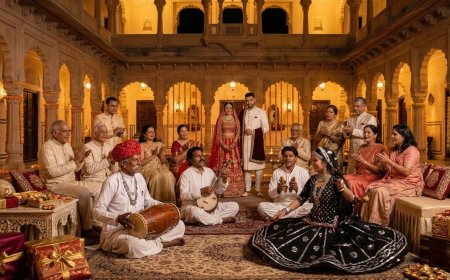
The traditional musician category — the dhol player, the shehnai player, the sarangi player, the tabla player, the classical vocalist performing at the sangeet — is not a substitute for either the DJ or the live band. It is a different function entirely: the function of cultural authenticity, of sonic rootedness in the specific tradition being celebrated.
The dhol:
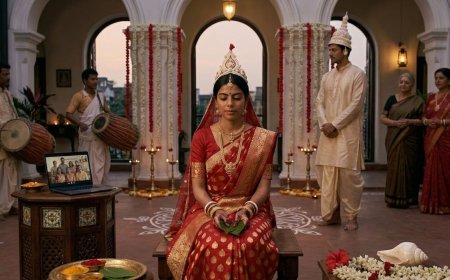
The dhol is the most universally present traditional musician at the Indian wedding — and its presence is one of the most powerful sonic signals available to the Indian wedding. The dhol at the baraat is not background music. It is the specific sound that tells the body that a baraat is happening — that creates the physical response, the instinct to move, the specific joy that is inseparable from the dhol's specific timbre and rhythm.
No recording of a dhol has the same effect as a live dhol player. The physical sound, the visual presence of the musician, the ability to build and release rhythm in response to the crowd — these are specific to the live performance and are not reproducible through amplified recordings.
For NRI couples who are uncertain about many of their entertainment choices, the dhol at the baraat is the one traditional musician booking that requires no deliberation. It is not optional.
The shehnai:
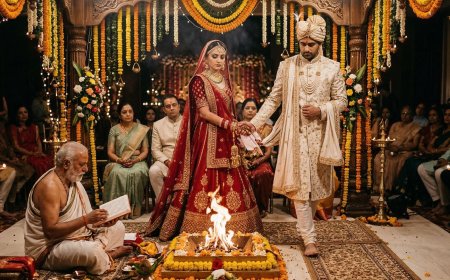
The shehnai — the double-reeded wind instrument whose sound is specifically associated with the auspicious in the Hindu and many North Indian traditions — is the appropriate accompaniment for the ceremony itself. The shehnai played live during the mandap ceremony, during the pheras, during the specific ritual moments — provides a sonic environment that is specifically culturally appropriate in a way that recorded music or a DJ cannot.
The shehnai player at the ceremony is not entertainment in the sense of the evening's DJ or the live band. It is ceremony — the sound that the ceremony has been set to for centuries, whose presence communicates cultural authenticity and whose absence is noticed by those for whom it is a familiar and expected element.
The classical vocalist and accompanying musicians:
The classical vocalist — a Hindustani or Carnatic vocalist performing at the sangeet — is the entertainment choice that positions the sangeet as a culturally serious occasion rather than simply a pre-wedding party. The classical set, typically performed in the earlier part of the sangeet before the dancing begins, creates a specific register — contemplative, sophisticated, culturally rooted — that the DJ and the live band do not produce.
For NRI couples whose family includes guests with a genuine appreciation for Indian classical music — and particularly for weddings that are celebrating a specific regional tradition whose classical music is part of the cultural identity being honored — the classical vocalist is a specific gift to those guests.
The fusion traditional musician:
A growing category of traditional Indian musician has developed specifically for the NRI wedding market — musicians who combine traditional Indian instruments with contemporary contexts. The sarangi player who performs alongside the DJ, creating a live traditional sound layer over contemporary beats. The tabla player whose set moves from classical patterns into contemporary electronic music rhythms. The flautist whose set moves from Hindustani classical into Bollywood and beyond.
These fusion performers serve the specific NRI wedding context well — they bridge the traditional and the contemporary in a way that reflects the NRI identity itself, rooted in tradition and living in modernity simultaneously.
The Event-by-Event Guide: Matching Music to Occasion
The Baraat
The baraat has one essential musician: the dhol player. Everything else is supplementary.
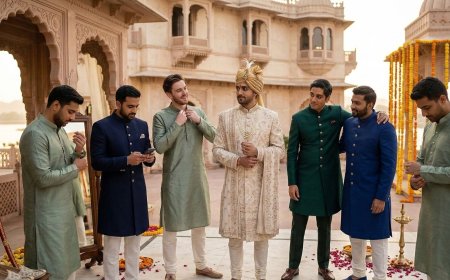
The dhol player should be booked early — good dhol players in major Indian wedding destinations are in demand during peak season and are often booked twelve months in advance. The dhol player should be briefed on the baraat route, the expected duration, and the specific moments — the milni, the groom's arrival at the venue — that require specific musical escalation.
The brass band — the full baraat band with trumpet, trombone, drums, and the specific celebratory chaos of the traditional Indian wedding procession — is the supplementary option for the baraat that wants maximum spectacle. For NRI weddings where international guests are attending the baraat, the brass band's visual and sonic exuberance is one of the most memorable experiences the wedding provides — the specific image of a tuxedo-clad groomsman from Manchester dancing in the street behind a full Indian brass band is a photograph that exists at nearly every NRI wedding and that is never anything other than wonderful.
The DJ set at the baraat — played from a vehicle-mounted sound system — supplements the dhol and the band with Bollywood and bhangra tracks. The vehicle-mounted DJ is common at urban bariats where the processional route is short and the crowd is dense. It adds contemporary energy to the traditional foundation.
The Mehendi
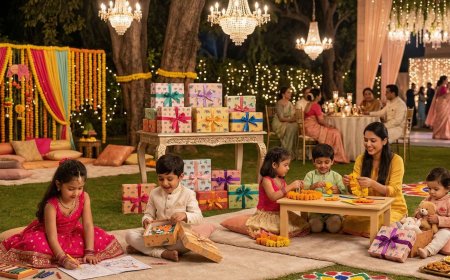
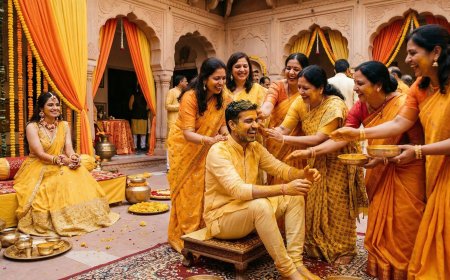
The mehendi is the occasion for live music that is intimate, culturally specific, and participatory — the folk songs that the women of the family sing, the specific mehendi songs of the regional tradition, the music that is made by the people present rather than by a hired performer.
Where professional music is booked for the mehendi, the appropriate format is: a small group of folk musicians playing the regional tradition's mehendi music, a singer who leads the traditional songs and invites the family's participation, or a fusion performer who can create the intimate, culturally rooted atmosphere appropriate for the mehendi's specific character.
The DJ at the mehendi — playing contemporary Bollywood tracks at reception volume — is the choice that converts the mehendi from an intimate cultural occasion into a pre-party. Whether this is the right choice depends entirely on the couple's vision for the mehendi's character. It is a choice, not a default.
The Sangeet
The sangeet is the most musically complex event of the NRI wedding programme — an event that must accommodate the family performances that are its cultural heart, the professional entertainment that frames and elevates those performances, and the dancing that typically concludes the evening.
The sangeet's musical programming has three distinct phases, each requiring different musical provision:
The performance phase: The family performances — the choreographed dances, the musical numbers, the comedy sketches that are the sangeet's specific cultural offering — require a DJ or a live band to provide the backing tracks and the overall sound production. The DJ is typically the more practical option for the performance phase because of the need to play specific tracks at specific moments, with precise timing.
The entertainment phase: The professional entertainment that precedes or follows the family performances — a live singer, a classical vocalist, a celebrity performer at the most lavish sangeets — requires specific sound production and a specific coordination with the overall evening's programme.
The dance phase: The dance floor that opens after the performances — the bhangra and the Bollywood and the specific mix of tracks that keep three generations dancing — requires the DJ's specific skills of room reading and seamless mixing.
The sangeet is the event where the DJ's specific skills are most essential — the ability to coordinate the performance phase's precise musical cues, provide the right sound environment for the entertainment phase, and then build and sustain a dance floor for the evening's conclusion.
The Ceremony
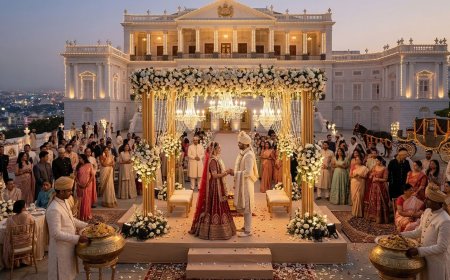
The ceremony's music is entirely distinct from all other event music — it is not entertainment, it is ceremony. The appropriate musical provision for the ceremony depends on the specific tradition being celebrated.
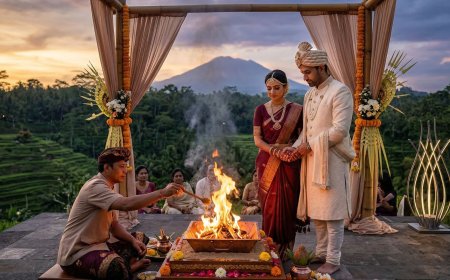
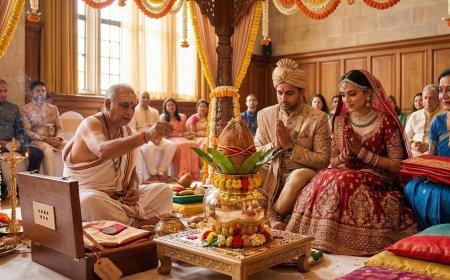
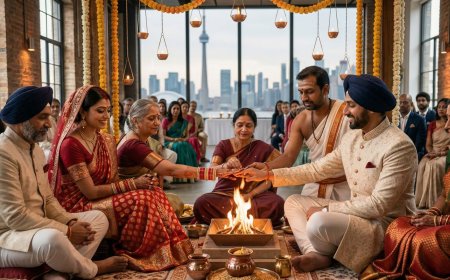
The Hindu ceremony: Shehnai played live throughout the ceremony — at the arrival of the baraat, during the mandap rituals, at the specific moments of the ceremony's progression. Recorded Vedic chants as background for the mantras. The Pandit's recitation is itself a form of music — the specific melodic patterns of the Sanskrit recitation are part of the ceremony's sonic world.
The Sikh Anand Karaj: Kirtan — devotional Gurbani music — performed live by ragis throughout the ceremony. The kirtan is not background music; it is a fundamental element of the Anand Karaj, and the quality of the ragis significantly affects the ceremony's spiritual atmosphere.
The Christian Indian ceremony: A combination of hymns and contemporary Christian music, typically led by a choir or a small ensemble. For NRI couples whose wedding includes a Christian element alongside Indian traditions, the musical provision for this element should be discussed with the officiating minister.
The civil ceremony: Typically minimal formal musical provision — the ceremony's brevity and legal formality does not require the same musical programme as the religious ceremony.
The Reception
The reception is the event that most closely resembles the Western wedding's entertainment format — and it is the event where the DJ versus live band decision has its most significant consequences.
The reception's entertainment programme typically includes: the couple's entrance, the formal first dance, the parent dances, the speeches, the dinner service, and the dance floor. Each of these elements has specific musical requirements.
The entrance and first dance: Whether these are provided by a DJ or a live band is a decision with significant aesthetic consequences. The live band performing the first dance song creates a specific romantic atmosphere that the recorded version cannot replicate. The DJ playing the couple's specific recording of their chosen song provides the exact version the couple has chosen. Both are legitimate choices — the decision depends on whether the live performance's atmosphere or the specific recording's exact sound is more important to the couple.
The dinner service: Background music during dinner — quieter, more ambient, creating atmosphere without competing with conversation — is well served by a live band or a small acoustic ensemble. The jazz trio, the acoustic guitar duo, the string quartet — these provide a live music experience during dinner that is intimate and sophisticated without the volume of the dance floor set.
The dance floor: As described above — the DJ's specific skills of room reading and seamless mixing are most critical here.
The hybrid approach — a live band for the dinner service and the formal first dance, transitioning to a DJ for the dance floor — is the most common premium reception entertainment format and is the approach that uses each option for the function it serves best.
The Booking Process: What to Look For and What to Ask
Auditions and Demos
Every entertainment booking — DJ, live band, or traditional musician — should include an audition or a demo before the booking is confirmed. Not a testimonial, not a video highlight reel, not a website's curated selection of their best moments. An actual audition or a representative demo that shows what the performer does in real conditions, with a real audience.
For DJs: ask for a demo mix — a thirty to sixty minute recording of an actual set from an actual wedding, not a studio-produced promotional mix. The actual set reveals the room reading — the transitions, the pacing, the judgment about what to play when — that the promotional mix conceals behind polish.
For live bands: attend a live performance if possible. If not possible, a full-length live recording of an actual wedding performance — not the promotional video — is the appropriate demo.
For traditional musicians: a live audition at which the musician performs a representative set of what they would perform at the wedding. The shehnai player's live audition is the specific test of whether their sound and their skill match the ceremony's requirements.
The Cultural Fluency Test
For the DJ specifically, the cultural fluency test is the most important element of the audition. The DJ who will serve an NRI wedding must demonstrate: knowledge of the Bollywood and bhangra catalogue across multiple decades, understanding of the specific moments when each register is appropriate, the ability to blend Indian and Western music in ways that serve both communities in the room, and the specific skill of reading an Indian wedding crowd — which is different from reading a Western nightclub crowd or a Western wedding crowd.
The test: ask the DJ to mix a set that moves through classic Bollywood, contemporary Punjabi, and Western tracks in a way that maintains energy and serves a mixed-age, mixed-cultural audience. The resulting mix reveals whether the DJ has genuine fluency in this specific landscape or whether they have added some Bollywood tracks to a primarily Western playlist.
The Technical Assessment
Every entertainment booking requires a technical assessment of the equipment and the setup — an assessment that should happen before the booking is confirmed and should be verified at the venue site visit.
For DJs: Sound system quality and appropriateness for the venue's size and acoustics. Backup equipment — what happens if the primary laptop fails, the mixer develops a fault, the speakers blow. Lighting provision — whether the DJ is providing lighting as part of the package, and whether the lighting system is compatible with the venue's existing provision.
For live bands: The number of musicians and the instrumentation — whether the band's configuration matches the sound the couple expects. The sound system and whether it is provided by the band or requires the venue's system. The setup and soundcheck time — which at an Indian wedding with a tight event programme is a specific logistical consideration.
For traditional musicians: The instrument's condition and the musician's backup provision — particularly for the shehnai, whose reeds can fail, and the dhol, whose skin can be affected by weather conditions.
The Brief and the Contract
The brief for any entertainment booking should be specific — not "play good music" but a detailed description of the event's programme, the audience's demographic and musical range, the specific songs and moments that are non-negotiable, the songs and moments that should be avoided, and the overall atmosphere the couple wants to create.
The contract should specify: the event, the date, the venue, the start and end time, the specific programme elements and their timing, the equipment the entertainer is providing, the setup and soundcheck time required, the payment terms, the cancellation terms, and the specific consequences of non-performance.
For the most important bookings — the reception DJ, the sangeet DJ or live band — the contract should also specify the consequences of the entertainer's failure to deliver to brief. The couple who has paid for an NRI-fluent DJ and who receives a DJ with a primarily Western playlist on the night has a specific grievance that the contract should address.
The Budget Allocation: What Each Option Costs
The entertainment budget for an NRI wedding — across all events and all entertainment categories — is consistently under-allocated relative to its impact on the guest experience. The entertainment is the element that guests feel most directly and remember most clearly — the dance floor at midnight, the dhol at the baraat, the live band during dinner — and it is the element whose quality most directly determines whether the wedding's emotional register reaches the level the couple intends.
The specific budget guidance: allocate entertainment at the level of the florals, not below it. The wedding that has extraordinary flowers and an adequate DJ has chosen the decoration over the experience — and the guests' memory of the experience is longer than their memory of the flowers.
The relative cost guidance across the three options: traditional musicians are typically the most affordable per musician, though the total cost depends on the number of musicians and the event duration. The DJ ranges from modest to premium depending on experience and reputation, with the premium DJ in major Indian wedding markets commanding rates that reflect genuine market demand for their specific skills. The live band is the most expensive option, with cost scaling directly with the number of musicians, the band's reputation, and the event duration.
The hybrid approach — traditional musicians at the ceremony, DJ at the sangeet and reception, live band for the dinner service — is the approach that allocates the budget across the options in proportion to their specific value at each event.
The Decision: The Framework
The decision between DJ, live band, and traditional musicians is not a single decision — it is a series of decisions, one for each event in the wedding programme, each made by applying the same framework.
For each event, ask:
What is this event's purpose — ceremony, intimate cultural gathering, entertainment showcase, or dance floor? What is the audience's demographic and musical range — the specific combination of ages, cultural backgrounds, and musical reference points that the music must serve? What is the venue's acoustic environment — the outdoor courtyard that needs projection, the ballroom with natural acoustics, the intimate garden where amplification should be minimal? What is the event's programme — the specific moments that need specific musical support, the transitions between elements, the overall arc from beginning to end? What is the budget — the specific amount available for this event's entertainment, and how does it compare to the cost of each option at the quality level the event requires?
The answers to these questions, applied to each event, produce an entertainment programme that serves each occasion specifically rather than a single choice applied uniformly across a programme that is not uniform.
The Midnight Dance Floor, Revisited
The dance floor at midnight is the test of all the decisions that preceded it — the DJ who was chosen for genuine NRI fluency, the dhol player whose baraat set built the evening's energy from its first moment, the live band whose dinner set created the atmosphere that opened into the dancing, the sangeet's musical programme that brought the audience to the dance floor hours before the reception began.
The grandmother clapping at the edge. The groomsman from Edinburgh being taught the moves by the bride's cousins. The aunties who have not danced in public for three years dancing. The music doing the specific thing that music at its best does.
This is what the entertainment decision is for. Not the vendor category — not DJ versus live band versus traditional musicians in the abstract — but the specific midnight that the choice produces.
Choose for that midnight. Everything else follows.
NRIWedding.com — Expert guidance for Indian weddings planned across borders.
What's Your Reaction?
 Like
0
Like
0
 Dislike
0
Dislike
0
 Love
0
Love
0
 Funny
0
Funny
0
 Angry
0
Angry
0
 Sad
0
Sad
0
 Wow
0
Wow
0