



















































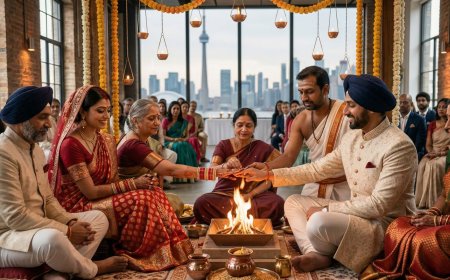



Before the Vows, Before the Fire, Before Everything — There Is Ganesh
Ganesh Puja is the sacred first ritual of every Hindu wedding — and for NRI couples planning ceremonies across London, Toronto, Dubai, Sydney, and Houston, getting it right from abroad is both a logistical and deeply emotional undertaking. This comprehensive guide covers the spiritual significance of invoking Ganesha before marriage, regional variations across ten Indian communities, practical advice on finding region-specific pandits abroad, sourcing ritual items in diaspora cities, and coordinating with family in India via video call.


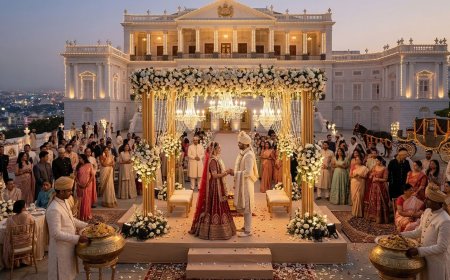
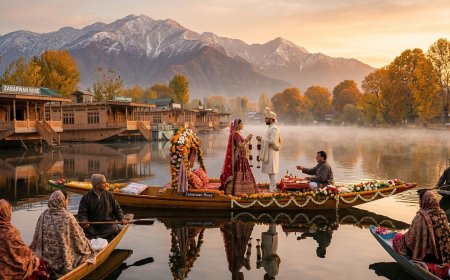
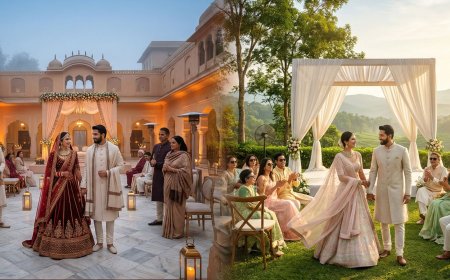
In Hindu wedding culture, no ceremony begins without first honouring the one who clears the path. Ganesh Puja is the sacred threshold ritual that opens every Hindu wedding, and for NRI couples planning ceremonies across continents, it carries a particular weight — the weight of wanting everything that follows to be protected, blessed, and begun correctly. This is the ritual that reminds the diaspora that some things must be done in order, and that order itself is a form of love.
You grew up knowing his face before you knew almost anything else. The curved trunk, the kind eyes, the broken tusk held like a pen, the mouse at his feet. He was on the wall above your parents' front door in Brampton, on the dashboard of your uncle's car in Birmingham, on a small brass plate in the kitchen of every Indian home you ever visited growing up. You did not always know why. You just knew he was there first, before everything else, and that this meant something.
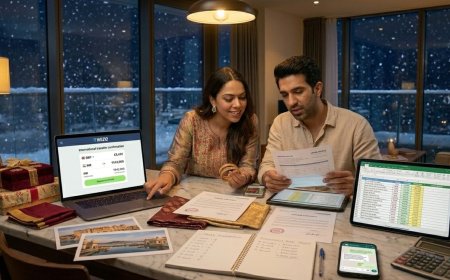
Now you are planning a Hindu wedding — in Vancouver, in Dubai, in Melbourne, in some rented venue that smells of carpet cleaner and possibility — and someone, probably your mother, has said the words you knew were coming: "We cannot begin anything without doing Ganesh Puja first." And you know she is right. You have always known she is right. What you need now is someone to tell you exactly how.
This article is that someone.
🌟 DID YOU KNOW?
Ganesh is mentioned in the Rigveda, one of the oldest texts in human history, dating back to approximately 1500 BCE — making the tradition of seeking his blessings before important endeavours one of the longest continuously observed spiritual practices on earth.
The Ganapati Atharvashirsa, a dedicated Upanishadic text devoted entirely to Ganesha, declares him the embodiment of the entire cosmos — not merely a deity of good luck, but a philosophical concept representing the principle that all beginnings contain within them the potential for all endings.
According to community surveys among Hindu diaspora in the UK, US, and Canada, over 87% of NRI Hindu couples report performing some form of Ganesh Puja before their wedding ceremony — making it the single most universally observed pre-wedding ritual across all regional traditions, transcending caste, language, and state of origin.
What Is Ganesh Puja?
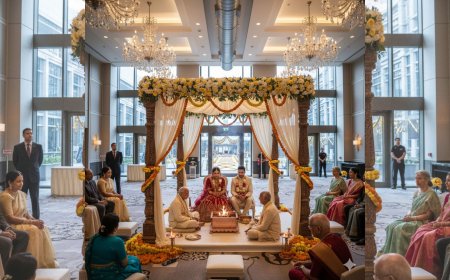
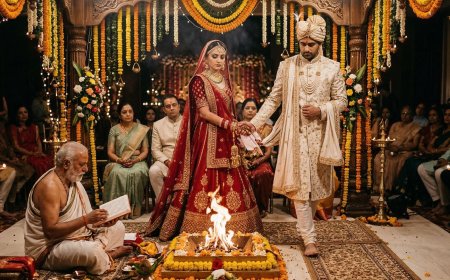
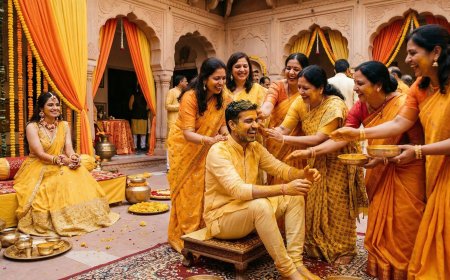
Ganesh Puja [the ritual worship of Lord Ganesha, the elephant-headed son of Shiva and Parvati, remover of obstacles and lord of new beginnings] is the ceremonial act of invoking Ganesha's presence and blessings before any significant undertaking in Hindu life. In the context of a wedding, it is always the first ritual performed — before the haldi [turmeric ceremony], before the mehendi [henna night], before the baraat [groom's procession], and certainly before the saat phere [seven circumambulations of the sacred fire]. Nothing begins until Ganesh is honoured.
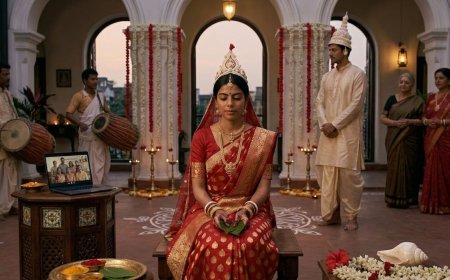
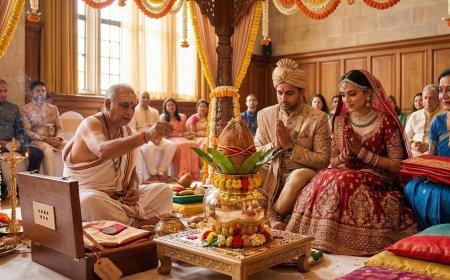
The puja itself follows a structured sequence known as the shodashopachara [sixteen-step offering] in its complete form, though wedding Ganesh Pujas are often performed in an abbreviated version called the panchopachara [five-step offering] appropriate to the occasion. The priest — called a pandit or purohit — establishes a sacred space, typically marked with a chowki [low wooden platform] draped in red or yellow cloth. A clay or brass image of Ganesha, or sometimes a living sthapana [ritual installation] created from betel nut and turmeric, is placed at the centre. The priest then performs avahana [invocation], calling Ganesha into the image. This is followed by offerings of durva grass [a specific three-bladed grass sacred to Ganesha], modak [sweet dumplings, Ganesha's favourite food], red flowers, akshat[whole unbroken rice grains mixed with turmeric], and sindoor [vermillion powder].
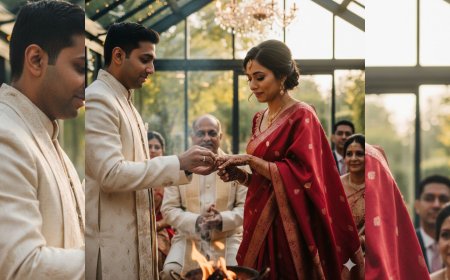
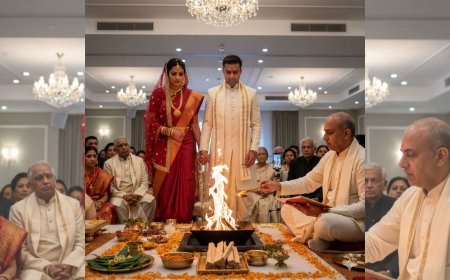
The couple — and often both sets of parents — sit before the image together. Mantras from the Ganesha Atharvashirsaare recited. An aarti [circular offering of light using a flame] is performed. Prasad [blessed food] is distributed. The entire ritual, done properly, takes between thirty minutes and two hours depending on regional tradition.
What makes it spiritually essential is its function: Ganesha is Vighnaharta [remover of obstacles] and simultaneously Vighnakarta [creator of obstacles for those who proceed without humility]. Performing the puja is an act of conscious acknowledgement that the couple cannot proceed on will alone — they begin by surrendering, by asking, by placing what comes next in hands larger than their own.
Community Comparison: Ganesh Puja Across Indian Traditions
| Community / State | Local Name | Key Tradition | How NRIs Abroad Adapt It |
|---|---|---|---|
| Himachali | Ganesh Puja / Ganpati Sthaapna | Performed by family purohit at the bride's home before any pre-wedding ritual begins; clay Ganesha made fresh by women of the house | Clay image shaped by eldest female relative; purohit joins via video call for mantra recitation if unavailable abroad |
| Garhwali | Gauri-Ganesh Puja | Ganesha worshipped alongside Gauri [goddess Parvati] as a paired invocation; marigold garlands and local hill flowers used | Parvati image added alongside Ganesha idol; marigolds sourced from Indian florists in diaspora cities |
| Kumaoni | Swasti Vachan with Ganesh Sthaapna | Ganesha installation accompanied by swasti vachan [vedic peace chanting] by multiple priests; coconut placed as primary symbol | Single pandit performs combined ritual; coconut and durva grass sourced from Indian grocery stores |
| Ladakhi | Adapted from Tibetan Buddhist and Hindu blend | Urban Ladakhi Hindu families perform standard Ganesh Puja; some incorporate butter lamp offerings reflecting Buddhist influence | Both traditions honoured; pandit performs Hindu puja, butter lamps lit alongside as family tradition |
| Kashmiri Pandit | Ganesh Puja / Lagnopavit | Performed as part of the Lagnopavit ceremony; Ganesha drawn in rice flour on a wooden platform rather than using an idol | Rice flour drawing recreated by family elder; pandit performs via video call with family following instructions live |
| Punjabi | Ganesh Puja | Often combined with the Ardas [Sikh prayer] in mixed families; for Hindu Punjabi families, full puja performed at home mandir before venue events begin | Home mandir used if available; portable altar assembled at venue; pandit sourced through gurudwara community networks |
| Marathi | Ganapati Puja | Among the most elaborate in India given Maharashtra's deep Ganesha devotion; Ganapati Atharvasheershha recited in full | Full recitation performed by Marathi-speaking pandit — specifically sought as the text requires precise pronunciation |
| Tamil | Pillayar Puja | Pillayar [Tamil name for Ganesha] worshipped with kolam [rice flour floor design] drawn at entrance; coconut broken as offering | Kolam drawn by bride or mother at venue entrance; coconut breaking performed symbolically if venue restricts mess |
| Bengali | Ganesh Puja / Siddhi Ganesh Vandana | Less central in Bengali Hindu tradition historically; increasingly incorporated in modern Bengali weddings; dhak [large drum] played during aarti | Dhak player hired from Bengali community associations in London, Toronto, and Melbourne |
| Rajasthani | Ganesh Sthapna | Highly elaborate; sthapna performed with a living betel nut Ganesha; family women sing mangal geet [auspicious songs] throughout | Betel nut Ganesha assembled by pandit; mangal geet recordings or live singing by family women substituted |
The Meaning Behind the Ritual
Ganesha's form is not accidental. Every element of his iconography is a philosophical statement. His elephant head represents the buddhi [intellect] — large, capable of seeing what smaller minds miss. His large ears are designed for deep listening. His small mouth suggests speaking less. His generous belly holds the entire universe without complaint. The broken tusk he writes with tells you that creation sometimes requires sacrifice — and that what is lost in the process of making something meaningful is not a flaw but a feature.
The mushak [mouse] at his feet is perhaps the most profound element of all. A mouse can enter anywhere — through the smallest crack, under the heaviest door. By placing this creature under his feet, the tradition says: even the impossible passages are available to those who are blessed. The obstacles you cannot see, the problems you have not yet encountered, the fears that have no name yet — all of these fall within Ganesha's jurisdiction.
For NRI couples beginning their wedding with this puja, the ritual carries an additional layer: it is an act of choosing. Choosing to begin with gratitude rather than anxiety. Choosing to acknowledge something larger than the logistics, the budget, the venue contract, the two families who may not yet know each other well enough.
For a non-Indian partner or family member trying to understand: this is how we ask the universe to clear the road before we drive — not out of superstition, but out of the understanding that humility, offered at the start, is the most powerful thing you can bring to anything that matters.
Doing Ganesh Puja Abroad: The Practical Reality
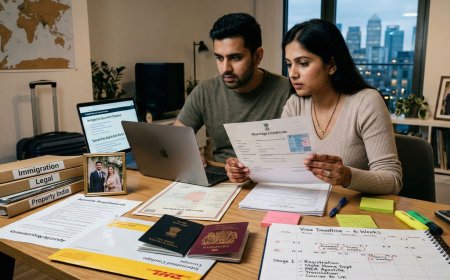
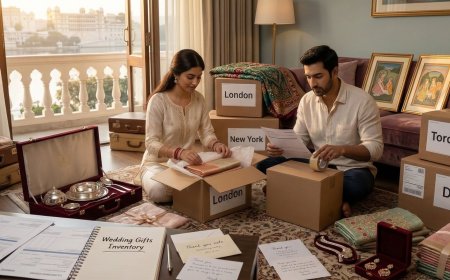
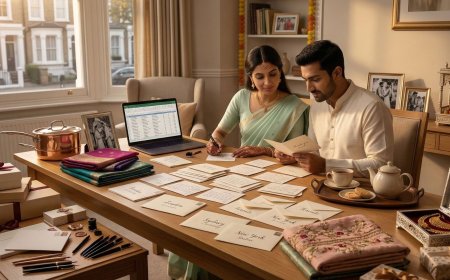
This is where the love meets the logistics — and for NRI couples, getting Ganesh Puja right abroad requires planning that your parents' generation simply did not have to do, because theirs was always done at home, in a known space, with a known pandit.
Finding the Right Pandit: This is the most critical element, and the one where NRI couples most often compromise unnecessarily. Ganesh Puja mantras vary significantly by regional tradition — a South Indian pandit reciting Tamil Shaivite invocations will perform a meaningfully different puja from a Garhwali purohit following Pahari tradition. For most NRI couples, the priority is finding a pandit fluent in Sanskrit who understands your family's regional school of practice. In London, the Hindu temples in Neasden, Wembley, and Tooting maintain active pandit directories. In Toronto, the Hindu temples along Dixie Road in Mississauga and the BAPS Swaminarayan Mandir in Etobicoke are reliable starting points. In Sydney, the Parramatta area has an established network of pandits serving the diaspora. In Dubai, the Hindu Temple in Bur Dubai is the single most important resource for any NRI couple planning a Hindu ceremony in the UAE. In Houston, the Meenakshi Temple in Pearland is a world-class resource. Contact these institutions three to four months before your wedding date.
The Idol and Sacred Items: A brass or copper Ganesha murti [sacred image] is available at virtually every Indian store in every major diaspora city. For Southall in London, the Broadway has multiple puja stores. In Toronto, the Gerrard India Bazaar and Dixie Road stores stock complete puja kits. In Sydney, Harris Park's Indian shops carry everything from durva grass to modak moulds. If your family prefers a fresh clay Ganesha in the Maharashtrian tradition or a betel nut installation in the Rajasthani style, your pandit can guide the assembly.
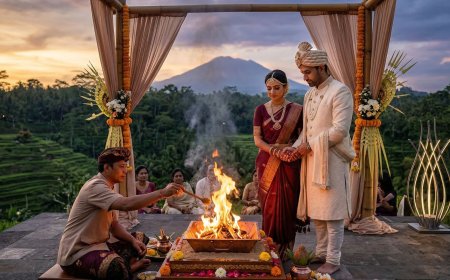
Fire and Smoke at Western Venues: Many Western venues have strict smoke detector policies that complicate traditional havan [sacred fire] elements. For Ganesh Puja specifically, the good news is that a full and complete puja can be performed without havan — the fire is associated more with the main wedding ceremony. The deepak [oil lamp] used in the aarti can typically be accommodated by informing venue management in advance. Use a ghee lamp rather than incense if smoke restrictions apply — the light is what matters most.
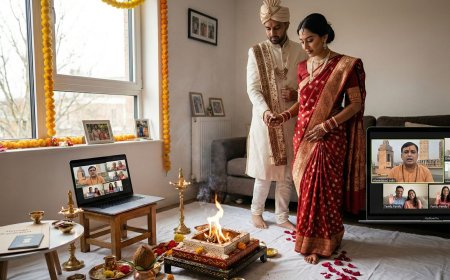
Coordinating with India via Video Call: Set up the call before the puja begins — not during. Test the connection. Position the camera so that relatives in India can see both the image of Ganesha and the couple's faces clearly. For families joining from Delhi or Mumbai, a morning puja at 9:00am UK time corresponds to 2:30pm IST — a civilised hour for everyone. For families joining from the US East Coast with India relatives, a 7:00am EST start reaches India at 5:30pm IST. Designate someone on each side to manage the call so the pandit is not interrupted.
Doing Ganesh Puja as a Destination Wedding in India
If you are bringing your wedding back to India, Ganesh Puja becomes an entirely different experience — richer, louder, and full of the specificity that only a home context provides.
Varanasi, Tirupati, Nashik, and Ujjain are among India's most spiritually potent locations for any Hindu puja, and a Ganesh Puja performed in these cities carries the weight of the landscape itself. For families whose roots are in Maharashtra, the Ashtavinayak [eight sacred Ganesha temples of Maharashtra] circuit offers the extraordinary option of performing the puja at one of Ganesha's own homes. For Rajasthani families, the Trinetra Ganesha Temple in Ranthambore is among the most revered in the country.
When briefing local pandits on your specific regional custom, provide a written note — in Hindi if possible, translated by a family elder — specifying your gotra [ancestral lineage], your regional school of practice, and any family-specific variations you follow. Experienced destination wedding pandits in these cities are well-accustomed to serving NRI families and will adapt accordingly. For non-Indian guests, a brief printed explanation of the puja's meaning transforms observers into participants.
What You Need: Ganesh Puja Ritual Checklist
Ritual Items A Ganesha murti in brass, copper, or clay; red or yellow cloth for the chowki; durva grass; modak [fresh or store-bought]; red hibiscus flowers; marigold garlands; akshat [unbroken rice with turmeric]; sindoor; a deepak with ghee or oil; camphor for aarti; incense [if permitted]; a coconut with husk; betel leaves and betel nuts; fresh fruit as offering; a kalash [copper or brass pot filled with water, mango leaves, and coconut] representing abundance; and panchamrit [a mixture of milk, honey, sugar, yoghurt, and ghee for ritual bathing of the idol].
People Required The pandit or purohit, the couple, both sets of parents, and a designated family elder to perform the first aarti. A family member to manage the video call for India-based relatives, and someone to distribute prasad at the close.
Preparation Steps Source your pandit three to four months ahead. Confirm ritual item availability in your city two weeks before. Prepare the puja space the evening prior. Brief non-Indian family members with a short written explanation the day before. Set up and test the video call one hour before the puja begins.
NRI.Wedding's verified pandit directory includes region-specific priests across the UK, US, Canada, UAE, and Australia. Our vendor network can source complete puja kits delivered to your venue. Let us handle the searching.
5 Questions NRI Couples Always Ask
Can we do Ganesh Puja at a hotel or banquet hall rather than a temple or home?
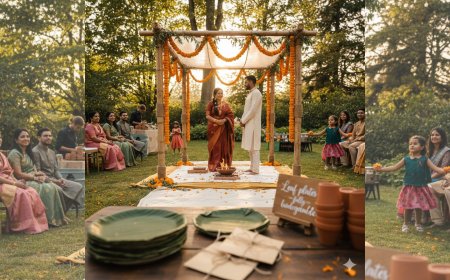
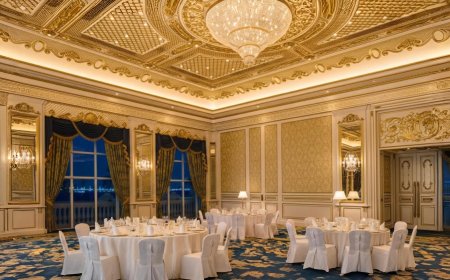
Absolutely — and most NRI couples do exactly this. The sacred space is created by the pandit through the ritual itself, not by the location. What matters is that a clean, designated area is set aside, that the chowki is elevated and facing east if possible, and that the immediate surroundings are respectful. Inform your venue coordinator that you will be setting up a small ritual altar and that an oil lamp will be used — almost all venues accommodate this with advance notice.
My partner is not Hindu. How do we include them meaningfully in Ganesh Puja?
The most beautiful approach is to have them sit beside you throughout, receive the tilak [sacred mark applied to the forehead] from the pandit at the close of the puja, and partake of prasad. The pandit can offer a brief spoken explanation in English at key moments — many NRI-experienced pandits do this naturally. Some couples ask the pandit to explain each offering as it is made, turning the ritual into a shared act of learning and witnessing. A non-Hindu partner who approaches the puja with openness often describes it as one of the most profound experiences of the entire wedding.
How do I find a pandit abroad who follows my specific regional tradition?
This requires specificity when you make contact. Do not simply ask for "a Hindu pandit" — ask for a pandit familiar with your gotra, your regional school of practice, and any family-specific traditions you observe. Community temples in your city are the best starting point; beyond that, NRI.Wedding's pandit directory filters by regional tradition, which saves considerable time. If no suitable pandit is available locally, some families have their pandit in India join the puja entirely via video call, with a locally sourced assistant pandit managing the physical elements on the ground.
How do we make the video call work for elderly relatives who are not tech-savvy?
Assign someone in India — a younger cousin, a trusted neighbour — to set up the device and manage it for the elderly relatives. A 10-inch tablet on a stable stand works better than a phone for visibility. Brief this person on what to expect and when the key moments occur so they can ensure the right people are watching at the right time. WhatsApp video, for all its limitations, is the most universally accessible platform across generations in India and is a reliable choice.
Does Ganesh Puja need to happen before the civil marriage ceremony as well?
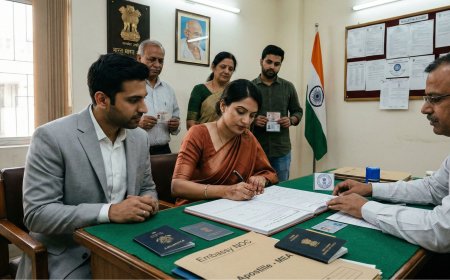
The Ganesh Puja is specifically tied to the Hindu religious ceremony and its associated pre-wedding rituals — it is not required before a civil registration. However, many NRI families choose to perform a brief, informal Ganesha aarti at home on the morning of the civil ceremony as a personal act of blessing, distinct from the formal puja performed before the main religious wedding. This is a beautiful practice and requires no pandit — simply a family elder, a lit lamp, and the intention to begin well.
The Emotional Angle
There is a particular kind of NRI parent who holds it together through everything — through the venue negotiations, through the guest list arguments, through the flight bookings and the currency conversions and the twelve time zones separating them from the people they most want at the table. They hold it together until Ganesh Puja begins.
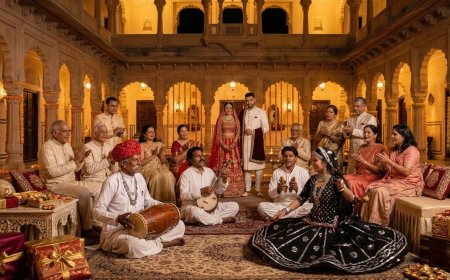
Something about the moment the pandit lights the lamp and the first mantra fills the room — something about the smell of camphor and ghee in a hired hall in a country where that smell has no business being so vivid — undoes them completely. Because this is not just a ritual. This is the proof that they made it. That they crossed the water, built the life, raised the child, and the child is here, sitting before Ganesha in a rented venue in a foreign city, beginning their life the correct way. The way their parents taught them. The way their parents' parents taught them. The chain unbroken.
NRI families do not perform Ganesh Puja because they are superstitious. They perform it because it is the one moment in the entire wedding where they are not performing for anyone. They are simply asking. Hands open, heads bowed, everything they love gathered in one room, saying: please let this go well. Please protect what we are building here.
Ganesha, by all accounts, listens.
A Moment to Smile
At a wedding in Southall two years ago, the family had sourced every ritual item with military precision — the durva grass, the modak, the kalash, the perfectly polished brass murti. What they had not accounted for was the venue's industrial air conditioning, which activated automatically at 9:00am and proceeded to blow the akshat rice directly into the pandit's face at the precise moment he was attempting a particularly sonorous mantra.
The pandit paused. He looked at the ceiling vent. He looked at the bride's father, who was already trying not to laugh. He said, in perfect calm, "Ganesha is testing us," and resumed the mantra from the beginning without missing a syllable.
The bride's father later said it was the funniest and most sacred thirty seconds of his entire life. The pandit received a standing invitation to every family event thereafter. The air conditioning was taped shut for the rest of the ceremony.
Quotes from the Diaspora
"Our pandit in Toronto told us that Ganesh Puja is not about asking Ganesha to remove every obstacle — it is about asking him to help you become the kind of person who can handle them. That changed how I thought about the whole wedding. We weren't asking for perfection. We were asking for strength." — Ananya Sharma, Punjabi-Hindu community, Toronto
"My daughter-in-law is Irish. She sat through the entire Ganesh Puja with her hands folded and her eyes completely open, taking in everything. At the end she asked the pandit what the mouse meant. His explanation made her cry. She wears a small Ganesha pendant now. She chose that herself." — Meena Iyer, Tamil Brahmin community, Leicester
"We did the Ganesh Puja in our living room in Houston at 7am before driving to the venue. Just the four parents and the two of us. No guests, no photographer. I am so glad we did it that way. That was the realest moment of the entire three days." — Riya Desai, Gujarati community, Houston
Your Roots Travel With You
Somewhere right now, a pandit is arranging marigolds on a chowki in a hired room in a city that has never heard of durva grass. A bride is sitting cross-legged in a wedding lehenga that took six months to source. A father is trying to remember the words to a prayer he has not said aloud since his own wedding, thirty years ago in a different country, in a different life that somehow led here. The lamp is lit. The mantra begins.
This is what NRI.Wedding exists to protect — not just the logistics of Indian weddings abroad, but the living reality of them. Our verified pandit network, our regional vendor directory, our destination wedding coordinators and our planning checklists exist so that when you sit before Ganesha on your wedding morning, every element is exactly as it should be. Let us carry the planning. You carry the prayer.
Begin as your parents began, and their parents before them. Begin with Ganesh.
This article covers Ganesh Puja — the sacred pre-wedding blessing ritual in Hindu weddings — across Punjabi, Tamil, Marathi, Bengali, Rajasthani, Kashmiri Pandit, Garhwali, and Kumaoni communities, with complete practical guidance for NRI couples in London, Toronto, Houston, Dubai, Sydney, and Mississauga planning authentic Hindu ceremonies abroad or as destination weddings in India.
What's Your Reaction?
 Like
0
Like
0
 Dislike
0
Dislike
0
 Love
0
Love
0
 Funny
0
Funny
0
 Angry
0
Angry
0
 Sad
0
Sad
0
 Wow
0
Wow
0