













































The Oldest Christian Wedding on Earth — and How NRIs Are Carrying It Across Oceans
Kerala's Mar Thoma and Syrian Orthodox Christian communities preserve one of the world's oldest wedding liturgies, rooted in Syriac prayer, the sacred minnu pendant, and ancient covenant rituals dating back to 52 AD. For NRI couples across Houston, Toronto, Melbourne, Dubai, and London, recreating these ceremonies abroad demands careful planning, the right priest, and deep cultural knowledge. This guide covers every ritual, diaspora adaptation, vendor sourcing tip, and pandit-finding strategy — making it the definitive resource for Kerala Christian NRI couples planning their wedding anywhere in the world.


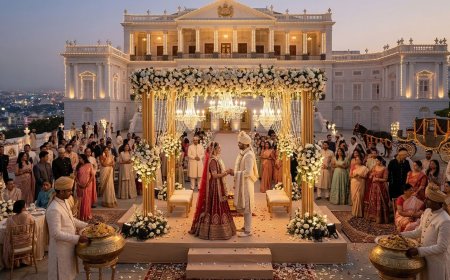
Kerala's Mar Thoma and Syrian Orthodox Christian communities carry one of the oldest living wedding liturgies on earth — a tradition so intertwined with spice routes, Syrian bishops, and coconut-fringed altars that it feels less like a ceremony and more like a civilisation remembering itself. For NRI families from Kottayam, Thiruvalla, and Pathanamthitta now scattered across Houston, Melbourne, Toronto, and Dubai, these weddings are not just celebrations — they are acts of cultural resurrection.
You grew up watching your ammachi pull out a worn Bible with a brass cross on the cover, the pages soft with decades of thumbing. You heard the word Marthomite or Jacobite before you understood what it meant. You knew your family's church back home had an altar that smelled of frankincense and beeswax, and that the priest wore an embroidered vestment that looked like it belonged in another century — because it did.
Now you're in Toronto, or Melbourne, or somewhere in the Dallas suburbs, and you're planning a wedding. You want the pranthal [ceremonial wedding canopy], the minnu [the sacred wedding pendant], the koorai saree [the silk wedding saree gifted by the groom's family] — all of it. You want your non-Indian partner to stand inside that liturgy and feel what you have always felt: that you come from somewhere ancient, somewhere serious, somewhere full of grace.
This is that guide. Written for you.
🌟 DID YOU KNOW?
The St. Thomas Christian tradition in Kerala traces its origins to 52 AD, when the Apostle Thomas is believed to have landed in Cranganore (modern Kodungallur). This makes Kerala Christian wedding rites among the oldest continuously practised Christian ceremonies on earth — predating the Roman Catholic Church's formalized liturgical traditions by centuries.
The Syrian Orthodox and Mar Thoma wedding liturgy is conducted in Syriac — a dialect of Aramaic, the language Jesus himself spoke. Many NRI couples hearing these prayers for the first time as adults describe the experience as emotionally overwhelming.
According to community surveys within the Kerala Christian diaspora in the UK and Canada, over 78% of second-generation NRI couples from Mar Thoma and Syrian Orthodox backgrounds actively seek to incorporate the full traditional church liturgy into their wedding, even when the civil ceremony takes place in a completely different country.
WHAT IS A KERALA CHRISTIAN (MAR THOMA & SYRIAN ORTHODOX) WEDDING?
The Kerala Christian wedding is not one ceremony but a layered sequence of rituals that unfolds across two or three days, rooted in a theology of covenant, community, and cosmic witness. The Mar Thoma Sabha [Mar Thoma Church, a reformed Syriac church] and the Malankara Orthodox Syrian Church [also known as the Jacobite or Syrian Orthodox Church] share deeply interwoven ceremonial DNA, though they differ in certain liturgical details and ecclesiastical allegiances.
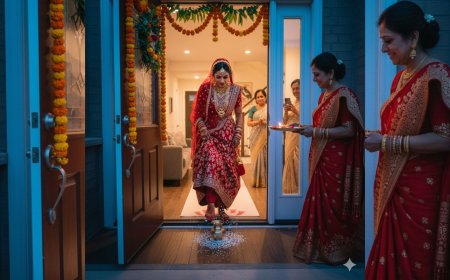
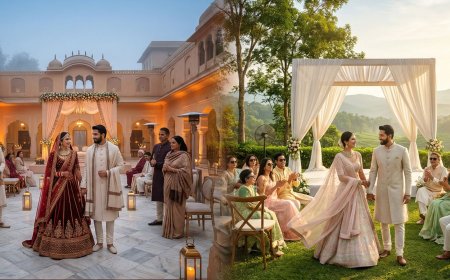
The pre-wedding sequence typically begins with the Nirnayam [the formal betrothal ceremony], where both families gather at the bride's home, the groom places a ring on the bride's finger, and elders from both sides offer formal blessings. This is followed on the wedding day by the Muhurtham [the auspicious wedding hour, retained in Christian practice as the appointed church time], at which the bride is dressed in the pattusaree [silk saree] — usually in off-white, gold, or deep red — gifted by the groom's family.
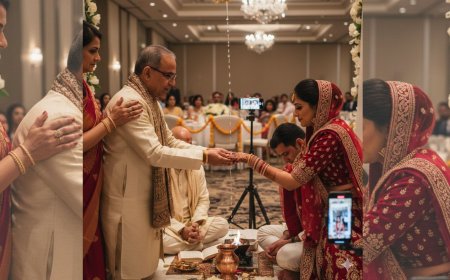
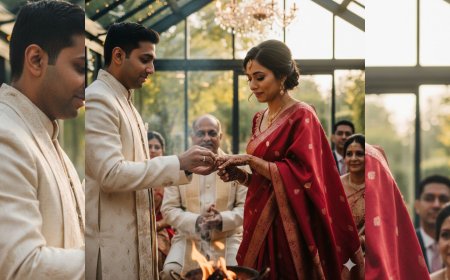
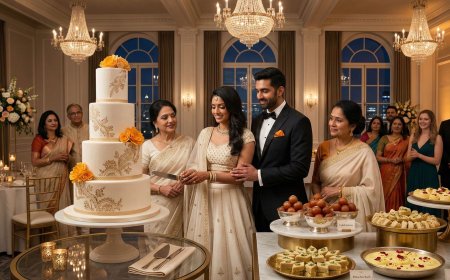
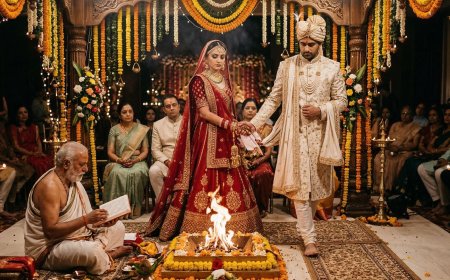
At the church, the central act is the tying of the minnu [a small gold pendant shaped like a cross with seven beads representing the seven sacraments], which the groom places around the bride's neck. This replaces the mangalsutra in Hindu tradition but carries its own profound theological weight. The priest joins the couple's hands with a manthrakodi[the ceremonial white and gold cloth] while passages from the Song of Solomon and the Gospel of John are recited in Syriac. The ceremony concludes with the thali tying, the exchange of garlands, and the priestly blessing.
What makes this liturgy extraordinary is its layering — Hindu customs of South India have been absorbed into a Christian framework over two thousand years, producing something that belongs entirely to neither world and entirely to both.
COMMUNITY COMPARISON TABLE
| Community / State | Local Name for Wedding Ritual | Key Tradition | How NRIs Abroad Adapt It |
|---|---|---|---|
| Kerala – Mar Thoma | Kalyana Krama | Full Syriac liturgy, minnu tying, manthrakodi ceremony | Conduct church service at local Mar Thoma or affiliated parish; stream to India |
| Kerala – Syrian Orthodox (Jacobite) | Jacobite Kalyanam | Koorai saree presentation, frankincense-heavy liturgy, priestly hand-joining | Fly in Malankara Orthodox priest; use diaspora parish networks |
| Kerala – Roman Catholic (for comparison) | Pelli | Latin/Malayalam Mass, ring exchange, floral canopy | Adapt at local Catholic church with visiting Indian priest |
| Kerala – CSI (Church of South India) | CSI Vivaha | Simpler liturgy, emphasis on congregational singing | Easier to adapt at any Protestant church abroad |
| Goa – Catholic | Roza / Roce | Pre-wedding milk and coconut oil ritual, Portuguese-influenced Mass | Roce ceremony held at home; church Mass at local parish |
| Tamil – Christian (Nadar/Vellalar) | Kalyana Sadhyam | White and gold saree, church blessing, feast | Adapted with Tamil Christian communities in UK/Canada |
| Punjabi – Christian | Anand Karaj / Church Wedding | Often a blend of Sikh and Christian elements | Cross-cultural adaptations common in UK diaspora |
| Bengali – Christian | Biye | Church ceremony with sindoor sometimes retained | Community churches in London/Toronto often host |
| Himachali – Christian convert communities | Vivah Sanskar | Church ceremony blended with pahadi folk elements | Rare; usually revert to full church-only format abroad |
| Rajasthani – Christian (Bhil converts) | Sagai + Church | Engagement ceremony with local church blessing | Simplified formats used in diaspora contexts |
THE MEANING BEHIND THE RITUAL
To understand a Kerala Christian wedding is to understand two thousand years of a community refusing to disappear. The minnu is not simply jewellery — it is a theological statement. The cross at its centre declares faith; the seven beads declare sacrament; the black thread on which it historically rested declared mourning for Christ and triumph over death simultaneously. When the groom ties it, he is not merely marking a woman as his wife — he is placing her inside a covenant that stretches back through his grandparents, through the bishops of Antioch, through the Apostle Thomas walking barefoot on Malabar sand.
The manthrakodi — that length of white cloth joining two sets of hands — speaks to the Indian understanding that marriage is not a private contract between individuals but a public, cosmic joining that requires witnesses both human and divine. The frankincense smoke that fills the church is not decoration; it is the ancient Hebrew understanding, absorbed through Syriac Christianity, that prayer rises like smoke toward heaven and that God is present in the midst of it.
The retention of South Indian customs — the silk saree, the garland exchange, the ceremonial threshold moments — reflects a community's understanding that faith does not erase culture. It sanctifies it.
For a non-Indian partner or family member trying to understand: think of this as the moment when two families don't just merge — they enter a shared story that is older than any nation either of them comes from.
DOING A KERALA CHRISTIAN WEDDING ABROAD: THE PRACTICAL REALITY
This is where most NRI couples from Mar Thoma and Syrian Orthodox backgrounds hit their first wall: finding a priest who not only belongs to the right denomination but knows the Syriac liturgy in its proper form. The global Mar Thoma diaspora has established parishes in Houston (Mar Thoma Church of Houston, Sugar Land area), Toronto (multiple parishes across the GTA including Mississauga), Melbourne (Eastern Melbourne Mar Thoma congregation), and London (Southall and Harrow areas host both Mar Thoma and Malankara Orthodox congregations). Your first call should be to your nearest parish priest — even if you haven't attended regularly, these communities are extraordinarily welcoming to diaspora couples coming home to their tradition for their wedding.
For Syrian Orthodox (Jacobite) couples, the situation is slightly more complex because the Syriac liturgy used is stricter and some families specifically want a Remban [a celibate bishop-monk priest] to officiate, which requires advance planning and coordination through the diocesan office in Kottayam. If you're in Dubai, the Malankara Orthodox community on the outskirts of Sharjah has an active congregation. In Sydney, the Parramatta area has a growing Malankara Orthodox presence.
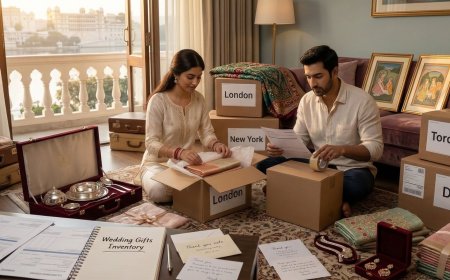
For sourcing ritual items abroad, the minnu is the non-negotiable item that most NRI families have carried from Kerala or had sent by relatives. Do not try to substitute this. For the pattusaree and koorai saree, Indian textile shops on Ealing Road in London's Wembley area, Gerrard Street in Toronto's east end, and Oak Tree Road in Edison, New Jersey carry Kerala silk. In Houston, Hillcroft Avenue has dedicated South Indian stores. In Melbourne, the Dandenong market area has Tamil and Malayali vendors who understand what you need when you say "off-white Kanchipuram with gold border."
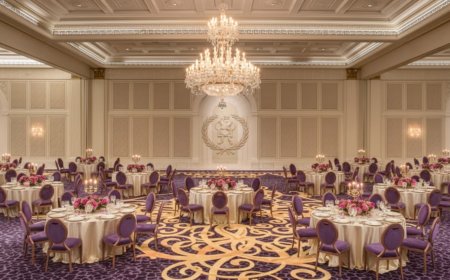
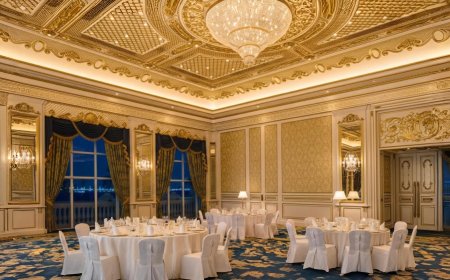
Venue fire restrictions are real. Most churches abroad will permit small amounts of frankincense in a thuribulum [censer] — speak to your officiating priest about this in advance. Candles are almost universally permitted. If your ceremony is at a non-church venue (a hotel ballroom, for instance) for the reception component, none of the liturgical elements will apply there anyway.
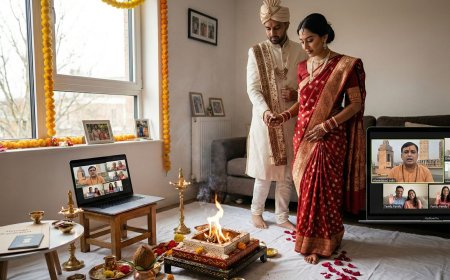
For coordinating with India: the Nirnayam or any pre-ceremony ritual held in Kerala for those family members who cannot travel can be streamed live. Kerala is IST (UTC+5:30), which means 7:00 AM in Toronto is 5:30 PM in Kottayam — manageable for a morning pre-ceremony blessing to be witnessed by grandparents via video call. Dubai is only 1.5 hours behind Kerala, making coordination almost seamless.
DOING A KERALA CHRISTIAN WEDDING AS A DESTINATION IN INDIA
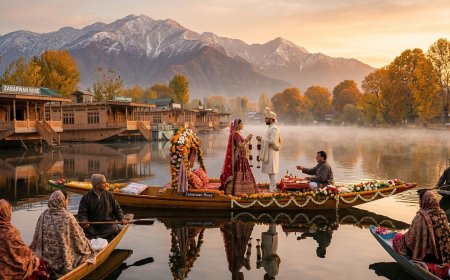
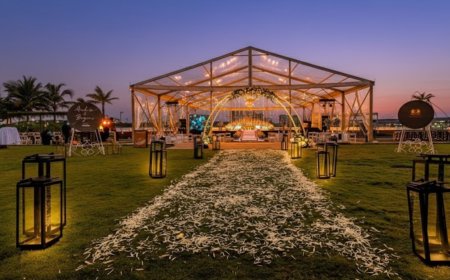
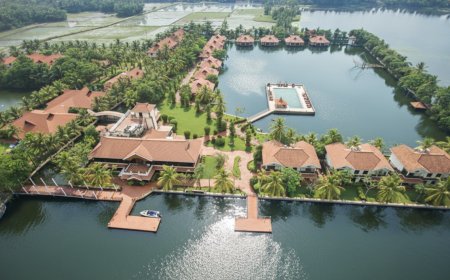
Kerala is, frankly, one of the most spectacular destination wedding locations on earth for this community, and the infrastructure for diaspora weddings in Kottayam, Thiruvalla, Pathanamthitta, and Ernakulam has grown enormously. Families returning from abroad for weddings often choose heritage properties in Alleppey [Alappuzha] with backwater views, or restored Syrian Christian ancestral homes [tharavadu] in the Kottayam highlands.
When briefing local pandits — or in this case, church priests — specify your denominational branch precisely. A Mar Thoma priest and a Jacobite priest use different liturgical books and will not substitute for each other. Contact the relevant diocesan office 6 to 12 months in advance if you are flying in from abroad. Request that the priest conduct a portion of the ceremony in English or Malayalam with English translation for non-Indian guests — most experienced priests who handle diaspora weddings are accustomed to this.
For non-Indian guests, a printed order of service with phonetic Syriac and English meanings transforms bewilderment into awe. Kerala's natural beauty — the church framed by coconut palms, the reception on a backwater houseboat — does the rest of the work.
WHAT YOU NEED: RITUAL CHECKLIST
Ritual Items: The minnu (sourced from Kerala or a trusted Kerala jeweller), the manthrakodi cloth (white and gold, usually provided by groom's family), the koorai pattusaree (silk saree for the bride, gifted by groom's family), frankincense and thuribulum (censer, usually provided by the church), fresh flower garlands for the exchange, a Bible (usually the family Bible, which carries its own emotional weight), wedding rings (exchanged during the Nirnayam and blessed at the main ceremony), and oil lamps or candles as the church requires.
People Required: The officiating priest (denomination-specific), a deacon or church assistant to manage the liturgy, a Chanter [for Syriac responses in the Orthodox tradition], the best man and bridesmaid, the Ammachi and Appachen[grandmothers and grandfathers, whose physical presence carries enormous ceremonial weight], and if possible, both family elders who participated in the Nirnayam.
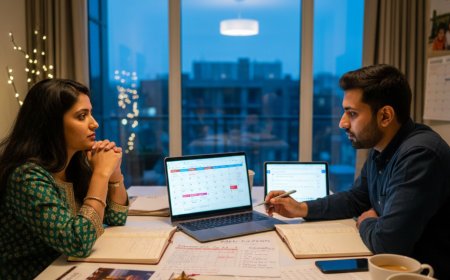
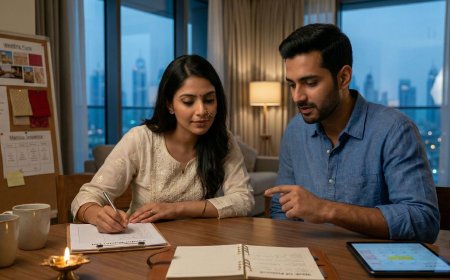
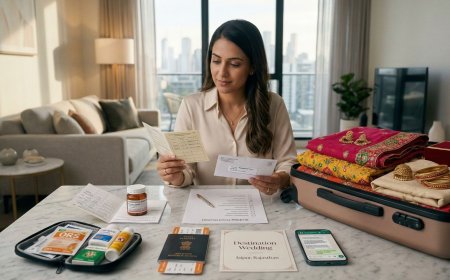
Preparation Steps: Confirm your denominational parish and book the priest at least 9–12 months ahead for diaspora weddings. Register formally with the church (required for a valid church wedding in both Mar Thoma and Malankara Orthodox traditions). Hold the Nirnayam at least one month before the wedding. Arrange the koorai saree presentation the morning of the wedding. Brief non-Indian guests and the wedding party on the liturgy. Prepare a live-stream link for family in India.
NRI.Wedding has verified Mar Thoma and Syrian Orthodox priests across Houston, Toronto, London, Dubai, and Melbourne, as well as Malayali photographers who understand how to capture the minnu tying and manthrakodi moment. Browse our Kerala Christian vendor directory to begin.
5 QUESTIONS NRI COUPLES ALWAYS ASK
Can we hold the church ceremony in a non-church venue, like a hotel ballroom?
Technically, both the Mar Thoma and Syrian Orthodox traditions prefer a consecrated church space for the full liturgy. However, in diaspora contexts where no suitable church is available, some priests will conduct a modified ceremony at a venue, particularly if there is a portable altar, candles, and a cross present. Speak to your priest directly — many have done this before for NRI couples in cities with small Malayali populations. The key is to make the space feel sacred, not merely decorated.
My partner is not Indian and not Christian. Can they participate fully?
Yes, and this happens more often than families initially expect. Both traditions permit non-Christian partners to stand at the altar for the ceremony. The groom or bride who is Kerala Christian will receive the full liturgy; the non-Christian partner participates through presence, the exchange of rings, and the hand-joining. Brief your priest in advance and ask for an English explanation of each moment. Most diaspora priests handle this with grace and warmth.
How do I find a Malankara Orthodox (Jacobite) priest in Canada?
My family is very specific about this. Start with the Malankara Orthodox Syrian Church Diocese of America and Canada's official website, which lists registered parishes. The Greater Toronto Area has at least two active Jacobite congregations. If none is available locally, it is entirely common — and accepted — for families to fly in a priest from New Jersey, New York, or even from the UK for the ceremony. Budget for travel, accommodation, and a dakshina [honorarium]. Your parish in Kerala can also provide a formal letter of introduction and referral to a diaspora priest.
We want to do a video call Nirnayam so our grandparents in Kottayam can participate. Is this appropriate?
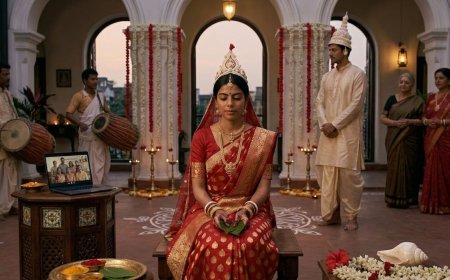
This has become not just accepted but beloved. Set up a proper video call with a large screen or laptop placed at the ceremony table so grandparents can see and be seen clearly. Choose a time when Kerala daylight is good — mid-morning in Kottayam is early evening in Toronto, which works well. Ask your priest to formally acknowledge the elders on screen and request their blessing by name. It is not a workaround. It is a new tradition being born.
We had our civil ceremony at the registry office last year. Does the church still recognise our wedding?
Both Mar Thoma and Malankara Orthodox traditions view the church ceremony as the spiritually binding marriage. Many diaspora couples — particularly in the UK and Australia — register their civil marriage for legal purposes and then hold the full church ceremony separately. Both churches accommodate this; simply inform your priest of the civil marriage date during your initial consultation. The church ceremony will be conducted as the primary wedding in the eyes of the community and the tradition.
THE EMOTIONAL ANGLE
There is a particular grief that nobody talks about when an NRI family from Thiruvalla or Kottayam sits in a church in Mississauga. It is not the grief of loss exactly. It is the grief of distance — the recognition that the smell of this church is different, that the light comes through the windows at the wrong angle, that the priest's Malayalam carries a slight Canadian hesitation that the priest back home never had.
And then the minnu is tied. And the Syriac prayer rises. And suddenly it doesn't matter that you're in Mississauga, because the words are the same words that were said over your parents in a village church you've only seen in photographs. Your mother is crying. Not because she is sad. Because she is hearing something she thought she had left behind — and discovering it had followed her all the way here, tucked inside her daughter's gold pendant, waiting.
This is what these rituals are. They are not museum pieces. They are living presences. Every NRI couple who insists on the full liturgy, who flies in the right priest, who sources the right saree, is doing something quietly radical: they are refusing to let two thousand years of identity become a footnote in someone else's country.
That refusal is its own kind of prayer.
A MOMENT TO SMILE
At a Kerala Syrian Orthodox wedding in Houston in 2019, the groom's family had arranged fresh jasmine garlands from a Tamil flower vendor on Hillcroft Avenue — the only place in the city that reliably stocked them. What nobody had accounted for was that the venue's air conditioning was set to full arctic blast, and within twenty minutes of the ceremony beginning, both garlands had wilted dramatically — the bride's trailing somewhere near her left shoulder, the groom's looking like it had given up on life entirely.
The priest, a magnificent man from Pathanamthitta with thirty years of wedding experience, did not break his expression once. He simply blessed the garlands with extra vigour during the exchange. The bride's younger brother, watching from the pew, could be seen shaking with silent laughter until her grandmother tapped his knee with considerable authority. The photographs are spectacular. The wilted jasmine, both families now agree, was the most Kerala thing that could have happened in Texas.
QUOTES FROM THE DIASPORA
"When the priest started the Syriac prayer, I lost it completely. I didn't understand most of the words but I had heard them at my parents' anniversary blessing when I was seven. My body remembered them before my mind did." — Treesa Varghese, Mar Thoma community, Melbourne
"We flew Father Thomas from New Jersey to Toronto for my son's wedding. Some people said it was too much effort. But my son's grandfather, my father-in-law, he married in that same liturgy in 1962. It had to be right. It was right." — Annamma Mathew, Malankara Orthodox, Mississauga
"My husband is from Ohio. He is Irish-American and Catholic, which helped. But the moment they tied the minnu around my neck, he held my hand tighter. He told me afterwards: 'I felt the weight of your whole family in that room.' He did. They were all there." — Deepa Cherian, Syrian Orthodox community, Dubai
YOUR ROOTS TRAVEL WITH YOU
The Syrian Christian wedding tradition is not a relic. It is a river — one that began in Malabar two thousand years ago, flowed through Antioch and Alexandria and Portuguese encounters and British colonial registries, and now runs through the parishes and living rooms of Houston, Toronto, Dubai, and Melbourne. It flows through every minnu placed in a jewellery box for the flight abroad, every koorai saree folded into checked luggage, every Syriac prayer played on a phone at midnight so a young woman can hear what her wedding will sound like.
NRI.Wedding exists for exactly this — to help you find the priest who knows your liturgy, the photographer who understands what the manthrakodi moment means, the vendors who can source what you need wherever you are in the world. Your ceremony deserves its full weight. Your children deserve to inherit something real.
Your roots travel with you. Let them be ancient. Let them be alive.
This article explores Kerala Christian wedding customs including Mar Thoma and Syrian Orthodox Malankara traditions, the minnu ceremony, manthrakodi ritual, and Nirnayam betrothal — and how NRI couples in Houston, Toronto, Melbourne, Dubai, and London are preserving these 2,000-year-old liturgies in their diaspora weddings.
What's Your Reaction?
 Like
0
Like
0
 Dislike
0
Dislike
0
 Love
0
Love
0
 Funny
0
Funny
0
 Angry
0
Angry
0
 Sad
0
Sad
0
 Wow
0
Wow
0