























































Lehenga Fabric Guide — Silk, Velvet, Georgette and More: The Complete NRI Bride's Handbook
The lehenga fabric decision is the foundational choice beneath every other bridal outfit decision — determining the embroidery's performance, the silhouette's character, the colour's photographic quality, the comfort across a twelve-hour wedding day, and the outfit's ability to survive long-haul travel from London or Toronto to Jaipur or Kerala. This complete guide covers every major bridal lehenga fabric for NRI brides — pure silk, Kanjivaram, Banarasi, raw silk, velvet, georgette, organza, net, chanderi, and tissue silk — with a full fabric comparison table across weight, climate suitability, photography quality, travel friendliness and price, an embroidery-fabric compatibility guide, a fabric-by-wedding-event recommendation framework, a care and transport table by fabric type, and the five common fabric selection mistakes that NRI brides consistently make when choosing without full information.


Lehenga Fabric Guide: Silk, Velvet, Georgette and More
The Fabric Decision Nobody Explains Properly
There is a specific moment in the bridal lehenga shopping process that almost every NRI bride experiences — and almost none of them are prepared for.
It happens after the first hour in the showroom. The initial excitement of seeing the pieces on display — the colours, the embroidery, the overall silhouette — has given way to something more specific and more confusing. The salesperson is describing fabrics. Silk. Organza. Georgette. Velvet. Tissue. Chanderi. Net. The words are familiar in the general sense but not in the specific sense — the sense that allows the bride to understand what each fabric actually means for how the lehenga will look, how it will feel to wear for twelve hours, how it will photograph, how it will travel in a suitcase from London to Jaipur, and how it will hold up through the ceremony, the baraat reception, and the three hours of dancing that follow.
The fabric is not a secondary detail. It is the decision that determines everything else — the weight of the garment, the way the embroidery sits on it, the way the skirt moves when the bride walks, the way the colour reads in the venue's specific lighting, and the way the bride feels physically at nine in the evening after wearing the lehenga since eight in the morning.
For NRI brides specifically, the fabric decision carries dimensions that domestic brides do not navigate. The lehenga must travel — often in checked luggage or carefully packed hand luggage across long-haul flights, with all the compression, pressure, and temperature variation that involves. It must perform in a climate that may be significantly different from the one where it was purchased. It must be stored and cared for in a country where the dry cleaners and specialists who understand Indian bridal textiles are not on every high street.
This guide is the complete fabric education that the showroom conversation rarely provides.
Not a glossary of technical terms but a genuinely useful framework — what each major bridal lehenga fabric looks like, feels like, photographs like, travels like, and is appropriate for, with the honest comparative assessment that helps NRI brides make the fabric decision with full information rather than relying on the showroom description alone.
The Core Reality: Why Fabric Matters More Than Most Brides Realise
The Fabric Determines the Embroidery
Every embroidery technique has a fabric it was designed for and fabrics it does not work on. Heavy zardozi embroidery — the gold and silver wire work of Mughal tradition — requires a base fabric with sufficient weight and structure to carry the metal thread without puckering or distorting. Delicate chikankari — the white-on-white shadow embroidery of Lucknow — requires the light, slightly translucent fabric that allows the shadow effect to read correctly. Bandhani tie-dye requires a fabric with the specific fibre structure that holds the dye in the characteristic dot pattern.
Choosing a fabric that conflicts with the embroidery technique produces a lehenga that looks wrong without the bride necessarily being able to identify why — the embroidery appears stiff on a fabric that should be fluid, or lost on a fabric too heavy for the delicacy of the work.
The Fabric Determines the Silhouette
The way a lehenga falls, flares, and moves is entirely determined by the fabric. A heavy silk lehenga creates a structured, dramatic flare that holds its shape whether the bride is standing still or moving. A georgette lehenga creates a fluid, softer movement that is more flattering in motion and more romantically photogenic in the flowing shots that outdoor wedding photography favours. A velvet lehenga creates an architectural weight that photographs magnificently but moves differently from lighter fabrics and creates specific comfort considerations for a summer or outdoor wedding.
The silhouette the bride sees on a mannequin or a model in a photograph is produced by a specific fabric. The same design executed in a different fabric will produce a different silhouette — sometimes dramatically so.
The Fabric Determines the Comfort
A twelve-hour wedding day in a heavy bridal lehenga is a physical experience — and the fabric's weight, breathability, and texture against the skin are the determining factors in how the bride feels at the end of it. The bride who chose the most spectacular velvet lehenga for a July wedding in Mumbai, without considering the fabric's heat retention in high humidity, is making a comfort decision that the photographs do not capture but the experience does not forget.
The Major Bridal Lehenga Fabrics: Complete Guide
Silk — The Classical Foundation
Silk is the historical foundation of Indian bridal wear — the fabric that Indian textile traditions have cultivated, refined, and elevated for thousands of years, and whose specific qualities — the natural lustre, the weight, the way it holds both vibrant colour and intricate embroidery — have made it the default fabric for the most significant occasions in Indian ceremonial life.
What silk actually is:
Not all silk is the same. Indian bridal wear uses several distinct silk types, each with specific characteristics that affect how the fabric looks and performs.
Pure silk — woven from continuous filaments produced by silkworms — has a natural luminosity that synthetic alternatives approximate but do not replicate. The specific quality of light on pure silk — the way it absorbs and reflects simultaneously, creating a depth that photographs differently at different angles and under different lighting — is the aesthetic foundation of the silk lehenga's specific appeal.
Kanjivaram silk — from the weaving tradition of Kanchipuram in Tamil Nadu — is among the heaviest and most richly coloured of the Indian silk traditions. The high gold zari content that characterises Kanjivaram fabric gives it a specific weight and a specific brilliance that make it the natural fabric for traditional South Indian bridal wear. A Kanjivaram lehenga is a substantial garment — beautiful in its weight and richness, but demanding in its physical requirements for a twelve-hour wedding day.
Banarasi silk — from the weaving tradition of Varanasi — is distinguished by its brocade work, the interwoven gold and silver zari that creates the characteristic Banarasi pattern in the body of the fabric itself rather than as surface embroidery. A Banarasi silk lehenga carries its ornamentation within its structure — the fabric and the decoration are inseparable — which gives it a specific coherence and depth that embroidered fabrics do not always achieve.
Raw silk — also called tussar or kosa silk depending on the specific fibre — has a different texture from the smooth filament silks, with a slight roughness and natural slub that gives the fabric an organic, textured quality. Raw silk photographs beautifully in natural light and has become increasingly popular for NRI brides seeking a more textural, less formally polished aesthetic than pure filament silk provides.
The NRI considerations for silk:
Silk travels well when packed correctly — rolled rather than folded, with tissue paper between layers to prevent creasing at fold lines. Pure silk does not require dry cleaning for minor refreshing — steaming is sufficient for most wrinkles — though significant staining or post-wedding storage should involve a specialist.
Silk performs well across a range of climates but has specific care requirements in the high humidity of coastal Indian wedding destinations — the fabric absorbs moisture and can feel heavier and slightly damp in very humid conditions. For Kerala or Mumbai summer weddings, the weight of a fully lined heavy silk lehenga is a consideration worth factoring into the fabric decision.
Velvet — The Dramatic Statement
Velvet arrived in Indian bridal fashion as the fabric of winter royal weddings — its richness, its depth of colour, and its specific quality of light absorption that makes jewel tones appear more saturated than on any other fabric — and it has remained the statement fabric for brides who want maximum visual impact, maximum colour depth, and the specific aesthetic of luxury that no other fabric delivers with the same authority.
What velvet actually is:
Velvet is a woven fabric with a short, dense pile — the characteristic surface texture produced by cutting the loops of warp threads to create the standing fibres that give the fabric its distinctive soft, directional sheen. The direction in which the pile lies affects how the fabric reads in light — velvet photographed with the pile running toward the camera has a different appearance from velvet photographed with the pile running away, a characteristic that experienced photographers and decorators know to manage.
Silk velvet — the most luxurious version, with a pile of pure silk on a woven backing — has a specific depth and luminosity that synthetic velvet cannot replicate. The price difference between silk velvet and synthetic velvet bridal lehengas is significant, and the visual difference — particularly in photographs — is real. Silk velvet has a softer, more fluid drape than synthetic velvet and holds its pile quality over the duration of a long wedding day more effectively.
What velvet photographs like:
Velvet is among the most photographically dramatic of all bridal fabrics. The depth of colour that velvet achieves — the specific saturation of a deep burgundy, a royal blue, or an emerald green in velvet — reads in photographs with an intensity that silk and georgette do not match. Brides who prioritise the visual impact of their wedding photographs and whose colour palette tends toward deep, saturated jewel tones find velvet an incomparable choice.
The NRI considerations for velvet:
Velvet is a winter fabric in every practical sense. Its heat retention — the same property that makes it luxurious in a cool climate — makes it genuinely uncomfortable in warm, humid conditions. For NRI brides planning October-to-February North Indian destination weddings, velvet is a natural choice. For any wedding in warm, humid conditions — coastal venues, summer events, outdoor ceremonies in April or May — velvet creates a comfort challenge that the photographs will not reveal but the experience will not forget.
Velvet requires specific packing care — it should never be folded, as fold lines in velvet are very difficult to remove. Transport in a hanging garment bag is the standard recommendation. Velvet also attracts lint and requires a specialist velvet brush for maintenance.
Georgette — The Fluid Contemporary Choice
Georgette is the fabric that has most significantly transformed the NRI bridal lehenga landscape over the past two decades — not by replacing the traditional fabrics but by offering a specific combination of properties that the heavier, more structured traditional fabrics do not provide: lightness, fluidity, movement, and the specific quality of drape that makes georgette lehengas look extraordinary in motion and in the outdoor, flowing photography that defines the contemporary Indian wedding aesthetic.
What georgette actually is:
Georgette is a sheer, lightweight woven fabric made from highly twisted yarns — the tight twist of the individual threads creates the characteristic slightly creped texture that distinguishes georgette from the smoother surfaces of silk and satin. The creping effect diffuses light rather than reflecting it directly, giving georgette a softer, less formal appearance than silk's directional lustre.
Pure silk georgette — the premium version — has a delicacy and a specific quality of movement that synthetic georgette approximates but does not fully match. The difference between silk georgette and polyester georgette is visible in photographs and tangible in wear — silk georgette moves with a lightness and a fluidity that synthetic versions do not replicate, and it breathes against the skin in a way that synthetic fabric does not.
What georgette photographs like:
Georgette photographs best in motion — in the flowing shots that capture the fabric's specific quality of movement, in the outdoor photography where the fabric responds to wind and the natural dynamics of movement. The contemporary Indian wedding photography aesthetic — the golden hour portraits, the candid ceremony images, the flowing first-look photographs — is ideally suited to georgette's specific visual qualities.
In static, formal portrait photography, georgette's fluidity is less advantageous — the fabric does not hold the structured, dramatic silhouette that silk or velvet creates for the formal posed images. The NRI bride whose wedding photography plan is primarily formal portraiture may find that georgette's specific appeal is less relevant to her context than it would be for a bride whose photography is primarily candid and motion-based.
The NRI considerations for georgette:
Georgette is among the most travel-friendly of the bridal fabrics — it is lightweight, compressible, and significantly more wrinkle-resistant than silk. Minor wrinkles in georgette typically hang out within a few hours at room temperature, making it forgiving of the compression that checked-luggage travel inevitably involves. For NRI brides who are carrying their wedding outfits on long-haul flights, georgette's travel properties are a genuine practical advantage over heavier, more crease-prone fabrics.
Georgette is also among the most breathable of the bridal fabrics — its lightweight construction and the natural breathability of silk georgette specifically make it among the most comfortable choices for warm-weather or outdoor weddings.
Organza — The Structural Sheer
Organza occupies a specific position in the bridal lehenga fabric landscape — the sheer fabric that has structure. Where georgette's sheerness comes with fluid softness, organza's sheerness comes with a stiffness and a crispness that allows it to hold shapes, create volume, and provide the specific architectural quality that makes organza lehengas and dupattas among the most visually dramatic in the bridal wardrobe.
What organza actually is:
Organza is a plain-weave sheer fabric made from highly twisted, continuous silk or synthetic filament yarns — the tight weave and the stiff finish create a fabric that is simultaneously transparent and structured, capable of holding its shape without the weight of heavier fabrics. The characteristic rustle of organza — the sound it makes when the fabric moves — is part of its specific sensory identity.
Silk organza — the traditional version — has a specific quality of light transmission that synthetic organza does not replicate. The way silk organza catches light — the specific shimmer of the transparent fabric over the lining beneath it — produces a visual effect that is most apparent in the outdoor photography that contemporary Indian wedding imagery favours.
Where organza works best:
Organza is most commonly used in bridal lehengas as a fabric layer rather than the primary fabric — a sheer organza skirt over a silk or satin underskirt, a floating organza dupatta over a heavier lehenga fabric, embroidery applied to organza that allows the embroidery to appear to float against the skin beneath. This layered use of organza takes advantage of its specific properties — the transparency, the structure, the light transmission — without the practical limitations of a full organza garment.
The NRI considerations for organza:
Organza wrinkles easily and does not recover from compression as well as georgette. The structured crispness that is organza's greatest asset is also its greatest vulnerability — it requires careful packing and storage to maintain the specific silhouette that makes it beautiful. For NRI brides carrying organza lehengas in luggage, professional pressing after arrival at the wedding destination is typically necessary.
Net — The Embroidery Foundation
Net — also referred to as tulle in some contexts, though the terms are not precisely interchangeable — is the fabric whose primary function in bridal lehenga construction is to serve as a base for embroidery. The open, mesh-like structure of net fabric allows embroidery to be applied with maximum visibility — the embroidered elements appear to float rather than sitting on a solid fabric surface — creating a specific aesthetic of lightness and intricacy that no other fabric base produces.
What net actually is:
Net is a machine-made or hand-made mesh fabric with a specific open-weave structure that creates the hexagonal holes characteristic of the fabric. Bridal net ranges from the finest, most delicate versions — almost invisible as a base fabric, used for the most intricate surface embroidery — to heavier, more structured versions that provide volume and body as well as an embroidery base.
Soft net is the most commonly used in contemporary bridal lehengas — its light, barely-there presence allows elaborately embroidered designs to appear as though they exist independently of a fabric base, creating the floating, three-dimensional embroidery aesthetic that has been among the most dominant in Indian bridal fashion for the past decade.
The NRI considerations for net:
Net is delicate — particularly the fine net used for the most intricate embroidery. The open mesh structure can snag on jewelry, on rough surfaces, and on the structural elements of other fabrics when packed. For NRI brides transporting heavily embroidered net lehengas, each piece should be wrapped individually in tissue paper to prevent the embroidery from catching on anything during transit.
Chanderi — The Understated Heritage
Chanderi is among India's most historically significant textile traditions — a hand-woven fabric from the town of Chanderi in Madhya Pradesh that combines silk and cotton in proportions that vary by the specific weave, producing a fabric with a specific translucency, a natural sheen, and a lightness that distinguishes it from both the heaviness of pure silk and the casualness of cotton.
What makes Chanderi distinctive:
The characteristic of authentic Chanderi fabric — the property that separates it from imitations — is its specific combination of weight and translucency. Chanderi is light enough to be comfortable in warm weather but has sufficient body to drape correctly. The natural sheen comes from the silk component of the weave without the full weight of a pure silk fabric.
Chanderi's traditional use in bridal wear tends toward the more understated, more minimalist aesthetic — the bride who wants a lehenga that signals cultural knowledge and textile heritage rather than maximum visual impact. The specific appeal of Chanderi for NRI brides is its authenticity — an authentic Chanderi lehenga is an engagement with a genuine Indian textile tradition of significant historical depth.
The NRI considerations for Chanderi:
Chanderi is among the most delicate of the bridal fabrics — it requires careful handling, specific storage, and the kind of textile expertise for care that is more readily available in India than in most NRI countries of residence. The investment in authentic handwoven Chanderi is substantial, and the care requirements reflect that investment.
Tissue and Tissue Silk — The Light-Catcher
Tissue fabric — sometimes called tissue silk, tissue cotton, or simply tissue depending on the fibre content — is distinguished by the metallic or lurex threads woven into its structure that give the fabric its characteristic shimmer and its specific quality of light interaction. A tissue lehenga catches and reflects light differently from any other fabric — the metallic threads create a constantly changing quality of shimmer that makes the fabric appear different under different lighting conditions.
What tissue photographs like:
Tissue is among the most photographically dynamic of the bridal fabrics — the way it interacts with light means that photographs taken at different angles and under different lighting conditions show the fabric differently. In direct light, tissue can appear intensely luminous. In softer, diffused light, the metallic quality becomes subtler. This dynamic interaction with light makes tissue lehengas particularly well-suited to the varied lighting of a full Indian wedding day — the outdoor ceremony light, the indoor reception lighting, the flash photography of the formal portraits all reveal different qualities of the fabric.
The Complete Fabric Comparison Table
| Fabric | Weight | Occasion Suitability | Photography Quality | Climate Suitability | Travel Friendliness | Price Range | Best For |
|---|---|---|---|---|---|---|---|
| Pure Silk (Filament) | Heavy to medium | All ceremonies — most formal | Excellent — rich lustre | Cool to moderate — challenging in high humidity | Moderate — rolls well, avoid sharp folds | ₹₹₹₹ | Traditional ceremonies, South Indian brides, full bridal set |
| Kanjivaram Silk | Very heavy | Main ceremony — South Indian tradition | Outstanding — unmatched zari brilliance | Cool — challenging in heat and humidity | Challenging — weight and structure | ₹₹₹₹₹ | South Indian ceremony, traditional families |
| Banarasi Silk | Heavy | Main ceremony — North Indian tradition | Excellent — brocade depth unique | Cool to moderate | Moderate — structure requires care | ₹₹₹₹ | North Indian ceremony, traditional aesthetic |
| Raw Silk / Tussar | Medium | All ceremonies and pre-wedding events | Very good — textural quality in natural light | Moderate — more breathable than filament silk | Good — less formal structure | ₹₹₹ | Contemporary traditional, natural aesthetic brides |
| Silk Velvet | Heavy | Winter ceremonies — statement occasions | Outstanding — colour depth unmatched | Cool only — not suitable for warm/humid | Challenging — no folding, hanging bag essential | ₹₹₹₹₹ | Winter North Indian weddings, jewel tone aesthetic |
| Synthetic Velvet | Heavy | Winter ceremonies | Good — less depth than silk velvet | Cool only | Challenging — same as silk velvet | ₹₹₹ | Winter wedding, budget-conscious |
| Silk Georgette | Light | All events, especially receptions and pre-wedding | Excellent in motion — outdoor photography | Excellent — breathable, comfortable in warmth | Excellent — lightweight, wrinkle-resistant | ₹₹₹₹ | Warm weather weddings, outdoor ceremonies, contemporary brides |
| Synthetic Georgette | Light | Pre-wedding events, receptions | Good | Good — breathable | Excellent | ₹₹ | Budget-conscious, pre-wedding events |
| Silk Organza | Light-medium | Layered use — dupattas, overlay skirts | Excellent — light transmission distinctive | Good — lightweight | Moderate — wrinkles require pressing | ₹₹₹₹ | Layered lehenga construction, dramatic dupatta |
| Net (Soft) | Very light | Contemporary ceremonies, receptions | Very good — embroidery floats | Excellent | Moderate — snagging risk requires tissue wrapping | ₹₹–₹₹₹₹ depending on embroidery | Heavy embroidery showcase, contemporary aesthetic |
| Chanderi | Light-medium | Understated ceremonies, intimate weddings | Very good — natural light specifically | Excellent — most breathable | Moderate — delicate handling required | ₹₹₹₹ | Heritage-aware brides, minimalist aesthetic |
| Tissue / Tissue Silk | Light-medium | All ceremonies — especially evening events | Outstanding — light-dynamic unique quality | Good — lighter than silk | Good — light weight | ₹₹₹₹ | Evening receptions, photographically ambitious |
The Embroidery-Fabric Compatibility Guide
The relationship between the embroidery technique and the base fabric is one of the most technically important dimensions of the lehenga decision — and one of the least discussed in the showroom context.
| Embroidery Technique | Best Fabric Base | Avoid | Why |
|---|---|---|---|
| Zardozi (gold/silver wire) | Heavy silk, velvet, brocade | Georgette, soft net | Wire embroidery requires structural base — lightweight fabrics pucker and distort |
| Resham (silk thread) | Silk, georgette, chanderi | Organza (too stiff) | Silk thread adapts to the base fabric's drape and movement |
| Sequence / Sitara | Net, georgette, organza | Heavy silk | Sequins read best on lighter, more translucent bases where they catch light independently |
| Aari / Maggam | Silk, velvet, net | Very stiff fabrics | The needle technique requires fabric with sufficient give |
| Bandhani (tie-dye) | Georgette, cotton silk, chanderi | Heavy brocade | Tie-dye requires fabric that holds dye in the characteristic dot structure |
| Chikankari | Cotton, chanderi, georgette | Velvet, heavy silk | The shadow embroidery effect requires translucency in the base fabric |
| Mirror work (Shisha) | Georgette, cotton, chanderi | Stiff organza | Mirror work requires fabric that moves with the embellishment |
| Cutwork / Lasercut | Organza, net | Velvet, heavy silk | Cutwork depends on the fabric's ability to hold a clean edge when cut |
Fabric for Each Wedding Event
Different events within the NRI wedding programme have different fabric requirements — determined by the formality of the occasion, the duration of wear, the physical demands of the event, and the specific aesthetic that the event calls for.
The Main Ceremony
The main ceremony is the occasion with the highest formality requirement and the longest duration of formal presentation — the bride is most visibly herself, most photographed, and most required to look perfectly composed across several hours of ritual.
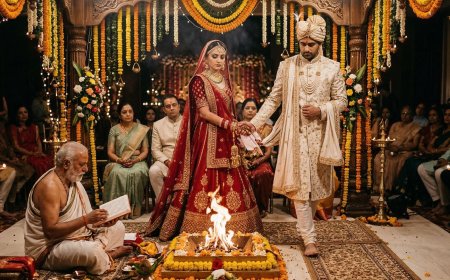
Best fabrics for the main ceremony: Heavy silk — Kanjivaram for South Indian traditions, Banarasi for North Indian traditions — or velvet for winter North Indian ceremonies. These fabrics have the weight and structure that match the ceremony's formality and the photographic quality that the ceremony's importance requires. The silk lehenga's specific lustre in the specific lighting of a traditional ceremony space — the mandap's flower arrangements, the sacred fire's glow — is a quality that lighter, more casual fabrics do not replicate.
The Reception
The reception is the social event of the wedding programme — the occasion of maximum guest interaction, maximum dancing, and maximum duration. The fabric requirements shift from ceremony formality to social comfort and photogenic performance across a long evening.
Best fabrics for the reception: Silk georgette, tissue silk, or a lighter silk are the most appropriate choices — fabrics that look beautiful in motion, hold up across a full evening of dancing and guest interaction, and feel comfortable enough to wear for four to five hours of social activity. Many NRI brides change outfits between the ceremony and the reception specifically to make this fabric transition.
The Mehendi
The mehendi is the most relaxed of the major wedding events — the fabric requirement is aesthetic and comfortable rather than formally structured.
Best fabrics for the mehendi: Raw silk, chanderi, soft georgette, or cotton silk — fabrics with the cultural relevance of natural Indian textiles but the lightness and comfort appropriate to an afternoon outdoor event. The deep colours and heavy embellishment of the main ceremony lehenga are less appropriate for the mehendi's warmer, more personal register.
The Sangeet
The sangeet requires a fabric that performs beautifully in the specific conditions of an evening of dancing — movement, lighting, and the sustained physical activity of performance.
Best fabrics for the sangeet: Silk georgette or tissue silk — fabrics that move beautifully under dancing conditions and catch the event's lighting in a way that is photogenic and dynamic. The sangeet is the event where georgette's specific advantage in motion photography is most fully realised.
The Lining Question
Every bridal lehenga has a lining — and the lining fabric affects the wearing experience as significantly as the outer fabric, though it is rarely discussed in the showroom context.
The lining is the fabric in direct contact with the skin for the duration of the wedding day. A lining in a breathable, natural fabric — cotton or silk — is more comfortable against the skin than a synthetic lining, particularly in warm or humid conditions. A lining with insufficient coverage creates structural problems — the outer fabric does not sit or move correctly without appropriate underlining.
When assessing any lehenga in the showroom, ask specifically about the lining fabric and its extent — what is it made from, does it fully line the skirt, and how does it affect the overall weight and comfort of the garment.
The NRI Fabric Buying and Care Guide
Buying Fabric in India vs. Buying Ready-Made
NRI brides who have time within their India visit — and who have the specific knowledge of what they want — can source fabric independently and have a lehenga constructed by a specialist tailor. This approach allows complete control over the fabric quality, the embroidery specification, and the construction — and can produce a result that is genuinely superior to ready-made at equivalent or lower cost.
The requirement is knowledge: knowing which fabric market to visit (Chandni Chowk in Delhi, Crawford Market in Mumbai, T. Nagar in Chennai), knowing how to assess fabric quality in person, and having either the tailoring knowledge to specify the construction or a trusted intermediary who does.
For NRI brides without the time or the knowledge for this approach, reputable multi-designer showrooms and established bridal boutiques with clear fabric labelling and experienced consultants are the reliable alternative.
The Authentication Question
India's bridal textile market has a significant problem with mislabelling — fabrics described as pure silk that contain synthetic content, embroidery described as handwork that is machine-produced, and regional textile names applied to fabrics that were not produced in the claimed region of origin.
For significant investments — a Kanjivaram silk lehenga, an authentic Banarasi brocade, a genuine handwoven Chanderi — purchase from retailers with clear provenance, ask for the specific silk mark certification or GI tag documentation where applicable, and treat any price that seems significantly below market rate as a signal of potential authenticity concern.
The Care and Storage Requirements by Fabric
| Fabric | Cleaning Method | Storage | Wrinkle Recovery | India to Home Transport |
|---|---|---|---|---|
| Pure Silk | Dry clean only — specialist preferred | Acid-free tissue in breathable fabric bag | Steam — never iron directly | Roll in tissue, avoid sharp folds |
| Kanjivaram Silk | Dry clean — specialist in Indian textiles | Muslin wrap, flat storage preferred | Professional steam only | Specialised packing — weight is significant |
| Velvet | Dry clean only | Hanging bag only — never folded | Specialist velvet pressing only | Hanging garment bag — never compressed |
| Silk Georgette | Hand wash in cool water or dry clean | Rolled in tissue or flat | Hangs out naturally — very forgiving | Rolls well — most travel-friendly |
| Organza | Dry clean preferred | Flat with tissue between layers | Professional pressing required | Flat packing with tissue — avoid compression |
| Net | Gentle hand wash or dry clean | Flat with individual tissue wrapping | Minimal wrinkles — generally forgiving | Tissue-wrap each piece to prevent snagging |
| Chanderi | Dry clean — specialist preferred | Flat, acid-free tissue, cool dry storage | Professional steam | Careful flat packing — delicate |
| Tissue Silk | Dry clean only | Rolled in tissue or flat | Steam with care | Rolls well — relatively forgiving |
The Common Mistakes NRI Brides Make With Fabric Selection
The first and most consistent mistake is choosing the fabric based on how the lehenga looks on a mannequin or in a photograph without wearing it and moving in it. The fabric that produces the most spectacular static display photograph may be the most uncomfortable to wear for twelve hours and the least photogenic in the motion photography that will dominate the wedding album. Always wear the lehenga and move in it before confirming the purchase.
The second mistake is not considering the climate of the wedding destination when choosing the fabric. The velvet lehenga purchased in a Delhi showroom in October for a March wedding in Goa is a beautiful garment in the wrong context. Research the specific temperature and humidity of the wedding location in the specific wedding month and assess every fabric choice against those specific conditions.
The third mistake is not asking about the lining. The outer fabric is what the showroom presents; the lining is what the bride wears against her skin for twelve hours. A synthetic lining under a beautiful silk outer fabric creates a different wearing experience from a natural cotton or silk lining under the same outer — and the difference is not visible in the showroom but is felt throughout the wedding day.
The fourth mistake is packing the lehenga incorrectly for travel. Velvet that is folded. Organza that is compressed into checked luggage. Net embroidery that is packed without tissue protection. Fabrics that are beautiful in India and arrive at the destination requiring professional restoration that may not be available in time. The packing method for each specific fabric is as important as the selection of the fabric itself.
The fifth mistake is buying fabric described as pure silk or handwork without asking for authentication. The Indian bridal textile market's authenticity challenge is real and well-documented. An investment of several lakhs in what is described as pure Kanjivaram silk deserves the same due diligence as any other investment of that magnitude — ask for certification, buy from reputable sources, and treat prices significantly below market rate as a signal rather than a bargain.
The Fabric That Carries Everything Else
The lehenga fabric is the decision beneath all the other decisions.
Beneath the embroidery choice — because the embroidery was designed for a specific fabric and performs differently on any other. Beneath the colour choice — because colour reads differently on silk, on velvet, on georgette, on tissue, and the shade that appealed in the showroom may read differently in the venue's specific lighting on the wedding day. Beneath the silhouette choice — because the silhouette is produced by the fabric's specific weight, drape, and structural properties, not by the design alone.
For NRI brides making the fabric decision from the specific context of a limited India visit, a long-haul travel requirement, a climate transition, and the knowledge that the lehenga must perform across twelve hours in conditions that may be significantly different from the showroom — the fabric decision is not a secondary question. It is the foundational one.
The silk that will carry the ceremony's weight. The georgette that will move through the reception. The velvet that will absorb the winter light. The chanderi that will speak quietly of heritage and knowledge. The tissue that will catch every photographic light source with a different quality of shimmer.
Each fabric is a specific proposition about what the wedding day looks, feels, and photographs like.
Know what each one offers. Know what each one requires. Choose the one that serves the specific wedding you are having — in the specific climate, at the specific time of year, photographed in the specific style, worn across the specific duration of the most significant day of your ceremonial life.
The fabric carries everything else. Choose it accordingly.
Published by NRIWedding.com — The Premium Global Platform for Non-Resident Indians Planning Indian Weddings From Abroad.
What's Your Reaction?
 Like
0
Like
0
 Dislike
0
Dislike
0
 Love
0
Love
0
 Funny
0
Funny
0
 Angry
0
Angry
0
 Sad
0
Sad
0
 Wow
0
Wow
0