



















































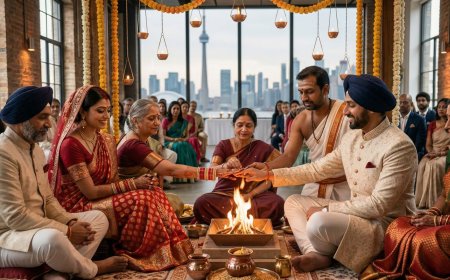



Mangalorean Catholic Wedding Rituals: The Complete NRI Guide to Roce, Konkani Traditions and Celebrations
Mangalorean Catholic weddings blend 500 years of Portuguese-influenced liturgy with ancient Tulu-Konkani coastal customs into one of India's most distinctive ceremonial traditions. From the sacred Roce coconut milk anointing to the legendary sorpotel feast, these rituals carry the memory of a community that survived centuries of hardship with its culture intact. For NRI families in Dubai, Toronto, Melbourne, London, and Mississauga, this guide covers every ritual, practical adaptation, priest-sourcing strategy, and diaspora workaround needed to plan an authentic Mangalorean Catholic wedding abroad.


The Mangalorean Catholic community carries one of India's most distinctive and least-documented wedding traditions — a layered ceremonial world built from Konkani roots, Portuguese colonial history, and centuries of coastal resilience. For NRI families from Mangalore, Udupi, and the surrounding Tulu Nadu coast now living in Dubai, Toronto, Melbourne, London, and across the Gulf, these rituals are not customs to be simplified — they are the living proof that a community survived everything and still knows how to celebrate.
You grew up with the smell of coconut oil and roses on wedding mornings. You remember the women of the house singing Konkani folk songs in the kitchen before sunrise, someone's aunty already crying before the ceremony had even started. You knew the difference between a Roce and a Rosary before you knew long division. You understood, without anyone explaining it, that a Mangalorean Catholic wedding was not a single event but a sequence of sacred, joyful, slightly chaotic days that belonged entirely to your community and nowhere else on earth.
Now you're in Dubai or Melbourne or somewhere in the greater Toronto area, and you're trying to explain to your venue coordinator what a Roce ceremony is and why you absolutely cannot skip it. You're WhatsApping your mother at midnight asking if the paan [betel leaf] has to be from a specific type of vendor or if the supermarket variety will do. You're Googling whether a Goan Catholic priest can officiate a Mangalorean Catholic wedding and feeling mildly panicked about the answer.
This is the guide that was missing. Written for you, with everything your ammama would have told you if she were sitting next to you right now.
🌟 DID YOU KNOW?
The Mangalorean Catholic community traces its Christian roots to the 16th century Portuguese missionaries, but many of their wedding rituals — including the Roce and the use of coconut milk — predate Christianity in the region and are absorbed from ancient Tulu Nadu and Konkani Hindu coastal customs, making this one of India's most fascinating examples of syncretic ceremonial culture.
During Tipu Sultan's captivity of Mangalorean Catholics between 1784 and 1799 — known as the Coorg Captivity — an estimated 60,000 to 80,000 community members were held prisoner for fifteen years. The fact that their wedding traditions, songs, and liturgical customs survived intact is considered by historians a remarkable act of collective cultural memory.
The Mangalorean Catholic diaspora in the Gulf — particularly in Dubai, Abu Dhabi, and Kuwait — is one of the most organised Indian Catholic diaspora communities in the world, with active parish networks, cultural associations, and wedding facilitation services that help NRI couples recreate full traditional ceremonies abroad.
WHAT IS A MANGALOREAN CATHOLIC WEDDING?
A Mangalorean Catholic wedding is a multi-day ceremonial sequence that weaves Roman Catholic liturgy with ancient Tulu-Konkani coastal traditions into something entirely its own. It is not simply a church wedding with Indian food. It is a civilisation-level event that requires understanding its layers.
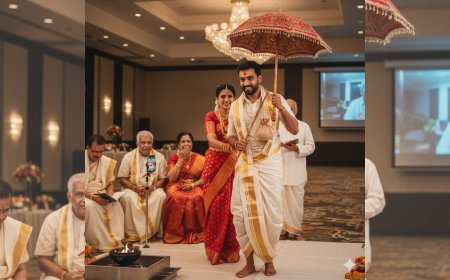
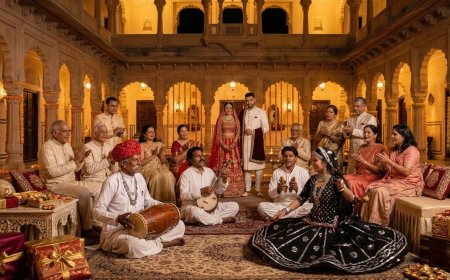
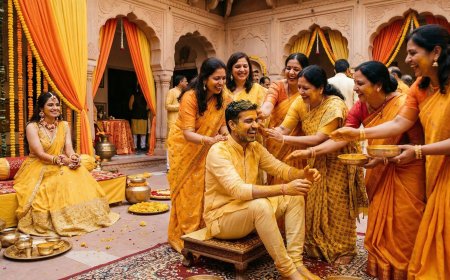
The sequence traditionally begins days before the church ceremony with the Roce [from the Portuguese rosca, meaning a circular bread, though in this context it refers to the coconut milk anointing ceremony] — the most beloved and emotionally charged pre-wedding ritual in the entire Mangalorean tradition. On the morning of the Roce, the bride and groom are seated separately at their respective family homes. Female relatives gather and take turns applying a mixture of nariyal ka doodh [fresh coconut milk] mixed with rose water and turmeric to the couple's hair, face, and arms. This is accompanied by Konkani wedding songs [called Udupi geetey or simply Roce geetey] sung by the women, songs that are often passed down through oral tradition and vary by family and village.
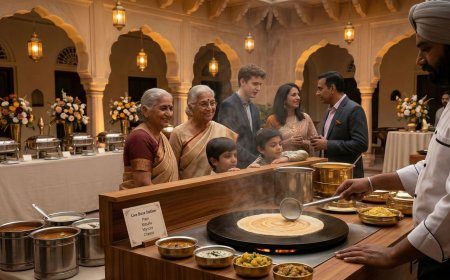
The evening before the wedding features the Roce party — a joyful gathering of family and friends, often with music, dancing, and the first sharing of sannas [soft steamed rice cakes made with toddy or yeast] and pork sorpotel [the iconic spiced pork dish that is non-negotiable at any Mangalorean Catholic celebration].
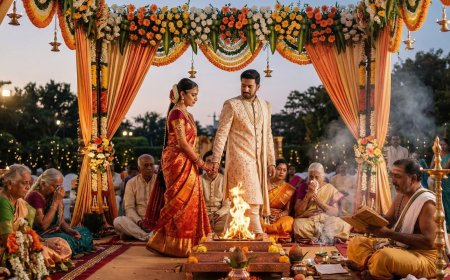
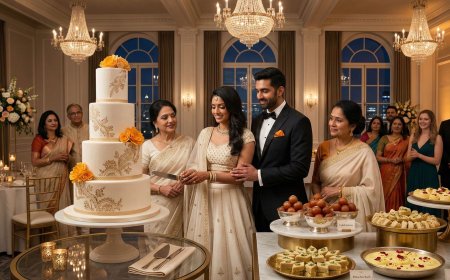
The wedding day itself begins with the Rosary at the bride's home, followed by the church ceremony — a full Roman Catholic nuptial Mass conducted in Konkani, Kannada, or English depending on the parish. The tying of the mangalsutra [retained in Mangalorean Catholic weddings as a cultural rather than strictly religious act], the exchange of rings, and the priestly blessing form the liturgical heart. The reception that follows is legendary for its food, its music — traditionally featuring manddo [a classical Konkani song-and-dance form] — and its extraordinary length.
COMMUNITY COMPARISON TABLE
| Community / State | Local Name for Wedding Ritual | Key Tradition | How NRIs Abroad Adapt It |
|---|---|---|---|
| Mangalorean Catholic (Konkani) | Roce / Nuptial Mass | Coconut milk anointing, Roce songs, sorpotel feast | Roce held at home or rented hall; source coconut milk from Indian grocers |
| Goan Catholic | Ros Ceremony | Similar coconut milk ritual, feni toasts, Latin-influenced Mass | Goan Catholic parishes in UK/Canada often accommodate; feni replaced with coconut wine |
| Kerala Syrian Orthodox | Kalyana Krama | Minnu tying, Syriac liturgy, manthrakodi | Full liturgy at diaspora parish; priest flown in if needed |
| Kerala Mar Thoma | Kalyana Krama | Reformed Syriac liturgy, ring exchange, garland | Mar Thoma parishes in Houston/Toronto/Melbourne |
| Tamil Catholic (Vellalar) | Kalyana Sadhyam | Church Mass with Tamil folk elements, floral canopy | Tamil Catholic community churches in UK/Canada |
| Punjabi Catholic | Church Wedding | Full Roman Catholic Mass, bhangra at reception | Standard Catholic church; bhangra band sourced locally |
| Bengali Catholic | Biye + Mass | Church ceremony with Bengali cultural elements | Community churches in London/Toronto |
| Himachali Christian | Vivah Sanskar | Church blessing with pahadi folk music | Simplified abroad; folk elements via recorded music |
| Anglo-Indian | Church Wedding | Classic colonial-era ceremony, waltz reception | Well-preserved in UK diaspora; Anglo-Indian associations active |
| Rajasthani Catholic (convert communities) | Sagai + Mass | Betrothal blessing, church ceremony | Rare diaspora presence; usually absorbed into broader Catholic community |
THE MEANING BEHIND THE RITUAL
The Roce ceremony is, at its philosophical core, a ritual of preparation and protection. Coconut in the Tulu-Konkani coastal worldview is not merely a crop — it is the Kalpataru [the wish-fulfilling tree], the tree that gives everything: food, oil, shelter, rope, and in this moment, the milk that softens and blesses the body of someone about to undergo the most significant transition of their life.
When a mother takes coconut milk in her palms and applies it to her daughter's hair on the morning of the Roce, she is doing what coastal Indian mothers have done for longer than Christianity has existed in this region. She is saying: you are still soft. You are still mine. And I am sending you into your new life anointed, loved, and prepared.
The singing that accompanies this act matters as much as the act itself. The Roce geetey are not background music — they are the liturgy of the women, the theology of the aunties, the theology of everyone who was never asked to stand at the altar but who held the community together through captivity, migration, and a hundred kinds of loss.
The fact that this ritual survived Tipu Sultan's captivity, survived British colonialism, survived the diaspora, and is now being performed in Melbourne kitchens and Dubai living rooms is not a footnote. It is the whole story.
For a non-Indian partner trying to explain it to their own family: this is the moment when a community places everything it has survived into the palms of its hands and passes it gently onto the person it loves most.
DOING A MANGALOREAN CATHOLIC WEDDING ABROAD: THE PRACTICAL REALITY
The single most important thing to understand about doing a Mangalorean Catholic wedding abroad is this: the Roce is not optional. NRI couples who try to skip it to simplify logistics almost universally regret it. The ceremony can be held in a living room, a rented community hall, a hotel suite — the space does not matter. What matters is the coconut milk, the women, and the songs.
For sourcing ritual items, fresh coconut milk is available at Indian grocery stores across all major diaspora cities. On Ealing Road in Wembley, London, South Indian and Konkani grocery vendors stock fresh-pressed coconut milk, rose water, and turmeric. In Toronto, the Gerrard Street India Bazaar and the Pape Avenue South Indian stores carry everything you need. In Melbourne, Dandenong market's Indian section is your best resource. In Dubai, Karama's Indian grocery cluster and the Meena Bazaar area in Bur Dubai have full stocks of coastal Indian ingredients. In Houston, Hillcroft Avenue's South Indian stores will understand exactly what you need.
The pork sorpotel question is one every Mangalorean NRI family faces. In the UK and Canada, halal butchers are everywhere but pork-specific butchers for the right cuts require planning. Specialist Portuguese or Brazilian butchers in Toronto's Danforth area and London's Stockwell neighbourhood carry the fatty pork cuts that authentic sorpotel demands. In Dubai, pork is available at licensed supermarkets in designated sections — Al Massa supermarket and the Spinney's in Jumeirah both carry pork reliably. Many NRI families prepare the sorpotel in India and carry it frozen — this is more common than you think and entirely worth doing.
For the church ceremony, any Roman Catholic parish abroad can technically officiate a Mangalorean Catholic wedding, but for the Konkani elements — the specific wedding prayers, the Konkani nuptial hymns — a Mangalorean Catholic priest is ideal. The Diocese of Mangalore maintains contact with diaspora priests globally. Active Mangalorean Catholic associations exist in Dubai (the Mangalorean Catholic Association of Dubai), Toronto (Konkani Catholic community groups in Mississauga), and Melbourne (the Konkani Catholic Sabha of Victoria). These associations maintain priest contact lists and are your most reliable starting point.
Fire and smoke restrictions at UK and Australian venues are worth checking in advance for any candle-heavy church ceremonies, though most registered churches have established protocols. The reception venue is where families most often face restrictions on outdoor cooking — a critical consideration if you are planning to cook sorpotel on-site.
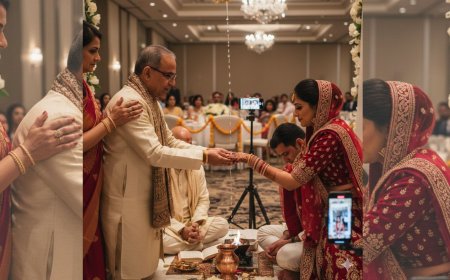
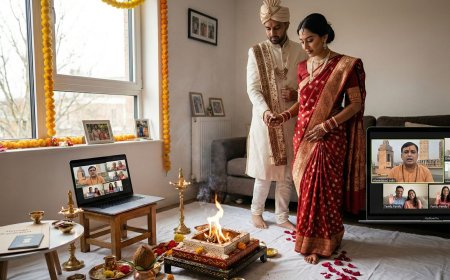
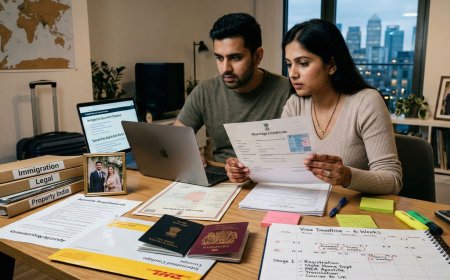
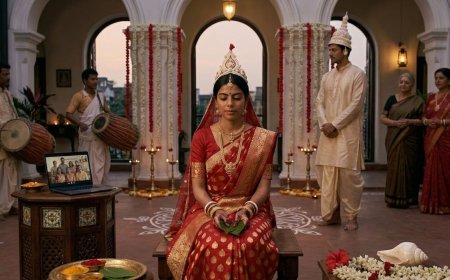
For India coordination via video call: the Roce at the groom's home in Mangalore while the bride's Roce happens in Melbourne is entirely doable. Set up a large screen at both locations. Karnataka is IST (UTC+5:30) — 7:00 AM in Melbourne is 2:30 AM in Mangalore, so schedule morning ceremonies carefully. Dubai to Mangalore is only 1.5 hours behind, making real-time participation almost seamless.
DOING A MANGALOREAN CATHOLIC WEDDING AS A DESTINATION IN INDIA
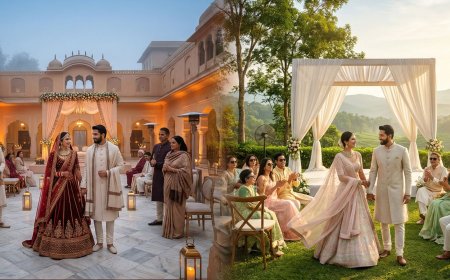
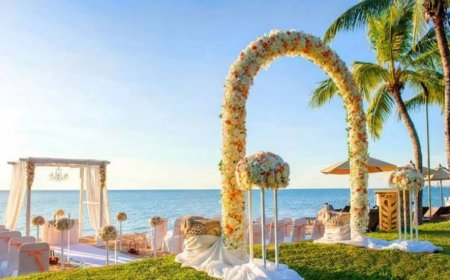
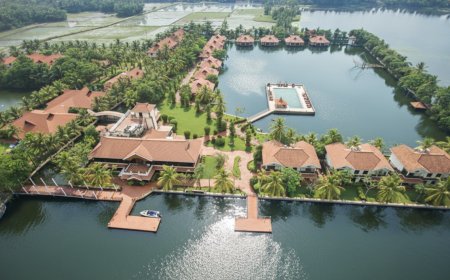
Mangalore and the surrounding Tulu Nadu coast is, for this community, the only destination wedding location that truly makes sense. The city has seen significant investment in wedding infrastructure over the past decade, with heritage properties in Udupi, Manipal, and the coastal villages between Mangalore and Kundapur offering extraordinary settings.
The old laterite-stone Catholic churches of the region — Milagres Church in Mangalore, Rosario Cathedral, and the dozens of village churches with their Portuguese-baroque facades framed by coconut palms — provide backdrops that no overseas venue can replicate. Brief your local parish priest well in advance about any specific family customs — Roce song variations, specific prayer sequences, mangalsutra inclusion — as practices vary between villages and families.
For non-Indian guests, the coastal Karnataka experience is one of India's great undiscovered pleasures. Arrange a pre-wedding day at Kaup Beach or St. Mary's Island. Serve a proper Mangalorean feast — kane rava fry [ladyfish in semolina], kori rotti [chicken curry with crispy rice wafers], neer dosa [thin rice crepes] — and your international guests will spend the rest of their lives talking about it.
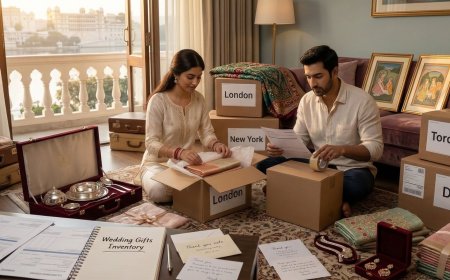
Coordinate from abroad by assigning one trusted local family member as your on-ground coordinator. Share a detailed written brief of your expected customs, priest requirements, and food preferences at least six months before arrival.
WHAT YOU NEED: RITUAL CHECKLIST
Ritual Items: Fresh coconut milk (ideally hand-pressed on the morning of the Roce), rose water, turmeric, a decorated Roce chair or ceremonial seat for the bride and groom, fresh flower garlands, a coconut with husk intact for threshold rituals, paan and areca nut for elder blessings, the mangalsutra (if being used), wedding rings blessed by the priest, white wedding candles, and a printed order of service with Konkani phonetics for non-Konkani-speaking guests.
People Required: The officiating Catholic priest (Mangalorean background preferred), female relatives who know the Roce geetey (if no one in your diaspora group knows the songs, record them from grandmothers in Mangalore and play them during the ceremony — this is widely accepted), a deacon or church sacristan, the best man and bridesmaid, and the family elder who will lead the first Roce application.
Preparation Steps: Book your Catholic parish and priest minimum 9 to 12 months in advance for diaspora weddings. Register your marriage with the church (required for a valid Catholic ceremony). Confirm Roce venue and catering 6 months ahead. Source sorpotel ingredients or arrange transport from India 3 months ahead. Brief all non-Indian wedding party members on ceremony sequence. Arrange live-stream equipment for India-based relatives. Prepare Roce songs — either find a community member who knows them or create a recording from family in Mangalore.
NRI.Wedding connects Mangalorean Catholic couples with verified Konkani Catholic priests, coastal Karnataka vendors, and photographers who understand the Roce moment. Explore our Mangalorean Catholic wedding directory today.
5 QUESTIONS NRI COUPLES ALWAYS ASK
Can we do the Roce the night before the wedding at our home in Mississauga even though there are only twelve people present?
Absolutely — and some of the most moving Roce ceremonies happen in small living rooms with twelve people rather than large halls with two hundred. The intimacy is not a compromise; it is often what the ritual was always meant to be. What matters is the coconut milk, at least one elder who knows the songs or can lead the prayers, and the genuine emotional presence of the people in that room. Size is irrelevant. Intention is everything.
My partner is not Catholic and not Indian. Can they participate in the Roce and the church ceremony?
For the Roce, yes — completely. The Roce is a family and community ritual, not a sacrament, and the warmth of Mangalorean Catholic families toward non-Indian partners who show genuine willingness to participate is well-documented and real. For the church ceremony, a non-Catholic partner can stand at the altar and exchange rings, though a formal Catholic marriage requires dispensation from the local Diocese if one partner is not Catholic. Begin this paperwork at least six months in advance through your local Catholic parish.
Where do I find a Mangalorean Catholic priest in the UAE who knows the Konkani wedding customs?
The Mangalorean Catholic Association of Dubai is your first call — they maintain active lists of Konkani-speaking priests serving parishes across the UAE. Our Lady of Rosary Church in Dubai and St. Mary's Catholic Church in Abu Dhabi both have significant Mangalorean congregations. If a specifically Mangalorean priest is not available, any Goan Catholic priest will understand the coastal Konkani wedding customs closely enough to officiate with a pre-ceremony briefing from your family.
Our grandparents cannot travel from Mangalore. How do we make them feel truly present at the Roce in Melbourne?
Set up a video call on a large television screen placed at the Roce chair level so your grandparents can see you eye-to-eye, not looking up at a ceiling-mounted screen. Ask the elder leading the Roce to formally address your grandparents by name and request their blessing aloud before beginning. If your grandmother knows the Roce songs, ask her to sing the opening verse from Mangalore while the room in Melbourne listens. This has happened at diaspora Roce ceremonies and the effect is, by all accounts, devastating in the most beautiful possible way.
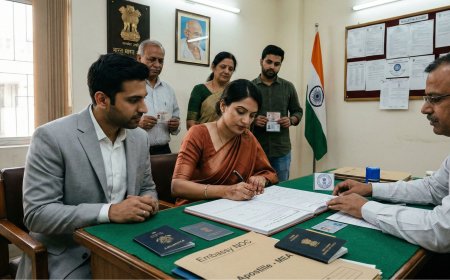
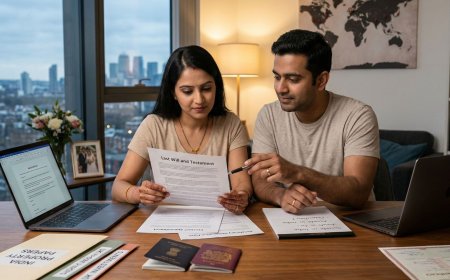
We had our civil registry wedding six months ago for visa purposes. Does the Catholic church still conduct a full wedding ceremony?
Yes. The Catholic Church considers the sacramental wedding ceremony the binding marriage in the eyes of the faith, regardless of prior civil registration. Inform your priest of the civil ceremony date at your initial consultation — this is entirely standard for NRI couples and raises no complications. The full nuptial Mass, the Roce, and all traditional customs proceed exactly as they would for a couple marrying for the first time in every sense.
THE EMOTIONAL ANGLE
There is a specific moment in a Mangalorean Catholic wedding that nobody photographs well and everybody remembers forever. It is not the church ceremony. It is not the first dance. It is the moment during the Roce when the first woman — usually the mother, or the oldest aunt present — takes the coconut milk in her cupped palms and brings it to the bride's hair. And the room goes quiet. And the singing begins. And the bride, who has been composed and cheerful all morning, suddenly understands what is happening.
She is being anointed. She is being released. She is being loved in a language so old it has no name in English.
For NRI families doing this in a Melbourne living room or a Dubai apartment, there is an extra layer that is almost unbearable in its tenderness. The women singing may have learned the songs from recordings. The coconut milk may have come from a tin because fresh-pressed wasn't possible this week. The eldest aunt may be joining by video from Mangalore with a two-second delay. And none of that makes it less real. If anything, the determination — the absolute refusal to let this moment disappear just because you live seven thousand miles from the church where your mother was anointed — makes it more real.
This is what it means to carry a culture. Not in a suitcase. In your hands. In your voice. In the way you hold your daughter's face and say, without words: you come from somewhere. Don't ever forget where.
A MOMENT TO SMILE
At a Mangalorean Catholic wedding in Southall, West London, in 2021, the family had sourced everything perfectly — fresh coconut milk from an Indian grocer on the Uxbridge Road, rose water from a Pakistani beauty supply shop two doors down, and turmeric from a Sri Lankan grocery that the bride's mother had been loyal to for eleven years. What nobody had planned for was the bride's younger cousin, aged seven, who had been told he could help with the Roce and had interpreted this as permission to apply coconut milk with the enthusiasm of someone grouting a bathroom.
By the time the adults intervened, the bride had coconut milk in her left ear, on her collar, and inexplicably on the ceiling. The Roce songs had dissolved into laughter. The bride's grandmother, watching from Mangalore on a tablet propped against a vase of roses, was laughing so hard she had to pass the tablet to someone else.
The photographs from that morning are the ones that come out every Christmas. The coconut milk on the ceiling became a permanent fixture of family mythology. The groom, when he heard the story at the reception, said it was the moment he knew he had married into exactly the right family.
QUOTES FROM THE DIASPORA
"I was determined to do the full Roce even in our two-bedroom flat in Mississauga. We had fourteen women in our living room. My neighbour — she's Portuguese, actually — heard the singing through the wall and knocked to ask if everything was all right. We ended up inviting her in. She cried. She said it reminded her of something from her own grandmother's village. I think about that a lot." — Swetha D'Souza, Mangalorean Catholic community, Mississauga
"My son's wife is from England. She's not Indian, not Catholic. But she sat for the Roce like she had been born to it. She told me afterwards that she had never felt so welcomed by a family in her life. That is what the Roce does. It doesn't just prepare the bride. It opens the door for everyone." — Laveena Pais, Mangalorean Catholic, Dubai
"We flew a Konkani priest from New Jersey to Melbourne for our wedding. People said we were mad. But when he began the nuptial prayers in Konkani and my father — who had not heard those words since his own wedding in Mangalore thirty years ago — put his face in his hands, I knew we had made exactly the right decision." — Riona Crasta, Mangalorean Catholic community, Melbourne
YOUR ROOTS TRAVEL WITH YOU
The Mangalorean Catholic wedding tradition is proof that a community can survive everything — captivity, colonisation, migration, and the particular loneliness of building a life in a country that has never heard of sorpotel — and still emerge on a Saturday morning in a living room somewhere, singing in Konkani, with coconut milk on their hands and roses in their hair.
NRI.Wedding is here for exactly this moment. Our directory of verified Konkani Catholic priests, Mangalorean vendors, coastal Karnataka photographers, and destination wedding specialists in Udupi and Mangalore exists because your ceremony deserves its full weight, wherever in the world you are standing when you say your vows.
Browse our Mangalorean Catholic wedding planning checklist. Find your priest. Source your sorpotel. Sing the songs your grandmother taught you, even if you have to learn them from a recording, even if you have to teach yourself.
Your roots travel with you. Let them sing.
This article covers Mangalorean Catholic wedding rituals including the Roce ceremony, Konkani nuptial traditions, sorpotel feast customs, and diaspora adaptations for NRI couples in Dubai, Toronto, Melbourne, London, and Mississauga planning authentic Tulu-Konkani coastal Catholic weddings.
What's Your Reaction?
 Like
0
Like
0
 Dislike
0
Dislike
0
 Love
0
Love
0
 Funny
0
Funny
0
 Angry
0
Angry
0
 Sad
0
Sad
0
 Wow
0
Wow
0