





















































The Promise Made Public: Inside the Muslim Mangni Engagement Ceremony
Mangni is the Muslim engagement ceremony that formally binds two families together before the Nikah — a richly diverse ritual of ring exchanges, decorated trays, mithai, and family blessings that varies meaningfully across Pakistani, Indian Muslim, Bangladeshi, Kashmiri, and Arab communities. Rooted in the Islamic concept of khitba and the South Asian tradition of public commitment, the Mangni is preserved powerfully across the Muslim diaspora in the UK, USA, Canada, UAE, and Australia. This complete guide covers its community variations, tray culture, ring exchange debate, maulvi role, and everything NRI Muslim families need to do it right abroad.


Mangni — the Muslim engagement ceremony that formally binds two families together before the Nikah — is one of the most culturally diverse and emotionally charged rituals in all of South Asian Muslim wedding tradition. It is the moment the intention becomes public, the families become one extended unit, and the couple steps from the private world of their agreement into the social world of their community's blessing. From Pakistani Mangni traditions in Birmingham to Hyderabadi Mangni customs in Houston, from Bangladeshi engagement ceremonies in East London to Kashmiri Muslim traditions in Toronto, the Mangni is not one ceremony but many — each community's version a distinct expression of the same fundamental human act: two families saying, in front of everyone they love, that they have chosen each other.
You remember when it was announced. Not the private conversation, not the families meeting over chai and careful words — but the Mangni itself. The room full of people. The ring. The moment your engagement stopped being a family matter and became a community event. Someone put something on your finger and the room erupted and your mother was crying and you were smiling in the specific way you smile when you are feeling too many things simultaneously to let any of them out fully.
You are planning your own Mangni now — or your daughter's, or your son's — and you are in London or Toronto or Houston or Melbourne, and the families are in two different countries and three different time zones and everyone has an opinion about how the Mangni should be done and whose tradition should take precedence and whether the ring exchange should happen at the girl's house or the boy's and what the correct gifts are and how many trays and whether the maulvi needs to be present or whether the Mangni is a cultural ceremony that precedes the religious one.
This is the Mangni. The beginning of the beginning. Let's make sure it starts exactly as it should.
🌟 Did You Know?
-
The word Mangni comes from the Urdu and Hindi root maangna meaning to ask or to request — reflecting the historical architecture of the engagement as a formal request made by the groom's family to the bride's family for her hand in marriage. In Islamic jurisprudence, the engagement is called khitba [from the Arabic root meaning to address or to propose] and is understood as a promise of marriage rather than the marriage itself — the khitba creates a moral and social commitment between the families but has no legal status in Sharia until the Nikah is performed. This distinction — that the Mangni is a cultural and social ceremony while the Nikah is the religious and legal one — is the philosophical foundation of the entire Muslim engagement tradition.
-
The exchange of rings at the Muslim Mangni is not an Islamic requirement — it has no basis in the Quran or the Sunnah and was not part of the original engagement tradition in Islamic culture. It entered South Asian Muslim wedding culture through a complex process of cultural exchange — partly through the influence of Hindu engagement traditions, partly through colonial-era British customs, and partly through the general human instinct to mark a significant promise with a physical symbol. Contemporary Islamic scholars hold varying views on the ring exchange: some consider it entirely permissible as a cultural custom, others recommend that the ring exchange happen only after the Nikah when the couple is legally married. NRI Muslim families navigate this question differently, and the family's specific approach should be confirmed with the family's religious guidance before the Mangni is planned.
-
In the Muslim diaspora, the Mangni has undergone a specific and meaningful evolution: increasingly, NRI Muslim families in the UK, USA, Canada, and Australia are combining the Mangni and the Nikah into a single ceremony — the Nikah Mangni — in which the religious marriage contract and the social engagement announcement happen simultaneously. This practice, which has precedent in Islamic tradition where the khitba and Nikah were sometimes combined, resolves several diaspora-specific logistical challenges while also ensuring the couple is religiously married from the moment they are publicly committed.
What Is the Mangni?
Mangni is the Muslim engagement ceremony — the formal public announcement of the intention to marry, the exchange of gifts between families, and in most traditions the exchange of rings between the couple, that precedes the Nikah and marks the beginning of the wedding period. It is governed not by Islamic law but by cultural tradition — each community's version reflecting centuries of local custom, regional practice, and the specific social architecture of that community's understanding of how families join.
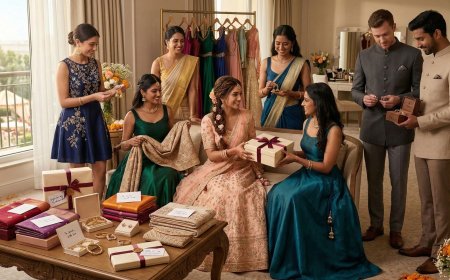
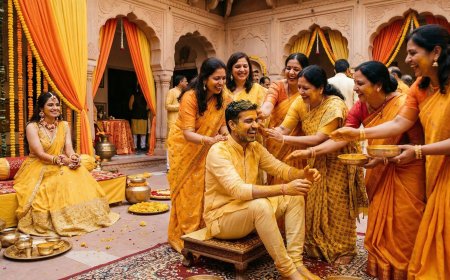
The Mangni typically begins with the arrival of the groom's family at the bride's home — the formal visit in which the groom's side brings gifts for the bride and her family. These gifts are presented on decorated trays — thaal [decorated trays, typically silver or brass, covered with cloth and arranged with gifts] — and their number, content, and arrangement follow specific family and community traditions. Common Mangni gifts include sweets — mithai — dry fruits, clothes for the bride, jewellery, and sometimes a sehraa [a garland or ceremonial decoration for the groom]. The number of trays presented by the groom's family is a matter of family tradition and community expectation, and is one of the most frequently negotiated elements of the Mangni arrangement.
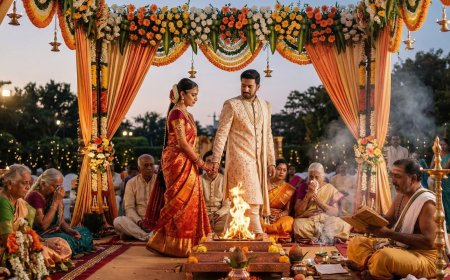
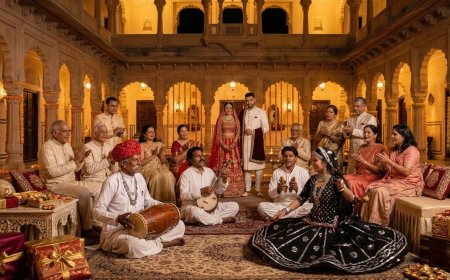
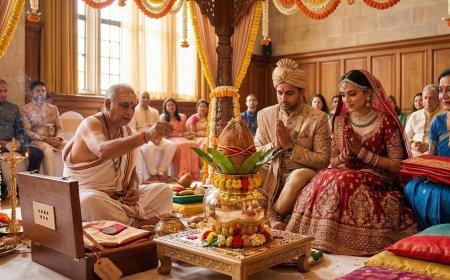
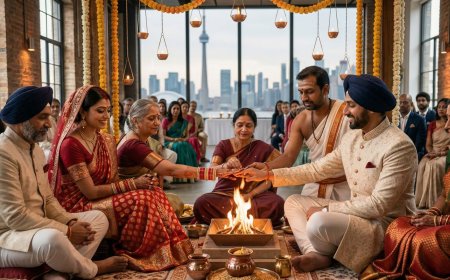
The central moment of the Mangni is the ring exchange — the groom places a ring on the bride's finger and in many family traditions the bride places a ring on the groom's finger. This exchange happens in front of the gathered family and community, typically accompanied by prayers, the recitation of Durood [blessings upon the Prophet], and sometimes a brief supplication by the family's maulvi [Muslim religious scholar] or the most senior male elder of the family.
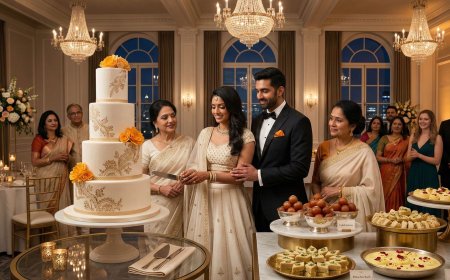
The Mangni concludes with the sharing of sweets — distributed to all present as an announcement and a blessing — and a gathering that may be as simple as a family tea or as elaborate as a catered community feast depending on the family's tradition and resources.
Mangni Traditions Across Muslim Communities
The Mangni is not one ceremony but many — each Muslim community's version carrying its own specific cultural identity. Here is how the engagement tradition manifests across the major Muslim communities represented in the NRI diaspora.
| Community | Local Name | Key Tradition | Tray Culture | How NRIs Abroad Adapt It |
|---|---|---|---|---|
| Pakistani Muslim [Punjab] | Mangni | Groom's family visits bride's home; ring exchange; elaborate tray gifts; maulvi recites dua | High — specific tray numbers expected | Pakistani community hall or home; trays assembled from Asian stores; maulvi sourced locally |
| Pakistani Muslim [Sindhi] | Mangni / Kurmai | Sindhi-specific gift traditions; specific sweetmeats; elaborate jewellery gifting | High — Sindhi-specific tray contents | Sindhi community contacts for specific items; jewellery from Pakistani jewellers in diaspora |
| Pakistani Muslim [Pashtun] | Mangni / Naamzadi | Pashtun-specific traditions; significant jewellery; community elder leads | Very high — community witness essential | Pashtun community elder leads; jewellery from Pakistani jewellers |
| Indian Muslim [Hyderabadi] | Mangni | Hyderabadi-specific customs; Urdu ceremony; specific sweets like Hyderabadi halwa; elaborate | High — specific Hyderabadi tray traditions | Hyderabadi community contacts; specific sweets from South Indian Muslim bakers |
| Indian Muslim [Lucknowi] | Mangni | Lucknawi tehzeeb [refined culture] emphasis; specific Urdu protocols; poetry sometimes recited | Moderate — elegance over quantity | Lucknawi community contacts; Urdu-speaking maulvi preferred |
| Bangladeshi Muslim | Paka Dekha / Mangni | Formal family meeting followed by engagement; specific Bengali Muslim customs; sweets central | Moderate — specific Bengali Muslim sweets | Bangladeshi community hall; Bengali Muslim sweets from Bangladeshi bakers |
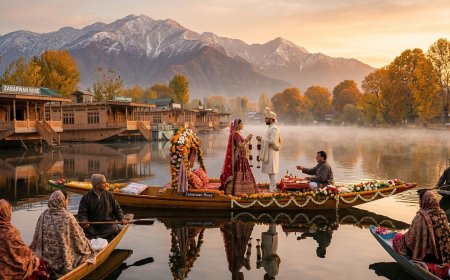
| Kashmiri Muslim | Livun gifts / Mangni | Kashmiri-specific engagement gifts; Kashmiri shawls central; community gathering | Moderate — Kashmiri textiles prominent | Kashmiri community contacts; Kashmiri shawls ordered online |
| Arab Muslim [diaspora] | Khitba | Formal family meeting; Quran recitation opens; mahr discussed; ring exchange | Low — simplicity preferred | Local mosque imam leads; family home setting preferred |
| East African Muslim [Swahili] | Kuposa / Mangni | Swahili-specific traditions; coastal Indian Ocean influences; specific textiles | Moderate — Swahili fabrics prominent | East African Muslim community contacts; specific items from African fabric stores |
| Malaysian / Indonesian Muslim | Pertunangan | Southeast Asian engagement customs; gifts in specific containers; flowers central | Moderate — specific Southeast Asian containers | Southeast Asian Muslim community contacts; specific items assembled |
The Meaning Behind the Ritual
The Mangni is built on a philosophical understanding of commitment that runs through both Islamic and broader South Asian culture — the idea that a promise made publicly, before the community, carries a moral weight that a private agreement does not. The Islamic concept of khitba [the engagement] is understood as creating a sacred moral commitment even though it has no legal status until the Nikah. To break an engagement is not haram [forbidden] in Islamic law, but it is understood as a serious matter — a promise made before community and before God that should not be broken without genuine cause.
The tray culture that dominates South Asian Muslim Mangni traditions — the elaborate presentation of gifts on decorated thaal — is not mere materialism. It is the physical language through which families communicate their regard for each other and their investment in the union being formed. The number of trays, the quality of their contents, the care of their decoration — all of these communicate something specific about how the giving family values the receiving one. To receive the trays is to receive a statement of regard. To present them is to make one.
The sweets that open and close the Mangni — the mithai distributed to every person present — are the announcement made edible. In South Asian culture, sweets mark celebration, auspiciousness, and the sharing of good news. To eat the Mangni sweets is to participate in the announcement, to make yourself a witness to it. Every person who eats the mithai becomes, in a small but real sense, a holder of the commitment that has been made.
For a non-Muslim or non-South Asian partner or family member seeking the simplest truth: the Mangni is the moment two families say publicly and completely — in front of everyone they love and trust — that they have chosen each other. The rings and the trays and the sweets are how that declaration is given physical form.
Doing the Mangni Abroad: The Practical Reality
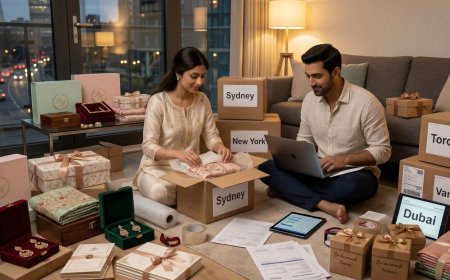
The Mangni abroad faces one logistical challenge that organises everything else: the trays. The elaborate thaal culture of the Pakistani, Indian Muslim, and Bangladeshi Mangni — the decorated presentation trays filled with specific gifts in specific arrangements — requires sourcing, assembling, and decorating that is entirely manageable in Lahore or Hyderabad or Dhaka where every bazaar has tray decorators and sweet shops and jewellers who know exactly what a Mangni tray should contain. In diaspora cities, the same result requires more deliberate sourcing.
Decorated thaal are available from South Asian wedding accessory suppliers in all major diaspora cities. In London, the Asian wedding suppliers of Southall Broadway and Green Street in East Ham carry decorated trays in various sizes and styles. In Toronto, the South Asian wedding suppliers of Brampton and Mississauga. In Houston, the Indian and Pakistani wedding suppliers of Hillcroft Avenue and the Mahatma Gandhi District. In Melbourne, the South Asian wedding suppliers of Harris Park and the broader western suburbs. In Dubai, the wedding suppliers of Meena Bazaar carry an extensive range.
The mithai [sweets] for the Mangni trays should be sourced from a South Asian sweet shop in your diaspora city — not a supermarket. Pakistani and Indian sweet shops in diaspora cities carry the specific sweets — barfi, ladoo, halwa, gulab jamun, jalebi — that belong on a Mangni tray. In London, the sweet shops of Southall and Wembley. In Toronto, the South Asian sweet shops of Brampton. In Houston, the Indian sweet shops of the Mahatma Gandhi District. In Melbourne, the sweet shops of Harris Park. Order in advance — Mangni quantities of mithai require notice.
The jewellery component of the Mangni — the engagement ring and sometimes additional jewellery gifted to the bride — follows the same sourcing logic as any NRI bridal jewellery. Pakistani and Indian jewellers in diaspora cities are familiar with Mangni jewellery requirements. In London, the jewellers of Southall and Wembley include Pakistani and Indian jewellers experienced in Mangni and wedding jewellery. In Toronto, the jewellers of Brampton and Scarborough. Allow six to eight weeks for commissioned pieces.
The maulvi question for the Mangni depends on the family's tradition. In many Pakistani and Indian Muslim families, a maulvi or imam is invited to the Mangni to recite Surah Al-Fatiha, offer a dua for the couple, and give a brief blessing on the engagement. This is a cultural practice rather than an Islamic requirement — the Mangni has no specific religious ritual content required by Sharia — but it is deeply embedded in the social tradition of many communities and is worth honouring if it is part of the family's practice. Most diaspora mosques can recommend an imam willing to attend home or venue Mangni ceremonies.
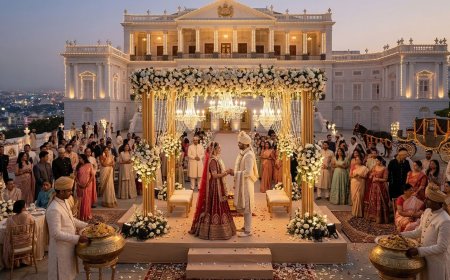
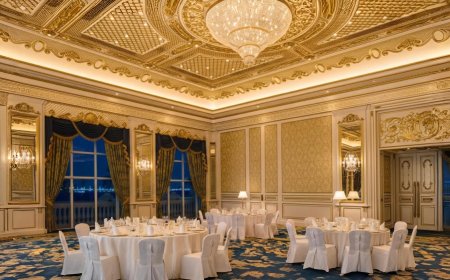
The question of venue for the Mangni follows the same logic as the Nikah — the family home is the most meaningful setting, the mosque hall or community centre a practical alternative for larger gatherings, and the wedding venue's private room an option for families who prefer a more formal setting. Many NRI Muslim families hold the Mangni at the bride's family home, as the traditional Mangni architecture requires the groom's family to come to the bride's family — this directionality has social meaning that a neutral venue partially dissolves.
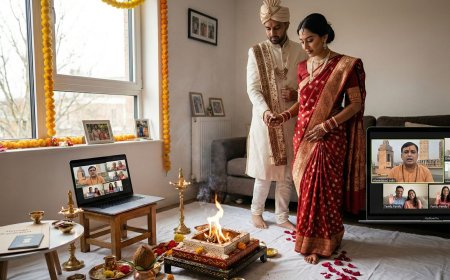
For streaming to family in Pakistan, India, or Bangladesh — where a Mangni in London at 4:00 PM is 9:00 PM in Karachi, 9:30 PM in Lahore, and 10:00 PM in Dhaka — position your device to show the ring exchange and the tray presentation clearly. The grandmother in Lahore watching the ring go on her granddaughter's finger from her sitting room at nine at night will want to see that moment with complete clarity.
Doing the Mangni as a Destination Event in South Asia
To hold the Mangni in Pakistan, India, or Bangladesh — in the family drawing room in Lahore or the ancestral haveli in Hyderabad or the family home in Dhaka — is to do it in the landscape that shaped its every detail. The tray decorators know exactly what a Mangni tray looks like. The sweet shops have been making Mangni mithai for generations. The maulvi has attended a hundred Mangni ceremonies in this neighbourhood.
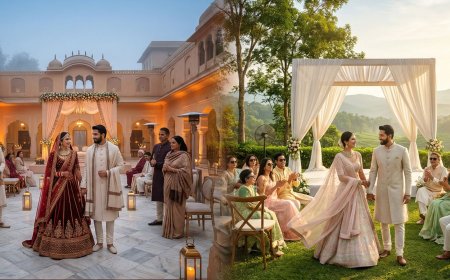
For a destination Mangni in Pakistan, the family drawing rooms and garden settings of Lahore, Karachi, and Islamabad provide the most natural settings. The Mangni in these cities is a well-understood social event with an entire service industry built around it — tray decorators, mithai suppliers, florists who know the Mangni aesthetic, photographers who know the ring exchange is the shot.
For Indian Muslim families, the Mangni traditions of Hyderabad, Lucknow, and Mumbai each carry their own specific cultural weight. The Hyderabadi Mangni in particular — with its Urdu ceremony, its specific sweets, and its emphasis on tehzeeb [refined cultural comportment] — is one of the most distinctive engagement traditions in all of South Asian Muslim culture.
Brief the family's maulvi on any specific prayers or recitations the family wants included — and brief the photographer on the ring exchange as the primary documentary moment. In South Asian Mangni photography, the ring going on and the faces in the room at that moment are the images the family will keep.
What You Need: The Mangni Ceremony Checklist
Ritual and Gift Items: Decorated thaal in the number specified by family tradition — assembled and decorated at least two days before; mithai in sufficient quantity for all guests plus gift boxes for close family; engagement ring for the bride confirmed and ready; engagement ring for the groom if family tradition includes it; jewellery gifts for the bride if family tradition includes additional jewellery; clothes for the bride on the presentation trays if family tradition includes this; dry fruits and nuts for the trays; flower arrangements for the ceremony space; a copy of the Quran for the maulvi's recitation; prayer mats if congregational prayer is included; sweets for distribution to all guests at the end of the ceremony.
People Required: The groom's family as the presenting party who arrive formally at the bride's home; the bride's family as the receiving party; the most senior male elder of the groom's family to formally present the engagement to the bride's family; the maulvi or imam for the dua and blessing if family tradition includes this; two witnesses if the family is combining Mangni with a formal khitba declaration; the bride and groom as the ceremony's central figures; your wedding photographer — brief them that the ring exchange and the tray presentation are the two documentary priorities of the ceremony, and that the faces of the mothers at the ring exchange moment are the images that will matter most.
Preparation Steps: Confirm tray number and contents with both families at least one month before. Source and assemble trays at least one week before. Order mithai at least one week before from a South Asian sweet shop. Confirm maulvi at least three to four weeks before. Confirm ring at least six to eight weeks before if commissioned. Prepare ceremony space the evening before. Set up and test the video stream to family abroad at least the day before. Brief photographer on ceremony sequence and key moments the evening before.
NRI.Wedding connects Muslim NRI couples with Mangni planning support, tray assembly and decoration contacts in diaspora cities, Pakistani and Indian Muslim jewellers, maulvi and imam contacts across all major communities, and photographers who understand the Mangni's specific documentary requirements. Begin at NRI.Wedding.
5 Questions NRI Couples Always Ask
Our families follow different Muslim cultural traditions — one Pakistani Punjabi, one Hyderabadi. Whose Mangni tradition do we follow?
This is one of the most common and most creatively solvable questions in Muslim NRI wedding planning. The most elegant approach is to hold two Mangni celebrations — one at each family's home, each following the host family's tradition — which has the additional advantage of giving both families their own ceremony to host and organise in the way they know. If a single combined Mangni is preferred, the practical solution is to divide the ceremony into two sequences: the groom's family arrival and tray presentation following Pakistani Punjabi tradition, and the dua and blessing following Hyderabadi custom, with the maulvi briefed to incorporate both. Discuss this explicitly with both family elders before any planning begins — most elders, when asked directly and respectfully, are more flexible than their initial positions suggest.
Is it Islamic to exchange rings at the Mangni before the Nikah?
This is a question of Islamic jurisprudence on which scholars hold different views, and the answer depends on the madhab and the specific scholarly guidance your family follows. The mainstream position in many Hanafi-following communities is that a ring exchange at the Mangni is permissible as a cultural custom provided the couple does not treat each other as mahram [a spouse to whom full marital rights apply] before the Nikah — the Mangni ring is a symbol of commitment, not a symbol of marriage. Some scholars recommend avoiding the ring exchange until after the Nikah for clarity. Consult your family's maulvi or trusted Islamic scholar for guidance specific to your situation, and do not rely on general social media fatwas for a decision this significant.
The groom's family wants fifty trays. The bride's family thinks ten is more appropriate. How do we navigate this?
Tray number negotiations are one of the most persistent sources of pre-wedding family tension in South Asian Muslim wedding planning, and they deserve a direct and practical answer. The most useful reframe is to move the conversation from quantity to meaning — ask both families what the trays are intended to communicate, because almost always the answer is the same: love, regard, and investment in the union. Once the intention is agreed, the quantity becomes a practical matter rather than a status one. A sensible middle position — typically agreed through a calm conversation between the two family elders, without the couple present — is almost always reachable. If it is not, a trusted community elder or family friend can serve as a mediator. Do not let tray number become the memory of your Mangni.
Can we combine the Mangni and the Nikah into one ceremony?
Yes, and many NRI Muslim families do exactly this — the combined Nikah Mangni is increasingly common across diaspora communities for several practical and philosophical reasons. Practically, it reduces the number of events to plan and coordinate across international timelines. Philosophically, it ensures the couple is legally and religiously married from the moment they are publicly committed, resolving any ambiguity about the couple's status during the engagement period. The combined ceremony requires both the Mangni's cultural elements — trays, rings, sweets — and the Nikah's religious elements — qazi, wali, witnesses, mahr, Nikah Nama. Confirm the combined format with your qazi at the earliest stage of planning and ensure the Nikah's legal requirements are fully met within the combined ceremony.
My fiancé's non-Muslim family will be attending the Mangni. How do we make them feel included and comfortable?
Brief them thoroughly the evening before — a simple one-page explanation of the Mangni's sequence, the significance of the trays, the ring exchange moment, the dua, and the mithai distribution will make the ceremony fully comprehensible to a non-Muslim observer. Assign a family member to sit with the non-Muslim guests throughout the ceremony and quietly explain each element as it happens. The dua — the supplication for the couple's happiness and blessing — is universally comprehensible as an act of prayer for two people making a commitment, regardless of religious background. The mithai is self-explanatory. The trays, once explained as the physical language of familial regard, become immediately meaningful. Most non-Muslim guests at a well-explained Mangni leave deeply moved by the warmth and intentionality of the ceremony.
The Emotional Angle
Nobody tells the mother of the bride that the tray moment will be the one that breaks her open.
She has been managing everything. The guest list and the mithai order and the tray decoration and the maulvi confirmed and the room arranged and the outfit chosen and the hundred details that constitute a Mangni planned across two countries. She has managed all of it because managing things is how she stays in her body and does not fall into the feeling that has been waiting at the edge of all this preparation.
And then the groom's family arrives. The men carry the trays in — the decorated thaal piled with sweets and dry fruits and the velvet box that contains her daughter's ring — and they set them down in the room she has prepared, in the home she has kept for twenty-six years, and she looks at those trays and something in her shifts.
Because the trays are real. The whole thing has been real since the families met and the conversations happened and the decision was made. But the trays make it visible. The trays say: this is happening. Another family has come to your home with their arms full of gifts and their faces full of hope and they are asking for your daughter. They are here. This is real.
She watches the groom's mother lift the ring from the velvet box. She watches her son-in-law — he is not her son-in-law yet, not until the Nikah, but her heart has already decided — place it on her daughter's finger.
Her daughter looks up. Their eyes meet across the room.
And the mother understands, in that specific moment with the mithai smell in the air and the maulvi's dua just concluded and the room full of the people she loves most in the world, that she has done her job. She raised a daughter worth crossing a room with trays for. Worth coming to ask for properly. Worth loving publicly, in front of everyone, without hesitation.
She distributes the mithai herself, going person to person around the room, because she needs something to do with her hands and with the feeling that has no other outlet.
Every person takes a piece. Every person is a witness.
The announcement has been made.
A Moment to Smile
At a Pakistani Muslim Mangni in Birmingham in the winter of 2022, the elaborate tray presentation had been planned with military precision — eleven trays, each with specific contents, each decorated by the groom's aunties over two evenings of considerable effort and occasional disagreement about the ribbon colour.
The trays were carried in by the groom's male relatives in a procession of appropriate dignity.
The eleventh tray — the largest, containing the velvet ring box at its centre surrounded by the finest mithai — was being carried by the groom's seventeen-year-old cousin, who had been given this responsibility because he was the tallest and therefore most visible and therefore most suitable for the ceremonially significant final tray.
He tripped on the drawing room rug.
The tray tilted.
The velvet ring box described a small, graceful arc.
It landed, closed, in the lap of the bride's grandmother — the most senior person in the room — who had been seated in the chair of honour and had not moved.
The room went completely still.
The grandmother looked at the box in her lap. She looked at the seventeen-year-old, who had gone a specific shade of white. She looked at the groom, who was considering whether the floor might open and receive him.
She picked up the ring box. She opened it. She examined the ring with the unhurried attention of a woman who has seen many rings and knows quality when she sees it.
"Good choice," she said to the groom. She handed the box to the groom's mother with the composure of someone who catches engagement rings in their lap regularly.
The room dissolved. The dua that followed was delivered by the maulvi through barely contained laughter. The ring went on the bride's finger correctly and without further incident.
The grandmother is the family's favourite person in every story told about this Mangni. She knows this and accepts it with complete dignity.
Quotes from the Diaspora
"My mother spent three days decorating the trays. Three days. She has a full-time job and she decorated eleven trays in the evenings after work because she said: the trays are how we show them what we think of their daughter. I watched her tie each ribbon and I understood that she was not decorating trays. She was making a statement about how much she valued the family she was joining. I have never been more proud of her." — Imran Chaudhry, Pakistani Muslim community, groom, Birmingham, UK
"We did a combined Nikah Mangni in our living room in Toronto. Fifteen people. The qazi, both families, the witnesses. The ring and the Nikah Nama happened in the same twenty minutes. My husband put the ring on my finger and then we signed the contract and the maulvi made dua and my mother distributed mithai and I was engaged and married simultaneously. Some people said it was too simple. I said: it was exactly enough." — Nadia Rahman, Bangladeshi Muslim community, Toronto, Canada
"The groom's family brought seven trays to our house in Houston. My mother counted them before they arrived, counted them when they came in, and counted them again after. Not because she was checking — because she was making sure she had counted right, because seven was exactly right, and she wanted to feel the rightness of it. She has talked about those seven trays at every family gathering since. The trays were right. Everything was right. It was right." — Sana Mirza, Pakistani Muslim community, Houston, USA
The Promise Is Made. Everything Follows From Here.
Your mother decorated the trays herself because the trays are the statement and she wanted the statement to be hers. She tied each ribbon and arranged each sweet and placed the velvet box at the centre of the final tray with the care of someone who knows that the family receiving these trays will remember how they looked.
She was right. They will remember. They already do.
NRI.Wedding is here for every part of making your Mangni exactly what it should be — from tray assembly and decoration contacts in your diaspora city to Pakistani and Indian Muslim jewellers, from maulvi and imam connections across all major Muslim communities to photographers who know that the ring exchange and the mothers' faces are the images that define a Mangni in family memory for generations.
The trays have been presented. The ring is on the finger. The mithai is in every hand. The community has witnessed. The promise is made — and everything that comes next begins from this moment of complete, public, joyful intention.
This article explores Mangni, the Muslim engagement ceremony across Pakistani, Indian Muslim, Bangladeshi, Kashmiri, Arab, and broader Muslim communities, its cultural and jurisprudential foundations, the tray tradition, the ring exchange, and complete practical guidance for Muslim NRI couples planning the Mangni in the UK, USA, Canada, UAE, and Australia.
What's Your Reaction?
 Like
0
Like
0
 Dislike
0
Dislike
0
 Love
0
Love
0
 Funny
0
Funny
0
 Angry
0
Angry
0
 Sad
0
Sad
0
 Wow
0
Wow
0