





































































The Night They Paint Her Hands With Everything She Is Taking With Her
Mehendi Night is one of Indian wedding culture's most emotionally significant rituals — and for NRI couples across London, Toronto, Dubai, Sydney, and Houston, it remains the celebration no distance can diminish. This in-depth guide covers the cultural origins of bridal henna, regional traditions across ten Indian communities, and practical advice for sourcing artists, managing venue restrictions, and coordinating with family in India via video call. Whether planning abroad or as a destination wedding in India, this is your complete resource for an authentic, meaningful Mehendi Night.


Mehendi Night is more than a pre-wedding party — it is one of the oldest living rituals in Indian wedding culture, a ceremony where colour, scent, and song converge to mark a bride's passage from one life into another. For NRI couples planning weddings across London, Toronto, Dubai, and Sydney, it remains the evening guests fly longest for, the night mothers cry without explanation, and the tradition no force of geography has ever managed to dim.
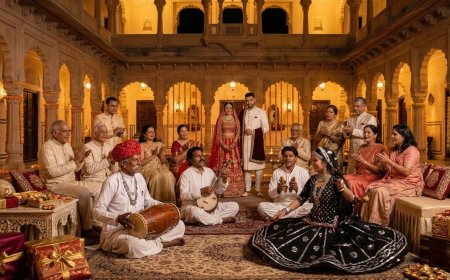
You grew up watching it happen to someone else — a cousin, an aunt, a neighbour from the building two streets over. The women gathered on a rooftop or in the back room of a hall, the air thick with the green-brown perfume of fresh henna, someone's dholak [hand drum] keeping time while everyone argued cheerfully about whether the paste should be thicker. You were too young to sit still, too old to pretend you weren't paying attention. You stored it, though. Filed it somewhere behind your sternum where the important things live.
Now it is your wedding. You are in Melbourne or Mississauga or somewhere the streets smell of winter, and you are texting your mother at 11pm asking whether the mehendi artist needs to be from your specific region or whether any trained artist will do. You are reading articles written for people who do not have your exact problem: that you love this ritual completely, carry it in your body the way you carry your mother tongue, and still have no idea how to do it from this distance, in this country, with this budget, at this venue that has rules about open flames and noise after 10pm.
This article is for you. Every word of it.
🌟 DID YOU KNOW?
Henna application as a pre-wedding ritual dates back over 5,000 years to ancient Egypt and the Indus Valley Civilisation — archaeologists have found evidence of henna use in burial sites from 3000 BCE, suggesting it was considered sacred enough to accompany the dead into the afterlife.
The chemistry of henna staining is permanent at the cellular level: lawsone, the active dye molecule in Lawsonia inermis, binds to the keratin proteins in skin — which is why the colour deepens over 48 hours and cannot be washed away. The darkness of the stain was traditionally read as an indicator of the depth of the groom's love.
According to community surveys conducted among South Asian diaspora in the UK and Canada, Mehendi Night consistently ranks as the wedding event with the highest emotional significance for NRI mothers — above the ceremony itself — because it is the last evening the bride is undisputedly still "theirs."
What Is Mehendi Night?
Mehendi [henna; derived from the Sanskrit mendhika, referring to the Lawsonia inermis plant] is applied to a bride in an intricate ceremony that typically takes place one or two evenings before the main wedding day. It is not simply decorative. The ritual exists at the precise intersection of beauty, protection, celebration, and farewell — and that is exactly why it has never died.
The paste itself is made from dried henna leaves ground into a fine powder, mixed with lemon juice, sugar, and essential oils such as eucalyptus or tea tree to intensify the stain. A skilled mehndiwaali [henna artist] applies it through a cone in patterns that can range from the bold geometric motifs of Rajasthan to the ultra-fine floral latticework favoured in Hyderabad and the dense narrative panels of Mughal-influenced North Indian design. The application begins on the bride's palms and works outward — across the backs of the hands, up the wrists, along the forearms, and often continuing across the feet and calves.
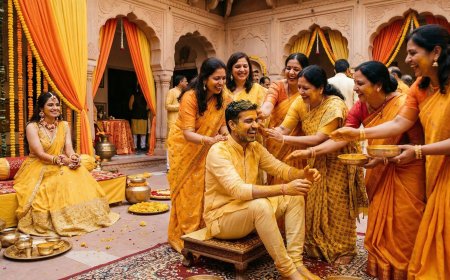
The ceremony typically unfolds the evening before the haldi [turmeric application ritual], placing it two nights before the wedding itself. While the artist works, women of both families gather. Songs — called mehndi ke geet [henna songs] — are sung, often passed down through generations and customised to tease the bride, bless the groom, and name the families being joined. The groom's name or initials are traditionally hidden within the bride's design; at the wedding, the groom must search for them — a moment of laughter built into the structure of a sacred night.
What makes Mehendi Night spiritually significant is this: henna is considered a shubh [auspicious] substance across virtually all Hindu, Muslim, and Sikh wedding traditions. Its deep colour is associated with love, fertility, prosperity, and protection from the nazar [evil eye]. The darker the stain, the stronger the blessings. In many communities, the bride is not permitted to do any household work until the henna fades — a built-in honeymoon protection encoded in ancient custom.
Community Comparison: Mehendi Traditions Across India
| Community / State | Local Name | Key Tradition | How NRIs Abroad Adapt It |
|---|---|---|---|
| Himachali | Mehendi Raat | Applied by maternal uncle's wife (maami); accompanied by nati folk dance | Maami attends or video-calls in live; local Bollywood dance substituted for nati |
| Garhwali | Mehendi Ceremony | Henna mixed with local herbs; songs reference the Garhwal hills and rivers | Herb mix sourced from Indian grocers; Garhwali folk songs played via speaker |
| Kumaoni | Mehendi Lagan | Applied to the sound of hudka [traditional drum]; turmeric added to paste | Recorded hudka music used; turmeric paste applied as symbolic first coat |
| Ladakhi | Rare — adapted from Punjabi influence | Urban Ladakhi families have adopted full mehendi ceremonies within last two generations | Same Punjabi-style mehendi adopted; artists found via South Asian community networks |
| Kashmiri Pandit | Dast-bandi | Henna applied on the night of Lagan; special significance given to the right hand | Pandits perform abbreviated Dast-bandi mantras via video call; full mehendi applied by artist |
| Punjabi | Mehendi | Elaborate, loud, celebratory; dhol [large drum] mandatory; ladies' sangeet combined | Dhol player hired from local gurudwara network; combined mehendi-sangeet event held at banquet hall |
| Marathi | Mehendi / Haldi-Mehendi | Less elaborate than North Indian; combined with haldi ceremony; simple designs preferred | Kept intentionally simple; family applies first stroke; artist completes the rest |
| Tamil | Marudhani | Typically applied as solid red-orange rather than detailed patterns; emphasises palms and soles | Tamil mehendi artists found in London, Toronto, and Sydney Desi communities; pattern style briefed |
| Bengali | Alta / Mehendi | Alta [red lac dye] traditionally used on feet rather than henna; mehendi increasingly adopted | Both alta and henna applied; alta ordered online from Kolkata-based suppliers shipping internationally |
| Rajasthani | Mehendi | Among the most intricate traditions; full arm and leg coverage; designs include miniature scenes from the bride's life | Two-day artists booked well in advance; Rajasthani artists in UK and Canada especially sought after |
The Meaning Behind the Ritual
To understand why Mehendi Night moves people to tears, you have to understand what henna actually represents in Indian philosophical thought. The Lawsonia inermis plant grows most abundantly in dry, arid climates — the Thar Desert, the Deccan Plateau, Rajasthan's sun-scorched plains — and yet it produces something lush, cooling, fragrant. Ancient Indian thought read in this a lesson: that beauty and abundance are not gifts of comfort, but achievements of resilience. Applying henna to a bride is, at its root, a prayer that she carries this quality forward into her new life.
The act of application itself is communal and intentional — it cannot be rushed, cannot be done alone, requires patience, warmth, and the steady hands of someone who loves you. In Ayurvedic tradition, henna is also deeply medicinal — cooling in nature, calming to the nervous system — which is why the night of mehendi application was structured as a night of rest and receiving, where the bride does nothing, asks for nothing, and is simply cared for.
The ritual encodes an entire worldview: that a woman entering marriage deserves to be celebrated, adorned, seen, and surrounded before she crosses the threshold. It is, perhaps, the most tender thing Indian culture does.
For a non-Indian partner or family member, here is how to explain it: this is the night we paint the bride's hands with blessings, because in our tradition, a woman's hands are where she gives love — and we send her into her new life with that love already written on her skin.
Doing Mehendi Night Abroad: The Practical Reality
This is the section your mother has been waiting for.
The first thing to know is that Mehendi Night travels exceptionally well — better than most Indian wedding rituals — because it requires no open flame, no specific religious site, and no elaborate physical infrastructure. What it does require is a skilled artist, the right henna paste, the right music, and the right women in the room. In diaspora cities, all of these are findable. Here is how.
Finding Your Artist: Major South Asian diaspora hubs have established mehendi communities. In London, Southall Broadway and Green Street in East Ham have walk-in mehendi studios as well as traveling bridal artists who book months in advance for wedding seasons. In Toronto and Mississauga, the Dixie Road and Hurontario corridor has several mehendi artists who specialise in specific regional styles — it is worth asking explicitly for North Indian, Rajasthani, or South Indian style when you enquire. In Houston, Hillcroft Avenue — sometimes called the "Desi Corridor" — hosts multiple bridal mehendi artists. In Dubai, Meena Bazaar and Karama are your destinations. In Sydney, Harris Park in Parramatta is where the South Asian wedding industry lives. Book your artist at least three to four months before the wedding date, and send them reference images of your preferred style. If your family has a specific regional tradition, brief them in writing.
Sourcing the Paste: If you or your family prefer to use homemade or region-specific henna paste rather than the artist's commercial supply, fresh henna powder is available at Indian grocery stores in all of the above neighbourhoods. Mix it with lemon juice, sugar, and a few drops of eucalyptus oil the night before, wrap it tightly in cling film, and allow it to rest overnight for maximum stain depth. Avoid "black henna" products sold at market stalls — these frequently contain para-phenylenediamine (PPD), a chemical compound that causes severe skin reactions.
Venue Practicalities: Most hotels and banquet halls accommodate Mehendi Night easily since there is no fire involved. The main considerations are noise — if you are hiring a dhol player or live musicians, confirm the venue's noise curfew in writing beforehand. Many NRI families book the mehendi in a private home or garden for exactly this reason. Designating a well-lit area with comfortable floor seating and access to water for paste removal works best.
Bringing India Into the Room via Video Call: Set up a dedicated laptop or tablet on a stand angled so that relatives in India can see the bride's hands and the room simultaneously. For guests joining from Mumbai or Delhi, a 10:00pm IST start corresponds to 4:30pm UK time, 5:30pm Dubai time, and 11:00am Toronto time in winter — plan accordingly so elderly grandparents are not awake at midnight. Designate someone specifically to manage the screen — someone who knows both sides of the family and can narrate what is happening.
Doing Mehendi Night as a Destination Wedding in India
If you are bringing your international guests to India for your wedding — and increasingly, NRI couples are — Mehendi Night becomes one of the most immersive evenings you can offer your non-Indian family and friends.
Udaipur, Jaipur, and Jodhpur offer haveli and palace settings where Rajasthani mehndiwaalis sit in courtyards by lantern-light applying henna to an entire room full of guests. Goa provides the combination of outdoor garden settings and easy logistics for international arrivals. Delhi and Mumbai have world-class bridal mehendi artists for every regional style.
When briefing a pandit or priest on regional customs for associated blessings — particularly for communities like Kashmiri Pandits or Kumaonis whose mehendi rituals have specific accompanying prayers — provide written notes from an elder family member or pandit who knows your family's tradition. Most experienced Indian wedding pandits are accustomed to receiving detailed briefs from NRI families and will adapt accordingly.
For non-Indian guests, prepare a small card or programme insert explaining the ritual's meaning. Most international guests who sit for mehendi application describe it as one of the most unexpectedly moving experiences of their lives — the intimacy of having a stranger paint blessings on your hands is, it turns out, universal.
What You Need: Mehendi Night Ritual Checklist
Ritual Items Fresh henna powder (pre-sifted), lemon juice, white sugar, eucalyptus essential oil, cling film for paste storage, henna application cones (pre-filled or empty with piping bags), surgical spirit or lemon-sugar solution for sealing the dried paste, floor sheets or throws to protect the venue, tissue rolls, small scissors, and a bowl of warm water for paste removal. Optional: alta [red lac dye] for feet if following Bengali tradition, and attars [natural perfumes] in the room to deepen the henna's colour.
People Required The bridal mehendi artist (booked separately for the bride with sufficient time — a full bridal design can take four to six hours), additional artists for guests, a dhol player or DJ briefed on mehndi ke geet, a designated family elder to perform the first application stroke, and someone to manage the video call for India-based relatives.
Preparation Steps Book your bridal artist three to four months ahead. Confirm the venue's noise policy and seating arrangement two weeks before. Prepare the henna paste 24 hours in advance if using homemade. Set up the video call station the day of. Brief non-Indian guests beforehand so they arrive expecting a long, slow, beautiful evening — not a quick event.
NRI.Wedding's vendor network includes verified mehendi artists across the UK, Canada, UAE, Australia, and the US, as well as NRI-experienced pandits who can bless the ritual according to your regional tradition. Let us connect you.
5 Questions NRI Couples Always Ask
Can we do Mehendi Night at a hotel ballroom, or does it need to be at home?
A hotel ballroom works perfectly — in fact, many NRI couples prefer it because of the neutral space that both families can share without the logistics of hosting in a private home abroad. Speak to your venue coordinator about floor protection (henna paste does stain carpet), seating arrangements for the floor-style setup, and their music policy. Some hotels will provide a private dining room for the bride's longer sitting, which is quieter and more intimate.
My partner is not Indian. How do we include them in the Mehendi Night without it feeling performative?
The most natural approach is to have your partner sit for mehendi too — even a small design on the back of the hand. Brief them beforehand on what each element means, so that when guests ask (and they will ask), your partner can answer with genuine understanding rather than polite uncertainty. Many NRI couples choose to have a motif that represents both of their backgrounds hidden somewhere in the design — a small nod to the life they are building together.
How do I find a pandit in London or Toronto who knows the specific prayers associated with our regional mehendi tradition?
This is genuinely difficult and the answer is: not every pandit abroad will know region-specific mehendi prayers, particularly for communities like Kumaoni, Kashmiri Pandit, or Garhwali traditions. The most effective solution is to reach out through community cultural associations — the Kashmiri Pandit Sabha in London, for instance, maintains a network of priests who know Kashmiri ritual specifics. NRI.Wedding's pandit directory is filtered by regional tradition, which is the fastest route to the right person.
Our family in India wants to be part of the mehendi ceremony. How do we actually make a video call work well for something this long?
Plan for a two-hour window rather than trying to stream the entire six-hour artist sitting. The most meaningful moments to share are the first stroke of henna applied by a family elder, the singing of traditional songs, and the reveal of the completed hands. Use a stable tripod rather than someone holding a phone. If possible, assign someone in India to coordinate their side — gather the relatives into one room with good audio, rather than a dozen separate video calls competing for the bride's attention.
We're having a civil ceremony first, then the full Indian wedding a month later. Does the mehendi apply at the civil ceremony, or do we wait?
Wait. The mehendi belongs to the Indian wedding sequence — it is spiritually and emotionally a pre-wedding ritual for the ceremony where the vows are taken in the presence of Agni [the sacred fire] or in the religious tradition of your family. Having it at a civil ceremony drains it of context. If you want to mark the civil ceremony with something Indian, consider a small henna design on the wrist — intimate, personal, and distinct from the full bridal mehendi saved for the main event.
The Emotional Angle
There is a particular grief that NRI mothers carry that they never quite name. It is not the grief of the wedding itself — they have prepared for that, in some sense, since the day you were born. It is the grief of the mehendi. Because Mehendi Night is the last night you are theirs in the most uncomplicated way. Tomorrow there will be ceremonies, relatives, an entire scaffolding of ritual. But tonight, you are sitting still, your hands extended, and she is watching someone paint your life with flowers, and she is thinking about the rooftop where her own mehendi was applied, and the city that no longer looks quite the way it did, and the mother who applied the first stroke and has been gone for eleven years now.
NRI families do this ritual in front-room carpets in Brampton, in rented halls in Wembley, in backyards strung with lights in Melbourne's outer suburbs — and they do it with the full force of everything they brought across the water with them. The henna is not nostalgia. It is not performance. It is a completely alive practice being kept breathing by people who understand, in their bones, what it costs to let beautiful things die. They will not let this one die.
The paste stains because it is meant to. These things mark you.
A Moment to Smile
At a Mehendi Night in Mississauga two summers ago, the family had hired a brilliant Rajasthani artist who arrived with her cones, her playlist, and complete professional confidence. The henna paste, however, had been prepared by the bride's nani in a moment of grandmotherly authority — a recipe involving an unmeasured quantity of mustard oil that, it turned out, no one had used in thirty years for very good reason.
The paste was applied. The colour that emerged, twelve hours later, was a cheerful and vigorous shade of orange that bore no resemblance to the deep burgundy the bride had been promised. There was a moment of absolute silence in the bridal suite. Then the bride's nani said, completely without remorse, "In our time, this was the correct colour," and the room collapsed into the kind of laughter that makes mascara run and stress evaporate.
The photographs are extraordinary. The bride's hands glow like marigolds in every shot. She says it was the best thing that happened at the entire wedding.
Quotes from the Diaspora
"I spent months trying to find a mehndiwaali in Sydney who could do Rajasthani-style work, not just the standard bridal design. When I finally found her in Harris Park, I cried in the chair while she applied it — not because I was sad, but because the smell of the henna was exactly what my grandmother's house smelled like during Diwali, every single year. It hit me out of nowhere." — Priyanka Rathore, Rajasthani-Marwari community, Sydney
"My son's fiancée is Scottish. She sat for mehendi for four hours without moving, asked every single question she could think of, and then spent the rest of the evening telling my relatives what each motif meant. I fell completely in love with her that night. The mehendi did that." — Sunita Kapoor, Punjabi community, Leicester
"We did our Mehendi Night in our apartment in Houston because the HOA had rules about events. Fourteen women, one kitchen, a speaker playing songs my nani sent from WhatsApp, and the most incredible bridal design I have ever seen on hands that were shaking with happiness. I would not change a single thing." — Deepa Nair, Malayali community, Houston
Your Roots Travel With You
Somewhere, right now, a bride in a diaspora city is sitting very still with her hands extended, watching a stranger draw an entire universe on her skin. Her mother is behind her, filming on a phone held slightly crooked. Her grandmother is on a tablet propped against a vase of marigolds, watching from a city twelve time zones away. The paste is applied. The songs are sung. The night does what it has always done — it marks the threshold and says: you are loved, you are blessed, you are ready.
NRI.Wedding exists to make sure every element of this night is as perfect as it deserves to be — from verified mehendi artists who know your regional style, to pandits who speak your ritual language, to photographers who understand what they are actually watching. Start with our Mehendi Night planning checklist and let us do the searching while you do the celebrating.
Your roots travel with you. Tonight, they bloom on your hands.
This article explores the Mehendi Night ritual — henna traditions in Indian weddings — across communities including Punjabi, Rajasthani, Tamil, Bengali, Kashmiri Pandit, Marathi, and Kumaoni families, with practical guidance for NRI couples in London, Toronto, Sydney, Houston, Dubai, and Mississauga planning authentic mehendi ceremonies abroad or as destination weddings in India.
What's Your Reaction?
 Like
0
Like
0
 Dislike
0
Dislike
0
 Love
0
Love
0
 Funny
0
Funny
0
 Angry
0
Angry
0
 Sad
0
Sad
0
 Wow
0
Wow
0