












































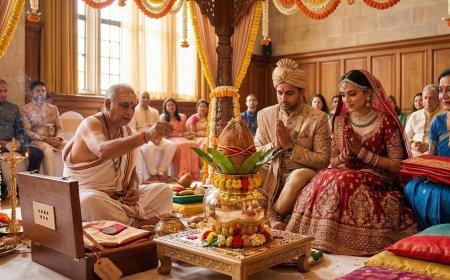

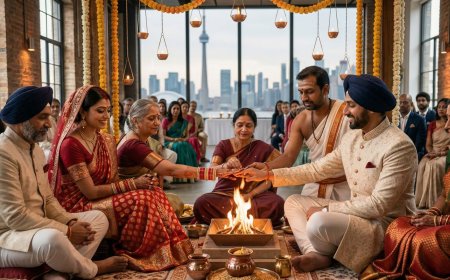



Why Tamil Brides Celebrate the Night Before — And How NRI Families Are Keeping Nalangu Alive Abroad
Nalangu is Tamil wedding culture's most joyful pre-wedding ceremony — a vibrant evening of turmeric anointing, jasmine garlands, the sacred oonjal swing, traditional games, and women's songs that has been celebrated for over 2,000 years and documented in classical Sangam literature. This guide explores the complete Nalangu ritual sequence, community variations across Tamil Iyer, Iyengar, Nadar, Mudaliar, and Sri Lankan Tamil traditions, and practical advice for NRI families recreating this ceremony in cities like London, Toronto, Scarborough, Melbourne, and Houston — including fresh turmeric sourcing, swing hire, nadaswaram musicians, and streaming for relatives in Tamil Nadu.


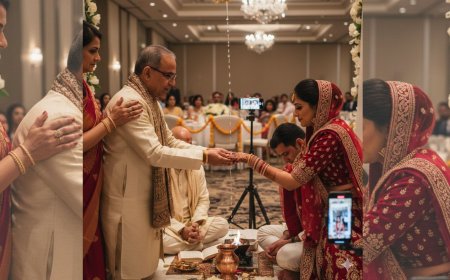
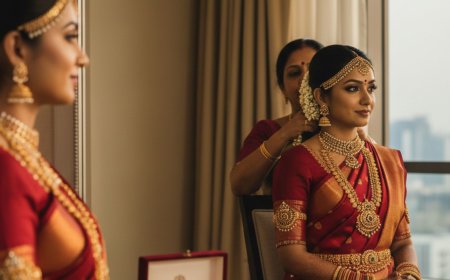
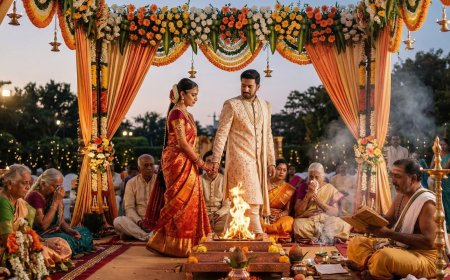
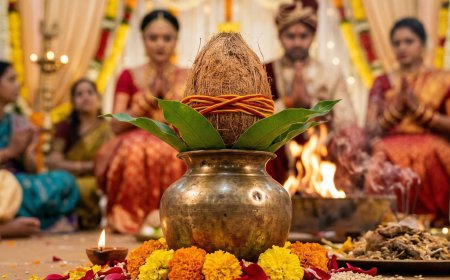
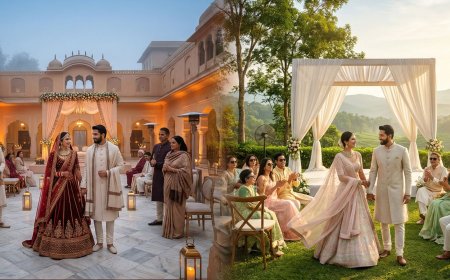
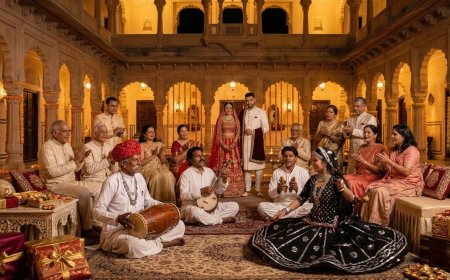
In Tamil wedding tradition, Nalangu is the ceremony that refuses to let a bride arrive at the most important day of her life without first being celebrated, teased, and thoroughly adored by the people who love her most. A pre-wedding ritual of games, turmeric, flowers, and music conducted the evening before the wedding, Nalangu is equal parts spiritual preparation and pure joy — and for Tamil NRI families in London, Toronto, Sydney, and beyond, it is the ceremony that brings the entire community together in the most uninhibited expression of love the Tamil wedding calendar contains.
You grew up hearing the music before you understood what it was for. The nadaswaram from a neighbour's wedding drifting through the summer evening. Your mother and her sisters singing in the kitchen the night before a cousin's ceremony, their voices carrying something older than the words. The sound of women laughing — really laughing — in a way that only happens at certain specific moments in Tamil family life, and Nalangu is one of them.
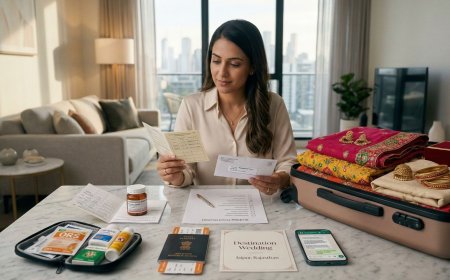
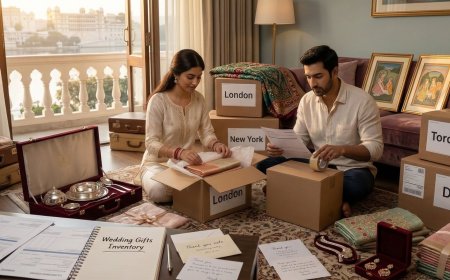
Now you are in Scarborough or Croydon or Parramatta, a week from your own wedding, and your mother is on a video call with three aunties simultaneously trying to coordinate who is bringing the turmeric and who knows the correct sequence of the games and whether the venue will permit the music at the volume it deserves. You are simultaneously exhausted and more excited than you have been about anything in months.
This is Nalangu. It is the ceremony that Tamil tradition designed to make sure a bride knows — with complete and joyful certainty — that she is loved before she crosses the threshold of her new life. And no amount of distance has ever managed to make Tamil families do it quietly.
🌟 DID YOU KNOW?
- Nalangu is documented in classical Tamil Sangam literature — poetry collections dating back over 2,000 years — where pre-wedding rituals of turmeric application, flower adornment, and women's celebratory songs are described in detail, making it one of the oldest continuously practised bridal preparation traditions in the world and predating many North Indian equivalents by several centuries.
- The word Nalangu derives from the Tamil root meaning "to apply" or "to anoint" — specifically referencing the application of turmeric and oil to the bride and groom's bodies as a purification and beautification rite — but the ceremony has expanded over centuries to include an elaborate sequence of games, songs, and rituals that vary significantly by community, region, and family tradition across Tamil Nadu.
- Tamil diaspora wedding surveys conducted across the UK, Canada, and Australia indicate that Nalangu has the highest attendance rate of any pre-wedding ceremony in Tamil NRI weddings — with over 78% of families reporting that Nalangu draws more guests than the Mehendi or Sangeet equivalents, because it is understood to be a community celebration rather than an immediate-family gathering.
What Is Nalangu?
Nalangu (from Tamil: nalan — auspiciousness, beauty, and wellbeing combined; gu — suffix indicating an active process) is the pre-wedding celebration held the evening before or the morning of the Tamil wedding, in which the bride — and in many contemporary Tamil families, the groom in a separate simultaneous ceremony — is anointed with turmeric, garlanded with flowers, seated on a decorated swing or low ceremonial seat, and celebrated through a specific sequence of games, songs, and rituals performed by the women of both families.
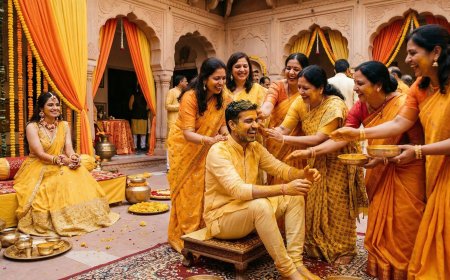
The ceremony begins with the Nalangu Ennai — the ritual application of sesame oil or coconut oil to the bride's hair by the women of her family, beginning with her mother and moving through senior female relatives in order of age. This is followed by the Manjal Nalangu — the application of manjal (turmeric paste) to the bride's face, neck, arms, and hands, performed with specific traditional songs called Nalangu Paadalgal (Nalangu songs) that have been passed down through generations of Tamil women.
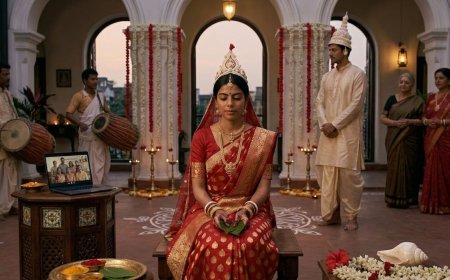
Once the anointing is complete, the bride is seated on a decorated swing — the oonjal (swing) — which carries its own deep symbolic significance in Tamil wedding culture. The swinging motion represents the transitional state of the bride — she is between two worlds, between her father's home and her husband's, and the swing embodies this beautiful, temporary suspension. Senior women from both families stand on either side and push the swing gently while singing — their voices blending in a sound that is simultaneously a blessing and a farewell.
The games that follow are the heart of what makes Nalangu unique among Indian pre-wedding traditions. The bride and groom — sometimes brought together for this section, sometimes kept separate depending on family custom — participate in a sequence of traditional competitive games including Aadu Puli Aatam (a strategy game), exchanging garlands, finding a ring submerged in a vessel of turmeric water, and a game in which each tries to place a tilak on the other's forehead first. These games are not merely entertainment. They are a ritual introduction to marriage itself — a playful rehearsal of the partnership, negotiation, and shared laughter that will define the life ahead.
The entire ceremony is accompanied by kolattam (stick dancing), kummi (clapping songs), and the specific Nalangu songs that carry the ritual's spiritual content — blessings for the bride's beauty, fertility, happiness, and the prosperity of her new home.
Community Comparison Table
| Community / State | Local Name | Key Tradition | How NRIs Abroad Adapt It |
|---|---|---|---|
| Tamil Brahmin (Iyer) | Nalangu / Oonjal | Full swing ceremony central; specific Brahmin Nalangu songs; groom and bride celebrate separately then together | Decorated swing hired or built; Tamil Brahmin community in Markham and Harrow organise full ceremony |
| Tamil Brahmin (Iyengar) | Nalangu with Vaishnava elements | Vishnu invocations woven into Nalangu songs; tulsi garlands instead of generic flowers; distinct mantra sequence | Iyengar community pandit sourced; tulsi garlands made at home; Vaishnava songs preserved via family recordings |
| Tamil Nadar | Nalangu with community songs | Community-specific songs distinct from Brahmin tradition; louder, more percussive music; extended game sequence | Community elders teach younger generation songs via WhatsApp voice notes before ceremony |
| Tamil Mudaliar | Nalangu / Kalyana Nalangu | Emphasis on specific family heirloom jewellery presented during Nalangu; matriarchal family line leads ceremony | Heirloom jewellery brought from Chennai by travelling relatives; matriarch leads regardless of geography |
| Tamil Vellalar | Nalangu with extended oonjal | Longer swing ceremony; specific Vellalar community blessings; groom's family women participate equally | Both families' women share swing duty; community hall decorated with jasmine and banana leaves |
| Sri Lankan Tamil | Nalangu with distinct songs | Sri Lankan Tamil song tradition distinct from Tamil Nadu; specific Sri Lankan bridal preparation customs | Sri Lankan Tamil diaspora in Toronto, London, and Sydney well-organised; community recordings used for songs |
| Himachali | Oil and turmeric ceremony | Pre-wedding oil and turmeric application by senior women; less elaborate game sequence; community songs | Family women lead ceremony at home; folk songs played; community elder gives formal blessing |
| Garhwali | Haldi with folk songs | Turmeric application accompanied by Garhwali women's folk songs; community gathering around bride | Garhwali folk songs played via recording; women's gathering preserved as central ceremony element |
| Kannada (Brahmin) | Nalangu / Arishina Ceremony | Similar turmeric ceremony with Karnataka-specific songs; groom and bride ceremonies held simultaneously | Simultaneous bride and groom ceremonies held in separate rooms; families coordinate timing |
| Telugu Brahmin | Nalangu / Pellikoduku | Groom's equivalent ceremony called Pellikoduku held same day; matching ceremonies for bride and groom | Both ceremonies held at same venue in separate spaces; families visit each other's ceremonies briefly |
| Malayali | Nalungu / Ezhunnellippu | Pre-wedding procession and anointing; specific Kerala flowers including jasmine and champaka used | Kerala flowers ordered from specialist Indian florists; Nair and Ezhava community specific elements preserved |
| Bengali | Aiburo Bhat / Dodhi Mangal | Pre-wedding ritual meal and morning turmeric ceremony; women's songs called Ululation and Mangalcharans | Dodhi Mangal preserved at dawn; special ritual meal prepared by family women the night before |
The Meaning Behind the Ritual
Nalangu operates on a theology of the body that is deeply rooted in Tamil Shaiva and Shakta tradition — the belief that the physical body is not separate from the spiritual self but is its most immediate expression. To prepare the body with turmeric, oil, and flowers is therefore not a cosmetic act. It is a sacred one.
Turmeric — manjal in Tamil — is understood in both Ayurvedic and Vedic frameworks as the most auspicious and purifying substance available to a household. Its application to the bride is an act of simultaneous purification, protection, and beautification — it cleanses the body of negative energies, marks the individual as someone undergoing a sacred transition, and signals to the community that this person has been set apart for a holy purpose. The yellow-gold colour of turmeric is the colour of Saraswati (goddess of wisdom), Lakshmi (goddess of abundance), and the surya (sun) — all the forces the bride is being aligned with as she enters her new life.
The oonjal (swing) is perhaps the most philosophically rich element of Nalangu. In Tamil poetic and spiritual tradition, the swing is the symbol of thiruvilaiyadal — divine play, the cosmic game that Shiva plays with the universe. The bride on the swing is not passive — she is participating in divine play. She is being rocked between the world she is leaving and the world she is entering, and the women who push the swing are the community's way of saying: we will keep you moving. We will not let you get stuck. You are held in our love while you are between.
The games that follow enact another profound theology: that marriage is partnership, not performance. The playful competition between bride and groom — who will find the ring first, who will place the tilak first — is a rehearsal in the grammar of intimacy. It teaches the couple, in front of their entire community, that the person they are marrying is someone they can laugh with. That is not a small thing. In Tamil tradition, it is understood to be the foundation of everything.
For a non-Indian partner or guest: Nalangu is a community's way of saying to a bride — you are not alone in this. You never will be.
Doing Nalangu Abroad: The Practical Reality
Nalangu abroad is, in one sense, the most natural of Tamil ceremonies to recreate — it requires no fire, no complex Vedic equipment, and no specific architectural space. What it requires is people, music, flowers, turmeric, and the willingness to be loud and joyful in a way that Tamil communities manage with great natural ability in any postcode on earth.
The turmeric is your most fundamental sourcing requirement. Fresh turmeric root — ground into a paste with a small amount of milk, rosewater, or sandalwood powder depending on family tradition — is strongly preferred for Nalangu over powdered turmeric, as the texture and colour of fresh-ground paste is distinctly more beautiful and the fragrance is incomparable. Fresh turmeric root is available at Indian and South Asian grocery stores in all major diaspora cities — in London, the shops along Tooting High Street and Wembley have reliable stock. In Toronto, Gerrard Street East and the Scarborough Tamil corridor on Markham Road are your best sources. In Sydney, the Harris Park area in Parramatta has Tamil-run grocery shops that stock fresh turmeric reliably. In Houston, Hillcroft Avenue Indian grocery stores carry it. Order or confirm availability one to two weeks ahead for wedding quantities.
The oonjal — the decorated swing — is the most logistically complex element of Nalangu abroad. Purpose-built ceremonial swings can be hired through Tamil wedding decorators in all major diaspora cities. In London, Tamil wedding vendors in Harrow, Wembley, and East Ham offer full Nalangu decoration packages including swing hire. In Toronto, the Scarborough and Markham Tamil wedding vendor community is well-established and experienced with full Nalangu setups. If a hire swing is not available, a beautifully decorated garden swing or a swing frame constructed by a family member — draped in silk, jasmine, and marigold — is a fully legitimate and often more personally meaningful alternative.
The music is non-negotiable for a genuine Nalangu. The specific Nalangu Paadalgal — Nalangu songs — are the spiritual and emotional backbone of the ceremony, and while a professional musician or vocalist is ideal, Tamil families are generally well-supplied with aunties who know every word of every song and will need very little encouragement to lead. The nadaswaram (double-reed wind instrument whose sound is considered inherently auspicious) can be hired through Tamil cultural associations in London, Toronto, Sydney, and Houston for the ceremony. Many Tamil NRI families also use high-quality recordings of traditional Nalangu songs played through a good speaker system — which works well provided the volume does your ancestors proud.
Venue considerations for Nalangu are relatively relaxed compared to fire-ceremony rituals. A community hall, a large family home garden, or a hired function room all work well. The swing requires ceiling height if it is suspended — confirm this with your venue specifically. Most Tamil wedding vendors have freestanding swing frames that require no ceiling attachment, solving this issue entirely. Confirm with your venue that music at appropriate volume is permitted during the Nalangu time slot.
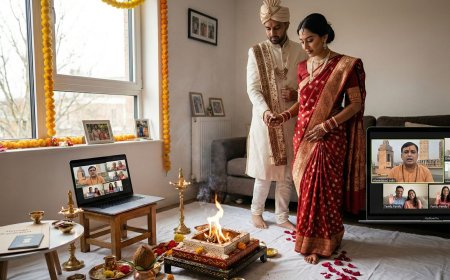
For India-based relatives, Nalangu is among the most enjoyable ceremonies to stream because of its visual richness and musical content. Set up your stream thirty minutes before the ceremony begins — not at the last moment — and use a wide-angle position that captures the swing, the women gathered around it, and the bride's face. If your family is in Tamil Nadu (IST), an evening Nalangu in the UK (7:00 PM GMT) falls at 12:30 AM IST — a late but manageable window for Tamil families who are famously unbothered by sensible bedtimes when there is a wedding involved.
Doing Nalangu as a Destination Wedding in India
Tamil Nadu offers Nalangu in its fullest and most naturally supported expression — the cultural infrastructure for this ceremony is woven into every aspect of Tamil wedding life in the state.
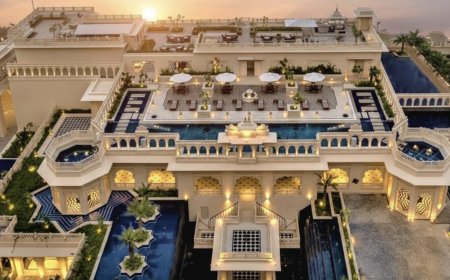
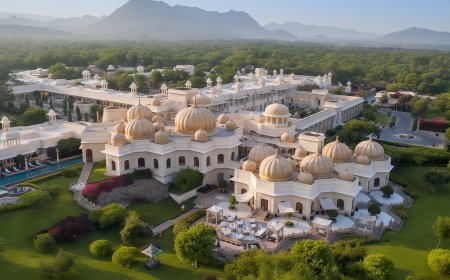
Chennai is the obvious hub for Tamil NRI destination weddings, with wedding venues ranging from heritage Brahmin-style halls to contemporary luxury properties, all staffed with teams who know the Nalangu sequence without needing to be briefed. The city's network of kolu (display) decorators and wedding florists can produce a jasmine-draped oonjal of extraordinary beauty on relatively short notice. Madurai carries particular spiritual significance for Tamil Hindu families — the city's proximity to the Meenakshi Amman Temple and its deep roots in classical Tamil culture make a Nalangu conducted there feel embedded in the tradition's oldest living context. Coimbatore and Thanjavur are increasingly popular for destination Tamil weddings, offering heritage properties with strong cultural authenticity and good accessibility for international guests.
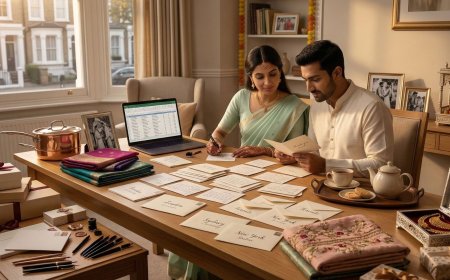
Brief your local ceremony coordinator and any visiting pandit on your specific community tradition — Iyer, Iyengar, Nadar, Mudaliar, and Vellalar Nalangu songs and sequences differ, and a coordinator who assumes all Tamil Nalangu is the same will produce a ceremony that feels generic. A written one-page brief with your family's specific song preferences, game sequence, and any heirloom jewellery presentation moments is the most useful document you can bring to your first vendor meeting.
For non-Indian guests, Nalangu is typically the revelation moment of a Tamil destination wedding — the ceremony where every sceptical or uncertain guest becomes a converted enthusiast. Its combination of beauty, music, laughter, and genuine human warmth is accessible across every cultural background. Assign a warm, English-speaking family member to narrate the ceremony for international guests as it unfolds — not with a microphone, but with the natural hospitality of someone who is proud of what they are sharing.
What You Need: Ritual Checklist
Ritual Items Fresh turmeric root for grinding into paste, or high-quality fresh-ground turmeric paste prepared the morning of the ceremony. Coconut oil or sesame oil for the initial hair anointing. A decorated oonjal (swing) — hired, built, or adapted from an existing swing. Fresh jasmine flowers — non-negotiable for a Tamil bridal ceremony — in quantities sufficient for garlands, hair decoration, and swing adornment. Marigold garlands for the ceremony space. A copper or silver vessel filled with turmeric water and a ring for the ring-finding game. Kolam (rangoli) at the ceremony entrance. Nalangu Paadalgal music — live vocalist, nadaswaram player, or high-quality recording. Heirloom jewellery if the family tradition includes a presentation moment. Kumkum and chandanam (sandalwood paste) for the bride's forehead.
People Required The bride's mother to lead the oil application — this is her ceremony to lead and no other person should begin it. Senior female relatives from both families for the turmeric application sequence. Women who know the Nalangu songs — family members or a hired vocalist. At minimum two women from each family to push the oonjal during the swing ceremony. The groom, if his family's tradition includes the joint game sequence. A photographer and videographer — Nalangu produces some of the most joyful and visually rich images in the entire Tamil wedding album.
Preparation Steps Source fresh turmeric and prepare paste the morning of the ceremony. Confirm swing hire or construction three to four weeks ahead. Brief all participating women on the song sequence and game order one week ahead. Order jasmine flowers through your florist four to six weeks ahead — confirm they can supply the volume required. Set up India video call and test thirty minutes before the ceremony. Position photographer and videographer before guests arrive, not after.
NRI.Wedding connects Tamil families with experienced Nalangu decorators, jasmine florists, nadaswaram musicians, and photographers across diaspora cities — find everything you need in our vendor directory.
5 Questions NRI Couples Always Ask
Can Nalangu be combined with the Mehendi evening or does it need to be a separate event?
Many NRI Tamil families successfully combine Nalangu with the Mehendi evening as a practical adaptation, and this works well provided the Nalangu sequence — the oil, turmeric, swing, and games — is given its own dedicated time and space within the evening rather than being treated as an add-on to the Mehendi party. The risk of combination is that the distinctive character of Nalangu — its specific music, its ceremonial sequence, its women-led ritual structure — can get diluted in a general pre-wedding party atmosphere. If you have the venue capacity, a separate Nalangu held in the afternoon before a combined Mehendi-Sangeet evening is the approach most Tamil families find most satisfying.
My partner is not Tamil. How do we include their family in Nalangu meaningfully?
Nalangu's game sequence is the most natural point of inclusion for non-Tamil guests and family members — the ring-finding game and the tilak game require no cultural knowledge to participate in and generate genuine laughter across every background. Seat the groom's non-Tamil family members close to the action and assign a family member to invite them into the games directly — not as observers but as participants. The swing ceremony is more intimate, but non-Tamil guests who watch it with a brief explanation of the oonjal's symbolism consistently describe it as one of the most moving things they have witnessed at any wedding.
How do we find someone who knows the authentic Nalangu Paadalgal songs in our specific community tradition?
Tamil cultural associations in London, Toronto, Sydney, and Houston maintain networks of women who know community-specific Nalangu songs — contact your local Tamil Sangam or cultural association at least three months before your wedding. Many Tamil NRI families also have aunties and grandmothers who carry this knowledge and need only to be asked and given a microphone. For families whose community-specific songs have not been formally recorded, the weeks before the wedding can be a beautiful opportunity to gather the older women of the family on a video call and record them singing — both for use at the ceremony and as a family archive that will be treasured for generations.
Our venue has a noise restriction after 9 PM. How do we manage the nadaswaram?
A nadaswaram is, by design and tradition, an instrument that carries. It was built to announce auspicious events across a temple courtyard — indoor volume management is genuinely challenging. Practical solutions include scheduling the nadaswaram-accompanied portions of Nalangu before the noise restriction takes effect, using a skilled nadaswaram player who can modulate volume for indoor settings, or incorporating recorded nadaswaram music for the ceremony portions that fall after the curfew. Many Tamil wedding venues in diaspora cities have established relationships with nadaswaram players who are experienced with venue noise restrictions — ask your decorator or Nalangu coordinator specifically for this.
Is it appropriate to have a Nalangu if the bride has been previously married?
Yes. Nalangu is a celebration of a new beginning — a joyful preparation for the life that lies ahead, not an evaluation of the life that came before. Tamil tradition's understanding of Nalangu as a ceremony of blessing, community gathering, and joyful anticipation makes it entirely appropriate for any bride entering a new marriage. The turmeric, the swing, the songs, and the games are about what is coming, not about what came before. A pandit or community elder can provide specific guidance on any mantra adjustments that reflect the family's tradition, but the celebration itself is yours to claim fully.
The Emotional Angle
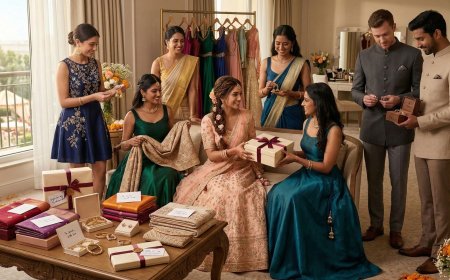
There is a specific quality of love that Tamil aunties carry to a Nalangu that exists nowhere else in the world. It is not the careful, composed love of a formal ceremony. It is something louder and less restrained — the love of women who have watched this girl grow up and are not remotely prepared to let her enter her new life without making absolutely sure she knows what she is worth.
For Tamil NRI families, Nalangu is the ceremony where the diaspora's emotional reserve — the composure that life in a foreign country teaches, the habit of keeping the cultural self private, the decades of explaining and justifying and translating — simply dissolves. Because Nalangu does not ask for explanation. It asks for turmeric and jasmine and the right song at the right moment and the willingness to push a swing while singing something your grandmother taught you in a language that the neighbours will not understand.
Tamil mothers in Scarborough and Croydon and Parramatta have kept these songs alive in their kitchens for thirty years, waiting for exactly this evening. The songs did not travel in suitcases. They travelled in voices — hummed while cooking, murmured while driving, sung to daughters who did not yet know what they were for.
Tonight the daughter knows. Tonight the song is finally for her.
And when the swing begins to move and the jasmine fills the room and the voices of every woman who loves her rise together — she understands, perhaps for the first time with her whole body, that culture is not something you inherit. It is something you are held inside of, by the people who love you, one ceremony at a time.
A Moment to Smile
At a Nalangu in Scarborough two summers ago, the ring-finding game was proceeding enthusiastically until it became clear that both the bride and the groom were taking the competition with a degree of seriousness that the assembled aunties had not anticipated. What had been intended as a lighthearted three-minute game became a focused, strategic, increasingly silent contest that lasted eleven minutes and involved both participants submerging their entire forearms into the turmeric water vessel while their respective families offered coaching from increasingly close range.
The groom found the ring first. The bride disputed the validity of his technique on grounds that were creative if not entirely coherent. A panel of three senior aunties was convened. After deliberation, they declared the result a draw on the grounds that "arguing about the ring game is itself a very good sign for the marriage."
The turmeric water was, by this point, distributed across a significant surface area of the ceremony space. The tablecloth did not survive. The bride's dupatta required attention. The groom's white kurta entered a new chapter of its life. The photograph of both of them — arms golden-yellow to the elbow, laughing with complete abandon — is the first image in their wedding album and the one every guest asks about.
Quotes from the Diaspora
"My mother learned the Nalangu songs from her mother in a village in Thanjavur. She sang them at my sister's Nalangu in Chennai fifteen years ago. She sang them at mine in Croydon last spring. Same songs. Same voice. The only difference was that in Croydon, the neighbours could hear through the wall and knocked to ask if everything was alright. My mother told them everything was more than alright. She was not wrong." — Kavitha Subramaniam, Tamil Iyer family, Croydon
"I am the mother of the groom. My daughter-in-law's family is Tamil and we are Punjabi. I had never seen a Nalangu before. When they put my daughter-in-law on that swing and the women began to sing — I did not understand one word. Not one word. And I cried from the first note to the last. Some things you feel before you understand them." — Harpreet Sandhu, Punjabi-Tamil family, Scarborough
"My grandmother in Madurai watched our Nalangu on a tablet propped against a pickle jar in her kitchen at 1 AM her time. She said it was the best Nalangu she had ever attended. She has attended approximately forty Nalangus in her life. I am choosing to believe her completely." — Priya Krishnamurthy, Tamil Brahmin family, Melbourne
Your Roots Travel With You
Nalangu is the Tamil wedding tradition's greatest act of communal love — a ceremony designed not for the pandit or the ritual or the cosmic alignment, but entirely and specifically for the bride. For the joy she deserves before the solemnity arrives. For the laughter she will need to remember when the weight of new beginnings feels heavy. For the knowledge, carried in her body from this evening forward, that she was celebrated by every woman who mattered before she was given to anyone.
NRI.Wedding is here to make sure this ceremony happens in its fullest, most joyful form wherever you are. From Nalangu decorators and oonjal hire in London, Toronto, Sydney, and Houston, to nadaswaram musicians and Tamil vocalists who know your community's specific songs, to jasmine florists and turmeric suppliers across every major diaspora city, to photographers who know that the ring game photograph is worth more than the formal portrait — we are with you for every swing, every song, and every turmeric-stained kurta.
Your roots travel with you. Let them sing.
This article explores Nalangu — the Tamil pre-wedding bridal celebration — including oonjal swing ceremony, turmeric anointing, Nalangu Paadalgal songs, and traditional games, with guidance for Tamil Iyer, Iyengar, Nadar, Mudaliar, and Sri Lankan Tamil NRI families planning ceremonies in diaspora cities including London, Toronto, Scarborough, Melbourne, and Houston.
What's Your Reaction?
 Like
0
Like
0
 Dislike
0
Dislike
0
 Love
0
Love
0
 Funny
0
Funny
0
 Angry
0
Angry
0
 Sad
0
Sad
0
 Wow
0
Wow
0