





































































Nischitartha: The Sacred Kannada Brahmin Engagement Ritual Every NRI Family Needs to Know
Nischitartha — the formal betrothal ceremony at the heart of every Kannada Brahmin wedding — is far more than an engagement party. Rooted in Vedic sankalpam, gotra lineage, and the sacred exchange of tambula trays, it is the moment two families make a cosmic covenant witnessed by ancestry, community, and divine presence. This guide explores Nischitartha across Smartha, Madhwa, and Iyengar traditions, with practical advice for Kannada Brahmin NRI families recreating this deeply meaningful ceremony in the US, UK, Canada, UAE, and Australia.


In the Kannada Brahmin wedding tradition, the engagement is not a party — it is a covenant. Nischitartha is the ancient ceremony of formal agreement between two families, sealed with sacred ritual, witnessed by fire, and consecrated by the precise alignment of horoscopes that Vedic astrologers have spent centuries learning to read. For Kannada Brahmin NRI families from Karnataka's temple towns and garden cities now living in Silicon Valley, Toronto, London, and Singapore, recreating this ritual abroad is an act of profound cultural devotion.
You grew up watching your parents on the phone with relatives in Mysuru, Udupi, or Dharwad, speaking in a Kannada that sounded different from what you heard at school — older, softer, more careful with its words. Somewhere in those conversations, between the names of eligible boys and the exchange of janmakundalis [birth horoscopes], was the architecture of a future being quietly built.
You didn't think much about it then. You were in Sunnyvale or Scarborough or Slough, navigating a life that felt a long way from the agraharas [traditional Brahmin settlements] your grandparents described. And then one day, unexpectedly, you said yes to someone. And suddenly your mother is calling the family pandit in Bengaluru, and your father is on a video call with the boy's father comparing horoscope printouts, and someone says the word Nischitartha — and the whole ancient machinery begins to move.
That word. That ritual. That moment when two families stop being strangers and become, by sacred agreement, one extended unit of belonging. It is older than any wedding hall, older than any Instagram reel, older than the city you live in. And it is yours.
🌟 DID YOU KNOW?
- The word Nischitartha derives from two Sanskrit roots — nischita [decided, confirmed, resolved] and artha [meaning, purpose, matter] — making it literally "the matter that has been decided," encoding in its very name the gravity of the commitment being made.
- Kannada Brahmin communities — including Smartha, Madhwa, and Iyengar sub-traditions — each observe Nischitartha with meaningful ritual differences: Madhwa families traditionally exchange tambulas [betel leaf and arecanut offerings] as the binding act, while Smartha families place greater emphasis on the Ganapathi Pooja [invocation of Lord Ganesha] that opens the ceremony.
- According to Karnataka's diaspora community networks, the Kannada Brahmin population in the San Francisco Bay Area alone exceeds 40,000 — making it one of the largest concentrations of this community outside India, and one of the most active in preserving sub-community specific wedding rituals including Nischitartha abroad.
What Is Nischitartha?
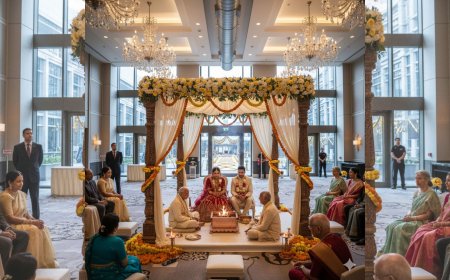
Nischitartha [the formal engagement ceremony, literally "the decided matter"] is the sacred rite of betrothal in Kannada Brahmin wedding tradition — the moment a prospective union transitions from family discussion and horoscope compatibility into public, ritual, and spiritually binding agreement. It is not a ring ceremony borrowed from Western tradition. It is not a party. It is a structured sacred event with its own sequence of rituals, its own required participants, its own spiritual logic — and its own profound emotional weight.
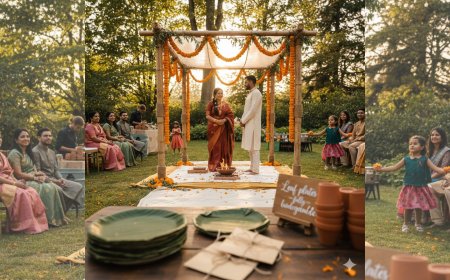
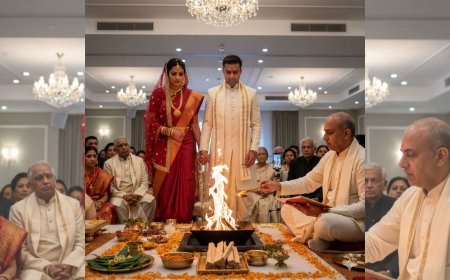
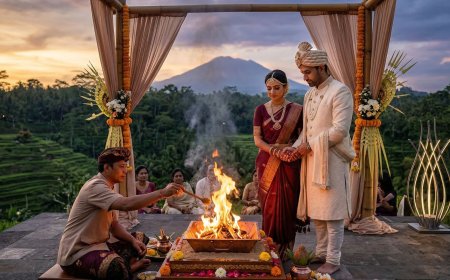
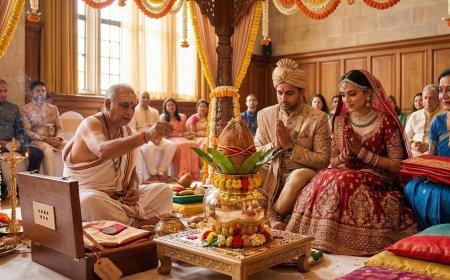
The ceremony typically takes place at the bride's family home, though in contemporary practice it may occur at a temple hall or community space. It begins with Ganapathi Pooja [invocation of Lord Ganesha, remover of obstacles, patron of new beginnings] — an essential opening act in virtually all Kannada Brahmin ceremonies, acknowledging that what is about to begin deserves divine clearance. The family priest then chants Vedic sankalpam [a formal declaration of intent that specifies the date, location, lunar calendar position, and the names of the families involved], formally announcing to the cosmos that this agreement is being made consciously, in full awareness, at this precise moment in time.
The central act of Nischitartha is the exchange of tambulas — trays containing betel leaves, arecanut, coconut, turmeric, kumkum, flowers, fruits, and gifts — between the two families. This exchange is not decorative. In Vedic tradition, the tambula is a vessel of intention: to offer it and receive it is to say, without ambiguity, I accept this union and this family.The groom's family brings the tambula to the bride's family first; the bride's family reciprocates. In many families, the exchange is accompanied by the tying of a kankana [sacred thread] on both the bride and groom's wrists, marking them as betrothed in the eyes of the tradition.
Mangala dravyas [auspicious ritual substances — turmeric, kumkum, coconut, flowers] are distributed to all married women present, invoking their collective blessing upon the couple. The pandit announces the vivaha muhurtham [the auspicious timing for the wedding itself] based on the horoscope compatibility assessment — and this announcement, the formal declaration of the wedding date in sacred space, is in many ways the emotional climax of the Nischitartha. It is the moment the future becomes real.
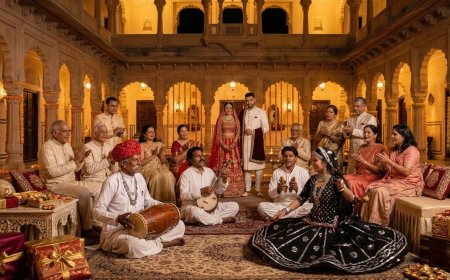
The ceremony concludes with ashirvada [the blessing of elders], where grandparents, parents, and senior relatives place their hands on the heads of the bride and groom and offer prayers for their prosperity, longevity, and happiness together.
Community Comparison: How Different Indian Communities Mark the Formal Betrothal
| Community / State | Local Name | Key Tradition | How NRIs Abroad Adapt It |
|---|---|---|---|
| Kannada Brahmin (Smartha) | Nischitartha | Ganapathi Pooja opens ceremony; tambula exchange; Vedic sankalpam; muhurtham announced by pandit | Conducted at home or temple hall; Bengaluru pandit consulted via video for horoscope; tambula items sourced from Indian stores |
| Kannada Brahmin (Madhwa) | Nischitartha | Strong emphasis on tambula exchange as binding act; Vishnu invocation replaces Ganapathi as primary deity | Madhwa-specific pandits sought through Pejawar or Udupi temple networks abroad |
| Kannada Brahmin (Iyengar) | Nischitartha | Sri Vaishnava traditions observed; Thirumangai [sacred Vaishnava thread] significant; distinct from Smartha practice | Iyengar community networks in USA and UK maintain pandit rosters |
| Himachali | Kurmai | Formal engagement with exchange of gifts; village elders witness; local deity invoked | Adapted to family gathering at home; village deity honoured symbolically with flower offering |
| Garhwali | Sagai | Exchange of coconut and gifts between families; community witnesses required | Garhwali community members in Toronto/London serve as community witnesses |
| Kumaoni | Tilak / Sagai | Tilak applied to groom's forehead by bride's father; formal date-setting follows | Family pandit in Uttarakhand consulted via video call; tilak ceremony preserved |
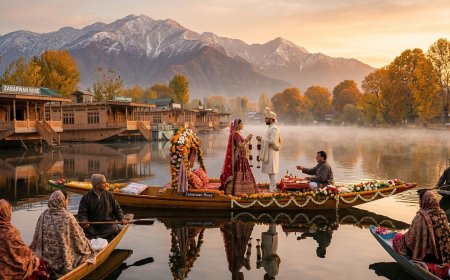
| Kashmiri Pandit | Livun / Kashmiri Misri | Exchange of sugar crystals (misri) and walnuts as betrothal seal; deeply community-specific | Kashmiri Pandit sabhas in New Jersey, London help source traditional items |
| Punjabi | Roka / Kurmai | Roka is informal family agreement; Kurmai is formal with gifts and sweets exchange | Very well-preserved in diaspora; Punjabi families in Brampton, Southall conduct full ceremony |
| Marathi Brahmin | Saakhar Puda | Bride receives sugar (saakhar) in a cloth bundle as betrothal gift; horoscope matching precedes | Maharashtra Mandals in USA and Australia assist with organisation |
| Tamil Brahmin | Nichayathartham | Mirror of Nischitartha; tambula exchange; pandit chants; Lagna Patrika [wedding invitation scroll] formally written | Tamil Brahmin pandits widely available in Markham, Harrow, Melbourne; ceremony well-preserved |
| Bengali Brahmin | Ashirbad / Paka Dekha | Formal family meeting with exchange of sweets and gifts; elder's blessing central | Bengali community centres in London, Toronto host community ceremonies |
| Rajasthani | Sagai | Ring exchange combined with tilak; community gathering; sweets distributed | Rajasthani Samaj networks in UAE and UK coordinate; ceremony adapted for smaller guest lists |
The Meaning Behind the Ritual
The Nischitartha encodes a worldview that modern secular culture has largely forgotten: that the most important decisions in human life should be made not impulsively, but with the full weight of community, ancestry, and cosmic alignment behind them. In Vedic philosophy, a marriage is not merely the union of two individuals — it is the meeting of two gotras[patrilineal clan lineages traced back to a Vedic sage], two sets of ancestral karma, two streams of dharma [sacred duty and righteous living].
The sankalpam chanted at the opening of Nischitartha makes this explicit. The priest does not simply say "these two people are getting engaged." He names the cosmic moment — the year in the Vedic sixty-year cycle, the month, the lunar fortnight, the tithi, the nakshatra — and within that precisely located moment in universal time, he names the families, their gotras, their ancestral sages. The couple is not just two people in a room. They are two lineages, meeting at a specific coordinate in the cosmos, witnessed by their ancestors, their community, and their gods.
The tambula exchange is the handshake of this cosmic agreement — organic, natural, biodegradable, alive. Unlike a metal ring, a betel leaf wilts. It is a reminder that what is being exchanged is not a possession but a living promise.
For a non-Indian partner or family member: "It is the moment two family histories decide, in front of everything they believe in, that they trust each other enough to share a future."
Doing Nischitartha Abroad: The Practical Reality
The first thing to understand about doing Nischitartha abroad is that its essential requirements are more portable than you might fear. Unlike rituals that depend on a specific landscape or a fire that must burn outdoors, Nischitartha is fundamentally a ceremony of presence — the right people, the right ritual items, and the right words spoken in the right sequence. All of these travel.
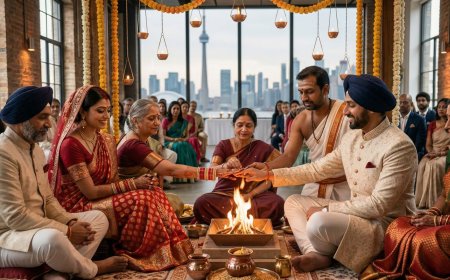
Space is rarely the primary challenge. Nischitartha is traditionally a home ceremony, which means a living room in Sunnyvale, a sitting room in Wembley, or a family home in Oakville can serve perfectly. The key is creating a designated ritual space — a clean area with a peetham [low wooden stool or platform], a spread of maavinakooru [mango leaves, used decoratively and auspiciously in Kannada ceremonies], flowers, and the arranged tambula trays. If the guest list is larger than your home can accommodate, temple halls and community spaces affiliated with Kannada Brahmin associations in your city are the natural next step.
For sourcing ritual items: the tambula tray requires betel leaves, arecanut, whole coconuts, turmeric root and powder, kumkum, flowers (preferably jasmine and marigold), fruits, and small gift items. In London, Ealing Road in Wembley and Tooting's Upper Tooting Road carry most of what you need — look specifically at South Indian grocery stores for betel leaves and arecanut, which are not always stocked at general Indian stores. In Toronto, Gerrard Street East and the Mississauga corridor of Dixie Road serve the South Indian community well; Fresh Co and Oceans stores in Scarborough often carry ritual items. In San Francisco Bay Area, Sunnyvale's Murphy Avenue and Fremont's Mowry Avenue have concentrated South Indian grocery options. In Sydney, Harris Park in Parramatta is your primary source. In Dubai, Meena Bazaar and the Karama district carry comprehensive South Indian ritual supplies.
The pandit question is nuanced for Kannada Brahmin families because the three main sub-communities — Smartha, Madhwa, and Iyengar — observe Nischitartha with meaningful differences. A Madhwa ceremony conducted by a Smartha pandit will feel slightly wrong to family elders who know the tradition well. When searching for a pandit, specify your sub-community explicitly. NRI.Wedding's pandit directory lists Kannada Brahmin priests by sub-tradition. Additionally, the Uttaradi Math and Pejawar Math networks (both Madhwa institutions) have affiliated priests in the US, UK, and Australia. Iyengar families can contact local Sri Vaishnava temple networks.
For the horoscope compatibility and muhurtham calculation: most Kannada Brahmin families have already completed jataka porutham [horoscope matching] before the Nischitartha — this is typically done by a jyotishi in Bengaluru, Mysuru, or your city of residence. Request the written vivaha muhurtham document before the Nischitartha so the pandit can announce it formally during the ceremony. Relatives in India watching via video call should be briefed that the sankalpam and tambula exchange — together spanning approximately 30 to 45 minutes — are the core of what they are witnessing. A 10 AM ceremony in Toronto is 8:30 PM IST; a 10 AM ceremony in London is 3:30 PM IST — both workable for Bengaluru relatives.
Doing Nischitartha as a Destination Ceremony in India
Bengaluru, Mysuru, Udupi, and Dharwad are the heartland cities for Kannada Brahmin wedding traditions, and returning to any of these for your Nischitartha connects the ceremony to a geography that the ritual itself remembers. Temple towns like Udupi and Sringeri carry particular spiritual weight for Madhwa and Smartha families respectively — conducting the Nischitartha in a temple hall or dharamshala [pilgrim rest house] attached to a significant math [monastic institution] elevates the ceremony beyond the social and into the genuinely sacred.
For NRI families coordinating from abroad, most Bengaluru and Mysuru event management teams that specialise in Brahmin weddings are experienced with Nischitartha logistics — they maintain relationships with sub-community-specific pandits, can source tambula items and floral arrangements, and understand the particular customs of Smartha, Madhwa, and Iyengar ceremonies. The key is briefing them on your specific family tradition and gotra, as practices vary even within the same sub-community.
For non-Indian guests attending a destination Nischitartha in India, the sankalpam is the most illuminating moment to explain — the chanting of names, gotras, and cosmic coordinates transforms the ceremony from a social event into something they can feel is genuinely ancient. A printed bilingual programme, English and Kannada, goes a long way.
What You Need: Ritual Checklist
Ritual Items — two complete tambula trays (one for each family), each containing betel leaves, arecanut, whole coconut, turmeric root, kumkum, jasmine flowers, marigold garland, banana, seasonal fruits, and small gift items; additional coconuts for the Ganapathi Pooja; camphor and agarbatti [incense sticks]; a brass or copper kalasha [ritual pot] filled with water and topped with mango leaves and a coconut; kankana thread for wrist-tying; akshata [rice grains mixed with turmeric]; new sarees and dhotis as family gifts; mangala dravyas for distribution to married women; a clean peetham covered with a silk cloth; maavinakooru for decoration; the written horoscope documents for both bride and groom; the muhurtham calculation document.
People Required — the officiating pandit (sub-community specific); the bride and groom; both sets of parents; paternal and maternal grandparents if available; married female relatives to lead the mangala dravya distribution; a family elder designated to make the formal verbal agreement statement; witnesses from both families.
Preparation Steps — confirm pandit availability and sub-community alignment at least three months ahead. Source tambula items two weeks before. Prepare the ritual space the evening before. Confirm video call links and IST timings for India relatives. Brief your photographer on the tambula exchange and sankalpam as the non-repeatable moments. Prepare a small printed programme for non-Indian guests. Confirm the muhurtham document is in the pandit's hands before the ceremony day.
NRI.Wedding connects Kannada Brahmin families abroad with verified sub-community-specific pandits, ritual supply vendors, and photographers experienced in intimate Brahmin ceremony documentation. Begin your planning at NRI.Wedding.
5 Questions NRI Couples Always Ask
Can we combine the Nischitartha with a larger engagement party for our non-Indian friends and colleagues?
Many NRI Kannada Brahmin families do this successfully by structuring the day in two distinct phases — the Nischitartha ritual in the morning or early afternoon, attended by family and close community members, followed by a separate celebration in the evening that is more inclusive and less ritually structured. The key is keeping the ritual phase protected — do not allow the social phase to bleed into the sacred ceremony. The Nischitartha deserves its own time, its own space, and its own emotional register.
My partner is not from a Brahmin background — can Nischitartha still be performed?
This depends entirely on your family's position, and it is a conversation to have honestly with both sets of parents and your pandit before planning begins. In many contemporary Kannada Brahmin families, particularly in the diaspora, the ceremony is adapted to honour both families' backgrounds — the Vedic elements are retained while the framing is made more universally accessible. The pandit's role in navigating this sensitively is crucial. NRI.Wedding can connect you with pandits experienced in intercommunity and interfaith ceremonies.
How do we find a Madhwa-specific pandit in Australia or Canada?
The Uttaradi Math and Pejawar Math both have affiliated centres and priests in Australia, Canada, the UK, and the US. Contact the nearest Madhwa Brahmin temple or cultural association in your city — in Melbourne, the Shiva Vishnu Temple in Carrum Downs has Madhwa community connections; in Toronto, the Hindu temple networks in Scarborough maintain sub-community contacts. NRI.Wedding's pandit directory specifies sub-tradition, so filter by Madhwa when searching.
What if key family members in India cannot travel abroad for the Nischitartha — is a video call presence acceptable?
In post-pandemic practice, this has become widely accepted within diaspora Kannada Brahmin communities, particularly for grandparents who cannot travel. Set up a dedicated tablet or laptop at the ritual space — positioned so the video call participants can see the tambula exchange and sankalpam clearly. Inform your pandit in advance so he can direct a portion of the sankalpam toward the remote participants, acknowledging their presence. The ashirvada [blessing] can be given by grandparents over video in a moving and entirely valid way.
Does the Nischitartha need to happen before or after our civil registration?
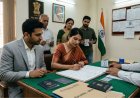
The Nischitartha is a religious betrothal ceremony, not a legal act. It can happen before or after civil registration — in many NRI families, the civil registration happens first for logistical reasons, and the Nischitartha and full wedding follow at a later date that suits the family calendar and the muhurtham. The spiritual validity of the Nischitartha is entirely independent of civil documentation.
The Emotional Angle
There is a particular grief that Kannada Brahmin NRI parents carry quietly — the grief of not being able to do this the way it was done for them. Not in the family home in Mysuru with the front courtyard decorated with rangoli and the smell of filter coffee mixing with agarbatti. Not with the neighbourhood women singing. Not with the family pandit who has known the child since she was born, who remembers her father's Nischitartha too.
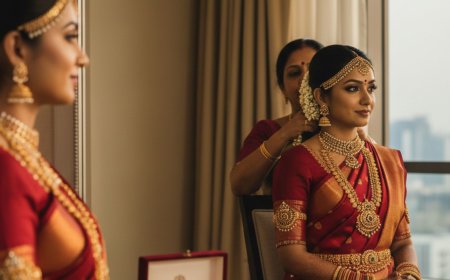
They do it anyway. They convert a living room in Sunnyvale or a sitting room in Harrow into something that remembers. They source betel leaves from a shop run by a Tamil family who has been in this city for thirty years. They video-call the pandit in Bengaluru who chants the sankalpam across eleven thousand kilometres of fibre optic cable. They dress in the silk sarees they brought in suitcases. They cry at exactly the moments they expected to cry.
And when the tambula trays are exchanged across a coffee table in a foreign city, and both families look at each other with the shining, careful eyes of people who have just made a promise that goes back further than either of them can trace — something ancient and unbreakable passes between them. The distance was never the point. The covenant was always the point. The covenant made it.
A Moment to Smile
At a Nischitartha in Mississauga three years ago, everything was going beautifully — the tambula trays were arranged to perfection, the pandit was mid-sankalpam, the families were seated in respectful silence — when the bride's six-year-old nephew, who had been stationed near the ritual items to "help," quietly ate three of the ceremonial bananas.
By the time anyone noticed, the fruit arrangement on the tambula tray had a very obvious gap. The bride's mother looked at the tray, looked at the nephew's face — which had the particular expression of someone who knows exactly what they have done — and whispered something in Kannada that made every adult in the room press their lips together very hard.
The pandit, who had seen everything in his forty years of conducting ceremonies, did not miss a syllable. The tambula exchange proceeded with two fewer bananas than tradition strictly required. The nephew was given a very serious look by approximately eleven relatives simultaneously.
The couple has been happily married for two years. The nephew is still occasionally reminded of the bananas.
Quotes from the Diaspora
"My mother arranged the tambula tray three times the night before. Each time she said it wasn't quite right. On the third arrangement I realised she wasn't arranging the tray — she was arranging her feelings. Making something beautiful because she couldn't make it happen in Mysuru the way she always imagined it would." — Kavitha Subrahmanya, Smartha Kannada Brahmin community, San Jose, California
"We had eleven people on the video call from Bengaluru and Dharwad. My husband's grandfather — he is ninety-one — held his phone up close to his face the whole time so he could see the tambula exchange properly. When the pandit announced the wedding date, he said 'Shubhavaagali' into the phone and we could all hear him across the room. That moment I will never forget." — Meenakshi Bhat, mother of groom, Madhwa Kannada Brahmin community, London
"James — my husband — had read about Nischitartha before the ceremony. He had actually read about it. He knew what the tambula meant. When his family received the tray, he was the one who explained it to his mother in English while it was happening. I watched his mother's face change when she understood what she was holding. That is when I knew this was going to be alright." — Roopa Hegde, Kannada Brahmin Smartha community, Melbourne, Australia
Your Roots Travel With You
The Nischitartha does not require the family home in Mysuru or the pandit who has known your family for three generations. What it requires is the intention — the willingness to say, in sacred space, with the old words and the betel leaves and the turmeric, that this decision has been made with full consciousness and full reverence. That is entirely possible in Mississauga. It is entirely possible in Melbourne. It is entirely possible in any city where two Kannada Brahmin families gather with love and the knowledge of what they are doing.
NRI.Wedding supports Kannada Brahmin families across the diaspora with verified sub-community-specific pandits for Smartha, Madhwa, and Iyengar traditions, ritual item sourcing guidance, ceremony photographers who understand the intimacy of Brahmin betrothal rituals, and planning checklists tailored to overseas Nischitartha logistics. Whatever city you are in, the ceremony can be complete.
The tambula travels. The promise travels. The gotra travels. Let them arrive.
This article explores Nischitartha — the sacred Kannada Brahmin engagement ceremony — across Smartha, Madhwa, and Iyengar traditions, and its practice among Karnataka diaspora NRI communities in the US, UK, Canada, UAE, and Australia, including cities such as San Jose, London, Toronto, Melbourne, and Dubai.
What's Your Reaction?
 Like
0
Like
0
 Dislike
0
Dislike
0
 Love
0
Love
0
 Funny
0
Funny
0
 Angry
0
Angry
0
 Sad
0
Sad
0
 Wow
0
Wow
0