






































































The WhatsApp Group With Forty-Seven Members: The NRI Couple's Complete Guide to Planning Sangeet Performances When Family Lives in Five Countries
The Toronto cousin choreographing over WhatsApp. The Dubai medley with no rehearsal plan. The London-Singapore-Bangalore spoken word piece that everyone agreed was wonderful and nobody had started preparing. The sangeet performance coordination crisis that arrives in October is entirely predictable — and entirely preventable by a couple who designs the process in February rather than inheriting the chaos in November. This guide delivers a complete framework covering the single coordinator model, the performance inventory and programme design, the rationalization conversation, remote rehearsal strategy and progress video check-ins, the India integration rehearsal timeline, the technical requirements document, the running order with realistic buffer time, managing performance anxiety and graceful withdrawals, briefing the emcee on each group's story, and the specific human understanding of what the sangeet performance actually is.


How to Plan Sangeet Performances When Family Lives in 5 Countries
The NRI couple's complete guide to coordinating the sangeet's most beloved and most logistically demanding element — the family performances — across international time zones, multiple rehearsal locations, and the specific human complexity of getting people who love you to do something terrifying in public
The WhatsApp Group That Had Forty-Seven Members
The sangeet performance coordination had begun, as these things typically begin, with optimism.
The bride's cousin in Toronto had volunteered to choreograph a group dance. The groom's sister in Dubai had offered to organize a medley of childhood songs with three of his cousins. The bride's college friends — distributed across London, Singapore, and Bangalore — had a concept for a performance that had been described in the WhatsApp group with a level of enthusiasm that suggested it would either be extraordinary or would not happen at all.
The WhatsApp group had been created in February. The sangeet was in November.
By April, the group had forty-seven members, three competing choreography concepts for the same song, one sub-group that had been created to coordinate the sub-group that had been created to coordinate the original group, and a pinned message from the bride's mother asking everyone to please confirm whether they were doing the performance or not because the caterer needed final numbers.
By July, the Toronto cousin had sent four different versions of the choreography video, each one incorporating feedback from a different subset of the forty-seven members, none of which incorporated feedback from all of them. The Dubai medley had a confirmed song list but no confirmed rehearsal plan, partly because two of the cousins were not arriving in India until the day before the sangeet. The London-Singapore-Bangalore performance concept had evolved three times and was currently a spoken word piece with a dance break, which everyone agreed was a wonderful idea and nobody had actually started preparing.
By October, five weeks before the sangeet, the bride sat down with a spreadsheet and a specific determination to impose structure on a situation that had been running on enthusiasm and goodwill for nine months and had produced, in concrete terms, approximately forty minutes of choreography for a ten-minute performance slot.
This story — with different cities, different cousins, different WhatsApp groups, and different levels of organizational chaos — is the sangeet performance coordination story of the majority of NRI weddings. It is not a failure of love or intention. It is the predictable result of a process that has not been designed, run by people who care deeply about the outcome and have no particular experience in producing it.
The design that prevents the October crisis is not complicated. It requires decisions made early, a structure that is realistic about human nature, and the specific coordination discipline that converts collective goodwill into collective performance.
Understanding What the Sangeet Performance Actually Is
Before the coordination framework, the honest assessment of what the sangeet performance is — because the couple whose expectations are calibrated correctly will make better decisions at every subsequent stage.
The Sangeet Performance Is an Act of Love, Not a Production
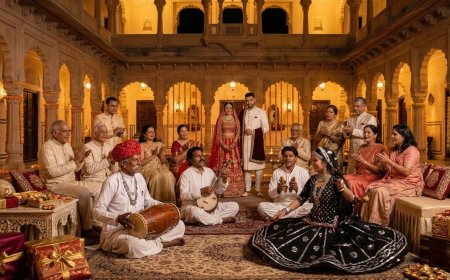
The family performance at the sangeet is not, at its heart, an entertainment product. It is an act of love — the specific form of love that says: I care enough about you and this occasion to do something that is outside my comfort zone, in front of people I know, for your pleasure and for the pleasure of everyone who loves you.
The aunt who has not danced since 1987 and who has spent three weeks learning twelve counts of choreography for a group performance is not performing. She is giving a gift. The gift is the effort and the vulnerability and the specific joy that the audience receives watching someone they love do something they love for someone they love.
This understanding has practical consequences. The sangeet performance coordination that treats the participants as performers — that holds them to rehearsal schedules, quality standards, and production timelines appropriate for professional entertainers — will produce resistance, anxiety, and the specific guilt of the well-meaning person who has committed to something they cannot deliver at the required standard.
The sangeet performance coordination that treats the participants as gift-givers — that supports the effort, accommodates the limitation, celebrates the attempt, and calibrates the expectation to the reality of what dispersed, non-professional participants can produce — will produce the specific magic that the sangeet exists to create.
The Audience Knows the Performers
The sangeet performance's specific quality — the quality that makes a technically imperfect family performance more moving than a technically excellent professional performance — is the relationship between the performers and the audience.
The bride's college friends performing a song that references specific memories of their friendship with the bride are performing for an audience that knows who they are, knows what the friendship means, and is watching the performance through the specific lens of love and history that no professional entertainer can replicate.
The imperfect dance move that produces laughter in the performer produces laughter in the audience not because it is funny in the abstract but because the audience is watching someone they know being human in public for someone they love. This is not a flaw in the performance. It is the performance's specific content.
What Good Coordination Produces
Good sangeet performance coordination does not produce polished professional entertainment. It produces: the family's full creative participation in the occasion, performances that reflect the specific relationships and histories that the wedding is celebrating, a sangeet evening whose emotional texture is rich and specific rather than generic, and performers who feel proud of what they gave rather than anxious about what they produced.
The coordination framework exists not to raise the quality of the performances to a professional standard but to ensure that the performances actually happen — that the goodwill and the intention and the love that motivated the volunteer in February is still present in November in a form the audience can receive.
The Architecture of the Sangeet Programme
The Performance Inventory
The first task of sangeet coordination is the performance inventory — the complete list of every performance that has been proposed, by whom, for what duration, and in what state of preparation.
The performance inventory typically reveals: more proposed performances than the sangeet programme can accommodate, significant overlap between performances that were proposed independently, at least one performance that has been proposed and accepted by the couple that the proposer has since become uncertain about, and at least one performance that everyone assumed was happening and that nobody has actually confirmed.
The inventory should be completed early — no later than eight months before the wedding — so that the rationalization decisions that follow have adequate lead time.
The Programme Design
The sangeet programme has a specific structure that the performance inventory must be shaped to fit — not the reverse.
The total performance time available within the sangeet's programme is determined by the evening's overall structure: the arrival and welcome, the performances, the professional entertainment if any, the dinner service, and the dance floor. A sangeet that begins at seven and ends at midnight has five hours — of which the performances typically occupy ninety minutes to two hours, with the remaining time distributed across the other elements.
The performance programme within this window should: open with an energy-building performance that brings the room to attention, vary the format across performances — dance, song, spoken word, comedy — so that the programme has texture and pace, include at least one performance that specifically involves the bride or groom rather than performing about them, build to a climax rather than front-loading the strongest performances, and leave the audience wanting more rather than relieved that it is over.
The specific mistake that the unmanaged performance inventory produces: a programme that is too long, too uniform in format, and structured by volunteer order rather than by dramatic arc. The sangeet that has six consecutive dance performances of similar length, followed by three song performances, followed by a comedy piece, followed by two more dance performances — this programme has not been designed. It has been assembled.
The Rationalization Conversation
The rationalization conversation — the conversation in which some proposed performances are redirected, combined, or respectfully declined — is the most difficult element of sangeet coordination and the one that is most consistently avoided until it is too late to have it gracefully.
The couple who has accepted every proposed performance out of love and appreciation for the offer will arrive at the sangeet programme design stage with significantly more content than the evening can accommodate. The performances that must then be cut or shortened produce hurt feelings that the early rationalization conversation would have avoided — because the early conversation is a planning decision, while the late conversation is a rejection.
The specific approaches to rationalization:
The combination: Two groups who have proposed similar performances — the bride's two separate groups of college friends, each of whom has proposed a dance — are gently guided toward combining into a single, larger, more spectacular performance. The combination produces a better performance and resolves the programme length problem simultaneously.
The format redirect: The group whose concept is excellent but whose proposed duration is excessive is redirected to a shorter format. "We would love a five-minute version of this — it will be the perfect length for the programme" is a loving constraint rather than a rejection.
The gentle decline: The proposed performance that does not fit the programme — for reasons of duration, format, or the specific relationship dynamics it might activate — is declined with genuine warmth and with a specific alternative offered. "We would love for you to be part of the evening in a different way — would you be willing to make a toast during the programme?"
The rationalization conversation is the couple's responsibility, not the coordinator's. It requires the couple's specific knowledge of each proposer's relationship, their sensitivity, and the specific form of gratitude that will make the conversation feel like curation rather than rejection.
The Coordination Framework: Managing Dispersed Participants
The Single Coordinator Model
The forty-seven member WhatsApp group is the specific organizational structure most likely to produce the October crisis. Its failure mode is predictable: too many voices, too little authority, too much goodwill, and no single person with the responsibility and the authority to make decisions when decisions are needed.
The sangeet performance coordination requires a single coordinator — one person who has the full picture of every performance, who has the authority to make decisions on the couple's behalf about programme structure and timing, who is the single point of contact for every performance group, and who is responsible for the overall programme's delivery.
The coordinator is not the couple. The couple is too emotionally proximate to the participants to manage the rationalization conversations and the follow-up that coordination requires. They should be briefed on every significant development but should not be managing the operational details.
The coordinator is typically: the wedding planner if they have experience with sangeet programme coordination, a highly organized and trusted family member who has accepted the specific responsibility clearly, or a professional sangeet coordinator — a category of specialist that exists in the major NRI wedding markets and whose specific expertise is exactly this challenge.
The Performance Group File
For each performance group, the coordinator maintains a performance group file — a document that contains: the group's name and contact details, the performance concept, the song or songs being used, the proposed duration, the current state of preparation, the rehearsal plan, the technical requirements for the performance, and the last communication date.
The performance group file is the coordinator's operational tool — the document that allows them to track every group's progress simultaneously and to identify, early, the groups that are falling behind the preparation timeline and that require intervention.
The Communication Protocol
The communication protocol — how information flows between the coordinator and each performance group — should be established at the outset rather than emerging organically.
The specific protocol: each performance group has a single point of contact — one person within the group who communicates with the coordinator, rather than the group communicating collectively through a shared channel that the coordinator must monitor. The coordinator communicates with this contact at specific intervals — the monthly check-in from the beginning of the coordination period, moving to fortnightly six weeks before the sangeet, and weekly in the final two weeks.
The single-point-of-contact model reduces the coordinator's communication burden significantly — from managing forty-seven individuals to managing eight to twelve group contacts — while ensuring that no group is overlooked and no development is missed.
The Rehearsal Strategy: Making It Work Across Five Countries
The Reality of Remote Rehearsal
The family whose members are distributed across Toronto, Dubai, London, Singapore, and Bangalore cannot rehearse together in person until they are all in India for the wedding. The sangeet performance coordination must therefore produce, from these dispersed participants, performances that work together on the night — and it must do so primarily through remote rehearsal methods that have specific capabilities and specific limitations.
What remote rehearsal can do:
Remote rehearsal can teach individual parts — the specific counts, the specific movements, the specific lyrics — to each participant in their home location, so that when they come together in India they have a shared foundation to build from.
Remote rehearsal can build collective familiarity — the group that has watched the choreography video together over WhatsApp, that has practiced their individual parts on camera and shared the videos in the group, that has had video calls where the choreographer has corrected specific mistakes — this group arrives in India not as strangers to the material but as individuals who know their own parts and need only the integration.
Remote rehearsal can build commitment — the group that has invested time and effort in individual preparation has a specific investment in the performance that the group that has done nothing has not. The participation in the remote preparation process is itself the thing that converts the February enthusiasm into the November delivery.
What remote rehearsal cannot do:
Remote rehearsal cannot produce the integration — the specific calibration that happens only when the group is in the same room, moving to the same music, adjusting their positioning and timing to each other's actual physical presence. The group that has rehearsed individually for months and that comes together for the first time in India two days before the sangeet will need those two days to integrate. The group that expects to integrate in thirty minutes will not have enough time.
The Rehearsal Video: The Foundation
The rehearsal video — a clear, well-produced video of the choreography that each remote participant uses as their individual rehearsal reference — is the foundation of the remote rehearsal process.
The good rehearsal video:
Shot from the front, at full-body distance, with clear visibility of both footwork and arm movements. Shot in sections — the first eight counts, the second eight counts — rather than as a complete run-through that does not allow the learner to pause and repeat specific sections. Shot at full speed and at a slower practice speed. Accompanied by a count or a verbal cue that helps the learner connect the movement to the music. Shared in a format that is accessible on any device — not a file that requires a specific application to open, not a video that requires a high-speed internet connection to stream smoothly.
The distribution:
The rehearsal video should be shared individually with each participant's single point of contact — not posted in the forty-seven member WhatsApp group where it will be buried within hours by subsequent messages. The individual share, accompanied by a specific request — "please practice sections one and two this week and send me a video by Sunday" — creates a specific accountability that the group post does not.
The Progress Video Check-In
The progress video check-in — the regular request for each participant to send a video of themselves practicing the material — is the specific accountability mechanism that distinguishes the coordination process that produces prepared participants from the one that produces the person who has watched the rehearsal video twice and considers themselves ready.
The progress video check-in serves three functions: it provides the choreographer with visibility into each participant's specific preparation level, allowing targeted correction before the India rehearsal; it creates a specific accountability that motivates practice — the person who knows they need to send a video on Sunday will practice on Saturday in a way they would not without the deadline; and it builds the remote connection between participants — the group that has seen each other's practice videos, that has commented on each other's progress, that has been part of each other's preparation journey, arrives in India as a group rather than as a collection of individuals.
The India Rehearsal: Making the Most of Limited Time
The India rehearsal — the in-person rehearsal that happens in the days before the sangeet, when the dispersed family is finally assembled in one place — is the integration phase. Its function is to take the individual preparation that has happened remotely and produce the collective performance.
The India rehearsal timeline:
For a five-to-seven minute dance performance with ten to fifteen participants distributed across multiple countries, the minimum India rehearsal time is three to four hours — distributed across two rehearsal sessions, with a rest period between them, in the two days before the sangeet.
The first session: the full group run-through that identifies the specific integration points that need work — the formations that are not landing correctly, the transitions that are unclear, the moments where individual participants have learned slightly different versions of the same section. The identification of these issues is the first session's output. The correction is the second session's work.
The second session: targeted correction of the specific issues identified in the first session, followed by multiple full run-throughs at increasing confidence levels, ending with the dress run that is as close to performance conditions as available time allows.
The specific challenge of the late-arriving participant:
The cousin who is arriving in India the day before the sangeet — because their work, their visa, or their flight connection allows nothing earlier — is the specific challenge that the India rehearsal plan must accommodate. The late arrival who has done no remote preparation needs a dedicated catch-up session with the choreographer before they can join the group rehearsal. The late arrival who has done thorough remote preparation can integrate into the group rehearsal relatively quickly, having already internalized the individual material.
The coordinator's leverage on the late arrival problem: the clearer the remote preparation requirement, and the more thoroughly it has been enforced through the progress video check-in process, the more prepared the late-arriving participant will be when they arrive.
The Technical Rider: What Each Performance Needs
The Technical Requirements Document
Every performance group should provide the coordinator with a technical requirements document — a specific list of what they need for their performance, provided no later than six weeks before the sangeet.
The technical requirements document should contain: the song or songs being used, in the specific version the performance has been choreographed to, in the specific audio file format the DJ or sound system requires. The audio file itself — not a link to the song on a streaming platform, not the name of the song for the DJ to find. The specific audio file, tested on the same equipment it will be played through.
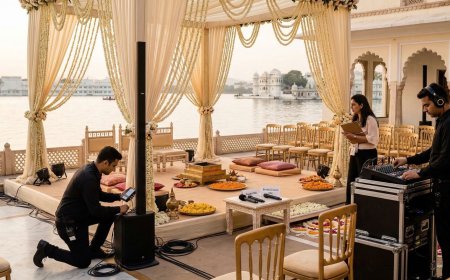
Any visual or lighting requirements — the specific lighting color for the opening of the performance, the blackout before the reveal, the spotlight that needs to follow the lead performer. These requirements should be specific and should have been confirmed with the venue's technical team as achievable before they are included in the brief.
Any prop or staging requirements — the chairs that need to be arranged in a specific configuration, the fabric that needs to be flown in from above, the candles that need to be lit. Every prop is a coordination and safety consideration that must be managed in advance rather than on the night.
Any costume requirements — the quick-change that needs a specific amount of time between two performances, the outfit that needs a specific area backstage for storage and changing.
The Running Order and Timing
The running order — the specific sequence of performances, with the start time and duration of each — is the coordinator's master document for the sangeet evening. It is produced from the performance inventory, shaped by the programme design principles, and shared with every performance group, every technical provider, and the emcee at least two weeks before the sangeet.
The running order should include buffer time — a realistic acknowledgment that transitions between performances take longer than anticipated, that the emcee's introduction takes time, and that the performance that was rehearsed to run five minutes will run six minutes on the night because the audience's response adds time that the rehearsal did not account for.
The running order without buffer time is an optimistic fiction. The running order with realistic buffer time is an operational document.
The Human Elements: What No Framework Fully Solves
The Performance Anxiety
The person who volunteered for the sangeet performance in February, when the wedding was abstract and the sangeet was nine months away, is a different person in November, three days before the performance, when the reality of standing in front of three hundred people and performing is suddenly specific and near.
Performance anxiety is a universal human experience that the coordination framework cannot eliminate — but it can be managed through specific interventions.
The dress rehearsal as anxiety management:
The dress rehearsal — the full run-through in the actual performance space, with the actual sound system, in the actual costumes — is the single most effective anxiety management tool available. The participant who has performed the piece in the actual space, who knows where they will be standing and what the audience will look like from the stage and how loud the music will sound, is significantly less anxious on the night than the participant for whom every element of the performance context is new.
The reframe:
The coordinator or the couple who can genuinely communicate the understanding described at the beginning of this guide — that the audience is watching with love, not with judgment, and that the imperfect performance of someone they love is more moving than the perfect performance of someone they do not know — is giving the anxious performer the most useful gift available. Not reassurance that everything will be fine. The genuine understanding of what the audience is actually experiencing.
The Person Who Withdraws
The person who volunteered in February and who, by September, has stopped responding to messages and whose performance group is covering for their absence — this person is withdrawing. The withdrawal may be due to work pressure, personal circumstances, anxiety about the performance, or the simple reality that nine months is a long time and the enthusiasm of February does not always survive to November.
The coordinator's response to early signs of withdrawal: direct personal contact, not a group message. The individual conversation that creates space for the person to say honestly whether they are still committed — and that, if they are not, creates the space to withdraw gracefully rather than disappearing and leaving the group to manage around the absence.
The graceful withdrawal is better for everyone than the person who is physically present at the India rehearsal but who has not prepared, who cannot keep up with the group, and whose anxiety infects the group's confidence in the days before the performance.
The Group That Has Outgrown Its Concept
The performance group that began in February with a concept that was exciting and that has, through nine months of evolution, produced a performance that nobody in the group is genuinely excited about — this group needs permission to change direction.
The coordinator who checks in at the six-month point — not just on the preparation progress but on the group's genuine enthusiasm for the concept — can identify this situation early enough for the group to redirect without panic. The coordinator who checks in only on preparation logistics may discover, three weeks before the sangeet, that the group has been building a performance nobody believes in.
The Emcee: The Sangeet's Invisible Architecture
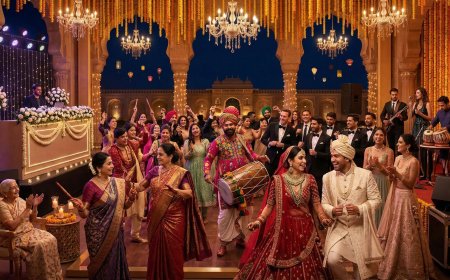
The emcee is the person who holds the sangeet's performance programme together — the transitions between performances, the introductions that give the audience the context they need to receive each performance in the right spirit, the management of the programme's pace and energy.
The emcee who knows each performance group's story — who can introduce the Toronto cousin's dance with the specific warmth of someone who understands what it means that she learned this choreography over WhatsApp from six thousand miles away — transforms the programme from a sequence of performances into a narrative.
The emcee should be briefed by the coordinator on every performance group's story — not just the logistics, but the specific human content that makes the introduction meaningful. The brief that says "the bride's college friends are performing a medley" is a logistics note. The brief that says "these four women met the bride on her first day of university in London, and this performance references a specific memory from their second year that the bride does not know about" is the content of an introduction that will make the audience cry before the performance has begun.
The Night Itself: Letting It Go
The sangeet performance coordinator who has done their job well arrives at the sangeet having transferred the performance from their spreadsheet to the performers. The running order is confirmed. The audio files are with the DJ. The props are backstage. The performers have rehearsed. The emcee is briefed.
And then the night happens — with its specific unexpected moments, its performances that exceed every expectation and its performances that are imperfect and wonderful, its audience that responds in ways that were not predicted and that are better than anything that was planned.
The coordination's job was to create the conditions in which the love in the room could express itself. The love in the room will do the rest.
Let it.
NRIWedding.com — Expert guidance for Indian weddings planned across borders.
What's Your Reaction?
 Like
0
Like
0
 Dislike
0
Dislike
0
 Love
0
Love
0
 Funny
0
Funny
0
 Angry
0
Angry
0
 Sad
0
Sad
0
 Wow
0
Wow
0