




















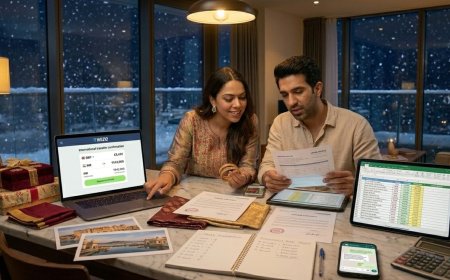
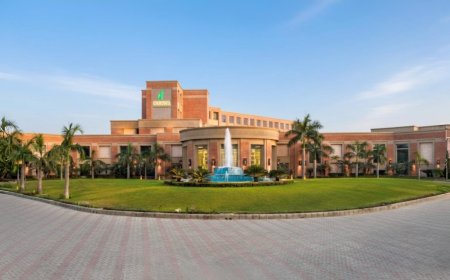


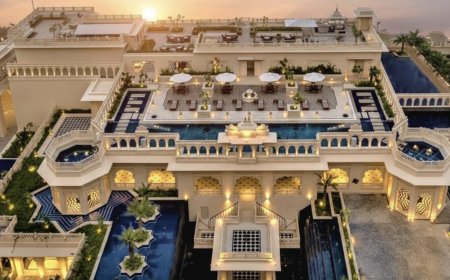




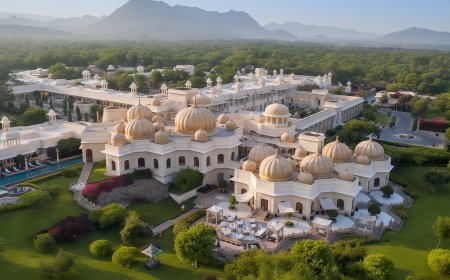












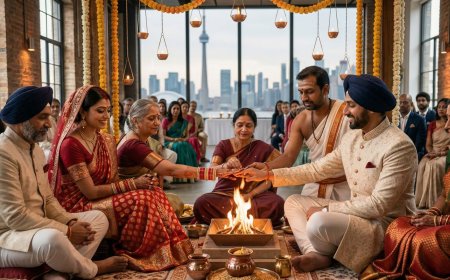



The Night Two Families Forget They Are Strangers: What the Sangeet Ceremony Really Means for NRI Families
The Sangeet — India's pre-wedding night of music, dance, and celebration — is the most joyful event in the Indian wedding calendar. For NRI families across the US, UK, Canada, UAE, and Australia, planning an authentic Sangeet abroad means coordinating choreography across continents, sourcing live dhol players, and bringing two families together through performance and song. This guide covers regional traditions from Punjabi Giddha to Gujarati Garba, practical venue planning, online rehearsal strategies, and how to create a Sangeet that every guest — Indian or not — will remember for years.


The Sangeet is the night the wedding stops being logistics and becomes love — a few hours when two families forget their nerves, their differences, and the seventeen unresolved seating chart decisions, and simply celebrate the fact that something beautiful is beginning. For NRI families carrying this tradition across continents, the Sangeet is not just a party — it is the most joyful act of cultural preservation they will perform all year.
You grew up knowing that the best part of any Indian wedding happened the night before the wedding itself. The hall transformed at midnight. Someone's uncle — the one nobody expected — turned out to be an extraordinary dancer. The grandmothers sat in a row and clapped along to a Bollywood song that came out the year they were married, and for three minutes everyone in the room was the same age. You fell asleep in the back of your parents' car on the way home, your ears still ringing with the dhol, your heart full of something you could not name at seven years old but recognise now as joy in its purest form.
Now you are planning a wedding — yours, or your child's — from a flat in Birmingham or a house in Brampton, and the Sangeet is on the list. Not as an optional extra. Not as a "if we have the budget" consideration. It is non-negotiable, because you have carried that childhood memory all the way here and you intend to recreate it, properly, with the dhol and the choreographed family dances and the grandmother in the front row who will cry when the bride's cousins perform the number they rehearsed for six weeks on a WhatsApp video call spread across four time zones.
This guide is for that night. For the NRI family that knows the Sangeet is where culture lives most freely — and wants to do it justice wherever in the world they find themselves.
🌟 DID YOU KNOW?
The word Sangeet derives from the Sanskrit Sam-Geet [literally "music coming together" or "collective song"], and the tradition of celebratory music before a wedding appears in ancient Indian texts including the Natyashastra [the foundational treatise on performing arts, attributed to Bharata Muni and dating to between 200 BCE and 200 CE] — making communal wedding music one of the oldest documented traditions in South Asian culture.
The modern Sangeet as NRI families know it — with choreographed group dances, Bollywood performances, and elaborate stage setups — evolved significantly through the 1990s and 2000s, partly driven by the Indian diaspora itself, whose wedding celebrations in the UK and US developed a performance culture that was then adopted and amplified back in India, making the NRI Sangeet not an import of Indian tradition but in many ways its co-creator.
Sangeet ceremonies are now among the most searched Indian wedding events globally, with wedding choreography services for NRI Sangeets — specifically online rehearsal coordination for family members spread across multiple countries — representing one of the fastest-growing segments of the diaspora wedding industry in the UK, US, Canada, and Australia.
What Is the Sangeet Ceremony?
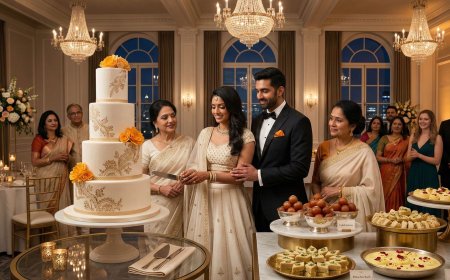
Sangeet [the musical celebration, from Sanskrit meaning "music together"] is a pre-wedding ceremony typically held one to three evenings before the wedding day, in which both families gather for an evening of music, dance, and communal celebration. Unlike the solemnity of the wedding ceremony itself, the Sangeet is explicitly joyful — a space where formality is suspended and the families' love for the couple is expressed through performance, laughter, and the particular abandon that only happens when a room full of people who care deeply about the same person finally let themselves celebrate.
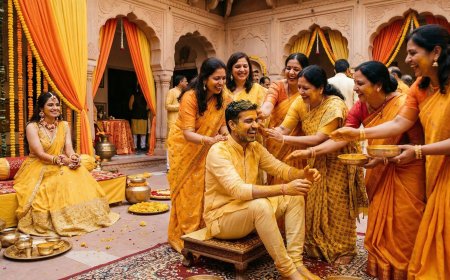
The Sangeet has evolved across different regions and decades into a layered event. At its traditional core, it began as a women's ceremony — a gathering of the women of both families who would sing geet [folk songs] specific to their community's wedding tradition, passing down the oral heritage of wedding music from generation to generation. In North Indian traditions, these songs were sohar [birth and wedding songs], vivah geet [wedding-specific compositions], and community-specific folk music that encoded cultural memory in melody. In South Indian communities, similar pre-wedding musical gatherings took different forms but served the same essential function: the women of the family singing the couple into their new life.
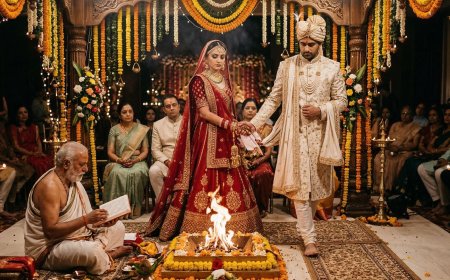
The contemporary Sangeet — particularly in NRI communities — has expanded dramatically from this intimate origin. Today's Sangeet typically includes choreographed dance performances by family groups and friends, antakshari [a competitive song game where participants must begin their song with the last letter of the previous song] or musical games, professional DJ sets alternating with live dhol [double-headed drum] performances, and often a stage with professional lighting and sound. The mehndi [henna] artist is frequently present at the same event, creating a combined Mehndi-Sangeet evening that maximises both the ceremonial and celebratory elements for families with limited event days.
What makes the Sangeet irreplaceable is its emotional freedom. It is the only event in the wedding calendar where the bride can dance with wild abandon, where the groom's father can attempt a Bollywood number and be cheered regardless of the result, and where the accumulated love of two families pours out in the least contained way possible.
Community Comparison Table
| Community/State | Local Name | Key Tradition | How NRIs Abroad Adapt It |
|---|---|---|---|
| Punjabi | Sangeet / Giddha | Women perform Giddha (folk dance); Dhol central; Bollywood performances; very high energy | Professional dhol player hired; Giddha taught to diaspora cousins via video; combined with mehndi night |
| Rajasthani | Sangeet / Geet Gawana | Traditional folk songs sung by women of family; Ghoomar dance performed; community participation essential | Ghoomar taught to family members; Rajasthani folk music mixed with Bollywood; community sabha members invited |
| Bengali | Aiburo Bhaat / Sangeet | Separate pre-wedding ritual meals; Rabindra Sangeet and adhunik songs sung; less performance-oriented, more intimate | Intimate musical evening with Bengali songs; family members sing; Rabindra Sangeet recordings played |
| Gujarati | Garba / Sangeet | Garba and Dandiya Raas performed; circular community dance essential; competitive energy | Garba sticks sourced from Indian stores; community Garba organised in hall with DJ; non-Indian guests taught basic steps |
| Marathi | Haldi-Kunku / Sangeet | Women's gathering with traditional Marathi songs; Lavani dance performances in some families | Marathi folk songs played; cultural association members invited; Lavani performance by professional dancer occasionally hired |
| Tamil (Hindu) | Uriyadi / Kolattam | Pre-wedding games and stick dance; women sing Carnatic-style wedding songs | Kolattam sticks sourced; Tamil wedding songs played; Chennai family joins via video call for song performances |
| Telugu | Sangeet / Pellikuthuru | Elaborate pre-wedding musical night; classical and folk performances; family skits common | Family skits maintained as central entertainment; Telugu songs mixed with Bollywood; professional compere hired |
| Kashmiri Pandit | Livenh / Wanwun | Traditional Wanwun songs sung exclusively by women in Kashmiri language; deeply community-specific | Wanwun songs taught to family women before event; recorded versions played; Kashmiri community women in diaspora city invited |
| Himachali / Garhwali | Sangeet / Nati | Nati — the traditional Pahadi folk dance — performed by community; circle dance with specific footwork | Nati taught to diaspora youth before wedding; Pahadi music DJ set; community Pahadi association members invited to lead dance |
| Sindhi | Sangeet / Lada | Sindhi Lada folk songs sung; community celebration with traditional music; very participatory | Sindhi community invited; Lada songs played; combined with Bollywood performances for younger guests |
The Meaning Behind the Ceremony
In the ancient understanding behind the Sangeet, music is not entertainment — it is invocation. The Natyashastra teaches that Nada [sacred sound] is a form of Brahman [the universal creative force], and that communal singing and dancing in auspicious circumstances generates mangalya shakti [auspicious energy] that surrounds and protects the couple entering their new life.
The women's songs that form the traditional Sangeet's core were not composed for performance — they were composed for transmission. Each song carried specific blessings, specific warnings, specific wisdom about marriage encoded in metaphor. A grandmother singing a wedding geet was not performing; she was transferring. Handing something essential from her generation to the next, through the specific medium that bypasses the thinking mind and lands directly in the body — melody.
The Ghoomar of Rajasthan, the Giddha of Punjab, the Garba of Gujarat — these are not simply dances. They are community technologies, developed over centuries, for moving large groups of people into shared emotional states of joy, solidarity, and sacred celebration. When an NRI family performs these dances at a Sangeet in Houston or Harrow, they are not imitating culture. They are activating it — calling forward the specific energy that these forms were designed to generate, regardless of the latitude and longitude of the room.
The Sangeet says: we celebrate you not just with words but with our whole bodies, our oldest songs, and every generation of our family dancing together in the same room.
Doing the Sangeet Abroad: The Practical Reality
The Sangeet is simultaneously the easiest and the most complex event to plan in the NRI wedding calendar. Easy, because its spirit is resilient — joy travels well. Complex, because the specific elements that make a Sangeet feel authentic require real planning.
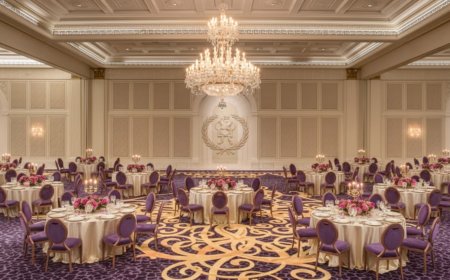
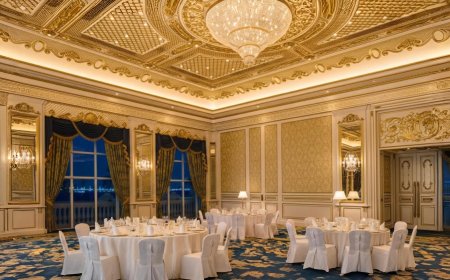
The venue is the first decision and the one that shapes everything else. The Sangeet needs a dance floor — a real one, not a cleared corner. It needs sound equipment capable of handling both DJ sets and live dhol without distorting, and ideally a stage or raised area for performances. In most major diaspora cities, South Asian wedding halls are the most practical choice because they are built for exactly this event. In London, venues in Wembley, Southall, and Harrow are purpose-built for large South Asian celebrations and have the sound infrastructure required. In Toronto, the banquet halls of Brampton and Mississauga are the established heartland of NRI Sangeet events. In Houston, venues along the Westheimer corridor and in Sugar Land cater specifically to South Asian weddings. In Sydney, Parramatta and Blacktown have established South Asian event spaces. In Dubai, the Jumeirah and Deira areas have multiple venues experienced with Indian wedding events.
The dhol player is non-negotiable for most North Indian and Punjabi Sangeet traditions and should be booked at minimum three months in advance, as experienced dhol players who can read a crowd and play for hours are in limited supply in most diaspora cities. Ask specifically for a player with Indian wedding Sangeet experience — not all dhol players have the repertoire or stamina for a four-hour celebration. NRI.Wedding's vendor directory lists verified dhol players across all major diaspora cities.
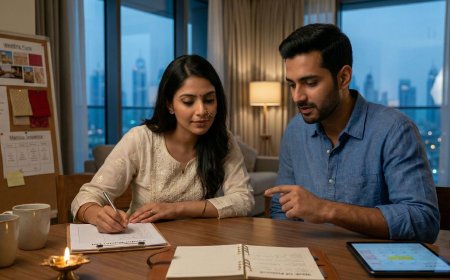
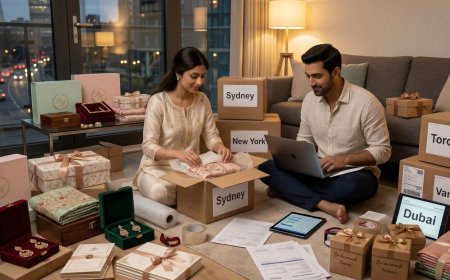
Choreography coordination is the uniquely NRI Sangeet challenge. Your bride's cousins are in Toronto, Vancouver, and London. The groom's siblings are in Dubai and Melbourne. The family dance number needs six weeks of rehearsal and none of these people are in the same city. The solution is online choreography — a growing industry specifically serving NRI wedding families. Professional choreographers who specialise in diaspora wedding Sangeets now offer fully online rehearsal programmes, with recorded video tutorials broken into sections that family members can learn independently and then synchronise at a single in-person rehearsal the day before the Sangeet. Budget for this service at least three months before the event and brief the choreographer on your family's comfort level, musical preferences, and the approximate age range of participants.
Sourcing music requires advance curation. Work with your DJ at least six weeks before the event to build a playlist that layers your community's traditional folk music with contemporary Bollywood, covering the full evening's emotional arc — from the intimate early performances to the full-floor dance that should close the night. If your tradition includes antakshari or musical games, designate an enthusiastic family member as compere and brief them thoroughly on the game's rules and flow.
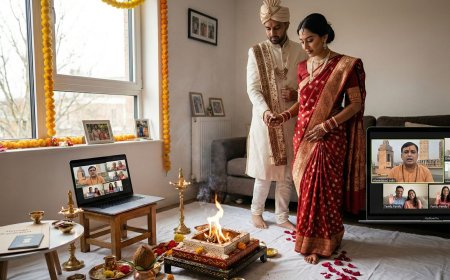
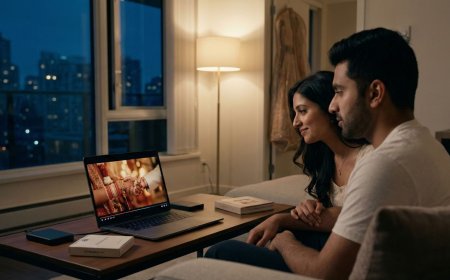
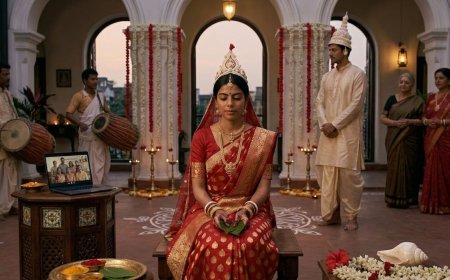
For India family joining via video call, the Sangeet presents a unique opportunity — performances can be shared in real time, and India-based family members can participate in antakshari rounds from their own screens. Set up a large display screen at the venue connected to the video call so that your India family is visible to the room, not just to one person holding a phone. The moment when the grandmother in Jaipur or Kolkata appears on the big screen and claps along to a performance is one that nobody in the room will forget.
Doing the Sangeet as a Destination Wedding in India
For NRI couples returning to India for their wedding, the Sangeet as a destination event unlocks possibilities that no diaspora city can replicate — not because India is better, but because certain specific things exist only there.
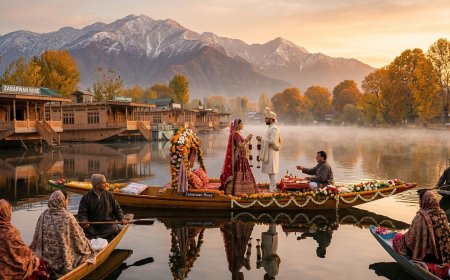
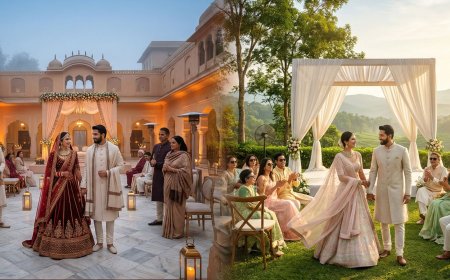
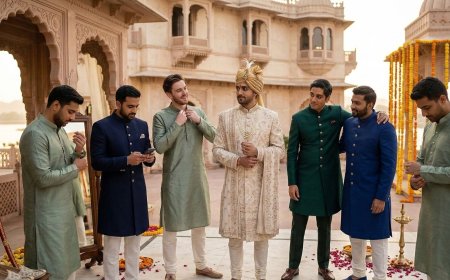
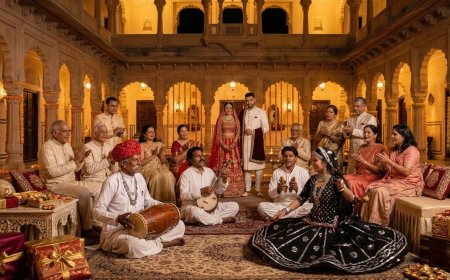
Jaipur is the undisputed destination Sangeet capital for NRI families seeking the maximum atmospheric impact — a rooftop at a heritage haveli, Ghoomar performers in full Rajasthani costume, and the desert city's warm night air create an experience that photographs and memories cannot fully capture. Udaipur and Jodhpur offer equally extraordinary haveli settings. For Punjabi families, Amritsar and Delhi offer access to the finest live dhol players and Giddha performers in India. For Gujarati families, Ahmedabad during any season delivers the most authentic Garba experience, with community participation that no hired performer can replicate.
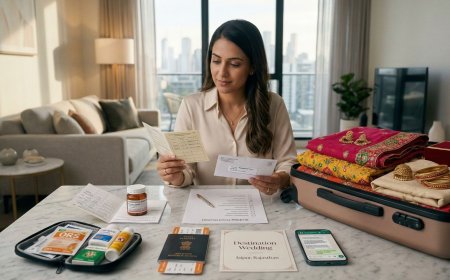
When coordinating the destination Sangeet from abroad, engage a local Indian wedding coordinator with specific NRI returnee experience — they will understand both the logistical requirements of an international family and the local vendor ecosystem. For non-Indian guests attending a destination Sangeet in India, prepare a brief guide to the evening's format and traditions, and assign a bilingual family member to narrate key moments and teach non-Indian guests the basic steps of whichever community dance opens the floor.
What You Need: Sangeet Checklist
Ritual and Event Items A dedicated dance floor space (minimum one-third of total venue area), professional sound system with both DJ capability and live instrument microphones, stage or performance area with lighting, a dhol player (if your tradition requires), props for choreographed performances (sourced per each performance's requirements), antakshari score cards if playing musical games, mehndi artist if combining with Mehndi night, a large display screen for India video call, decorative backdrop for the performance stage, and a professional compere or designated family MC.
People Required A choreographer or designated family member to coordinate all dance performances, a DJ with South Asian wedding experience and your community's specific musical repertoire, a dhol player booked well in advance, a professional compere or family MC, a dedicated video call coordinator for India family, and a photographer and videographer who have specific Sangeet experience — the low-light, high-energy environment requires specific technical skill.
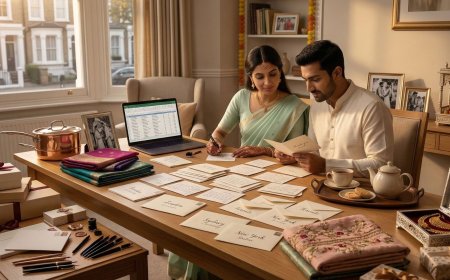
Preparation Steps Book your venue, DJ, and dhol player a minimum of four months before the event. Engage a choreographer for family performances at least three months before. Conduct online rehearsals for geographically dispersed family members beginning eight weeks before. Build your DJ playlist in collaboration with your DJ six weeks before. Set up a WhatsApp coordination group for all performing family members. Test your video call setup and venue screen connection one day before the event. Brief your compere on the full evening's running order.
NRI.Wedding's verified vendor network includes Sangeet-specialist DJs, dhol players, choreographers, and photographers across the UK, US, Canada, UAE, and Australia — explore our directory to connect with experienced professionals for your celebration.
5 Questions NRI Couples Always Ask About the Sangeet
How do we coordinate family dance performances when everyone is in different countries?
This is the defining logistical challenge of the NRI Sangeet, and the answer is structured online rehearsal. Hire a choreographer who specifically offers diaspora wedding packages — they exist and they are experienced at exactly this challenge. The choreographer creates a video tutorial broken into manageable sections, distributes it to all participants, schedules weekly group video rehearsals, and plans a single in-person run-through the day before the Sangeet. The most important thing is to start early — eight weeks minimum for a group of mixed ability — and to be realistic about what your family members can learn. A joyful, slightly imperfect family performance is infinitely more moving than a polished routine that required three family members to drop out due to stress.
Our venue has a noise curfew at 10 p.m. How do we plan the Sangeet around this?
Noise curfews are the practical reality for most NRI Sangeets in residential areas of the UK, Canada, and Australia in particular. The solution is sequencing: begin the Sangeet earlier than you might in India — a 5:30 or 6:00 p.m. start allows you a full four hours of celebration before a 10:00 p.m. curfew. Sequence the evening so that the dhol and the highest-energy music comes in the middle of the evening rather than at the end. Close with a more intimate musical moment — a family song, a meaningful Bollywood number — that requires less volume but carries full emotional weight. Brief your DJ specifically on the curfew and discuss the musical arc in advance.
My partner is not Indian and their family has never attended anything like a Sangeet. How do we help them feel included?
The Sangeet is arguably the most accessible Indian wedding event for non-Indian guests because its core language — music, dancing, joy, and celebration — requires no cultural fluency to participate in. The most effective approach is a brief, warm welcome speech at the beginning of the evening explaining what the Sangeet is and inviting everyone to participate rather than observe. Teach the non-Indian guests a simple folk dance or the rules of antakshari early in the evening — most people become enthusiastic participants once they understand what is happening. Assign a bilingual, outgoing family member as an informal cultural ambassador to each table of non-Indian guests. And remind your partner's family that the correct response to a dhol solo is to get up and dance, regardless of skill level.
Should we combine the Sangeet and Mehndi into one evening?
For many NRI families, combining the Sangeet and Mehndi into a single evening is a practical necessity — particularly when guests are travelling internationally and event days are limited. The combined evening works beautifully when sequenced correctly: mehndi application in the first half of the evening, with softer music and more intimate performances, transitioning into the full Sangeet celebration in the second half once the mehndi artists have finished. The challenge is that mehndi application requires the bride to sit relatively still for one to two hours, which limits her participation in the early Sangeet performances. Many NRI brides choose to have their mehndi applied the afternoon before the combined evening so they are free to dance the entire night — a practical adaptation that preserves both experiences fully.
We have a very mixed guest list — Indian, non-Indian, multiple Indian regional communities. How do we build a Sangeet programme that works for everyone?
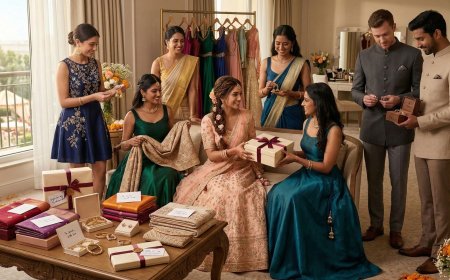
The answer is intentional layering. Structure your evening so that it moves from community-specific to universally accessible: open with your family's traditional folk music and performances, which give your community guests the specific cultural experience they came for and give your non-Indian guests a window into something genuinely unfamiliar and beautiful. Move into Bollywood classics in the middle of the evening — these are familiar to all Indian guests regardless of regional background and accessible to non-Indian guests who have encountered Hindi film music. Close with contemporary chart music that gives your younger and non-Indian guests the familiar dance floor they enjoy. Within this arc, every guest has a moment that is specifically for them, and the evening builds a shared emotional experience across all communities in the room.
The Emotional Angle
There is a moment in every Sangeet — you cannot predict when it will come, but it always does — when the music shifts and the room changes register. The choreographed performances are done. The games are over. The DJ plays something that nobody specifically requested but everyone knows, and the dance floor fills not with performers but with people who simply cannot stay in their seats.
Your mother is dancing. Your father, who does not dance, is dancing. Your grandmother has been pulled to her feet by someone's eight-year-old and she is laughing in a way you have not heard since you were a child. The groom's family and the bride's family, who were careful and formal with each other three hours ago, are now in the same circle, their arms around each other's shoulders, moving to the same beat.
For NRI families, this moment carries a specific gravity. Because everyone in that room travelled to be there. They left their jobs and their routines and their cities and their countries, and they came to a hall in Brampton or Birmingham to stand in a circle and dance together. And in the middle of that circle, the couple at the centre of it all looks out at the two families that made them and sees, for perhaps the first time with full clarity, what they are bringing into their marriage — not just a person, but an entire world of people who show up. Who dance. Who travel across oceans to be in the room when it matters.
That is not a party. That is the architecture of a life.
A Moment to Smile
At a Sangeet in Mississauga eighteen months ago, the highlight of the evening was meant to be a carefully choreographed performance by the groom's four brothers — three months of online rehearsals, a professional choreographer, matching outfits ordered from Mumbai. The performance was, by all accounts, technically excellent right up until the youngest brother, twenty-three years old and deeply committed to his role, executed a particularly ambitious spin move that sent his carefully coordinated dupatta sailing directly into the face of the DJ, who was standing closer to the performance area than anyone had anticipated.
The music stopped. The dupatta covered the DJ's face completely for a full three seconds. The audience was silent. Then the DJ, with extraordinary professionalism, removed the dupatta from his face, placed it gently around his own neck, restarted the track from the beginning, and pointed at the brothers to continue.
The second performance was, somehow, even better than the first. The groom's mother still has the dupatta. She says it is her most prized possession from the entire wedding week.
Quotes From the Diaspora
"We had family members joining the Sangeet from seven different cities — some in the room in Toronto, some on the screen from London, Dubai, and Sydney. When my cousins performed the dance they had rehearsed on video call for two months, my aunt in Dubai was watching on the big screen and crying, and everyone in the room could see her crying, and then everyone in the room started crying too. We were all in completely different time zones having the exact same feeling at the exact same moment. That is what the Sangeet does." — Anika Sharma, Punjabi bride, originally from Chandigarh, now in Toronto
"My son married a girl from a Gujarati family. We are Bengali. I was nervous about the Sangeet — nervous that the two families would be polite but separate, two groups of people who didn't quite know each other's music. But by ten o'clock, the Bengali aunties were doing Garba and the Gujarati uncles were attempting Giddha claps, and nobody was doing either correctly, and it was the most joyful thing I have ever witnessed at a wedding. Music finds a way." — Suparna Chatterjee, Bengali mother of the groom, originally from Kolkata, now in Birmingham
"I taught my fiancé's Irish family the basic Garba step at the Sangeet. His mother picked it up immediately and danced for forty-five minutes without stopping. His father took longer but refused to sit down until he had it. By the end of the night, they were in the circle with my maasis and they were all laughing in the same language. I didn't need a translation. Joy doesn't need one." — Riya Patel, Gujarati bride, originally from Surat, now in Melbourne
Your Song Travels With You
The Sangeet is where two families stop being separate stories and begin becoming one. For NRI families, making that happen in a hall in Houston or a venue in Harrow — with family flying in from four continents and cousins rehearsing dance routines on video call for two months — is an act of love so deliberate it borders on the heroic. And it is worth every logistical complication, every time zone calculation, every dupatta that accidentally covers a DJ's face.
NRI.Wedding supports families across the UK, US, Canada, UAE, and Australia with Sangeet-specialist vendor directories — verified DJs, dhol players, choreographers, comperes, and photographers who understand the specific energy and requirements of diaspora wedding celebrations. Our planning checklists and pandit network ensure that every element of your wedding week, from the most intimate ritual to the most joyful celebration, is supported by professionals who know what they are doing.
Book your vendors early. Rehearse your family. Clear the dance floor.
Your song has been travelling a long time to reach this room — let it play.
This article explores the Sangeet ceremony — the pre-wedding musical celebration — across Indian communities including Punjabi Giddha, Rajasthani Ghoomar, Gujarati Garba, Bengali musical traditions, and Telugu Sangeet, with practical planning guidance for NRI families in the US, UK, Canada, UAE, and Australia.
What's Your Reaction?
 Like
0
Like
0
 Dislike
0
Dislike
0
 Love
0
Love
0
 Funny
0
Funny
0
 Angry
0
Angry
0
 Sad
0
Sad
0
 Wow
0
Wow
0