










































































Lower the Leaves: The Complete Guide to Shubho Drishti for NRI Bengali Families
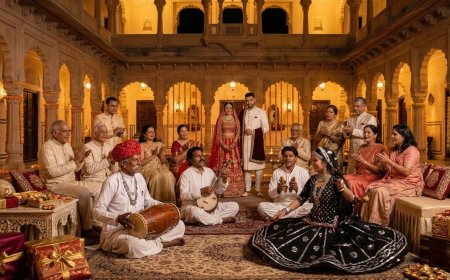
Shubho Drishti — the moment a Bengali bride lowers her betel leaves and meets her groom's eyes for the first time in the sacred wedding ceremony — is one of the most spiritually charged and visually arresting rituals in all of Indian wedding tradition. Rooted in Vedic philosophy and carried across oceans by NRI Bengali families in London, Toronto, New York, Dubai, and Melbourne, this ancient ceremony of seeing transforms a single gaze into a cosmic declaration. This complete guide covers the ritual's meaning, the Saat Paak and Mala Badal sequence, community variations, and full practical advice for NRI couples planning authentic Bengali weddings at home or in Kolkata.


Shubho Drishti — the first sacred, unobstructed gaze between a Bengali bride and groom during their wedding ceremony — is one of the most visually arresting and spiritually charged moments in all of Indian wedding tradition. For NRI Bengali families in London, Toronto, New York, Dubai, and Melbourne, this single suspended moment carries the full emotional architecture of a culture, a community, and a love story that has crossed oceans to arrive at this exact breath.
You have seen it in photographs. The bride, seated on her wooden piri [ceremonial stool], carried by her brothers, her face hidden behind two fresh betel leaves. The groom waiting. The room absolutely still. And then — the leaves lowered, the eyes meeting, the universe apparently deciding that this, right here, is sufficient reason for everything.
You have seen it in photographs and you have thought: that will be me. That will be us. That moment, in a hired hall in Brampton or a hotel in Jumeirah or a beautifully decorated community centre in Southall, with your grandmother watching on a video call from Kolkata and your mother already crying somewhere behind you — that moment will belong to us.
You are right. It will. And this is everything you need to know to make it exactly what it should be.
🌟 Did You Know?
- The word Shubho Drishti comes from the Sanskrit shubha [auspicious, blessed] and drishti [gaze, sight, vision] — making it literally "the auspicious seeing." In classical Indian philosophy, the drishtiis not merely a passive act of looking but an active exchange of prana [life force] — meaning that when the bride and groom truly see each other for the first time in the ceremony, they are understood to be exchanging something of their essential selves.
- The betel leaves the bride holds before her face are not merely decorative or theatrical. Paan pata[betel leaves] are considered deeply auspicious in Bengali Hindu tradition — associated with Lakshmi[the goddess of prosperity] and used at every threshold ritual. The bride concealing her face behind them represents her final moments as a daughter before she becomes a wife, protected by auspiciousness itself until the exact right moment.
- Shubho Drishti is the ritual most frequently cited by second and third-generation NRI Bengalis as the moment they felt the full weight of their cultural identity — including by individuals who grew up largely outside Bengali cultural practice. Something about this specific exchange of gaze across a room full of love appears to be, as one community researcher noted, "immune to diaspora distance."
What Is Shubho Drishti?
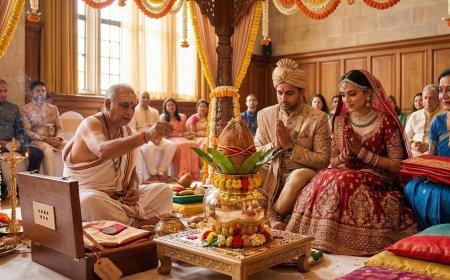
Shubho Drishti [the auspicious first gaze] is the ceremonial moment during a Bengali Hindu wedding when the bride and groom look directly into each other's eyes for the first time within the sacred space of the wedding ceremony. It occurs during the Saat Paak sequence — after the bride has been brought into the wedding mandap [sacred canopy] on her piri, carried by her brothers while she conceals her face behind two fresh betel leaves held in both hands.
The sequence unfolds with precise choreography that is also somehow deeply natural. The bride is carried in — this procession itself is called Bou Baran [the welcoming of the bride] — and placed before the groom. The purohit [Hindu priest] guides the ceremony to the auspicious muhurtham [sacred time] designated by the family's astrologer. At the precise moment, the bride lowers her betel leaves. The groom sees her. She sees him. They circle each other — the bride is carried around the groom seven times on her piri, rotating in the ritual called Saat Paak [seven circles] — and during this circling, each time they face each other, they hold the gaze again.
After the seven circles are complete, the couple performs Mala Badal [the exchange of flower garlands] — a moment of such joyful, game-like energy that it forms a perfect counterpoint to the solemn gravity of the gaze that preceded it. The family tries to prevent the groom from garlanding the bride easily, lifting her out of his reach, laughing, the room suddenly loud after its long held silence.
What makes Shubho Drishti so specifically Bengali is its theatrical completeness. The concealment, the reveal, the circling, the gaze held and held and held — it is structured like the best kind of story, where the tension is released not in an explosion but in a steady, accumulating recognition. These two people are seeing each other. Really seeing each other. And the room is witness to it.
Community Comparison Table
| Community / State | Local Name | Key Tradition | How NRIs Abroad Adapt It |
|---|---|---|---|
| Bengali Hindu (Brahmin/Kayastha) | Shubho Drishti | Bride carried on piri by brothers; betel leaves concealing face; seven circles; garland exchange | Full ceremony performed in banquet halls; brothers carry the piri; betel leaves sourced from Indian stores |
| Bengali Hindu (Baidya) | Shubho Drishti | Slight mantra variation; same core ritual structure; strong emphasis on muhurtham timing | Muhurtham confirmed with Kolkata-based astrologer via video consultation before ceremony |
| Odia Hindu | Badhia / First Darshan | Couple sees each other under sacred canopy; less theatrical concealment than Bengali tradition | Often draws on Bengali community resources when Odia-specific priests unavailable |
| Kashmiri Pandit | Lagan / First Darshan | Couple's first formal gaze under the ritual canopy; specific Kashmiri mantras | KP Sabhas in London and Toronto maintain purohit networks for authentic ceremony |
| Tamil Brahmin | Kashi Yatra / Oonjal | Ritual swing ceremony precedes formal gaze; highly choreographed family involvement | Tamil Sangams in every major diaspora city support full ritual infrastructure |
| Marathi Brahmin | Antarpat Moment | Cloth screen held between couple; dropped at auspicious moment for first gaze | Close structural parallel to Bengali tradition; Marathi community associations active in diaspora |
| Goan GSB Brahmin | Antarpat | Identical cloth-screen tradition; coconut milk and turmeric elements surround the moment | GSB Sabha networks support authentic ceremony; ritual well-preserved in diaspora |
| Punjabi Hindu | First Darshan / Milni | Less formally ritualised first gaze; Milni [family meeting ceremony] precedes main wedding | Large Punjabi diaspora means full ceremony support available in most cities |
| Gujarati Hindu | Jaimala / First Garland | Garland exchange is the primary first-meeting ritual; preceded by formal procession | Gujarati community infrastructure among strongest in diaspora; full ceremonies common |
| Rajasthani | Jaymala Ceremony | Groom arrives in procession; formal first garland exchange under mandap | Adapted with recorded folk music; procession elements maintained even indoors |
| Bengali Muslim | Akad / Nikah | No equivalent Shubho Drishti; first formal meeting at Nikah under Islamic tradition | Distinct tradition; community resources through Muslim Bengali organisations |
| Himachali Hindu | First Darshan | Village deity invoked before couple's first meeting; outdoor mountain ceremony traditional | Deity invocation at local mandir; mountain elements incorporated symbolically |
The Meaning Behind the Ritual
In classical Indian philosophy, drishti [vision, gaze] is never understood as a passive act. The eyes, in Sanskrit cosmological thinking, are not merely receivers of light — they are emitters of tejas [inner radiance] and conduits of prana [life force]. When two people look deeply into each other's eyes, they are understood to be exchanging something of their essential nature — something that cannot be taken back, that changes both people irrevocably.
This is why the moment of Shubho Drishti is so carefully protected by the ritual structure around it. The concealment is not theatrical delay. It is spiritual preparation — creating the conditions for a gaze that is complete, intentional, and witnessed. The betel leaves are not props. They are the last boundary between two separate destinies. When they are lowered, those destinies merge.
The seven circles of Saat Paak that immediately follow are the universe's way of saying: confirm it. Look again. And again. Let the gaze accumulate into something permanent.
In Bengali cultural philosophy, the concept of ananda [pure joy, bliss] is understood as something that arrives from completeness — from the meeting of two things that were meant to meet. Shubho Drishti is the moment ananda enters the room. The reason the room goes silent is not convention. It is recognition. Everyone present understands, in their bodies, that something real is happening.
For a non-Indian partner or guest: "This is the moment when two people truly see each other for the first time — not just look, but truly see — and the entire community bears witness to it. It has been doing this exact job for three thousand years."
Performing Shubho Drishti Abroad: The Practical Reality
The good news for NRI Bengali couples is that Shubho Drishti is one of the most practically adaptable rituals in the Bengali wedding canon. It requires no fire at this specific moment, no large quantities of ritual materials, and no elaborate spatial setup beyond a clear sightline between bride and groom and enough room for the piri to be carried in a circle. What it requires most is the right people, the right timing, and betel leaves.
Finding Bengali betel leaves abroad is your first practical task. Fresh betel leaves — paan pata — are available at most South Asian grocery stores in diaspora cities. In London, Green Street in East Ham and Ealing Road in Wembley both stock fresh paan pata reliably. In Toronto, the stores along Gerrard Street East and the Patel Brothers on Albion Road carry them. In Dubai, Meena Bazaar in Bur Dubai stocks fresh betel leaves daily. In Sydney, Harris Park in Parramatta is your best source. In Houston, the Hillcroft corridor's South Asian stores carry them, and in New York, the Jackson Heights South Asian strip is well-stocked. Buy them fresh, no more than 24 hours before the ceremony, and keep them wrapped in a damp cloth until the moment they are needed.
The piri [ceremonial wooden stool] is the next consideration. A traditional piri is a low, flat wooden seat with specific proportions — not a bar stool, not a decorative piece, but a specific functional object. In diaspora cities, the Bengali community network is your best source; many NRI Bengali families own one and will lend it for weddings within the community. Alternatively, a clean, flat wooden platform of appropriate height can be used with your purohit's guidance. Some NRI couples have had piris made by local woodworkers using photographs of the traditional form as reference.
The brothers' role in carrying the bride deserves specific planning. The bride is traditionally carried by her brothers — specifically her dada [elder brother] or dadas — on the piri. If the bride has no brothers, the role passes to male cousins, and in contemporary practice, female siblings have begun taking on this role in many diaspora families with full community acceptance. Brief whoever will carry the piri well in advance on the route, the circling direction, and the pace — and if the bride is wearing a heavy lehenga or saree, account for the additional weight and ensure the carriers are prepared.
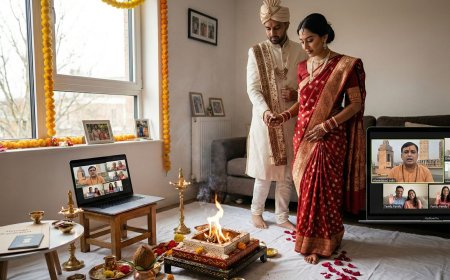
For coordinating with Kolkata, the Shubho Drishti moment is the one your relatives in India most want to witness live. IST is GMT+5:30 — a 3 PM ceremony in London gives Kolkata a comfortable 8:30 PM viewing slot. Position your streaming camera with a clear sightline to the bride's face at the moment of the reveal, not behind the crowd. The moment the betel leaves lower is the frame everyone in Kolkata will keep.
The muhurtham [auspicious timing] for Shubho Drishti must be confirmed with a Bengali astrologer or your purohit well in advance. This specific timing can affect your entire ceremony schedule. NRI couples frequently consult Kolkata-based astrologers via video call for this calculation — your purohit can recommend one, or NRI.Wedding's network can connect you.
Shubho Drishti as a Destination Wedding in West Bengal
There is a particular quality of light in Kolkata in the winter wedding season — November through February — that no overseas venue has ever replicated. It is golden and slightly hazy and it falls through the tall windows of old houses in a way that makes everything look like a painting that was waiting for you specifically. Performing Shubho Drishti inside an ancestral home in North Kolkata, or in one of the heritage venues of Ballygunge or Alipore, is an experience that rewards the journey entirely.
For destination weddings in Kolkata, book your purohit minimum six months in advance — experienced Bengali wedding priests who work with NRI families are in high demand during the winter season. Provide your family's gotra [ancestral lineage], rashi [astrological sign], and specific community tradition in writing before arrival. Brief your purohit on any adaptations your family makes to the standard sequence, so there are no surprises on the day.
For non-Indian guests, Kolkata's extraordinary food, architecture, and cultural atmosphere do much of the contextualising work automatically. A simple printed guide explaining the sequence of Shubho Drishti — what to watch for, what the silence means, why the brothers carry the bride — transforms observers into participants. And the moment the betel leaves come down, no explanation is necessary. That moment speaks every language.
What You Need: Ritual Checklist
Ritual Items: Two fresh betel leaves (paan pata) of good size and unblemished quality, a wooden piri of appropriate height and proportion, fresh flower garlands for Mala Badal [garland exchange] — traditionally white tuberose and marigold, though families vary — ritual flowers for the mandap, and the full havan materials for the broader ceremony of which Shubho Drishti is part.
People Required: The bride's brothers or designated male carriers for the piri, a Bengali purohit with specific knowledge of the Shubho Drishti and Saat Paak sequence, the family's designated muhurtham coordinator, a streaming coordinator for Kolkata relatives, and a photographer briefed specifically on the betel-leaf reveal moment — this is the frame the entire ceremony builds toward and it must be captured without obstruction.
Preparation Steps: Confirm muhurtham timing with your purohit or astrologer minimum one month before. Source fresh betel leaves no more than 24 hours before. Brief piri carriers on route, direction, and pace. Position streaming camera for optimal sightline on the reveal. Brief your photographer explicitly on the Shubho Drishti moment. Ensure the mandap layout gives the couple a clear, unobstructed sightline at the moment of the gaze. Practice the carrying sequence once before the ceremony if the brothers are unfamiliar with the tradition.
NRI.Wedding connects Bengali couples with community-knowledgeable purohits, piri sourcing networks, and photographers experienced in documenting the specific sacred architecture of Bengali wedding ceremonies. Visit our vendor directory to begin.
5 Questions NRI Couples Always Ask
The bride has no brothers. Who carries the piri?
This is more common in diaspora families than many people realise, and the tradition has always had provisions for it. Male cousins on the maternal side are the traditional first alternative. In contemporary NRI practice, female siblings carrying the piri has become widely accepted and, many families find, deeply moving in its own right. Speak with your purohit early about the specific adaptation that feels right for your family — there is no version of this that diminishes the ritual's meaning, provided it is done with full intention and love.
My partner is not Bengali and has never attended a Hindu wedding. How do we prepare them for the Shubho Drishti moment?
Tell them almost nothing. The Shubho Drishti moment, more than almost any other ritual in Indian wedding tradition, communicates its own meaning without instruction. Brief your partner on the practical sequence — you will be carried in, you will lower the leaves, we will look at each other — and let the moment do the rest. Many non-Indian partners describe Shubho Drishti as the moment they understood, in their body rather than their mind, what kind of tradition they had married into. That understanding requires no preparation.
Can the muhurtham be adjusted if it falls at an inconvenient time — say, 2 AM?
This requires an honest conversation with your purohit and astrologer. In some families, the muhurtham is treated as absolute and the entire ceremony is scheduled around it, however inconvenient — 2 AM Bengali weddings are not unheard of and have their own particular magic. In other families, the nearest auspicious window within a reasonable timeframe is selected. The diaspora reality of guests who have flown from multiple time zones is a factor that many contemporary Bengali purohits factor into their guidance. Be honest about your constraints and find a solution that honours both the tradition and your guests.
Our venue has a raised stage setup. Does Shubho Drishti work on a stage?
Yes, with planning. The key requirement is that the bride's entry and the carrying of the piri can be performed with sufficient space and clear sightlines — a stage can actually enhance the visibility of the moment for all guests. Ensure there is a clear path for the piri carriers from the entrance to the stage, that the stage surface is stable enough for carrying, and that your photographer has an unobstructed angle on the bride's face at the moment of the reveal. The height differential between a standing groom and a seated bride on a piri, on a stage, can produce extraordinarily powerful photographs.
How do we handle the live-stream so relatives in Kolkata don't miss the exact moment?
Assign one dedicated person — not a family member who will be emotionally occupied — as your streaming coordinator. Use a stable tripod-mounted device rather than a handheld phone. Position the camera with the bride's face clearly in frame from the moment she enters. Brief your streaming coordinator that the Shubho Drishti moment is the priority frame, and that if they must choose between showing the room and showing the bride's face at the reveal, they always choose the bride's face. Send a WhatsApp message to your Kolkata family group fifteen minutes before the ceremony begins so they are ready and connected. Do not leave this to chance.
The Emotional Angle
There is a particular kind of waiting that Bengali families do at weddings. It is not impatient waiting — it is the waiting of people who know something extraordinary is coming and want to be fully present for every second of its approach.
For NRI Bengali families, this waiting carries additional weight. The mother who spent thirty years in a semi-detached house in Ilford maintaining a Kolkata kitchen and a Kolkata calendar and a Kolkata way of marking time — she has been waiting for this moment since her daughter was born. The father who drove that daughter to every Bengali cultural programme and every Durga Puja and every dance recital because he understood, dimly but correctly, that these were the threads he was weaving into her — he has been waiting too, though he would not have named it that.
And when the room goes quiet — that specific Bengali wedding quiet that falls like a held breath — and the brothers lift the piri, and the daughter appears in her red and gold with two betel leaves before her face, and the groom stands very still and very straight and waits — something in that room recognises itself. All the distance. All the years. All the Kolkata that was carried in suitcases and in recipes and in the specific way certain mothers say certain words — all of it arrives at this moment and says: it was worth it. We are still here. Look.
The leaves come down. And everyone in the room — in the hall in Brampton, in the venue in Jumeirah, in the community centre in Southall — is, for one suspended moment, exactly where they are supposed to be.
A Moment to Smile
At Ananya and David's wedding in Melbourne last March, the Shubho Drishti moment arrived with the full weight of months of planning behind it. The piri was perfect. The betel leaves were fresh. Ananya's two cousins — standing in for her brothers who couldn't travel from Kolkata — had practiced the carrying three times in the car park before the ceremony.
What no one had practiced was what to do when Ananya, carried solemnly into the mandap on her piri to a room of absolute silence, caught David's eye one second before she was supposed to — over the top of the betel leaves, in a completely accidental, completely undeniable moment of pure recognition — and both of them started laughing.
The purohit waited. The cousins wobbled slightly. The room, which had been holding its breath, exhaled in a wave of laughter that lasted a full minute.
When the actual Shubho Drishti moment came — the official, auspicious, correctly-timed one — the room was warm and laughing and entirely ready for it.
It was, several aunties agreed afterward, the best one they had ever seen.
Quotes From the Diaspora
"I practiced keeping a composed face for weeks. I looked in the mirror. I told myself I would be serene and beautiful and not cry until after. And then my brothers carried me in and I saw Rohan standing there looking like he might actually faint, and I lowered the leaves and looked at him and every single plan I had made dissolved completely. I was just there. Just completely there." — Priyanka Mukherjee, Bengali Brahmin, Toronto
"My son is not a man who shows emotion easily. He gets that from his father. But when that girl came in on the piri and lowered those leaves and looked at him, I watched something move across his face that I have never seen before and will never forget. That is what Shubho Drishti does. It reaches things that nothing else can reach." — Kaberi Das, mother of the groom, Bengali Kayastha, Dubai
"We were in a hotel in Canary Wharf. Everything was modern and glass and very London. And then the room went quiet in that Bengali way and my cousins carried me in and I raised the betel leaves and thought — my great-grandmother did this. Her mother did this. And now I am doing it, in this glass tower, in this city, and the ritual doesn't care. It just works. It just completely works." — Devika Banerjee, Bengali Hindu, London
Your Roots Travel With You
Shubho Drishti does not require the Hooghly River or the red clay of Bengal or a house where the walls remember four generations of the same family. It requires two people willing to truly see each other, a community willing to hold the silence, and the wisdom to preserve a ritual that has known, for three thousand years, exactly what it is doing.
NRI Bengali families are performing Shubho Drishti in cities their grandparents never visited, in languages their grandparents never spoke, in rooms that look nothing like the homes where this ceremony was born — and the ritual arrives every time, complete and powerful and entirely itself. Because it was never about the geography. It was always about the gaze.
NRI.Wedding supports Bengali couples with purohit connections, piri sourcing networks, muhurtham consultation services, and photographers across London, Toronto, Dubai, New York, Melbourne, and Houston who understand how to document the specific, unrepeatable architecture of a Bengali wedding moment.
Lower the leaves. Let him see you. Let her see you. Let the universe witness it.
This complete guide to Shubho Drishti in Bengali Hindu weddings covers the ritual's Vedic origins, spiritual significance, the Saat Paak and Mala Badal sequence, community variations, and practical advice for NRI Bengali families in London, Toronto, New York, Dubai, and Melbourne planning authentic ceremonies at home or as destination weddings in Kolkata.
What's Your Reaction?
 Like
0
Like
0
 Dislike
0
Dislike
0
 Love
0
Love
0
 Funny
0
Funny
0
 Angry
0
Angry
0
 Sad
0
Sad
0
 Wow
0
Wow
0