






































































Where Profit Meets Prayer: The Gujarati Diwali Ritual That Blesses Every New Beginning
Yamadeepam, the sacred lamp lit on Dhanteras in honor of Lord Yama, holds deep spiritual significance beyond Diwali’s celebration of wealth. For NRI families across the US, UK, Canada, UAE, and Australia, the ritual has become a powerful expression of cultural continuity and ancestral connection. As diaspora communities adapt traditions to modern venues and global lifestyles, Yamadeepam continues to symbolize protection, longevity, and gratitude for life — reinforcing the emotional bridge between heritage and home.

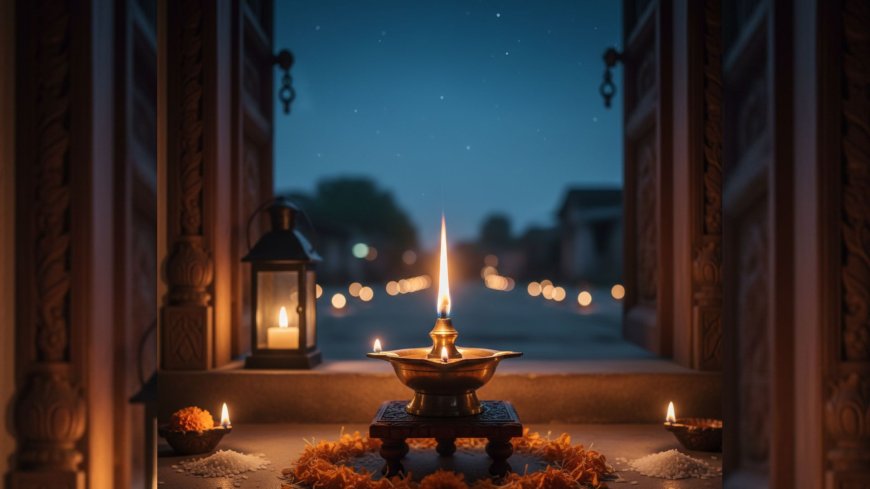
On Dhanteras, as homes glow in anticipation of Diwali, one quiet flame is lit not for wealth — but for protection. The ritual of Yamadeepam carries ancient meaning, invoking Lord Yama for longevity and peace before inviting prosperity into the home. For NRIs across Toronto, London, Melbourne, Dubai, and Houston, this lamp becomes more than tradition — it becomes a bridge to ancestry, memory, and the promise that culture survives distance.
OPENING HOOK
You grew up watching your grandmother place one diya slightly apart from the others.
Not in the centre. Not near the silver coins. Not beside Lakshmi.
It faced south.
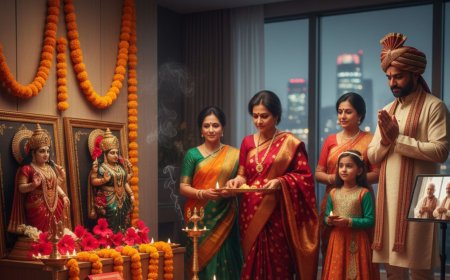
Now you’re in Mississauga. Or Southall. Or Parramatta. It’s late October, the air is sharper than it ever was in India, and you’re lighting diyas on a condo balcony where open flames are technically “not permitted.” And still, instinctively, you turn one lamp toward the south.
Because some rituals are not about geography. They are about belonging.
🌟 DID YOU KNOW?
• In many North Indian households, thirteen diyas are traditionally lit on Dhanteras to represent the Trayodashi (13th lunar day) of Kartik Krishna Paksha.
• Classical ritual texts refer to this observance as Yamadipadana and Yamatarpan, rites meant to acknowledge mortality before invoking abundance.
• Across diaspora communities in Canada and the UK, Dhanteras gatherings have grown significantly in the past decade, with temples in cities like Brampton and Leicester reporting record participation in pre-Diwali rituals.
WHAT IS YAMADEEPAM?
Yamadeepam (literally “lamp for Yama”) is a sacred diya lit on Dhantrayodashi — the thirteenth lunar day of the dark fortnight in the month of Kartik — to honor Yamarāja (Lord Yama, the deity of death and cosmic order).
While Dhanteras is popularly associated with purchasing gold and invoking Lakshmi (goddess of wealth) and Dhanvantari (divine physician), Yamadeepam precedes all of that. It is the spiritual clearing before celebration. The acknowledgment before abundance.
Traditionally, at sayam sandhya muhurat (the twilight hour), homes are cleaned thoroughly, especially the threshold. An earthen diya — sometimes handmade from wheat flour dough mixed with turmeric — is filled with sesame oil or ghee and fitted with a cotton wick. In many northern traditions, thirteen diyas are arranged. In southern homes, a single lamp may suffice.
The diya is placed facing south — the direction ruled by Yama. Flowers, kumkum (vermilion), turmeric, rice grains, and sandal paste are offered. A brief invocation may be spoken, or a silent prayer offered: a request for protection from untimely death, accidents, and misfortune.
A popular legend tells of a devoted young bride who saved her husband from a foretold early death by keeping him awake and surrounding their doorway with dazzling lamps and ornaments. When Yama arrived disguised as a serpent, the brilliance prevented him from crossing the threshold. By dawn, the destined hour had passed.
But beyond the story lies philosophy: this is not a ritual of fear. It is a ritual of balance. Before inviting wealth, one first prays for life itself.
For families — especially those living far from ancestral soil — that intention carries immeasurable weight.
COMMUNITY COMPARISON TABLE
| Community / State | Local Name | Key Tradition | How NRIs Abroad Adapt It |
|---|---|---|---|
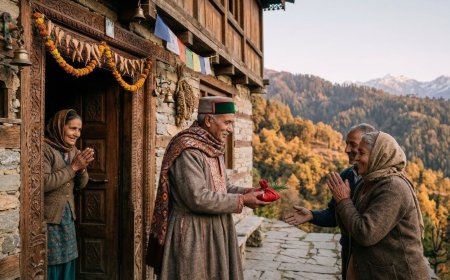
| Himachali | Yam Deep Daan | Thirteen lamps lit at courtyard entrance facing south | Apartment balconies used; brass lamps ordered online from Indian artisans |
| Garhwali | Yam Deep | Oil lamp placed near tulsi plant | Tulsi replaced with indoor plant or symbolic altar space |
| Kumaoni | Deepdan for Yama | Single diya outside main threshold | Electric diya used in condo corridors due to fire restrictions |
| Ladakhi | Protective Butter Lamp | Butter lamp lit for ancestors before festivities | Ghee lamps lit in small temple rooms within diaspora Buddhist-Hindu households |
| Kashmiri Pandit | Yama Diya | Diya placed at doorway with water offering | Copper lotas sourced from Indian stores in Southall or Edison |
| Punjabi | Yam Deep | Thirteen diyas in verandah | Community lighting at local gurdwara-temple complexes |
| Marathi | Yamadeepdan | Diya floated in courtyard or placed at south wall | Glass-enclosed lamps used in Melbourne homes |
| Tamil | Yama Deepam | Single south-facing lamp during evening puja | Combined with regular Sandhya rituals in Sydney temples |
| Bengali | Yam Prodip | Lamp lit before Kali Puja preparations | Placed alongside Kali altar in diaspora households |
| Rajasthani | Yama Deep Daan | Diyas arranged in rows at entrance | LED diyas used in Dubai villas due to regulations |
THE MEANING BEHIND THE RITUAL
Indian cosmology does not deny death — it integrates it.
The lighting of Yamadeepam acknowledges that life is finite, fragile, luminous. Before inviting Lakshmi’s abundance, one bows to Yama’s inevitability. It reflects a worldview that understands prosperity without longevity is meaningless.
Fire in Vedic tradition symbolizes consciousness — the inner witness that persists through cycles. The south-facing flame is not an invitation to death but a prayer for its natural timing. It is gratitude for breath. It is reverence for order.
In a world obsessed with accumulation, this ritual whispers something deeper: first protect life, then pursue wealth.
Or as one NRI groom once explained to his British fiancée’s parents, “It’s our way of saying — before we celebrate, we give thanks for simply being alive.”
DOING YAMADEEPAM ABROAD: THE PRACTICAL REALITY
Here’s the truth no one tells you: performing Yamadeepam abroad requires creativity.
Let’s begin with the biggest obstacle — fire regulations. Many condos in Toronto, Melbourne, and London restrict open flames on balconies. The solution? Glass hurricane lanterns, enclosed brass diyas with covers, or flameless LED diyas specifically made for Diwali. While purists prefer ghee, sesame oil is often easier to source abroad.
Speaking of sourcing — where do you buy ritual items?
In London, Southall Broadway remains the epicenter for puja supplies. In Toronto, Gerrard Street East and stores in Brampton stock everything from copper lotas to cotton wicks. In Houston, Hillcroft Avenue is a treasure trove. In Dubai, Meena Bazaar carries clay diyas year-round. In Sydney, Harris Park’s Indian grocery shops are your best bet.
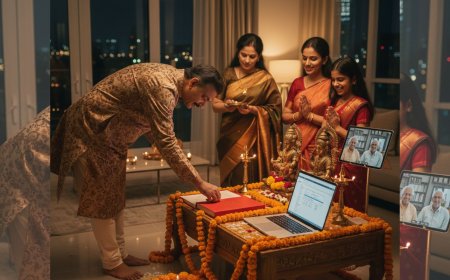
The pandit question is more nuanced. Not every priest abroad is familiar with region-specific Yamadeepam traditions. If you are Himachali or Kashmiri Pandit, ask explicitly about regional customs before booking. Many NRIs now schedule a 30-minute Zoom call with their family priest in India to guide them live during twilight — adjusting for time zones (remember, Dhanteras muhurat differs by location; consult a local panchang app).
If elderly parents are in India, coordinate video calls 10–15 minutes before twilight so both households light the diya together. For NRIs in North America, that often means early morning calls to India.
It may feel complicated. But when that lamp glows in your foreign home, something shifts. The space feels claimed. Anchored.
And suddenly, the ocean doesn’t feel so wide.
DOING YAMADEEPAM AS A DESTINATION WEDDING IN INDIA
If you are planning a destination wedding in Udaipur, Jaipur, Rishikesh, or even Kerala during the Diwali season, incorporating Yamadeepam adds profound depth.
Brief your wedding planner in advance — not all resort pandits automatically include this ritual. Specify whether you follow the thirteen-diya tradition or single-lamp custom. In Rajasthan and Gujarat, local priests are deeply familiar with Yamadeepdan; in South India, clarify the south-facing placement.
For non-Indian guests, provide a short printed explanation in welcome hampers. When they understand that this flame honors life before celebration, the ritual becomes universally moving.
It transforms a luxury wedding into a culturally rooted experience.
WHAT YOU NEED: RITUAL CHECKLIST
Ritual Items
Earthen or brass diyas
Sesame oil or ghee
Cotton wicks
Kumkum, turmeric, rice grains
Flowers
Copper vessel (for Yamatarpan, optional)
People Required
Family elder or priest
Immediate family members
Video call setup if coordinating internationally
Preparation Steps
Clean threshold and altar area
Confirm local sunset timing
Arrange diyas facing south
Prepare brief invocation or prayer
For region-specific guidance, NRI.Wedding connects couples with verified pandits across the US, UK, Canada, UAE, and Australia.
5 QUESTIONS NRI COUPLES ALWAYS ASK
Can we perform Yamadeepam at a hotel venue abroad?
Yes — but confirm fire regulations first. Enclosed lamps or LED alternatives are widely accepted. The intention matters more than the medium.
My partner is not Indian. How do we include them meaningfully?
Explain the symbolism. Invite them to light the diya with you. When they understand it honors life itself, the ritual becomes beautifully inclusive.
How do we find a regional pandit abroad?
Ask local temple boards for recommendations and verify community familiarity. Many diaspora groups maintain directories. Virtual guidance from your family priest in India is also increasingly common.
What if India time and our time zone don’t match for twilight?
Perform according to your local sunset. Coordinate a symbolic second lighting with family in India if desired.
Should this be done before or after a civil ceremony abroad?
Yamadeepam is independent of marriage rites. It occurs on Dhanteras. If your wedding coincides with Diwali week, include it the evening before festivities begin.
THE EMOTIONAL ANGLE
There is something achingly tender about watching your parents light Yamadeepam in a foreign country.
Their hands move exactly as they did back home. The same careful turning of the wick. The same quiet whisper. But now it happens against a skyline of glass towers, not mango trees.
For many NRI families, this ritual carries unspoken grief — the absence of grandparents, ancestral homes sold, neighbors who once gathered in shared courtyards. And yet, there is pride too. A determination that culture will not dilute with distance.
When you light that lamp, you are saying: we remember.
You are telling your future children that Diwali is not only about fireworks and sweets. It is about gratitude for breath.
A MOMENT TO SMILE
In Mississauga last year, a family carefully arranged thirteen diyas along their townhouse porch. Ten minutes later, a sudden gust of Canadian autumn wind extinguished eleven of them.
Panic. Laughter. A frantic scramble for matches.
Finally, the grandmother calmly brought out a large glass casserole dish from the kitchen, placed it upside down over the remaining lit diyas, and declared, “Now Yama will need a visa to enter.”
The family still laughs about it. And every year since, the casserole dish makes its ceremonial appearance.
QUOTES FROM THE DIASPORA
“Lighting Yamadeepam in London made me feel closer to my dadi than any WhatsApp call ever could.”
— Rhea Sharma, Punjabi bride, London
“In Melbourne, my son insisted on turning the diya exactly south using Google Maps. That seriousness — that’s how culture survives.”
— Meena Iyer, Tamil mother of the groom, Melbourne
“We lit the lamp in Houston while my parents did the same in Jaipur. Different continents, same flame.”
— Aakash Mehta, Gujarati groom, Houston
Your Roots Travel With You
Living abroad often means choosing which traditions to carry and which to simplify. Yamadeepam is not loud. It does not demand grandeur. It asks only for a small flame and a quiet acknowledgment of life’s fragility.
At NRI.Wedding, we understand that rituals are not checkboxes — they are emotional inheritances. Whether you need a regional pandit in Toronto, a diya supplier in Dubai, or a cultural planning checklist for your destination wedding in Udaipur, our community exists to make sure your traditions arrive intact.
Your home may be in London or Sydney. But when that south-facing lamp glows, you are exactly where you are meant to be.
Your roots travel with you. Let them shine.
Yamadeepam on Dhanteras is observed across Himachali, Punjabi, Marathi, Tamil, Bengali, and other Indian communities, with diaspora families in Toronto, London, Melbourne, Dubai, and Houston adapting the ritual with devotion and creativity.
What's Your Reaction?
 Like
0
Like
0
 Dislike
0
Dislike
0
 Love
0
Love
0
 Funny
0
Funny
0
 Angry
0
Angry
0
 Sad
0
Sad
0
 Wow
0
Wow
0