



































































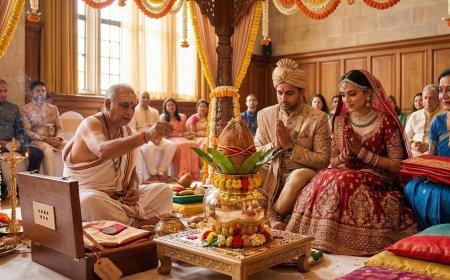






How Bengali NRI Mothers Are Cooking the Aiburo Bhaat Across the World
Aiburo Bhaat is the ceremonial last bachelor's meal at the heart of every Bengali Hindu wedding — a deeply personal pre-wedding feast cooked by the mother, built entirely around the bride or groom's favourite dishes, and served as a final act of unconditional love before marriage. Rooted in Bengali food philosophy where rice and cooking are expressions of the deepest familial care, the ritual is preserved powerfully across the Bengali diaspora in the UK, USA, Canada, UAE, and Australia. This complete guide covers its meaning, menu, and everything NRI families need to do it right abroad.

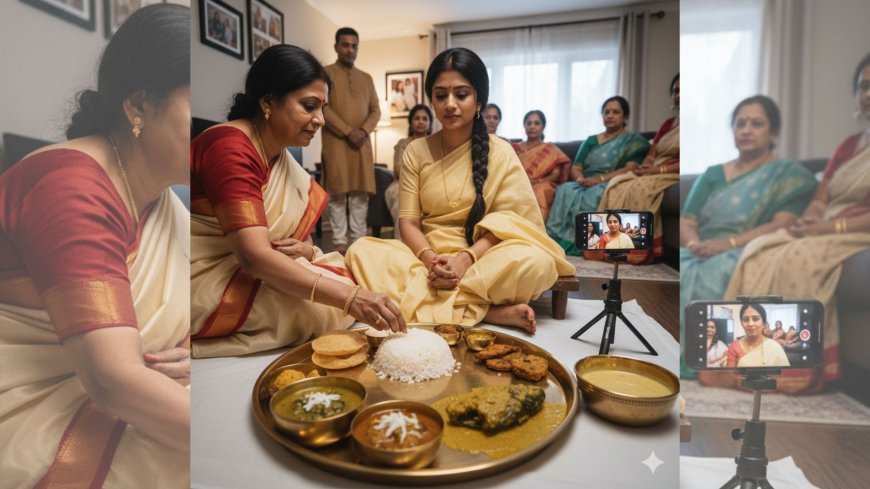
Aiburo Bhaat — the ceremonial last bachelor's meal served to a Bengali bride or groom at their natal home on the eve of their wedding — is one of the most quietly devastating rituals in all of Indian wedding culture. It is not loud. It is not public. It is a mother cooking every dish her child has ever loved, one final time, in the kitchen that made them, before the threshold is crossed and the family is permanently rearranged. For Bengali NRI families from Kolkata to California, from Dhaka to Dubai, the Aiburo Bhaat is the ritual that asks the hardest question any family ever has to answer: how do you feed someone enough love to last a lifetime, in a single meal?
You grew up eating her food. Not restaurant food, not catered food — her food. The specific way she makes cholar dal with coconut and raisins that no cookbook has ever replicated. The fish curry with mustard paste that filled the whole flat in Croydon or Scarborough with a smell that was, somehow, both entirely British-Indian and entirely Bengal. The payesh she made only on birthdays and very special occasions, the one with the skin on the milk and the small cardamom pods and the specific sweetness that meant someone in this family was being celebrated.
You are getting married in six weeks. And somewhere between the venue confirmations and the catering negotiations and the saree decisions, your mother has quietly started making a list. Not a wedding list. A menu.
This is the Aiburo Bhaat. The last meal she will cook for you as her unmarried child. The last time you will sit in your family's home and be fed as though you are the centre of the entire universe — because in this ritual, you are, completely and without apology, the only thing that matters.
🌟 Did You Know?
-
The name Aiburo Bhaat comes from the Bengali words aiburo (unmarried, or one who has not yet crossed the threshold of marriage) and bhaat (cooked rice — the central, sacred food of Bengali culture and the symbol of sustenance, home, and maternal love). The meal is therefore literally translated as "the rice of the unmarried" — a meal that can only be eaten once, by definition, because after this night the person eating it will never be unmarried again.
-
The Aiburo Bhaat is held separately for the bride and groom, each at their own natal home, typically the day before the wedding. The menus are built entirely around the personal food preferences of the person being celebrated — every dish is chosen by or for them specifically — making it one of the only rituals in any Indian wedding tradition that is entirely customised around a single person's taste and memory rather than a fixed ceremonial requirement.
-
In the Bengali diaspora — which spans the UK, USA, Canada, UAE, and Australia, with significant communities in London, New York, Toronto, Melbourne, and Dubai — the Aiburo Bhaat has evolved into one of the most emotionally preserved pre-wedding traditions, with NRI mothers routinely transporting specific spice blends, specialty fish, and hand-carried mustard oil from Indian grocery networks specifically to ensure the meal tastes exactly as it would have in Kolkata or Dhaka.
What Is Aiburo Bhaat?
Aiburo Bhaat is the ceremonial pre-wedding feast served to a Bengali bride or groom — separately, at their respective natal homes — on the day before the wedding. It is the last formal meal the person will eat as an unmarried member of their family, and it is cooked and served with the full understanding that this is its meaning. This is not a party. It is a meal. The distinction is everything.
The ceremony is led by the mother, who cooks every dish personally or oversees its preparation with direct involvement. The menu is built around the bride or groom's favourite foods — the dishes they asked for as children, the things they missed when they moved abroad, the food that means home to them in the most specific and irreplaceable sense. There is no fixed menu required by tradition, but certain dishes appear across almost every Aiburo Bhaat because they are the foundations of Bengali domestic cooking: luchi [the deep-fried white flour bread that is Bengali celebration food], cholar dal [split chickpea lentil with coconut and spices], begun bhaja [pan-fried aubergine], at least one substantial fish preparation — typically ilish [Hilsa fish, the most beloved fish in all of Bengali cuisine, practically sacred in its cultural significance] or rui [rohu], and payesh [Bengali rice pudding made with full-fat milk, rice, and sugar, the dessert of celebrations and auspicious occasions].
The person being celebrated sits at the centre of the meal, served by the family rather than serving themselves. The mother brings each dish personally. Senior female relatives are present as witnesses. There is no formal ceremony in the priestly sense — no mantras are required, no priest presides — but the meal is opened with a brief prayer or blessing, and the final dish, the payesh, is served with specific ceremony because it is the last sweetness the mother gives her child before giving them to the world.
The Aiburo Bhaat happens the day before the wedding — typically at noon or early evening — so that the family has the full afternoon and evening together after the meal before the wedding events begin the following morning.
The Last Meal Tradition Across Indian Communities
The Aiburo Bhaat is Bengal's expression of a profound and near-universal instinct — the natal family feeding the bride or groom one final, complete meal before they transition into their new life. Every major Indian community has a version of this impulse. Here is how it manifests across traditions.
| Community / State | Local Name | Key Tradition | How NRIs Abroad Adapt It |
|---|---|---|---|
| Bengali (Hindu) | Aiburo Bhaat | Full ceremonial meal of favourite dishes cooked by mother; Hilsa fish and payesh central; held separately for bride and groom | Hilsa sourced from Bengali grocery networks; mother cooks personally; family gathers in home or hotel suite |
| Bengali (Muslim) | Gaye Holud feast | Turmeric ceremony combined with celebratory feast; similar emotional structure; family food central | Full feast preserved; Halal Bengali ingredients sourced from South Asian grocers |
| Maharashtrian | Kelvan | Ceremonial feast before wedding rituals begin; specific Maharashtrian dishes; maternal family cooks | Maharashtrian caterers sourced in diaspora cities; family recipes cooked at home or catered |
| Punjabi | Family dinner / Gharoli feast | Pre-wedding family meal; mother cooks favourite dishes; community gathering | Home-cooked spread by mother and aunties; Punjabi caterers supplement in diaspora |
| Tamil | Nichayathartham feast | Engagement feast with specific Tamil dishes; family cooks; bride and groom separately celebrated | Tamil caterers in diaspora cities; specific dishes sourced from South Indian grocers |
| Gujarati | Family pre-wedding meal | Mother cooks favourite dishes before wedding; community gathers; sweets central | Gujarati sweets and dishes sourced from Indian grocers; community caterers assist |
| Goan Catholic | Family dinner before Roce | Pre-Roce family meal; Goan-Portuguese dishes; mother cooks; intimate family gathering | Goan ingredients sourced from Indian and Portuguese grocers in diaspora cities |
| Rajasthani | Pre-wedding family feast | Dal baati churma and specific Rajasthani dishes; family cooks; community present | Rajasthani caterers in diaspora; key dishes cooked by family members |
| Kashmiri Pandit | Wazwan pre-wedding | Multi-course meat feast before wedding; specific Kashmiri dishes; community cooks together | Kashmiri Pandit community associations help source and prepare traditional dishes |
| Telugu | Pre-wedding family meal | Specific Telugu dishes cooked by mother; family gathering; sweets and savoury balance | Telugu caterers sourced in diaspora; mother cooks signature dishes personally |
The Meaning Behind the Ritual
To understand the Aiburo Bhaat at its philosophical depth, you need to understand what rice means in Bengali culture — because this is not simply a meal. It is an act of transfer.
In the Bengali worldview, bhaat [cooked rice] is not merely sustenance. It is the most fundamental expression of a mother's love, a home's warmth, and a family's care. To be fed rice by your mother is to be recognised as belonging to her, to this home, to this family. The phrase ma-er haater ranna [the cooking of a mother's hands] carries in Bengali an emotional weight that has no English equivalent — it names the specific, irreplaceable quality of food made by the person who loves you most completely, with the hands that have known you your entire life.
The Aiburo Bhaat is the mother's final, complete act of this feeding. Every dish she makes is a memory she is giving physical form. The ilish she prepares is every ilish she has ever made for this child. The payesh she brings last is every birthday, every celebration, every moment she looked at this person and felt the full weight of how much she loves them.
The Hilsa fish — ilish — carries specific spiritual significance. It is the fish of Bengal's rivers, the fish of the monsoon, the fish of homecoming. To serve ilish at the Aiburo Bhaat is to say: you come from a place with rivers. You come from a place of abundance. Carry this with you.
For a non-Indian partner or family member seeking the simplest truth: this is a mother cooking every dish her child has ever loved, one last time, as her final act of complete, unconditional care before the family changes shape forever.
Doing the Aiburo Bhaat Abroad: The Practical Reality
The Aiburo Bhaat abroad faces one central challenge that organises every other logistical question: the Hilsa fish. Ilish is not simply an ingredient — it is the soul of the meal, and for many Bengali families, an Aiburo Bhaat without proper ilish is an incomplete ceremony regardless of how beautiful every other dish is.
In London, fresh or frozen Hilsa is available at the Bangladeshi and Bengali grocers of Whitechapel and Brick Lane — specifically the fishmongers along Whitechapel Road and the Bengali-run stores of Bethnal Green. Frozen whole Hilsa, exported from Bangladesh, is the most reliably available form in the UK and is entirely acceptable for the Aiburo Bhaat if the mother prepares it correctly — which she will. In Toronto and Mississauga, the Bengali grocers of Gerrard Street East and the South Asian stores of Brampton and Scarborough carry frozen Hilsa, often imported from Bangladesh. Call ahead to confirm availability and reserve your fish at least a week before the wedding.
In New York and New Jersey, the South Asian grocers of Jackson Heights in Queens and the Bengali community stores of Astoria carry frozen Hilsa with some regularity. In Houston, the Indian and Bangladeshi grocers of Hillcroft Avenue are your best starting point. In Dubai, where both Bengali Hindu and Bengali Muslim diaspora communities are substantial, Hilsa is available in the South Asian grocery districts of Bur Dubai and Karama. In Melbourne and Sydney, the South Asian grocers of Harris Park and Dandenong are your first calls — availability varies and advance ordering is strongly recommended.
The cooking space for the Aiburo Bhaat is as important as the ingredients. The ceremony should happen where the mother can cook — at the family home, a family member's house near the wedding venue, or in an apartment or self-catering accommodation booked specifically to give the mother a real kitchen for this day. A hotel suite kitchenette is not sufficient for an Aiburo Bhaat. The mother needs a full kitchen, proper pots, and enough space to prepare five to seven dishes simultaneously. Book your accommodation with this requirement in mind when planning the wedding weekend.
The mustard oil question is one every diaspora Bengali family navigates. Pure mustard oil — sarshey tel — is essential to the specific flavour of Bengali cooking and cannot be substituted. In the UK it is technically sold for external use only due to EU regulations, but it is available at South Asian grocers in Whitechapel and Southall with this labelling. In Canada, the US, and Australia it is available freely at Indian grocery stores. Buy more than you think you need. The mother will use more than the recipe requires, as she always does.
The Aiburo Bhaat does not require a priest. It requires a kitchen, a mother, and enough time. Give the mother the full morning undisturbed. Do not schedule anything before noon on Aiburo Bhaat day. This is her ceremony as much as it is the bride or groom's, and it deserves the full weight of time.
Doing the Aiburo Bhaat as a Destination Wedding in Bengal
To eat the Aiburo Bhaat in Kolkata — in the family's flat in South Calcutta or the ancestral house in North Kolkata with the high ceilings and the inner courtyard and the kitchen that has been making this family's food for three generations — is to eat it in the landscape that made it meaningful.
For a destination Aiburo Bhaat in Bengal, the family home is the ideal and irreplaceable setting. If the family home is no longer available or accessible, the heritage guesthouses and boutique properties of South Kolkata — particularly those in the Ballygunge and Hindustan Park areas — offer real kitchens and enough domestic atmosphere to hold the ceremony with integrity. The food markets of Gariahat and the New Market fish halls are where the fresh ilish comes from, bought the morning of the meal by someone who knows how to choose it — the silver flank, the specific weight, the freshness the fishmonger confirms with a confidence that comes from generations.
For non-Bengali guests witnessing the Aiburo Bhaat in Kolkata, the meal is the most immediately accessible of all Bengali wedding rituals because everyone understands being fed by someone who loves you. Brief them on the significance of the ilish and the payesh — the fish of homecoming and the sweet of celebration — and they will understand the emotional architecture of the meal without needing to understand the language it is served in.
What You Need: The Aiburo Bhaat Checklist
Ritual Items and Ingredients: Whole Hilsa fish (ilish) — fresh or frozen, sourced at least two days before the meal; mustard oil (sarshey tel) — pure, not blended; panch phoron [Bengali five-spice blend of fenugreek, nigella, cumin, black mustard, and fennel seeds]; fresh mustard paste for fish preparation; split chickpeas for cholar dal; fresh coconut for dal garnish; luchi flour and oil for frying; full-fat milk for payesh; gobindobhog rice [the short-grain aromatic Bengali rice used specifically for payesh and ritual cooking — source from Bengali grocery stores]; cardamom, bay leaves, and ghee; fresh seasonal vegetables for bhaja [pan-fried preparations]; a large thali or traditional Bengali brass plate for serving the meal.
People Required: The mother as the primary cook and ceremony leader — her presence at the cooking is non-negotiable; senior female relatives of the bride or groom's family as witnesses and helpers; the bride or groom as the sole honoured guest of the meal; immediate family members to be present at the meal and serving; one designated family member to manage any video stream to relatives in India or abroad; your wedding photographer briefed to treat the Aiburo Bhaat as a priority documentary sequence — the cooking, the serving, the mother's face, the first bite.
Preparation Steps: Source the ilish and all specialty ingredients at least three to four days before the wedding. Book self-catering accommodation with a full kitchen well in advance if the family home is not available in the wedding city. Give the mother an undisturbed morning on Aiburo Bhaat day — no errands, no wedding logistics, nothing. Set up the video call to India at least thirty minutes before the meal begins. Brief your photographer the evening before on the sequence of the meal and the emotional significance of the payesh moment specifically.
NRI.Wedding connects Bengali NRI couples with ilish sourcing contacts in their diaspora city, photographers who understand the Aiburo Bhaat as the most important documentary sequence of the pre-wedding period, and complete Bengali wedding planning checklists. Begin at NRI.Wedding.
5 Questions NRI Couples Always Ask
We're having the Aiburo Bhaat in a hotel and there's no real kitchen. What do we do?
Book separate self-catering accommodation near the wedding hotel specifically for the Aiburo Bhaat day — a serviced apartment or an Airbnb with a full kitchen. This is not an optional luxury; it is a functional requirement of the ceremony. The Aiburo Bhaat cannot be catered by an outside restaurant without losing its entire meaning, which is the mother cooking personally. Even if the apartment is only used for one day, the cost is entirely worth it for the ceremony it enables. Some families book a family member's nearby home for the cooking day and travel back to the hotel for the evening — this works equally well.
My mother is in Kolkata and I'm in London. She wants to cook the Aiburo Bhaat herself but she can't travel. How do we handle this?
This is one of the most heartbreaking logistics questions in NRI Bengali wedding planning and it deserves a real answer. The most meaningful solution is a two-part Aiburo Bhaat: a full meal cooked by your mother in Kolkata that she films and streams to you in London, eating simultaneously with your family gathered around you — so you are eating her food virtually while she watches you eat — paired with a parallel meal cooked in London by the most senior female family member present, using your mother's exact recipes confirmed by phone the night before. This is not a perfect substitute for your mother's kitchen. Nothing is. But it is a ceremony of love performed across distance, which is, in a sense, exactly what every NRI wedding is.
My partner is not Bengali and finds the idea of a separate pre-wedding meal confusing. How do I explain what the Aiburo Bhaat is?
Tell them this: it is the last meal my mother will cook for me as her unmarried child, and every dish she makes is one she has been making for me my entire life. It is her saying goodbye to this version of our family in the most specific and loving way she knows how. After that explanation, most non-Bengali partners not only understand but feel genuinely moved to witness it — and many ask if they can be present at the edge of the gathering, which most Bengali families welcome warmly.
Does the Aiburo Bhaat have to happen the day before the wedding or can it be two days before?
Traditionally it is the day before the wedding, but in diaspora wedding timelines where multiple events are compressed into a shorter window, two days before is entirely acceptable and practised widely. The emotional integrity of the ceremony comes from its intention — the last bachelor's meal, cooked by the mother with complete love — not from its precise timing within the wedding sequence. What matters is that it feels like a threshold moment, not like a casual dinner squeezed between other events. Give it its own day if at all possible.
We want to stream the Aiburo Bhaat to my grandmother in Kolkata who can't travel. What's the best setup?
Position your streaming device on a stable surface where it shows both the table and the mother serving — your grandmother in Kolkata will want to see the food being placed before you, not just your face. Hold the ceremony at noon London time, which puts Kolkata at 5:30 PM — a comfortable early evening hour for an elderly person. Call thirty minutes early to let your grandmother see the kitchen and the preparations. If possible, have someone on the Kolkata side hold their phone near the grandmother so you can see her face during the meal. Her reaction to the ilish, to the payesh, to watching her grandchild be fed this way one last time — that is part of the ceremony too.
The Emotional Angle
Nobody tells the mother that the cooking will be the hardest part.
She has handled everything else with the quiet competence of a woman who has been solving problems her entire life. The venue negotiations and the guest list and the relative who cannot eat onion and the one who needs to sit away from the other one — she managed all of it without showing the seams. Managing things is how she stays upright.
And then it is nine in the morning on Aiburo Bhaat day. The flat in Croydon or the apartment in Mississauga or the rented house near the Melbourne wedding venue. She is in the kitchen alone, and she is cooking.
She starts with the dal because it takes longest. The familiar smell of panch phoron hitting hot mustard oil fills the kitchen — and something in her chest tightens in a way she was not prepared for. She has made this dal hundreds of times. She has made it in this exact kitchen. She has called her child in from wherever they were and put a bowl in front of them and watched them eat it without looking up, the way you eat food that is simply part of the air of your life, food you don't register as remarkable because it has always been there.
It will not always be there. That is what today is about. That is what she has known since she started writing this menu three months ago, adding and crossing out and adding again, trying to fit an entire childhood of love onto a single afternoon table.
She fries the luchi last because it must be served hot. She carries the thali out herself. She places it in front of her child — this person she has fed ten thousand times, in this particular and irreplaceable way — and she sits beside them and watches them eat.
She does not cry until the payesh. She had decided she wouldn't cry at all, but the payesh undoes her, as it always does, because she made it sweet exactly the way her child has always liked it and she is not sure she will make it this way for them again.
She cries quietly. Her child reaches across the table and takes her hand.
The payesh is perfect.
A Moment to Smile
At a Bengali Hindu wedding in Houston in the autumn of 2022, the Aiburo Bhaat was proceeding with the full weight and beauty it deserved — the thali laid out in the rented apartment kitchen, the ilish curry fragrant and gleaming, the luchi fried perfectly — when the smoke alarm went off.
Not a gentle chirp. A full building alarm.
The mother had been frying luchi with the dedication of a woman who had been making luchi for thirty years and did not particularly respect smoke alarms. The apartment building's ventilation system had a different opinion.
The family evacuated to the corridor holding thalis. The bride sat on the hallway floor in her yellow outfit clutching a bowl of cholar dal. The groom's family, staying two floors below, came out to find what the emergency was, and found the entire Aiburo Bhaat relocated to the corridor, the mother already calculating how to finish the payesh once they were let back inside.
"The luchi is still hot," she said to no one in particular, as a fire warden walked past.
They were back inside in eleven minutes. The payesh was finished on a lower flame. The meal was eaten. It was, the bride said afterwards, the best Aiburo Bhaat she could have imagined — partly because of the food, and partly because her mother's face during the corridor evacuation, still holding the frying pan and entirely unintimidated by the situation, was the most essentially her mother thing she had ever witnessed.
The smoke alarm, the family agrees, was simply the building blessing the occasion in its own way.
Quotes from the Diaspora
"My mother made seven dishes. She had been planning the menu since my engagement — I found a piece of paper in her kitchen drawer with different versions of it, crossed out and rewritten. She never mentioned it. She just cooked. When I sat down and saw the ilish and the payesh and the luchi all at once, I understood that she had been preparing for this moment since the day I was born. I could not eat for the first five minutes. I just sat there and looked at it." — Priya Chakraborty, Bengali Hindu community, London, UK
"My daughter-in-law's Aiburo Bhaat was done in a flat in Toronto — her mother had flown from Kolkata specifically to cook it, carrying mustard oil and gobindobhog rice in her luggage. I watched from the corridor because I was not family yet, not quite. But I watched the mother carry the thali out and place it in front of my son's bride and I thought: I am witnessing something I will never see again in my life. That woman cooked an ocean of love onto one plate." — Malini Sengupta, Bengali Hindu community, mother of the groom, Toronto, Canada
"The ilish was frozen. It was from a shop in Whitechapel that my mother found after calling four different grocers. She defrosted it overnight and cooked it the way her mother taught her, which is the way her mother's mother taught her. It tasted exactly like Kolkata. I do not know how that is possible. But it did." — Roshni Bose, Bengali Hindu community, Melbourne, Australia
Where You Come From Lives in the Food
Your mother carried the gobindobhog rice in her hand luggage because she did not trust the checked bag with something she needed to be perfect. She called the Whitechapel fishmonger three times to confirm the ilish was in stock. She arrived at the apartment at seven in the morning and she was in the kitchen, alone, before anyone else was awake.
She did all of this because she knows something you are still learning: that the food she makes is not separate from her love. It is her love, in its most specific and irreplaceable form. The way she makes cholar dal is not a recipe. It is thirty years of feeding you, condensed into a clay pot and a handful of coconut and the particular confidence of a woman who has made this ten thousand times and will make it perfectly every single time.
NRI.Wedding is here for every part of bringing this ceremony to wherever you are — from connecting you with Bengali ingredient sourcing contacts in your diaspora city to photographers who know that the payesh moment is the photograph that will matter in forty years, from complete Aiburo Bhaat planning checklists to the full Bengali wedding coordination that surrounds it.
The ilish is on the table. The payesh is coming. Your mother is watching you eat, and for this one meal, you are the entire world to her. Let her feed you.
This article explores Aiburo Bhaat, the sacred last bachelor's meal at the heart of Bengali Hindu pre-wedding traditions, its cultural roots in Bengali food philosophy, the significance of ilish and payesh in the ceremony, and complete practical guidance for Bengali NRI couples planning the ritual in the UK, USA, Canada, UAE, and Australia.
What's Your Reaction?
 Like
0
Like
0
 Dislike
0
Dislike
0
 Love
0
Love
0
 Funny
0
Funny
0
 Angry
0
Angry
0
 Sad
0
Sad
0
 Wow
0
Wow
0