












































When the Dhol Starts, the Wedding Begins: Barat in South Asian Muslim Weddings
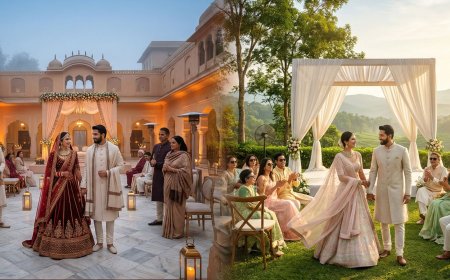
Barat — the grand procession of the groom and his family travelling to the bride's home or wedding venue for the Nikah ceremony — is one of the most spectacular, most joyful, and most community-charged moments in South Asian Muslim wedding tradition. Rooted in the Islamic principle of public marriage announcement and shaped by centuries of Mughal court culture and South Asian ceremonial tradition, the Barat is not merely an arrival but a declaration — a family's public statement of pride, love, and community witness. This complete guide covers the Barat tradition across Pakistani, Bangladeshi, Indian Muslim, Arab, and West African communities, practical advice for organising processions in London, Toronto, Houston, Dubai, and Sydney, and destination Barat planning in Lahore, Karachi, and Dhaka.


Barat — the grand procession of the groom and his family travelling to the bride's home or wedding venue for the Nikah ceremony — is one of the most spectacular, most joyful, and most community-charged moments in South Asian Muslim wedding tradition. For NRI Muslim families in London, Toronto, Houston, Dubai, and Sydney, the Barat is not merely an arrival — it is a declaration, a celebration, a family's public statement that their son is ready, that they are proud, and that the community is invited to witness every magnificent, music-filled, flower-decked step of the journey.
You have seen it from both sides. As a child in Birmingham or Brampton or somewhere in Western Sydney, standing at the window watching a procession arrive on your street — the decorated cars, the dhol [double-headed drum] player at the front, the uncles dancing in the road with an abandon they never permit themselves at any other occasion, the groom in his sherwani looking simultaneously thrilled and terrified. You understood even then, without anyone explaining it, that something important was moving through your neighbourhood.
And you have seen it from the inside — pressed into a car with cousins, someone's perfume too strong, someone's excitement contagious, the dhol growing louder as you approach the venue and something in the collective body of the Barat beginning to move before anyone decides to move, the dancing simply happening because the music and the moment and the love in the car demand it.
Now it is your Barat. Your family's procession. Your groom, or your son, or your brother — moving through a city that did not exist in your grandparents' imagination, carrying a tradition that is centuries older than the street he is dancing on.
This is how you do it right.
🌟 Did You Know?
- The word Barat derives from the Arabic/Persian bara'at — meaning declaration, proclamation, or the act of being absolved and made complete. In the South Asian Muslim wedding context, it has come to mean the groom's party specifically — the family and community who travel with him to the Nikah, their collective presence constituting the public declaration that this marriage is happening, that this family stands behind it, and that the community is witness. The procession is itself the proclamation.
- The tradition of a groom's procession to the bride's home has roots in multiple convergent cultural streams — the Islamic emphasis on public announcement of marriage (I'lan), the Mughal court tradition of elaborate ceremonial processions, and the pre-Islamic South Asian tradition of the Baraat[groom's party] that predates Muslim arrival on the subcontinent and was absorbed into and transformed by Islamic wedding culture over centuries of coexistence and cultural exchange.
- In contemporary NRI Muslim communities, the Barat has become one of the most adapted and most creatively reimagined elements of the South Asian Muslim wedding. NRI families in London, Toronto, and Houston have arrived by double-decker buses, vintage cars, horse-drawn carriages, narrowboats on English canals, and — in one memorable Toronto winter Barat — a convoy of snowmobiles. The spirit of joyful, communal, music-filled arrival has proven entirely portable across every climate and every culture it has entered.
What Is Barat?
Barat [the groom's procession — from Arabic/Persian meaning declaration or the groom's party] is the tradition in South Asian Muslim weddings in which the groom, accompanied by his family, relatives, and community, travels to the bride's home or the wedding venue for the Nikah [Islamic marriage ceremony]. The Barat is not merely transportation — it is a ceremonial procession, a public celebration, and a community event in its own right.
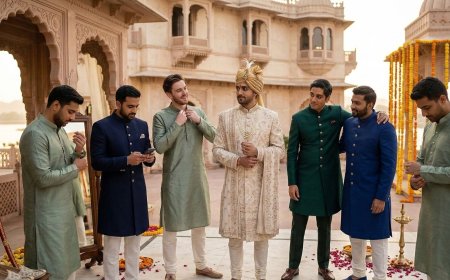
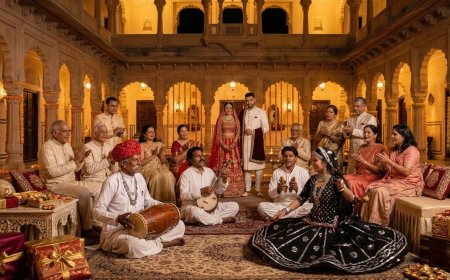
The Barat begins at the groom's home or a designated gathering point where the groom's family and guests assemble before the procession departs. The groom is typically dressed in his wedding attire — traditionally a sherwani [long formal coat], shalwar [loose trousers], and sehra [a decorative veil of flowers or strings worn over the face or forehead] — and is surrounded by his closest male relatives and friends. The dhol player — and in more elaborate Barats, a full dhol-shehnai ensemble or a band-baaja [brass band] — begins playing as the procession forms, and the music does not stop until the Barat has arrived and been formally received at the venue.
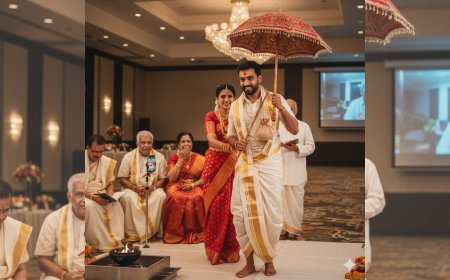
The journey itself is the celebration. The groom's family and guests dance — naach [dancing] at a Barat is not merely permitted but expected, the uncles who have been composed and dignified all year finding at this specific moment the permission to be completely, joyfully undignified. The dholchi [dhol player] is the procession's heartbeat, reading the energy of the crowd and escalating or sustaining the rhythm as the moment demands. Flower petals are scattered. Lights may be carried. In some traditions, the groom arrives on horseback — ghodi [the groom's horse] is a specific and beloved Barat tradition that NRI families go to significant effort to arrange even in cities where horses are not the standard mode of transport.
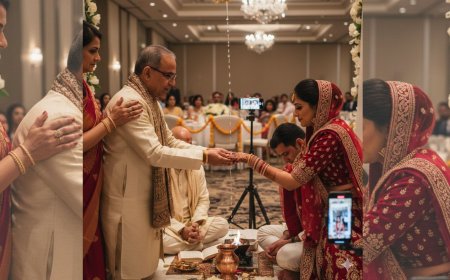
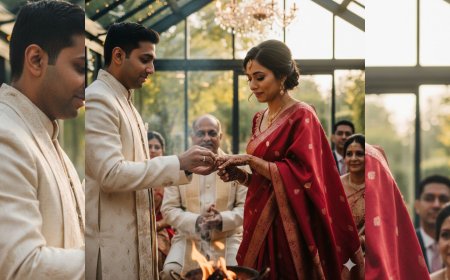
Upon arrival at the bride's venue, the Barat is received by the bride's family in a ceremony called Milni [meeting] or Istiqbal [formal welcome] — the two families formally greeting each other, exchanging garlands or embraces, the bride's father welcoming the groom's father, the families publicly acknowledging each other as now connected. The Qazi[Islamic officiant] may be present for this reception, or the formal Nikah may begin after the Barat has been seated and welcomed.
What distinguishes Barat from a simple arrival is its quality of public declaration. The procession moves through streets, arrives at venues, makes noise, draws attention — and this is not incidental but intentional. The Islamic emphasis on I'lan[public announcement of marriage] finds one of its most vivid expressions in the Barat. The community is not just invited to a wedding — it is made unavoidably aware that a wedding is happening, that a family is celebrating, that a man is going to claim his bride with every person who loves him walking beside him.
Community Comparison Table
| Community / Region | Local Name | Key Traditions | Music & Transport | How NRIs Abroad Adapt It |
|---|---|---|---|---|
| Pakistani Muslim (Punjab) | Barat | Dhol-shehnai procession; ghodi [horse] for groom; sehra on groom's face; Milni reception | Dhol, shehnai, brass band; horse or decorated car | Dhol players sourced through South Asian music networks; horses arranged through specialist providers in diaspora cities |
| Pakistani Muslim (Sindhi) | Barat | Strong Sindhi folk music tradition; distinctive embroidered wedding attire; community procession | Sindhi folk instruments; decorated vehicles | Sindhi community networks in London and Toronto assist with cultural music sourcing |
| Pakistani Muslim (Pashtun) | Barat | Community procession; elder-led ceremonial arrival; specific Pashtun welcome traditions | Rabab [stringed instrument], dhol; decorated vehicles | Pashtun community associations in UK and Canada support cultural preservation |
| Indian Muslim (UP/Lucknawi) | Barat | Refined Nawabi tradition; attar [perfume] distribution; elaborate sherwani tradition | Shehnai, brass band; horse or decorated palanquin historically | Lucknawi catering and cultural traditions maintained; UP Muslim community networks active |
| Indian Muslim (Hyderabadi) | Barat | Distinctive Hyderabadi Nawabi tradition; specific arrival customs; attar and paan distribution | Shehnai, brass band; decorated vehicles | Hyderabadi Muslim community networks in London, Houston, Toronto maintain traditions |
| Bangladeshi Muslim | Barat / Jamai Boron** | Groom's formal arrival; bride's family performs specific welcome rituals; boron[ceremonial welcome] | Dhol, shehnai; decorated vehicles; boat processions historically | Bangladeshi community associations in East London and Toronto support cultural traditions |
| Kashmiri Muslim | Barat | Specific Kashmiri welcome traditions; wanwun [Kashmiri women's songs] at reception | Shehnai, dhol; decorated vehicles | Kashmiri Muslim community networks in UK and Canada maintain traditions |
| Gujarati Muslim (Bohra) | Barat | Modest procession; Jamaat community organisation central; specific Bohra welcome customs | Modest musical accompaniment; community-organised transport | Bohra Jamaat organisations coordinate procession logistics in diaspora cities |
| South Indian Muslim (Kerala Mappila) | Barat / Nikah Procession** | Coastal Kerala tradition; mosque community involvement; specific Mappila welcome customs | Oppana [women's musical welcome] at reception; modest procession | Kerala Muslim community associations in Gulf cities and UK maintain Mappila traditions |
| Arab Muslim tradition | Zaffa / Wedding Procession** | Bride and groom processed together in Arab tradition; tabla and mizmar music; ululation | Tabla, mizmar [Arabic oboe], ululation; elaborate choreography | Arab wedding entertainment companies in Dubai, London, Toronto provide Zaffa services |
| West African Muslim (Nigerian) | Barat / Groom's Entry** | Community procession with specific Yoruba or Hausa musical traditions; elaborate attire | Talking drum, goje [fiddle]; decorated vehicles | Nigerian Muslim community networks in London, Houston, Toronto maintain cultural music traditions |
| Turkish Muslim | Gelin Alma [Bride Taking]** | Groom's family arrives to formally take the bride; specific Turkish folk customs | Davul [drum], zurna [wind instrument]; decorated vehicles | Turkish diaspora communities in Germany, London maintain traditional elements |
The Meaning Behind Barat
In Islamic theological and cultural understanding, the Barat performs a function that is simultaneously spiritual, social, and deeply human — it is the community's physical movement in support of one of its members crossing the most significant threshold of his life.
The Islamic principle of I'lan [public announcement and declaration of marriage] is at the heart of why the Barat matters theologically. The Prophet Muhammad ﷺ specifically encouraged the public announcement of marriage — in multiple authenticated Hadith, the beating of the duff [frame drum] at weddings is specifically mentioned as a means of making the marriage publicly known, distinguishing it from secret unions which are discouraged in Islamic tradition. The Barat takes this principle of public declaration and gives it physical, communal, procession-shaped form.
In the Sufi [Islamic mystical] philosophical understanding that has deeply shaped South Asian Muslim cultural life, the groom's journey to his bride carries a metaphorical resonance that transcends the social occasion. The journey of the soul toward its beloved — ishq [divine love] as the animating force of human existence — finds a worldly expression in the groom's procession toward the woman he has chosen. The sehra [the decorative veil over the groom's face] is read in Sufi poetic tradition as the veil of the world between the lover and the beloved — and its lifting at the bride's threshold is the moment of arrival and recognition. Pakistani and Indian Urdu shayari [poetry] and qawwali [devotional music] have returned to this metaphor across centuries of literary tradition.
The uncles dancing at the Barat are not being frivolous. They are doing something ancient and necessary — they are giving the groom their joy, their blessing, their physical presence in his moment of transition. They are saying with their bodies what words are insufficient to express: we are with you. We have always been with you. We are walking you to the door of your new life and we are dancing as we go because this is a reason to dance if anything is.
For a non-Muslim partner or guest: "The procession is the family and community physically walking with the groom to the most important moment of his life — their presence is their blessing, and the dancing is what gratitude looks like when it is too large to be quiet."
Organising the Barat Abroad: The Practical Reality
For NRI Muslim families, the Barat presents a combination of logistical, cultural, and occasionally regulatory challenges that require specific planning — but that have been successfully navigated by diaspora families in every major city, with solutions that are now well-established within community networks.
The dhol player is the Barat's non-negotiable heartbeat. In every major South Asian Muslim diaspora city, dhol players who specifically work South Asian weddings are available — but good ones book quickly, particularly for the winter wedding season. In London, the South Asian wedding music community in Southall, Wembley, and East London has extensive dhol and shehnai networks — begin booking minimum six months before the wedding date. In Toronto, the South Asian wedding music community in Brampton and Mississauga is well-established, and dhol players who specialise in Barat processions are readily available. In Houston, the South Asian music community within the Texas wedding industry serves the city's significant Pakistani and Indian Muslim population. In Dubai, the South Asian wedding entertainment industry is one of the most developed in the world — dhol and full band-baaja packages are available at every scale and price point. In Sydney, the South Asian music community in Auburn and Parramatta can assist with dhol player sourcing through community networks.
The ghodi [groom's horse] is the element that requires the most advance planning in diaspora cities. In London, specialist Barat horse providers operate specifically for South Asian weddings — search for Asian wedding horse hire in the Midlands and Greater London, and book minimum six months in advance. In Toronto, horse hire for wedding processions is available through equestrian providers in the surrounding suburban areas who have experience with South Asian wedding requirements. In Houston, the wider Texas equestrian community can accommodate Barat horse requests with sufficient lead time. In Dubai, horse processions are available through specialist wedding entertainment companies. If a horse is genuinely unavailable or impractical, a beautifully decorated vintage car with the groom seated at the window achieves a similar quality of ceremonial arrival — many NRI families have chosen this alternative and found it equally magnificent in photographs.
Street procession regulations are the most commonly underestimated challenge for NRI Barat planning. In the UK, a street procession that blocks traffic or creates significant public disruption may require notification to — or permission from — the local council and police. In Canada, similar municipal regulations apply in most cities. In Australia, outdoor procession regulations vary by state and local council. The practical solution most NRI families use is to plan the Barat procession within a private venue car park or approach road rather than on a public street — this contains the celebration within a controlled space, eliminates regulatory complications, and still produces the full visual and musical impact of a traditional Barat arrival. Discuss this with your venue at the booking stage.
Noise considerations in residential areas are real — a dhol player at full celebration volume at 7 PM on a residential street will generate responses from neighbours that range from delighted participation to formal complaint. Venue-contained Barats eliminate this risk entirely. If your family's heart is set on a street procession, brief your dhol player on the specific noise constraints of the route and discuss timing — earlier in the evening is generally more neighbourly than late night.
For coordinating the procession logistics — the cars, the timing, the sequence of arrival — designate one family member as Barat coordinator who is responsible for nothing else on the day. The most common Barat logistics failure is the procession arriving fragmented — half the Barat already inside while the other half is still parking — which loses the collective impact of the arrival entirely. A designated coordinator with a WhatsApp group for all Barat vehicles, a clear departure time, and a rehearsed arrival sequence prevents this entirely.
For coordinating with Pakistan or Bangladesh, the Barat is one of the most video-call-friendly moments of the wedding — its outdoor, procession character makes it naturally camera-visible, and the music and dancing communicate joyfully across any connection quality. Designate one person in the procession as the live-stream carrier, position them at the front near the groom, and let the relatives in Lahore or Dhaka watch the arrival in real time. This is consistently described by relatives in Pakistan as one of the most joyful moments of the entire wedding — they can hear the dhol, they can see the dancing, they can see their son or brother or nephew approaching the moment that changes his life, and the distance collapses entirely.
Barat as a Destination Wedding in Pakistan or Bangladesh
Returning to Lahore, Karachi, Dhaka, or any ancestral Pakistani or Bangladeshi city for a destination Barat is to return to a tradition that still exists in its fullest, most uncompromised form — where the ghodi is a given, the band-baaja plays at full volume without noise complaints from neighbours, the street procession moves through a neighbourhood that has been watching Barats pass for generations, and the collective joy of the community is not something to be managed or contained but simply released.
Lahore is, by general consensus, the spiritual capital of the South Asian Muslim Barat. The city's culture of wedding celebration — the scale of the processions, the quality of the music, the elaborateness of the groom's attire, the architectural grandeur of the venues that receive the Barat — is unmatched anywhere in the diaspora. An NRI family returning to Lahore for a destination Barat will find an event infrastructure of extraordinary capability and a community of professionals — from band-baaja ensembles to ghodi providers to professional Milni coordinators — who have been perfecting this specific celebration for their entire careers.
Karachi offers a different Barat character — more urban, more cosmopolitan, with a strong Muhajir cultural tradition and the specific musical heritage of the city's multi-ethnic Muslim community. Islamabad offers a more contained, more contemporary Barat tradition, with beautiful venue infrastructure in the diplomatic enclave areas.
Dhaka offers the distinctive Bangladeshi Barat tradition — including the Jamai Boron [formal welcome of the son-in-law] that is one of the most elaborate arrival reception ceremonies in the South Asian Muslim world, with specific rituals performed by the bride's family that transform the Barat's arrival into a multi-stage ceremonial reception of extraordinary warmth.
For non-Muslim or non-Pakistani guests attending a destination Barat in Lahore, the experience is consistently described as one of the most viscerally joyful events of their lives. The sound of a full band-baaja ensemble, the sight of a family dancing in the street behind a groom on a white horse, the smell of flowers and attar and biryani arriving simultaneously — this communicates across every cultural boundary with complete effectiveness. No preparation is needed. The Barat explains itself.
What You Need: Barat Checklist
Music and Procession: A dhol player confirmed minimum six months before, with experience in South Asian wedding Barat processions. A full band-baaja ensemble if budget and scale permit. A designated dholchi [dhol player] coordinator who knows the procession route and the arrival timing. Flower petals or rose petals for scattering during the procession. A sehra [decorative forehead piece] for the groom, sourced from South Asian bridal accessory suppliers in diaspora cities.
Transport: A ghodi [ceremonial horse] arranged through specialist Asian wedding horse providers, confirmed minimum six months before. If horse is not available — a beautifully decorated vintage or luxury car for the groom's arrival. A convoy plan for all Barat guests' vehicles, with a designated Barat coordinator managing departure timing and arrival sequence.
Arrival Reception: Coordination with the bride's family on the Milni [formal welcome] ceremony sequence. Garlands for the Milni exchange, sourced from South Asian florists. A designated Milni coordinator on the bride's family side. A photographer specifically briefed to be positioned for the Barat arrival and the Milni moment.
Preparation Steps: Book dhol player and ghodi minimum six months before. Confirm street or venue procession route and any required permissions minimum three months before. Create Barat WhatsApp group for all guests and designate coordinator. Brief all Barat guests on departure time and procession sequence. Confirm Milni details with bride's family including garland exchange protocol. Position live-stream device at the front of the procession for relatives in Pakistan or Bangladesh. Brief photographer on Barat arrival as priority frame.
NRI.Wedding connects Muslim couples with dhol players, ghodi providers, Barat coordinators, and wedding photographers across London, Toronto, Dubai, Sydney, and Houston who understand that the Barat arrival is not the beginning of the wedding photography — it is the beginning of the wedding itself. Visit our vendor directory to begin.
5 Questions NRI Couples Always Ask
Our venue is in a city centre location with no space for a street procession. How do we create the Barat experience?
The venue car park or approach road is your procession route. Many of the most spectacular NRI Barat moments in diaspora cities have occurred entirely within venue grounds — the dhol player leading the procession from the car park entrance to the venue door, the dancing happening in the space between the cars, the groom arriving at the venue entrance in full ceremonial style with his family around him. The contained space actually intensifies the experience for everyone present — the sound is concentrated, the visual impact is focused, and the arrival at the venue door is the dramatic endpoint that a street procession can sometimes lose in the length of the journey. Work with your venue on designating the approach route and ensuring it is clear of obstructions for the Barat arrival.
The groom's family is small and we are worried the Barat will look sparse. How do we manage this?
The Barat's energy comes from its joy, not its numbers. A small Barat danced with complete abandon and genuine celebration makes a more powerful impression than a large Barat going through the motions. That said, practically speaking — ensure that every person in the Barat is briefed to be fully present and fully celebratory for the arrival. The dhol player's role in energising a small procession is especially important; brief them specifically that energy is the priority regardless of group size. And remember that the bride's guests watching the arrival will amplify the Barat's visual impact enormously — even a small procession arriving to the sound of dhol and the sight of dancing will draw the crowd's energy and become something collectively larger than its individual parts.
My partner's family is not South Asian and has never seen a Barat. How do we prepare them for full participation?
Tell them one thing: when the dhol starts, let your body decide what to do. No one has ever heard a dhol at full Barat volume and remained still unless they were making a specific effort to remain still. Brief the non-South Asian family members that dancing is not only permitted but expected, that there is no wrong way to participate, and that the groom's family will be delighted by any and all participation from the bride's non-South Asian relatives. The Barat is one of the most naturally inclusive moments of the entire South Asian Muslim wedding precisely because its joy is entirely accessible — no cultural knowledge is required, only a willingness to move when the music demands it.
Can women participate fully in the Barat procession?
In South Asian Muslim Barat tradition, women's participation varies significantly by family background, regional tradition, and level of religious conservatism. In many Pakistani and Indian Muslim families, women participate fully in the Barat — dancing, celebrating, and processing alongside the men. In more religiously conservative Pashtun or certain other traditions, women may travel to the venue separately and join the celebration inside rather than in the street procession. There is no single Islamic ruling on this question — it is a cultural and familial determination. NRI families in the diaspora have the freedom to establish the tradition that feels most authentic to their specific family values, without the community pressure that might constrain this choice in an ancestral village setting.
We want to include Qawwali or Naat in the Barat. Is this appropriate and how do we organise it?
Qawwali [Sufi devotional music] and Naat [prophetic praise poetry] are deeply appropriate for a Barat in religiously observant South Asian Muslim families and carry a specific quality of spiritual blessing that transforms the procession from cultural celebration to devotional expression. Qawwali ensembles and Naat reciters who perform specifically at South Asian Muslim wedding events are available in every major NRI Muslim city — in London through the East London and Southall South Asian Muslim music community, in Toronto through the Brampton and Mississauga Muslim community networks, in Houston through the Islamic Society of Greater Houston area, and in Dubai through the extensive South Asian wedding entertainment industry. Book these performers through the same community networks you use for dhol players, and brief them on the procession route and timing so their performance aligns with the Barat's movement rather than competing with it.
The Emotional Angle
Nobody tells the groom what the Barat feels like from inside it.
You have been to other people's Barats. You have been the cousin dancing in the street, the uncle who found his feet moving before his mind caught up, the friend carrying a light in the procession and feeling the collective joy of a family moving together toward something irrevocable and beautiful.
But nobody tells you what it feels like to be the one at the centre. To be the one the dhol is playing for. To look back and see your father dancing — your father, who has never once in your entire life danced in front of you, who is a serious man with serious responsibilities, who came to this country with nothing and built everything — dancing in the car park of a hired hall in East London or a venue in Mississauga or a hotel approach road in Houston, with tears on his face and his hands in the air, because his son is going to his Nikah and the joy of it is simply too large to be contained in a standing body.
For NRI Muslim families, the Barat carries the weight of everything the diaspora is. The groom's grandfather came to this country on a ship or a plane with a prayer and a suitcase. His son built a life. His son's son is now walking — dancing, actually, because the dhol demands it — toward a marriage in a city his grandfather could not have imagined, in a language his grandfather did not speak, wearing a sherwani that was made in a shop in Southall that was itself opened by someone who came from Lahore forty years ago and built something from nothing.
The procession is longer than the car park. It started three generations ago. The groom is simply the one who has reached the door.
Dance for him. Dance for all of them. The dhol is playing for everyone who walked this road before him.
A Moment to Smile
At Bilal and Amara's Barat in Toronto last December, everything had been planned with exemplary care — the dhol player confirmed, the vintage car arranged, the procession route through the venue car park mapped out, the Milni garlands sourced from the Gerrard Street florist who had been doing this for thirty years.
What had not been planned was the weather. Toronto in December had opinions, and those opinions were expressed in the form of approximately fourteen centimetres of snow that arrived between the morning and the evening with the calm certainty of a city that has seen everything.
The car park was white. The vintage car was operational but moving with great caution. The dhol player, to his eternal credit, had arrived in full readiness and was not deterred by any quantity of precipitation.
Bilal's father — a man who had grown up in Lahore and had very specific expectations about what a Barat looked like — surveyed the snow, the car park, the dhol player already beginning to play, and the assembled Barat of forty people in sherwanis and formal shalwar kameez standing in a Canadian winter.
He took off his coat. He handed it to someone. He looked at the dhol player.
"Play," he said.
The Barat danced in fourteen centimetres of Toronto snow for eleven minutes. The photographs are extraordinary. Bilal's mother says it was the best Barat she has ever attended and she has attended thirty-seven.
The vintage car got stuck briefly on the way out. Everyone agreed this was the correct ending.
Quotes From the Diaspora
"When the dhol started and I looked back and saw my father dancing — my father who I have never once seen dance in my entire life — I understood something about joy that I had not understood before. That is what the Barat does. It gives people permission to feel the size of what they are feeling. My father was feeling everything. We all were." — Bilal Ahmed, Pakistani Muslim, Toronto
"I am the mother of the groom. I have been to many Barats in my life. I have never been to one that did not make me cry. The sound of the dhol when my son walked out of the house in his sherwani — I cannot explain what that sound does to a mother. It is pride and grief and love and time, all at once, in a drumbeat. I will hear it for the rest of my life." — Rukhsana Malik, mother of the groom, Pakistani Muslim, London
"My husband is from Ireland. He had never seen a Barat before our wedding. He told me afterward that the moment the dhol started and his father-in-law began dancing in the car park, he understood for the first time what it meant to marry into a family rather than just marry a person. He said: your family dances for each other. I had never thought about it that way before. But he was right. That is exactly what we do." — Zara Hussain, Pakistani Muslim married to an Irish convert, Houston
Your Roots Travel With You
The Barat has been moving through streets and courtyards and villages and cities for as long as South Asian Muslim families have been celebrating marriages — and it has not stopped moving. It moved from the villages of Punjab to the cities of Lahore and Karachi. It moved from there to the streets of Southall and Wembley and Bradford. It moved to the car parks of Mississauga and the hotel approaches of Houston and the suburban venues of Western Sydney. And at every stop, the dhol found its rhythm and the uncles found their feet and the groom walked toward his bride with his whole family around him, exactly as it has always been.
NRI.Wedding supports Muslim couples with dhol player networks, ghodi providers, Barat coordination services, vintage car hire connections, and wedding photographers across London, Toronto, Dubai, Sydney, and Houston who understand that the Barat arrival is the wedding's first great photograph — and that it deserves to be planned with the same care as every ceremony that follows it.
Find your dhol player. Arrange your horse or your car. Put your family in a procession and walk toward the door of your new life with everyone who loves you dancing at your back.
The road he travels to claim her has always led here. Walk it with everything you have.
This complete guide to Barat in Muslim wedding tradition covers the groom's procession customs across Pakistani, Bangladeshi, Indian Muslim, Arab, West African, and other Muslim communities, the Islamic theological basis for public marriage announcement, practical advice for organising Barat processions in diaspora cities including London, Toronto, Houston, Dubai, and Sydney, and destination Barat planning in Lahore, Karachi, and Dhaka.
What's Your Reaction?
 Like
0
Like
0
 Dislike
0
Dislike
0
 Love
0
Love
0
 Funny
0
Funny
0
 Angry
0
Angry
0
 Sad
0
Sad
0
 Wow
0
Wow
0