












































































Celebrity Performers at Indian Weddings: Feasibility and Costs — The Complete NRI Wedding Planning Guide
The groom mentioned it once in passing at the engagement party — his one wish for the wedding was a specific Bollywood singer at the sangeet, said in the offhand way of a person who does not expect to be taken literally. The groom's father had not forgotten it. Six weeks later he called his son to report that the singer was available and the fee was significantly more than the entire entertainment budget allocated for all four days of the wedding combined. The celebrity performance at an Indian wedding is the most consistently misunderstood line item in the NRI wedding budget — the couples and families who pursue it frequently do so with an incomplete understanding of what the fee covers, what the logistics involve, what the contract demands, and what the realistic outcome looks like against the significant financial and operational investment required. This complete guide gives NRI couples the full picture of celebrity performer feasibility and costs — covering the four-tier performer market from Bollywood A-list at fifty lakhs to several crores through established names at fifteen to fifty lakhs through regional celebrities and rising stars at five to fifteen lakhs to tribute artists and cover performers at one to five lakhs, the three booking channels including artist management companies, event management intermediaries and direct connections with their respective risks, the real costs beyond the performance fee including technical rider requirements that add twenty to forty percent, travel and accommodation for entourages of twelve to fifteen people, catering requirements, and security obligations, the complete contract guide including non-refundable deposit structures, cancellation clause protections and their limits, performance duration specifics, setlist approval provisions, exclusivity clauses and force majeure terms, the six feasibility questions to answer before any enquiry begins, the specific situations where celebrity performance is genuinely appropriate and where it is not, the alternatives including high-quality tribute performances, curated live bands and regional folk performances, and the five common mistakes including calculating feasibility on the fee alone and booking through informal channels.

Celebrity Performers at Indian Weddings: Feasibility and Costs
The Call That Changed the Budget
The groom had mentioned it once, in passing, at the engagement party.
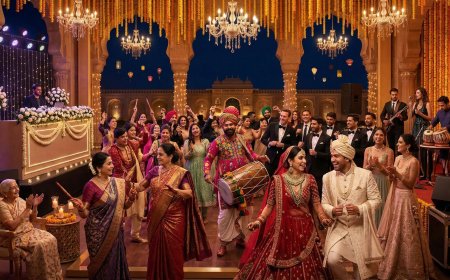
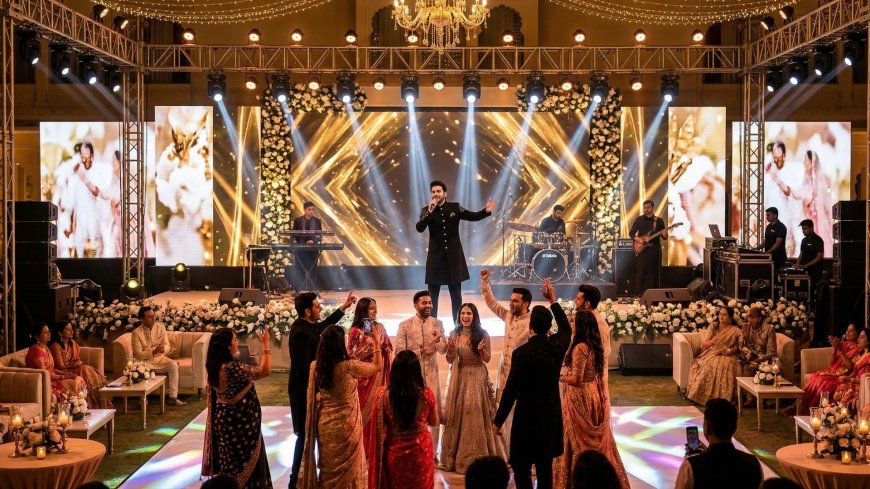
He had said — in the specific offhand way of a person who does not expect the thing they are saying to be taken literally — that his one wish for the wedding was to have a specific Bollywood singer perform at the sangeet. The singer was not the most famous Bollywood performer working. He was not in the first tier of the celebrity performance circuit. He was a singer whose specific voice and whose specific catalogue of songs had been the soundtrack to a significant portion of the groom's adolescence in Ahmedabad, and the idea of him performing at the sangeet was not a serious plan — it was the kind of wish that is expressed at engagement parties and forgotten by the following morning.
The groom's father had not forgotten it.
Six weeks later, the groom's father called his son to tell him that he had made enquiries. The singer was available for the wedding date. The fee was — and here the father paused in the way of a person delivering information that requires a moment of preparation — significantly more than the entire entertainment budget that the couple had allocated for all four days of the wedding combined.
The groom called the bride. The bride called her mother. Her mother called the wedding planner. The wedding planner — who had navigated this conversation many times before with many different families and many different degrees of celebrity being discussed — said the thing she always said at this point in the conversation.
"Before we discuss the fee, let's discuss what the fee actually includes. And what it does not."
The celebrity performance at an Indian wedding is the most consistently misunderstood line item in the NRI wedding budget. The couples and families who pursue it frequently do so with an incomplete understanding of what the fee covers, what the logistics involve, what the contract demands, and what the realistic outcome of the performance looks like against the significant financial and operational investment it requires.
This guide is the conversation the wedding planner always has — the complete picture of celebrity performer feasibility and costs, from the initial enquiry through the contract to the performance night, for the NRI couple who is considering whether this investment is the right one for their wedding.
The Celebrity Performance Market: How It Actually Works
The Tier System
The celebrity performance market for Indian weddings operates through an informal but well-understood tier system — categories of performer whose fee ranges, availability patterns, and performance requirements are broadly consistent within each tier and significantly different between them.
Tier One — The Bollywood A-List:
The performers at the top of the Bollywood celebrity hierarchy — the singers whose names are known to every Indian family regardless of regional background, the actors who are simultaneously film stars and cultural phenomena, the composers whose music defines the contemporary Bollywood canon. This tier includes performers whose names, if written here, would date this article — because the specific individuals who occupy it change over time, but the tier itself is permanent.
The fee range for Tier One performers at private Indian weddings: between fifty lakhs and several crores of Indian Rupees, depending on the specific performer, the duration of the performance, the wedding's location, and the specific negotiation. Converted to the currencies of the NRI couple's country of residence: between fifty thousand and several hundred thousand pounds, dollars, or their equivalent.
The availability: extremely limited, booked months or years in advance for the peak wedding season of October through February, and subject to the performer's film and promotional commitments which take precedence over wedding bookings.
Tier Two — The Established Bollywood Names:
The performers who are genuine celebrities — known across India, with significant fan bases, with recent releases that the wedding guests will recognise — but who are not at the absolute peak of the cultural hierarchy. The singer with three or four charttopping albums, the composer who has scored major films, the performer whose specific genre has a large and devoted following.
The fee range for Tier Two performers: between fifteen and fifty lakhs, subject to the same variables as Tier One. More accessible in absolute terms, still a significant budget line item by any measure.
Tier Three — The Regional Celebrities and Rising Stars:
The performers who are major celebrities within specific regional or linguistic communities — the Tamil film music star, the Punjabi pop artist, the Gujarati folk music performer — and the rising Bollywood artists whose careers are ascending and whose fees have not yet reached the levels of established stardom.
The fee range for Tier Three performers: between five and fifteen lakhs. The most accessible tier for couples who genuinely want a celebrity performance without the budget of a Tier One or Tier Two booking.
Tier Four — The Tribute Artists and Cover Performers:
The performers who specialise in performing the music of specific celebrities — the Arijit Singh tribute artist, the AR Rahman tribute show, the comprehensive Bollywood covers band. These performers are not celebrities in the traditional sense but deliver the experience of a celebrity performance — the familiar songs, the production quality, the live performance atmosphere — at a fee range between one and five lakhs.
The Tier Four option is the one that the wedding planner most often recommends as the alternative to the genuine celebrity booking, and it is the one that couples most often dismiss before they have seen it performed and most often wish they had considered after they have seen the fee for the genuine article.
The Booking Channels
Celebrity performers at Indian weddings are not booked directly — they are booked through specific channels that are not always visible to the couple making the initial enquiry.
Artist management companies:
The major Bollywood performers are represented by artist management companies — the Indian equivalents of the talent agencies that manage celebrity performers globally. These companies manage the performer's availability, negotiate the fee, draft the contract, and manage the logistics. They are the appropriate first contact for any genuine Tier One or Tier Two enquiry.
The management companies do not advertise openly — they operate through industry relationships. The wedding planner who has managed celebrity bookings has these relationships. The family member who has "heard that someone knows someone" does not, and the informal channel that begins with "someone knows someone" is the channel most likely to produce either an inflated fee, a fraudulent representation of availability, or both.
Event management companies:
The event management companies that specialise in celebrity bookings for private events — weddings, corporate events, product launches — are the intermediary layer between the artist management company and the client. They know which performers are available, what the current fee range is, and how to structure a booking that the management company will accept.
The event management company charges a fee for its services — either a flat fee or a percentage of the booking value — that is separate from the performer's fee. This fee is not always disclosed upfront and should be confirmed explicitly before any booking conversation proceeds.
Direct family connections:
The Indian entertainment industry is, in specific ways, a community — and the NRI family that has direct personal connections to performers or their management occasionally has access to the booking process through a more personal channel. These connections produce genuine bookings at reasonable fees when they are real and produce fraud when they are not. The distinction between the real connection and the claimed one is not always visible until the contract is requested and is not forthcoming.
The Real Costs: Beyond the Performance Fee
The Fee Is the Beginning, Not the Total
The performance fee — the number that produces the pause in the groom's father's phone call — is the beginning of the cost calculation, not the total. The celebrity performance at an Indian wedding involves a specific set of additional costs that are not included in the performance fee and that the couple who calculates only the fee is underestimating the total investment.
The sound and production requirement:
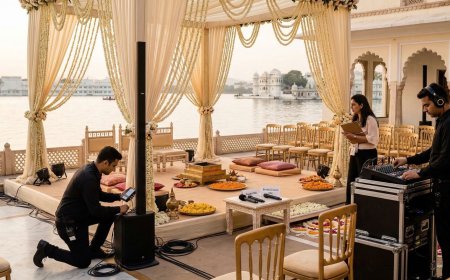
Celebrity performers do not perform with the wedding's standard DJ sound system. They arrive with a technical rider — a specific list of sound equipment, stage equipment, lighting equipment, and production infrastructure that must be in place before they will perform. The technical rider for a Tier One performer may require a stage of specific dimensions, a specific sound system with specific specifications, a specific lighting rig, a specific backline of musical instruments, and a specific crew to operate the equipment during the performance.
The cost of meeting the technical rider — hiring the specific equipment, engaging the specific crew — is separate from the performance fee and can add twenty to forty percent of the performance fee to the total cost. The couple who has been quoted the performance fee without seeing the technical rider has been quoted an incomplete number.
The travel and accommodation requirement:
The performer, their band, their backing dancers, their personal assistants, their security detail, and their management representative all travel to the wedding venue and require accommodation. The travel and accommodation costs — typically specified in the contract as the couple's responsibility — can involve business class or first class flights for multiple people, multiple nights at a five-star hotel, and ground transportation throughout the stay.
For a Tier One performer with an entourage of twelve to fifteen people, the travel and accommodation costs can add significantly to the total. For destination weddings in Rajasthan or other locations that require additional domestic travel from the performer's base, these costs increase further.
The catering requirement:
The contract will specify the performer's catering requirements — specific meals at specific times, specific dietary requirements, specific hospitality provisions. These requirements are not requests — they are contractual obligations whose non-fulfilment can result in the performer refusing to perform.
The security requirement:
High-profile performers at private events require security — both for their personal protection and for the management of the crowd response that their presence produces. The security requirement may be specified in the contract as the couple's responsibility, adding a further cost line that was not anticipated.
The total cost calculation:
A Tier Two performer whose stated fee is twenty-five lakhs may represent a total cost, including technical rider, travel and accommodation, catering, and security, of thirty-five to forty lakhs. The total cost calculation — not the performance fee — is the number that should be compared against the entertainment budget and the wedding's overall financial allocation.
The Contract: What to Know Before Signing
The Non-Negotiable Elements
The celebrity performance contract is not a standard event contract — it is a document designed to protect the performer's interests comprehensively and to allocate the significant financial and operational risk of the booking to the client. Understanding what the contract contains before signing is not optional — the couple who signs without reading has agreed to obligations they may not have understood.
The deposit structure:
Celebrity performance contracts typically require a non-refundable deposit of fifty percent of the performance fee at the time of booking, with the balance due before the performance. The non-refundable nature of the deposit means that if the wedding is postponed or cancelled — for any reason, including reasons outside the couple's control — the deposit is lost. Wedding insurance that specifically covers celebrity performance cancellations is available and should be considered for high-value bookings.
The cancellation clause:
The cancellation clause is the section of the contract that specifies what happens if the performer cancels — and how little protection it typically provides to the couple. The performer who cancels for a professional reason — a film commitment, a health issue, a scheduling conflict — may be entitled under the contract to cancel with limited financial consequence. The couple's recourse in the event of performer cancellation is often limited to the return of the deposit and occasionally a partial additional compensation — not the full cost of the production infrastructure that was assembled in anticipation of the performance.
The performance duration:
The contract specifies the performance duration precisely — thirty minutes, forty-five minutes, sixty minutes — and the performer is not contractually obligated to exceed this duration regardless of the audience's response. The Tier One performer who delivers a precisely thirty-minute set and declines the encore that the audience is expecting is performing exactly as contracted. The couple who expected a longer or more interactive performance has expectations that the contract does not support.
The setlist approval:
The contract may or may not include a provision for setlist approval by the couple. Many performers' contracts explicitly state that the setlist is the performer's discretion — the couple cannot require specific songs to be performed. The couple who has booked a specific performer because they want a specific song performed should confirm, in writing, before signing, that the specific song is available and will be included.
The exclusivity clause:
Some performers' contracts include exclusivity clauses that specify what other performances the couple cannot book for the same event — preventing the wedding from having another performer in the same genre, for example. These clauses can significantly constrain the wedding's overall entertainment programme.
The force majeure clause:
The force majeure clause specifies what circumstances allow either party to cancel the contract without financial penalty. The pandemic of 2020 and 2021 produced an extensive renegotiation of force majeure clauses across the celebrity performance contract market — and the current contracts in use reflect a more sophisticated and more performer-protective definition of force majeure than pre-pandemic contracts contained.
The Negotiation Reality
The celebrity performance fee is not typically negotiable in the way that other wedding vendors' fees are — for the simple reason that the demand for the performer's time significantly exceeds the supply, and the performer's management has no incentive to reduce the fee for a private wedding when other events are available at the full rate.
The elements that occasionally produce fee flexibility: off-peak dates, the early booking lead time that allows the management to plan the performer's schedule efficiently, a genuine personal connection between the family and the performer, the specific prestige of the wedding that adds to the performer's portfolio value.
The elements that do not produce fee flexibility: the couple's genuine enthusiasm for the performer, the size of the wedding, the prestige of the venue, the other high-value vendors engaged for the wedding. These factors matter to the couple but are not the performer's management company's primary concern.
The Feasibility Assessment: Is It Right for Your Wedding?
The Questions to Ask Before Pursuing a Booking
The feasibility assessment for a celebrity performance booking should answer six specific questions before the enquiry process begins.
Question one: What is the total budget allocation for this performance, including all additional costs?
Not the performance fee budget — the total budget, including technical rider, travel, accommodation, catering, security, and the event management company's fee. If the answer to this question, honestly calculated, represents a significant portion of the total wedding budget, the feasibility assessment should include a specific conversation about the trade-offs.
Question two: What does this performance replace in the entertainment programme?
The celebrity performance occupies a specific slot in the programme and a specific budget allocation that would otherwise go to other entertainment. The thirty-minute Tier One performance that costs thirty-five lakhs is thirty-five lakhs not spent on the DJ, the decor for the sangeet, the welcome experience for international guests, or any of the other entertainment elements that serve the full four-day programme.
Question three: What is the realistic audience for this performance?
The Tier Two Bollywood singer whose fan base is primarily the forty to sixty age group is performing for a specific segment of the guest list. If this segment represents thirty percent of the guest list, the cost-per-engaged-guest calculation for the performance is significantly higher than if the performer has universal appeal. The feasibility assessment should match the performer's specific appeal profile to the specific composition of the guest list.
Question four: What are the logistics of this specific venue and date?
The destination wedding in Rajasthan in December, the venue with limited stage infrastructure, the wedding date that falls in the peak of the performer's professional commitments — these logistics factors affect both the feasibility of the booking and the total cost significantly. The feasibility assessment must include a specific logistics assessment rather than assuming that the logistics will work themselves out.
Question five: What is the contractual risk, and is it covered by insurance?
The non-refundable deposit, the cancellation clause, the force majeure provisions — the contractual risk of the celebrity performance booking is specific and significant. Wedding insurance that covers celebrity performance cancellation is available and should be factored into the total cost and the feasibility assessment.
Question six: What is the alternative, and has it been genuinely considered?
The Tier Four tribute artist or covers performer who delivers the experience of the celebrity performance at a fraction of the cost is the alternative that the feasibility assessment should specifically address. The couple who has genuinely seen a high-quality Arijit Singh tribute performance and decided that it does not serve their vision has made a specific, informed decision. The couple who has dismissed the tribute option without seeing it has not.
The Situations Where Celebrity Performance Makes Sense
The celebrity performance is a genuinely appropriate investment for specific situations — and the feasibility assessment that finds these situations in the couple's specific context should proceed with confidence.
The family tradition:
Some NRI families have a tradition of celebrity performances at significant family occasions — the grandfather's milestone birthday, the parents' anniversary, the sibling's wedding. For families in which the celebrity performance is a specific expression of how significant occasions are marked, the investment is culturally appropriate and the family's experience of managing it is an asset.
The performer with personal significance:
The specific performer whose music has a specific, deep personal significance to the couple — whose songs were the soundtrack to specific moments of the relationship, who represents something specific about the couple's cultural identity — is a different kind of booking from the generic celebrity engagement. The performance that is personally meaningful is a different investment from the performance that is impressive.
The large wedding with the budget:
The wedding of three hundred or more guests, with a total budget that makes the celebrity performance a proportionate rather than a disproportionate allocation, is the wedding for which the feasibility assessment is most likely to be positive. The cost-per-guest of the performance is lower, the audience for the performer is larger, and the production infrastructure that the performance requires is more easily justified.
The corporate or family business context:
Some NRI weddings have a dimension of professional or business celebration — the family business milestone, the professional achievement that the wedding is also marking. In these contexts, the celebrity performance has a dimension of professional prestige that adds to its value beyond the entertainment function.
The Situations Where It Does Not
The impression-driven booking:
The celebrity booking that is driven primarily by the impression it will make on other guests, by the social media content it will generate, or by the prestige it will confer — rather than by the genuine desire for the specific performer's specific contribution to the celebration — is the booking most likely to produce dissatisfaction. The impressive booking is impressive for the thirty minutes of the performance and is forgotten, by the guests and by the couple, significantly sooner than the impression was expected to last.
The budget stretch:
The celebrity booking that requires the couple to reduce other significant elements of the wedding budget — the venue, the catering, the photography — to accommodate the performance fee is the booking whose trade-offs are likely to be regretted. The wedding that has a celebrity performance and inadequate photography of it, or an impressive performer and a venue that cannot accommodate the technical rider adequately, has made a trade-off that the feasibility assessment should have identified.
The mismatch with the guest list:
The performer whose specific appeal is mismatched with the specific guest list — the contemporary Bollywood star performing for a guest list that is predominantly elderly, the regional celebrity whose language is not spoken by the majority of the guests, the performer whose genre the couple loves but their families do not — is a performance that serves the couple's preferences rather than the event's purpose.
The Alternatives: Delivering the Celebrity Experience Without the Celebrity Fee
The High-Quality Tribute Performance
The tribute performer market in India has developed significantly — driven precisely by the demand for celebrity performance experiences at a price point that the genuine celebrity market cannot serve. The high-quality Arijit Singh tribute, the comprehensive AR Rahman show, the Kishore Kumar or Mohammed Rafi tribute for the older generation — these performances deliver the emotional experience of the performer's music with a production quality that, in the right venue with the right sound system, is not easily distinguished from the original by an engaged and celebrating audience.
The evaluation criteria for a tribute performer: the quality of the vocal performance, the production value of the show, the audience engagement capability of the performer, and the specific catalogue range that is relevant to the wedding's guest list. A tribute performer should be seen live before booking — the video on Instagram is not an adequate assessment of the live performance quality.
The Curated Live Band
The high-quality live band — with a specific Bollywood repertoire, professional production values, and the specific audience interaction capability that makes live music different from recorded music — delivers an experience that is in many ways superior to a celebrity performance of fixed thirty-minute duration.
The live band plays for three hours rather than thirty minutes. They take requests. They read the room and adapt. They are available for the full evening rather than for a contracted slot. And their fee — typically between three and eight lakhs for a high-quality professional band — is a fraction of the celebrity performance cost.
The Regional Folk Performance
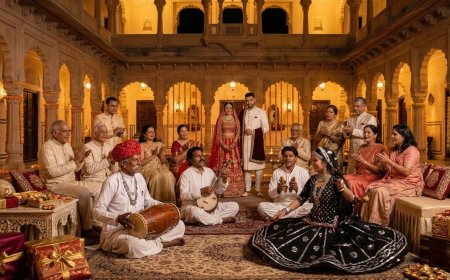
For the NRI wedding in a specific Indian destination, a high-quality performance of the region's folk music tradition — Rajasthani folk musicians at a Jaipur wedding, Kathak dancers at a Delhi celebration, Bharatanatyam performers at a Chennai occasion — is a performance experience that is specific to the place and the tradition in a way that a Bollywood celebrity performance is not.
The regional folk performance is culturally resonant, visually spectacular, personally meaningful for the family members whose tradition it represents, and genuinely novel for the international guests for whom it is a first encounter. Its fee is a fraction of the celebrity circuit, and its specific contribution to the wedding's character is often more memorable than the thirty-minute set of a performer whose music the guests could hear on Spotify the following morning.
Common Mistakes NRI Couples Make With Celebrity Performance Bookings
The first mistake is calculating feasibility based on the performance fee rather than the total cost. The performance fee is the largest single number in the total cost calculation but not the only one. The technical rider, travel and accommodation, catering, security, and event management fees add substantially to the total — and the couple who has budgeted only the performance fee discovers the additional costs at the contract stage, when the booking momentum is difficult to reverse.
The second mistake is booking through informal channels rather than established management companies. The "someone knows someone" channel that promises to deliver a Tier One performer at below-market rates is the channel most associated with deposit fraud and phantom bookings. The established event management company with verifiable references and a specific track record of celebrity bookings is the only appropriate channel for a high-value engagement.
The third mistake is not reading the cancellation clause before signing. The performer who cancels the booking is not obligated, under most contracts, to provide a replacement or to compensate the couple for the production costs that were assembled in anticipation of their appearance. The couple who has not read the cancellation clause has not understood the risk they are carrying.
The fourth mistake is booking a performer without confirming the setlist. The couple who has booked a specific performer because they want a specific song performed and has not confirmed in writing that the song will be included discovers, at the performance, that the performer's standard set does not include the specific song and the contract does not require it.
The fifth mistake is dismissing the alternative without genuinely investigating it. The tribute performer who is dismissed without being seen, the live band whose quality is assumed rather than assessed, the regional folk performance whose relevance is not considered — the alternative that is not genuinely investigated is the alternative whose value is not available to the couple's decision-making. See the alternatives live before deciding they are not sufficient.
The Performance Worth Having
The wedding planner's advice to the groom's father — delivered after the fee was discussed and the additional costs were calculated and the contract's cancellation clause was explained and the total budget allocation was placed against the total wedding budget — was not that the celebrity booking was wrong.
It was that the celebrity booking needed to be the right decision for the right reasons, with a complete understanding of what it cost and what it delivered.
The groom's father listened carefully. He asked specific questions about the total cost. He asked about the technical rider. He asked about the cancellation clause. He asked, specifically, whether the singer would perform the specific song that his son had mentioned at the engagement party, and was told that this needed to be confirmed in writing before the contract was signed.
He thought for a moment.
Then he asked the wedding planner about the tribute performer option — which he had dismissed when it was first mentioned, before the full cost picture was on the table.
The wedding planner sent him three videos.
He watched all three.
He booked the tribute performer. The fee was four lakhs. The performance lasted ninety minutes. The singer performed the specific song. The groom cried.
The celebrity performance worth having is the one that serves the celebration rather than the impression. Whether that is the genuine article at thirty-five lakhs or the high-quality tribute at four, the feasibility assessment that answers the six questions honestly will identify which it is.
Assess it completely. Budget it honestly. Contract it carefully.
And make sure the specific song is confirmed in writing before anything is signed.
Published by NRIWedding.com — The Premium Global Platform for Non-Resident Indians Planning Indian Weddings From Abroad.
What's Your Reaction?
 Like
0
Like
0
 Dislike
0
Dislike
0
 Love
0
Love
0
 Funny
0
Funny
0
 Angry
0
Angry
0
 Sad
0
Sad
0
 Wow
0
Wow
0