



























































His Hands on Her Wrists: What the Chooda Ceremony Really Means for NRI Punjabi Families
The Chooda ceremony — the gifting of sacred red and white bangles by the bride's maternal uncle on her wedding morning — is one of the most intimate and emotionally significant rituals in the Punjabi wedding tradition. For NRI families across the US, UK, Canada, UAE, and Australia, this ceremony requires careful advance sourcing of the Chooda bangle set, the maama's physical presence, and the overnight milk soaking ritual. This guide covers the full ceremony sequence, Kaleere traditions, regional comparisons, and the ceremony's profound cultural meaning.


The Chooda ceremony is the moment a Punjabi bride's maternal family makes their final and most visible declaration of love — a gift of red and white bangles that will encircle her wrists for months after the wedding, carrying her family's blessing into every room of her new life. For NRI families performing this deeply intimate ritual across oceans, the Chooda is not jewellery — it is a portable homeland, worn on the body of a woman who has crossed every border except the one that separates her from the people who raised her.
You grew up knowing what the Chooda meant before you could fully articulate why. You saw it on your cousin's wrists at her wedding — that particular red and white, the ivory and crimson that is like no other colour combination in the world because it belongs entirely to this one ceremony, this one moment, this one relationship between a bride and her mother's brother. You watched your maama [maternal uncle] slide those bangles onto her wrists with hands that were not entirely steady, and you watched your cousin's face in that moment, and you filed that image away in the deepest part of your memory without knowing you were doing it.
Now it is your wedding. You are in Houston or Harrow or Hamilton, and the Chooda is on your ceremony list. Not because someone told you it had to be there — because those red and white bangles belong on your wrists and you have known this since you were old enough to understand what they mean. You want your maama's hands on your wrists. You want the ivory and the red. You want to walk into your wedding wearing the last gift your maternal family will give you as their unmarried daughter.
This guide is for that bride. For the NRI Punjabi family that knows the Chooda is not a fashion choice — it is a ceremony of love, lineage, and the particular bond between a sister's daughter and her mother's brother that Indian culture has always understood to be among the most sacred of all family relationships.
🌟 DID YOU KNOW?
The Chooda [the set of red and white bangles gifted by the maternal uncle] is specifically a Punjabiand Sindhi tradition with no direct equivalent in most other Indian regional communities — making it one of the most community-specific bridal ornaments in Indian culture, immediately recognisable to any Punjabi family and carrying a social meaning that requires no explanation within the community.
The traditional Chooda bangles are made from churha [a specific type of ivory or white resin bangle] dipped in red lac, and in the most traditional form were made from actual elephant ivory — a practice now prohibited — with the red and white combination specifically chosen because white represents Shuddhi [purity and new beginnings] while red represents Saubhagya [marital good fortune and the auspicious state of being a married woman].
Among NRI Punjabi families in the UK, US, Canada, UAE, and Australia, the Chooda ceremony has seen a significant contemporary revival — with many second-generation diaspora brides who had previously chosen not to wear the Chooda in Western professional environments now actively reclaiming it, driving demand for modern Chooda designs in gold, rose gold, and contemporary colour combinations that honour the tradition while adapting its visibility for diaspora life.
What Is the Chooda Ceremony?
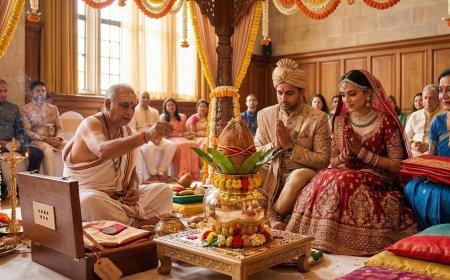
Chooda [from Punjabi, referring specifically to the set of red and ivory or red and white bangles gifted to the bride by her maternal uncle] is a sacred pre-wedding ceremony observed in Punjabi Hindu and many Punjabi Sikh families, in which the bride's maama [maternal uncle — her mother's brother] and maami [maternal aunt — her maternal uncle's wife] present the bride with a set of bangles that she will wear on her wrists beginning on her wedding day and continuing for a specified period — traditionally forty days, though many families observe the Chooda period for a full year or until the first significant family occasion following the wedding.
The ceremony typically occurs on the morning of the wedding day, before the main ceremony begins — though in some NRI families it is held the day before, as part of the Maiya or Haldi events, to give the moment its own dedicated space. The ritual begins with the Chooda being soaked overnight in a mixture of raw milk and rose water in a vessel covered with a red cloth — this purification ensures that the bangles arrive at the bride's wrists already consecrated and auspiciously prepared.
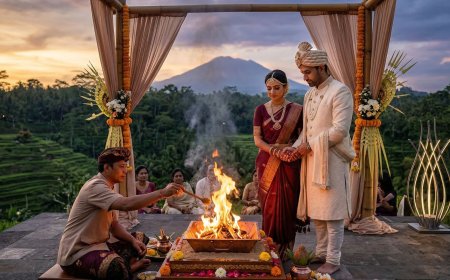
The application itself is conducted by the maama and maami together. The bride sits with her eyes closed or her face covered by the dupatta [veil], and traditionally she is not permitted to look at the Chooda before it is on her wrists — the first sight of the red and white should be of them already belonging to her. The maama slides the bangles onto the bride's wrists, beginning with the right wrist, while the assembled women sing Suhag [Punjabi wedding folk songs] and the family elders offer Ashirvad [blessings].
Following the Chooda application, the bride's wrists are wrapped in a red cloth or dupatta [ceremonial scarf] and tied with a paranda [a decorative hair and wrist accessory] — in many traditions, the Chooda is kept covered until the wedding ceremony begins, as the first public unveiling of the red and white wrists is considered a sacred moment of its own. The Shagun [auspicious gifts] accompanying the Chooda — typically sweets, dry fruits, new clothing, and a monetary offering from the maternal family — complete the ceremony.
A significant element of the Chooda's spiritual architecture is the Kaleere [the golden or silver decorative pendants attached to the Chooda bangles], which are tied to the Chooda by the bride's friends and female relatives following the ceremony. The Kaleere jingle with the bride's movement, announcing her presence audibly and joyfully throughout the wedding day.
Community Comparison Table
| Community/State | Local Name | Key Tradition | How NRIs Abroad Adapt It |
|---|---|---|---|
| Punjabi (Hindu) | Chooda | Red and white bangles gifted by maama; overnight milk soaking; bride does not see before wearing; Kaleere tied | Full ceremony maintained; Chooda ordered from Indian jewellers abroad or brought from India; maama's role preserved |
| Punjabi (Sikh) | Chooda / Churha | Same tradition with Gurbani [Sikh scripture] recited; Ardas offered; Kaleere included | Gurbani played; Ardas offered by family elder; ceremony maintained at home before Anand Karaj |
| Sindhi | Chooda equivalent | Similar bangle gifting tradition; maternal family's role central; community celebration | Sindhi community invited; bangles sourced from Indian stores; maternal family role preserved |
| Rajasthani | Chooda / Bangles ceremony | Coloured glass bangles gifted; maternal family involved; specific Rajasthani bangle colours | Rajasthani bangle sets sourced from Indian stores; maternal family role maintained |
| Gujarati | Chooda equivalent / Green bangles | Green glass bangles significant for new brides; gifted by family; specific to some communities | Green bangle sets sourced from Gujarati jewellers; community tradition maintained |
| Marathi | Green bangles / Patli | Green glass bangles are the Marathi equivalent marriage marker; gifted before wedding | Green bangles sourced from Marathi community jewellers; tradition maintained |
| Bengali (Hindu) | Shakha-Pola | White conch bangle and red lac bangle are primary marriage markers; applied at ceremony | Shakha-Pola sourced from Bengali shops in London and Toronto; ceremony maintained |
| Tamil (Hindu) | Gold bangles / Valai | Gold bangles gifted by bride's family; specific ceremony sequence | Gold bangles ordered from Tamil jewellers; ceremony sequenced within Tamil Vivah |
| Kashmiri Pandit | Dejhoor / Bangles | Specific Kashmiri Pandit jewellery tradition; bangles included in bridal ornament sequence | Kashmiri Pandit community jewellers consulted; tradition maintained |
| Himachali / Garhwali | Bangles ceremony | Community-specific bangle gifting traditions; maternal family role significant | Community elders from diaspora city invited; bangles sourced from Indian stores |
The Meaning Behind the Ritual
To understand the Chooda is to understand a specific and ancient strand of Indian family philosophy — the belief that the relationship between a woman and her mother's brother is among the most protective, most unconditional, and most sacred bonds that family life produces.
In the Indian joint family system, the maama [maternal uncle] occupies a unique position. He is not the primary authority figure — that is the father. He is not the daily caregiver — that is the mother. He is the person who loves his sister's children with a particular freedom, uncomplicated by the weight of parental responsibility. His love for his niece is joyful, generous, and entirely devoted to her happiness. It is, in many ways, the purest expression of family love that Indian culture recognises.
The Chooda that this man places on his niece's wrists on her wedding morning is therefore not simply jewellery — it is the physical embodiment of his love and his blessing, made wearable, made daily, made impossible to forget. Every time the red and white circles catch the light in her new home, every time the Kaleere jingle as she moves through rooms that are still becoming familiar, she carries his hands on her wrists.
The red and white of the Chooda are not arbitrary colours. Red is Shakti [divine feminine power] and Mangal[auspiciousness]. White or ivory is Shuddhi [purity] and new beginning. Together they declare: this woman is both powerful and pure, both blessed and beginning, both her mother's daughter and her husband's wife. Both. Always both.
The Chooda says: the love of the family you are leaving is so strong that it travels with you on your own body into every room of the life you are beginning.
Doing the Chooda Ceremony Abroad: The Practical Reality
The Chooda ceremony is one of the most logistically manageable of all Punjabi wedding rituals for diaspora settings — its essential requirements are intimate, home-centred, and material rather than infrastructural. The complexity lies in sourcing the right Chooda and ensuring the maama can be present.
Sourcing the Chooda is the first and most time-sensitive task. Traditional Chooda bangles — red and ivory or red and white resin, in the correct sizes for the bride's wrists — must be ordered well in advance. Many NRI families bring the Chooda from India specifically, commissioning it from a trusted jeweller in Amritsar, Ludhiana, or Delhi who knows the correct proportions and the traditional specifications. If ordering from India for delivery abroad, place the order at minimum three months before the wedding and confirm sizing carefully — Chooda bangles cannot be resized once set. In London, Wembley's Ealing Road has Punjabi jewellers who carry or can commission traditional Chooda sets; the Southall area has multiple bridal jewellers experienced with NRI Chooda orders. In Toronto, the jewellers of Gerrard Street East and Brampton's Peel Village area carry Chooda sets. In Houston, Hillcroft Avenue's South Asian jewellers stock Chooda bangles. In Sydney, Harris Park in Parramatta has Indian jewellers who can source or order Chooda sets. In Dubai, the Gold Souk in Deira is one of the finest sources for custom Indian bridal jewellery including Chooda commissions.
The maama's presence is the non-negotiable human requirement of the Chooda ceremony — and for NRI families with maamas living in India or in other diaspora cities, this requires advance planning of flights, visa requirements, and scheduling. The maama must be physically present to place the Chooda on the bride's wrists — this is not a ceremony that can be performed by a substitute or adapted to a video call for the maama's role specifically. If the maama is genuinely unable to travel — due to health, visa restrictions, or extreme circumstance — the family's senior elder will advise on the appropriate adaptation for your specific tradition. In all other cases, the Chooda's meaning is inseparable from the maama's physical hands.
Preparing the Chooda overnight requires the soaking vessel to be set up the evening before the ceremony. Use a clean brass or copper vessel — or a glass bowl — filled with raw milk and rose water, with the Chooda submerged and the vessel covered with a red cloth. Many NRI families add flower petals and a few drops of Gangajal [sacred Ganges water] if available — small bottles of Gangajal are available from Indian religious supply stores in all major diaspora cities and from online suppliers.
The Kaleere — the golden or silver pendants tied to the Chooda — must be sourced separately and are available from Punjabi bridal jewellers in all major diaspora cities. Traditional Kaleere are gold-toned and elaborate; contemporary versions in rose gold, silver, and with floral or geometric motifs are increasingly popular among NRI brides. Order at minimum six weeks before the wedding.
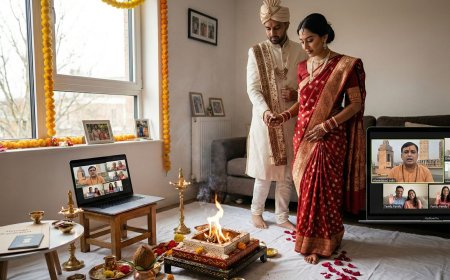
For India family on video call, the Chooda moment is one the maternal family in India will consider most important to witness. Set up a dedicated device with clear audio — the sound of the bangles sliding onto the bride's wrists, the Suhag singing, and the moment the dupatta is lifted for the bride's first sight of her red wrists are the moments that India grandmothers will want to hear and see clearly. If your ceremony is in the morning in Toronto (EST), your Punjab family can join comfortably in the evening IST.
Doing the Chooda as a Destination Wedding in India
For NRI Punjabi brides returning to India for their wedding, the Chooda ceremony in Amritsar carries a spiritual and cultural weight that no diaspora setting can replicate — the city's proximity to the Golden Temple and its deep Punjabi wedding culture mean that every element of the ceremony exists within its most authentic context. Ludhiana, Chandigarh, and Jalandhar are equally vibrant centres for Punjabi wedding traditions, with established bridal jewellers who have made Chooda sets for generations of families.
For NRI families returning to ancestral villages or towns in Punjab, the Chooda ceremony in the family's home village carries an emotional resonance that city venues cannot provide — the ancestral courtyard, the neighbourhood women gathering to sing Suhag, the maama arriving with the Chooda in a ceremony that mirrors exactly what was done at the bride's mother's wedding and her grandmother's wedding before that.
When coordinating from abroad, arrange the Chooda commission with an Amritsar or Ludhiana jeweller at minimum four months before the wedding — specify the bride's wrist size, the number of bangles required, and whether you want traditional ivory-and-red or a contemporary variation. Brief the family about any non-Indian guests attending the ceremony and arrange for a bilingual family member to explain the maama's specific role and the Kaleere tradition.
What You Need: Chooda Ceremony Checklist
Ritual Items The Chooda bangle set in correct size [ordered minimum three months before], Kaleere [golden or silver pendants, ordered minimum six weeks before], a clean brass, copper, or glass soaking vessel, raw milk and rose water for overnight soaking, Gangajal [sacred water] if available, red cloth to cover the soaking vessel, a red dupatta or cloth to cover the bride's wrists after application, a paranda [decorative wrist and hair accessory] for the covering, fresh marigold flowers for the ceremony space, sweets and dry fruits for the Shagun gifts from the maama, a decorated Shagun envelope for the monetary gift, and Suhag song recordings as guide for family members.
People Required The maama [maternal uncle — his physical presence is non-negotiable], the maami [maternal aunt] who accompanies the maama in the ceremony, the bride's mother to be present as witness and to lead the Suhag singing, female relatives and close friends to tie the Kaleere and sing, a photographer specifically briefed on the Chooda moment — this is the most photographed single gesture of the Punjabi wedding morning, and a dedicated video call coordinator for India family.
Preparation Steps Order the Chooda minimum three months before the wedding. Confirm the maama's travel arrangements and visa requirements minimum four months before. Soak the Chooda in milk and rose water the evening before the ceremony. Prepare the ceremony space the morning of — flowers, covered soaking vessel, seating for the maama and maami in a position of honour. Share Suhag song recordings with family women two weeks before. Set up and test the video call device the day before. Brief the photographer on the specific angles required — the maama's hands, the bride's covered eyes, the moment the dupatta is lifted for first sight.
NRI.Wedding's vendor directory, Punjabi bridal jeweller network, and Chooda ceremony planning checklists connect you to verified professionals across the UK, US, Canada, UAE, and Australia.
5 Questions NRI Couples Always Ask About the Chooda
How long should the bride wear the Chooda after the wedding?
The traditional Chooda period is forty days, during which the bride wears the bangles continuously and does not remove them. In many families, the period extends to the first significant family occasion following the wedding — the first visit to the maternal home, the first festival, or a specific auspicious date. Contemporary NRI brides navigate this with significant personal variation — some wear the Chooda for the full traditional period regardless of professional environment, some wear it for forty days including at work, and some wear it continuously at home and at Indian community events while choosing a more discreet option for Western professional settings. What matters is that the decision is made consciously and with family discussion, not by default or external pressure. Many NRI brides describe wearing the Chooda at work as one of the most affirming cultural experiences of their married life — colleagues ask, conversations happen, and the tradition gets to tell its own story.
What happens if the maama cannot travel for the ceremony?
The maama's physical presence is the ceremonial ideal, and every effort should be made to facilitate it — including assistance with visa applications, flights, and logistics if the family is in a position to help. If the maama is genuinely unable to be present due to serious health reasons or insurmountable travel barriers, the family's senior pandit or elder will advise on the appropriate adaptation for your specific community tradition. In some families, the maternal grandmother or the bride's mother performs the ceremony in the maama's absence with specific prayers acknowledging the circumstance. This should always be discussed openly with family elders rather than decided unilaterally, as the correct adaptation varies by family tradition. A video call participation from the maama — even if he cannot be physically present — is always included alongside whatever adaptation is made.
Can the Chooda be a contemporary design rather than traditional red and white?
Yes — and this is one of the most active areas of evolution in NRI Punjabi bridal culture. Many contemporary brides choose Chooda sets in rose gold and ivory, gold and white, or even custom colour combinations that complement their wedding lehenga, while retaining the traditional structure of the bangle set and the ceremony's complete ritual sequence. The colour red and the ivory or white remain the most culturally significant combination, but the tradition's essential meaning — the maama's gift, the overnight soaking, the ceremonial application — is preserved regardless of the specific colour. If you are considering a non-traditional colour, discuss it with your family's senior women first to understand their perspective, and make the decision collaboratively rather than unilaterally.
How do we involve the maama meaningfully if he is joining via video call because travel is truly impossible?
If the maama's physical presence is genuinely impossible — and only in this circumstance — many NRI families create a meaningful video call participation by having the maama perform a parallel ceremony in India at the same moment: he holds a set of Chooda bangles in India, his sister [the bride's mother] holds the actual Chooda in the diaspora ceremony space, and the maama recites his blessing and the Suhag verses while the mother completes the physical application on his behalf. This adaptation is emotionally significant and widely accepted within the diaspora Punjabi community. It is not the same as the maama being there — and the family should acknowledge that openly — but it honours both his role and the ceremony's meaning within the constraints of the circumstance.
Should the Chooda ceremony happen before or after the Haldi?
In most Punjabi family traditions, the Chooda ceremony occurs on the morning of the wedding day, before the main wedding ceremony begins — making it the first ritual of the wedding morning. The Haldi typically occurs either the day before the wedding or on a separate pre-wedding day. If both happen on the same day, the Chooda is applied first, the bride's wrists are covered with the red cloth, and the Haldi follows — the turmeric paste does not interfere with the Chooda bangles if the wrists are properly covered. In many NRI families who compress the pre-wedding rituals to a single day, the sequence runs: Haldi in the morning, Chooda ceremony before the wedding ceremony, ensuring each ritual has its own distinct time and attention.
The Emotional Angle
Your maama's hands are on your wrists. The hands that have always brought you the best gifts — not because he had to but because he wanted to, because you are his sister's daughter and that has always meant something specific and irreplaceable to him. The hands that arrived at your childhood birthday parties with the gifts your parents had said were too expensive. The hands that held yours on your first day at a new school when you had just moved to a new country and everything was strange and he was the one familiar thing.
Those hands are sliding the red and white bangles onto your wrists now, one by one, and the room is full of the Suhag singing and the sound of the bangles settling into place and your mother crying somewhere behind you, and you have your eyes closed or your face covered because you are not allowed to look yet — the first sight of your red wrists must be their first sight, not a preview.
For NRI brides, this moment is layered with everything that living far from home means. Because your maama flew from Ludhiana or from another city to be in this room. Because the Chooda soaking in milk in a glass bowl in your Brampton house last night was the same Chooda that soaked in milk in a brass vessel in Punjab when your mother was a bride. Because the Suhag verse your aunt is singing — badly, bravely, from half-memory — is the same verse that was sung at every Chooda ceremony in your family's history.
The bangles settle on your wrists. You open your eyes. Red and white. The colours of everything you are carrying forward and everything you are carrying with you.
Both. Always both.
A Moment to Smile
At a Chooda ceremony in Houston two years ago, the maama — who had flown from Toronto specifically for this moment and had been preparing himself emotionally for weeks — arrived at the ceremony with tremendous composure and the Chooda ready in its soaking vessel.
What nobody had accounted for was the maama's deep unfamiliarity with the specific technique of sliding multiple bangles onto a wrist simultaneously. The first three bangles went on beautifully. The fourth bangle paused at the bride's knuckle with a philosophical reluctance that no amount of gentle encouragement could resolve. A brief but spirited conference was held between the maama, the maami, and the bride's mother, conducted in urgent whispers while the Suhag singing continued diplomatically around them.
The bride, eyes still covered by her dupatta, remarked from beneath the cloth that she could feel everything and found it very interesting.
The fourth bangle was eventually persuaded into position through the combined efforts of rose water, a significant reduction in the surrounding air pressure of collective family breath-holding, and what the maami later described as a moment of divine intervention. The remaining bangles went on without incident. The maama was so relieved that he cried for the rest of the ceremony. The bride considered this entirely fair.
Quotes From the Diaspora
"My maama flew from Chandigarh to Mississauga for my Chooda ceremony. Just for the Chooda — he stayed four days and flew back. When he slid the first bangle onto my wrist, he said something in Punjabi that I will not repeat because it is mine. But I will say that I have never felt so loved by anyone in my life as I felt by him in that moment. The red on my wrists felt like his arms around me." — Ravneet Dhaliwal, Punjabi Sikh bride, originally from Chandigarh, now in Mississauga
"My daughter-in-law's maama is a quiet man — not someone who speaks his feelings easily. When he placed the Chooda on her wrists, he did not say a word. He just held her wrists for a moment after the bangles were on, both hands around both her wrists, and looked at her. My son told me later that she said it was the most complete feeling of being loved she had ever experienced. I believe him. I have seen that gesture. I know what it means." — Gurpreet Kaur, Punjabi mother of the groom, originally from Amritsar, now in Birmingham
"I wore my Chooda to work in Melbourne for the full forty days. On the third day, a colleague asked about the red and white bangles and I explained the ceremony — the maama, the overnight soaking, the covered wrists, the first sight. She was silent for a moment and then she said: that is the most beautiful thing I have ever heard of anyone doing for someone they love. I went to the bathroom and cried for five minutes. Then I came back and told her about the Kaleere." — Manpreet Sandhu, Punjabi bride, originally from Ludhiana, now in Melbourne
Your Bangles Travel With You
The Chooda is the most wearable act of love in the Indian wedding tradition — a gift placed on the bride's wrists by the person whose love for her has always been the most uncomplicated, most generous, and most devoted expression of what family can be. For NRI Punjabi brides wearing red and white on their wrists in offices and kitchens and school gates across the diaspora world, the Chooda is a daily declaration: I know where I come from. I know who loved me. I carry both into every room I enter.
NRI.Wedding supports Punjabi families across the UK, US, Canada, UAE, and Australia with a curated Punjabi bridal jeweller network for Chooda and Kaleere commissions, vendor directories for sourcing all ceremony items in diaspora cities, experienced NRI wedding photographers who understand the specific visual and emotional requirements of the Chooda moment, and planning checklists built specifically for diaspora families who want to honour this ceremony with the full love it deserves.
Order your Chooda early. Confirm your maama's travel. Soak the bangles in milk the night before.
Let his hands put them on. Let the red travel with you.
This article explores the Chooda ceremony — the Punjabi bridal bangle gifting ritual performed by the maternal uncle — alongside related bangle traditions across Indian communities including Bengali Shakha-Pola, Gujarati green bangles, Marathi Patli, and Rajasthani bangle ceremonies, with practical planning guidance for NRI families in the US, UK, Canada, UAE, and Australia.
What's Your Reaction?
 Like
0
Like
0
 Dislike
0
Dislike
0
 Love
0
Love
0
 Funny
0
Funny
0
 Angry
0
Angry
0
 Sad
0
Sad
0
 Wow
0
Wow
0