































































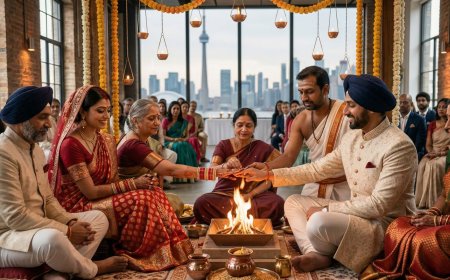



One Unbroken Stream, One Unbroken Promise: The Sacred Dhare Hereyuvudu Ritual of Karnataka Weddings
Dhare Hereyuvudu — the sacred pouring of holy water over joined hands — is the binding moment at the heart of every Karnataka Hindu wedding. As an unbroken stream of consecrated water flows over the couple's hands, a marriage is sealed not by words alone but by the oldest elemental force in creation. Rooted in Vedic invocations of Varuna and practised across Smartha, Madhwa, Lingayat, and Vokkaliga traditions, this ritual carries profound spiritual weight. For Kannadiga NRIs planning weddings across the US, UK, Canada, UAE, and Australia, this is your complete cultural and practical guide.


In the heart of every Karnataka Hindu wedding, there is a moment of complete stillness — when a stream of holy water is poured over the joined hands of bride and groom, washing away their individual pasts and consecrating their shared future in the most elemental way imaginable. Dhare Hereyuvudu is not a supporting ritual or a ceremonial flourish — it is the binding act, the moment the wedding becomes spiritually irrevocable. For Kannadiga NRIs from Bengaluru to Brisbane, from Mysuru to Melbourne, from Hubli to Houston, this is the ritual their grandmothers will travel continents to witness.
You grew up hearing the word dhare at every Kannadiga wedding your family attended — in community halls in Fremont, California, in temple function rooms in Harrow, in hired mandapams during summer visits to Bengaluru. You didn't always understand the Sanskrit being chanted. But you understood the water. Everyone understood the water. There was something about the way it fell — steady, unhurried, impossibly clear — over hands that were reaching for each other for the first time as husband and wife. Something that made even the most restless child in the room go quiet.
You are planning your own wedding now. You are in a flat in Wembley or a house in Sunnyvale or an apartment in Brampton, and your mother is on the phone from Dharwad or Hassan or Mangaluru saying, "The dhare must be done by your father's hands, not just anybody." She is right, and somewhere in you, you already knew she was right. Because this ritual is not about the water. It is about whose hands pour it, and whose hands receive it, and what passes between them in that moment that no photograph can fully capture.
This is Dhare Hereyuvudu. And it has been making Karnataka families cry since before anyone can remember.
🌟 DID YOU KNOW?
- Dhare Hereyuvudu literally translates from Kannada as "pouring the stream" — the word dhare(ధారె) refers specifically to a continuous, unbroken flow of water or liquid, and the ritual's spiritual validity depends on this continuity: the stream must not be interrupted once it begins, as a broken flow is considered inauspicious and symbolically incomplete.
- The ritual has documented roots in the Vaikhanasa and Smartha traditions of Karnataka, both of which prescribe specific mantra sequences for the water pouring that differ significantly from similar rituals in neighbouring Tamil Nadu and Andhra Pradesh — making it essential for NRI families to source a Karnataka-specific pandit rather than a generic South Indian priest.
- According to community data gathered by Kannadiga cultural associations in the United States, over 71% of Kannadiga NRI couples in cities like Fremont, Chicago, and Seattle specifically sought out a Karnataka Brahmin priest for their wedding, citing Dhare Hereyuvudu as the ritual they were most concerned about performing correctly — more than any other single element of the ceremony.
What Is Dhare Hereyuvudu?
Dhare Hereyuvudu — from the Kannada dhare (a continuous stream or flow) and hereyuvudu (the act of pouring or releasing) — is the central binding ritual of a Karnataka Hindu wedding. It occurs at the most sacred point of the ceremony sequence, typically following the Vara Pooja (the ritual honouring of the groom) and the Kanyadan (the sacred giving of the daughter), and immediately preceding or coinciding with the Mangalasutra Dharane (the tying of the sacred thread around the bride's neck). It is, in the structure of the Karnataka wedding, the moment everything has been building toward.
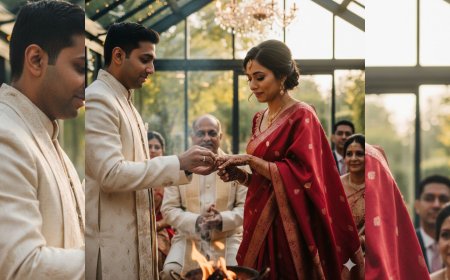
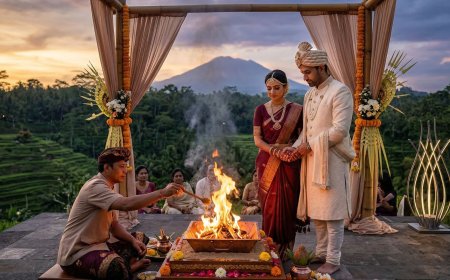
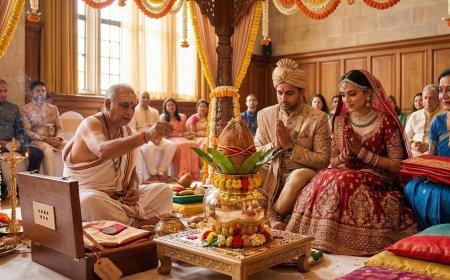
What physically happens is this: the bride and groom are seated facing each other, their right hands joined — her hand resting upon his, palm meeting palm, fingers aligned. The bride's father, or her senior-most male guardian, holds a tamra patra (copper vessel) or occasionally a silver kalasha (sacred pot) filled with water that has been consecrated through the prior chanting of Vedic mantras. Sometimes the water contains tulsi (holy basil leaves), akshata (turmeric-dusted rice), gandha (sandalwood paste dissolved in water), or Gangajal (sacred Ganges water) — the specific additions varying by family tradition and regional sub-community.
The priest begins the Dhare Mantras — specific Vedic and Puranic verses that invoke Varuna (the Vedic deity of water and cosmic order), Lakshmi (the goddess of abundance and auspiciousness), and the couple's ancestral lineage. As the chanting reaches its consecrated peak, the father tilts the vessel and pours a steady, unbroken stream of water over the joined hands of the bride and groom. The water flows down their fingers, over their wrists, and falls onto a banana leaf or copper plate placed below — collected, never wasted, often later used to water a sacred plant or poured at the base of a tulsi plant in the home.
The stream must not break. This is not ceremony — it is law. An unbroken flow represents an unbroken union. The father's hand must be steady. The vessel must be full enough. The moment must be long enough for the priest's chanting to complete. And in the time it takes for all of this to happen, the couple's hands are bound not by any human authority but by water itself — the oldest, most elemental force of purification and life that the ancient world knew.
The ritual concludes with the couple's hands being gently separated and wiped with a clean white cloth by the mothers. The groom's family presents gifts. The priest continues into the next sequence. But the binding has already happened. The water has already fallen. There is no going back — and no one in the room wants to.
Community Comparison Table
| Community / State | Local Name | Key Tradition | How NRIs Abroad Adapt It |
|---|---|---|---|
| Karnataka (Brahmin — Smartha) | Dhare Hereyuvudu | Father pours consecrated water over joined hands; tulsi and gandha added to water | Copper vessel sourced from Indian stores; Gangajal in sealed bottles; Smartha pandit essential |
| Karnataka (Brahmin — Madhwa) | Dhare Hereyuvudu | Madhwa-specific mantras chanted; emphasis on Vishnu invocation; tulsi mandatory | Madhwa priest specifically required; ISKCON temples in diaspora cities often have referrals |
| Karnataka (Vokkaliga) | Dhare Hereyuvudu | Community elders pour water alongside father; banana fibre used to filter water | Elder participation preserved; banana leaf universally available in Indian stores |
| Karnataka (Lingayat) | Lagna Dhare | Performed under the Sharana tradition with different mantra sequence; Basavanna's vachanas incorporated | Lingayat priests in diaspora cities; vachana texts available digitally for priest reference |
| Himachali | Jal Abhishek | Sacred water poured over couple by priest; river water traditionally used | Mineral water consecrated by priest substituted; ritual fully preserved |
| Garhwali | Jal Dhara | Continuous water stream poured over joined hands by father; Ganga water central | Gangajal bottles sourced from Indian grocery stores; ritual sequence maintained |
| Kumaoni | Haath Milap Jal | Water poured over joined hands during Haath Milap (hand joining) ceremony | Priest guides substitution of local water consecrated with mantras |
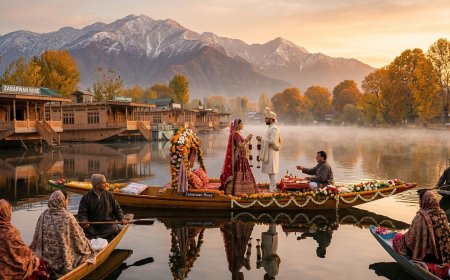
| Kashmiri Pandit | Lagan Jal | Consecrated water from ritual copper pot poured over couple during Lagan | Copper pot sourced from Indian stores; Kashmiri pandit essential for mantra sequence |
| Tamil (Iyer/Iyengar) | Pani Thirtham | Sacred water mixed with Panchamrut poured over joined hands during Kashi Yatrai sequence | Panchamrut ingredients universally available; South Indian priest familiar with Iyer tradition |
| Bengali | Jal Daan | Sacred water poured over joined hands during Sampradaan; conch shells blown | Conch shells from Bengali stores in Jackson Heights NY or Green Street London |
| Rajasthani | Haath Peelay Jal | Water poured over turmeric-stained hands during Haath Peelay ceremony | Turmeric universally available; ritual adapted to indoor venue easily |
The Meaning Behind the Ritual
To understand why Dhare Hereyuvudu holds the position it does in the Karnataka wedding sequence, you need to understand what water means in the Vedic cosmology that underlies all of Hindu ritual practice — and it is not simply what a modern mind assumes.
In the Rigveda, water is Apah — not merely a physical substance but a divine principle, the primordial medium through which all creation was possible. Varuna, the Vedic deity invoked during Dhare Hereyuvudu, is not simply a water god in the way that Western mythology imagines sea deities. Varuna is the guardian of Rita — cosmic order, the invisible law that holds the universe in its right relationship. To pour water consecrated in Varuna's name over joined hands is to place a marriage under the protection of cosmic order itself. To say: this union is not merely human. It is correct. It belongs to the structure of things.
The unbroken stream carries its own theology. In Karnataka philosophical tradition, particularly within the Advaita Vedanta school associated with Adi Shankaracharya (who was himself from the region now known as Kerala but whose intellectual legacy shaped Karnataka's Smartha Brahmin tradition profoundly), continuity is a sacred value. The self that is unbroken, the consciousness that flows without interruption — these are the marks of the divine. An unbroken stream of water over joined hands is therefore a physical enactment of a metaphysical truth: that the union being consecrated participates in the unbroken nature of the cosmos itself.
In the simplest words for a non-Indian partner or family member: the water says what words cannot — that this marriage is as old and as real and as necessary as water itself.
Doing Dhare Hereyuvudu Abroad: The Practical Reality
Let's talk about what this ritual actually requires when you are planning it in Fremont or Harrow or Brampton or Melbourne — because the gap between what is spiritually required and what is logistically available abroad is smaller than most Kannadiga families fear, and larger than the details you might overlook if nobody warns you.
The vessel matters, and it is findable. A tamra patra (copper vessel) is the traditional container for the Dhare water, and it is available at Indian grocery stores and Hindu temple shops in virtually every major diaspora city. In London, Southall Broadway has multiple stores stocking copper ritual vessels — go to the puja supply shops rather than the general grocery stores. In Houston, the Indian stores along Harwin Drive and Hillcroft Avenue stock copper kalash in several sizes. In Toronto and Mississauga, the Brampton Indian grocery cluster and the stores on Gerrard Street East are your destinations. In Sydney, Harris Park in Parramatta. In Dubai, the puja supply shops in Meena Bazaar. Buy the vessel at least two weeks before the wedding and have your pandit consecrate it the morning of the ceremony.
The water composition is where family traditions diverge, and you should have a specific conversation with your pandit about what your family customarily uses. The baseline is clean water — many families use filtered water consecrated through mantra rather than tap water for reasons of ritual purity. Common additions include tulsi leaves (universally available at Indian grocery stores and often grown in NRI homes), gandha (sandalwood paste — available at Indian stores as liquid sandalwood or solid paste), akshata (turmeric-dusted raw rice), and Gangajal. Gangajal in sealed, ritually pure bottles is available at most Indian grocery stores in the UK, US, Canada, and Australia — it is stocked specifically for ritual use.
Finding a Karnataka-specific pandit is the most critical preparation task for this ritual, and it deserves more time than most families give it. The mantra sequence for Dhare Hereyuvudu differs between Smartha, Madhwa, and Lingayat traditions — a generic South Indian priest or a Telugu or Tamil pandit, however capable, will not know the Karnataka-specific verses. Begin your pandit search at least four to six months before the wedding. The Karnataka Sangha chapters in major diaspora cities — there are active chapters in the San Francisco Bay Area, Chicago, London, Melbourne, and Toronto — maintain lists of Karnataka priests and can make referrals. The Venkateswara temples in several diaspora cities also have Karnataka priest networks. NRI.Wedding's pandit directory filters specifically by regional tradition, including Smartha, Madhwa, and Lingayat Karnataka priests in the UK, US, Canada, UAE, and Australia.
Water and venues present a more manageable challenge than fire and venues. Unlike havan-based rituals, Dhare Hereyuvudu involves a controlled pour over joined hands into a collection vessel below — it is contained, brief, and produces no smoke. Most venue managers, once shown that the ritual involves a modest quantity of water poured carefully over a plate or banana leaf, are accommodating. The key is to have this conversation in advance and to bring your own collection vessel and cloth for the floor. A small waterproof mat beneath the ritual area is a practical addition that venue managers appreciate and that costs almost nothing.
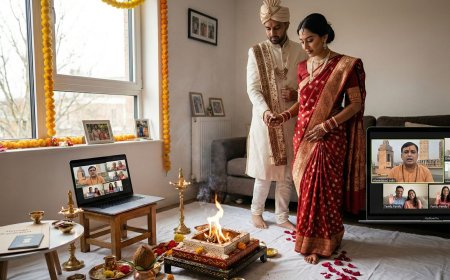
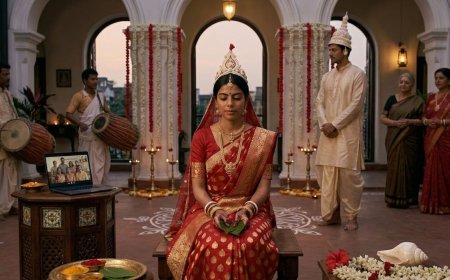
For streaming to family in India, Dhare Hereyuvudu is visually intimate and ideally suited to a close camera angle — the joined hands, the falling water, the father's face above the vessel. Position your tablet or phone on a stable stand at hand height, angled to capture both the water and the expressions of those immediately around the couple. Begin the stream at least fifteen minutes before the ritual sequence, as the Dhare tends to occur after several preceding rituals and your India-side family needs to be settled and connected well in advance. If your wedding is at noon in London (GMT), your family in Bengaluru will be joining at 5:30pm their time — a manageable hour that means your grandparents can watch without losing sleep.
Doing Dhare Hereyuvudu as a Destination Wedding in India
Coming home to Karnataka to get married — to have the Dhare water poured in a mandapam in Mysuru, or in an open courtyard in Coorg, or at a heritage venue in the old quarters of Bengaluru — is to understand why the ritual is shaped the way it is. The air already knows the weight of it. The women who have attended a hundred Karnataka weddings recognise the moment the vessel is lifted, and they lean forward.
For a full traditional Karnataka wedding with an authentic Dhare Hereyuvudu sequence, the most resonant locations include the heritage kalyana mandapams of Mysuru — a city whose royal Wadiyar dynasty patronised elaborate Kannada wedding traditions for centuries — the coffee estate resorts of Coorg (Kodagu) for Kodava families, the coastal temple towns of Udupi and Mangaluru for Tulu and Havyaka Brahmin traditions, and the grand wedding venues of Bengaluru's Basavanagudi and Malleshwaram neighbourhoods, which retain a particular old-city Karnataka character even as the city transforms around them.
When briefing local pandits in Karnataka, come with a written note specifying your sub-community — Smartha, Madhwa, Lingayat, Vokkaliga, Kodava — and the specific mantra tradition your family follows. If your family has a kula purohita (hereditary family priest) still practising, involve them at all costs. Their knowledge of your family's specific dhare tradition is not available in any text.
For non-Indian guests attending a destination wedding in Karnataka, a bilingual ceremony booklet explaining Dhare Hereyuvudu in English and Kannada — what the water means, why the stream must be unbroken, what the father's role signifies — transforms their experience from polite observation to genuine witnessing.
What You Need: The Dhare Hereyuvudu Ritual Checklist
Ritual Items A tamra patra (copper vessel) of sufficient size to pour a continuous stream for the duration of the mantra chanting, clean filtered water, tulsi leaves (fresh — grown at home or sourced from Indian grocery stores), gandha(sandalwood paste or liquid), akshata (turmeric-dusted raw rice), Gangajal (available in sealed bottles at Indian grocery stores), a copper or brass collection plate or large banana leaf to catch the water below the joined hands, a clean white cotton cloth for wiping the couple's hands afterward, a small waterproof mat for the floor beneath the ritual area, and fresh flowers for the ceremonial tray.
People Required The officiant pandit with specific knowledge of Karnataka Dhare mantras and your sub-community tradition, the bride's father or senior guardian who will physically pour the water, the bride and groom, both mothers of bride and groom as witnesses, senior family elders, a designated family member to manage the India video call stream, and your wedding photographer and videographer briefed specifically that the Dhare moment is a priority capture.
Preparation Steps Source the copper vessel at least two weeks before the wedding. Prepare the water mixture — tulsi, gandha, akshata, Gangajal — the morning of the ceremony under the pandit's guidance. Brief the bride's father privately on the pouring technique — the vessel must be tilted gradually to produce a steady stream, not a sudden flood. Confirm the mantra sequence and ritual timing with your pandit the evening before. Set up and test the India video call connection thirty minutes before the ceremony begins. Place the collection vessel and waterproof mat before guests are seated.
NRI.Wedding connects Kannadiga families abroad with verified Karnataka-specific pandits across Smartha, Madhwa, and Lingayat traditions, ritual item vendors, and wedding photographers who understand what it means to capture water falling over joined hands. Begin planning at NRI.Wedding.
5 Questions NRI Couples Always Ask
Our venue won't allow any liquids on the carpet. How do we handle the water pouring?
This is manageable with advance preparation. First, speak directly with your venue coordinator about the ritual before assuming it is prohibited — many venues have blanket liquid policies that were written with spilled drinks in mind, not a carefully contained ritual pour. Explain that the water falls over a copper plate or banana leaf collection vessel, directly onto a waterproof mat, and that the total quantity of water is small and controlled. Most venues, once they understand the containment, are accommodating. If the venue remains firm, there are two workable solutions: perform the Dhare on a tiled or hard-floored area of the venue if one is available — a foyer, corridor, or outdoor terrace — or use a wide, deep copper plate beneath the joined hands that fully contains the water with no floor contact at all. Discuss either option with your pandit in advance so the ritual space can be arranged accordingly.
My father has health issues and cannot hold the vessel steadily for the full duration of the pour. What are the options?
This is more common than families acknowledge, and the tradition has always accommodated physical realities with grace. Your pandit can guide the father's hands, effectively supporting the vessel during the pour while the father maintains symbolic contact with it — his hands do not need to bear the full weight, only to remain in contact with the vessel as the water flows. Alternatively, the father can initiate the pour and then be assisted by the maternal uncle or elder brother, who takes over the physical weight while the father remains present at the vessel. In cases of significant health limitation, the senior-most available male guardian can perform the pour entirely, with the father present and acknowledged by the priest in the Sankalpa declaration. Discuss your specific situation openly with your pandit — a knowledgeable priest will find the solution that honours both the tradition and your father's dignity.
How do I find a Madhwa Karnataka pandit in the UK specifically?
I don't want a generic priest. The Madhwa community in the UK is concentrated primarily in the Midlands and London, and the best referral routes are through the Udupi Sri Krishna temples that exist in several UK cities, through the Karnataka Sangha UK, and through the ISKCON community which has historical connections to Madhwa Vaishnavism. When contacting potential priests, ask specifically: "Are you familiar with the Madhwa Dhare Hereyuvudu mantra sequence?" and "Have you performed this for Tulu or Havyaka Brahmin families?" These specifics will immediately indicate whether the priest knows your tradition. NRI.Wedding's UK pandit directory filters by sub-community tradition including Madhwa Karnataka. Book at least four months in advance — Madhwa priests in the UK who are genuinely trained in the tradition are few and in high demand.
We want to include my partner's non-Indian family in the Dhare moment without it feeling forced. Any suggestions?
The most natural way to include non-Indian family in Dhare Hereyuvudu is through the witnessing role rather than the participating role — the ritual itself has clearly defined participants (the father, the couple, the priest) and clearly defined witnesses (the assembled family). Brief your partner's family in advance, ideally through a printed ceremony booklet that explains the ritual in English. Ask your pandit to give a brief bilingual explanation before the Dhare begins — two minutes of context in English transforms a non-Indian family's experience from confused observation to moved witnessing. Some couples also ask their partner's parent to stand beside the bride's father during the pouring — not touching the vessel, but present and acknowledged — which creates a visual inclusion that photographs beautifully and feels genuinely meaningful.
We did our civil ceremony last month. Does Dhare Hereyuvudu still carry its full spiritual validity?
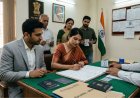
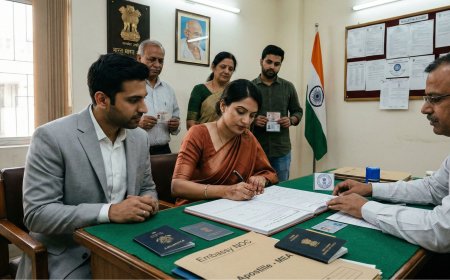
Completely and without question. Dhare Hereyuvudu in Karnataka Hindu tradition carries its own complete and self-contained spiritual authority — it is not dependent on, preceded by, or subordinate to any civil documentation. Your pandit will approach your religious ceremony as the whole and sacred event, regardless of what legal registration occurred previously. Many NRI couples find that this sequencing — civil first, religious ceremony following — actually deepens the religious ceremony by removing any administrative distraction. The water that falls over your joined hands during Dhare Hereyuvudu does not know about the registrar's office. It knows only that two people are making a covenant before the cosmos, and it falls accordingly.
The Emotional Angle
Nobody prepares a Kannadiga father for what happens when he lifts the copper vessel. He has been managing everything for months — the hall booking, the catering deposits, the relatives' flight connections, the long phone calls to the pandit. He has been the one who stayed practical when everyone else became sentimental, because somebody had to, because the wedding would not plan itself, because he is a father and that is what fathers do.
And then the moment comes. The priest signals him. He lifts the tamra patra with both hands. His daughter's hand is resting on the groom's hand below him, and he has held that hand — that specific hand — ten thousand times. He held it crossing roads in Bengaluru when she was four. He held it in hospital corridors he does not like to remember. He held it at airports in the particular way that fathers hold their children's hands at airports, tight and then tighter and then letting go. He knows this hand completely.
He tilts the vessel. The water begins to fall.
For the few seconds that the stream flows — steady, unbroken, exactly as it must be — he is not thinking about the catering or the hall booking or the relatives' connections. He is thinking about the morning she was born, and the evening she told him she was leaving for a university in another city, and the night she called from abroad to say she had met someone, and every ordinary Tuesday morning in between when she was simply there, in the house, and he did not understand yet that those ordinary mornings were the extraordinary thing.
The stream must not break. His hands are steady. He does not know how, but they are steady.
The water falls. She is married. He has done the most important thing he will ever do, and he did it with his own hands, and the water fell in one unbroken stream, and that is enough. That is everything.
A Moment to Smile
At a Karnataka Brahmin wedding in Fremont, California, in the winter of 2020 — a small, pandemic-era ceremony with fourteen people and one carefully negotiated venue — the Dhare Hereyuvudu was proceeding with great solemnity when the bride's six-year-old nephew, tasked with holding the banana leaf collection vessel beneath the joined hands, decided that his arms were tired.
He put the banana leaf down. Just for a moment, he said later. Just for a second.
The water, which does not negotiate with six-year-olds, continued falling. It landed on the carpet.
The bride's mother made a sound. The pandit, without missing a single syllable of his mantra, pointed firmly at the banana leaf with one finger. The nephew retrieved it. The stream continued. The ritual completed without further incident.
The carpet dried. The marriage held. The nephew was not asked to hold anything at subsequent family events for approximately two years.
He accepts this as fair.
Quotes from the Diaspora
"I grew up in Dharwad and I have seen Dhare Hereyuvudu at every wedding in my family since I was a child. I thought I knew what it felt like. Then it was my own wedding in Melbourne and my father was pouring the water and his hands were shaking — not from weakness, from trying not to cry — and I realised I had never actually seen it before. I had only watched it. That day I felt it." — Kavitha Kulkarni, Smartha Brahmin community, Melbourne, Australia
"My daughter-in-law is from England. She had never heard of Dhare Hereyuvudu before she met our family. She researched it herself — she came to me with questions about what the water means, why it must not break, what Varuna has to do with marriage. I answered everything she asked. On the wedding day, when the water fell over her hand and my son's hand together, she closed her eyes. I think she understood it better than most people who grew up with it." — Sharada Hebbar, Havyaka Brahmin community, mother of the groom, London, UK
"The pandit we found in Toronto had driven four hours from Ottawa because there was nobody closer who knew the Madhwa sequence properly. He arrived the night before, had dinner with my parents, and talked with my father for two hours about our family's specific tradition. When he poured the water the next day and chanted the right mantras — the ones my grandfather would have recognised — I thought: this is why you don't compromise on the priest. Some things are worth four hours." — Pooja Shenoy, Madhwa Brahmin community, Toronto, Canada
Your Roots Travel With You
Your father sourced the copper vessel from an Indian store in Fremont three weeks before the wedding. He asked the shopkeeper twice whether it was the right size for the dhare pour. He carried it home wrapped in newspaper and placed it on the puja shelf in his bedroom, where it stayed until the morning of the ceremony. He did not tell you this. He told you about the catering and the parking arrangements and the time the pandit was arriving. He handled the practical things because that is his language of love.
But when he lifted that vessel — when the water fell over your joined hands in one unbroken stream and the priest chanted in the language of your grandparents and your grandparents' grandparents — everything he had never said was in that water. All of it. Every school run and airport goodbye and long-distance phone call and quiet pride he carried like a private treasure across every year of your life abroad.
NRI.Wedding is here for every part of that journey — from finding your Karnataka pandit to sourcing your ritual vessels, from building your ceremony checklist to connecting you with photographers who know that the most important frame of the whole wedding is water falling over joined hands.
Your roots traveled with you. And today, like water, they find their own level — and hold.
This article explores Dhare Hereyuvudu, the sacred holy water pouring ritual at the heart of Karnataka Hindu weddings across Smartha, Madhwa, Lingayat, and Vokkaliga traditions, and its practice among Kannadiga NRI communities in Fremont, Melbourne, London, Toronto, and Dubai — offering cultural depth, practical planning guidance, and emotional resonance for diaspora couples celebrating heritage across oceans.
What's Your Reaction?
 Like
0
Like
0
 Dislike
0
Dislike
0
 Love
0
Love
0
 Funny
0
Funny
0
 Angry
0
Angry
0
 Sad
0
Sad
0
 Wow
0
Wow
0