


































































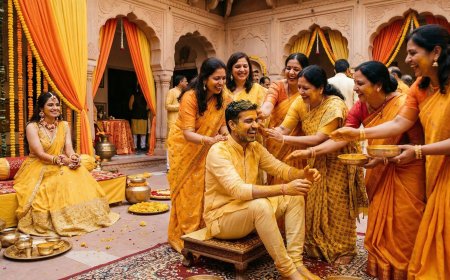




A Feast Without Borders: Wedding Catering Traditions Across Indian Communities
From Tamil banana-leaf Sadhya to Gujarati thaal spreads and Bengali mustard-fish curries, Indian wedding catering is one of the most culturally significant — and logistically complex — elements of the celebration. For NRI couples planning weddings across the UK, US, Canada, UAE, and Australia, replicating authentic regional feast traditions requires specialist caterers, community networks, and careful planning. This guide covers regional differences, diaspora sourcing, and practical catering advice across ten major Indian communities.


Every Indian community has built its wedding feast around a different philosophy of abundance — and understanding those differences is one of the most delicious journeys a couple can take through their own culture.From the banana-leaf banquets of Tamil Nadu to the towering thaal spreads of Gujarat, from the mustard-rich fish curries of Bengal to the slow-cooked nihari of Lucknow, the Indian wedding table is not merely a catering decision. It is a cultural declaration. For NRI couples planning weddings from Toronto to Dubai, replicating that declaration faithfully — and beautifully — is both the greatest logistical challenge and the most emotionally rewarding element of the entire celebration.
You remember the food first. Before the lehenga, before the flowers, before the music — you remember the food. The specific dal your nani made that no restaurant has ever quite replicated. The particular sweetness of the halwa served at four in the morning after the baraat. The smell of the feast being prepared in the courtyard of the ancestral home, rising with the smoke before anyone was awake.
You are in Melbourne now, or in Calgary, or in the West Midlands, and you are sitting across from a catering manager at a hotel that does very competent Indian food — competent being precisely the problem. Because what you are trying to recreate is not competent. It is specific. It is your grandmother's kitchen scaled to three hundred people, and you need it to taste like home even though home is eleven thousand kilometres away.
This is the article that will help you get there.
🌟 DID YOU KNOW?
• The tradition of serving wedding food on Kela ke Patte [banana leaves] in South Indian communities is not merely aesthetic — the banana leaf is understood to have mild antimicrobial properties and to subtly enhance the flavour of food served on it, a piece of ancestral food science encoded in ritual practice.
• The Gujarati wedding thaal — the traditional circular platter service — can include up to thirty-five individual dishes served simultaneously, making it one of the most complex single-service meal formats in world food culture, rivalling the formal kaiseki of Japan in its structural ambition.
• In the Indian diaspora, wedding catering is the single largest expenditure category after the venue — with NRI couples in the UK, US, and Canada spending an average of 28 to 35 percent of their total wedding budget on food and beverage, reflecting how central the feast remains to the cultural meaning of the celebration.
What Is the Indian Wedding Feast?
The Indian wedding feast — known variously as Bhojan [meal, from Sanskrit], Dawat [feast, from Urdu-Persian tradition], Sadhya [the grand Kerala feast], or simply by the community-specific name for the wedding meal — is not a dinner. It is a theological statement about generosity, abundance, and the obligations of hospitality that a family owes to everyone who has honoured them with their presence.
In the Indian worldview, the feeding of guests is among the most sacred duties a host can perform. The Atithi Devo Bhava [the guest is equivalent to God] principle embedded in Vedic culture means that the quality, quantity, and care of the wedding feast is understood as a direct reflection of the family's values and their reverence for the occasion. A guest who leaves a wedding hungry is a failure not of logistics but of character.
The physical form of the feast varies enormously across communities. In South Indian Hindu tradition, the meal is served on a banana leaf laid on the floor or at long low tables, with dishes added in a specific ritual sequence from left to right, sweet to savoury, liquid to solid. In North Indian tradition, the buffet — itself a modern adaptation of older thaal service — allows guests to circulate and construct their own plate from a spread that might include fifteen to twenty-five dishes. In Gujarati tradition, the seated thaal service brings a curated selection of dishes simultaneously to each guest in a choreographed act of collective hospitality. In Muslim communities, the Walima [the wedding feast held after the marriage is consummated, a Sunnah obligation] is a specific religious duty with its own rules about what must be served and who must be invited.
The wedding feast typically occurs at multiple points across the wedding celebration — at the Mehendi evening, at the Sangeet, at the main wedding reception, and sometimes at a separate lunch the following day. Each occasion has its own food logic, its own dishes, and its own relationship to the ritual it accompanies.
Community Comparison Table
| Community / State | Feast Name | Signature Dishes | How NRIs Abroad Adapt It |
|---|---|---|---|
| Tamil Brahmin | Sadhya / Virundhu | Banana leaf service, sambar, rasam, kootu, payasam, rice | Tamil caterers in Harrow, Scarborough, and Parramatta; banana leaves sourced from Asian grocers |
| Kerala Hindu | Sadhya | 26+ dish banana leaf feast, avial, olan, erissery, ada pradhaman | Kerala caterers in Southall and Melbourne; banana leaves from Sri Lankan grocers |
| Gujarati | Thaal | Dal, baati, shrikhand, undhiyu, puran poli, farsan, mohanthal | Gujarati caterers in Leicester, Edison NJ; thaal service recreated at venue |
| Punjabi Hindu / Sikh | Langar-style / Buffet | Sarson da saag, makki roti, dal makhani, butter chicken, lassi | Punjabi caterers widely available in Southall, Brampton, Surrey; large buffet format |
| Bengali Hindu | Bhojan | Begun bhaja, machher jhol, kosha mangsho, mishti doi, sandesh | Bengali caterers in Mississauga, Melbourne; mustard oil sourced from Indian grocers |
| Rajasthani | Marwari Thaal | Dal baati churma, gatte ki sabzi, ker sangri, ghevar | Rajasthani caterers in London and Houston; speciality ingredients imported |
| Marathi | Pankti Bhojan | Puran poli, varan bhat, ukdiche modak, aamras, solkadhi | Marathi caterers in Melbourne and New Jersey; community catering cooperatives assist |
| Kashmiri Pandit | Wazwan (vegetarian equivalent) | Haak saag, nadru yakhni, rajma, tchok wangun | KP community networks provide caterers; Kashmiri spices sourced from specialist importers |
| Himachali / Pahari | Dham | Madra, khatta, mah dal, boor ki kari, mittha | Community elders cook collectively; Pahari caterers rare abroad, community cooking common |
| Muslim (Hyderabadi) | Walima / Dawat | Dum biryani, haleem, mirchi ka salan, sheer khurma, double ka meetha | Hyderabadi caterers in Houston, Southall, Dubai; dum cooking recreated in commercial kitchens |
The Meaning Behind the Feast
Food in the Indian wedding is never merely sustenance. It is Prasad [blessed offering], it is Dana [the act of giving], and it is the most tangible expression of a family's love for everyone gathered around them. The specific dishes served at an Indian wedding carry the weight of generations — recipes passed through maternal lines, spice combinations that identify a family's regional origin as clearly as their surname, cooking methods that encode centuries of agricultural and culinary history.
The banana leaf of the South Indian feast is not a biodegradable plate — it is a sacred surface, prepared with water and oriented correctly before the meal begins, because even the vessel of the feast deserves ritual attention. The ghee poured over the rice at a Brahmin wedding feast is not merely a fat — it is an offering of purity and prosperity. The sweetness that begins and ends the Gujarati thaal is not a structural quirk — it is a statement that life, at its most auspicious, should begin and end in sweetness.
For NRI families, the wedding feast carries an additional layer of meaning: it is the most powerful way to bring India into a room that is physically located in Canada or Australia or the UAE. When the smell of the tempering hits the air — when the mustard seeds crack in the hot oil and the curry leaves release their perfume — something happens in that room that no decoration, no music, and no ceremony can quite replicate.
The Indian wedding feast is the family's way of saying: we come from a place of abundance, and everything we have, we share with you.
Recreating the Wedding Feast Abroad: The Practical Reality
The catering challenge for NRI couples is among the most practically complex elements of the entire wedding, and it deserves more planning time than most couples initially allocate to it. The core difficulty is not finding Indian food abroad — Indian restaurants and caterers exist in every major diaspora city. The difficulty is finding the right Indian food: community-specific, regionally authentic, prepared with the techniques and ingredients that make the difference between competent and genuinely moving.
The first and most important decision is whether to use a specialist community caterer or a generalist Indian wedding caterer. Generalist Indian wedding caterers in diaspora cities produce reliable, crowd-pleasing food that covers the broad strokes of North Indian cuisine competently. If your wedding feast requires Tamil Brahmin banana leaf service, Gujarati thaal choreography, Bengali mustard-oil cooking, or Himachali Dham preparation, a generalist caterer will not serve you well. You need a specialist, and finding one requires going into the community.
In London, the catering communities are well-organised by region. Southall and Wembley have the broadest range of North and West Indian caterers; Harrow and Tooting carry South Indian and Sri Lankan specialists; East London has established Bengali caterers. For specialist requirements — Kashmiri Pandit cooking, Himachali Dham, Parsi Dhansak — community networks and cultural associations are the most reliable path to finding cooks with genuine knowledge.
In Toronto and the Greater Toronto Area, the Mississauga and Brampton corridors have comprehensive Punjabi and Gujarati catering; Scarborough serves the Tamil community well; the Bengali community in Mississauga maintains catering contacts. The Devon Avenue corridor in Chicago is the primary sourcing hub for the Midwest. In Houston, Hillcroft Avenue is the centre of South Asian catering services. In Sydney, Harris Park in Parramatta is the primary hub. In Dubai, the Bur Dubai and Karama areas have comprehensive Indian catering services covering most regional traditions.
For sourcing specialist ingredients — Kashmiri spices, banana leaves, specific dal varieties, regional rice types, pure desi ghee — the Indian grocery streets of each diaspora city are your most reliable source. Banana leaves specifically are often available through Sri Lankan, Caribbean, and South-East Asian grocery suppliers in cities where the South Asian grocer does not stock them.
The venue conversation about catering requires particular care. Many established wedding venues have preferred caterer lists that do not include Indian specialists. Negotiate the right to bring an outside caterer as early as possible in the venue conversation — ideally before signing any contract. If the venue insists on their own kitchen, arrange a detailed tasting and be specific about what authentic preparation of your community's dishes requires: the right oil, the right cookware, the right sequencing of spices.
The Wedding Feast in a Destination Wedding in India
For NRI couples planning a destination wedding in India, the catering question inverts entirely — the challenge is not finding authentic regional food but managing the sheer abundance of what is available and ensuring that non-Indian guests can navigate it comfortably.
Rajasthan's heritage hotel venues in Jaipur, Udaipur, and Jodhpur maintain exceptional in-house catering teams capable of producing authentic Marwari and Rajasthani wedding feasts alongside continental and global options for international guests. Kerala's backwater resort venues are served by catering teams with deep knowledge of the Sadhya tradition. Goa's destination venues offer the unique opportunity of combining Goan Portuguese-influenced cuisine with the couple's regional Indian tradition.
When briefing destination wedding caterers in India, share the specific community traditions you want honoured — the sequencing of the banana leaf service, the correct composition of the Gujarati thaal, the preparation method for dishes that have specific ritual significance. Good Indian wedding caterers in destination venues will understand and respect these specifications. Bring written notes if necessary; specificity is always better than assumption.
For non-Indian guests, a pre-meal briefing — a card at the table, a word from the host, or a short guide in the wedding booklet — explaining the structure of the feast and how to eat it is a small gesture that dramatically improves the experience. The banana leaf in particular benefits from explanation: guests who understand they are sitting before a ritually prepared ceremonial surface engage with it very differently from guests who think they have been given a novelty plate.
What You Need: Catering Checklist
Ritual and Menu Items: Confirmation of community-specific dishes required, banana leaves or thaal platters if applicable, pure Ghee [clarified butter] for cooking and serving, Mishti [sweets] or Mithai [confectionery] specific to your community, regional rice variety if relevant, specialist ingredients sourced from community suppliers.
People Required: Community-specific specialist caterer confirmed at least six months ahead, catering coordinator who understands the ritual sequencing of the feast, serving staff briefed on banana leaf or thaal service protocol, a trusted family member or community elder who can quality-check authenticity.
Preparation Steps: Book specialist caterer at least six months before the wedding, conduct a full tasting session with the catering team, confirm venue permission for outside caterers if required, source specialist ingredients and confirm supply chain, prepare guest guidance for non-Indian attendees, confirm the ritual sequence of dish service with the caterer and pandit if the feast has ceremonial elements.
NRI.Wedding connects couples with verified community-specific caterers across diaspora cities in the UK, US, Canada, UAE, and Australia — specialists in Tamil, Gujarati, Bengali, Punjabi, Marathi, Kashmiri, Rajasthani, and Muslim wedding feast traditions.
5 Questions NRI Couples Always Ask
Our venue will only allow their in-house caterer. How do we get authentic regional food in this situation?
This is the most common catering challenge NRI couples face, and it has workable solutions. The first step is to request a detailed tasting with the venue's catering team and bring a specific written list of the dishes you need, including preparation notes — the type of oil required, the spice combinations, the cooking method. Many venue catering teams are more capable of authentic Indian cooking than their standard menus suggest; they simply need a precise brief. Alternatively, negotiate for your own specialist caterer to work alongside the venue kitchen for specific dishes — many venues will allow this if approached diplomatically early in the relationship. If the venue is genuinely unable to deliver what you need, that is important information to have before you commit to a contract.
How do we cater authentically for both Indian and non-Indian guests at an intercultural wedding?
The most successful approach is not to create two separate menus but to design a feast that centres on your regional Indian tradition while ensuring accessibility for guests unfamiliar with it. This means providing guidance — table cards, a brief from the host, or a wedding booklet entry — explaining the dishes and how to eat them. It means ensuring that at least some dishes are familiar enough to non-Indian palates to provide comfort. And it means briefing your serving staff to guide guests through the feast warmly and without condescension. Most non-Indian guests, when they feel guided rather than abandoned, find the Indian wedding feast one of the most memorable and delicious experiences of their lives.
How do we find a caterer who specialises in our specific regional community's cuisine?
The most reliable path is through community networks rather than general search. Your regional cultural association — the Gujarat Samaj, the Tamil Sangam, the Bengal Association, the Marathi Mandal — will know which caterers in your city have genuine knowledge of your community's wedding food traditions. Temple communities are another excellent source. NRI.Wedding maintains a directory of community-specific caterers across diaspora cities that is regularly updated and vetted. Do not rely on a restaurant's general Indian menu as evidence of their ability to cater a community-specific wedding feast — ask specifically about their experience with your tradition and request references.
We want to serve alcohol at our wedding but our families have different views on this. How do other NRI couples handle this?
This is one of the most common family negotiation points in NRI wedding planning, and it is resolved differently by different couples. One workable approach is to have a clearly alcohol-free ceremony and religious events, with alcohol available only at the evening reception — a separation that most traditional family members can accept. Another approach is to have alcohol available in a separate area of the venue rather than at the main tables. The key is to make the decision consciously and early, communicate it to both families before the planning is advanced, and ensure the venue understands and can accommodate whatever arrangement you choose. There is no universal right answer — only the answer that allows your family to celebrate together.
How do we recreate the community cooking atmosphere of a traditional Indian wedding — the collective preparation, the family recipes — in a diaspora setting?
This is the most emotionally important catering question NRI couples ask, and it has a genuinely beautiful answer. Many NRI families organise a community cooking session in the days before the wedding — in a rented community hall kitchen, or in the largest domestic kitchen available — where aunts, cousins, and family friends gather to prepare specific dishes that the catering company cannot replicate: the particular pickle, the family halwa, the specific sweet that has been made at every wedding in the family for three generations. This pre-wedding cooking gathering often becomes one of the most beloved memories of the entire wedding weekend — the conversation, the laughter, the transmission of recipes, the smell of the food filling a room in Birmingham or Brampton or Brisbane the way it once filled a courtyard in Punjab or Kerala or Gujarat.
The Emotional Angle
There is a moment at every Indian wedding abroad when the food arrives and something in the room changes. It is not a visible change — the decorations are the same, the music is the same, the people are the same. But the smell reaches someone across the room and they close their eyes for just a second, and in that second they are somewhere else entirely. They are in their mother's kitchen. They are at a wedding twenty years ago in a city they no longer live in. They are eight years old and being handed a plate by someone who is no longer alive.
Food does this. Only food does this with this particular precision — this ability to collapse distance and time and return you, without warning, to a moment you did not know you were still carrying.
For NRI families, the wedding feast is the most powerful act of cultural preservation available to them. You can wear the clothes and speak the language and perform the rituals — and all of those things matter enormously. But when the food is right — when it tastes the way it is supposed to taste, when the spices are correct and the cooking method is authentic and the sequence of dishes follows the logic your community has followed for generations — something is transmitted that cannot be transmitted any other way.
Your guests will remember your wedding. But what they will remember most specifically, most viscerally, and most permanently is what they ate. Make it worthy of that memory.
A Moment to Smile
At a wedding in Mississauga two years ago, the family had arranged for a specialist caterer to prepare a traditional Gujarati thaal — thirty-two dishes, seated service, the full choreographed experience. The caterer was excellent. The dishes were authentic. The serving team had been thoroughly briefed.
What no one had briefed was the bride's Scottish father-in-law, who — confronted simultaneously with thirty-two dishes he had never seen before, a banana leaf that he initially attempted to fold into a more manageable size, and a server who kept adding more dal before he had finished processing the previous dal — responded by quietly photographing each dish in sequence and texting them to his wife with the single caption: "Send help."
His wife, sitting three tables away, looked up from her phone, looked at her husband's expression, and began laughing in the way that only people who genuinely love each other can laugh at each other in public.
He ate everything. He asked for the dal recipe. He has since made it twice at home in Edinburgh, with results he describes as "probably seventy percent correct, which I consider a personal achievement."
Quotes From the Diaspora
"I spent six months finding a caterer who could make the specific variety of payasam my grandmother used to make. When I tasted it at the tasting session and it was right — not just good, but right — I cried in front of the caterer. He was very kind about it. He said it happened more often than I would think." — Deepa Nair, Malayali Hindu, Melbourne
"For me, the food was never just the food. It was the proof that we had not lost anything. That everything we carried from Ahmedabad to Leicester forty years ago was still intact. When my son's wedding thaal was served correctly — in the right sequence, with the right sweetness at the beginning — I felt that proof." — Kokila Patel, Gujarati, Leicester
"My fiancé's family had never eaten Bengali food before our wedding. I was nervous. But when the kosha mangsho arrived and his mother asked for the recipe before she had finished her first plate, I knew everything was going to be fine."— Priya Chatterjee, Bengali Hindu, Toronto
Your Roots Travel With You
The wedding feast you serve is one of the most enduring gifts you will give your guests — and one of the most powerful statements you will make about who your family is and where you come from. In a diaspora setting, it is also an act of cultural courage: the decision to insist on authenticity, to source the right ingredients, to find the right caterer, to serve the dishes that matter rather than the dishes that are easiest.
NRI.Wedding connects couples with verified community-specific caterers across the UK, US, Canada, UAE, and Australia — specialists in every major Indian regional wedding feast tradition, from Tamil Sadhya to Gujarati thaal to Bengali Bhojan to Rajasthani Dham. We also connect you with wedding planners who understand the ritual sequencing of the Indian feast and photographers who know how to document it beautifully.
Feed your guests the way your ancestors fed theirs.
Your table is an act of love. Set it with everything you have.
This article covers Indian wedding catering traditions across Tamil, Gujarati, Bengali, Punjabi, Marathi, Rajasthani, Kashmiri Pandit, Himachali, Keralite, and Muslim communities, with practical guidance for NRI couples recreating regional wedding feasts in the UK, US, Canada, UAE, and Australia.
What's Your Reaction?
 Like
0
Like
0
 Dislike
0
Dislike
0
 Love
0
Love
0
 Funny
0
Funny
0
 Angry
0
Angry
0
 Sad
0
Sad
0
 Wow
0
Wow
0