
























































They Placed a Kara on Her Wrist in the Gurdwara and Called It a Beginning — Because That Is Exactly What It Was
Kurmai — the Sikh engagement ceremony performed at the gurdwara — is not a party but a prayer. Witnessed by the Guru Granth Sahib Ji, sealed with Ardas and karah prasad, it is the moment two Sikh families bring their intention before the Guru before anything else begins. For NRI Sikh families across London, Toronto, Vancouver, Dubai, and Sydney, this guide covers the spiritual significance of Kurmai, community traditions across Sikh diaspora families, practical guidance on gurdwara bookings, shagun sourcing, and coordinating with family in India.


Kurmai — the Sikh engagement ceremony — is not a party. It is a prayer. Performed in the presence of the Guru Granth Sahib Ji, witnessed by the sangat, and sealed with Ardas and karah prasad, it is the moment two families bring their intention before the Guru and ask for divine blessing before anything else begins. For NRI Sikh families across London, Toronto, Vancouver, Dubai, and Sydney, Kurmai is the ceremony that reminds the diaspora that every significant beginning deserves to start in the right place — and the right place has always been the gurdwara.
You have watched your parents make every major decision of their lives in a particular sequence. They thought about it. They talked about it. They went to the gurdwara. Not because the gurdwara would make the decision for them — but because beginning something important without first bringing it before the Guru felt, to them, like building a house without laying a foundation. You understood this even as a child, even before you had the words for it.
Now there is a person you want to marry. You are in Mississauga or Slough or Melbourne or Abu Dhabi, and the families are agreed, and the date is being discussed, and someone — your mother, probably, or his — has said the words that were always going to be said: "First we do the Kurmai. Properly. At the gurdwara."
You are here because you want to do this properly. You want to understand what Kurmai is, what it asks of both families, and how to bring its full meaning intact into whatever city you are standing in when the day arrives.
This article will take you through all of it.
🌟 DID YOU KNOW?
The word Kurmai derives from the Punjabi root related to karna [to do, to commit] — it is not merely an announcement of intention but a formal act of commitment, understood in Sikh tradition as a covenant made before the Guru that carries spiritual weight from the moment it is performed. Breaking a Kurmai is considered a serious matter precisely because it was made in the Guru's presence.
Unlike many engagement traditions across world cultures that are primarily social or contractual in nature, Kurmai is structurally identical to a religious ceremony — it includes Ardas [congregational prayer], a hukamnama [the Guru's guidance read from the Guru Granth Sahib Ji], and the distribution of karah prasad [sacred blessed food] — making it one of the only engagement traditions in the world that is also, simultaneously, a complete act of worship.
Community data from Sikh organisations in the UK and Canada indicates that Kurmai ceremonies have seen a significant revival among second and third generation NRI Sikh families over the past decade — with many young couples specifically requesting the gurdwara ceremony over secular engagement parties, citing a desire for their commitment to be witnessed by something larger than family and friends alone.
What Is Kurmai?
Kurmai [from Punjabi: the formal Sikh engagement ceremony, also referred to as Mangni in some Punjabi communities or Ring Ceremony in colloquial NRI usage, though the gurdwara-based Kurmai is distinct from and more spiritually significant than a simple ring exchange] is the ceremony through which two Sikh families formally announce and spiritually consecrate their intention to unite their children in marriage. It is performed in the gurdwara, in the presence of the Guru Granth Sahib Ji, and is considered in Sikh tradition to be the beginning of the wedding journey rather than a separate social event preceding it.
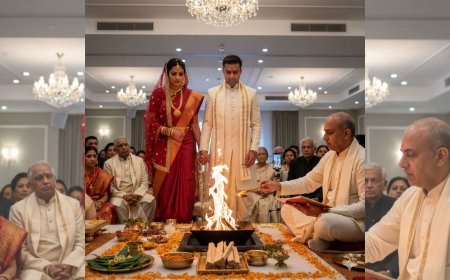
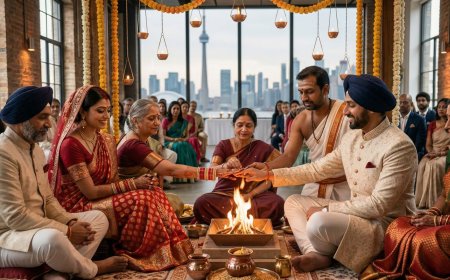
The ceremony follows a clear and sacred structure. Both families — the bride's and the groom's — gather in the darbar sahib [the congregation hall of the gurdwara] before the Guru Granth Sahib Ji. The Granthi [the reader and officiant] begins with Ardas [the Sikh congregational prayer], formally presenting the families' intention to the Guru and asking for divine blessing upon the union being announced. This Ardas is specific — it names both families, invokes their gotras[lineages] in some traditions, and asks explicitly for Waheguru's blessing on the commitment being made.
Following the Ardas, a hukamnama [a passage randomly opened from the Guru Granth Sahib Ji, understood as the Guru's direct guidance and blessing for the occasion] is read aloud by the Granthi. The hukamnama is received by both families as the Guru's response to their Ardas — his counsel for the journey ahead. In many families, the hukamnama read at the Kurmai is written down, framed, and kept as a sacred memento of the occasion.
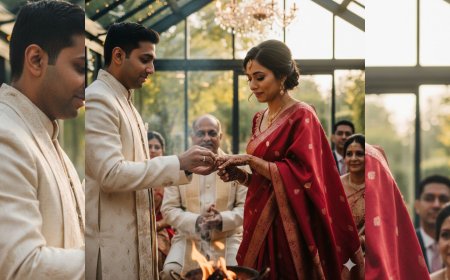
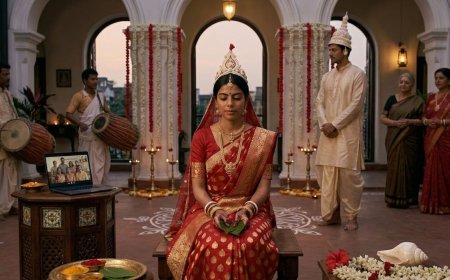
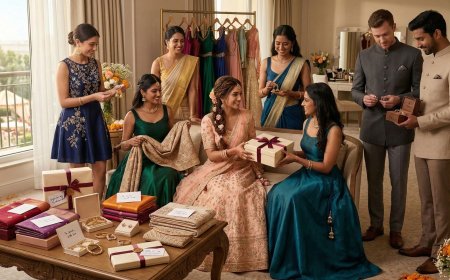
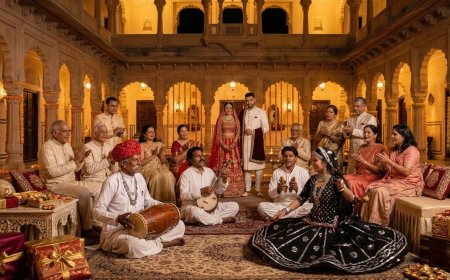
The central physical act of Kurmai is the shagun [the auspicious gift, the formal token of commitment]. The groom's family presents the bride with a kara [the Sikh steel bracelet, one of the five articles of Sikh faith] or a gold kara, along with a chunni [head covering, typically in pink, red, or saffron] and dried fruits and sweets. In many families, a ring is also exchanged at this point — but the kara is the spiritually significant element, not the ring. The groom may also receive shagun from the bride's family. Karah prasad [the sacred blessed food] is then distributed to all present, and the families share langar [the community meal] or sweets in celebration.
What distinguishes Kurmai from a secular engagement in every meaningful way is this: the commitment is made before the Guru, witnessed by the sangat, sealed with Ardas. It is not a promise between two families. It is a prayer offered jointly, and answered by the hukamnama. From this moment, the wedding is not merely planned — it is blessed.
Community Comparison: Kurmai Traditions Across Sikh Communities
| Community / State | Local Name | Key Tradition | How NRIs Abroad Adapt It |
|---|---|---|---|
| Punjabi Sikh (Jat) | Kurmai | Full gurdwara ceremony; kara presented to bride; misri [rock sugar] and dried fruits exchanged as shagun; both extended families attend | Full gurdwara ceremony maintained; misri and dried fruits sourced from Indian grocers; extended family attends or joins via video call |
| Punjabi Sikh (Khatri) | Kurmai / Mangni | Strong emphasis on gold kara rather than steel; additional gold jewellery gifted to bride; hukamnama framed and kept | Gold kara commissioned from Indian jewellers in Southall, Gerrard Street, or Dixie Road; hukamnama professionally framed |
| Ramgarhia Sikh | Kurmai | Community gurdwara central; Ramgarhia Sikh Societies in UK and Canada often host the ceremony; strong tradition of community witness | Ramgarhia Sikh Society gurdwaras in Wolverhampton, Nairobi-origin communities in London, and Toronto host ceremonies |
| Himachali Sikh | Kurmai / Nisbat | Pahari folk elements in pre-ceremony family gathering; gurdwara ceremony follows standard Sikh Rehat Maryada | Pahari songs sung by family before gurdwara ceremony; Kurmai itself follows standard format |
| Sindhi Sikh | Kurmai / Mangni | Some families blend Hindu engagement elements with gurdwara Kurmai; gurdwara ceremony treated as primary spiritual event | Gurdwara Kurmai performed first as primary ceremony; family celebrations follow separately |
| Second Generation NRI | Kurmai with English translation | Increasing number of ceremonies include printed English translation of the Ardas and hukamnama for non-Punjabi-speaking guests and partners | Translation cards prepared and distributed; Granthi provides brief English explanation at key moments |
| Interfaith Families | Adapted Kurmai | Families where one partner is non-Sikh navigate Kurmai with sensitivity; most gurdwaras welcome non-Sikh attendance with respect | Non-Sikh partner attends respectfully with head covered; family briefs them on gurdwara etiquette in advance |
| East African Sikh | Kurmai | Sikh families of East African origin maintain strong Kurmai traditions; additional cultural gifting elements from East African heritage incorporated | Full gurdwara Kurmai performed; East African community cultural elements incorporated at family celebration afterward |
| Afghan Sikh | Kurmai | Afghan Sikh community maintains Kurmai traditions with particular emphasis on community witness given the community's small size in diaspora | Community gurdwara in Southall and Toronto serves Afghan Sikh families; full community attendance considered essential |
| Urban Progressive Sikh | Kurmai | Growing number of couples request female Granthis to officiate; equal exchange of kara between both partners; egalitarian shagun | Female Granthis available through progressive gurdwara networks in UK and Canada; equal kara exchange increasingly common |
The Meaning Behind the Ritual
The Sikh Gurus dismantled, deliberately and systematically, every form of ceremony that placed human authority above divine presence. They removed the priest as intermediary. They removed caste as qualification. They removed elaborate ritual as the price of blessing. What they kept — and what Kurmai preserves — is the direct relationship between the human being and the Guru.
When two families bring their children's intended marriage before the Guru Granth Sahib Ji in Kurmai, they are making a statement about what kind of foundation they want this union built on. Not the foundation of family approval alone — though that matters. Not the foundation of social expectation — though that exists. The foundation of Hukam [divine will, the order that underlies all existence] — the understanding that a marriage blessed by the Guru and entered into with the Guru's guidance has something in it that a purely human arrangement does not.
The hukamnama received at Kurmai is understood as the Guru's direct response to the families' prayer. It is not a fortune. It is guidance — a passage of Gurbani that the family will read, reflect upon, and carry into the marriage. Many families keep the hukamnama framed in their home for the duration of the marriage, returning to it at difficult moments as a reminder of what was asked for and what was given.
The kara gifted to the bride is the most theologically precise element of the ceremony. Of the Panj Kakars [the five articles of Sikh faith], the kara [steel bracelet] represents infinity — its circular form has no beginning and no end. To give a kara as a token of engagement is to say: what we are committing to has no end point we can see from here.
For a non-Sikh partner or family member: this is how Sikh families begin — not with a party, but with a prayer, because in the Sikh understanding, anything worth doing is worth bringing before God first.
Doing Kurmai Abroad: The Practical Reality
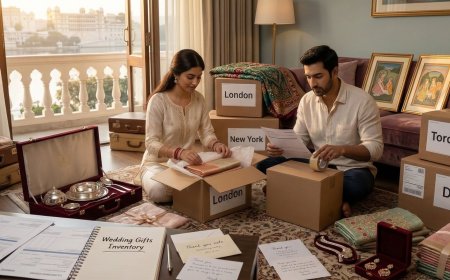
Kurmai is among the most logistically straightforward of all NRI Sikh ceremonies — because it requires a gurdwara, a Granthi, both families, and the shagun items. No elaborate decoration, no catering at the gurdwara itself [langar is provided by the gurdwara as standard], and no specialist equipment beyond what the gurdwara already holds. What it requires is planning, coordination, and the specific items that make the shagun meaningful.
Finding the Right Gurdwara: For NRI families, the gurdwara you choose for Kurmai is often the same one your family attends regularly — and this familiarity is itself meaningful. The Granthi who knows your family, the sangat that has watched you grow up, the darbar sahib where your parents prayed through difficult years — this is the right gurdwara for your Kurmai. If you are new to a city or your family does not have a regular gurdwara, contact the largest and most established gurdwara in your area and speak directly with the management committee. In London, the Sri Guru Singh Sabha in Southall and the Gurdwara Sahib in Gravesend are primary resources. In Toronto, the Dixie Road Gurdwara in Mississauga and the Malton Gurdwara serve large NRI Sikh communities. In Vancouver, the Gurdwara Sahib in Surrey and the Dasmesh Darbar in Surrey are well-established. In Sydney, the Gurdwara Sahib Glenwood serves the Australian Sikh community. In Dubai, the Sikh temple in Jebel Ali coordinates ceremonies for the Gulf diaspora. Contact your chosen gurdwara at least two to three months ahead to confirm a date.
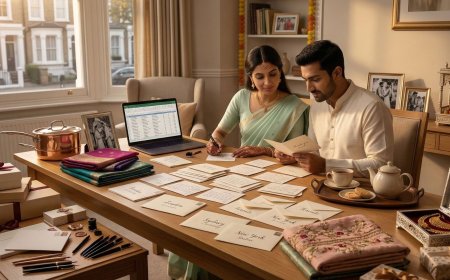
The Shagun Items: The kara — the central shagun item — should be chosen with care. A steel kara in the traditional Sikh style is the spiritually significant choice and is available at gurdwara-associated shops and Indian jewellers in every diaspora city. A gold kara, favoured by Khatri and some other communities, is available from Indian jewellers on Southall Broadway in London, Gerrard Street and Dundas Street in Toronto, at jewellers in Harris Park in Sydney, and at the gold souks in Dubai. The chunni should be in an auspicious colour — pink, red, saffron, or ivory — and is available at Indian clothing stores in all diaspora cities. Misri [rock sugar] and dried fruits for the shagun are available at Indian grocery stores across all major diaspora cities — on Southall Broadway, along Dixie Road in Mississauga, at Harris Park in Parramatta, and on Hillcroft Avenue in Houston.
The Shagun Presentation: In most families, the shagun items are arranged on a decorated thali [brass plate] lined with a red cloth and surrounded by flower petals. The groom's mother typically presents the chunni to the bride and drapes it over her head — this moment is among the most photographed of the Kurmai ceremony. The kara is placed on the bride's wrist by the groom or his mother, depending on family tradition. Brief your photographer specifically on this sequence — it happens quickly and the photographs of the kara being placed are among the most meaningful of the day.
Non-Sikh Guests and Family Members: If either family includes non-Sikh members — as is increasingly the case in NRI intercommunal families — brief them warmly and clearly in advance. They must cover their heads upon entering the gurdwara [rumaal are provided at the entrance or can be brought from home], remove their shoes, and sit respectfully in the darbar sahib. A simple printed guide explaining the sequence of the ceremony — Ardas, hukamnama, shagun, karah prasad — will allow non-Sikh guests to follow and participate meaningfully rather than observe uncertainly. Most non-Sikh guests describe the gurdwara experience as unexpectedly peaceful and moving.
Coordinating with India: For grandparents and extended family in Punjab watching via video call, Kurmai is a ceremony that streams well — the darbar sahib has good acoustics, the ceremony is relatively contained in space, and the key moments [the Ardas, the hukamnama reading, the shagun presentation] are visually clear. Position a tablet on a tripod at a respectful angle toward the Guru Granth Sahib Ji and the families. For families joining from Amritsar or Chandigarh, a mid-morning Kurmai in the UK — around 10:00am — corresponds to 3:30pm IST, a comfortable viewing hour. Assign a dedicated person on each side to manage the connection and to describe quietly what is happening at each moment.
Doing Kurmai as a Destination Event in India
For NRI families choosing to perform Kurmai in India — either as part of a destination wedding trip or as a standalone ceremony before the wedding abroad — the experience takes on the full weight of its original context.
The Harmandir Sahib complex in Amritsar is the most spiritually significant location in all of Sikhi, and performing Kurmai in one of the gurdwaras within the complex — or at the Akal Takht [the highest temporal seat of Sikh authority] in Amritsar — carries a depth that no diaspora gurdwara, however beloved, can fully replicate. For families whose roots are in specific regions of Punjab, performing the Kurmai at the local gurdwara of the ancestral village — the gurdwara where previous generations made the same prayer — is among the most emotionally complete experiences available to the diaspora.
Anandpur Sahib, the city of divine bliss, is an increasingly popular destination for NRI Sikh families performing Kurmai as part of a wedding trip — its historical significance as the city where the Khalsa was founded gives every ceremony performed there a particular resonance. Patna Sahib in Bihar, the birthplace of Guru Gobind Singh Ji, and Hazur Sahibin Nanded, Maharashtra, are also significant for families with connections to those regions.
When briefing the local Granthi on your family's specific traditions and community variations, provide written notes in Punjabi where possible. For non-Sikh international guests accompanying the family, the gurdwara experience in Punjab — the kirtan, the langar, the community — is among the most extraordinary they will encounter anywhere in the world.
What You Need: Kurmai Ritual Checklist
Ritual Items A steel or gold kara for the bride [and optionally one for the groom in egalitarian exchange]; a chunni in pink, red, saffron, or ivory; misri [rock sugar] and an assortment of dried fruits and sweets for the shagun; a decorated brass thali lined with red cloth and flower petals for presenting the shagun items; fresh flowers for decoration if the gurdwara permits; and printed English translation cards of the Ardas and hukamnama format for non-Punjabi-speaking guests.
People Required The Granthi to perform the Ardas and read the hukamnama; both families in attendance — the bride's and the groom's; the groom's mother for the chunni draping; a designated family member to manage the video call for India-based relatives; and a photographer briefed specifically on the kara placement and chunni draping moments.
Preparation Steps Contact the gurdwara two to three months ahead to confirm the date and the Granthi's availability. Commission or purchase the kara four to six weeks ahead. Source all shagun items two weeks before. Prepare and print guest etiquette guides and hukamnama translation cards one week before. Arrange the shagun thali the morning of the ceremony. Set up and test the video call connection one hour before the ceremony begins.
NRI.Wedding's gurdwara network and planning resources are available across the UK, Canada, UAE, and Australia. Let us help you identify the right gurdwara, source the right items, and prepare both families for this sacred beginning.
5 Questions NRI Couples Always Ask
Is Kurmai legally binding? What happens if the engagement is broken after Kurmai?
Kurmai is spiritually binding in the Sikh understanding — it is a commitment made before the Guru and witnessed by the sangat — but it is not legally binding as an engagement contract under the laws of most Western countries. In practical terms, breaking a Kurmai is considered a serious matter within the Sikh community precisely because of its sacred nature, and families who have performed a Kurmai treat the commitment with corresponding gravity. If circumstances require an engagement to be ended after Kurmai, the families typically return to the gurdwara for Ardas, acknowledging the situation before the Guru and asking for guidance — a practice that maintains the spiritual integrity of the original ceremony even in difficult circumstances.
My partner is not Sikh. Can they participate in the Kurmai ceremony?
A non-Sikh partner can absolutely attend and participate in Kurmai with respect and an open heart. They must cover their head and remove their shoes upon entering the gurdwara, and they should bow before the Guru Granth Sahib Ji as a gesture of respect [this is not a religious conversion act but a mark of respect for the Guru]. They can receive karah prasad, sit with the family during the Ardas, and witness the hukamnama. Brief them warmly and specifically in advance — both on gurdwara etiquette and on what each element of the ceremony means. Most non-Sikh partners describe the Kurmai experience as one of the most peaceful and meaningful of their entire wedding journey.
How do we find a Granthi who can perform Kurmai in English as well as Punjabi for our mixed family?
An increasing number of Granthis serving NRI communities are accustomed to providing English explanations alongside the Punjabi ceremony — particularly in cities like London, Toronto, and Vancouver where second and third generation Sikh families frequently have non-Punjabi-speaking members. When contacting the gurdwara, ask explicitly whether the Granthi can provide brief English explanations at key moments, or whether they can recommend a bilingual Sikh who can sit beside the families and translate quietly in real time. NRI.Wedding's gurdwara network includes information on bilingual Granthis and community resources across diaspora cities.
We want to do a small Kurmai at the gurdwara and then a larger engagement party at a venue afterward. How do we sequence this?
This is the most common arrangement among NRI Sikh families and it works beautifully. The gurdwara Kurmai is always first — it is the spiritual foundation upon which the celebration rests. The family gathers at the gurdwara in the morning, the ceremony is performed, karah prasad is distributed, and langar is shared. The engagement party at a venue follows in the evening — a separate, celebratory event where the ring exchange often happens, speeches are made, and the families celebrate socially. The two events are complementary rather than competing: the gurdwara provides the sacred beginning, the party provides the joyful celebration of it.
Can Kurmai be performed at home rather than at the gurdwara if the family prefers a very intimate ceremony?
Technically, a ceremony with the essential elements of Ardas and shagun can be performed at home if the Granthi agrees to attend. However, most Sikh scholars and Granthis strongly recommend the gurdwara setting for Kurmai specifically because the presence of the Guru Granth Sahib Ji and the sangat [congregation] are considered integral to the ceremony's spiritual validity. A home ceremony without the Guru Granth Sahib Ji present can include Ardas and shagun but is considered a family blessing rather than a full Kurmai. If the family's preference is for intimacy, a private time slot at the gurdwara — early morning, before the main sangat arrives — is often arrangeable and provides the full sacred context in a quieter setting.
The Emotional Angle
There is something that happens to NRI Sikh parents at Kurmai that does not happen at any other point in the wedding journey. It happens in the moment after the Ardas — when the Granthi has finished the prayer and the gurdwara is momentarily quiet and the hukamnama is about to be read. In that silence, something settles.
These are parents who built their lives in cities that did not know their names, who prayed in gurdwaras that smelled of langar and reminded them of home, who told their children — quietly, consistently, across decades of school runs and homework and weekend trips to the gurdwara in the early morning when everyone else was still asleep — that Waheguru is with you. Wherever you are. Whatever city you are in. Whatever language the people around you speak.
They were not speaking abstractly. They were preparing their children for exactly this moment — the moment when their child sits before the Guru Granth Sahib Ji in a gurdwara in Mississauga or Southall or Sydney, beside a person they have chosen to walk through life with, and the Granthi begins the Ardas, and the words are familiar in the deepest possible way, and the certainty arrives — not romantic certainty, not even the certainty of love, but the certainty that this is the right way to begin.
The hukamnama is read. The Guru has answered. The kara is placed on her wrist.
The parents who held it together through everything — the migration, the years, the raising of children in translation — find that they cannot hold it together for this. They do not try. The gurdwara has always been the place where there was no need to.
A Moment to Smile
At a Kurmai in Southall three years ago, the bride's younger sister — aged nine, extremely serious about weddings, having attended approximately fourteen of them in her short life — had appointed herself the unofficial photographer of the family's phone-based documentation team.
She was thorough. She photographed the shagun thali from six angles. She photographed the Granthi, who smiled patiently. She photographed the kara being placed with the focused intensity of a professional. She photographed the moment the chunni was draped with such concentration that she walked directly into the groom's grandfather, who was walking in the opposite direction with equal concentration and less spatial awareness.
Both were entirely unhurt. The grandfather laughed. The girl immediately photographed him laughing. She then photographed the karah prasad, two aunties crying, the exit shoes, and the gurdwara car park for reasons that remain unclear.
At the family celebration afterward, when the professional photographer showed his results, the family agreed that the nine-year-old's documentation was equally comprehensive and considerably more candid. She has since been given the official role at every subsequent family ceremony. She accepts this responsibility without false modesty.
Quotes from the Diaspora
"We had been together for four years before the Kurmai. We had built a life, shared a flat, made all the decisions. I thought the Kurmai would feel like a formality. It did not feel like a formality. When the Granthi read the hukamnama and I heard the words and understood what the Guru was saying to us on that specific morning — I understood for the first time why my parents always said: bring it to the gurdwara first. Whatever it is. Bring it to the gurdwara first." — Parveen Kaur Gill, Punjabi Sikh community, Toronto
"My son's fiancée is from a Hindu family. She came to the Kurmai with her head covered and her shoes off and her hands folded and she sat through the entire ceremony with complete attention. When the karah prasad was placed in her hands, she held it for a long time before she ate it. She told me afterward that she felt the gurdwara was one of the most peaceful places she had ever been. She has asked to come back for the morning kirtan before the wedding. I told her the gurdwara is always open. It always is." — Gurjeet Kaur Mangat, Punjabi Sikh community, Wolverhampton
"We did our Kurmai at the gurdwara in Glenwood in Sydney on a Tuesday morning in November. It was raining. There were maybe twenty people. The Granthi read the hukamnama and it was a verse about the soul finding shelter in the Guru's name — about home being not a place but a presence. I live twelve thousand kilometres from where my parents were born. I have lived in Sydney for eleven years. I have never felt more at home than I did in that gurdwara, in the rain, on a Tuesday, with twenty people and a hukamnama about shelter." — Navjot Kaur Sidhu, Punjabi Sikh community, Sydney
Your Roots Travel With You
Somewhere right now, a family is gathering in a gurdwara — in Mississauga, in Southall, in Glenwood, in Jebel Ali — on a morning that looks ordinary from the outside and is anything but. The Guru Granth Sahib Ji is open. The Granthi is preparing the Ardas. The groom's mother is holding a decorated thali. The bride is sitting with her hands folded, wearing a chunni she will keep for the rest of her life.
The Ardas begins. The prayer rises. The hukamnama is read. The kara is placed.
This is what NRI.Wedding exists to support — not just the logistics of the ceremonies that follow, but this one, the one that begins everything, the one that asks the Guru before it asks anyone else. Our gurdwara network spans the UK, Canada, UAE, and Australia. Our planning resources cover every element of your Kurmai — from sourcing the right kara to preparing your non-Sikh guests for the gurdwara experience.
Begin the way your parents began. Begin the way their parents began before them.
Bring it to the Guru first. Everything else will follow.
What's Your Reaction?
 Like
0
Like
0
 Dislike
0
Dislike
0
 Love
0
Love
0
 Funny
0
Funny
0
 Angry
0
Angry
0
 Sad
0
Sad
0
 Wow
0
Wow
0