




















































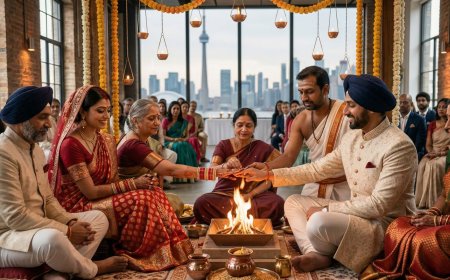



The Maher Ceremony: How Maharashtrian NRI Families Are Keeping Their Most Sacred Gifting Tradition Alive Across the World
The Maher Ceremony — the bride's natal family gifting tradition at the heart of Maharashtrian Hindu weddings — carries profound cultural and legal significance through the ancient Stridhana concept. For NRI families across the UK, US, Canada, and Australia, recreating this deeply emotional ritual abroad demands careful planning, cross-border logistics, and cultural preservation. This guide covers the ceremony's philosophical roots, gift categories including Paithani sarees and Kolhapuri jewellery, practical sourcing advice, and how diaspora families are evolving the tradition without losing its soul.


In the emotional landscape of a Maharashtrian wedding, the rituals of the mandap are witnessed by everyone. But the Maher Ceremony — the gifting of clothes, jewellery, vessels, and everything a daughter might need for her new life, presented by her family before she crosses the threshold into marriage — is witnessed most completely by the people doing the giving. It is a private act of love that happens in the middle of a public celebration. It is a father and mother saying, with silk sarees and steel vessels and gold ornaments and their own hands that are not quite steady: we are sending you into your new life with everything we can carry. For Maharashtrian NRIs from Pune to Perth, from Nashik to New Jersey, from Mumbai to Melbourne, the Maher is the ritual that breaks the family open — and puts them back together again.
You have watched it happen at someone else's wedding and felt something you could not name. The bride seated on a low wooden paat, her mother beside her, the family bringing things one by one and placing them before her — sarees folded in tissue, steel vessels gleaming, a jewellery box that has been packed and repacked three times because there is always something else to add. The gestures were practical. The faces were not. And you stood at the edge of it and thought: I will understand this when it is mine.
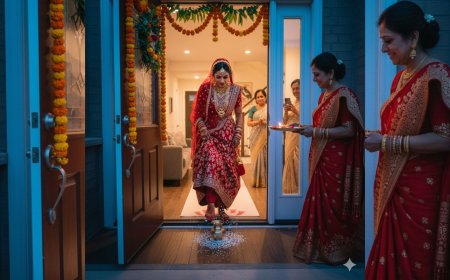
It is yours now. You are in a flat in Harrow or a house in Edison or an apartment in Scarborough, and your mother is on the phone from Pune saying she has been collecting things since before you got engaged — "not collecting, preparing," she says, which is a distinction that matters to her — and that the Maher will be done properly even if it has to happen in a hotel suite in London because your daughter is not leaving for her new life without everything she needs.
She has been preparing for this moment since the day you were born. She just did not tell you that.
This is the Maher. And it is the love that cannot be spoken, only given.
🌟 DID YOU KNOW?
- The word Maher in Marathi means the bride's natal home — her parents' house, the place she grew up, the family she belongs to before she belongs to her new one. The Maher Ceremony is therefore not simply a gifting ritual — it is the bride's natal home making its final, most complete offering to her before she leaves it, embedding a piece of everything she came from into everything she is taking with her.
- In traditional Maharashtrian families, the Maher gifts are specifically categorised into Sahamaan(items of equal measure — practical household goods given in pairs or sets, symbolising completeness) and Stridhana (the bride's own property — jewellery, silk sarees, and precious items that legally and culturally belong to the bride alone and cannot be claimed by her husband's family). The Stridhanaconcept, codified in the Manusmriti and the Arthashastra, makes the Maher gifts not merely sentimental but legally significant in the classical Indian understanding of a woman's independent property rights.
- The Maher Ceremony in the Maharashtrian diaspora has undergone a specific and meaningful evolution — in communities in the UK, US, Canada, and Australia, where Indian families have been building new lives for two to three generations, the Maher gifts increasingly include items that reflect the bride's life in the diaspora: professional books, items for her career, meaningful objects from her childhood in a foreign country, alongside the traditional silk sarees and gold ornaments. This hybrid Maher — part ancient tradition, part diaspora autobiography — is one of the most distinctive and emotionally rich expressions of NRI cultural identity in any wedding tradition.
What Is the Maher Ceremony?
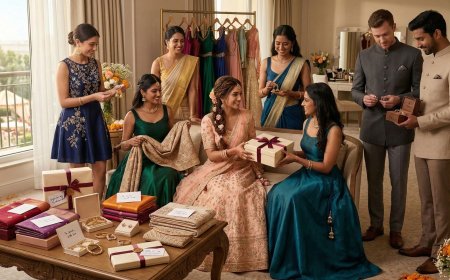
Maher — from the Marathi word for the bride's natal home, her parents' house, the place that is hers before any other place is hers — is the pre-wedding or wedding-day ceremony in which the bride's family presents her with a comprehensive collection of gifts that she will take into her new life. It is not a single act but a sequence — a procession of giving that may unfold over several hours or across several pre-wedding events, each gift placed before the bride with intention and sometimes with specific words or prayers.
The Maher gifts are traditionally organised into specific categories. Kapde (clothes) form the foundation — a collection of silk sarees, traditionally including at minimum one Paithani (the iconic Maharashtra silk with gold zari border), one Nauvari (the nine-yard Maharashtrian saree worn in the distinctive Maharashtrian draping style), and several other sarees for daily and festive wear. The number of sarees gifted varies by family tradition and economic circumstance — some families gift five, some eleven, some twenty-one — but the number is always auspicious and always odd.
Daginé (jewellery) is the second category — the Stridhana that legally belongs to the bride. Traditional Maharashtrian bridal jewellery includes the Mangalsutra (the sacred necklace of black beads and gold pendant), the Nath (the large nose ring — a specific Maharashtrian bridal ornament of elaborate design), the Kolhapuri Saaj (the distinctive multi-layered gold necklace of the Kolhapur tradition), Bangles (glass bangles in green for the wedding, gold bangles for daily wear), Jodvi (toe rings), and various gold earrings, finger rings, and armlets depending on the family's tradition and region.
Bhande (vessels) are the third category — steel, brass, or copper kitchen vessels that equip the bride's new kitchen. In the traditional Maharashtrian understanding, the woman who runs the kitchen is the Gruhalakshmi (the Lakshmi of the home), and to equip her kitchen is to equip her domain. Steel vessels given in the Maher are not merely practical — they are symbolic of the bride's authority in her new home, her sovereignty over the hearth.
Sadhan (essentials) include a range of items that vary by family — cosmetics and personal care items, bedding and household linens, religious items for the bride's personal puja corner, and increasingly in the diaspora, items specific to the bride's life and interests.
The Maher typically happens in the days before the wedding — often during a specific pre-wedding gathering at the bride's family home — or on the wedding morning before the bride departs for the mandap. In NRI weddings, it often happens at the hotel suite or the wedding venue itself, in a private room designated for the purpose, with the immediate family gathered.
The bride receives each gift with both hands. She does not open everything immediately — the gifts are presented, blessed, and set aside. She will discover their full extent later, in her new home, when she unpacks them one by one. This delayed discovery is intentional — a way of making the Maher last beyond the wedding day, of letting the bride find her family's love in layers, over time.
Community Comparison Table
| Community / State | Local Name | Key Tradition | How NRIs Abroad Adapt It |
|---|---|---|---|
| Maharashtrian (Brahmin — Deshastha) | Maher | Sarees, jewellery, vessels in specific categories; Paithani and Nauvari essential; Stridhana concept central | Paithani ordered from Maharashtra online retailers; jewellery sourced from Indian jewellers in diaspora cities |
| Maharashtrian (Brahmin — Kokanastha) | Maher | Coastal tradition variations; specific Kokanastha jewellery designs; coconut and betel in ritual | Kokanastha family elder confirms specific items; community jewellers consulted |
| Maharashtrian (Brahmin — Saraswat) | Maher | Saraswat-specific gift categories; similar structure; specific saree traditions | Saraswat community association consulted; online sourcing from Karnataka and Maharashtra |
| Maharashtrian (Maratha) | Maher | Community-specific gift items; Nauvari saree central; practical household gifts prominent | Family elder guides item list; vessel sets sourced from Indian homeware stores |
| Gujarati | Mameru | Maternal uncle brings gifts to bride; separate ceremony; sarees, jewellery, sweets | Mama's gifting role preserved; Gujarati sarees sourced from Gujarat retailers online |
| Punjabi | Daaj / Trousseau | Bride's family gifts collected over years; presented before wedding; clothes, jewellery, household items | Trousseau items sourced from Indian stores; jewellery from Punjabi jewellers in diaspora |
| Bengali | Tattwa | Elaborate exchange of gifts between families; decorated trays; fish and sweets included | Hilsa fish from Bengali stores; decorated trays assembled by family; full ceremony preserved |
| Tamil | Valaigaappu gifts | Bride's family gifts jewellery and sarees; specific Tamil bridal jewellery set | Temple jewellery and Kanchipuram sarees sourced from Tamil retailers and online |
| Telugu | Vastralu and gifts | Sarees and jewellery gifted; Kanchipuram and Pochampally silks traditional | Silk sarees ordered from Telugu retailers online; jewellery from Indian jewellers |
| Rajasthani | Pehraawa | Wedding clothes gifted to entire bride's family; elaborate ceremony; Rajasthani jewellery | Rajasthani jewellery from specialist retailers; Pehraawa ceremony coordinated by family elder |
| Kashmiri Pandit | Wanwun gifts | Specific Kashmiri gifts including walnut wood items; Kashmiri embroidered textiles | Kashmiri shawls and embroidered items ordered online; walnut wood items sourced from Kashmir retailers |
The Meaning Behind the Ritual
To understand the Maher at its philosophical depth, you need to sit with the Marathi word itself — because maher is not simply the word for a house. It is the word for a specific quality of belonging that has no precise English equivalent.
Maher is the place where you belong without earning it. It is the home that does not need you to deserve it — that is yours because you were born into it, because you grew there, because the walls know you and the kitchen smells like your childhood and your parents' faces look at you differently here than any face anywhere else in the world looks at you. It is the place you come from. And in Marathi emotional vocabulary, maherchi maaya — the love of the maher — is understood as a specific, irreplaceable category of love that is different from any other love a person will experience in their life.
The Maher Ceremony is the natal home making its offering. It is the family saying: you are leaving us — not because you did anything wrong, not because we don't want you, but because this is what happens and we have always known it was going to happen and we have been preparing for it since before you were old enough to understand what preparation meant. And here is what we have prepared. Here is the silk and the gold and the steel and the things you will need and the things you will want and the things that will remind you, in your new home, that you came from somewhere that loved you completely.
The Stridhana concept embedded in the Maher gifts is not merely legal but philosophical. By giving the bride property that is legally and irrevocably hers — that cannot be claimed, disputed, or taken by any other party — the bride's family is making a specific statement about the kind of woman they are sending into the world. She is not entering her marriage empty-handed. She is not entering it dependent. She carries with her the evidence of her family's love in a form that is portable, permanent, and protected. The gold in her jewellery box and the silk in her saree stack are her family's insistence that she arrive at her new life already wealthy — not in opposition to her new family, but as a complete person who brings her own fullness to the union.
The vessels — the bhande — carry perhaps the most quietly powerful symbolism. A woman's kitchen is her sovereignty in the Maharashtrian domestic philosophy. The vessels gifted in the Maher are the tools of that sovereignty. To give a bride her kitchen vessels is to give her her domain. To give them with love is to say: go and be the Gruhalakshmi of your new home. Go and be the keeper of the hearth. We equipped you for it. We always believed you were capable of it.
For a non-Indian partner or family member seeking the simplest truth: this is the bride's family sending her into her new life with everything they can give her — not because they owe it, not because tradition requires it, but because they love her and they cannot bear for her to need anything that they could have provided.
Doing the Maher Ceremony Abroad: The Practical Reality
The Maher abroad faces a specific logistical reality that no other Indian wedding ritual faces quite so directly: the gifts must travel. Whether the bride's family is in India and the wedding is abroad, or the bride's family is in one diaspora city and the wedding is in another, the Maher gifts must arrive at the right place at the right time in the right condition. This requires planning that begins months before the wedding.
The Paithani saree is the most culturally significant garment in the Maher and the one that requires the longest lead time. Authentic Paithani sarees — woven in Paithan or Yeola in Maharashtra's Aurangabad district — are available directly from weavers who have developed international shipping capability specifically for the diaspora market. Several established Paithani cooperative societies and individual weavers ship internationally, and the sarees arrive carefully wrapped in tissue within flat boxes that travel well. Order at minimum eight to ten weeks before the wedding. In diaspora cities with significant Maharashtrian communities — London, Fremont, Toronto, Melbourne — some Maharashtrian cultural organisations and saree shops stock authentic Paithani, though the selection is more limited than what is available directly from Maharashtra. The Nauvari saree — the nine-yard Maharashtrian saree — follows the same sourcing route and the same timeline.
The jewellery is the Maher item that generates the most logistical complexity and the most family conversation. Maharashtrian bridal jewellery — particularly the Nath (the large bridal nose ring) and the Kolhapuri Saaj — is highly specific in its design and requires a jeweller who knows the tradition. In major diaspora cities, Indian jewellers who serve Maharashtrian communities can create or source the specific pieces: in London, the jewellery shops of Southall and Wembley include jewellers familiar with Maharashtrian designs. In the San Francisco Bay Area, Fremont and Sunnyvale have Indian jewellers serving the large Maharashtrian tech community. In Toronto, the jewellery shops in Brampton and Scarborough. In Melbourne and Sydney, the Indian jeweller network in the South Asian community areas carries Maharashtrian designs or can commission them. Online, several Maharashtra-based jewellers ship internationally — allow ten to twelve weeks for commissioned pieces.
The steel and brass vessels — the bhande — are available at Indian homeware stores in every major diaspora city. The traditional set includes specific vessels for specific purposes: the patela (cooking pot), the ghaghar (water vessel), the tambya (copper water pot — specifically copper, not steel, in many family traditions), the parat (large steel plate for preparing dough), and various serving and storage vessels. Many Indian homeware stores in Southall, Harwin Drive Houston, Brampton, and Harris Park Sydney carry these items. The vessel set should be assembled at least two weeks before the wedding so there is time to replace anything that is unavailable.
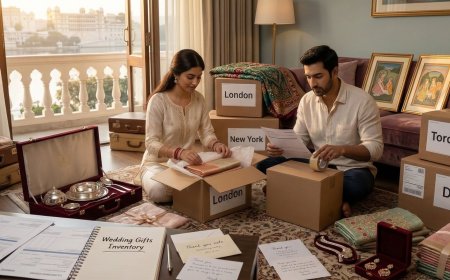
The packing and transport of Maher gifts across international borders requires specific planning. If the gifts are being brought from India — packed by the bride's mother in Pune and carried to London or Toronto — they must be distributed across multiple suitcases to avoid excess baggage charges and customs declarations. Jewellery should be declared and insured. Sarees travel well in flat parcels but should be wrapped in fabric rather than plastic to prevent creasing. If gifts are being shipped internationally rather than hand-carried, use a reputable international courier with insurance, and allow three to four weeks for delivery to account for customs delays.
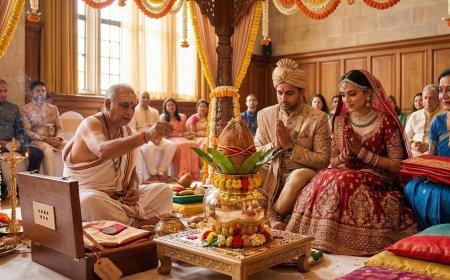
The ceremony space for the Maher abroad should be a private, unhurried room — a hotel suite, a family member's living room, a private room at the wedding venue. The Maher is not a public spectacle. It is a family moment. It requires only a clean floor or low table for presenting the gifts, seating for the bride and her immediate family, and enough privacy for the emotions of the moment to be felt without performance. Many NRI families hold the Maher in the hotel suite the morning before the wedding — a quiet gathering of the immediate family, the gifts arranged on the floor on a clean white cloth, the priest saying a brief blessing prayer if the family includes this, and then the giving, one gift at a time.
The mama's role in the Maher — the bride's maternal uncle, who plays a central ceremonial role in Maharashtrian pre-wedding and wedding rituals — should be confirmed and briefed well in advance. In many Maharashtrian families, the mama presents specific gifts from the maternal family's side as a distinct part of the Maher, separate from the parents' gifts. This role should be protected with the same seriousness as the mama's role in the Antarpat.
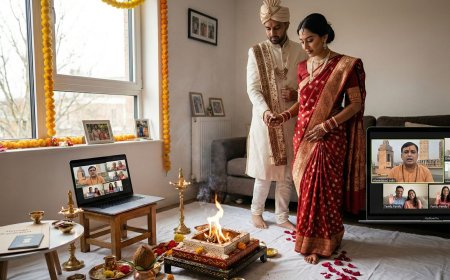
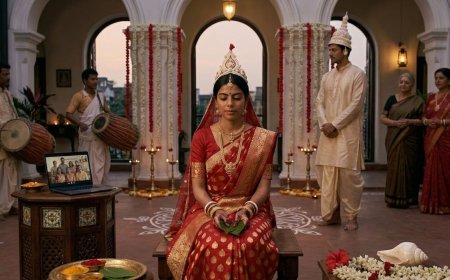
For streaming to family in India who cannot attend, the Maher is a deeply personal moment to share. Set up a tablet or laptop in the ceremony space positioned to show the gifts being presented and the bride's face as she receives them. Brief your India-side family in advance on the timing and ensure someone is designated to manage the video call throughout. The Maher in a hotel suite in London, streamed to the bride's grandparents in Nashik, while the grandmother recognises the Paithani she selected six months ago being unfolded before her granddaughter — this is one of the most emotionally complete moments any NRI wedding can produce.
Doing the Maher as a Destination Wedding in Maharashtra
To receive the Maher in Maharashtra — in the family home in Pune where the gifts were packed over months by a mother who arranged and rearranged them many times — is to receive it in the landscape that made it. The sarees come off shelves that have been in the family for thirty years. The steel vessels are brought from a store on a street the bride has walked since childhood. The jewellery comes from the family jeweller who has known the family since before the bride was born.
For a destination wedding in Maharashtra, the Maher typically happens at the bride's family home — the actual maher — on the morning of the wedding or in the days before. This is its most natural setting: the home where the bride grew up, with the smell of it and the light of it and the weight of everything that has happened in its rooms present in the air. If the bride's family home is not available for the ceremony, the wadas and heritage properties of Pune's old city offer the closest architectural equivalent — rooms with history, thresholds with meaning.
Brief your local pandit on the Maher sequence and the specific prayer or blessing the family wants over the gifts. Most Maharashtra-based pandits are entirely familiar with the Maher and will guide the blessing prayer naturally. The pandit's specific role in the Maher varies by family tradition — in some families the priest chants mantras over the gifts; in others the gifting is a family moment without formal priestly involvement.
For non-Indian guests witnessing a Maher in Maharashtra, the experience is one of the most immediately comprehensible Indian wedding rituals — a family giving a daughter everything they can before she leaves. Brief them on the Stridhana concept, because understanding that these gifts are legally the bride's own property — not gifts to her husband or her new family but gifts to her — reframes the entire ceremony in a way that resonates powerfully with contemporary values around women's independence and financial autonomy.
What You Need: The Maher Ceremony Checklist
Ritual Items and Gifts Paithani saree (the most culturally significant garment — source from Maharashtra weavers online at least eight to ten weeks before), Nauvari saree (nine-yard Maharashtra saree — same sourcing route), additional silk sarees in auspicious number (five, eleven, or twenty-one depending on family tradition), Maharashtrian bridal jewellery set including Nath, Kolhapuri Saaj, Mangalsutra, bangles, Jodvi, and family-specific pieces, steel and brass vessel set (patela, ghaghar, tambya, parat, and serving vessels — sourced from Indian homeware stores), personal care and cosmetic items, religious items for bride's personal puja corner (small idol or image of family deity, puja thali, agarbatti, oil lamp), bedding and household linens if family tradition includes these, and any personal items specific to the bride's life and interests.
People Required The bride's mother as the primary gift-giver and ceremony organiser (her role is central and non-delegable), the bride's father who presents specific gifts formally in many family traditions, the bride's mama (maternal uncle) presenting gifts from the maternal family's side, senior female relatives of the bride's family as witnesses and supporters, the priest for the blessing prayer if the family includes formal priestly involvement, and your wedding photographer briefed specifically on the Maher as a priority documentary sequence — the gifts being unfolded, the family's faces, the bride's expression as each gift is placed before her.
Preparation Steps Begin assembling Maher gifts at least three to four months before the wedding — the Paithani and jewellery require the longest lead times. Create a complete itemised list of all Maher gifts at least two months before and review it with your family elder to confirm nothing traditional has been omitted. Arrange transport or shipping of gifts to the ceremony location at least two weeks before the wedding. Set up the Maher ceremony space the evening before — clean white cloth on the floor, gifts arranged in the traditional order, priest's puja items if applicable. Brief the photographer on the ceremony sequence and timing the evening before. Set up and test the India video call at least thirty minutes before the ceremony begins.
NRI.Wedding connects Maharashtrian couples abroad with verified pandits experienced in Maher ceremonies, Paithani saree suppliers, Maharashtrian jewellers, and wedding photographers who understand that the Maher is the most important documentary sequence of the pre-wedding period. Begin planning at NRI.Wedding.
5 Questions NRI Couples Always Ask
My family is in Pune and the wedding is in London. How do we get all the Maher gifts there without losing half of them to customs?
This is the most practically important question in any NRI Maher and it has a reliable answer. Distribute the gifts across multiple suitcases carried by different family members travelling to London — this spreads the weight, reduces excess baggage, and minimises any single customs declaration. The jewellery should be declared accurately at customs — the UK allows personal jewellery to be brought in without duty if it is genuinely personal property being worn or gifted, but gold above a certain value threshold requires declaration. Consult the UK customs guidelines specifically for gold and jewellery allowances before the family departs from India. Sarees travel easily in flat parcels — wrap each in a clean cotton cloth rather than plastic to prevent mildew and fold along the saree's natural fold lines. Steel vessels are heavy — ship these as a separate package via international courier at least three weeks before the wedding, with insurance. The gifts that cannot be shipped or carried — items over the customs limit or impractical to transport — can be sourced in London with the guidance of the sourcing advice in this article.
My mother wants to give fifty sarees in the Maher. My future in-laws feel this is excessive and creates pressure on them to reciprocate. How do we navigate this?
This is one of the most common and most delicate family conversations in NRI Maher planning, and it deserves a direct and constructive answer. The first thing to establish clearly — ideally through a calm conversation between both families, or through a trusted elder intermediary — is that the Stridhana principle means the Maher gifts are given to the bride, not for the benefit of or in competition with the groom's family. The Maher is not a statement about the groom's family's ability to reciprocate. It is a statement about the bride's family's love for their daughter. The second thing to establish is that the Maher's meaning is entirely independent of its quantity — a Maher of five sarees given with complete love is as spiritually complete as a Maher of fifty. Your mother's desire to give fifty sarees is an expression of love, not a competitive gesture. Help her understand that the love can be expressed in quality rather than quantity, and that a smaller, more curated Maher — with one extraordinary Paithani, one exceptional piece of jewellery, and the vessels that matter most — is a more complete expression of the Stridhana philosophy than fifty sarees that create family tension before the wedding has begun.
My partner is not Indian and does not have an equivalent gifting tradition. How do we create a sense of balance and mutual giving in our wedding?
Many NRI couples with cross-cultural marriages create a beautiful reciprocity by inviting the non-Indian family to present gifts in their own tradition's style at a corresponding moment. The Maher from the bride's Maharashtrian family is balanced by a meaningful gift-giving from the groom's non-Indian family in whatever form feels most authentic to them — a presentation of family heirlooms, a letter from the parents, a specific object of sentimental significance. This is not a Hindu ritual — it is simply two families saying to a young woman: you are welcomed and loved by both sides of your new world. The Maher then stands as what it is — a Maharashtrian cultural tradition, not a competitive one — and the non-Indian family's gesture stands as what it is: genuine welcome in their own language. Most Maharashtrian family elders, when the cross-cultural context is explained, welcome this reciprocal approach warmly.
The Maher is happening in a hotel suite. How do we make it feel meaningful rather than just like gift-opening in a hotel room?
The setting matters less than the preparation and the intention. Three things transform a hotel suite Maher into a genuine ceremony. First, set the space deliberately the night before — lay a clean white cloth on the floor, arrange the gifts in traditional order, set up a small puja lamp and fresh flowers in one corner, create a physical boundary between the ceremony space and the ordinary hotel-room furniture. Second, begin the ceremony with a brief family prayer — even without a priest, the senior family member can say the family's traditional blessing prayer over the gifts before the giving begins. Third, slow down the giving. Many families rush the Maher because the hotel room feels informal and there is a wedding to get to. But the Maher's meaning comes from the weight given to each gift — the unfolding of each saree, the presentation of each piece of jewellery, the moment of giving and receiving with both hands. Do it slowly. Give each gift its moment. The hotel room will disappear. What remains is the giving.
My grandmother has Maher gifts she has been collecting for me for fifteen years — things she bought specifically for my wedding before I was even engaged. How do we honour this in the ceremony?
This is one of the most moving circumstances a Maher can have, and it deserves its own specific moment in the ceremony. Before the main sequence of Maher gifts, designate a specific time for your grandmother to present her gifts personally — gifts that she selected, perhaps alone, perhaps over many years, with only you in her mind. Ask the family to be silent for this moment. Ask the photographer to be ready. Let your grandmother tell you, if she is willing, when she bought each item and why she chose it. The fifteen-year accumulation of a grandmother's certainty that her grandchild would one day be married — that she would one day need a Paithani and a set of bangles and a steel vessel and the specific thing your grandmother knew you would need even before you knew — is one of the most extraordinary acts of love that any family member can perform for another. Honour it with the full weight it deserves. The wedding can wait five minutes for a grandmother to give her grandchild fifteen years of quiet preparation.
The Emotional Angle
Nobody tells the bride's mother that the packing will be the hardest part.
She has been practical about all of it. The venue booking and the guest list and the caterer negotiations and the cousin who needs a vegetarian option and the relative who needs airport pickup — she has managed all of it with the efficiency of a woman who has been managing things her entire life. She is good at managing things. Managing things is how she does not fall apart.
And then it is midnight the night before the wedding. The ceremony is tomorrow. The hotel suite in London or Mississauga or Fremont is quiet. Her husband has gone to sleep because he has to give a speech tomorrow and he needs to be rested and also because if he stays awake he will start crying and he has decided he will not cry until the Vidaai.
She is alone with the Maher gifts.
She has been assembling them for three years. The Paithani was ordered from a weaver in Yeola eighteen months ago, when she saw the design and knew immediately that it was right — the specific green of the border, the specific gold of the zari, the peacock motif that her own mother had on her wedding saree. The jewellery was chosen piece by piece from the family jeweller in Pune over four visits spanning two years — each visit a quiet, serious conversation about what her daughter would need and what her daughter would love and what her daughter would be able to use in the country she lives in. The vessels were bought from a store on a street she has shopped on for thirty years, packed in newspaper in a suitcase that she repacked three times because she kept finding something else to add.
She arranges them on the white cloth now, in the quiet hotel suite. The Paithani first. Then the jewellery, each piece in its box. Then the vessels, gleaming under the hotel room light. Then the small things — the kumkum, the turmeric, the puja items for her daughter's new home altar, the family photograph she had framed specifically for this.
She sits back and looks at it all.
This is everything she can give. She knows it is not everything her daughter will need — no collection of sarees and vessels and gold can be everything a person needs for a marriage. But it is everything she can carry. It is every trip to the jeweller and every negotiation with a weaver and every midnight of wondering if she had chosen correctly and every moment of certainty that she had.
She folds the Paithani one more time, along its perfect crease. She turns off the light. She goes to bed.
Tomorrow she will give it all. With both hands open. Without looking away.
A Moment to Smile
At a Maharashtrian Brahmin wedding in Edison, New Jersey, in the autumn of 2022, the Maher was proceeding beautifully in a hotel suite carefully arranged the night before — the white cloth on the floor, the gifts in order, the family gathered, the photographer positioned — when the bride's eight-year-old brother, who had been tasked with carrying the smallest and most delicate item of the Maher (a tiny gold earring set in a velvet box) to his sister, tripped on the edge of the white cloth and launched the velvet box in a small, graceful arc.
The box opened in mid-air.
The earrings landed, separately, on the hotel carpet.
The room went completely still. The bride's mother, who had spent three years assembling this Maher and approximately forty-five minutes arranging the ceremony space, took a breath that contained an entire autobiography.
The bride picked up both earrings. She looked at her brother, who was frozen in the specific horror of a child who has done something irreversible. She looked at her mother. She put the earrings on.
"They fit perfectly," she said. "He delivered them exactly right."
The brother sat down with the expression of someone who has been granted an unexpected pardon. The bride's mother laughed — actually laughed, the kind of laugh that breaks the tension of three years of preparation in one sound. The photographer got the shot.
The earrings are the bride's favourite piece from the entire Maher. She wears them at every family occasion. The brother is told this regularly and accepts the compliment with the dignity of someone who has decided to own his role in the story.
Quotes from the Diaspora
"I packed the Maher myself. Every item. I did not let anyone help me because the packing was part of the gift. When you pack something with your own hands, something of yourself goes into it. When my daughter unpacked those sarees in her new home in London, she was not just unpacking sarees. She was unpacking three years of my hands being careful with her." — Sushma Deshpande, Deshastha Brahmin community, mother of the bride, Pune / London
"My daughter-in-law's Maher included a copy of her PhD thesis alongside the Paithani and the jewellery. Her mother said: you are not just a bride. You are everything you have worked to become. Take all of it into your new life. I have thought about that thesis in the Maher every day since. It changed how I understood what the Maher is for." — Rekha Kulkarni, Kokanastha Brahmin community, mother of the groom, Toronto, Canada
"My grandmother bought the steel tambya from a shop in Nashik when I was seven years old. She said: this is for your Maher. I did not know what a Maher was. I was seven. Twenty-two years later, when she placed that tambya in front of me in a hotel suite in Melbourne with hands that shook slightly and eyes that did not, I understood what she had known when I was seven that I did not know until that moment: she always believed I would get here. She always believed I deserved the full ceremony. She prepared for it for twenty-two years." — Ananya Joshi, Deshastha Brahmin community, Melbourne, Australia
Your Roots Travel With You
Your mother packed the Maher herself. Every item. She repacked the suitcase three times because there was always something else to add and the weight limit was always slightly exceeded and she negotiated with it every time until the scale read exactly the right number. She carried the Paithani in her hand luggage because she did not trust the checked bag with something she had been waiting eighteen months to give you.
She arranged it in the hotel suite in London the night before your wedding, alone, in the quiet, with the hotel room light making the gold of the Kolhapuri Saaj gleam and the steel of the vessels shine and the velvet of the jewellery boxes look like small, precious offerings on a white cloth altar.
She went to bed. She did not cry. She had decided she would not cry until the Vidaai.
She did not make it to the Vidaai. She cried at the Maher, when she placed the Paithani in your hands with both of hers and you looked at each other over the gold zari border that she had chosen because it was the same green as your childhood bedroom curtains and she knew you would not notice but she would know.
You noticed.
NRI.Wedding is here for every fold of that journey — from connecting you with Paithani weavers and Maharashtrian jewellers to sourcing your vessel sets, from planning your Maher ceremony timeline to finding photographers who understand that the most important documentary sequence of the pre-wedding period is a mother placing a saree in her daughter's hands.
Your roots traveled with you. They were packed, repacked, carried in hand luggage, and placed before you with both hands open. That is what roots do. They follow you. They find you. They give you everything they have.
This article explores the Maher Ceremony, the sacred bride's family gifting tradition at the heart of Maharashtrian Hindu weddings across Deshastha, Kokanastha, and Saraswat Brahmin traditions, its philosophical roots in the Stridhana concept, and complete practical guidance for Maharashtrian NRI couples planning the ceremony in the US, UK, Canada, UAE, and Australia — and as a destination wedding in Maharashtra.
What's Your Reaction?
 Like
0
Like
0
 Dislike
0
Dislike
0
 Love
0
Love
0
 Funny
0
Funny
0
 Angry
0
Angry
0
 Sad
0
Sad
0
 Wow
0
Wow
0