













































Three Knots, One Lifetime: What the Mangalsutra Ceremony Really Means for NRI Families
The Mangalsutra — the sacred black and gold thread tied by the groom during a Hindu wedding — is the most enduring symbol of Indian marriage. For NRI families across the US, UK, Canada, UAE, and Australia, sourcing the correct community-specific design and finding a pandit who knows the right mantra requires careful planning. This guide covers regional variations from Tamil Thaali to Maharashtrian Vati, jewellery sourcing in diaspora cities, modern design adaptations for Western workplaces, and the ceremony's deep spiritual meaning.


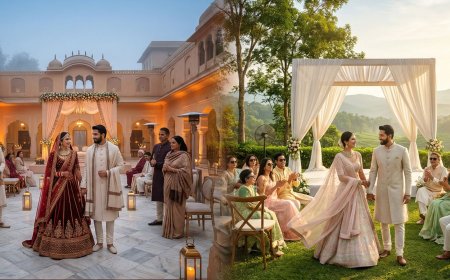
The Mangalsutra is not jewellery — it is a declaration. The moment the groom ties the sacred black and gold thread around his bride's neck, two lives formally become one, witnessed by fire, family, and three thousand years of unbroken tradition. For NRI families carrying this ceremony across oceans, the Mangalsutra is the single most visible symbol of a marriage that refuses to be diminished by distance.
You grew up watching your mother touch it before she left the house every morning. Not consciously — the gesture was so automatic it had become invisible, the way breathing is invisible. A brief, instinctive touch to the black beads at her throat, the same beads your father had tied there on their wedding day, in a village or a city or a mandap that existed before you did. You did not understand what it meant when you were small. You understood it was important.
Now you are planning your own wedding — in Melbourne, in Manchester, in Mississauga — and the Mangalsutra is on your list. Not because anyone told you it had to be. Because you watched your mother touch those beads ten thousand times across a childhood, and you want that same quiet anchor for your own life. You want the weight of it at your throat. You want the specific, irreplaceable meaning of something your husband tied there himself, in front of everyone who matters, with his own hands.
This guide is for that bride. For the NRI family that understands the Mangalsutra is not an accessory to the wedding — it is the wedding made visible and worn every day thereafter.
🌟 DID YOU KNOW?
The Mangalsutra [sacred marriage thread] has been documented in Indian literature and temple sculpture since at least the 6th century CE, with references appearing in the Puranas [ancient Hindu texts] and in the poetry of the Sangam period in Tamil literature — making it one of the oldest continuously worn symbols of marriage in human civilisation.
The design of the Mangalsutra varies so significantly across India's regional communities that a trained eye can identify a woman's state, community, and even sub-caste from her Mangalsutra alone — a Maharashtrian Vati design is entirely distinct from a Tamil Thaali, which looks nothing like a Rajasthani Mangalsutra or a Gujarati Mangalsutra, making it one of the most regionally diverse ritual objects in Indian culture.
Among NRI Hindu women in the UK, US, Canada, UAE, and Australia, the Mangalsutra has undergone a significant contemporary revival — with younger diaspora brides increasingly choosing to wear redesigned, modern Mangalsutra styles that can be worn to professional workplaces in Western countries, driving a new jewellery design industry specifically serving the NRI market.
What Is the Mangalsutra Ceremony?
Mangalsutra [from Sanskrit Mangal meaning auspicious and Sutra meaning thread] is the sacred necklace tied by the groom around the bride's neck during the Hindu wedding ceremony, symbolising the formal constitution of their marriage and the bride's transition into Suhagan [the state of being a married woman]. The ceremony of tying the Mangalsutra — Mangalsutra Dharanam [the wearing of the auspicious thread] — is considered in many Hindu traditions to be the single most decisive moment of the wedding, the point at which the marriage is irrevocably made.
The Mangalsutra itself varies significantly by regional tradition but is most commonly constructed from black beads strung on a gold chain or yellow thread, with a gold pendant at the centre whose design is community-specific. The black beads — Kala Moti [black pearls or beads] — are not decorative. In Hindu belief, black is the colour that absorbs and neutralises negative energy, and the beads are understood to protect the husband's life and wellbeing by absorbing any malevolent forces directed at the couple. The gold represents Lakshmi [the goddess of prosperity] and the auspiciousness she brings to a new household.
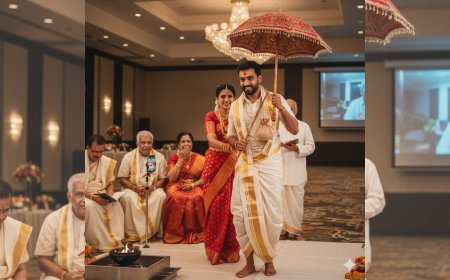
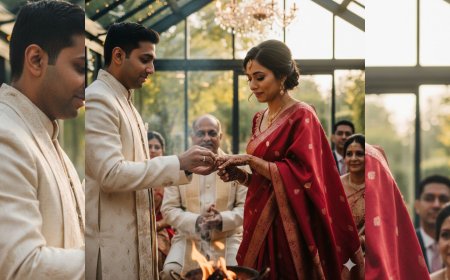
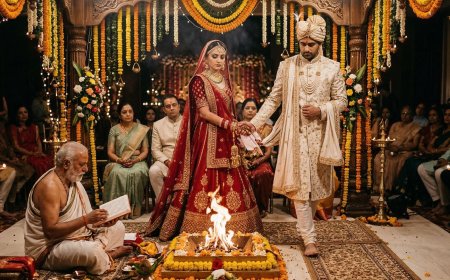
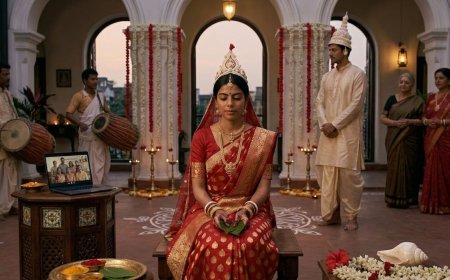
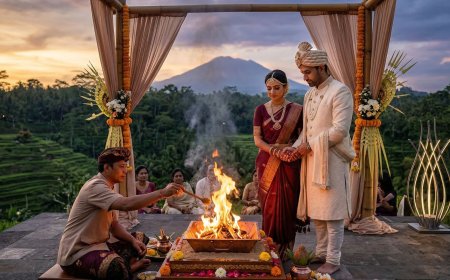
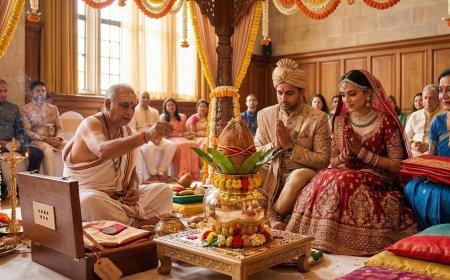
The ceremony occurs near the culmination of the Vivah [wedding ceremony], typically following the Saat Pheras [seven sacred circumambulations] or, in South Indian traditions, as part of the central ceremony sequence. The groom ties the Mangalsutra around the bride's neck in three knots — each knot representing a distinct dimension of the marital bond: Sharir [body], Mann [mind], and Atma [soul]. In many traditions, the groom's mother or a senior female relative assists with the tying or places the Mangalsutra around the bride's neck first before the groom completes the knots, symbolising the bride's formal acceptance into the groom's family.
The mantra [sacred verse] recited during the tying is specific to each regional tradition, but its essence is universal: I tie this auspicious thread around your neck. May you live long. May this bond protect us both.
Community Comparison Table
| Community/State | Local Name | Key Design Features | How NRIs Abroad Adapt It |
|---|---|---|---|
| North Indian (General Hindu) | Mangalsutra | Black beads on gold chain; central gold pendant; groom ties three knots | Modern pendant designs worn to Western workplaces; ordered from Indian jewellers abroad or brought from India |
| Maharashtrian | Mangalsutra / Vati | Two strands of black beads with specific Vati (bowl-shaped) gold pendant; deeply community-specific design | Vati design sourced from Maharashtrian jewellers in cities like Leicester and New Jersey; community goldsmith consultations online |
| Tamil (Hindu) | Thaali / Thirumangalyam | Region and community-specific gold pendant on yellow turmeric-dyed thread; tied by groom during Maangalya Dharanam | Thaali designed by family goldsmith in Chennai and brought abroad; Tamil Vadhyar recites specific Maangalya Mantra |
| Telugu | Mangalasutramu / Thaali | Similar to Tamil tradition; community-specific gold pendant; yellow thread used | Pendant brought from Hyderabad or ordered from Telugu community jeweller; ceremony follows Telugu Vedic sequence |
| Kannada | Mangalasutra / Thaali | Black beads with community-specific gold pendant; tied with specific Kannada mantras | Sourced from Kannada community jewellers; modern designs available from NRI jewellery brands |
| Gujarati | Mangalsutra | Black beads on gold chain; pendant design varies by community; three-knot tying tradition | Contemporary designs chosen; sourced from Gujarati jewellers in Wembley, Toronto, or Houston |
| Rajasthani | Mangalsutra | Black beads; community-specific pendant; silver sometimes incorporated | Traditional design brought from Jaipur; modern adaptations ordered from NRI jewellery designers |
| Bengali (Hindu) | Loha / Shakha-Pola | Iron bangle (Loha) and white conch shell bangle (Shakha) are primary marriage symbols; Mangalsutra less central | Shakha-Pola sourced from Bengali shops in London and Toronto; Loha bangle obtained from Bengali jewellers |
| Kashmiri Pandit | Dejhoor | Unique gold earring worn by married Kashmiri Pandit women rather than a necklace thread; community-specific | Dejhoor designed by Kashmiri community jewellers; worn in addition to contemporary Mangalsutra in many diaspora families |
| Punjabi | Mangalsutra | Black beads on gold chain; less ritually central than in South Indian traditions but widely worn | Modern designs preferred; sourced locally or brought from India; worn as both cultural symbol and contemporary jewellery |
The Meaning Behind the Ritual
In the Hindu philosophical framework, the Mangalsutra operates on multiple simultaneous levels — protective, symbolic, theological, and social — and the depth of its meaning is precisely why it has survived unchanged across millennia.
At its protective level, the black beads embody the ancient Indian understanding of Nazar [the evil eye] — the belief that concentrated negative attention, whether intentional or unconscious, can cause harm to those it lands upon. A newly married couple is considered particularly vulnerable to Nazar because they are at the peak of happiness and therefore the peak of human visibility. The black beads absorb and neutralise this energy before it reaches the couple, functioning as a permanent, wearable kavach [protective shield].
At its theological level, the Mangalsutra represents the couple's participation in Grihastha Dharma [the sacred duty of the householder], the stage of life in which two individuals create a home, raise children, and sustain the social fabric of the community. The thread is not merely a symbol of love — it is a symbol of responsibility, of the specific and weighty commitment that a Hindu marriage entails.
At its social level, the Mangalsutra communicates the bride's status within her community — not as subordination but as identity. A woman who wears her Mangalsutra carries with her a visible declaration of the life she has chosen and the family she belongs to.
The Mangalsutra says: I am loved enough to be protected, committed enough to be bound, and proud enough to wear the evidence of both.
Doing the Mangalsutra Ceremony Abroad: The Practical Reality
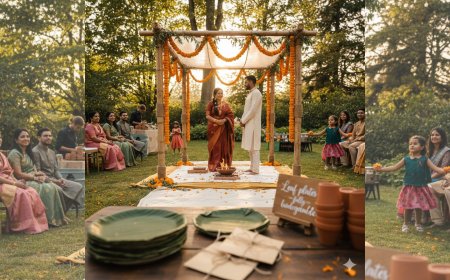
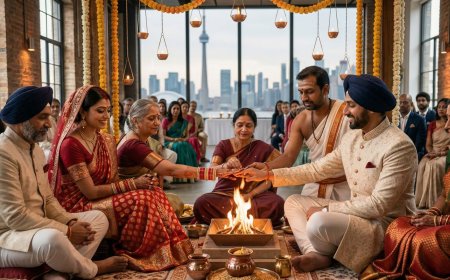
The Mangalsutra ceremony itself — the tying — requires no special venue adaptations and no fire, which makes it one of the most straightforwardly performable Indian wedding rituals in any diaspora setting. The complexity lies in the preparation, particularly in sourcing the correct Mangalsutra design for your community tradition.
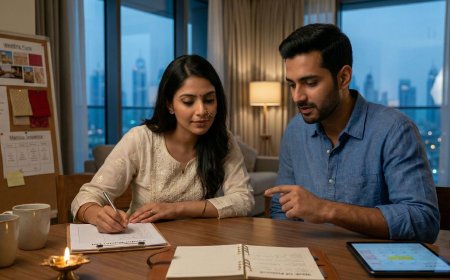
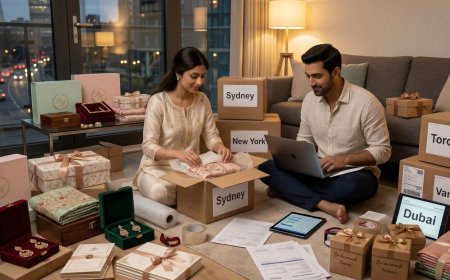
Sourcing the Mangalsutra is the first and most important task — and it must be done months before the wedding, not weeks. The reason is specificity. A Maharashtrian Vati Mangalsutra is not the same object as a Tamil Thaali, which is entirely different from a Gujarati or North Indian design. If your family's tradition requires a specific regional design, a generic jeweller — however skilled — may not be able to produce the correct item. Your first step is to consult your mother, your grandmother, or the senior women of your family to establish exactly which design your tradition uses, and then to find a jeweller who either specialises in that community's designs or can be briefed precisely.
In London, Wembley's Ealing Road has multiple Indian jewellers who carry a wide range of community-specific Mangalsutra designs and can custom-make to specification — start your search here and allow at minimum eight weeks for custom work. The Tooting area has Tamil community jewellers specifically equipped for Thaali commissions. In Toronto, the jewellers along Gerrard Street East and in Brampton cover North Indian and Gujarati designs; for Tamil Thaali, contact the Tamil community jewellers in Scarborough. In Houston, Hillcroft Avenue has multiple South Asian jewellers with broad regional knowledge. In Sydney, Harris Park in Parramatta has Indian jewellers experienced with NRI commissions. In Dubai, the Gold Souk in Deira is one of the finest sources of custom Indian jewellery in the world and is used extensively by NRI families for wedding jewellery commissions.
For community-specific designs that require a very particular regional goldsmith knowledge — Kashmiri Pandit Dejhoor, specific Tamil Thaali designs from particular sub-communities, certain Maharashtrian Vati variations — the most reliable approach is to commission the piece from a jeweller in the relevant region of India and bring it to your diaspora city. Many NRI families do this as a matter of preference regardless of local availability, because the Mangalsutra brought from India carries the additional emotional weight of having been made in the place the tradition comes from.
The ceremony itself requires only your pandit, the Mangalsutra, and a brief ritual preparation. Ensure your pandit knows the specific Mangalsutra Mantra for your regional tradition — this is a moment where generic will be immediately apparent to family elders. The three-knot tying takes concentration and steady hands; many pandits advise the groom to practise the tying motion beforehand on a similar thread so that the actual ceremony moment is fluid and unhurried. Your photographer should be briefed to capture this moment from multiple angles — the groom's hands, the bride's face, and the wider ceremony space — as it is the single most photographed moment of many Indian weddings.
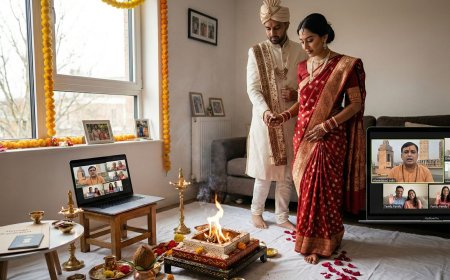
For India family on video call, the Mangalsutra tying is the moment your India grandmothers will consider most essential to witness in real time. Ensure your video call setup provides a clear, close view of the ceremony — this is not the moment for a wide-angle shot of the whole mandap. Position a dedicated camera or device to capture the tying closely, and have your videographer manage this specifically rather than leaving it to chance.
Doing the Mangalsutra Ceremony as a Destination Wedding in India
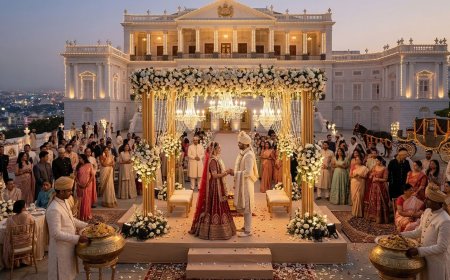
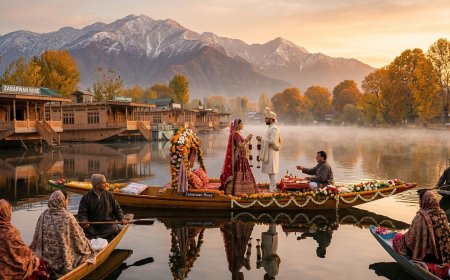
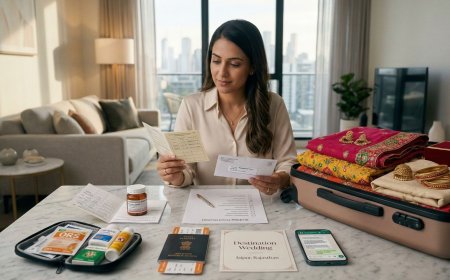
For NRI brides returning to India for their wedding, the Mangalsutra ceremony carries an additional layer of resonance — the possibility of commissioning and receiving the piece in the city or region where the design originated.
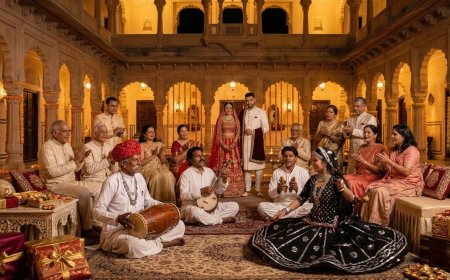
For Tamil brides, Chennai's T. Nagar jewellery district is one of the finest sources of Thaali craftsmanship in the world, with generations of goldsmiths who know the specific designs for each Tamil sub-community. Madurai and Coimbatorealso have excellent community-specific jewellers. For Maharashtrian brides, Pune and Mumbai's Zaveri Bazaar offer the finest Vati Mangalsutra commissions. For North Indian and Rajasthani families, Jaipur's Johari Bazaar is India's most celebrated jewellery market, with craftspeople whose families have been making wedding jewellery for centuries.
When briefing your pandit in India as an NRI returnee family, be explicit about your specific Mangalsutra Mantra tradition and the three-knot tying sequence your family follows. Arrange for a bilingual family member or your wedding coordinator to provide English commentary for any non-Indian guests during the ceremony — the moment of tying, when explained clearly, is one that moves international guests deeply.
What You Need: Mangalsutra Ceremony Checklist
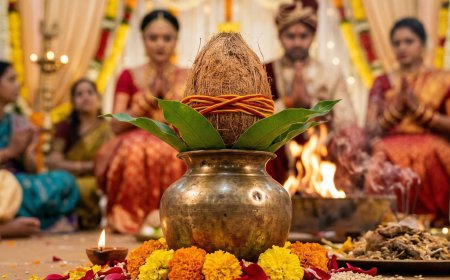
Ritual Items The Mangalsutra itself (commissioned and collected well in advance), a small puja thali [ritual plate] to present the Mangalsutra on before tying, kumkum, turmeric, fresh flowers, a small diya, and any additional community-specific items your pandit specifies for the Mangalsutra Dharanam sequence.
People Required A qualified pandit familiar with your regional tradition's specific Mangalsutra Mantra, the groom (who must practise the tying in advance), the groom's mother or senior female relative for the tradition of initial placement in applicable communities, a dedicated close-up camera operator for this specific moment, and a dedicated video call coordinator for India family.
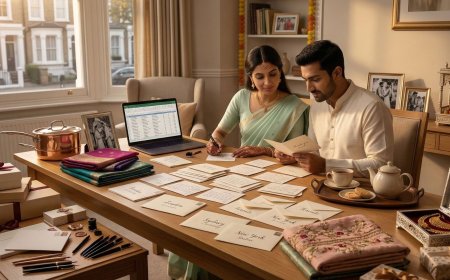
Preparation Steps Commission or source the Mangalsutra at minimum three months before the wedding. Confirm the design with senior family women before commissioning. Practise the three-knot tying with your pandit or at home on a similar thread. Brief your photographer on the specific angles required for this moment. Set up a dedicated close-view video stream for India family. Request the specific Mangalsutra Mantra from your pandit and confirm it matches your family's tradition.
NRI.Wedding's pandit directory, Indian jewellery vendor network, and ceremony planning checklists connect you to verified professionals across the UK, US, Canada, UAE, and Australia — ensuring your Mangalsutra ceremony is conducted with the full cultural integrity it deserves.
5 Questions NRI Couples Always Ask About the Mangalsutra
Can the Mangalsutra be a modern design that I can wear to work in a Western professional environment?
Absolutely — and this is one of the most significant developments in NRI wedding culture over the past decade. A thriving industry of NRI-focused jewellery designers now creates Mangalsutra designs that honour the traditional black bead and gold structure while adapting the pendant and chain length for Western professional settings. These designs are worn comfortably under work attire, passed as contemporary necklaces to non-Indian colleagues, and yet carry the full symbolic meaning of the traditional piece. The black beads and gold remain — the adaptation is in proportion and pendant design. Consult both your family's senior women and a contemporary Indian jewellery designer to find the balance that works for your life and your tradition.
My partner is not Hindu. Does the Mangalsutra still carry the same meaning if they don't share the religious belief behind it?
The Mangalsutra's meaning is not contingent on theological pre-existing belief — it is constituted by the intention of the person who ties it and the person who receives it. Many non-Hindu grooms who tie a Mangalsutra describe the moment as one of the most serious and meaningful of their lives, precisely because the physical act of tying three knots around someone's neck with your own hands is an unmistakably deliberate gesture of commitment. Brief your partner thoroughly on what each knot represents — body, mind, and soul — so that the tying is conscious and intentional. An intentional Mangalsutra, tied by hands that understand what they are doing, carries every ounce of its traditional meaning.
How do we find a pandit who knows our specific community's Mangalsutra Mantra?
The Mangalsutra Mantra is one of the most community-specific elements of the Hindu wedding ceremony, and getting it right matters enormously to family elders. When booking your pandit, specify not just your regional tradition but your sub-community and gotra if known — a Tamil Iyer Mangalsutra Mantra differs from a Tamil Iyengar one, and a Maharashtrian Deshastha mantra differs from a Koknastha one. NRI.Wedding's pandit directory lists priests by community tradition specifically to solve this problem. Conduct a video call with your pandit before booking and ask them directly about the Mangalsutra Mantra sequence — an experienced, community-specific priest will be able to discuss this immediately and in specific detail.
What happens to the Mangalsutra if the marriage ends? Is there a ritual for this?
This is a question NRI couples ask with increasing frequency and it deserves a direct, compassionate answer. In traditional practice, the Mangalsutra is removed following the death of the husband, and in some communities following divorce, with specific rituals in both cases. Contemporary NRI families navigate this with significant variation — some follow traditional practice, others make entirely personal decisions. If this question is relevant to your situation, the most appropriate person to consult is a trusted pandit from your community tradition who can speak to your specific practices with knowledge and sensitivity. NRI.Wedding's pandit network includes priests experienced in supporting families through all of life's transitions with cultural integrity and human compassion.
Should the Mangalsutra be worn every day, or is it ceremonial?
In traditional Hindu practice, the Mangalsutra is worn every day — it is not ceremonial jewellery to be brought out for special occasions. It is the visible, daily expression of the marriage. However, many NRI women in professional Western environments adapt their practice — wearing the full traditional Mangalsutra at home and at Indian community events, and wearing a more discreet modern design in professional settings. Some women wear it consistently and simply let it become part of their visible identity in all settings — an increasingly common choice among NRI women of the current generation who are proud to make their cultural identity visible in their professional lives. The decision is ultimately personal, but it is worth making consciously rather than by default.
The Emotional Angle
Nobody prepares you for what it feels like when his hands are at your neck. Not romantically — though that too — but with the specific weight of what those hands are doing. Three knots. One for your body, one for your mind, one for your soul. He is tying you to him, and you are letting him, in front of everyone who has ever loved either of you, and the pandit is reciting words that have been recited at this exact moment for a thousand years.
For NRI brides, this moment carries layers that are hard to articulate to someone who has not lived the specific experience of carrying a culture across a border. Because the Mangalsutra around your neck is not just your marriage — it is your mother's marriage, your grandmother's marriage, the marriages of every woman in your lineage who wore black beads and gold against her skin and touched them automatically every morning before leaving the house.
You are in a hotel in Harrow or a hall in Houston, and the man tying the thread grew up three streets from you in Mumbai or three thousand miles from you in another country entirely, and none of that geography matters in this moment because what is happening is older than any of it. Three knots. Your body, your mind, your soul. His hands, steady with the weight of understanding what he is doing.
The beads settle against your collarbone. The pandit continues. Somewhere on a screen, your grandmother in Varanasi sees it happen and touches her own Mangalsutra without thinking.
The gesture is automatic. It has been automatic for sixty years. Now it will be automatic for you.
A Moment to Smile
At a wedding in Melbourne last year, the groom — a software engineer from Bangalore who had practised the three-knot tying precisely eleven times on a spare thread in his hotel room the night before — arrived at the ceremony moment with full confidence. The Mangalsutra was brought forward on the puja thali. The pandit began the mantra. The groom lifted the Mangalsutra with steady hands.
He then proceeded to tie four knots. Nobody was certain when the fourth knot appeared. The pandit paused mid-mantra. The bride's mother, seated in the front row, counted quietly and held up four fingers to her daughter with an expression of resigned affection.
The bride, to her enormous credit, began laughing. The groom looked at his hands with genuine bewilderment. The pandit, after a moment's consideration, declared that the fourth knot represented the couple's future children and continued the mantra seamlessly.
The Mangalsutra remained with four knots. It is, the bride reports, still there. She considers it perfect.
Quotes From the Diaspora
"I had the Thaali made in T. Nagar in Chennai and carried it to London in my hand luggage, separately from everything else, in its own small cloth bag. When the Vadhyar tied it, I thought about my grandmother wearing hers for fifty-three years. I thought about my mother wearing hers for thirty-one. I thought: this is the thread that connects all of us. I have not taken it off since that day." — Deepa Subramaniam, Tamil Brahmin bride, originally from Chennai, now in London
"My daughter-in-law is from New Zealand. Her family are not Indian, not Hindu. When my son tied the Mangalsutra, I watched her face. She was not performing emotion — she was genuinely moved. Afterwards she told me she had never been given something that meant so much by someone who meant so much. She wears it every day. She asked me what the black beads do. I told her they protect him. She said: then I will never take it off." — Sudha Nair, Malayali mother of the groom, originally from Kochi, now in Mississauga
"I redesigned my Mangalsutra with an Indian jeweller in Wembley — kept the black beads and gold, changed the pendant to something I could wear at my law firm without explanation. Some of my colleagues know what it is. Most don't. I know what it is. Every morning when I put it on, I know exactly what it means and who tied it there. That is enough." — Reena Sharma, North Indian bride, originally from Delhi, now in London
Your Thread Travels With You
The Mangalsutra is the most enduring object of an Indian wedding — everything else is taken off, stored away, or gradually transformed by time. But the Mangalsutra stays. It travels with the bride through every ordinary morning and every extraordinary day of the life that follows the wedding. For NRI women, it travels further than most — through customs halls and boardrooms and school gates and all the spaces where Indian culture and Western life exist in the same breath.
NRI.Wedding supports families across the UK, US, Canada, UAE, and Australia with a curated Indian jewellery vendor network for community-specific Mangalsutra commissions, verified regional pandits who know the correct Mangalsutra Mantra for your tradition, experienced NRI wedding photographers briefed to capture this specific moment with the reverence it deserves, and planning checklists that ensure every element of your ceremony is prepared with full cultural integrity.
Commission your Mangalsutra early. Find your pandit. Practise the knots.
The thread is only three knots long — and it lasts a lifetime.
This article explores the Mangalsutra ceremony and its regional variations across Indian communities — including Tamil Thaali, Maharashtrian Vati, Telugu Mangalasutramu, Kashmiri Dejhoor, and Bengali Shakha-Pola — with practical planning guidance for NRI families in the US, UK, Canada, UAE, and Australia.
What's Your Reaction?
 Like
0
Like
0
 Dislike
0
Dislike
0
 Love
0
Love
0
 Funny
0
Funny
0
 Angry
0
Angry
0
 Sad
0
Sad
0
 Wow
0
Wow
0