




























































Micro-Weddings in India: Planning for 20 Guests or Fewer — The Complete NRI Wedding Planning Guide
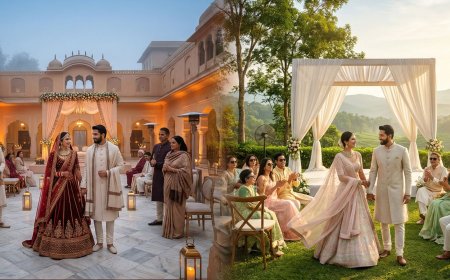
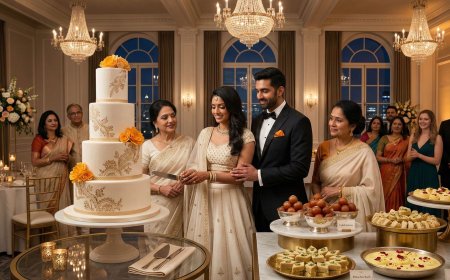
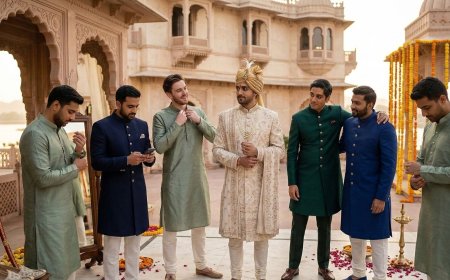
The couple initially planned a 220-guest wedding, but when they listed the people they were truly excited to celebrate with, the number was just nineteen. After months of family conversations, the final guest list became eighteen—immediate family, a few closest friends, and the officiating priest. The wedding they envisioned and the one they had were finally the same. A micro-wedding, with twenty guests or fewer, isn’t a compromise or an elopement; it’s a celebration designed around meaningful presence rather than obligation. This guide helps NRI couples plan micro-weddings, covering guest selection, family conversations, venues, intimate ceremonies, curated dining, and how smaller scale creates a deeply personal wedding experience.

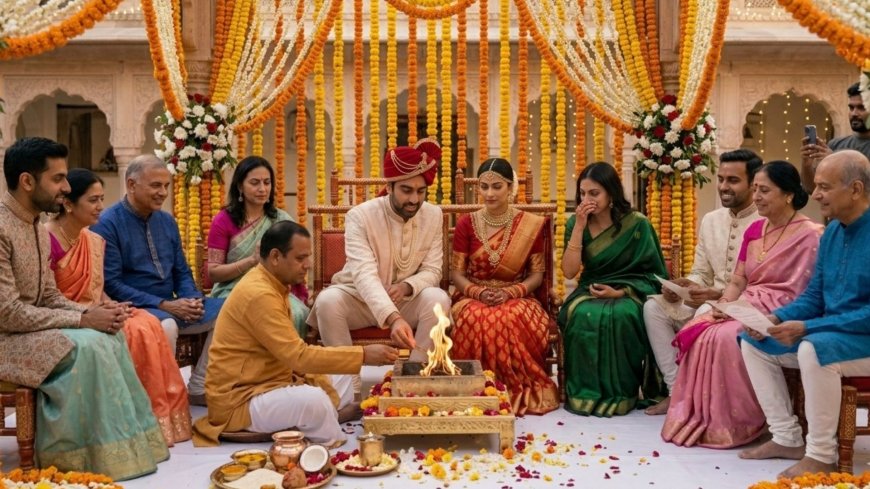
Micro-Weddings in India: Planning for 20 Guests or Fewer
The NRI couple's complete guide to the smallest and most intentional wedding format — understanding what the micro-wedding genuinely offers, what it requires, and how to plan the occasion that is specific, intimate, and entirely itself rather than a large wedding with fewer people
The Wedding That Was Only the People Who Mattered Most
The couple had originally planned a wedding for two hundred and twenty guests. The venue was booked. The caterer had been contacted. The preliminary guest list — which both families had contributed to — had reached two hundred and twenty before anyone had added the couple's own friends.
Then they sat down together one evening and had a conversation that changed everything.
The groom said: I know approximately forty of these people. The bride said: I know fewer. They looked at the list together and identified the guests whose presence they were genuinely anticipating — the people whose specific company at this specific occasion they were looking forward to rather than simply accepting as socially necessary.
The number was nineteen.
The conversation that followed was not easy. It involved two families whose expectations about the wedding's scale were deeply embedded in their understanding of what a wedding was — what it communicated to the community, what it owed to the extended family relationships whose reciprocal invitations had accumulated over decades. It involved the specific social arithmetic of the Indian wedding guest list, where the invitation to one branch of the family implies the invitation to another, and the exclusion of a specific person implies a specific message about their standing in the family's regard.
The conversation took three months. At the end of it, the couple had a guest list of eighteen people — both immediate families, three of the couple's closest friends each, and the officiating Pandit. They had cancelled the venue booking, released the caterer, and begun planning a different kind of wedding.
The wedding they planned and the wedding they had were the same event — something that happens less often than it should.
This guide is for the couple considering that conversation.
What the Micro-Wedding Actually Is
The Definition
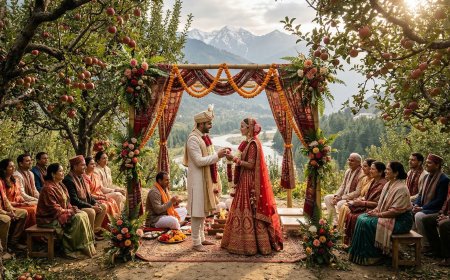
The micro-wedding, for the purposes of this guide, is a wedding with twenty guests or fewer — the number that allows every person present to have a genuine, individual relationship with the couple, that fits in a single room without amplification, and that the couple can speak to personally on the day without sacrificing the ceremony's momentum.
Twenty is not a magic number. The wedding of twenty-two that feels intimate is more a micro-wedding than the wedding of sixteen that feels managed and formal. The number is an indicator of the format's character rather than a strict boundary.
The character of the micro-wedding: every guest is specifically chosen. Every person in the room has a specific reason for being there that the couple can articulate. The occasion is designed around the specific people present rather than around a guest list that has grown to accommodate social obligations. The wedding is experienced by both the couple and the guests as an occasion for genuine presence rather than managed attendance.
What It Is Not
The micro-wedding is not the elopement — the ceremony of two, or two and a witness, with no assembled guests. The micro-wedding has a small community rather than no community. It is the specific difference between a private act and an intimate shared occasion.
The micro-wedding is not the destination wedding that happened to have few attendees because the destination made attendance difficult. The micro-wedding is specifically designed to be small — the guest count is a deliberate choice rather than a constraint imposed by geography or logistics.
The micro-wedding is not the wedding that was supposed to be large and was reduced by circumstance — the pandemic reduction, the venue change that limited capacity. The micro-wedding whose small size is a compromise rather than a choice has a different character from the wedding whose small size is the specific vision.
The Case For: What the Micro-Wedding Genuinely Offers
The Presence
The most significant thing the micro-wedding offers is the presence that scale removes. The wedding of two hundred guests is an occasion that the couple experiences from a distance — they are the subjects of the occasion rather than participants in it. They move through a receiving line, they sit at a head table elevated above the assembled guests, they are managed through a programme by a coordinator who ensures they reach every required guest in the required order.
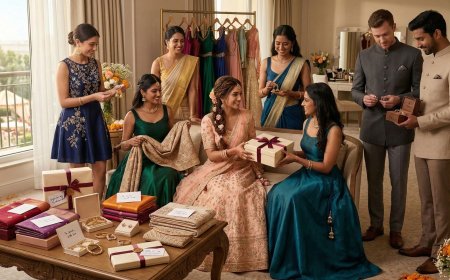
The wedding of eighteen guests is an occasion that the couple experiences from within. They sit at the same table as their guests. The conversation across the meal is the conversation of people who know each other. The moment after the ceremony — when the couple has just been married and the people who love them most are in the same room — is a moment whose specific quality is available only when the room is small enough for everyone to be physically present to each other.
The couple who has had a micro-wedding consistently describes the specific quality of the day's presence — the feeling of having actually been at their wedding rather than having moved through it — as the thing that distinguished the experience from what they imagined a large wedding would have been.
The Specificity
The micro-wedding is the occasion where every element can be specifically chosen for the specific people who are present rather than designed for a generic guest of a certain cultural and demographic profile.
The menu that includes the specific dish the groom's grandmother has been making for him since childhood. The ceremony reading chosen because it is specifically meaningful to the bride's closest friend, who is hearing it for the first time. The flowers arranged by the bride's mother, who has been a gardener for thirty years, rather than by a florist. The specific song played during dinner because it was playing the night the couple first said they loved each other.
These specific choices are possible at a micro-wedding because the small guest count makes them meaningful — they land with the people who share the specific knowledge that makes them specific. At a wedding of two hundred, they would be invisible.
The Financial Reallocation
The micro-wedding's dramatically reduced guest count has a specific financial consequence: the per-guest cost that goes into catering, seating, favors, and accommodation for two hundred guests is reallocated to a much smaller number.
The financial reallocation is not necessarily a saving — many micro-wedding couples spend a similar total amount to a larger wedding, but the allocation is different. The catering for eighteen people at a restaurant or a private dining room can be a genuinely extraordinary meal. The accommodation can be a property of exceptional quality rather than a hotel block adequate for two hundred. The florals can be elaborate and personal rather than the mass production that scale requires.
The micro-wedding that asks what we would choose if we were designing the perfect occasion for these specific eighteen people, rather than what we need to provide to be adequate for two hundred, produces a different answer in almost every vendor category.
The Ceremony Quality
The ceremony whose audience is eighteen people is a different ceremony from the one whose audience is two hundred. The Pandit's recitation heard by eighteen people in a small, still room is received differently from the same recitation amplified through a sound system into a hall of two hundred. The couple's vows spoken at a volume appropriate for a sitting room are an intimate declaration. The same words amplified into a ballroom are a performance.
The micro-wedding's ceremony is the ceremony where the specific sacredness of the occasion can be most fully experienced — because the intimate scale allows the sacred to be present rather than managed.
The Case Against: What the Micro-Wedding Genuinely Costs
The Family Conversation
The Indian family's expectations about the wedding's scale are not superficial preferences. They are rooted in the wedding's specific social function within the community — the public declaration of the two families' union, the reciprocal acknowledgment of the relationships that have accumulated over decades, the specific communication to the community that this family's child is married.
The micro-wedding whose guest count cannot include the extended family's network — the second cousins, the father's business colleagues, the mother's college friends — is perceived, in some family contexts, as a specific statement about the value of those relationships. The couple who chooses a micro-wedding must be prepared for the specific family conversations that this choice generates — not the conversation about whether to have a small wedding, but the conversation about what the small wedding means for the family's standing and relationships.
This conversation is navigable. It has been navigated by every NRI couple who has chosen a micro-wedding in an Indian family context. But it requires specific honesty, specific patience, and the specific willingness to hold a boundary that the family will test.
The Guest Selection Problem
The selection of eighteen guests from an extended family and social network of two hundred is a specific social act with specific consequences. Every person who is not invited to the micro-wedding knows they were not invited. The community that is not represented at the micro-wedding registers its absence.
The couple who has a large social network — who has many close friends, whose families are extensive and interconnected — faces a specific painful selection problem. Who is in the eighteen? What principle governs the selection? The couple whose selection principle is "only the people we would specifically miss if they were not there" is applying a criterion that some family members will not accept as sufficient justification for their exclusion.
The guest selection problem is the primary practical difficulty of the micro-wedding and the reason that many couples who want a micro-wedding compromise to a larger number — the forty or fifty guest "intimate wedding" that is small by Indian wedding standards but that is not a micro-wedding in the specific sense this guide addresses.
The Community Event Alternative
The Indian wedding's community function — the celebration that the broader network participates in, the occasion that fulfills the reciprocal social obligations of decades of attending other people's weddings — does not disappear because the couple has chosen a micro-wedding. It is simply not fulfilled by the micro-wedding.
Some couples address this by hosting a separate, larger celebration — a reception, a party, an open house — after the micro-wedding, to which the broader community is invited and at which the marriage is celebrated publicly. This solution separates the intimate ceremony from the community celebration, allowing both to be what they are rather than one event trying to serve both functions.
The couple who chooses a micro-wedding without any broader celebration is making a specific choice about the community function — they are declining to fulfill it, or deferring it indefinitely — and must be clear with themselves and their families about this choice.
The Planning Framework: What Changes at This Scale
The Venue
The micro-wedding's venue requirement is entirely different from the large Indian wedding's venue requirement — and the difference opens options that the large wedding cannot access.
The private residence:
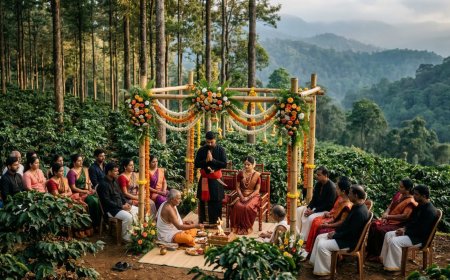
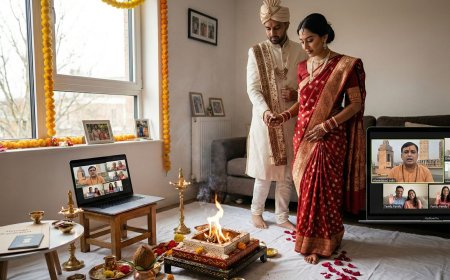
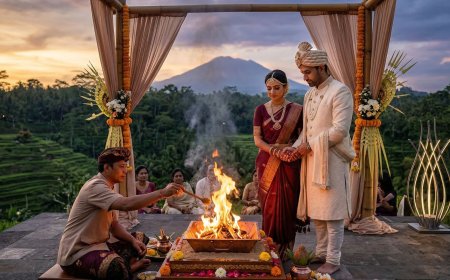
The private home — the family home in India, the rented villa, the boutique property taken on an exclusive basis — is the most intimate micro-wedding venue available. The ceremony and the meal that take place in a space that feels domestic rather than institutional have a specific warmth that the dedicated wedding venue cannot produce.
For NRI couples whose India-based family has a home appropriate for a gathering of eighteen, the family home is a specific and emotionally resonant venue choice — the wedding in the place where the couple's families have actually lived, surrounded by the specific objects and the specific atmosphere of that life.
The boutique property:
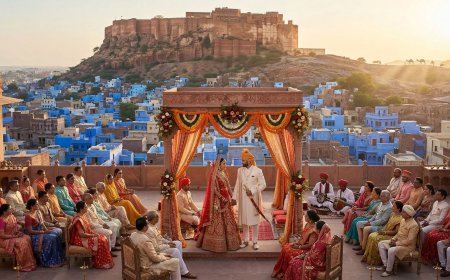
The boutique hotel, the heritage haveli taken exclusively, the small luxury property that becomes entirely the wedding party's for the duration — this is the micro-wedding venue that provides the intimacy of a private residence with the service infrastructure of a hospitality property. The boutique property for eighteen guests is a genuinely exclusive experience — the property that would be one venue among many vendors for a large wedding becomes the entirely private domain of the micro-wedding.
The restaurant or private dining:
The exceptional restaurant with a private dining room — or the restaurant taken exclusively for an evening — is the micro-wedding venue whose specific advantage is the food. The restaurant whose chef is cooking for eighteen people rather than catering for two hundred produces a different meal — more precise, more personal, more ambitious — and the micro-wedding that is held at a genuinely extraordinary restaurant is using its scale to access a culinary experience that the large wedding cannot.
What does not work:
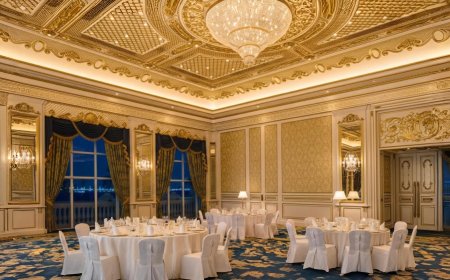
The large wedding venue — the hotel ballroom, the wedding hall, the event space designed for two hundred — used for eighteen people is a space that makes the small gathering feel insufficient rather than intimate. The micro-wedding in the wrong venue communicates the same thing as a dinner party held in a conference room: the occasion has not been matched to its space.
The Ceremony
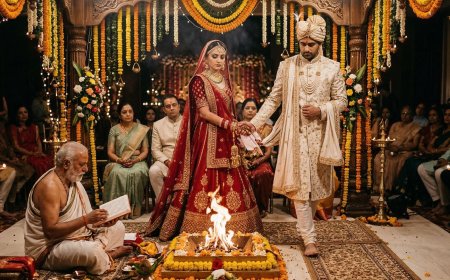
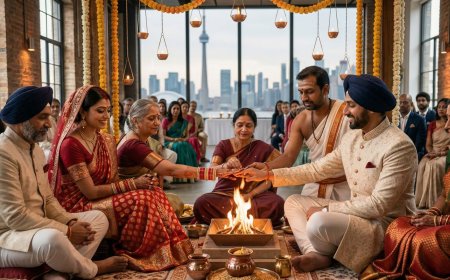
The micro-wedding ceremony can be shorter than the large wedding ceremony — not because the rituals are abbreviated but because the specific management overhead of a large ceremony is absent. There is no sound system to calibrate, no seating of hundreds of guests, no management of a large officiant team. The ceremony proceeds at the pace the ritual requires rather than the pace a large, formally managed occasion imposes.
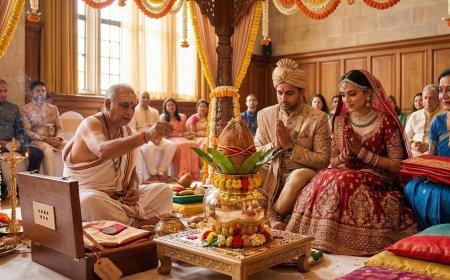
The Pandit or the officiant for a micro-wedding should be specifically briefed on the occasion's scale and character — and should understand that the ceremony is being conducted for eighteen people in an intimate space rather than for two hundred in a formal hall. The recitation that is appropriate for the large hall may be too amplified, too formal, for the intimate space. The ceremony that is calibrated to the micro-wedding's scale — more personal, more directly addressed to the couple, more comfortable with the specific presence of eighteen people who know each other — is a different ceremony from the ceremonially correct but scale-inappropriate alternative.
The Catering
The catering at a micro-wedding is the element most transformed by the scale reduction — because the difference between feeding eighteen people and feeding two hundred is not merely proportional. It is qualitative.
The options that scale opens:
A private chef — engaged for the occasion, cooking specifically for eighteen people, producing a meal that is genuinely personal and genuinely extraordinary rather than the catered meal that is adequate for a large group — is accessible at the micro-wedding's scale and inaccessible at the large wedding's scale.
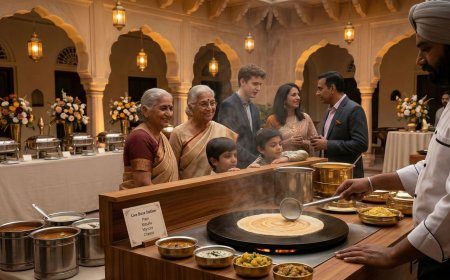
The family cooking that is part of the cultural tradition — the grandmother who makes the specific dish that is the family's specific expression of celebration — is possible for eighteen people and impossible for two hundred. The micro-wedding where some portion of the food comes from the family's own kitchen is the wedding whose food carries the specific meaning that professionally catered food cannot.
The tasting menu format — a multi-course meal where each course is a specific, carefully chosen dish rather than the spread of a large catered meal — is the format that eighteen people can be served and two hundred cannot.
The service format:
The micro-wedding's eighteen guests do not need the service infrastructure of the large wedding. The buffet that serves a crowd, the stations that prevent bottlenecks, the serving staff ratio that manages the logistics of a large meal — none of this is required. The meal served at a single table — or two tables — with the intimacy of a private dinner is the service format that the micro-wedding's scale makes available.
The Photography
The micro-wedding's photography requirement is different from the large wedding's — not because it is less important but because the intimacy of the scale allows a different approach.
The documentary approach:
The photographer who works in a documentary style — who moves through the occasion without directing it, who captures the specific authentic moments rather than arranging them — is the photographer most appropriate for the micro-wedding. The intimacy of eighteen people in a small space, the absence of the staging and the management that the large wedding requires, creates an environment where the documentary approach produces its best work.
The single photographer:
The large wedding needs multiple photographers to cover the simultaneous events, the separate spaces, the hundred simultaneous moments. The micro-wedding's single event in a single space is fully covered by one excellent photographer. The budget that would have funded three photographers at the large wedding funds one extraordinary photographer at the micro-wedding.
The unplugged ceremony:
The micro-wedding's ceremony is the ceremony where the unplugged request — asking guests not to photograph during the ceremony itself — is most easily honored and most meaningfully observed. Eighteen people can be asked to be fully present at the ceremony without the mediation of a phone screen. The photographs can be taken before and after.
The Florals and Décor
The micro-wedding's florals and décor are transformed by the scale — because the budget and the creative attention that would be distributed across a large venue and twenty-three tables are concentrated on a single intimate space.
The micro-wedding's single table centrepiece can be genuinely extraordinary rather than adequate. The ceremony space that needs to be beautiful for eighteen people can be more elaborate, more personal, and more specific than the ceremony space designed for two hundred. The boutique property whose every surface the couple has considered — whose specific corners and specific light and specific atmosphere have been engaged with individually — is an entirely different aesthetic experience from the large venue whose zones have been decorated for crowd management.
The micro-wedding is also the occasion where non-professional florals — family members who arrange flowers, the garden of the venue whose blooms are cut and arranged by someone who loves the couple — are appropriate and genuinely beautiful rather than insufficient.
The Programme: What Eighteen People Can Do That Two Hundred Cannot
The Ceremony With Participation
The micro-wedding ceremony can include the specific participation of every guest — not as a passive audience but as active witnesses and participants. The ceremony where each guest is invited to say one specific thing to the couple — a blessing, a wish, a specific memory — is a ceremony that only works at the micro-wedding's scale. Eighteen such moments create a specific ceremony of collective witness. Two hundred such moments are not possible.
The Shared Meal
The wedding meal at a single long table — where the couple sits among their guests rather than elevated above them — is the specific format whose emotional quality is entirely different from the round-table reception. The conversation that flows across a single table, the specific quality of being at dinner with the people one loves most, the absence of the logistical management that the large reception requires — these are the specific gifts of the micro-wedding's meal format.
The Specific Toasts
The large wedding's speeches are managed — three to four designated speakers with allocated times, a programme that moves between elements. The micro-wedding can have as many toasts as there are people who want to speak — because eighteen people's toasts are not an imposition on a programme but a natural expression of a dinner party's conversation. The spontaneous toast, the specific memory spoken aloud, the moment when someone says the thing that everyone knows but that nobody has said — these are possible at eighteen and not at two hundred.
The Second Day
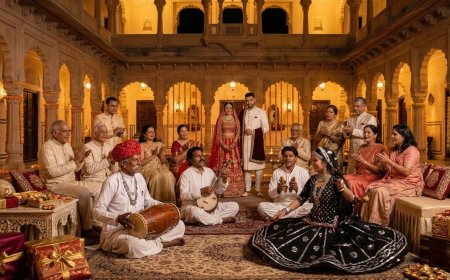
The micro-wedding's guest list — eighteen people who have come specifically to be present — justifies the specific investment of a second day. The morning-after breakfast at the boutique property. The excursion to the specific place in the wedding city that the couple loves. The afternoon that is not the wedding but is its specific continuation in the intimate company of eighteen people who are all, by the morning after the wedding, genuinely a community of people who have shared something specific together.
The NRI Micro-Wedding: The Specific Considerations
The International Guest Logistics
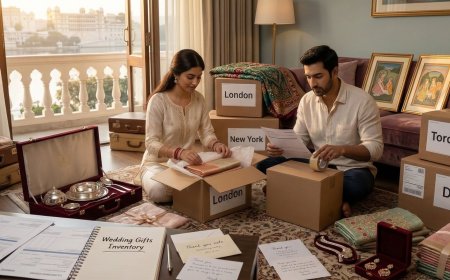
The eighteen guests at an NRI micro-wedding may include international guests — the couple's friends from London, the siblings who live in Canada — whose attendance requires the full logistics of international travel described elsewhere in this guide. At the micro-wedding's scale, these logistics can be managed with a level of personal attention that the large wedding cannot provide.
The couple who has eighteen guests can know every guest's travel details personally — can follow up individually on visas, flights, and accommodation, can be the specific point of contact for each person's specific logistical question. The personal attention that the large wedding must delegate to coordinators is something the couple themselves can provide at this scale.
The Family Reception After
The NRI couple who has a micro-wedding in India faces the specific question of the community event in their country of residence — the gathering that allows the family's and community's network in the UK, the US, or Canada to acknowledge and celebrate the marriage.
The post-wedding reception in the country of residence — planned for two to four months after the India micro-wedding — allows the intimate ceremony in India and the community celebration abroad to each be what they are rather than one event trying to serve both functions across a guest list that is too large for one and too small for the other.
The Micro-Wedding Is Not for Everyone
The micro-wedding is not the right format for every couple, and the guide that presents it as a universally superior option is a guide that has not been honest about its costs.
The couple who genuinely loves a large gathering — who finds the specific energy of many people celebrating together genuinely nourishing rather than overwhelming — is not the couple for whom the micro-wedding is the right choice. The couple who understands the Indian wedding's community function and who values that function — who wants the specific public declaration, the specific community acknowledgment, the specific occasion of the extended family gathered — is not the couple who should be persuaded that smaller is better.
The micro-wedding is the right format for the couple who has had the honest conversation — who has asked what they actually want from this occasion rather than what the convention expects them to want — and whose honest answer is: the specific people, the genuine presence, the occasion that is designed entirely for us and for the eighteen people whose specific company we are anticipating.
For that couple, the micro-wedding is not the compromise version of the Indian wedding. It is the wedding that was always theirs.
NRIWedding.com — Expert guidance for Indian weddings planned across borders.
What's Your Reaction?
 Like
0
Like
0
 Dislike
0
Dislike
0
 Love
0
Love
0
 Funny
0
Funny
0
 Angry
0
Angry
0
 Sad
0
Sad
0
 Wow
0
Wow
0