

















































Two Words. One Contract. Everything: Inside the Sacred Nikah Ceremony
The Nikah is the sacred Islamic marriage contract at the heart of every Muslim wedding — a ceremony of profound simplicity in which two people give their full, free consent to marry in front of witnesses, before God, with a mahr that is the bride's irrevocable right. Valid in any setting from a mosque to a living room, the Nikah is simultaneously an act of worship and a legal covenant. Preserved powerfully across the Muslim diaspora in the UK, USA, Canada, UAE, and Australia, this complete guide covers its jurisprudential foundations, mahr and wali requirements, civil registration considerations, and everything NRI Muslim families need to do it right abroad.


The Nikah — the Islamic marriage contract that forms the sacred, legal, and spiritual foundation of every Muslim wedding — is one of the most elegant and most profound wedding ceremonies in all of human culture. It requires no elaborate staging, no specific venue, no priestly hierarchy. It requires witnesses, consent, a mahr, and the word of God. In its simplicity is its power: a marriage in Islam is made not by spectacle but by agreement, not by performance but by intention. For Muslim NRI families from Karachi to Calgary, from Hyderabad to Houston, from Lahore to London, the Nikah is the moment around which everything else — the mehndi, the baraat, the walima — orbits. It is the centre. It is the contract. It is the beginning of everything.
You grew up understanding that the Nikah was the real moment. Not the reception with the hundreds of guests and the elaborate décor and the photographer circling the room. Not the mehndi night with the music and the laughter. Those were the celebrations around the marriage. The Nikah was the marriage itself — a moment of such specific weight and such deliberate simplicity that it could happen in a living room, in a mosque, in a garden, in a hotel suite, and it would be equally, completely valid in every one of those settings because its validity came from within itself.
You are in London or Toronto or Houston or Melbourne, and your Nikah is being planned across time zones and family WhatsApp groups and conversations about who the qazi will be and what the mahr should be and whether the Nikah will happen at the mosque or at the venue and how to make sure the ceremony reflects not just the Islamic requirement but the specific cultural tradition your family carries — Pakistani, Indian, Bangladeshi, Arab, or the particular regional Muslim tradition that makes your family's Nikah distinctly yours.
This is the Nikah. The contract that the entire structure of your wedding day is built to honour. Let's make sure it is done with everything it deserves.
🌟 Did You Know?
-
The word Nikah comes from the Arabic root meaning to join or to unite — but in Islamic jurisprudence it carries a specific legal and spiritual meaning that encompasses the entire marriage contract, not merely the ceremony. The Nikah is simultaneously a ibadat [an act of worship — one of the few human social arrangements classified as an act of worship in Islamic law] and a muamalat [a legal transaction between two parties]. This dual nature — sacred and contractual simultaneously — is what gives the Nikah its specific philosophical character: it is an agreement witnessed by God and by human beings at the same time.
-
The mahr [the mandatory gift from the groom to the bride, which is her exclusive property and cannot be claimed by any other party] is not a dowry and not a bride price — it is a specific Islamic institution with no precise equivalent in any other legal or religious tradition. The mahr is the bride's right, stipulated in the Quran, that must be agreed upon before the Nikah is valid. It can be any amount agreed between the parties — from a symbolic sum to a substantial gift — but it must be real, it must be the bride's alone, and it cannot be waived by anyone other than the bride herself. The mahr concept, like the Hindu Stridhana, makes the Islamic marriage one in which the woman enters her new life already holding something that is irrevocably, legally hers.
-
In the global Muslim diaspora — which spans every major city in the UK, USA, Canada, UAE, and Australia — the Nikah has undergone a specific and meaningful evolution. NRI Muslim families increasingly conduct two distinct Nikah ceremonies: the religious Nikah performed by a qazi [Islamic marriage officiant] or imam [mosque leader] with full Islamic ritual validity, and a separate civil marriage registration to satisfy the legal requirements of their country of residence. The sequencing of these two ceremonies — which comes first, which is the family's primary celebration — is one of the most actively discussed questions in Muslim NRI wedding planning.
What Is the Nikah?
The Nikah is the Islamic marriage contract — the ceremony through which a man and woman are joined in marriage according to Islamic law and tradition. It is governed by the Sharia [Islamic law] and the Sunnah [the practices and traditions of the Prophet Muhammad, peace be upon him] and is understood as both a sacred act and a legally binding agreement.
The Nikah has five essential elements without which it is not valid. The first is ijab and qubul [offer and acceptance] — the formal proposal of marriage and its acceptance, spoken aloud by both parties or their representatives. The second is the presence of two adult male Muslim witnesses or equivalent witnesses as specified by the madhab [school of Islamic jurisprudence] followed by the family. The third is the wali [the bride's guardian — typically her father or, in his absence, another male relative — who gives the bride in marriage on her behalf in most Sunni traditions, though the specific requirements of the wali vary between the Hanafi, Maliki, Shafi'i, and Hanbali schools]. The fourth is the mahr [the mandatory gift from the groom to the bride, agreed upon and stipulated in the marriage contract]. The fifth is the absence of any Sharia-prohibited impediment to the marriage.
The Nikah ceremony itself can be as brief as fifteen minutes or as elaborate as a family chooses to make it. At its core, the qazi or imam reads from the Quran — specifically Surah Al-Fatiha [the opening chapter] and verses from Surah Al-Baqarah and Surah Al-Nisa — delivers a brief khutba [sermon] on the sanctity of marriage in Islam, confirms the mahr amount with both parties, asks the bride's acceptance through her wali, asks the groom's acceptance directly, and declares the Nikah complete. The Nikah Nama [the written marriage contract] is then signed by the bride, the groom, the wali, and the witnesses.
The moment of the Nikah — the moment the qazi declares the marriage complete — is the moment that matters in Islamic understanding. Everything before it is preparation. Everything after it is celebration.
The Sacred Marriage Contract Across Muslim Communities
The Nikah is universal across all Muslim traditions but its cultural expression varies significantly between communities. Here is how the ceremony manifests across the major Muslim communities represented in the NRI diaspora.
| Community | Cultural Tradition | Key Variations | How NRIs Abroad Adapt It |
|---|---|---|---|
| Pakistani Muslim | Nikah with full family ceremony | Qazi leads; Nikah Nama signed; mahr agreed publicly; separate from reception | Pakistani qazi sourced in diaspora; mosque or venue; civil registration separate |
| Indian Muslim [Hyderabadi] | Nikah with Hyderabadi traditions | Specific Urdu phrases and prayers; elaborate Nikah Nama; mahr publicly announced | Hyderabadi community qazi preferred; specific traditions confirmed with family elder |
| Bangladeshi Muslim | Nikah with Bangladeshi customs | Kazi [qazi] leads; specific Bengali Muslim traditions; community gathering | Bangladeshi community kazi sourced; full community Nikah preserved |
| Arab Muslim [Gulf tradition] | Akd al-Nikah | Strict adherence to Hanbali or Maliki madhab; mahr often substantial; witnesses very specifically qualified | Arab community imam sourced; madhab requirements confirmed |
| Moroccan / North African | Aqd az-Zawaj | Maliki tradition; specific contractual elements; family elder involvement | North African community imam; specific Maliki requirements confirmed |
| Turkish Muslim | Nikah / Imam Nikahı | Turkish Hanafi tradition; imam leads; separate civil and religious ceremony | Turkish community imam sourced; civil Nüfus registration managed separately |
| Malaysian / Indonesian Muslim | Akad Nikah | Shafi'i tradition dominant; wali prominent; specific Southeast Asian customs | Southeast Asian Muslim community contacts; Shafi'i imam sourced |
| Iranian / Persian Muslim | Aghd | Shia tradition; specific Shia ritual elements; sofreh aghd [ceremonial spread] central | Shia imam sourced; sofreh aghd items assembled from Persian grocers |
| Bosnian / European Muslim | Nikah with European Muslim customs | Hanafi tradition; integration with civil ceremony; community imam | European Muslim community imam; civil and religious ceremonies coordinated |
| Converts to Islam | Nikah with convert-specific guidance | Wali arrangement may differ; specific guidance from imam needed | Local mosque imam guides process; convert-specific wali arrangements confirmed |
The Meaning Behind the Ritual
The Nikah is built on a philosophical foundation that is simultaneously simple and extraordinarily deep: that marriage is a covenant — mithaq ghaleez [a solemn covenant, the same term used in the Quran to describe God's covenant with the Prophets] — entered into with full consciousness, full consent, and full witness before God and the human community.
The ijab and qubul [offer and acceptance] at the heart of the Nikah is not a formality. It is the entire ceremony. In Islamic understanding, the words of consent spoken by the bride and groom — or the bride's silence indicating consent, or the wali speaking on her behalf — are the marriage. The ceremony exists to create the conditions in which these words can be spoken with full validity: the right witnesses, the right guardian, the right contractual terms. But the marriage itself lives in the words.
The mahr is not a negotiation about the bride's worth. It is a statement about the groom's commitment and the bride's rights. The Quran commands the mahr as a gift given freely, with a good heart, and it belongs to the bride alone — not to her family, not to her husband after the marriage. In an era when women's financial independence was far from guaranteed, the mahr was a radical legal protection. In contemporary Muslim marriages, it remains a philosophical statement: this woman enters this marriage already holding something that is hers, completely and irrevocably.
The witnesses at the Nikah are not merely legal requirements. They are the community's act of receiving the marriage — saying: we have seen this. We know this contract was made. We hold it in our memory. The marriage is not a private arrangement between two people but a public covenant between two people and their community, made in the sight of God.
For a non-Muslim partner or family member seeking the simplest truth: the Nikah is a sacred contract in which two people give their full, free consent to marry each other, in front of witnesses, in front of God, with a gift that ensures the bride enters her marriage already holding something of her own.
Doing the Nikah Abroad: The Practical Reality
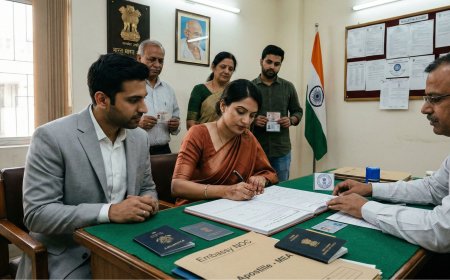
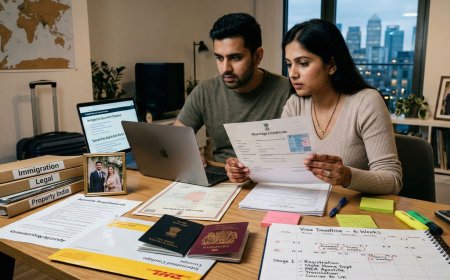
The Nikah abroad faces one central practical challenge that organises everything else: the question of legal validity. In the UK, USA, Canada, Australia, and UAE, the Nikah conducted by a qazi or imam does not automatically constitute a legally registered marriage — the civil registration requirements of the country of residence must be satisfied separately. This is the conversation that every Muslim NRI couple must have clearly and early in their wedding planning.
In the UK, a Nikah conducted by an imam is not legally recognised as a marriage under the Marriage Act 1949 unless it takes place in a registered mosque or registered venue with an authorised person present. Many UK mosques are registered for civil marriages and can conduct both the Nikah and the civil registration in the same ceremony — this is the most practical approach for UK Muslim couples and is worth confirming with your mosque at the earliest stage of planning. If the mosque is not registered, a civil registry office marriage must be conducted separately, either before or after the Nikah. The question of which ceremony the family considers the real marriage — the Nikah or the civil registration — is a conversation worth having explicitly.
In the USA, the legal requirements for marriage vary by state, but in most states an imam or qazi can be registered as an officiant authorised to solemnise marriages. Confirm your qazi's officiant registration with your county clerk's office before the Nikah. In Canada, the requirements similarly vary by province — Ontario, for instance, requires that the person solemnising the marriage be registered with the province. In Australia, a Muslim marriage celebrant registered with the Attorney-General's Department can conduct a legally valid Nikah.
The qazi question is the most important logistical decision in Nikah planning abroad. The qazi must know the Islamic marriage contract requirements of the specific madhab [school of Islamic jurisprudence] your family follows — Hanafi, Maliki, Shafi'i, or Hanbali. A qazi trained in one madhab may not know the specific requirements of another. In London, the major mosques — the East London Mosque, the Islamic Cultural Centre in Regent's Park, the Baitul Futuh Mosque in Morden — have imams experienced in conducting Nikahs for South Asian Muslim diaspora families and can often recommend qazis for home or venue ceremonies. In Toronto, the Islamic Society of North America and the major Toronto mosques. In Houston, the Islamic Society of Greater Houston. In Melbourne and Sydney, the Australian Federation of Islamic Councils can connect couples with qualified imams.
The Nikah Nama [written marriage contract] should be prepared in advance of the ceremony with the qazi's guidance. The mahr amount must be agreed upon and recorded in the Nikah Nama before the ceremony — this is not a detail to leave until the day. Many Pakistani and Indian Muslim families use a traditional printed Nikah Nama form that includes all required fields; these are available from Islamic bookshops and online suppliers in all major diaspora cities.
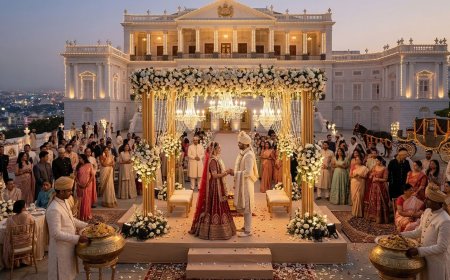
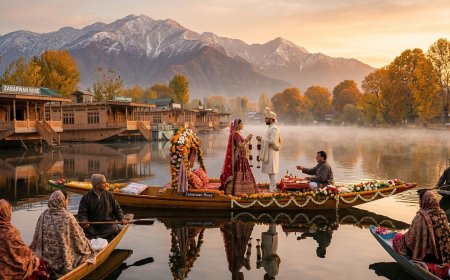
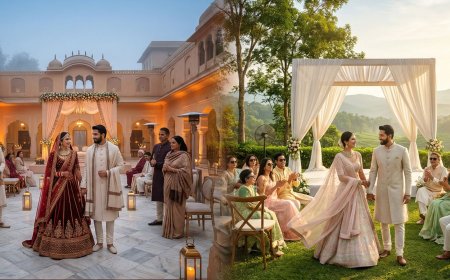
The venue for the Nikah has no Islamic requirement beyond the presence of the required participants. A mosque, a home, a hotel suite, a garden — all are entirely valid. Many NRI Muslim families prefer to hold the Nikah at the family home for its intimacy and domestic significance, while others prefer the mosque for its sacred authority. The decision is entirely the family's.
For families where the bride's acceptance is given through the wali — as in most Sunni traditions — the wali's presence at the Nikah is essential and must be confirmed well in advance. If the bride's father cannot attend, the succession of wali — father, then paternal grandfather, then brother, following the specific madhab's guidance — must be determined and confirmed with the qazi before the ceremony day.
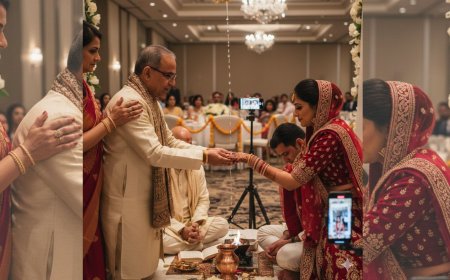
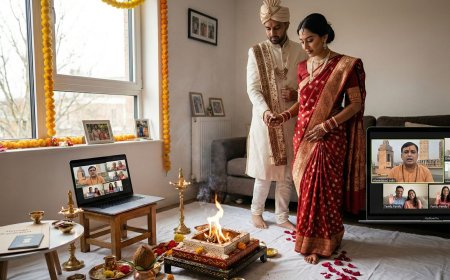
For streaming to family in Pakistan, India, or Bangladesh — where a Nikah in London at 3:00 PM is 8:00 PM in Karachi, 8:30 PM in Delhi, and 9:00 PM in Dhaka — position your device to show both the qazi and the faces of the bride and groom clearly. The ijab and qubul moment — the moment of consent — is the moment that every family member watching from abroad needs to witness clearly.
Doing the Nikah as a Destination Wedding in South Asia
To have the Nikah in Pakistan, India, or Bangladesh — in the family home in Lahore or Hyderabad or Dhaka, with the full extended community gathered, the qazi known to the family for generations, the Nikah Nama prepared by the same family who has prepared it for every wedding in this family's history — is to do it in the landscape that gave it its specific cultural form.
For a destination Nikah in Pakistan, the great mosque complexes of Lahore — the Badshahi Mosque, the Wazir Khan Mosque — and the family mosques of Karachi and Islamabad offer the most sacred settings. For Indian Muslim families, the historic mosques of Hyderabad, Lucknow, and Delhi carry the weight of centuries of Muslim scholarship and tradition. For Bangladeshi families, the mosques of Dhaka's old city and the family homes of Sylhet and Chittagong.
Brief your local qazi on the specific madhab your family follows and any specific family traditions within the Nikah sequence — the specific Quranic verses recited, the specific form of the khutba, the specific way the mahr is announced. These details vary by community and by family tradition within communities. Do not assume the local qazi's default matches your family's practice.
For non-Muslim guests witnessing the Nikah — whether at a destination wedding in South Asia or abroad — brief them specifically on the ijab and qubul moment and the mahr. These two elements make the Nikah's philosophical architecture legible to an outside observer. The simplicity and the directness of the consent exchange — two people saying yes to each other, witnessed by God and community — is one of the most universally moving wedding moments any guest of any background can witness.
What You Need: The Nikah Ceremony Checklist
Ritual and Legal Items: The Nikah Nama [written marriage contract] — prepared in advance with the qazi's guidance and confirmed for compliance with the madhab followed; the agreed mahr amount — documented in the Nikah Nama and confirmed with both parties before the ceremony day; two adult male Muslim witnesses [or as specified by the madhab] confirmed and briefed on their role; the wali confirmed and present — succession confirmed with qazi if the primary wali cannot attend; copies of both parties' identification documents for the civil registration if the Nikah is being conducted as a legally registered ceremony; a copy of the Quran for the qazi's recitation; prayer mats if the Nikah includes a congregational prayer; dates and water for the traditional post-Nikah sharing [Sunnah of the Prophet, peace be upon him].
People Required: The qazi or imam — the most important logistical confirmation of the entire ceremony, booked as early as possible; the wali of the bride — his presence is essential in most Sunni traditions; two qualified witnesses; the bride and groom; immediate family members as the primary gathering for the Nikah itself [the broader community attends the walima]; a designated family member to manage the video stream to relatives abroad; your wedding photographer — brief them that the ijab and qubul moment and the Nikah Nama signing are the two documentary priorities of the ceremony.
Preparation Steps: Confirm qazi and their madhab knowledge at least three to four months before the wedding. Prepare Nikah Nama with qazi's guidance at least one month before. Confirm mahr amount and record it in the Nikah Nama at least two weeks before. Confirm wali and witnesses at least two weeks before. Confirm civil registration requirements for your country of residence and arrange accordingly. Set up and test the video stream to family abroad at least the day before. Brief photographer on the ceremony sequence and the key documentary moments the evening before.
NRI.Wedding connects Muslim NRI couples with qualified qazis and imams serving the global diaspora across all major madhabs, Nikah Nama preparation guidance, civil registration coordination support, and photographers who understand that the ijab and qubul is the most sacred and photographically significant moment of the Islamic wedding ceremony. Begin at NRI.Wedding.
5 Questions NRI Couples Always Ask
Do we need to do a civil marriage registration separately from the Nikah in the UK?
In most cases in the UK, yes — unless your Nikah is conducted in a mosque or venue registered under the Marriage Act 1949 with an authorised person present. The legal position of the Nikah in UK law has been the subject of significant public discussion, and as of 2025 a Nikah conducted outside a registered venue by an unregistered officiant does not create a legally recognised marriage in England and Wales. Scotland has slightly different rules. The practical guidance is: call your local register office, confirm the requirements for your specific situation, and either arrange a civil ceremony at a register office or confirm that your mosque and imam are registered to conduct legally valid marriages. Many UK Muslim families conduct a register office ceremony on a weekday and hold the Nikah and walima on the weekend — both ceremonies are meaningful, and your family can determine which one you celebrate as your primary wedding event.
The bride's father is not Muslim and cannot serve as wali. How do we handle the wali requirement?
This is a situation that arises in convert families and in interfaith families, and it has established solutions within Islamic jurisprudence. In the Hanafi madhab — the most widely followed among South Asian Muslims — the wali requirement can be fulfilled by the qazi acting as wali in the absence of a qualified Muslim male guardian. This is called wilayat al-qadi [the guardianship of the judge or qazi] and is entirely valid in the Hanafi school. In other madhabs the rulings differ — the Maliki school has different provisions, for instance. Discuss this situation explicitly with your qazi well before the ceremony day so the appropriate arrangement can be made with full jurisprudential validity.
Can the Nikah be conducted at our wedding venue rather than at a mosque?
Yes, entirely. The Nikah has no Islamic requirement to be conducted in a mosque — it can be conducted in any clean, appropriate space. A hotel ballroom, a garden, a family home, a dedicated ceremony room at a wedding venue — all are entirely valid settings for the Nikah. What is required is the presence of the qazi, the wali, the witnesses, and the bride and groom — not a specific building. Many NRI Muslim families conduct the Nikah in a private room at the wedding venue before the reception begins, which allows the Nikah and the celebration to happen in the same location on the same day.
Our family follows the Hanafi madhab but the qazi we have found follows the Shafi'i madhab. Does this matter?
It can matter in specific details — the Hanafi and Shafi'i schools differ on some requirements of the wali, the witnesses, and specific elements of the contract. It does not mean a Shafi'i-trained qazi cannot conduct a Nikah for a Hanafi family, but it does mean you should have an explicit conversation with the qazi about your family's madhab before confirming the booking, and ask whether they are familiar with and comfortable following the Hanafi requirements. Most experienced qazis who serve multicultural Muslim diaspora communities are familiar with the major differences between madhabs and can conduct the Nikah according to the family's madhab. If there is any doubt, contact your family's local mosque in Pakistan or India and ask for a remote consultation with a qazi who knows your madhab's specific requirements.
How do we make the Nikah feel spiritually significant in a hotel venue rather than a mosque?
The Nikah's spiritual significance comes entirely from within the ceremony itself — from the Quran recited, the khutba delivered, the ijab and qubul exchanged, and the intention with which all of this is done. A hotel room prepared with attention — clean, fragrant with oud or rose water, with a prayer mat laid for the qazi's recitation, with the Quran open, with dates and water ready for the post-Nikah sharing — is a sacred space. The adhan [call to prayer] recited softly by the qazi before the ceremony begins transforms the acoustic environment of any room. Brief your qazi on the importance of a thoughtful, unhurried ceremony in which the spiritual weight of each element is given its full time. A Nikah conducted with complete attention in a hotel room is more sacred than a rushed one conducted in a mosque. The sacredness is in the intention, not the architecture.
The Emotional Angle
Nobody tells the father what it will cost him to give his daughter's hand.
He has been the practical one. The visa paperwork and the venue negotiations and the guest list managed across three countries and the qazi confirmed and the Nikah Nama reviewed and the civil registration appointment booked. He has done all of this with the efficiency of a man who has been solving problems across continents for twenty years.
He has not thought about the moment the qazi will ask him.
He has performed the wali's role at his brothers' daughters' weddings. He has sat beside the qazi and spoken the words and placed his daughter's — no, his nieces' — hands in the groom's. He knows the words. He knows the sequence. He thought he knew what the moment felt like.
And then it is his daughter's Nikah. The room is prepared. The qazi is seated. The witnesses are in position. His daughter is on the other side of the dividing curtain or in the adjacent room, her face calm with the specific calm of a woman who has made her decision completely and is at peace with it.
The qazi asks: does the wali give this woman in marriage?
He opens his mouth to say yes.
He has said yes at a dozen Nikahs. He knows how the word sounds. He knows how long it takes.
He does not know, until this moment, how heavy it is when the woman being given is his. How many years are in that single syllable. How much love. How much letting go.
He says yes.
The qazi continues. The witnesses confirm. The groom accepts. The Nikah Nama is signed.
His daughter is married.
He sits with his hands folded in his lap and he makes dua [supplication to God] for her — the same dua he has been making for her since the day she was born, now with a new specific weight and a new specific hope added to it. That she will be happy. That she will be loved. That the man on the other side of this contract is worthy of what he has just been given.
He folds the Nikah Nama carefully. He keeps his copy in his breast pocket for the rest of the day, close to his heart.
A Moment to Smile
At a Pakistani Muslim Nikah in East London in the summer of 2022, the qazi — a distinguished and experienced gentleman who had conducted several hundred Nikahs across forty years of service to the community — arrived at the family home to find that the designated witness room had been inadvertently double-booked with the mehndi artist's setup.
The mehndi artist, a professional of considerable experience who had also been working in British South Asian weddings for many years, surveyed the situation.
The qazi surveyed the situation.
There was a brief pause in which two professionals assessed the logistics.
"I can move to the corner," said the mehndi artist.
"I can face the other direction," said the qazi.
The Nikah was conducted in one half of the sitting room while intricate bridal mehndi was applied in the other half. The witnesses sat along the dividing line between the two ceremonies with the composed expressions of men who had decided to find this entirely normal.
The bride's mehndi was completed at the same time the Nikah Nama was signed. She emerged from her corner married and intricately decorated simultaneously, which her mother declared was actually the most efficient use of a Saturday afternoon she had ever witnessed.
The qazi, upon leaving, complimented the mehndi artist's work. The mehndi artist said the khutba had been very moving. Both meant it.
Quotes from the Diaspora
"My father said yes so quietly I almost did not hear it. The qazi paused for a moment as if he was giving my father time to say it the way he needed to say it — not loudly, not performatively, just truthfully. I was in the next room and I heard that quiet yes and I understood everything my father had been carrying since the engagement was announced. I will hear that yes for the rest of my life." — Zara Hussain, Pakistani Muslim community, London, UK
"We did the Nikah at our home in Houston before the venue reception. Just the immediate family, the qazi, the witnesses. Fifteen people in our living room. The qazi recited Surah Al-Fatiha and the room went completely still — the specific stillness that happens when something sacred is being done in a domestic space. I have been to Nikahs in mosques and in grand venues. Nothing has ever felt more like the real thing than those fifteen minutes in our living room." — Imran Sheikh, Pakistani Muslim community, groom, Houston, USA
"My mahr was a specific set of books — my husband knows I value knowledge more than gold. The qazi recorded it in the Nikah Nama: a complete set of the works of Allama Iqbal in the original Urdu. My husband presented them at the Nikah. My father-in-law in Lahore watching on video call laughed and said: this is the most Pakistani mahr I have ever witnessed. I kept the books. I kept the Nikah Nama. I kept both." — Sana Malik, Pakistani Muslim community, Toronto, Canada
The Contract Holds Everything
Your father said yes quietly, close to your ear almost, the way he has always said the things that matter most — not for the room but for you. The qazi recorded it. The witnesses confirmed it. The Nikah Nama was signed with the mahr written in your name alone, as it always should be.
This is what your parents carried across oceans. Not just the tradition of the ceremony — the understanding of what the ceremony means. That a marriage in Islam is made by consent and contract and witness, not by spectacle. That the mahr is yours and no one else's. That the two words of ijab and qubul, spoken correctly in front of the right witnesses, are more binding and more sacred than any venue and any floral arrangement and any photographer's portfolio.
NRI.Wedding is here for every part of making your Nikah exactly what it should be — from connecting you with qualified qazis and imams serving all major madhabs across diaspora cities, to Nikah Nama preparation guidance, civil registration coordination, and photographers who understand that the qazi's recitation and the signing of the contract are the images that will define this day in your family's memory for generations.
The qazi has recited. The witnesses have confirmed. The mahr is yours. The contract is signed. Everything that comes next — the walima, the celebrations, the life — begins from this moment.
This article explores the Nikah ceremony, the sacred Islamic marriage contract at the heart of Muslim weddings across Pakistani, Indian, Bangladeshi, Arab, and broader Muslim communities, its jurisprudential foundations across the four major madhabs, the mahr and wali requirements, civil registration considerations for Muslim NRI couples, and complete practical guidance for planning the Nikah in the UK, USA, Canada, UAE, and Australia.
What's Your Reaction?
 Like
0
Like
0
 Dislike
0
Dislike
0
 Love
0
Love
0
 Funny
0
Funny
0
 Angry
0
Angry
0
 Sad
0
Sad
0
 Wow
0
Wow
0