
























































Getting a Bridal Lehenga Custom-Made in Jalandhar — Full Timeline, Process and What to Carry
For the NRI bride who has looked in every boutique and found nothing that is exactly right, the custom bridal lehenga is not a luxury — it is the only logical conclusion. But commissioning a custom lehenga from Jalandhar while living abroad is a process with specific phases, non-compressible timelines, and critical decision points that most NRI brides encounter without adequate preparation. This comprehensive guide by NRIWedding.com walks through every stage of the custom lehenga process in full — from the pre-departure brief preparation and remote consultation through fabric sourcing, construction management, first and final fittings, and collection. Includes the complete backward-planning timeline framework, a full milestone and action table for managing the process from abroad, the specific documents and physical items to carry to every appointment, the contract terms that protect the NRI bride across time zones, and the five most costly mistakes NRI brides make when commissioning custom bridal work in Jalandhar.

Getting a Bridal Lehenga Custom-Made in Jalandhar — Full Timeline, Process and What to Carry
The Brief in the Notes App
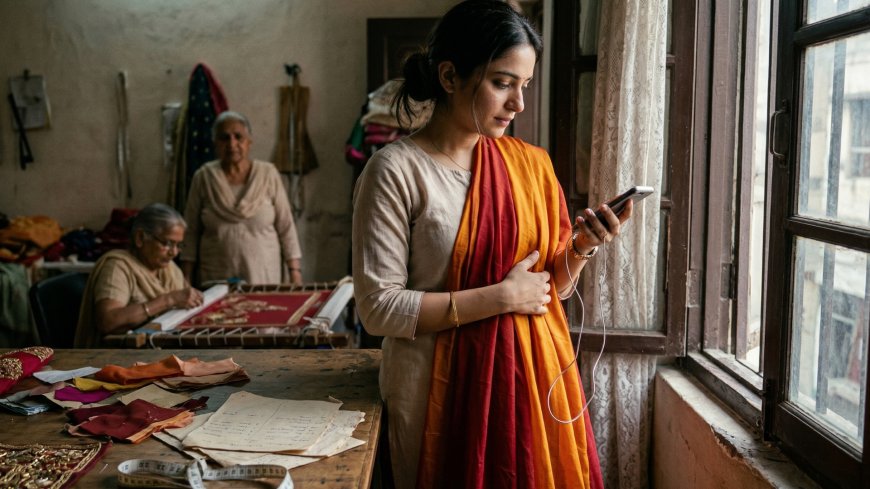
Divjot had been building the brief for fourteen months.
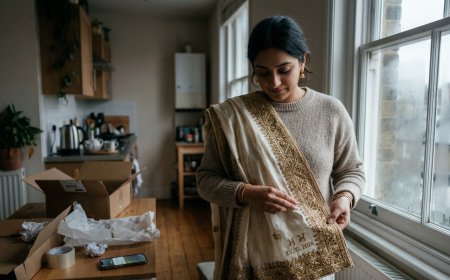
Not consciously, not with the deliberate intention of someone who knew she was building a document — but in the specific, accumulative way that engaged women build the mental architecture of a wedding outfit they have not yet found. A screenshot here. A saved Instagram post there. A photograph taken at a cousin's wedding in Ludhiana in March, slightly blurred because she had taken it quickly and without drawing attention to herself, of a lehenga whose embroidery border she had been thinking about, off and on, ever since. A voice note sent to her sister at eleven-thirty on a Tuesday from her flat in Manchester, describing a colour that she had seen in a film and could not name precisely but could describe: not the orange-red of a marigold, not the deep crimson of the traditional bridal red, but the specific, narrow register between the two where the warmth of one and the depth of the other existed simultaneously.
By the time she got engaged, the Notes app on her phone contained forty-seven items related to the lehenga that existed in her mind. Some were images. Some were fragments of description. Some were the names of embroidery techniques she had looked up — zardozi, resham, the specific kantha work she had seen on a piece at a museum exhibition in London and had photographed from three angles before the gallery attendant had asked her politely to put the phone away.
She had never found the lehenga in a shop. She had looked — in Birmingham, in Leicester, in the Southall Broadway corridor during a visit that had been specifically intended to settle the question. She had found things that were close. She had found things that were beautiful in themselves but wrong for the specific, accumulated brief that forty-seven notes had produced. She had come very close to buying something in a Southall boutique in January — a wine-red lehenga with zardozi work that was genuinely fine — and had pulled back at the last moment, in the fitting room, with the specific, uncomfortable clarity of someone who knows that close is not the same as right.
Her mother, who had been watching this process with the patience and the slightly worried attention of a woman who remembers her own wedding outfit search with complete clarity, said something in February that changed the direction of everything. She said: you are describing something that does not exist yet. You are not going to find it. You are going to have it made.
Divjot looked at the forty-seven notes. She looked at the voice note about the colour between marigold and crimson. She looked at the photograph of the embroidery border from the Ludhiana wedding.
She said: in Jalandhar?
Her mother said: where else.
This guide is for Divjot, and for every NRI bride who has realised — at forty-seven notes, or at four, or at the moment in the fitting room when close is not enough — that the lehenga she needs does not exist yet and must be made.
Why Custom Is Different From What You Are Imagining
The word custom carries a weight of expectation in the NRI bridal context that the reality of the custom process does not always meet — not because the reality is inferior, but because the expectation has been shaped by a version of custom that belongs to the high-end designer atelier market rather than to the practical, relationship-based custom garment-making that Jalandhar's best tailors and boutiques actually provide.
The high-end designer custom experience — the mood board consultation, the fabric library, the multiple fittings in a designed studio space, the white-glove collection process — exists in India and is available to the NRI bride who has the budget and the connections to access it. It is not what most NRI brides working with Jalandhar's custom market will experience, and it is not what produces the best outcomes for most NRI brides in the Jalandhar context.
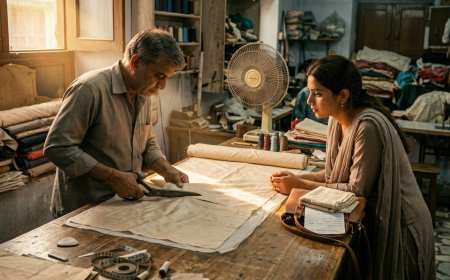
What Jalandhar's best custom makers actually offer is something different and, for the right bride with the right brief and the right preparation, considerably more valuable. It is a direct, personal relationship with a skilled craftsperson — a tailor or an atelier owner who has been making bridal garments for decades, who understands the construction of a heavily embroidered lehenga in its physical, structural, and aesthetic dimensions, and who will engage with the bride's brief with the specific, focused attention of someone whose professional reputation depends on getting it right. This relationship does not happen in a designed studio with a mood board. It happens across a cutting table, with fabric swatches in hand, in a conversation that is equal parts technical and personal.
The outcome, when the relationship works and the brief is well-prepared, is a garment that the designer atelier model cannot produce at any price: something made specifically for this person's body, this person's aesthetic, and this person's wedding, by hands that have been making this kind of thing for long enough to know exactly what they are doing.
The Full Timeline — From Brief to Collection
The timeline for a custom bridal lehenga in Jalandhar is the dimension of the process that most NRI brides underestimate most significantly, and the one whose underestimation has the most serious consequences. The timeline is not a logistical preference. It is a physical reality determined by the sequential nature of the construction process and by the non-compressibility of hand embroidery work.
The Complete Timeline, Worked Backward from the Wedding Date
The correct way to plan the timeline is to work backward from the wedding date rather than forward from the first available appointment. Take the wedding date. Subtract the minimum of two weeks that should exist between collection and the wedding, to allow for any final alterations, for the garment to be transported to the wedding location, and for the specific contingency buffer that every NRI bridal garment needs. That is your collection date. From the collection date, subtract the construction and finishing time — a minimum of four weeks for a lehenga with moderate embroidery, six weeks for heavy embroidery, eight to ten weeks for a lehenga with any genuine hand embroidery component. That is your fabric-confirmed and order-placed date. From that date, subtract the fabric sourcing and approval time — typically one to two weeks for fabrics available in Jalandhar's market, longer if specific fabrics are being sourced from outside the city. That is your first appointment date. From that date, subtract the pre-departure consultation and brief preparation — a minimum of two weeks of remote communication with the atelier before the first in-person appointment.
Working this backward, the NRI bride who is getting married in March and wants a custom lehenga from Jalandhar needs to have initiated the remote consultation process by the end of October at the latest — five months before the wedding. The bride who begins this process in January for a March wedding is beginning too late for anything except the most compressed and therefore most risk-laden version of the custom process.
The Pre-Departure Phase — Six to Eight Weeks Before the India Trip
The pre-departure phase is the phase that most NRI brides either skip entirely or conduct inadequately, and its inadequacy is the single most common cause of custom process failure. This phase exists to ensure that when the NRI bride arrives in Jalandhar for her first appointment, the atelier she is meeting has enough context about her brief to conduct a productive conversation from the first minute rather than beginning the information-gathering process that should have happened remotely.
The pre-departure phase begins with the identification of the atelier. This process has been covered in the previous guides to Jalandhar's bridal boutique market — the community network is the most reliable source of atelier recommendations, the digital footprint of Jalandhar's best custom makers is limited, and the personal recommendation of someone who has received a custom piece from a specific maker is worth more than any online review. Once the atelier is identified, contact is made — typically via WhatsApp, which is the primary communication channel for Jalandhar's bridal makers — and the initial brief is shared. The initial brief is a document, not a conversation. It contains the wedding date, the function for which the lehenga is required, the colour direction, the embellishment preference, the budget, the timeline, and the reference images that best represent the aesthetic the bride is working toward. Send this document before any phone or video call — it gives the atelier something to respond to rather than requiring them to extract the information conversationally.
The pre-departure phase also includes the remote measurement process. Every NRI bride who is commissioning a custom lehenga from Jalandhar must provide precise measurements before the work begins — not approximate measurements, not the measurements from a lehenga purchased two years ago, but the specific measurements taken for this garment at this moment. The measurement set required for a custom lehenga commission is more extensive than most NRI brides expect: waist circumference, hip circumference at the fullest point, waist-to-floor length, waist-to-knee length, bust circumference, under-bust circumference, shoulder width, back length from nape to waist, blouse length from shoulder to waist, and the specific length preference for the skirt hem from the waist. Take these measurements at home, or have them taken by a local tailor, and send the complete set with the initial brief document.
The First Appointment — Days One and Two of the India Trip
The first appointment with the custom atelier is the most important appointment of the entire process, and it should be given the time it requires. This is not a thirty-minute boutique visit. It is a two to three hour engagement in which the brief is discussed in its full complexity, the fabric options are reviewed and handled, the embellishment references are examined and evaluated for feasibility, the price is negotiated and confirmed, and the contract is agreed and signed. Every one of these elements must be completed at the first appointment for the process to proceed correctly.
The fabric selection at the first appointment is a decision that requires the most careful attention. The base fabric of the lehenga — the fabric onto which the embellishment will be applied and from which the garment will be constructed — determines the quality ceiling of the finished piece regardless of how skilled the embroidery or how precise the tailoring. A magnificent embroidery on an inferior base fabric produces a garment that looks right in photographs and wrong in person. The fabric selection conversation should cover the fibre content, the weight, the drape, the colour fastness, and the specific response of the fabric to the embellishment technique that has been agreed. Handle every candidate fabric with both hands, drape it over the arm, examine it in natural light, and compare it against the brief's reference images.
The embellishment feasibility conversation is the conversation that most NRI brides are least prepared for and that produces the most significant adjustments to the original brief. The reference images that constitute the brief have been selected for their visual appeal, not for their technical achievability within the budget and timeline. A reference image that shows dense hand zardozi work of the quality produced by a master atelier in Delhi, commissioned six months in advance at a budget of three lakh rupees, is not achievable in Jalandhar in six weeks at a budget of eighty thousand. The atelier will tell you this — the good ones will tell you directly and specifically, which is the service you need. Listen carefully to what is achievable and what is not, and make the adjustments to the brief that the feasibility conversation requires, rather than insisting on the original brief against the atelier's honest counsel.
The price should be confirmed at the first appointment as a complete, itemised figure — base fabric, lining fabric, embellishment labour, making charges for the skirt, making charges for the blouse, making charges for the dupatta if included, GST, and any agreed extras. Write this down. Photograph the written confirmation. Do not leave the first appointment without a confirmed, complete price.
The Deposit and the Contract
The deposit for a custom lehenga commission in Jalandhar's market is typically between thirty and fifty percent of the agreed total price, paid at the point of order confirmation at the first appointment. The deposit should be paid digitally — UPI, bank transfer, or card — to create a payment trail that serves as both confirmation of the transaction and evidence of the agreed terms in the event of any subsequent dispute.
The contract should specify the garment description in sufficient detail to be meaningful — not "one bridal lehenga in red" but a description that captures the specific fabric, the embellishment type and coverage, the colour reference, the silhouette, the blouse design, and the dupatta specifications. It should specify the agreed price. It should specify the delivery date. It should specify the terms for alterations — how many fitting appointments are included, what alterations are covered within the agreed price, and what the process is if the finished piece does not match the agreed brief. It should specify the refund or remedy terms if the delivery is missed or the quality standard is not met.
A custom order placed without a written contract is a custom order that has no enforceable terms if something goes wrong — and something going wrong in a custom garment process is common enough that the protection of a contract is not a precaution but a necessity.
The Fabric Sourcing Phase — Days Two to Four
If the base fabric is not available in the atelier's stock, it must be sourced — from the wholesale fabric markets in Jalandhar, from specific suppliers in Amritsar or Ludhiana, or in some cases from the fabric clusters of Delhi or Surat for specific categories that are not available locally. The fabric sourcing phase typically takes between one and three days and occurs after the first appointment. The NRI bride does not need to be present for the fabric sourcing — the atelier will manage this process — but she should be available by WhatsApp for any decisions that arise, particularly if the specific fabric agreed at the first appointment is not available and an alternative must be considered.
If the fabric sourcing process reveals that the agreed fabric is unavailable in the agreed colour or quality, this is a decision point that requires the bride's involvement and her explicit approval of any substitution. Do not allow the atelier to substitute fabric without explicit approval — the fabric is the foundation of the garment, and a substitution that is convenient for the atelier is not necessarily right for the brief.
The Construction Phase — Weeks Two Through Six
The construction phase — the period between fabric confirmation and the first fitting — is the phase during which the NRI bride is typically back in Manchester or Toronto or Melbourne, managing the process from a different time zone. The construction phase for a standard custom lehenga with moderate embroidery takes four to six weeks. For a lehenga with hand embroidery, the embroidery component alone takes three to six weeks and runs concurrently with the structural construction where possible.
The management of the construction phase from abroad requires a specific communication discipline. Check in with the atelier by WhatsApp at weekly intervals — not daily, which creates pressure and displaces focus from the work, but weekly, with a specific question about progress rather than a general anxiety check. Ask about specific milestones: has the embroidery started, is the skirt construction underway, has the blouse pattern been cut. The atelier's answers to these specific questions will tell you whether the timeline is on track in a way that general reassurances will not.
If the atelier goes silent — if WhatsApp messages are not responded to for more than forty-eight hours — escalate immediately. Silence from a custom garment maker during the construction phase is not a neutral signal. Request a photograph of the work in progress. The atelier that cannot produce a photograph of a partially constructed garment is an atelier that may not have begun the work.
The First Fitting — Day Five or Six of the Return Trip
The first fitting is the appointment at which the partially constructed garment — typically the skirt and the blouse in a wearable but unfinished state, before the final embellishment is applied — is tried on and assessed for fit. This appointment requires the same time investment as the first appointment — at least two hours — and the same standard of attention.
The assessment at the first fitting covers four dimensions. The fit: does the garment sit correctly on the body, in the waist, the hip, the length, and the blouse. The proportion: do the skirt and blouse relate to each other and to the body in the way the reference images specified. The embellishment progress: is the embroidery — if hand work — proceeding at the pace and to the quality that the brief specified. And the colour: does the garment's colour read as the reference specified in the actual, non-boutique light of the fitting room and wherever natural light is available.
Any adjustments identified at the first fitting should be communicated in writing — a WhatsApp message with a list of specific changes, confirmed by the atelier before the bride leaves the appointment. Verbal agreements about fitting adjustments are not sufficient. Write them down.
The Final Fitting and Collection — Days Ten to Twelve
The final fitting is the appointment at which the completed garment — fully constructed, fully embellished, fully finished — is tried on for the last time before collection. If the process has proceeded correctly, the final fitting is a confirmation rather than a correction session — the garment fits, the embellishment is as specified, and the finishing is complete. Minor adjustments at the final fitting are normal and should be corrected immediately, within the same appointment if possible. Major issues at the final fitting — significant fit problems, embellishment that does not match the brief, finishing that is incomplete — are a signal that the construction phase has not proceeded as agreed and must be addressed before payment of the final balance and collection of the garment.
Do not collect the garment until it is right. The leverage you have before collection — the final payment — is the only leverage you have. Once the garment has been collected and the final payment made, the practical options for remedy from another country are significantly more limited.
What to Carry to Jalandhar — The Preparation Document
The brief document is the most important thing the NRI bride carries to Jalandhar for a custom lehenga commission. Its preparation is not a supplementary task. It is the primary task of the pre-departure phase, and the quality of the brief is the most significant predictor of the quality of the outcome.
The complete brief document should contain the wedding date and function, the full set of measurements as described earlier, the colour reference with at least three images that represent the specific colour direction, the embellishment reference with images that represent the type, density, and placement of embellishment required, the silhouette reference with images that show the skirt shape, the waistband height, and the blouse design, the budget stated clearly as a fixed figure rather than a range, the timeline working backward from the wedding date, and the specific requirements that are non-negotiable — the elements of the brief that cannot be compromised regardless of what the feasibility conversation reveals.
The physical items to carry include fabric swatches if specific fabrics have been identified in advance — silk swatches, embellishment samples, colour references that are more accurate in physical form than in a digital image on a screen. Carry a printed version of the reference images in addition to the digital version — the screen brightness of a phone or laptop alters colour perception in ways that a printed image does not. Carry a tape measure for verification of the measurements provided in the brief. Carry a notebook for recording the decisions made at the first appointment — the verbal agreements, the specific adjustments to the brief, the timeline confirmations — in addition to the WhatsApp record.
The Table: Custom Bridal Lehenga in Jalandhar — Full Timeline, Milestones and NRI Action Required
| Phase | Timeline Before Wedding | Duration | NRI Action Required | Key Risk | Mitigation |
|---|---|---|---|---|---|
| Brief preparation | 6–8 months | 2–4 weeks | Build complete brief document, take measurements, identify atelier | Incomplete brief produces wrong outcome | Brief document with all dimensions covered |
| Remote pre-consultation | 5–6 months | 1–2 weeks | Share brief via WhatsApp, confirm atelier availability | Atelier fully booked | Contact multiple ateliers simultaneously |
| First appointment (in person) | 4–5 months | 2–3 hours | Fabric selection, embellishment feasibility, price confirmation, contract signing | Verbal agreement without written record | Written contract with all terms confirmed |
| Fabric sourcing | 4 months | 1–3 days | Available by WhatsApp for substitution decisions | Agreed fabric unavailable | Pre-approve alternatives at first appointment |
| Construction phase | 3–4 months | 4–10 weeks | Weekly WhatsApp check-ins, milestone confirmation | Silent atelier — work not progressing | Request progress photographs at each check-in |
| First fitting (in person) | 6–8 weeks before wedding | 2 hours | Assess fit, proportion, embellishment progress | Fit issues too late to correct | Book first fitting at least 6 weeks before wedding |
| Correction phase | 4–6 weeks before wedding | 1–2 weeks | Confirm corrections in writing | Corrections not executed as agreed | Written WhatsApp confirmation of all changes |
| Final fitting and collection | 2–3 weeks before wedding | 1–2 hours | Full assessment, final payment, collection | Major issues at final stage | Do not collect until garment is right |
| Transport and storage | 2 weeks before wedding | — | Roll and wrap using acid-free tissue, carry on if possible | Travel damage to embellishment | Follow transport guide protocol |
Common Mistakes NRI Brides Make When Commissioning Custom Lehengas in Jalandhar
The first mistake is beginning the process too late. The custom lehenga timeline is non-compressible below its physical minimum, and the atelier that promises a full hand-embroidered commission in four weeks is either promising something that is not physically achievable or planning to achieve it through means that do not match the brief — machine embroidery substituted for hand work, inferior fabric substituted for the agreed base. The minimum timeline for a genuine custom lehenga with moderate hand embellishment is twelve weeks from first appointment to collection. Begin earlier.
The second mistake is conducting the brief entirely through visual references without the written dimension. The reference images that constitute the visual brief show what the bride wants the lehenga to look like. They do not specify what it should be made of, how the embellishment should be executed, what the fit priorities are, or what the specific construction requirements of the ceremony it will be worn at demand. The written brief is the complement to the visual brief — the document that translates the images into instructions that a tailor and an embroiderer can act on. A brief that consists entirely of Instagram screenshots is a brief that will produce a garment that resembles the screenshots in silhouette and colour and that differs from them in every dimension that the brief did not specify.
The third mistake is not attending the first fitting in person. The NRI bride who cannot return to Jalandhar for the first fitting — who asks the atelier to proceed to the final fitting without an intermediate assessment — is removing the most important correction opportunity from the process. A fit problem identified at the first fitting, when the garment is partially constructed and unembellished, is correctable without significant cost or delay. The same fit problem identified at the final fitting, when the garment is fully embellished and the embellishment would be damaged by structural reconstruction, may be uncorrectable without compromising the finished piece. Plan the India trip to include the first fitting.
The fourth mistake is conflating the atelier's warmth and enthusiasm with a commitment to the agreed timeline. The best custom makers in Jalandhar are warm, enthusiastic, and genuinely invested in the work they produce. They are also operating multiple commissions simultaneously, managing a supply chain that includes embroiderers, fabric suppliers, and finishing specialists, and working in a context where unexpected delays — a supplier's delayed delivery, an embroiderer's illness, a fabric that requires re-ordering — are common. The warmth is genuine. The timeline is a separate question. Ask about the timeline specifically at every check-in, and assess the answers against the milestones rather than against the tone.
The fifth mistake is not building the transport protocol into the collection appointment. The custom lehenga that has been made with six months of care and attention should not be folded into a boutique bag and placed in the overhead locker of an international flight. The collection appointment should include a conversation with the atelier about the correct transport method — the rolling technique, the tissue paper requirements, the rigid case specifications — and the atelier should either assist with the packing or confirm that the bride has the materials and the knowledge to do it correctly. The previous guide to bridal garment transport provides the complete protocol.
What Divjot Carried Home
The voice note about the colour had been the most important part of the brief. Not the images — the images had been useful, had given the atelier's owner something to look at and respond to — but the voice note, which Divjot had sent to her sister in the taxi from the airport to her parents' house, in which she described the colour in the particular, unguarded language of someone not trying to be precise but simply trying to be honest: not the orange-red of the marigold, not the deep crimson of the traditional bridal red, but the narrow register between the two where the warmth and the depth existed simultaneously.
She had played the voice note to the atelier owner at the first appointment. It had taken forty-five seconds. When it finished, the owner had gone to the back of the studio and returned with a fabric swatch — a silk georgette in a colour that was, when Divjot held it against her arm in the light from the studio's north-facing window, so precisely what she had described that she had not been able to speak for a moment.
The fabric was from a supplier in Amritsar. The owner had been holding it for six months, waiting for a commission it was right for.
The lehenga was ready in nine weeks. The embroidery — resham work with a zardozi border, exactly as the brief had specified — was done by a woman in a workshop in the Paragpur area whose name the atelier owner knew and mentioned with the specific respect of someone who has been directing work to a craftsperson for many years.
Divjot flew back to Manchester with the lehenga rolled in acid-free tissue in a rigid carry-on case. She opened the case in her flat on a Tuesday evening, unrolled the tissue on the bed, and found the forty-seven notes on her phone. She looked at them for a while. Then she deleted them.
The lehenga was not in the notes anymore. It was on the bed, in the colour between marigold and crimson, existing in the world in the specific way that things only exist when they have been made with complete attention for a particular person.
She wore it in March. It fit without a single alteration.
Begin the timeline calculation from the wedding date backward — never forward from availability. Build the complete written brief before the first appointment. Commission before you fly, consult remotely, fit in person. Sign the contract and pay digitally. Check in weekly during construction and ask for photographs. Do not collect until it is right.
And carry the voice note, or the photograph, or the forty-seven notes — whatever it is that contains the thing you are actually looking for. The best makers in Jalandhar will understand it.
Published by NRIWedding.com — The Premium Global Platform for Non-Resident Indians Planning Indian Weddings From Abroad.
What's Your Reaction?
 Like
0
Like
0
 Dislike
0
Dislike
0
 Love
0
Love
0
 Funny
0
Funny
0
 Angry
0
Angry
0
 Sad
0
Sad
0
 Wow
0
Wow
0