












































































Bridal Blouse Backup — Why NRI Brides Should Always Commission Two and How to Plan for It
The blouse that does not fit on the morning of the wedding is the bridal emergency that no amount of planning protects against — unless the planning includes a backup. For the NRI bride arriving from the UK, Canada, or Australia with a compressed timeline, a body adjusting to a different climate, and a tailor who cannot be reached at six in the morning, the backup blouse is not a luxury precaution. It is the rational insurance policy that every NRI bridal wardrobe requires. This complete guide covers why the blouse is the outfit's most vulnerable piece, why NRI brides face higher risk than resident brides, how to commission both blouses correctly, the fabric strategy, the emergency kit, and the one simple rule that prevents the most common wedding morning crisis.

Now I have strong research. Let me write the full article.
Bridal Blouse Backup — Why NRI Brides Should Always Commission Two and How to Plan for It
The single piece of bridal planning advice that most people give too late, most brides receive too casually, and almost every bride who has learned it the hard way wishes she had taken seriously from the start
The Morning of the Wedding — and the Blouse That Doesn't Fit
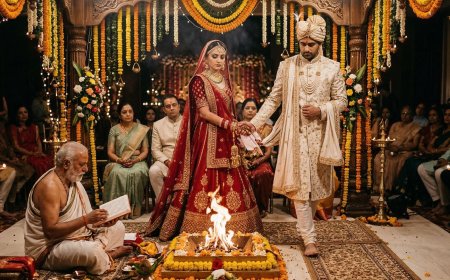
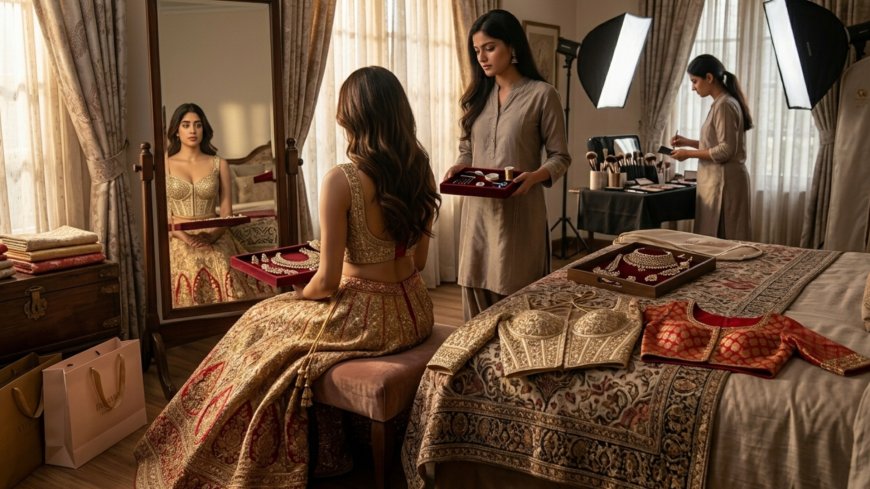
Picture the scene. It is six o'clock in the morning on the day of the Anand Karaj. The makeup artist has arrived. The family is assembled. The lehenga — months in the making, carefully chosen, expensively embellished — is hanging on the wardrobe door. The photographer is somewhere downstairs.
And the blouse won't close.
Not by much. Perhaps an inch at the back hook. Perhaps a centimetre at the side zip. But enough. Enough to make the blouse unwearable as it is. Enough to send the entire morning into a quiet, mounting panic that the bride's mother is trying to suppress from her face while simultaneously WhatsApping the tailor who made the blouse, a tailor who — of course — is not answering at six in the morning.
This scene, in some variation, plays out at Indian weddings with a frequency that no one in the bridal industry discusses as openly as it should be. It happens to brides who planned carefully. It happens to brides who had three fittings. It happens to brides who spent serious money. And it happens to NRI brides — arriving from the UK, Canada, Australia, or the United States with compressed timelines, unfamiliar climate impacts on their bodies, and no local backup infrastructure — at a rate that is even higher than for resident brides.
The reason it happens, why it happens specifically more to NRI brides, and what to do about it — starting now, months before the wedding — is what this article is about.
Part One: Why the Blouse Is the Most Vulnerable Piece in the Entire Bridal Outfit
Not All Bridal Garments Carry the Same Risk
A bridal lehenga skirt has natural flex. Its waist is usually tied rather than stitched, meaning minor body changes can be accommodated by adjusting the tie. The skirt itself, if it is slightly too loose or too full, can be compensated for with a different underskirt. These are not trivial problems, but they are manageable problems with day-of solutions.
The blouse has none of this forgiveness. It is a precisely fitted garment, typically closed with hooks and eyes, a side zipper, or a back zipper, stitched to measurements taken weeks or months earlier. It is constructed from embellished fabric that cannot simply be let out at the seams without creating visible damage to the embroidery. Its fit is either right or it is not, and the margin for error is small.
Tightening a blouse is easier than loosening it, so it is always recommended to keep 2 inches of margin inside the blouse, just in case of weight gain before the wedding day. This advice is sound as far as it goes, but it does not go far enough for the NRI bride whose circumstances make even a well-designed margin unreliable.
The Specific Physics of Bridal Blouse Fit
A lot of brides want the perfect fit and end up choosing a blouse that is tighter than it should be, hoping that will be more flattering. But sometimes that just leads to unsightly back bulges and broken zippers.
The bridal blouse problem is not simply about size. It is about the interaction between a precisely fitted, non-stretch garment and a body that changes — subtly but meaningfully — in response to the conditions of the weeks before a wedding. Those conditions, for an NRI bride, are more extreme than for most.
Most brides gain 1 to 2 kilograms in the week before the wedding due to stress-related water retention and celebration meals. This is a clinically established phenomenon, not an exaggeration. Cortisol — the stress hormone — causes the body to retain water. A multi-day Indian wedding programme, with its feasting and celebration, adds caloric intake on top of that hormonal retention. The result is a bride whose bust and waist measurements on the morning of her wedding ceremony are meaningfully different from the measurements taken at her final fitting, which may have happened weeks earlier.
A 2-inch seam allowance, correctly stitched, can absorb a kilogram of water retention. It cannot always absorb two kilograms, or a bride who has gained four kilograms during the excitement of her India trip, or a blouse whose seam allowance the tailor quietly reduced because the desired silhouette demanded it.
Part Two: Why the NRI Bride Is Specifically at Higher Risk
The Timeline Problem
Planning a wedding from thousands of miles away presents a unique set of challenges and opportunities. NRI brides often manage compressed timelines, making the shopping process more intense and time-sensitive.
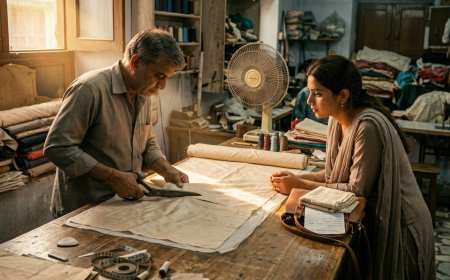
The NRI bride's relationship with her tailor is fundamentally different from that of a resident bride. A resident bride might visit her tailor six times across three months — initial measurements, first cut, first fitting, adjustments, second fitting, final collection. She can make a same-day visit if something needs tweaking. If her body changes in the week before the wedding, she can be at the tailor the next morning.
The NRI bride typically has two to four weeks in India, sometimes less. She is managing wedding shopping across multiple markets, attending family events, coordinating logistics across multiple cities, and navigating jet lag. Her fitting schedule is compressed. Her final fitting may happen ten days before the wedding rather than three, simply because she is flying home and needs the garment in her luggage.
The recommended fitting schedule for bridal alterations is 8–10 weeks before for first fitting, 4–6 weeks before for fine-tuning, 2 weeks before for final checks with all accessories, and 3–5 days before for emergency fixes only. This schedule assumes the bride is present and available throughout. It assumes local proximity to the tailor. It assumes the ability to make same-day changes if the final fitting reveals problems.
For the NRI bride, this schedule almost never applies in full. She arrives late in the process, attempts to compress months of fitting into weeks, and departs before the natural close of the tailoring cycle.
The Climate and Body Change Problem
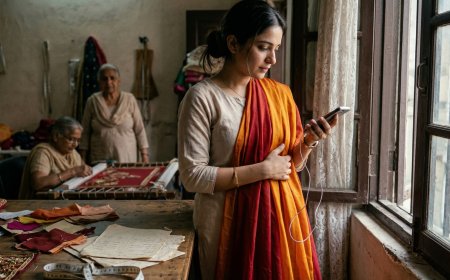
The NRI bride's body is doing something unusual during her India visit that her resident counterpart's body is not doing. She is adapting.
Arriving from London or Toronto in October, adjusting to Punjab's autumn heat, eating wedding food at every family gathering, attending events that run from morning to midnight — all of this creates physiological responses. Body measurements do not always stay the same; everyone's measurements change slightly from day to day, and dramatic weight loss or gain can affect the fit of a dress significantly close to the wedding.
An NRI bride who arrives from Canada in November has often spent months in a cold climate where her body's fluid regulation was calibrated to cold air. Arriving in Punjab — even November Punjab, which is cool but not cold — creates a fluid redistribution effect. Bust measurements and waist measurements can shift by half a centimetre to a full centimetre in the first two weeks simply as the body adjusts. This shift is usually temporary. It is also timed precisely to coincide with the final fitting window.
The Distant Tailor Problem
Perhaps the most structurally significant risk factor for the NRI bride is this: when the blouse doesn't fit on the morning of the wedding, her tailor is in Jalandhar, and she is in a hotel room three kilometres away, and the tailor is not answering because it is before seven in the morning during peak wedding season.
The resident bride with a blouse problem has a bad morning but probably has a solution. She knows her tailor personally. She has a relative who knows a second tailor. She can dispatch someone at eight in the morning to get the blouse looked at. There are options, and they are local.
The NRI bride has fewer of those options. She may not know the city well enough to identify an emergency tailor. Her family members — if they are locals — may be occupied with wedding preparations. Her knowledge of who to call is limited by the fact that she has spent a total of three weeks in the city. Her WhatsApp contacts in Jalandhar number in the dozens rather than the hundreds.
This is the structural argument for the backup blouse. Not as a worst-case contingency for the careless bride, but as a rational insurance policy for a bride whose circumstances make the gap between problem and solution materially wider than it is for most.
Part Three: The Case for Two — Why "Having Yours Altered" Is Not Enough
The Most Common Response — and Why It Often Falls Short
When the backup blouse argument is made, the most common response is: "If the blouse doesn't fit, I'll just have it altered." This response is reasonable, and in many cases it would work. But it rests on a chain of assumptions that do not always hold on the morning of a wedding.
Assumption one: The blouse can be let out. While tightening a blouse is easy, loosening one is not. Always keep 2 inches allowance in the seams so you can make alterations as and when needed. If the tailor did leave a two-inch seam allowance, the blouse can likely be let out. If they did not — if the blouse was cut tight to the final measurement to achieve the desired silhouette — the seam allowance may be insufficient. And with embroidered fabric, letting out seams often means relocating or damaging embroidery near the seam, which requires specialist repair that cannot be done in three hours.
Assumption two: An emergency tailor is available. Wedding season in Jalandhar runs from October through February. Every skilled tailor in the city is working at maximum capacity. Emergency same-morning alterations are possible — a specialist bridal tailor can handle emergency alterations in 3–5 days — but same-morning emergency alterations require either an extraordinarily lucky contact or an already-established relationship with a tailor who is available at short notice. Neither can be assumed.
Assumption three: The alteration will be invisible. Even when a blouse can be let out and a tailor is available, the alteration itself is a risk. Rush alterations on heavily embroidered fabric can leave visible marks where the original stitching was. The embroidery near the seam may show distortion. The lining may pucker. A blouse that was photographed at every angle for ten hours on the most documented day of the bride's life is not the place for visible alterations.
The backup blouse eliminates all three assumptions. It does not require the original to be alterable. It does not require an emergency tailor. It does not introduce alteration marks. It is simply the blouse, made correctly to the measurements that account for the NRI bride's specific body-change risk, ready to wear.
What the Backup Blouse Is — and Is Not
The backup blouse is not a second, identical copy of the original. Making two identical blouses creates one more problem: if the original fails due to a design or construction issue, the identical copy may fail for the same reason.
The backup blouse is a second blouse for the same lehenga or saree, made at the same time as the original, from matching or coordinating fabric, but with slight strategic differences that make it the safer, more flexible option.
Typically, the backup blouse should be:
Slightly more generous in fit. Where the original may be cut to a close, precise silhouette, the backup is made with the full two-inch seam allowance and is fitted to the bride's maximum expected measurement rather than her current measurement. This means that if the bride's body changes, the backup fits even when the original does not.
Simpler in closure. Where the original may have a back zip that requires precise body dimensions to close without strain, the backup can use a lace-up or adjustable hook-and-eye closure that accommodates a range of body sizes without requiring alteration.
From the same fabric or a closely matching one. The backup blouse should coordinate seamlessly with the lehenga skirt. If the original blouse fabric has embroidery that cannot be replicated, the backup can be made from the plain base fabric of the same colour, or from a complementary fabric that reads as intentional variation rather than mismatch.
Completed at the same time as the original. The most important logistical point: both blouses should be commissioned simultaneously, from the same tailor, using the same measurements. The incremental cost of a second blouse from a tailor who has already done the work of pattern-cutting and fitting is significantly lower than the cost of commissioning it separately — and it ensures both are completed before the NRI bride leaves India.
Part Four: How to Commission Both Blouses Correctly
The Conversation with the Tailor
Most tailors in India will not spontaneously suggest a backup blouse. It is not part of the standard conversation. The onus is on the bride to initiate it, and the way it is framed matters.
Do not frame it as a sign of distrust in the tailor's work. Frame it as a practical acknowledgement of the NRI timeline challenge: "I am flying back to the UK two days after the wedding and won't be able to come back for any adjustments. I want to be absolutely certain I have a wearable blouse on the day, so I would like to commission a second one as a backup."
This framing respects the tailor's craftsmanship while acknowledging the structural reality. Most experienced tailors, particularly those who have worked with NRI clients before, will understand immediately and engage constructively.
Ask the tailor to note the following differences between the original and the backup:
The backup is to be cut to the maximum measurement plus the full seam allowance. If the original is cut to 36 inches at the bust, the backup should be cut to 38 with a two-inch allowance, making it alterable down to 36 if needed.
The backup closure should be adjustable — a lace-up back, a wider hook-and-eye panel, or a side-seam zipper with extra seam allowance rather than the back zipper of the original.
Both blouses should be completed by the same fitting deadline. The backup is not an afterthought to be rushed in the final days — it should be present at every fitting alongside the original.
The Fitting Protocol
The recommended timing for a final blouse fitting is two to three weeks before the wedding, not earlier, as the body may still be changing. For the NRI bride, this recommendation is complicated by the fact that she may be departing India within two to three weeks of the wedding.
The practical adaptation is this: if the NRI bride cannot be present for the final fitting two to three weeks before the wedding, she should arrange for a trusted local family member — someone with similar build, or someone who can relay measurements precisely — to attend the final fitting on her behalf. This is imperfect, but it is significantly better than the alternative of collecting the blouses without a final fitting.
The final fitting should be done wearing the exact innerwear and footwear that will be worn on the wedding day — even a one-inch heel difference changes the lehenga length dramatically. The same principle applies to the blouse: the bride should wear the exact bra she plans to wear on the wedding day to every blouse fitting, including the backup fitting. A padded bra worn at the fitting but an unpadded one on the day creates a material difference in fit that neither bride nor tailor anticipates.
Wearing a bra with the perfect amount of padding as you would want in the blouse when going for the fitting is essential. Always wear a bra that fits well while giving out measurements. If wearing a padded one, ensure that the tailor/designer is told about it.
The Delivery Check
When the blouses are collected — whether in person or via a family member — a thorough delivery check should be conducted before accepting the garments. Both blouses should be tried on, both closures should be tested, and both should be examined in good light for any embroidery damage, uneven seaming, or lining problems.
Do not collect garments without trying them on. This seems obvious, but in the pressure and time-crunch of the final days before an NRI bride's departure, it is a step that is frequently skipped — and it is precisely the step that prevents the morning-of-the-wedding surprise.
Part Five: The Fabric Strategy — Getting the Second Blouse Right
Matching Fabric Without Matching Exactly
One of the practical challenges of commissioning a backup blouse from the same fabric as the original is that heavily embroidered blouse fabric is often supplied in limited quantities from the boutique or vendor. The original blouse may use almost all of the available embroidered fabric, leaving nothing for a backup.
The solution is to plan for this from the start. When purchasing the lehenga and blouse fabric, request an additional half to one metre of the base fabric specifically for the backup blouse. This fabric does not need to carry the same embroidery as the original — it can be the plain base fabric, which will look intentionally restrained compared to the embroidered original.
If the original blouse is in a heavily embroidered brocade, a backup in the same colour but lighter embroidery — perhaps with a single border detail or just the base fabric — reads as a deliberate design choice rather than a substitute. Many brides who have commissioned backup blouses this way have found that on the morning of the wedding, the simpler backup is actually the one they prefer to wear.
The Saree Blouse Consideration
For NRI brides wearing sarees rather than lehengas, the backup blouse argument is if anything even more compelling. A saree blouse is typically a smaller, more precisely fitted garment than a lehenga blouse — with less fabric and less seam allowance, making emergency alterations harder. It is also the most photographed piece of the saree look, since the saree's drape often exposes the blouse more than a lehenga does.
Getting a blouse stitched with cups ensures that there is no worry about lingerie and where it might be poking out. For saree blouses particularly, the structural engineering of cups and padding is more consequential than for a lehenga blouse, and any mismatch between the bra worn at fitting and the bra worn on the day is immediately visible in the drape and fit of the blouse.
Commission the backup saree blouse with a back-hook opening rather than the single-hook-and-eye that many tailors default to. A back panel with multiple hooks gives the flexibility to wear the blouse at slightly different body sizes, which is precisely what the NRI bride needs.
Part Six: The Emergency Kit — Supplementing the Backup
What the Backup Blouse Cannot Do
Even with a backup blouse in hand, every NRI bride should travel with a small emergency kit that addresses the blouse problems a second blouse cannot solve. These include day-of incidents — a hook that pops, a strap that snags, a seam that splits at a stress point — rather than the fundamental fit problems the backup blouse addresses.
An emergency kit stocked with safety pins, needles, thread, double tape, fabric adhesive, and spare buttons is indispensable for unexpected wardrobe mishaps during the celebrations.
For a bridal blouse specifically, the kit should include:
Safety pins in three sizes. The small, flat type that can be used invisibly at hook closures, the medium type for emergency side seam management, and the larger type for securing a dupatta that is pulling on the blouse. Safety pins are the bride's best friend — they can pin loose areas discreetly and serve as replacement zipper pulls if a zipper pull breaks off.
Hook-and-eye sets in the blouse's metal colour. If a hook-and-eye pops under pressure — one of the most common day-of blouse failures — having a replacement set and a needle and thread to sew it on quickly can resolve the issue in ten minutes. Assign this task to one designated bridesmaid or family member who is comfortable with a needle.
Fashion tape. Particularly useful for necklines that gap, back openings that separate slightly, or any area where the blouse fabric is separating from the intended line of the body. Fashion tape is effective for necklines that gap or sleeves that slide.
A small hand mirror. For checking the back of the blouse — where most problems originate — without requiring another person. On a morning when everyone around the bride is occupied, the ability to check her own blouse back is practically valuable.
Delegating the Emergency Kit
The bride should not be the person managing her emergency kit on the morning of the wedding. Designate one specific person — a bridesmaid, a trusted sister, or a family friend — as the "blouse custodian" whose sole responsibility for the duration of the wedding day is to carry the emergency kit, monitor the blouse for problems, and be the first point of contact if anything needs immediate attention.
This person should know where the backup blouse is stored. They should know how to use a needle and thread for emergency hook replacement. They should have the tailor's phone number. And they should have been briefed — well in advance, not on the morning of the wedding — on what to do if the primary blouse fails and the backup needs to be switched.
Delegating tasks to trusted friends or family members is essential to alleviating pressure and allowing the bride to stay focused and calm.
Part Seven: The Cost Conversation — Why Two Blouses Is Not an Extravagance
What the Second Blouse Actually Costs
The incremental cost of commissioning a second blouse from a tailor who has already done the pattern work for the first is significantly lower than the cost of a first-time commission. The tailor already has the measurements. The pattern is already cut. The fitting has already established the key dimensions. Making a second blouse from an existing pattern requires new fabric and additional stitching time, but it does not require the entire commissioning cycle from scratch.
In Jalandhar, a first bridal blouse from a quality boutique or tailor might cost between ₹3,000 and ₹15,000 depending on complexity and embellishment. A backup blouse, made simultaneously in simpler fabric with the same measurements, typically adds thirty to fifty percent to that cost — so ₹1,500 to ₹7,500 more for the backup.
Against the cost of a damaged bridal outfit, an emergency tailor on the morning of the wedding at crisis rates, or — in the worst case — photographs that show the bride in a blouse that is visibly uncomfortable or improperly fitted, the backup blouse represents excellent value.
The Real Calculation
The real calculation is not monetary. It is the cost, in accumulated stress, of not having a backup blouse against the cost, in peace of mind, of having one.
The NRI bride who arrives at her wedding morning knowing she has two wearable blouses can engage with the morning differently from the bride who is praying the original fits. She can focus on the rituals. She can be present with her family. She can move through the day knowing that the most vulnerable garment in her entire wedding wardrobe has been addressed with intelligence rather than hope.
That peace of mind is worth considerably more than the incremental cost of the backup blouse. And unlike most wedding planning investments, it is one that can be planned for, executed cleanly, and completed months before the wedding day.
Conclusion: The Simple Rule
The rule is simple: commission two.
Commission them at the same time, from the same tailor, with different fit philosophies — the original to your current measurements, the backup to your maximum expected measurements with full seam allowance. Store them separately in your luggage to India and back. Tell one trusted person where each is. Brief your blouse custodian before the wedding morning, not during it.
Numerous bridal emergencies stem from issues that could have been avoided with the right tailoring timeline. Scheduling fittings well in advance and working with professionals who understand bridal fabrics makes all the difference. A rushed alteration normally creates more problems than it solves.
The backup blouse is not a rushed alteration. It is not a last resort. It is a planned, deliberate act of preparation that every NRI bride — arriving from thousands of miles away, with compressed timelines, unfamiliar climate adjustments, and a body that is almost certainly changing in ways that cannot be perfectly predicted — should treat as a non-negotiable part of her bridal wardrobe planning.
Commission two. The one you wear on the day will be whichever fits. And either way, you will look exactly as you planned.
Practical checklist: Commission both blouses at the same time from the same tailor. Ensure both are completed by your penultimate fitting, not the final one. Bring the exact bra you will wear on the wedding day to every fitting. Pack the backup blouse in a separate bag from the original. Designate a blouse custodian before the wedding morning. Include in your emergency kit: safety pins, hook-and-eye sets, fashion tape, needle and thread, and a hand mirror. Keep the tailor's WhatsApp number accessible until the wedding is over.
What's Your Reaction?
 Like
0
Like
0
 Dislike
0
Dislike
0
 Love
0
Love
0
 Funny
0
Funny
0
 Angry
0
Angry
0
 Sad
0
Sad
0
 Wow
0
Wow
0