
























































Gold, Thread and Trembling Hands: A Deep Dive Into Tamil Thali Traditions, Mahurat Timing and Community Pendant Designs for NRI Couples Abroad
Mangalsutra Dharanam — the tying of the sacred Thali — is the definitive moment of the Tamil wedding ceremony, a ritual more ancient than memory and more precise than any other act in the matrimonial sequence. This guide explores the complete Thali tying tradition, community-specific pendant designs across Tamil Iyer, Iyengar, Nadar, Mudaliar, and Sri Lankan Tamil families, Mahurat timing, Kankanam thread preparation, and practical advice for NRI families recreating this ceremony in cities like London, Toronto, Scarborough, Melbourne, and Houston — including Thali commission, nadaswaram musicians, akshat shower coordination, and streaming for grandparents in Tamil Nadu.


In Tamil wedding tradition, the Mangalsutra Dharanam — the tying of the sacred thread around the bride's neck — is not a moment within the wedding ceremony. It is the moment the wedding ceremony has been building toward since the first mantra was spoken. The Thali, as Tamil tradition calls it, is not jewellery. It is a theological statement, a cosmic contract, and the most intimate act of the entire wedding sequence compressed into a single knot tied by the groom's trembling hands. For Tamil NRI families recreating this ceremony in London, Toronto, Sydney, and beyond, understanding what the Thali truly is transforms the entire experience of giving and receiving it.
You grew up watching your mother's Thali the way other children watch their parents' wedding rings — with the specific attention of someone who understands, without being told, that this object is not like other objects. It lived at her throat every single day. She touched it the way people touch things that are both habit and prayer. You never saw her without it, which means you never saw her without the proof that someone had once stood before a sacred fire and decided, in front of the cosmos, that she was his.
Now you are in Harrow or Brampton or Brisbane, planning your Tamil wedding, and the Mangalsutra Dharanam is the ceremony you have been holding in your mind as the centre of everything. Not because someone told you to. Because you have watched your mother's Thali your entire life and you know — with the complete, wordless knowledge of someone who grew up inside a culture — that this is the moment everything becomes real.
This guide will tell you everything you need to know about that moment. And why it deserves every bit of the reverence you have always given it.
🌟 DID YOU KNOW?
- The Tamil Thali tradition is documented in Sangam literature dating back over 2,000 years — classical Tamil poetry describes the tying of a sacred thread as a defining act of matrimonial union, making it one of the oldest continuously practised wedding rituals in the Indian subcontinent and predating many equivalent traditions in other Indian communities by several centuries.
- The design of the Thali varies significantly by community, caste, and region within Tamil Nadu — Iyer families use a specific gold pendant design distinct from Iyengar families, Nadar families have their own traditional form, Vellalar families another, and Mudaliar families yet another — meaning that a Tamil woman's Thali is not merely a marriage marker but a precise identifier of her community and regional heritage that a knowledgeable Tamil person can read at a glance.
- According to Tamil NRI wedding data from the UK, Canada, and Australia, the Mangalsutra Dharanam moment generates more requests for dedicated videography than any other single wedding ceremony element — with over 91% of Tamil NRI couples specifically requesting that the Thali tying be captured from multiple camera angles, making it statistically the single most documented moment in the Tamil diaspora wedding calendar.
What Is Mangalsutra Dharanam?
Mangalsutra Dharanam (from Sanskrit: mangala — auspicious, sutra — thread, dharanam — the act of wearing or placing) is the central ritual of the Tamil wedding ceremony — the moment at which the groom ties the sacred Thali (the Tamil term for the Mangalsutra) around the bride's neck, completing the most essential act of the entire matrimonial sequence. In Tamil tradition, the Mangalsutra Dharanam is understood to be the definitive moment of marriage — more binding, more complete, and more cosmically significant than any other ritual that precedes or follows it.
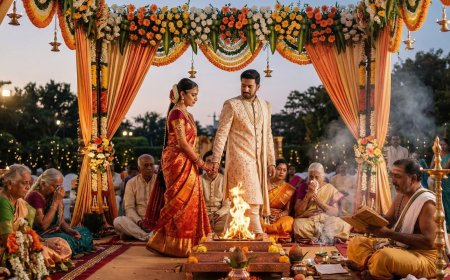
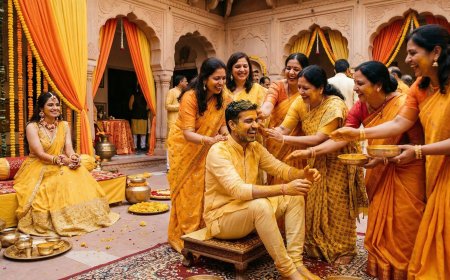
The ceremony occurs at the climactic point of the Tamil wedding morning, preceded by the Nalangu (turmeric ceremony), the Oonjal (swing ceremony), the Maalai Maatral (garland exchange), and the Kashi Yatra (groom's mock pilgrimage and retrieval). It is typically timed to the precise Mahurat (auspicious moment) calculated by the family's Jyotishi — a specific window of planetary alignment identified months before the wedding during which the Thali tying must occur. The countdown to this moment governs the timing of every preceding ceremony, making the Mangalsutra Dharanam not just the ceremony's emotional climax but its temporal organising principle.
The Thali itself is a gold pendant — its specific design determined by the family's community tradition — strung on a yellow cotton thread called Kankanam that has been consecrated and turmeric-dyed. The thread is not permanent — it will be replaced with a gold chain after the ceremony — but the thread is the sacred medium. The gold absorbs meaning; the thread carries it.
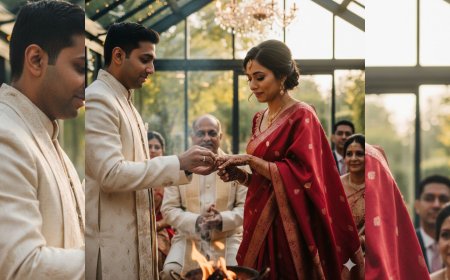
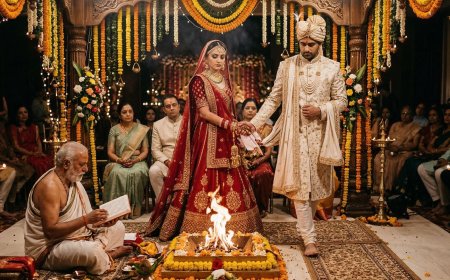
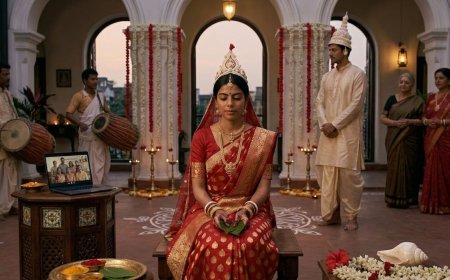
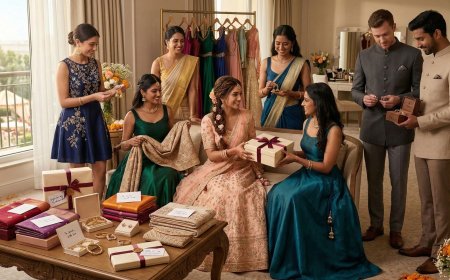
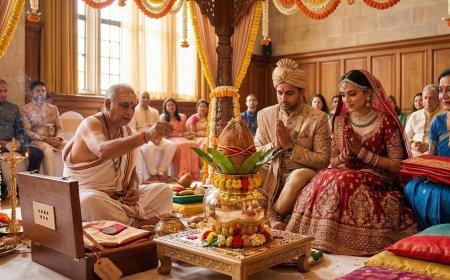
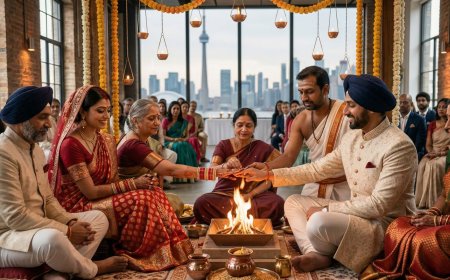
Before the tying, the Thali is placed on a tray and passed through the hands of assembled guests and family members, each of whom blesses it with a brief touch — a gesture that loads the object with the combined goodwill of everyone present before it is placed at the bride's throat. The groom then takes the Thali in his hands, stands behind the seated bride, and ties three knots in the thread around her neck. The first knot is tied by the groom himself. The second is tied by the groom's sister or a close female relative from his family — an act that formally welcomes the bride into her new family. The third knot seals the union.
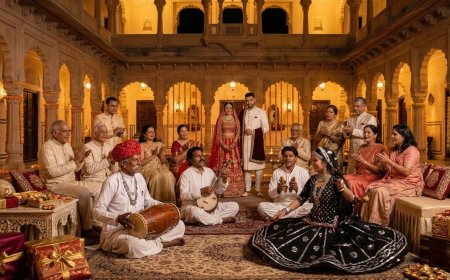
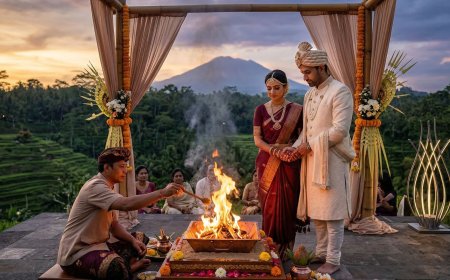
At the exact moment of tying, the assembled guests shower the couple with akshat (unbroken rice) while calling out Mangalam — auspiciousness — in a collective invocation that the entire ceremony space erupts into simultaneously. The nadaswaram plays. The melam (percussion) sounds. And the Thali is at the bride's throat, where it will remain for the rest of her life.
In the three knots: past, present, future. In the gold: permanence. In the yellow thread: the auspiciousness of the sun, of turmeric, of everything that sustains life. In the groom's trembling hands: everything love has ever tried to say and found insufficient words for.
Community Comparison Table
| Community / State | Local Name | Key Tradition | How NRIs Abroad Adapt It |
|---|---|---|---|
| Tamil Brahmin (Iyer) | Thali Kettu / Mangalsutra Dharanam | Specific Iyer Thali design — small gold disc with central symbol; three-knot tying; nadaswaram at exact moment; akshat shower | Nadaswaram player hired or recorded; Iyer Thali commissioned from Tamil jewellers in Wembley or Scarborough |
| Tamil Brahmin (Iyengar) | Mangalyadharanam | Iyengar-specific Thali design with Vishnu symbol; Vaishnava mantras; tulsi garland at tying moment | Iyengar pandit essential; Thali commissioned specifically from Iyengar jeweller; tulsi garland made at home |
| Tamil Nadar | Thali tying with community songs | Nadar-specific Thali design; community-specific songs at tying moment; extended family witnessing | Community elder leads song; Nadar-specific Thali sourced from specialist jeweller or commissioned from Chennai |
| Tamil Mudaliar | Thali Dharanam | Mudaliar Thali design distinct; specific tying songs; emphasis on groom's sister tying second knot | Groom's sister role preserved regardless of location; second knot tying given dedicated ceremony moment |
| Tamil Vellalar | Thali Kettu | Vellalar-specific pendant design; extended mantra sequence; both families' elders bless the Thali before tying | Elder blessing round preserved; Thali passed through all assembled guests before tying |
| Sri Lankan Tamil | Thali tying with Sri Lankan customs | Sri Lankan Tamil Thali design distinct from Tamil Nadu; specific Sri Lankan community songs at tying | Sri Lankan Tamil diaspora in Toronto and London source community-specific Thali designs; community songs preserved |
| Rajasthani (Marwari) | Mangalsutra tying | Gold and black bead Mangalsutra; tying done during Saat Phere sequence rather than as standalone moment | Mangalsutra commissioned from Rajasthani jewellers; tying during pheras preserved as correct sequence |
| UP Brahmin | Mangalsutra Dharanam | Gold and black bead design; tying done after Kanyadaan; specific UP Brahmin mantra sequence | UP Brahmin pandit sourced for correct mantra; black and gold Mangalsutra sourced from North Indian jewellers abroad |
| Punjabi Hindu | Mangalsutra tying | Less ritually formalised; Mangalsutra often presented at engagement and worn from that point | Presentation at engagement preserved; tying ceremony added at religious wedding for families who want full ritual |
| Marathi Brahmin | Mangalsutra Dharanam | Gold and black bead Mangalsutra specific to Marathi design; tying during Saptapadi | Marathi Mangalsutra sourced from Pune jewellers online; tying during pheras preserved |
| Bengali Brahmin | Sindoor and iron bangle — no Mangalsutra | Sindoor application in hair parting is the primary marriage marker; iron shakhabangle completes the symbol | Sindoor ceremony preserved as primary moment; shakha bangle sourced from Bengali jewellers in London or Toronto |
| Malayali (Hindu) | Minnu tying | Kerala-specific gold pendant called Minnuon yellow thread; tying by groom; cross-shaped design in Christian tradition | Minnu commissioned from Kerala jewellers; Hindu and Christian traditions distinguished clearly by family |
The Meaning Behind the Ritual
The Tamil Thali carries a theology that distinguishes it from every other form of matrimonial symbol in the world — not because it is more beautiful, though it is, but because of what it understands about the relationship between the material and the sacred.
In Tamil Shaiva tradition, the universe itself is held together by sutra — thread, connection, the invisible binding force that makes reality cohere. The Brahmasutra holds the cosmos. The Pranasutra holds the body. And the Mangalsutra holds the marriage — a thread that is simultaneously the most fragile and the most durable thing in the ceremony space, because its durability derives not from its material but from the intention with which it was tied.
The gold of the Thali represents permanence — the indestructibility of the Atman (soul) and the intention it carries. Gold does not corrode, does not tarnish, does not change its essential nature over time. A marriage sealed in gold is being declared to have these same qualities: essential, unchanging beneath all the changes that life will bring.
The yellow thread carries the theology of Mangala — auspiciousness — which in Tamil tradition is not merely good fortune but a specific quality of cosmic alignment, a state in which human intention and divine support move in the same direction. To tie the Thali on the Mangal thread is to tie the marriage to this alignment — to declare that this union is not just desired but cosmically endorsed.
The three knots are the three Gunas (qualities of nature): Tamas (stability), Rajas (energy), Sattva (consciousness). A marriage that contains all three in right proportion is a complete one. The groom, in tying three knots, is not just securing a thread. He is declaring the completeness of his intention.
The akshat shower at the moment of tying is the community's voice added to the declaration — a hundred hands throwing unbroken rice grains, saying simultaneously: may this be fertile. May this be whole. May nothing that matters be broken.
For a non-Indian partner or guest: the Thali is a thread that says — I have decided. With three knots and witnesses and the whole weight of everything I believe — I have decided.
Doing Mangalsutra Dharanam Abroad: The Practical Reality
The Mangalsutra Dharanam abroad requires attention to three distinct elements — the Thali itself, the pandit and mantra sequence, and the precise timing of the Mahurat moment — each of which demands advance planning that begins months before the wedding.
The Thali is your most fundamental preparation and the element that most NRI families correctly identify as requiring the earliest attention. Community-specific Thali designs — the precise pendant form that identifies an Iyer bride versus an Iyengar bride versus a Nadar bride — are not interchangeable, and sourcing the correct design abroad requires knowing specifically what you are looking for and where to find it.
In London, Tamil jewellers in Wembley, Harrow, and East Ham carry a range of South Indian Thali designs and can commission community-specific pendants with four to six weeks' notice. Confirm the specific design with your family before commissioning — show the jeweller a photograph of your mother's or grandmother's Thali as the reference point. In Toronto, the Scarborough Tamil jeweller community on Markham Road and the broader Scarborough Tamil corridor are your primary resource, with several established jewellers experienced in community-specific Thali commission. In Sydney, Tamil jewellers in Parramatta and the Harris Park area handle Thali commissions regularly. In Houston, Hillcroft Avenue and the broader Southwest Houston Indian jeweller community can source or commission Tamil Thali designs.
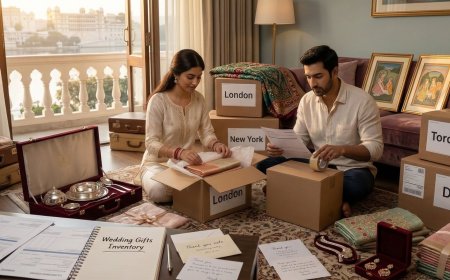
For families who want absolute certainty of design accuracy, commissioning the Thali from a jeweller in Mylapore, Chennai and having it shipped is the most reliable solution — Tamil jewellers in Mylapore have been making community-specific Thali pendants for generations and will know exactly what is required from the community name alone. Commission at minimum three months ahead to allow for crafting, quality checking, and shipping time.
The yellow Kankanam thread for the tying is specific — it must be turmeric-dyed cotton thread of a particular thickness, not generic yellow string. This is available at Indian religious goods shops in all major diaspora cities and can also be prepared at home using raw cotton thread and turmeric powder. The thread is typically prepared and blessed by the family pandit before the ceremony, sometimes as early as the Nalangu evening.
The pandit must know the specific Mangalyadharanam mantras for your community tradition — Iyer and Iyengar mantra sequences differ, and a pandit who is unfamiliar with your specific tradition will not be able to perform the ceremony correctly at the Mahurat moment. The Mahurat for Mangalsutra Dharanam is the most precisely timed moment in the entire Tamil wedding — confirm it with your Jyotishi and your pandit at least three months ahead, and ensure that all preceding ceremonies are scheduled backward from that fixed point. NRI.Wedding's pandit directory specifies Tamil Brahmin sub-tradition experience for listed pandits.
The nadaswaram at the moment of tying is non-negotiable for families who want the full ceremonial experience. The instrument's sound at the Thali tying moment is understood in Tamil tradition to be both celebratory and spiritually protective — it announces the union to the cosmos and simultaneously wards off negative energies at this moment of maximum vulnerability and openness. Nadaswaram players are available through Tamil cultural associations in London, Toronto, Sydney, and Houston — book them specifically for the ceremony morning and brief them on the approximate Mahurat time so they are positioned and ready.
The akshat shower requires preparation — every guest should have a small amount of unbroken rice grains ready in their hands before the Mahurat moment arrives. Distribute akshat to guests in small packets or place it on seats before the ceremony begins. Brief the guests — gently but clearly — that when the nadaswaram plays and the family calls Mangalam, they should throw the rice simultaneously. The shower of akshat when it happens as one unified gesture is one of the most visually extraordinary moments in any Indian wedding. When it happens in scattered dribs because guests were unprepared, it is significantly less so.
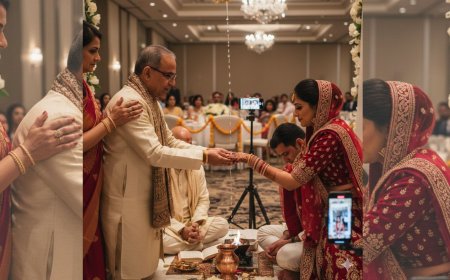
For India-based relatives, the Mangalsutra Dharanam is the single moment above all others that grandparents in Tamil Nadu cannot bear to miss. Set up your most reliable video connection — a dedicated tablet on a tripod, not a handheld phone — and test it thirty minutes before the ceremony begins. If your family is in Tamil Nadu (IST), a morning Mahurat in the UK (10:00 AM GMT) falls at 3:30 PM IST. A morning ceremony in Toronto (10:00 AM EST) falls at 8:30 PM IST. In both cases, confirm the exact time with India-based relatives the night before and again on the morning of, and assign a dedicated family member to manage the connection throughout — not as a secondary task alongside other responsibilities, but as their sole function during the ceremony.
Doing Mangalsutra Dharanam as a Destination Wedding in India
In Tamil Nadu, the Mangalsutra Dharanam finds its most naturally supported and culturally embedded expression — every element of the ceremony's infrastructure exists as standard practice, and the Tamil wedding industry has been producing this ceremony for thousands of years without interruption.
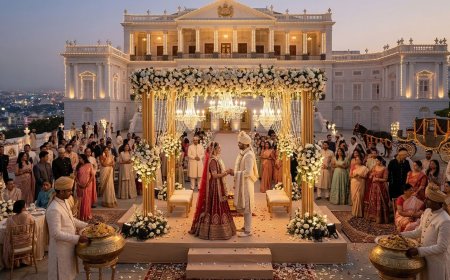
Chennai is the natural hub for Tamil NRI destination weddings, with Mylapore offering the most concentrated access to Tamil Brahmin ceremony infrastructure — pandits, jewellers, nadaswaram players, and wedding decorators who know the Thali tying sequence as well as they know their own names. Madurai carries particular sacred weight — a Mangalsutra Dharanam conducted with the Meenakshi Amman Temple's presence in the spiritual atmosphere of the city carries a depth of cultural and cosmic alignment that families who have experienced it consistently describe as beyond articulation. Thanjavur and Kumbakonam — the heartland of Tamil Brahmin scholarly and temple tradition — offer settings where the ceremony feels not recreated but continuous with everything that came before it.
Brief your local pandit in writing with your specific community tradition, both families' gotras, the bride's nakshatra name, and the pre-calculated Mahurat time. Provide this at your first meeting, not on the wedding morning. A pandit who has had three weeks with your family's specific details will time and perform the Mangalsutra Dharanam with a precision and personalisation that transforms the ceremony.
For non-Indian guests at a destination Thali tying in Tamil Nadu, the combination of the nadaswaram, the akshat shower, the simultaneous community cry of Mangalam, and the visual beauty of the gold Thali at the bride's throat creates an experience that requires no translation and produces a reaction in first-time witnesses that Tamil families have been quietly proud of for generations.
What You Need: Ritual Checklist
Ritual Items The community-specific gold Thali pendant — commissioned minimum three months ahead. Turmeric-dyed yellow Kankanam cotton thread — prepared and blessed by pandit before ceremony. A decorated thali tray for presenting the Thali to assembled guests for blessing before tying. Akshat (unbroken rice) distributed to all guests before the ceremony begins — in small paper packets or placed on seats. Fresh turmeric paste for any remaining Nalangu elements preceding the tying. Kumkum and chandanam for the bride's forehead. Marigold and jasmine garlands for the ceremony space. A permanent gold chain to replace the Kankanam thread after the ceremony — this is often presented by the groom's family as a separate gift.
People Required The groom to tie the first knot. The groom's sister — or nearest female relative from his family — to tie the second knot; this role is her specific honour in the Tamil Brahmin tradition. A family elder to complete or witness the third knot. The pandit for mantra sequence and Mahurat management. A nadaswaram player positioned and ready before the Mahurat window. A minimum of two photographers — one positioned behind the bride capturing the groom's face and hands, one positioned in front capturing the bride's face and the Thali at her throat. A dedicated videographer.
Preparation Steps Commission Thali minimum three months ahead — confirm community-specific design with family before commissioning. Calculate Mahurat with Jyotishi and share with pandit minimum three months ahead. Schedule all preceding ceremonies backward from Mahurat time. Prepare Kankanam thread with pandit one week before. Distribute akshat packets to guests before ceremony begins. Brief groom's sister on her specific role two weeks ahead. Position photographers before guests are seated. Test India video call connection thirty minutes before ceremony.
NRI.Wedding connects Tamil families with community-specific Thali jewellers, experienced Tamil Brahmin pandits, nadaswaram musicians, and photographers who understand that two camera angles at the Thali tying is a minimum, not a luxury — find everything in our vendor directory.
5 Questions NRI Couples Always Ask
How do we find the correct community-specific Thali design if we are not sure exactly what it should look like?
The most reliable reference is always your mother's or maternal grandmother's Thali — ask to see it, photograph it, and use that photograph as the brief for your jeweller. If that is not possible, contact your family pandit or a senior community elder and describe your family's community and regional origin — they will know the correct design. Tamil cultural associations in your diaspora city will also have members who can advise. As a last resort, Tamil jewellery communities on social media have knowledgeable members who can identify community-specific designs from photographs. Do not commission a Thali based on a generic "Tamil style" recommendation — the specificity is the point.
The Mahurat for our Thali tying is at 6:30 AM. How do we manage a ceremony that early in a diaspora city venue?
Early Mahurats are common in Tamil Brahmin weddings and diaspora venues in cities with large Tamil communities — particularly in Scarborough, Harrow, and Parramatta — are experienced with early-morning ceremony timings. Book your venue for the full day beginning the evening before. Brief all guests clearly and repeatedly that the Mahurat is at 6:30 AM and that their presence at that time is the ceremony, not a preamble to it. Frame it correctly — most Tamil guests will understand immediately. For non-Tamil guests, a warm written explanation of what Mahurat means and why this timing is auspicious rather than inconvenient transforms their experience of being asked to arrive at dawn.
My partner is not Tamil. How do we explain the significance of the Thali to his family before the wedding?
Send them something written — not a Wikipedia article but something personal. A short letter or card from the bride explaining what the Thali means to her specifically, what her mother's Thali has meant watching it her whole life, and what it will mean to wear one of her own. This personal framing is infinitely more effective than cultural explanation. Then invite the groom's mother or sister to participate in the blessing round — passing the Thali through the hands of guests before tying includes them in the ceremony's most intimate preparatory gesture. Non-Tamil families who have held the Thali before it was tied consistently report feeling included in the ceremony at its deepest level.
Can the Mangalsutra Dharanam be performed if we have already had a civil ceremony?
Completely and entirely yes. The Mangalsutra Dharanam belongs to the religious and cultural wedding — it is entirely independent of civil marital status. Many Tamil NRI couples conduct their civil ceremony months or even a year before their religious wedding, and the Thali tying retains every particle of its meaning and significance regardless. In Tamil tradition, the Thali is the marriage — not the civil registration. The ceremony is not diminished by prior civil union. If anything, the deliberate choice to conduct the full religious ceremony with complete attention and preparation makes the Thali tying more consciously meaningful.
What is the correct protocol if the groom's sister is unable to travel for the second knot?
The groom's sister tying the second knot is a significant tradition — it is her formal act of welcoming the bride into the family — but it has accepted diaspora adaptations when travel is impossible. The most common adaptation is for the groom's mother to tie the second knot in the sister's place, with an explicit acknowledgment during the ceremony that she does so on the sister's behalf. The sister can simultaneously tie a symbolic knot on a thread at home in India, filmed live and shared with the ceremony via video call. A qualified pandit will know how to incorporate this adaptation into the mantra sequence with grace and spiritual validity.
The Emotional Angle
There is a specific terror that Tamil grooms carry to the Mangalsutra Dharanam that nobody prepares them for. Not the terror of commitment — they made that decision long before this morning. Not the terror of the ceremony's public nature — they have been public all day. It is a more precise terror: the terror of the knot.
Three knots. Tied by hands that have never tied this before, will never tie this again, and must tie it now in front of everyone who matters in approximately thirty seconds because the Mahurat does not negotiate. The thread is delicate. The pendant is gold. The bride's hair is elaborate and beautiful and in the way. The nadaswaram is already playing, which means the moment is now, not in a moment, now — and the hands that have performed surgery or written code or managed international accounts are suddenly the least reliable instruments in the room.
NRI grooms in London and Toronto and Sydney and Houston have stood in this exact position — behind a woman they love completely, with a thread in their hands and the cosmos watching and their mother visible in the corner of their eye, barely breathing — and understood in that specific instant what it means to do something irrevocable. Something that cannot be undone, edited, optimised, or improved upon after the fact. Something that must simply be done, with everything you have, in the time available.
They tie the first knot. Their hands shake. They tie the second knot — or rather, the sister does, her steadier hands completing what love makes difficult. They tie the third. And the akshat falls like rain and the room erupts and the nadaswaram is enormous and the bride's hand comes up to touch the Thali at her throat — just once, just briefly — and the groom sees her do it and understands that the thread held.
It always holds.
A Moment to Smile
At a Tamil Brahmin wedding in Brampton two autumns ago, the Mahurat for the Thali tying had been precisely calculated as 8:47 AM. The ceremony was proceeding beautifully and on schedule until the groom — having successfully tied the first knot with what he later described as "professional focus" — discovered that the second knot was being contested.
The groom's sister, who had flown in from Singapore specifically for this moment and had been mentally preparing for her role for approximately six weeks, had a clear and firm view of how the second knot should be tied. The groom's mother, who had been to eleven Tamil weddings in the past decade and had opinions of comparable firmness, had a slightly different view. The bride, seated between them with gold at her throat and akshat incoming, maintained an expression of extraordinary serenity that she has since confirmed was achieved by thinking about something else entirely.
The pandit, who has been conducting Tamil Brahmin weddings for twenty-seven years, managed the situation with the quiet authority of a man who has seen this specific disagreement before and has a system. The second knot was tied at 8:47 AM exactly. By whom is a matter of gentle family debate that continues to this day and is expected to continue indefinitely.
The Thali, which has no opinion on the matter, sits at the bride's throat and does its job perfectly.
Quotes from the Diaspora
"My mother's Thali is the first thing I remember noticing as a child. Gold at her throat, every single day, never removed. I asked her once what it meant and she said: it means your father decided. That was all she said. I have thought about those four words my entire life. When my own Thali was tied, I finally understood them completely." — Ananya Krishnamurthy, Tamil Iyer family, Harrow
"My son tied the Thali at 7:15 in the morning in a community hall in Scarborough with forty people watching and his hands were shaking so badly I thought the thread would break. It did not break. He tied three knots. He has always been steadier than he looks. I have never been more proud of him than in that moment, which surprised me, because I thought I had already been maximally proud of him many times before." — Kamala Venkataraman, Tamil Brahmin family, Scarborough
"I am not Tamil. I am Irish. My wife is Tamil Iyer and I had never heard of a Thali before I met her family. At our wedding, I held that gold pendant in my hands while the pandit explained what I was about to do. Three knots. Past, present, future. I tied them as carefully as I have ever done anything in my life. My wife touched the Thali afterward and smiled. I will make sure I deserve that smile every day for the rest of my life." — Ciarán Murphy-Subramaniam, Irish-Tamil family, Melbourne
Your Roots Travel With You
The Mangalsutra Dharanam is the Tamil wedding tradition's most complete statement about the nature of commitment — three knots on a yellow thread carrying the weight of two families, two gotras, two souls, and the collective blessing of every person present into a single gold pendant at a woman's throat. It is the ceremony that needs no explanation in any language, because the moment it happens, everyone in the room understands what they have just witnessed.
NRI.Wedding is honoured to support Tamil families at this most sacred moment. From community-specific Thali commission through Tamil jewellers in Wembley, Scarborough, Parramatta, and Houston, to Tamil Iyer and Iyengar pandits who know the Mahurat to the minute, to nadaswaram musicians who understand that their instrument is not background music but the voice of the cosmos at the moment of tying, to photographers who know that two camera angles is a minimum — we are with you for every knot, every grain of akshat, and every trembling, triumphant, irrevocable second of this extraordinary ceremony.
Your roots travel with you. Let them be tied at the right moment, with the right thread, in the right hands.
This article explores Mangalsutra Dharanam in Tamil weddings — including the Thali tying ceremony, Iyer and Iyengar traditions, Mahurat timing, Kankanam thread preparation, and community-specific pendant designs — with guidance for NRI families planning ceremonies in diaspora cities including London, Toronto, Scarborough, Melbourne, Brampton, and Houston.
What's Your Reaction?
 Like
0
Like
0
 Dislike
0
Dislike
0
 Love
0
Love
0
 Funny
0
Funny
0
 Angry
0
Angry
0
 Sad
0
Sad
0
 Wow
0
Wow
0